
Choosing neuropathy care starts with finding a provider who runs a thorough diagnostic process rather than treating nerve pain as unsolvable. Peripheral neuropathy is not a single condition. It is a set of symptoms, including numbness, tingling, burning, and weakness, caused by damage to the peripheral nerves. Those nerves carry signals between the brain, spinal cord, and the rest of the body, so damage anywhere along that pathway can produce different symptom patterns in different patients. Diabetes is a common cause, but neuropathy also stems from nerve compression, autoimmune conditions, nutritional deficiencies, and injury. Because the causes vary so widely, an effective evaluation looks at nerve function, spinal alignment, and overall health history together instead of assuming one explanation fits every patient. A proper care plan follows that evaluation. It should be built around what the diagnostic findings actually show, using therapies suited to the specific type and source of nerve involvement rather than a standard protocol applied to every case. Chiropractic adjustment, Cold Laser Therapy, and Neuropathy Care are examples of approaches that may be part of that plan when the findings support them. What matters most before starting care is confirming that the provider investigates the underlying cause rather than only addressing surface symptoms. Patients who have already been through multiple appointments without clear answers benefit most from a process that re-examines the evidence instead of repeating prior conclusions. Selecting the right provider means prioritizing diagnostic rigor, individualized planning, and a clear explanation of findings before any treatment begins.
Articles in this cluster
- Clinical tests for neuropathy response to care — Clinical Tests That Show If Neuropathy May Respond to Care
- How nerve testing shapes a Morton care plan — How Nerve Function Testing Guides a Neuropathy Care Plan in Morton
- Primary care versus dedicated nerve specialists — Primary Care vs Dedicated Nerve Care in Tazewell County
- Traits of a strong neuropathy care provider — Traits to Look For in a Neuropathy-Focused Care Provider
- Signs it is time to consider nerve care — Signs It's Time to Consider Nerve Care Over More Medication
- Questions to ask about rising nerve pain doses — Rising Medication Doses for Nerve Pain: What Questions to Ask Next
- Questions for a burning foot pain visit in East Peoria — Questions to Ask During a Burning Foot Pain Visit in East Peoria
- What happens during a Pekin neuropathy consultation — What to Expect at a Pekin Consultation for Numb, Burning Feet
- Whether nerve damage from neuropathy is permanent — Is Nerve Damage from Neuropathy Always Permanent?
- How a chiropractor identifies nerve damage in the feet — How a Chiropractor Tells Nerve Damage From Other Foot Pain
- Credentials to check in a local neuropathy provider — Credentials to Look For in a Neuropathy Care Provider Locally
- Why long-term visit commitments worry nerve care patients — Why Long-Term Visit Commitments Worry Neuropathy Care Patients
What Is Happening Inside a Nerve That Won't Stop Signaling?
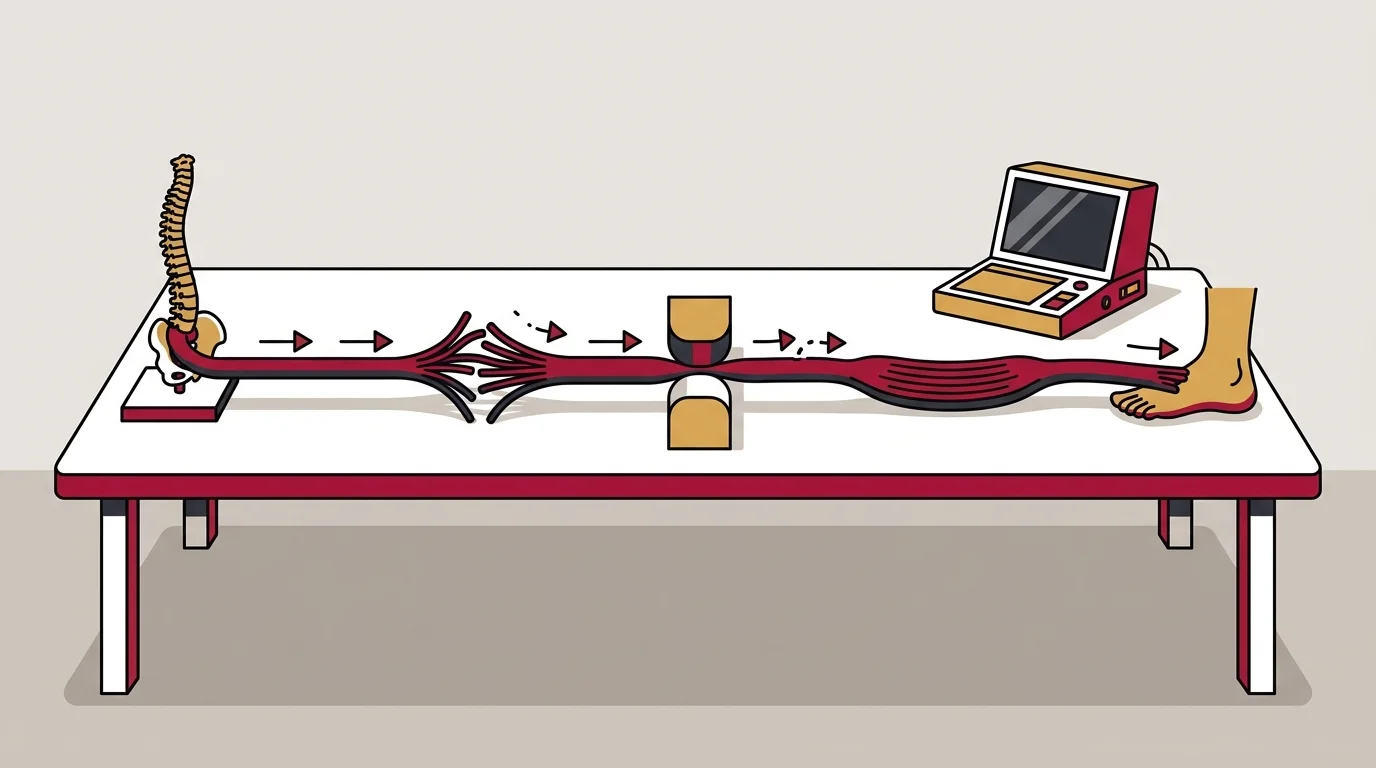
A nerve that won't stop signaling is a nerve stuck in a feedback loop. Damage disrupts normal transmission, so the nerve fires pain or tingling signals even without a new injury triggering them.
That misfiring is why neuropathy feels so unpredictable. It can show up as burning in the feet one week and numbness in the hands the next, depending on which fibers are affected.
Why Nerve Damage Looks Different in Every Patient
Why does the same diagnosis produce such different symptoms from patient to patient? Nerve fibers vary in size, function, and location, so damage to one type produces sensory changes while damage to another produces weakness or balance problems.
Here's the piece a fixed checklist misses. A real evaluation, including chiropractic adjustment and spinal treatment where the findings support it, has to pin down which fibers are involved before anyone builds a plan around them.
Why a Symptom Checklist Alone Misses the Diagnosis
A symptom checklist treats nerve damage like one condition with one shape. It isn't. Ticking boxes for numbness and tingling tells a provider that nerves are involved, but it can't say which nerves or why.
Many patients bring that exact checklist experience into a specialist's office after months of appointments that led nowhere. Unexplained does not mean untreatable. It means the diagnostic process stopped too early, and picking the right provider for Neuropathy Care is the decision that determines whether it starts over properly.
What the Research Actually Shows About Common Nerve Pain Therapies
A symptom checklist is not a treatment plan. Neither is reaching for the nearest device that promises relief without asking why the nerve misfires in the first place.
TENS units get recommended for nerve pain all the time. So before anyone builds a plan around that shortcut, it's worth looking honestly at what the research says.
Where TENS and Similar Modalities Fit in the Evidence
Here's what the pooled data found. A 2025 study by ElMeligie et al. (Al-Hayah University, BioMed research international) found that across pooled studies, TENS may slightly reduce neuropathic pain compared to placebo, though this was not clinically significant (SMD = -0.35).
That gap matters for neuropathic pain specifically, since misfiring nerve fibers don't always respond to surface-level stimulation the way other pain does. A modality can still have a place in a broader plan. It just can't be the plan.
How a Rigorous Nerve Assessment Is Actually Built

A modality can't replace a map. And building that map takes a diagnostic workup that pins down where and how the nerves are failing, instead of guessing from symptom descriptions alone.
Cookie-cutter protocols are not care. They're assembly-line medicine, built to move patients through a fixed sequence regardless of what their nerves are actually doing.
| Diagnostic Component | What It Reveals | Why It Matters for Care Planning |
|---|---|---|
| Symptom History and Prior Treatment Review | Which symptoms appeared first, how they progressed, and what previous care already failed to resolve | Prevents the plan from repeating approaches a patient has already tried without results |
| Physical and Neurological Exam | How reflexes, sensation, and muscle strength respond across different nerve pathways | Points to which fiber types are involved before any care plan is written |
| Spinal Alignment Assessment | Whether nerve compression along the spine is contributing to symptoms reported elsewhere in the body | Determines whether chiropractic adjustment has a role in the plan or whether the source lies elsewhere |
| Hands-On Sensory and Reflex Exam | How touch, vibration and reflexes respond along the suspected nerve pathway | Points to where nerve signals are disrupted before any care plan is written |
| Overall Health History | Underlying contributors such as metabolic conditions, nutritional gaps, or past injury | Shapes a plan that is not some catch-all protocol but one built around what is actually driving the nerve involvement |
The Core Components of a Legitimate Diagnostic Workup
The first consultation is arguably the most important part of the whole process. It sets the foundation for the entire care plan. Every finding that comes after gets read against what's established in that room.
So that visit has to capture symptom history, past treatment attempts, and a physical exam before any device enters the picture. Skip it, and every test that follows gets read without context.
How One-Size-Fits-All Protocols Break Down Under Real Patient Variability
A protocol built for the average patient was never built for any patient in particular. Nerve damage varies by cause, location, and fiber type, so a fixed treatment sequence applied to every case ignores the variability that makes neuropathy what it is.
No protocol is proven for every patient. The assumption that one approach works across the board treats nerve pathology as uniform when the diagnostic picture says otherwise.
The Mechanism Behind Protocol Failure in Complex Nerve Cases
Here's how it breaks. A sound diagnostic process maps the specific nerves involved before treatment starts, while a system that skips that step swaps in a generic sequence and calls it a plan.
That substitution is where protocols break down. Two patients with the same symptom checklist can have entirely different nerve involvement, and a fixed protocol has no mechanism for telling them apart.
What Comes After Diagnosis: Building a Response Instead of Running a Script
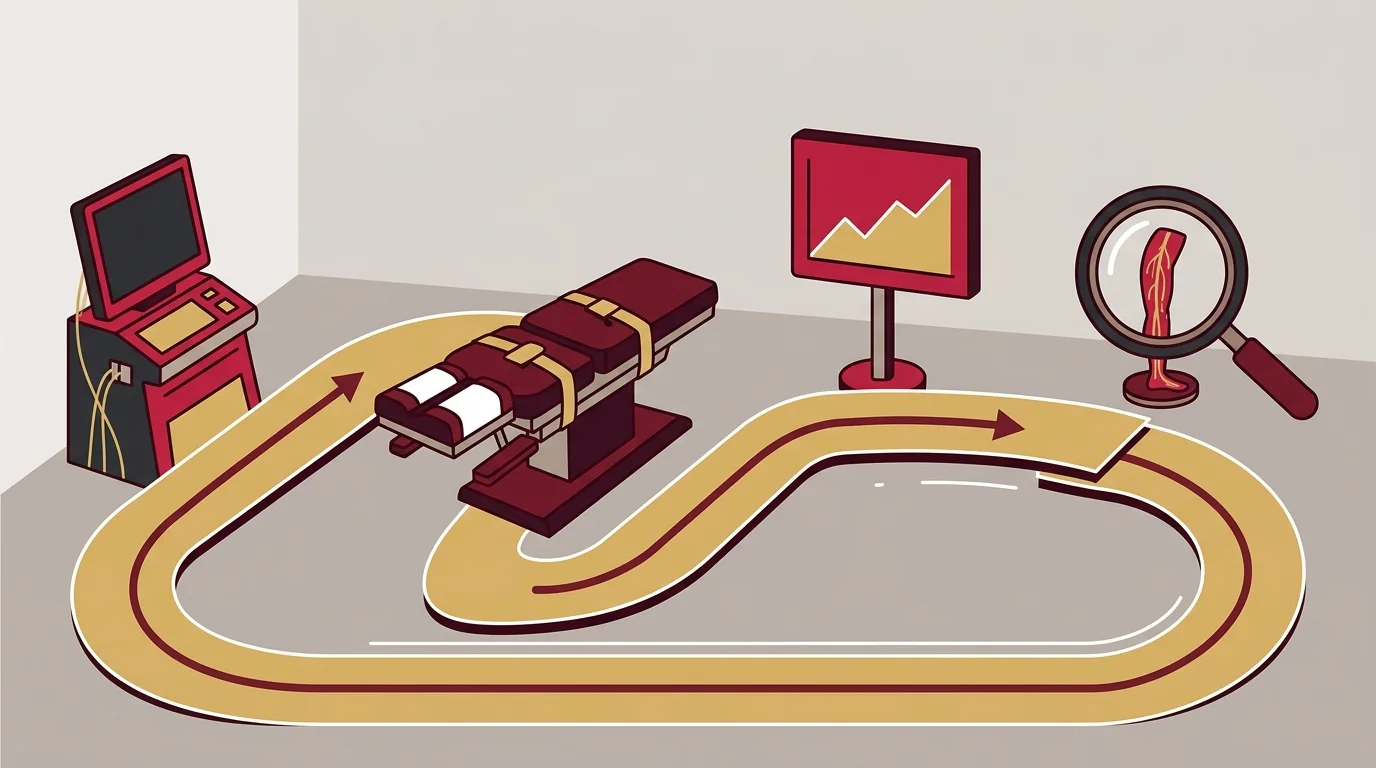
A protocol built in advance can't respond to a finding made afterward. Once the diagnostic picture names which nerves are involved, the response has to follow that picture rather than a preset sequence. Real care works in that order.
| Stage | What Happens | Question to Ask |
|---|---|---|
| Intake and History | Gather symptom history, prior treatment attempts, and a physical exam before any device or modality enters the room. | Does the record explain which nerves are suspected and why, or only which symptoms were reported? |
| Diagnostic Mapping | Identify which nerve fibers are involved and what's driving the damage, using findings instead of assumption. | Can the provider name the specific nerve involvement, or is the plan still built around a generic symptom checklist? |
| Plan Construction | Build a response around what the mapping actually showed, drawing from Chiropractic Care, Cold Laser Therapy, or Neuropathy Care only where findings support each one. | Does every therapy in the plan trace back to a specific finding, or is one included out of habit? |
| Adjustment and Reassessment | Deliver the planned response, then recheck whether the patient's actual response matches what the diagnostic picture predicted. | If the response doesn't match the finding, does the plan change, or does the sequence just continue unchanged? |
Sequencing Care: From Assessment to Adjustment to Reassessment
Assessment comes first, and it stays open-ended until the nerve involvement is actually mapped. That mapping is what the earlier consultation exists to produce, not a formality before the real work starts.
Adjustment follows from what assessment found, not from habit. Reassessment then checks whether the response matches the finding, and the plan shifts again if it doesn't.
Frequently Asked Questions
Once the diagnostic process makes sense, a few practical questions always follow. Here are the ones we hear most.
What kind of diagnostic tests does a chiropractor use for neuropathy?
A neuropathy evaluation includes a physical exam of reflexes, sensation, and muscle strength, paired with a review of spinal alignment. That workup identifies which nerves are affected before any treatment plan gets written.
How is chiropractic care for neuropathy different from what my primary care physician offers?
A primary care physician often screens for underlying disease and may prescribe medication for relief. Chiropractic care for neuropathy adds a structural and nerve-function evaluation. It looks for the mechanical source of the irritation, not just the sensation it causes.
Is chiropractic treatment for neuropathy covered by insurance in Illinois?
Insurance is checked at the first visit, so patients know their costs before treatment starts, and there are no hidden admin fees.
How long does it typically take to see improvement in neuropathy symptoms with chiropractic care?
Neuropathy care protocols run 8 to 12 weeks, and the plan is rechecked along the way.
What are the most common signs that nerve damage requires specialized evaluation?
Persistent numbness, burning, or tingling that spreads or worsens over time warrants a specialized evaluation. So does weakness, balance trouble, or symptoms that haven't responded to a prior provider's explanation.
Can chiropractic care help neuropathy caused by diabetes?
Diabetic neuropathy is one of the most common forms seen in practice, and it responds to the same diagnostic logic as any other cause. Chiropractic adjustment and Neuropathy Care can address the nerve and spinal factors at play, alongside whatever medical management the diabetes itself requires.
Where This Leaves You
Unexplained nerve pain is not a dead end. It is a diagnostic puzzle, and most patients who reach that conclusion have simply never had anyone assemble the pieces.
The right provider does not start with a protocol. They start with an exam that maps which nerves are involved, why, and what that means before any treatment plan gets written. That order is the whole difference between care that guesses and care that knows.
If your symptoms have been brushed off, you deserve a process built on your own findings, not the same catch-all sequence everyone else gets. That starts with a consultation that treats your history as evidence instead of noise, so when you're ready, talk it through with us.
Results may vary.
Insurance coverage varies by plan and should be verified before your visit.