
The most important questions to ask during a burning foot pain visit focus on identifying where nerve signals are being interrupted, not just naming the sensation itself. Ask what is causing the irritation, whether the spine or a specific nerve pathway is involved, and what structural factors could be contributing to the problem. Burning feet are a symptom, not a diagnosis, and the sensation itself is most often a signal from the peripheral nervous system that something along its path is interfering with normal nerve function. A thorough evaluation should ask whether the cause originates locally in the foot or further up the chain, since peripheral nerves travel long distances from the spine and lower back before reaching the feet. Patients should ask what diagnostic steps will be used to rule out or confirm nerve involvement, what structural or mechanical factors will be assessed, and how a treatment plan will be tailored to the specific findings rather than applied as a standard response to the symptom. It is also reasonable to ask how progress will be measured over time and what role posture, alignment, or movement patterns play in ongoing nerve irritation. While many people begin this process with a primary care physician, a comprehensive evaluation should also consider the structural and mechanical factors that can influence nerve health along the entire pathway. Understanding the reasoning behind a set of symptoms, rather than only the symptoms themselves, is the first step toward identifying a treatment approach that addresses the underlying cause rather than the sensation alone.
Why Burning Feet Signal a Wiring Problem, Not a Mystery
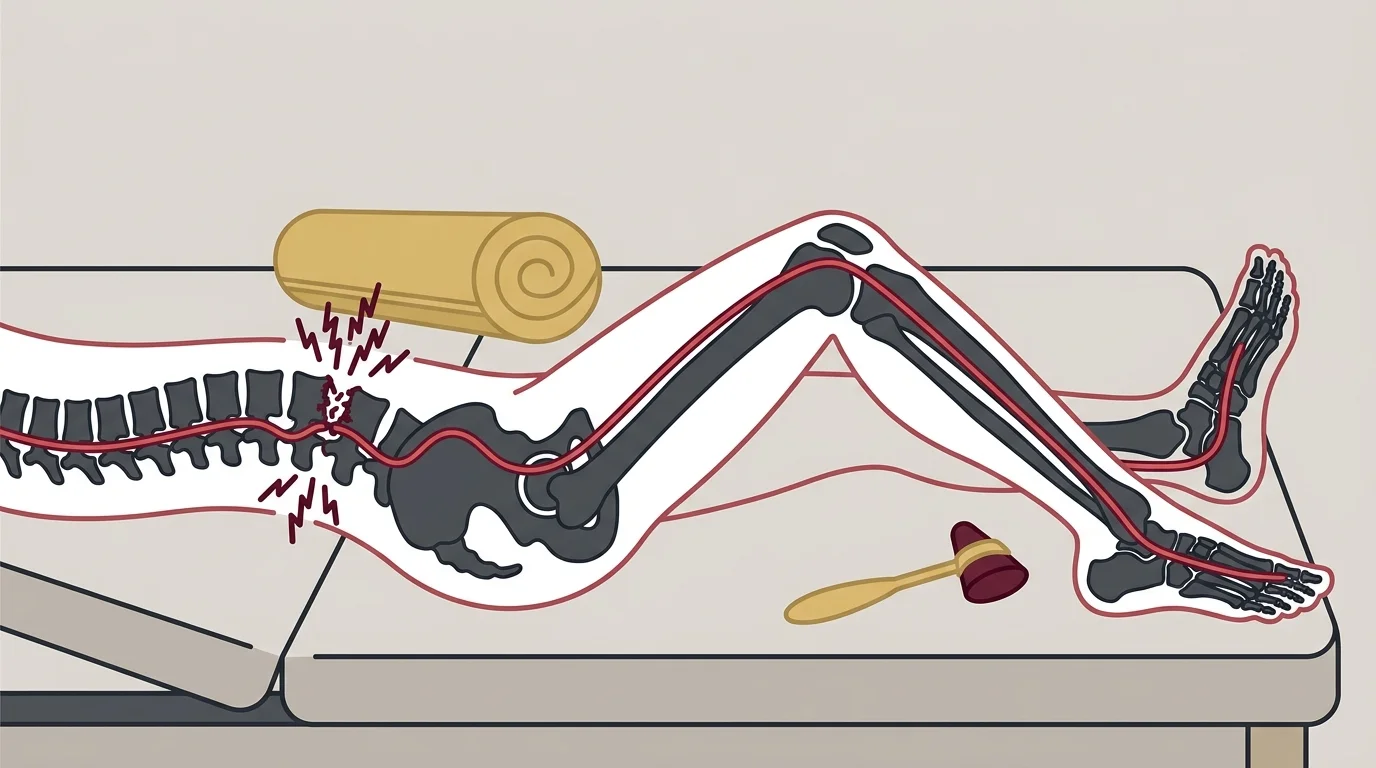
A burning sensation in the feet is not a local malfunction. It is a signal traveling along a wire, and somewhere along that wire, the signal is picking up static.
Unexplained does not mean untreatable. A symptom without a clear answer from one exam still has a cause, and the right questions are how that cause gets found.
What Burning Feet Actually Mean
So here's what burning feet usually mean: the peripheral nervous system is talking, not the skin or tissue of the foot. Something along that nerve's path is getting in the way of the signal.
That distinction changes everything about which questions matter. The question is not what's wrong with the foot — it's where the wire is getting pinched.
Where the Signal Gets Disrupted Along the Way
Now picture how far these nerves travel. They start at the spine and lower back, then run all the way down to the feet. Static anywhere on that route can show up as burning at the very end of the line.
Many people start this search with a primary care physician, and that's a reasonable first stop. But a comprehensive evaluation also has to weigh the structural and mechanical factors that can influence nerve health along the whole pathway, not just at the foot. Before committing to any plan, it helps to know the questions to weigh before beginning neuropathy treatment.
Why the One-Size Workup Leaves Burning Feet Unanswered
No protocol is proven for every patient. A workup built to run the same checklist on every presenting condition will miss what makes this case different.
Walking into any appointment with a clear set of questions matters. It matters even more when the symptom is persistent and unexplained, because a vague complaint invites a generic response.
The Limits of a Symptom-Only Workup
Here's the gap: a symptom-only workup asks what hurts and stops there. It rarely asks why the signal is misfiring in the first place.
That gap is where burning feet go unanswered for years. Understanding the why behind the symptom is the first step toward a plan built around its cause, not just the sensation itself.
Why Treating the Foot Alone Rarely Resolves the Signal
But treating the foot alone works on where the static is heard, not where it starts. That wire runs from the spine through the lower back long before it reaches the toes.
So a plan aimed only at the foot leaves the real interference untouched. Working through the steps of a numb and burning feet evaluation helps map that whole pathway before any treatment begins.
The Specific Questions That Separate a Structural Workup From a Guess
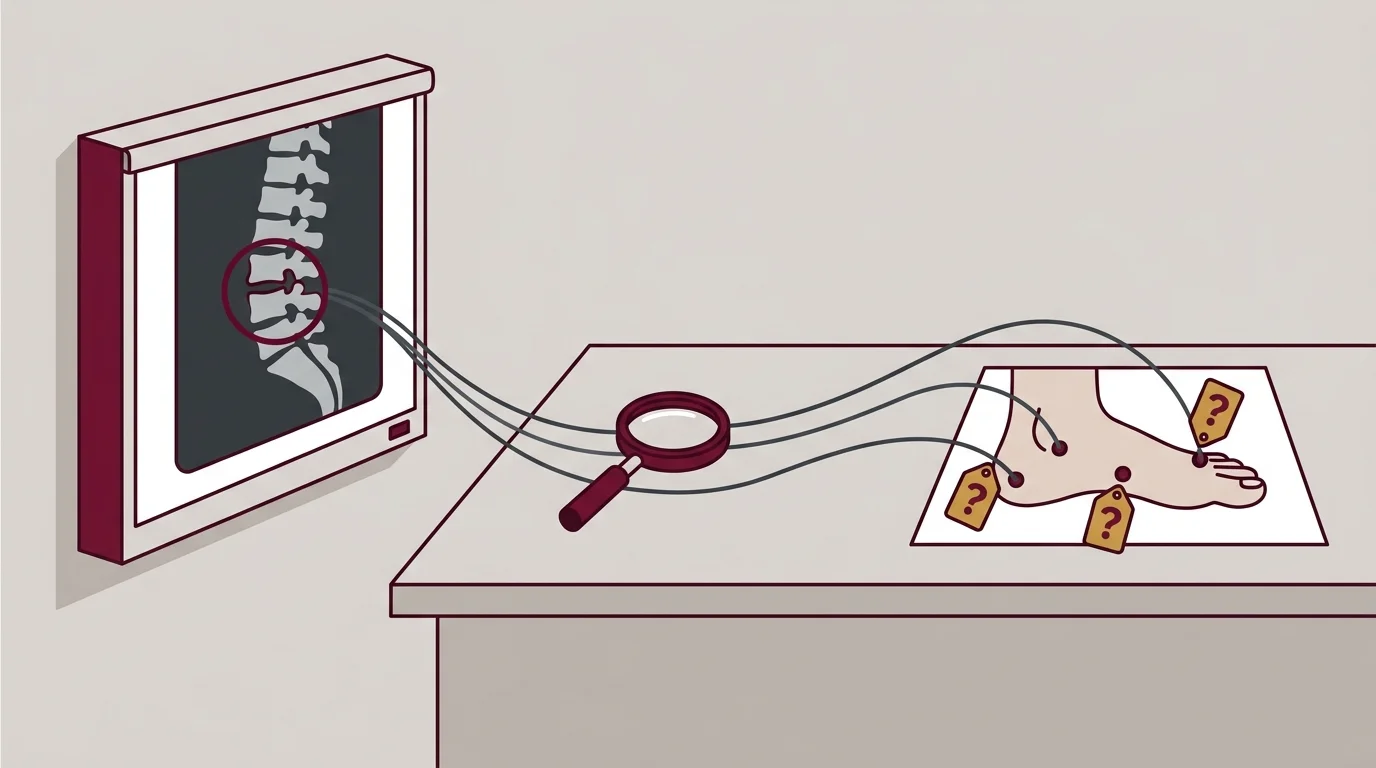
So what does a real structural workup actually ask? Specific questions, not a general complaint, and every one should trace the signal back toward where the static starts instead of describing the burning all over again.
Questions About the Source of the Signal
Ask where along the nerve's path the interference most likely starts. Ask what in the spine, hip, or lower back could be pressing on that pathway before the signal ever reaches the foot. A reasonable workup also asks how rising medication fits into the picture, which is exactly where navigating increasing medication for nerve pain becomes useful groundwork.
Questions About How the Findings Will Be Tested
Ask how each finding gets confirmed, not just noted, because one observation is a guess until it's tested against movement, posture, and alignment. Then ask what should change if the real source is found. And ask how that change gets measured over time.
What a Structural Evaluation Looks Like in Practice
A real structural evaluation starts at the spine and follows the nerve down, not at the foot. Chiropractic care built around the nervous system treats burning feet as a wiring problem, not one more generalist complaint squeezed between every other visit on the schedule.
| Evaluation Component | What It Assesses | Why It Matters for Burning Feet |
|---|---|---|
| Spinal Alignment Check | Whether vertebrae in the lower back are positioned in a way that could press on nerve pathways feeding the legs and feet | Interference at the spine can show up as burning at the end of the nerve's route, far from where the pressure actually starts |
| Nerve Tension Testing | How the nerve pathway responds to movement and stretch along its full length, not just at the point of pain | A nerve that reacts abnormally to tension reveals where along the wire the signal is getting disrupted |
| Posture and Movement Pattern Review | How standing, walking, and daily movement habits load the spine and hips over time | Repeated mechanical strain can be the slow-building source of nerve irritation that a single snapshot exam would miss |
| Structural and Mechanical Factor Assessment | The hip, lower back, and lower extremity mechanics that influence how nerves travel toward the feet | This is the layer many primary care evaluations skip, even though it can carry the actual cause |
| Individualized Plan Mapping | How findings from alignment, tension, and movement review combine into a plan built around this specific case | A plan built this way is not some catch-all protocol applied to every burning-feet complaint that walks through the door |
Reading the Spine and the Nerve Pathway Together
A workup that only treats whatever symptom walked through the door that day cannot trace a signal back to its source. Reading the spine and the nerve pathway together means checking alignment, movement, and nerve tension as one connected system, which is the core of the practice's chiropractic treatment approach.
How Adjunct Tools Fit Into the Picture
Adjunct tools back up that reading. They don't replace it. A 2024 study by Çelik, Doğan and Filiz in Lasers in Medical Science found that patients who got laser therapy had greater improvement in day and night pain scores, function scores at three months, and sensory nerve signal speed on day 15 than patients who got a sham laser. At the practice, that kind of adjunct is Cold Laser Therapy, used alongside the hands-on reading, not instead of it.
What a Realistic Plan and Timeline Involve
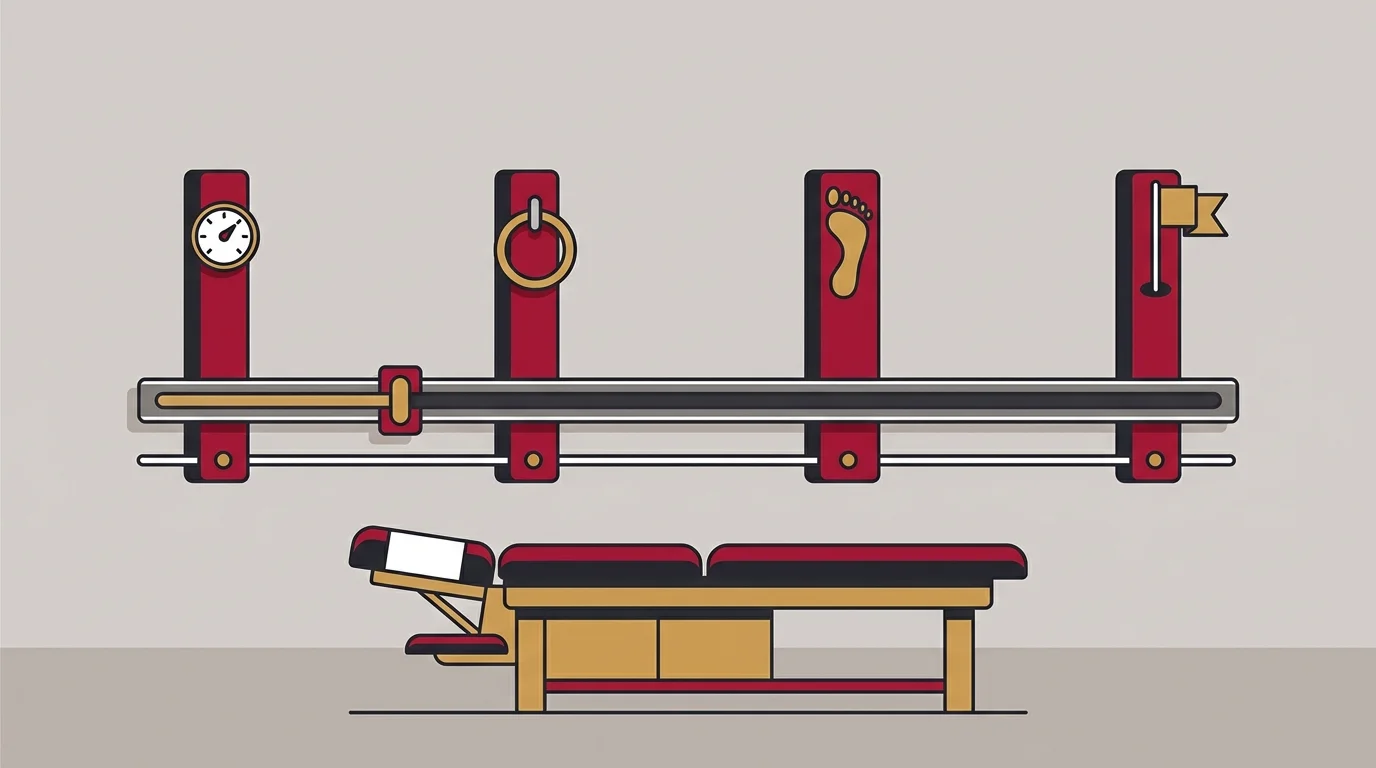
A realistic plan does not run on open-ended visits. It runs on checkpoints that measure whether the nerve signal is actually clearing, not just whether the patient keeps showing up.
| Checkpoint | What Gets Measured | Typical Timeframe |
|---|---|---|
| Baseline Workup | Alignment, movement, and nerve tension measured against the initial complaint | Set during the first visit, before any adjustment plan begins |
| Early Re-Check | Whether the baseline findings are shifting under care, not whether symptoms feel different day to day | Scheduled once enough adjustments have occurred to expect a measurable change |
| Mid-Plan Checkpoint | Comparison of current alignment and nerve tension readings against the early re-check, not just the original baseline | Timed to the pace of change shown at the previous checkpoint, not a fixed calendar date |
| Plan Adjustment Point | Whether frequency, technique, or adjunct tools need to change based on what the markers show | Triggered by the data at each checkpoint rather than a predetermined number of visits |
| Maintenance Decision | Whether ongoing care is addressing a structural finding or simply continuing out of habit | Reached once the nerve pathway findings stabilize at or near expected function |
Setting Checkpoints Instead of Open-Ended Visits
Frequency and duration should be set by what the initial findings show, not by a standard number of weeks applied to every case. A checkpoint re-tests alignment, movement, and nerve tension against the baseline taken on day one.
If those markers are not shifting, the plan changes. That is a different structure than a block of visits scheduled before anyone knows how the nerve will respond.
Frequently Asked Questions
Once the structural approach makes sense, specific questions tend to follow. Here are the ones patients ask most.
My medical doctor couldn't find a cause for my burning feet. How can a chiropractic visit be different?
Ruling out disease isn't the same as mapping the nerve from spine to foot. A chiropractic visit picks up right where that search stopped. It checks alignment and nerve tension along the whole route.
What specific diagnostic techniques does a chiropractor use to evaluate nerve-related foot pain?
Expect a spinal and postural evaluation alongside tests for nerve tension and movement along the suspected pathway. Findings get checked against baseline, not guessed at. The goal is locating where the signal is getting interrupted.
If the issue is in my spine, why are my feet the only thing that hurts?
Nerves travel long distances before they end at the feet. Interference near the spine or hip can show up only at the far end of that line.
Are chiropractic adjustments for neuropathy painful, especially if my feet are already sensitive?
A Chiropractic adjustment targets the spine and nerve pathway, not the sensitive foot itself.
How long does it typically take to see improvement in burning foot pain with chiropractic care?
Neuropathy care protocols run 8 to 12 weeks, and the plan is rechecked along the way. Checkpoints re-test alignment and nerve tension against day one, and if those markers aren't moving, the plan changes.
Will I need to keep coming for chiropractic adjustments forever to manage my symptoms?
No. Frequency is set by measurable findings, and visits taper as those markers improve. Chiropractic care here is not an open-ended subscription to attendance.
Can chiropractic care help even if my neuropathy is caused by diabetes?
Diabetes is a common cause of burning feet. A structural evaluation still checks the spine and nerve route for mechanical factors that may be adding to it, alongside whatever medical care the diabetes itself needs.
Where This Leaves You
Burning feet are not a mystery that medicine gave up on. They are a signal, and every signal has a source.
Asking where the wire gets pinched, instead of only what hurts, is what separates a real structural workup from a symptom-only visit. That question is the first step toward a plan built around a cause, not just a sensation — and it's not some catch-all protocol applied the same way to every patient on the schedule.
Tracing that signal back to where the static starts takes a spine and nerve pathway evaluation built for that exact question. If that's your next step, talk it through with us.
Results may vary.