
A specialized neuropathy care provider is distinguished by a diagnostic process that identifies the specific cause and pattern of nerve damage, rather than applying a generic treatment plan to every patient. Peripheral neuropathy results from many distinct underlying mechanisms, including diabetes, chemical exposure, autoimmune activity, and physical nerve compression, and each mechanism produces a different pattern of nerve dysfunction. A provider equipped to address this variability conducts a thorough neurological examination, reviews medical history for contributing conditions, and checks sensation, reflexes and strength to find where nerve signals are disrupted. Key traits of this type of provider include a diagnostic process that finds the cause, a range of treatment modalities beyond a single technique, and a willingness to adjust the care plan as a patient's nerve function responds or fails to respond. Treatment approaches may include Chiropractic adjustment to address spinal or joint contributions to nerve irritation, alongside modalities such as Cold Laser Therapy or Shockwave Therapy, selected according to the specific nerve pathology identified during diagnosis. A provider offering Neuropathy Care should also coordinate with other medical professionals when the underlying cause falls outside their scope of practice, since peripheral neuropathy frequently has systemic origins requiring broader medical management. The defining trait across all of these elements is individualization: diagnostic findings determine the treatment combination, rather than a predetermined protocol applied uniformly across patients. A provider who treats every case of nerve pain identically, regardless of its origin or presentation, is not practicing specialized neuropathy care, since nerve damage from diabetes, compression, and chemical exposure each require different diagnostic attention and different treatment emphasis to address the specific dysfunction present.
What Separates a Neuropathy-Focused Provider From General Practice
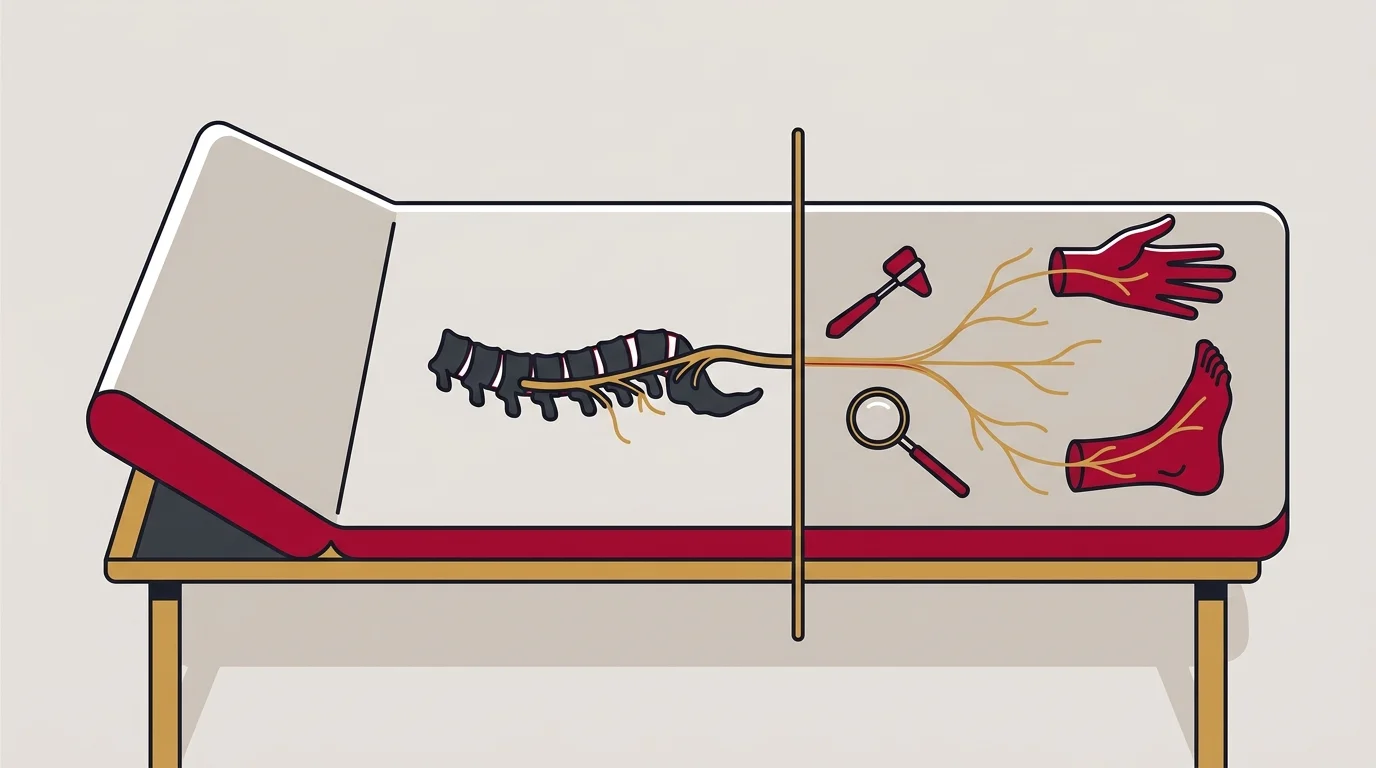
Start with the term itself. A neuropathy-focused provider builds the whole practice around diagnosing and treating nerve and spine dysfunction, not as one service on a long menu. That choice shapes everything, from intake to the equipment in the room.
General chiropractic care usually runs as a wide-angle service, with newborns, seniors, athletes, and chronic pain patients all folded into one broad model. And many patients discover that a provider focused on the nervous system offers a different perspective than general primary care.
The Scope of a Specialized Nerve and Spine Practice
So what changes when a practice organizes around one system? Its diagnostic tools, treatment protocols, and provider training all point at nerve and spine conditions instead of every complaint that walks through the door. That focus changes what gets measured in the exam.
It also changes what gets tracked over time. A specialized practice follows nerve function response visit over visit, rather than treating the initial exam as the only diagnostic checkpoint. Readers comparing nerve pain treatment options for local patients will notice this operational difference before they notice any difference in technique.
Where General Chiropractic Care Stops
The model of chiropractic care as a generalist family guide, serving every age and every condition under one roof, works for routine musculoskeletal complaints. It was never built to track a nerve signal across its full disrupted route.
A practice organized around broad coverage treats neuropathy as one line item among dozens. A practice organized around nerve and spine function treats it as the reason the practice exists. That difference in structural identity, not just technique, is what separates general care from specialized care.
Why the Assembly-Line Protocol Fails Damaged Nerves
Here's the industry's default logic: a chiropractor's job is to run the same proven protocol on every presenting condition. But no protocol is proven for every patient, because no two damaged nerves carry the same signal failure. Finding the right care for neuropathy can feel overwhelming, especially when standard treatments haven't provided relief.
The Problem With One Protocol for Every Diagnosis
A single standardized protocol treats numbness, burning, and shooting pain as the same event. They rarely share the same mechanism. So a provider who skips the diagnostic step is guessing at the cause while the patient keeps the symptom.
A truly specialized provider looks beyond just managing symptoms and seeks to understand the underlying cause of nerve dysfunction. That's the diagnostic fingerprint this article keeps coming back to. Readers weighing choosing between a general doctor and nerve specialist are really asking who reads that fingerprint instead of a generic chart.
What Gets Missed When Symptoms Are Treated as Identical
So what's lost when every case gets the same plan? The specific route the damaged signal travels. A protocol built for the average patient was never built for the one sitting in the chair.
What a Generic Protocol Fails to Measure
Patients dismissed by traditional medicine are not imagining their symptoms. A generic protocol fails to register nerve dysfunction because it was never designed to measure nervous system change in the first place. Specialized nerve-focused care checks a different set of markers, and what qualifications a nerve care provider should hold decides whether they get measured at all.
How a Specialized Diagnostic Workup Is Built
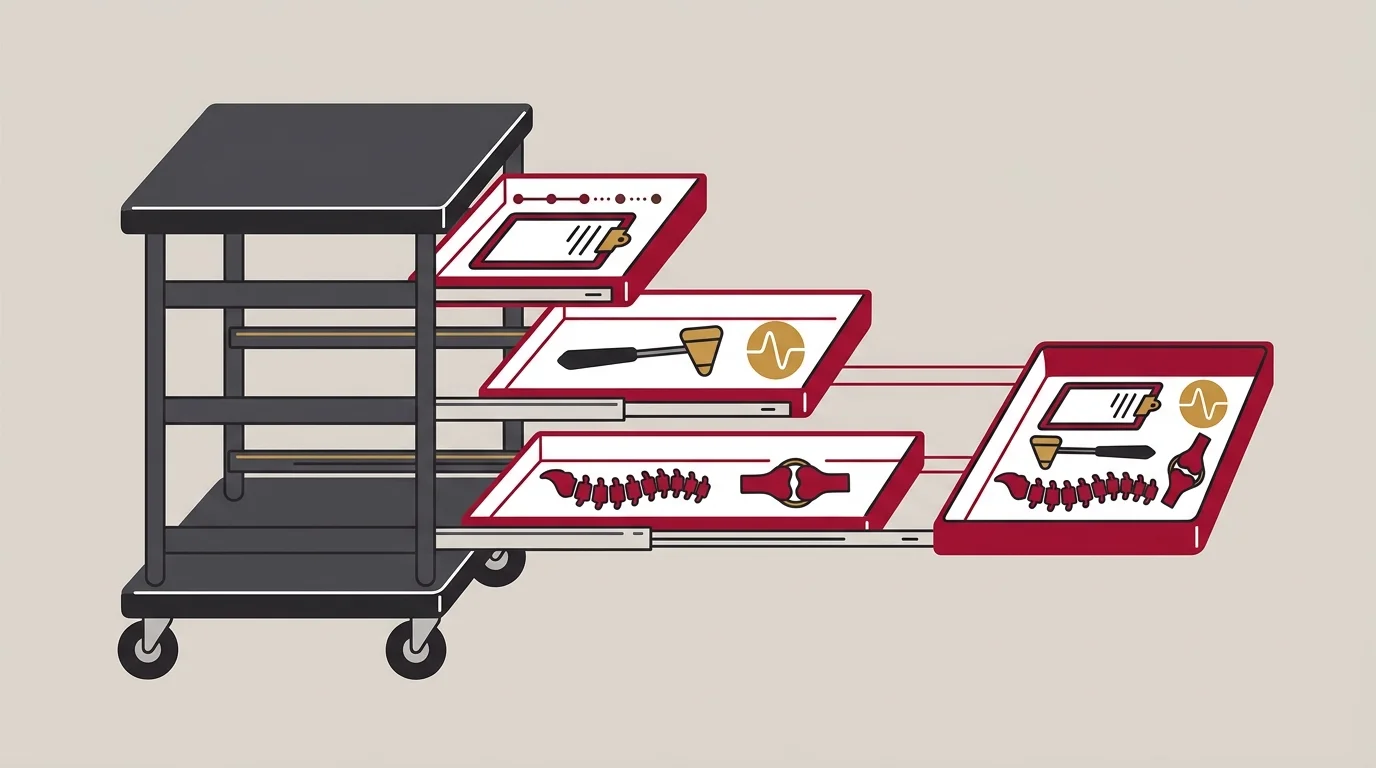
So how does a specialized workup actually get built? In layers, never in a single test, and each layer narrows down where the signal failure really lives.
Layering Neurological, Orthopedic and History Data
Neurological findings get checked against orthopedic findings and against medical history, rather than read on their own. A reflex change means something different next to a history of diabetes than it does next to a history of spinal injury. For a nerve-focused provider, what chiropractic treatment involves starts with that layering, before any treatment modality gets selected.
Why Unexplained Symptoms Still Get a Workup
An industry assumption treats unexplained symptoms as a dead end, something no further workup can resolve. That assumption confuses an incomplete diagnostic process with an untreatable condition. Unexplained does not mean untreatable, it means the layering has not yet found the mechanism.
Reading the Credentials Behind the Diagnosis
A credential on a chiropractor's wall doesn't tell you much on its own. What matters is the training behind it and how the provider uses it in the exam.
| Diagnostic Question | Generalist Protocol Answer | Specialized Nerve Protocol Answer |
|---|---|---|
| Where is the signal failure located? | Assumed from symptom location alone | Mapped through layered testing against neurological and orthopedic findings |
| What explains the underlying cause? | Not formally investigated beyond the presenting complaint | Cross-checked against medical history for systemic contributors |
| Which treatment gets selected? | One default technique applied regardless of mechanism | Chosen from multiple modalities based on the specific nerve pathology identified |
| What happens if the plan doesn't work? | Plan repeats unchanged across visits | Plan adjusts based on tracked nerve function response |
What Postgraduate Training Looks Like
Board specialty diplomate programs are one postgraduate path, and they make up a minority of the options. A 2024 study by Schut (The Journal of Chiropractic Education) found 49 postgraduate training opportunities for chiropractors, and 19 of them (38.8%) were board specialty diplomate programs. So it's worth asking any provider what training sits behind their title and how it shapes their exam.
Where Generalist Protocols Break Down Under Real Nerve Damage
A generalist protocol is built for the average musculoskeletal complaint. It has no mechanism for isolating where a damaged nerve signal actually fails. That gap is where the plan breaks down under real nerve damage, not at the point of treatment. Verifying what qualifications sit behind a diagnosis is what catches the gap before it costs the patient time.
Matching Treatment Modalities to the Specific Nerve Condition
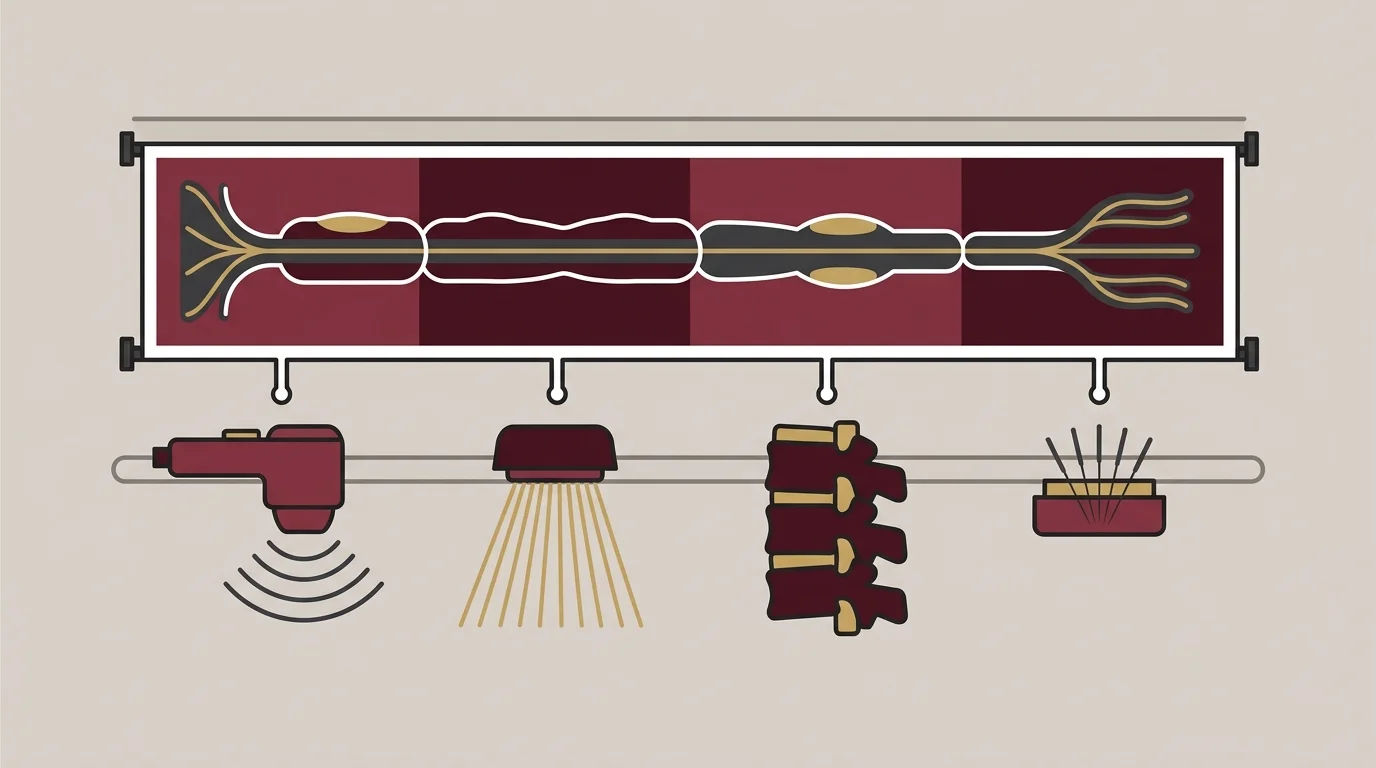
So a credential tells you what a provider is trained to see. The treatment plan shows what actually gets built from that training.
| Treatment Modality | Mechanism Targeted | Typical Role in a Nerve Plan |
|---|---|---|
| Chiropractic adjustment | Spinal alignment and nerve root irritation along the signal pathway | Addresses mechanical compression contributing to nerve dysfunction, often the foundation layer of a matched plan |
| Cold Laser Therapy | A specific area flagged during the exam | Used as an add-on when findings point to a specific area |
| Shockwave Therapy | A specific focal area found during the exam | Selected when findings point to one focal area rather than a diffuse nerve pathway |
| Coordinated medical referral | Systemic causes outside chiropractic scope, such as metabolic or chemical origins | Keeps the plan accurate when the exam points beyond what adjustment and in-office modalities can address |
Building a Multi-Modal Plan Instead of a Single Tool
Nerve dysfunction rarely answers to one tool used alone. A plan built around the diagnostic fingerprint pairs Chiropractic adjustment with Cold Laser Therapy or Shockwave Therapy, matched to the pathology the workup found. That's a far cry from a fixed sequence run on every patient who walks in, and it's how Neuropathy Care is meant to work.
Tracking Whether a Nerve-Focused Plan Is Actually Working
A matched plan still needs a way to confirm it is working. Nerve function response gets tracked visit over visit, not assumed from the initial exam. If a modality stops producing change, the plan shifts, because the signal, not the protocol, decides what comes next.
Frequently Asked Questions
A few practical questions keep coming up. Here's what still needs a direct answer.
What is the difference between a neurologist and a chiropractor for neuropathy?
A neurologist diagnoses nerve disease and often prescribes medication. A nerve-focused chiropractor diagnoses spinal and nervous system dysfunction and treats it with Chiropractic adjustment, Cold Laser Therapy, or Shockwave Therapy. The two roles investigate different mechanisms of the same symptom.
How long does it take to see results with a neuropathy-focused chiropractor?
Neuropathy care protocols run 8 to 12 weeks, and the plan is rechecked along the way.
What kind of diagnostic tools should a specialized neuropathy provider use?
Expect layers, not a single test. Neurological findings, orthopedic findings, and medical history get checked against each other. Only then does a treatment modality get picked.
Will my insurance cover specialized chiropractic care for neuropathy?
Insurance is checked at the first visit, so patients know their costs before treatment starts, and there are no hidden admin fees.
What questions should I ask a potential neuropathy care provider during a consultation?
Ask what the diagnostic workup includes before any treatment starts. Ask what training sits behind the provider's approach to nerve care. Ask how nerve function gets measured after the first visit, not just at intake.
Getting Back to Being You
Your damaged nerve signal travels a route nobody else's does. The right provider reads that map, your map, instead of reaching for a generic chart.
That's the whole case against the cookie-cutter protocol. Diagnosis comes first. Then comes a plan built on what that diagnosis actually found, not on whatever's easiest to repeat for every patient in the chair.
So look for the provider who'll hunt down the specific mechanism behind your symptoms, because that's where feeling like yourself again begins. When you're ready to start there, Schedule a consultation at Touch Of Wellness Chiropractic.
Results may vary.
Insurance coverage varies by plan and should be verified before your visit.