
The right credentials for a neuropathy care provider start with a valid Doctor of Chiropractic license and go further: a nerve-focused exam, clear explanations, training the provider can name, and a habit of referring out when needed. A chiropractic license confirms that a provider met the minimum legal standard to diagnose and treat within a licensed scope of practice. It does not, by itself, show training focused on nerve function. Some chiropractors add post-graduate coursework or diplomate-level study in areas such as neurology or orthopedics, and a provider should be able to name each credential and explain what it required. Diagnostic approaches for peripheral neuropathy can include a review of medical history, physical and neurological examination, body fluid testing, imaging, genetic testing, and electrodiagnostic studies such as EMG with nerve conduction testing. Several of these, such as needle EMG and lab work, are ordered by medical doctors, so a nerve-focused provider should know how to read those results alongside a hands-on exam of reflexes, sensation and muscle strength. When comparing local providers for nerve-related symptoms, look for a current license, a hands-on exam that targets nerve pathways rather than a quick spinal check, findings explained in plain language, credentials the provider can describe specifically, and a clear point at which a case gets referred to another specialist. Together, these show whether a provider's training and process reach the nervous system or stay at the generalist level.
What a Chiropractic License Actually Confirms (And What It Doesn't)
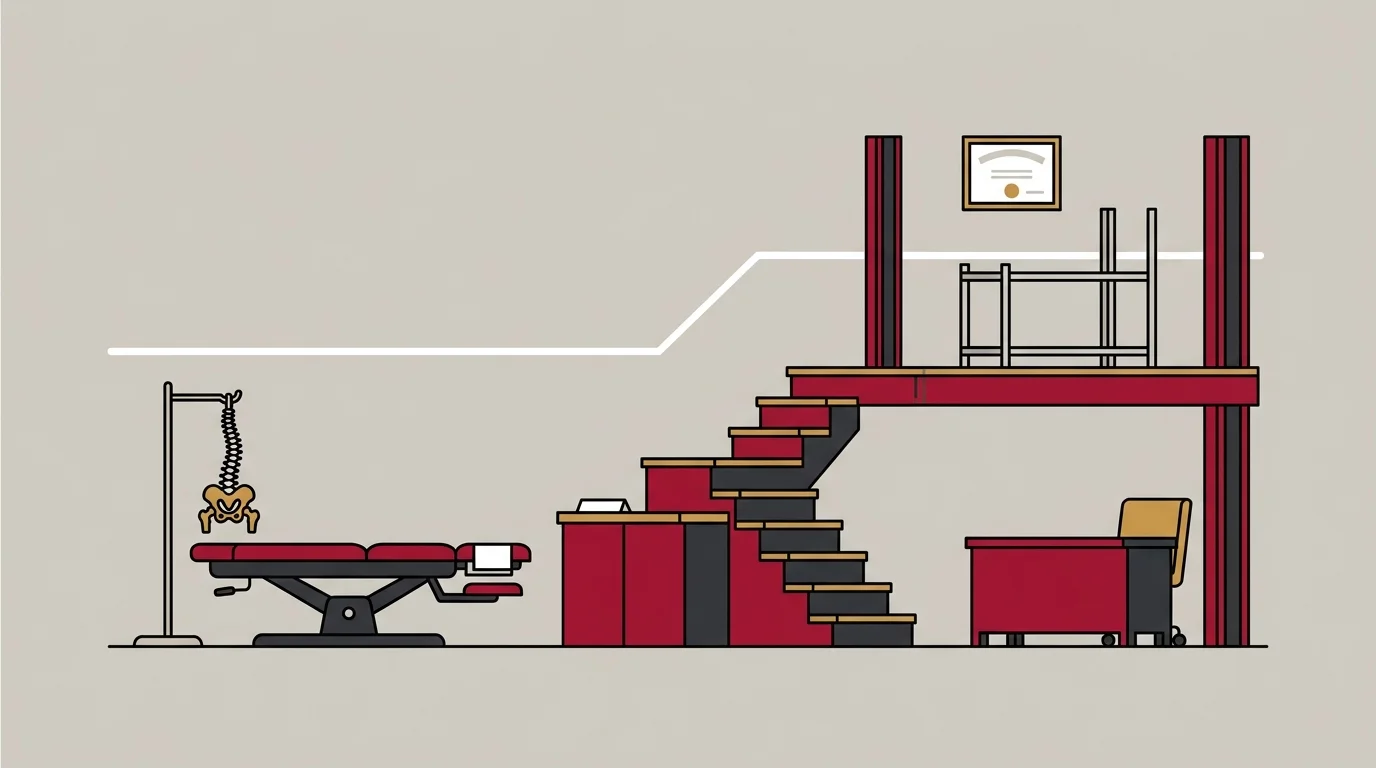
Every state licensing board exists to set a floor, not a ceiling. A chiropractic license confirms one thing: the provider met the minimum standard to practice within a defined scope.
That floor matters, but licensing boards are built to protect the public, not to confirm specialization. A license on its own doesn't say anything about a nerve-focused skill set.
Where the Baseline License Stops Short
So where does the baseline stop? At the point where general competence meets a condition that needs more than general tools.
A license says a provider can practice. It says nothing about whether that provider has trained specifically in nerve function, nerve pathways, or the diagnostic methods built for peripheral nerve conditions. Neuropathy Care needs more than that baseline.
Why the "One Protocol Fits Every Condition" Model Breaks Down
Here's where the generalist model breaks down. Treating chiropractic as a single protocol for every condition, newborn to senior, assumes nerve-related symptoms respond to the same baseline approach as a sore shoulder.
They don't. A system built around serving every condition the same way is a system without a mechanism for depth. Specialized nervous system and spinal care functions as its own identity, not a subset of general practice. For anyone comparing providers, a primer on starting neuropathy treatment lays out what that distinction looks like in practice.
The Credentials That Signal a Nervous-System Focus
So what actually shows nervous-system training? Not a weekend certificate. It's training a provider can name, describe and back up with the coursework and testing it required.
A credential is more than a piece of paper on the wall. It stands for a formal, standardized level of training and examination in one specific field of study.
Reading a Credential Correctly
Here's the catch: not every credential on a wall means the same thing. Some confirm hours and testing in nerve-specific diagnostics, while others only confirm someone showed up.
Judging a provider starts with reading the credential itself, not just its title. For a closer look at what that distinction looks like from the patient's side, signs of a qualified nerve pain provider breaks down what to check first.
Why the Standard Generalist Approach Fails a Nerve-Focused Case
Finding the right provider for Neuropathy Care can feel overwhelming. The symptoms are complex, and clear answers are often hard to come by.
So the instinct is to trust whoever already has the practice's name on the door. But a generalist protocol built to treat every condition the same way has no mechanism built in for a nerve-specific case.
How a Generalist Protocol Fails a Nerve Case in Practice
A single proven protocol applied to every presenting condition sounds efficient on paper. In practice, no protocol is proven for every patient, and a nerve case is the one that exposes that fastest.
Plenty of practitioners offer health services under one broad license. Real Neuropathy Care specialization takes a distinct set of credentials and a focused clinical approach. Look at general practice compared to focused nerve care, and you'll see exactly where the generalist model runs out of road.
The Diagnostic Tools a Specialized Provider Brings to the Table
So what does specialized diagnostic work actually look like? It starts long before anyone mentions a chiropractic adjustment. The tools are picked to find a mechanism, not just slap on a label.
| Diagnostic Method | What It Measures | Typical Setting |
|---|---|---|
| Medical History Review | Symptom onset, pattern, and progression over time | Initial consultation, before any hands-on exam |
| Neurological Exam | Reflexes, sensation, and muscle response tied to nerve pathways | In-office evaluation, often the first clinical checkpoint |
| Imaging Tests | Structural issues that may be placing pressure on nerve tissue | Bring any X-rays or MRIs you already have |
| EMG with Nerve Conduction Studies | Electrical signal speed and strength along peripheral nerves | Ordered and read by a medical doctor |
| Body Fluid and Genetic Testing | Underlying metabolic or hereditary contributors to nerve damage | Lab-based testing, ordered within a defined scope of practice |
Standard Diagnostic Pathways
Here's the standard pathway. NINDS at the National Institutes of Health explains that doctors may use medical history, physical and neurological exams, body fluid tests, imaging tests, genetic tests, and EMG with nerve conduction studies to help diagnose peripheral neuropathy. That sequence exists to narrow down a cause, not to confirm one.
But a generalist protocol applied to every nerve complaint tends to skip past where these tools get used with intention. Unexplained does not mean untreatable. It means the diagnostic sequence hasn't been matched to the symptom yet. That gap is a system failure, not a dead end.
Where a Nerve-Focused Chiropractor Fits Among These Tools
A nerve-focused chiropractor doesn't run every one of these tests. The hands-on exam of reflexes, sensation and muscle strength happens in the office, and results from tests a medical doctor ordered get read alongside it. That combination is what chiropractic treatment for chronic pain should be built on when nerves are involved.
What a Specialized Intake and Verification Process Looks Like
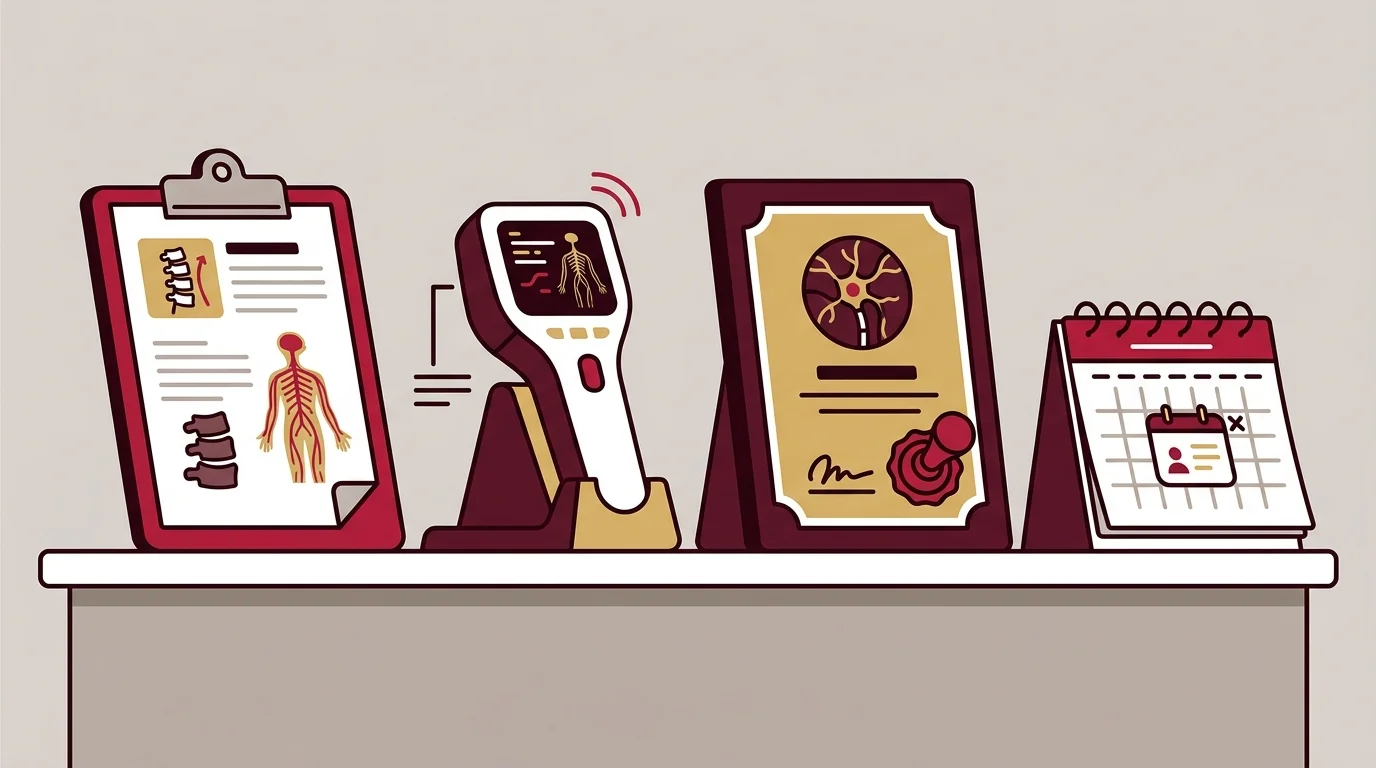
So what happens before a chiropractic adjustment plan even gets written? A specialized intake looks nothing like a generalist's new-patient form. The process is built to surface nerve involvement early, not treat it as an afterthought.
| Step | What Happens | What to Verify |
|---|---|---|
| Initial Symptom Intake | A provider documents the pattern, location, and onset of nerve-related symptoms rather than relying on a generic new-patient form. | Whether the intake form asks nerve-specific questions, not just general pain location. |
| Neurological and Physical Exam | Testing targets nerve pathways and reflexes tied to peripheral nerve function, not a standard musculoskeletal screen alone. | Whether the exam includes neurological testing beyond a routine spinal check. |
| Diagnostic Review | Findings from prior imaging, body fluid testing, or electrodiagnostic studies are reviewed within the provider's defined scope of practice. | Whether the provider explains how existing diagnostic results inform the plan, rather than ordering a repeat of the same baseline workup. |
| Credential Verification | The provider's training background is laid out directly, including any post-graduate coursework and what it required. | Whether the credential can be named specifically, with its coursework and examination standard, instead of a vague reference to experience. |
| Plan Development | A Neuropathy Care plan is built around the nerve-specific findings gathered during intake, not a single protocol applied to every condition. | Whether the proposed plan ties back to the specific diagnostic findings rather than following a one-size-fits-all format. |
The First Visit Sequence
At Touch of Wellness Chiropractic, the first visit takes about 45 to 60 minutes: a consultation, then a hands-on evaluation, then a report of findings that covers what was found, how the practice can help, and the cost. A focused intake moves in that order because it is specific, not because it skips steps.
Verifying Scope and Credentials Before the First Visit
Before a first visit, scope and credentials are worth confirming directly. Any credential a provider lists should be verifiable, not assumed. So ask what coursework and testing stand behind each title, and when the provider refers a case out. Those answers separate documented training from a vague claim of experience.
Frequently Asked Questions
A few questions come up every time credentials get discussed. Here are direct answers to the ones that matter most.
What's the difference between a general chiropractor and one who specializes in neuropathy?
A general chiropractor treats a wide range of conditions under one baseline license. A provider focused on Neuropathy Care runs a nerve-focused exam, reads nerve test results from a patient's medical doctor, and can name the training behind that focus.
What specific certifications confirm advanced training beyond a standard chiropractic degree?
Diplomate programs and other post-graduate certifications each confirm documented coursework and testing in one area. Ask the provider to name the credential, the area it covers, and what it required. A credential the provider can't describe doesn't tell you much.
How does a provider determine whether a treatment plan is tailored versus generic?
A tailored plan starts from a nerve-focused intake and specific diagnostic findings. A generic protocol runs the same steps no matter what those findings show.
Are advanced diagnostic tests for neuropathy within a chiropractor's scope of practice?
Yes, within limits. Chiropractors can take a history, run a hands-on neurological exam, and read results from nerve tests a medical doctor ordered. Tests like needle EMG are performed and read by physicians.
What questions reveal whether a provider's credentials match their claimed specialty?
Ask what coursework and testing stand behind each credential. A provider who can name the program, what it covered and what it required has documented training. Vague answers are a signal to keep asking.
Where This Leaves You
So here's where it all lands. A license tells you one thing: this provider met the minimum standard to practice, nothing more.
What matters next is how a provider handles a nerve case: a hands-on exam aimed at nerve pathways, results explained clearly, training they can name, and a referral when a case falls outside their scope.
Specialized nervous system and spinal care isn't a subset of general practice. It's its own identity, and it's worth checking before you trust it. That check starts with one honest conversation, so talk it through with us.
Results may vary.