
Primary care and dedicated nerve care differ in diagnostic depth, not in medical legitimacy. A primary care physician evaluates nerve pain as one of many possible conditions across the entire body, ordering broad screening tests and often starting with medication to manage symptoms while other causes are ruled out. A dedicated nerve care provider, by contrast, narrows the diagnostic process onto the nervous system, using focused testing to trace numbness, tingling, burning, or weakness back to a specific mechanical, vascular, or neurological origin. This distinction matters because nerve pain symptoms frequently overlap with dozens of unrelated conditions, and a generalist framework is built to screen for all of them rather than isolate one. Neither approach is incorrect. They serve different diagnostic purposes, and the choice between them affects how quickly a root cause is identified versus temporarily managed. A referral to a specialist typically follows when initial primary care treatment fails to resolve symptoms, or when the case requires equipment and expertise not available in a general practice. Chiropractic adjustment and Neuropathy Care represent two components of the dedicated nerve care model, applied after a diagnostic process has located the specific structure or pathway involved. Understanding which pathway a case requires begins with recognizing what each model is actually built to find.
What Separates a Primary Care Visit From a Dedicated Nerve Care Workup
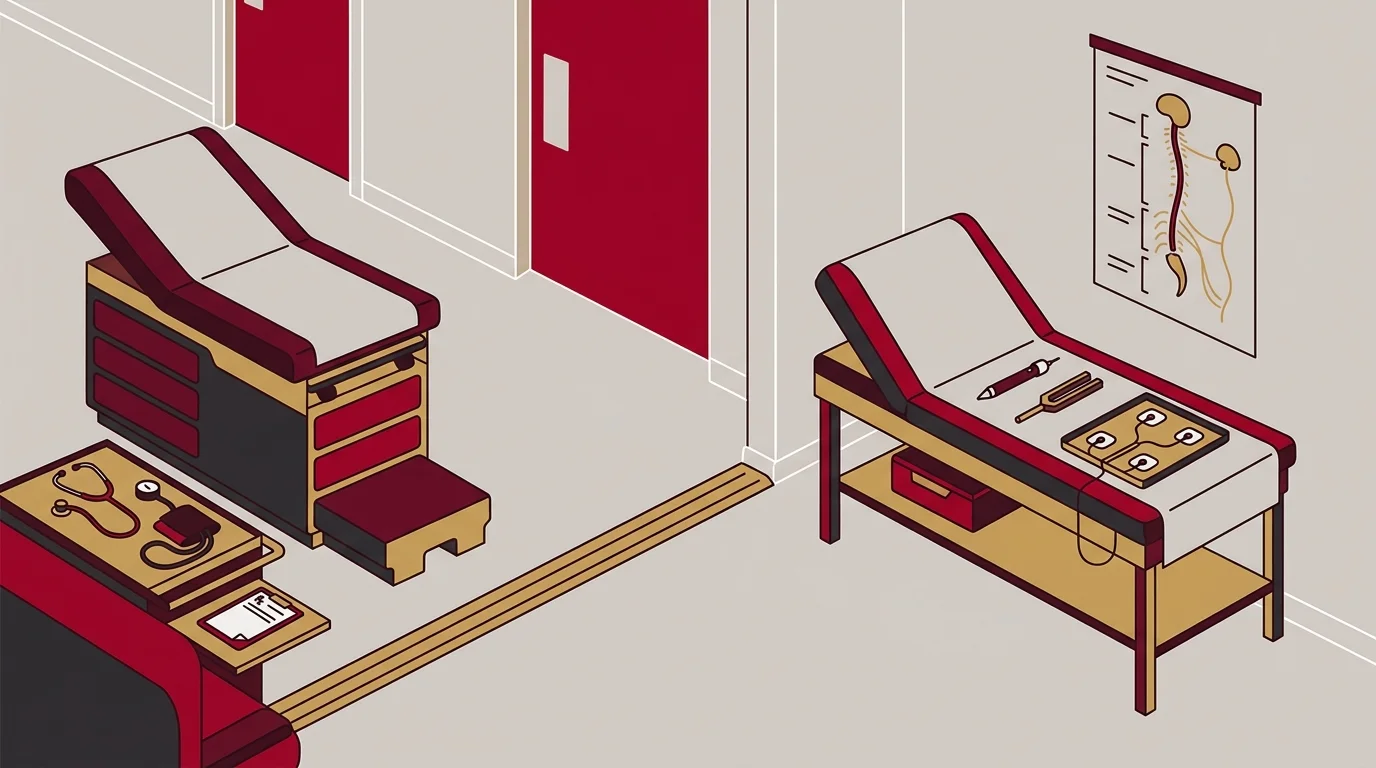
Think of a primary care physician as the frontline of healthcare. That role covers a huge spread of health issues, from the routine to the complicated. When a case runs past that scope, the job is to coordinate a referral outward.
Dedicated nerve care, found in specialized chiropractic or neurology centers, puts its focus on diagnosing and treating the nervous system. Why does that narrower focus matter? Because the gap between the two is not a quality gap. Once a model treats the nervous system as its main subject rather than one possibility among many, it stops acting as a generalist family guide and becomes a specialized instrument — see how to evaluate a neuropathy care plan for how that distinction shapes what a plan should include.
| Factor | Primary Care Visit | Dedicated Nerve Care Workup |
|---|---|---|
| Diagnostic Scope | Screens the entire body for possible causes, treating nerve pain as one hypothesis among many. | Narrows the entire workup onto the nervous system from the first visit. |
| Starting Point | Often begins with medication to manage symptoms while broader causes are ruled out. | Begins with focused testing designed to trace symptoms back to a specific origin. |
| Guiding Model | Functions like a wide map, marking many locations where a problem could exist. | Functions like a compass, held steady on one system until it finds true north. |
| Referral Pattern | Coordinates outward to specialists once a case exceeds general practice scope. | Refers out when findings point outside nerve and spine care. |
| Role in the Care Journey | Acts as the frontline, managing a broad spectrum of health issues at once. | Acts as the instrument that locates the mechanical, vascular, or neurological source once engaged. |
Why the Broad Net of Primary Care Misses Nerve Cases
A generalist caseload is built to cover every body system, not to isolate one. That design has a cost, and the cost shows up most in conditions that hide behind common symptoms.
Nerve pain is one of those conditions. Numbness and tingling can be filed under a dozen different causes before anyone looks closely at the nervous system itself.
The Volume Problem in a Generalist Caseload
In the same week a nerve case walks in, a primary care panel is juggling infections, injuries, chronic disease management and preventive screening. Volume alone limits how long any single symptom stays under scrutiny.
According to a 2025 study by Kopuru et al. (All India Institute of Medical Sciences Mangalagiri, Journal of Family Medicine and Primary Care), up to 30% of peripheral neuropathy cases might go undetected in primary care settings. It means the generalist model's breadth works against it exactly where nerve pathways are concerned.
Why a Symptom-First Protocol Skips the Nerve Pathway
A symptom-first protocol treats the complaint in front of it. The pain gets managed, often with medication. The pathway underneath stays unexamined.
The assumption that one proven protocol applies to every presenting condition does not hold once the nervous system is the subject. No protocol is proven for every patient, and a model built to apply uniform first steps across unrelated conditions will routinely skip the one step that would have found the nerve pathway. For how a provider is judged on this specific point, see qualities that mark a good neuropathy provider.
How a Dedicated Nerve Care Workup Actually Finds the Cause
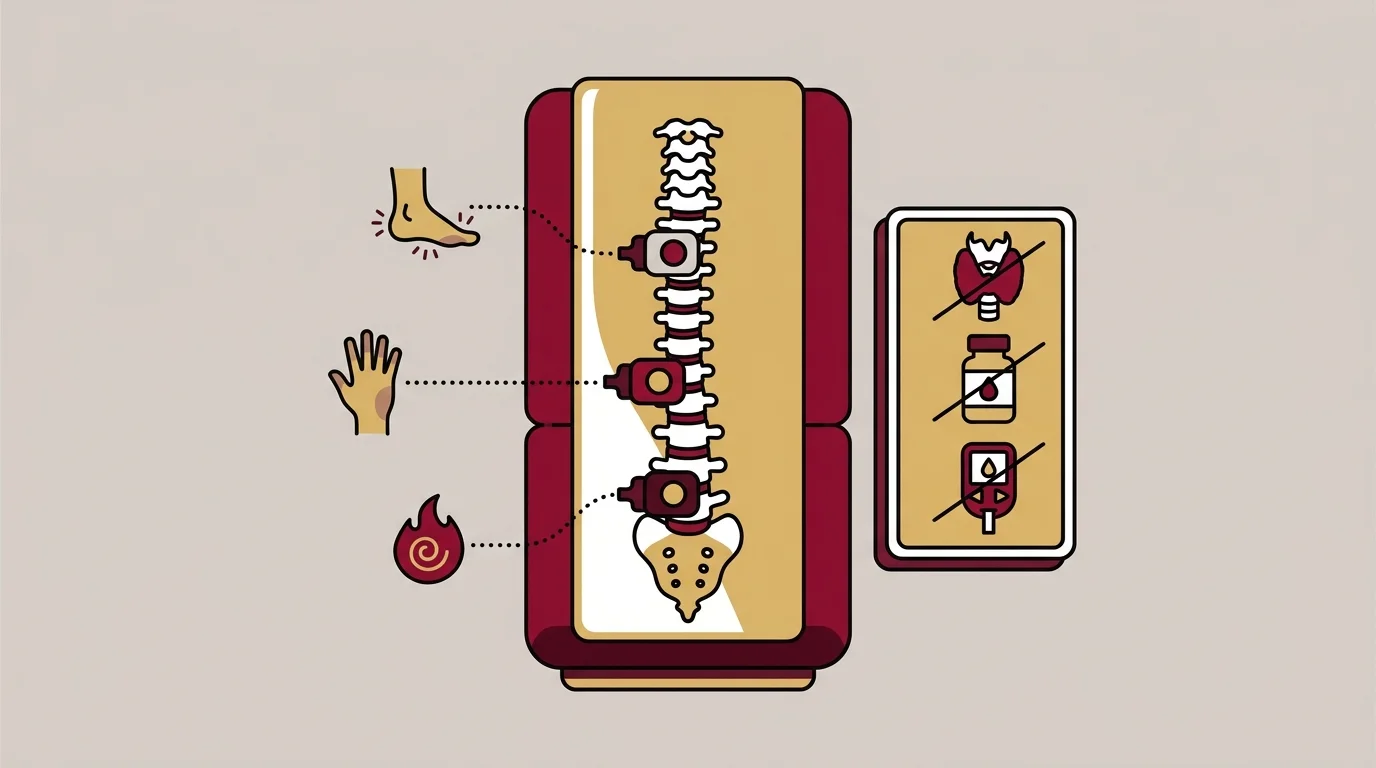
A dedicated nerve care workup starts with location, not a label. Before any Chiropractic adjustment or Neuropathy Care plan gets built, one question comes first: where along the pathway does the signal break down?
That question only gets answered when a model has already committed to treating the nervous system as its main subject.
| Diagnostic Step | What It Checks | What It Rules Out |
|---|---|---|
| Symptom Pattern Mapping | Where numbness, tingling, or weakness falls along a specific nerve territory versus a general region | Conditions unrelated to the nervous system that happen to produce similar surface symptoms |
| Functional and Sensory Testing | Whether signal conduction is intact or interrupted along the suspected pathway | A symptom located in one area while the actual nerve damage sits somewhere else along the pathway |
| Mechanical and Structural Review | Whether a joint, disc, or soft tissue structure is compressing or irritating the nerve itself | Pain sources that mimic nerve involvement but originate from muscle or joint strain alone |
| Pathway Origin Confirmation | The specific point along the pathway where the signal breaks down, before any plan is built | Guesswork that would otherwise aim Chiropractic adjustment or Neuropathy Care at the wrong location |
Mapping the Nerve Pathways
Mapping starts with the symptom pattern itself. Numbness that follows a single nerve's territory points somewhere different than weakness that spreads across a whole limb.
Next, the workup layers in functional and sensory testing to confirm exactly where conduction gets interrupted. That's how a plan avoids treating a symptom in one spot while the real damage sits somewhere else entirely, the very distinction chiropractic treatment for chronic pain is built to address head-on.
Ruling Out the Look-Alikes
Ruling out look-alikes matters most with painful diabetic neuropathy, where pain decisions carry real weight. According to the American Academy of Neurology's guideline, clinicians treating painful diabetic neuropathy should review all available options to reduce pain, including oral, topical, and non-drug options.
What Happens When Nerve Pain Goes Unexplained Instead of Untreated
An unexplained result is not a dead end. It is a signal that the search needs to narrow, not stop.
The Cost of Treating Symptoms Without Finding the Source
A symptom-first protocol that stalls at an unexplained result tends to repeat the same step: adjust the medication and reassess later. That cycle treats the plateau as the ceiling of what can be known, rather than as a prompt to narrow the search. Unexplained does not mean untreatable, it means the diagnostic focus has not yet matched the problem.
Where Diabetic Neuropathy Fits Into the Options Conversation
Painful diabetic neuropathy is where this plateau shows up most often, because pain management decisions carry real weight and get revisited instead of re-diagnosed. The guideline already discussed calls for reviewing the full range of options before settling on one. A stalled workup that only adjusts dosage has not finished that review.
Building the Traits That Separate a Dedicated Nerve Care Provider
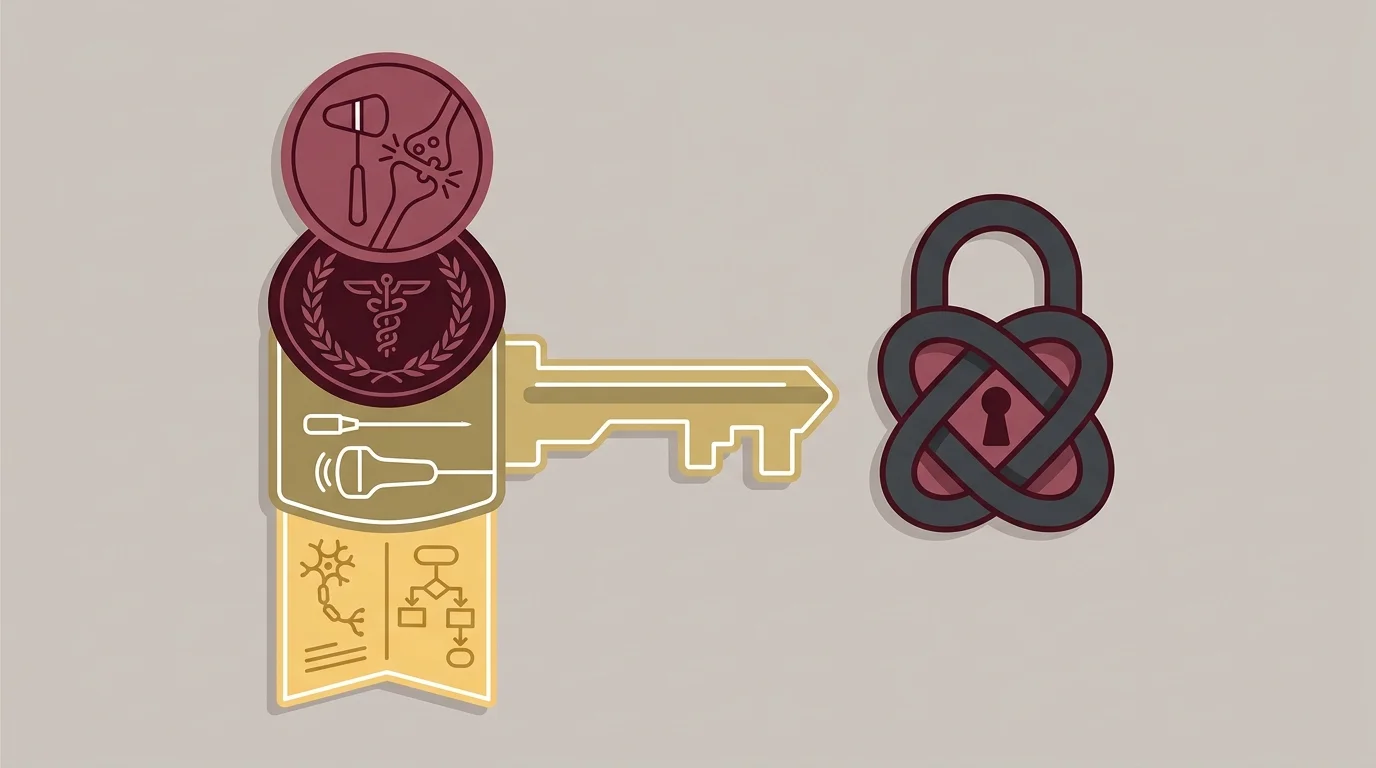
A provider's traits are what turn diagnostic focus into something a patient can actually check from the outside. They show up in specific, checkable markers of scope and depth.
| Trait | What It Looks Like in Practice | Why It Matters |
|---|---|---|
| Content depth on the condition | Published material that explains mechanism, testing, and care pathways for Neuropathy Care specifically, not a single page folded into a general services list. | Depth of content tends to mirror depth of practice. |
| Scope of plan | A Chiropractic adjustment or Neuropathy Care plan built around where the workup located the problem, described in individual terms rather than a catch-all protocol. | Not some catch-all protocol — a plan tied to a specific finding reflects a workup that found the problem before treatment started. |
| Referral threshold | A documented point at which a case outside nerve-specific scope gets referred onward instead of treated indefinitely in place. | A provider who recognizes the edge of nerve and spine care refers out instead of treating everything in place. |
Frequently Asked Questions
A few mechanical questions tend to remain even after the model itself is clear. The answers below settle those specifics.
What specific diagnostic tools does a dedicated nerve care specialist use that a primary care doctor might not?
A dedicated workup uses functional and sensory testing aimed squarely at the nervous system. Its job is confirming exactly where conduction breaks down. A general exam screens broadly and rarely isolates that spot.
If my primary care doctor already prescribed medication for my neuropathy, can I still see a specialist?
Yes. An existing medication plan from primary care does not block a nerve-focused workup, and a specialist can evaluate the pathway the prescription was written to manage.
How long does it typically take to see results from specialized nerve care compared to general treatment?
Neuropathy care protocols run 8 to 12 weeks, and the plan is rechecked along the way.
What symptoms indicate a nerve pathway issue rather than a muscle or joint issue?
Numbness, tingling, or burning that follows a nerve's specific territory points to a pathway issue. Pain tied to movement or pressure on a joint points elsewhere.
How does a nerve conduction finding differ from a standard primary care exam finding?
A nerve conduction finding pinpoints where along the pathway the signal gets interrupted. A standard primary care exam usually confirms only that a symptom exists. It doesn't say where it starts.
What does an unexplained neuropathy diagnosis actually mean during a workup?
An unexplained result means the workup has not yet matched its focus to the problem, not that the problem has no cause. It signals the search needs to narrow, not stop.
Where This Leaves You
Primary care and dedicated nerve care were never asking the same question. One scans the whole body for anything that might be wrong. The other stays on the nervous system until it finds exactly where the signal breaks.
That's the whole case for dedicated nerve care in Tazewell County. A symptom that got dismissed or medicated in a generalist setting isn't imaginary. It's a signal still waiting for a closer look.
Nerve pain that's outlasted a general exam deserves a diagnostic process built for nerve pain, not another lap through the same broad screen. That's the standard to hold every provider to. Schedule a nerve care evaluation and start with location, not a label.
Results may vary.