
A chiropractor distinguishes nerve damage from other foot pain through a structured differential process that compares symptom patterns, sensory testing, and spinal assessment rather than relying on the location of pain alone. Nerve-related pain, known clinically as neuropathic pain, typically presents as burning, tingling, numbness, or an electric-shock sensation that follows a specific nerve pathway and often appears at rest or at night. Structural, or musculoskeletal, foot pain generally correlates with movement, weight-bearing, or a specific point of mechanical stress, such as the heel or arch. The diagnostic process begins with a detailed symptom history, since the character, timing, and triggers of the pain provide early clues about which system is involved. Physical examination tools help confirm those clues. Sensory testing, including monofilament assessment and tuning fork evaluation of vibratory sense, measures whether peripheral nerves are responding normally. Reflex testing and muscle strength checks identify patterns consistent with nerve entrapment or compression. Because nerve signals in the lower extremities can originate from the spine, a full evaluation also assesses the kinetic chain, including spinal alignment, to rule out referred nerve pain traveling down the leg into the foot. This step separates true peripheral neuropathy from conditions like plantar fasciitis, which produce overlapping symptoms but require different management approaches. The combination of patient-reported history, targeted neurological testing, and spinal assessment allows a clear distinction between nerve damage and structural foot pain, forming the basis for an accurate, condition-specific evaluation rather than a generic assumption about the pain's source.
Why Foot Pain Isn't One Problem With One Answer
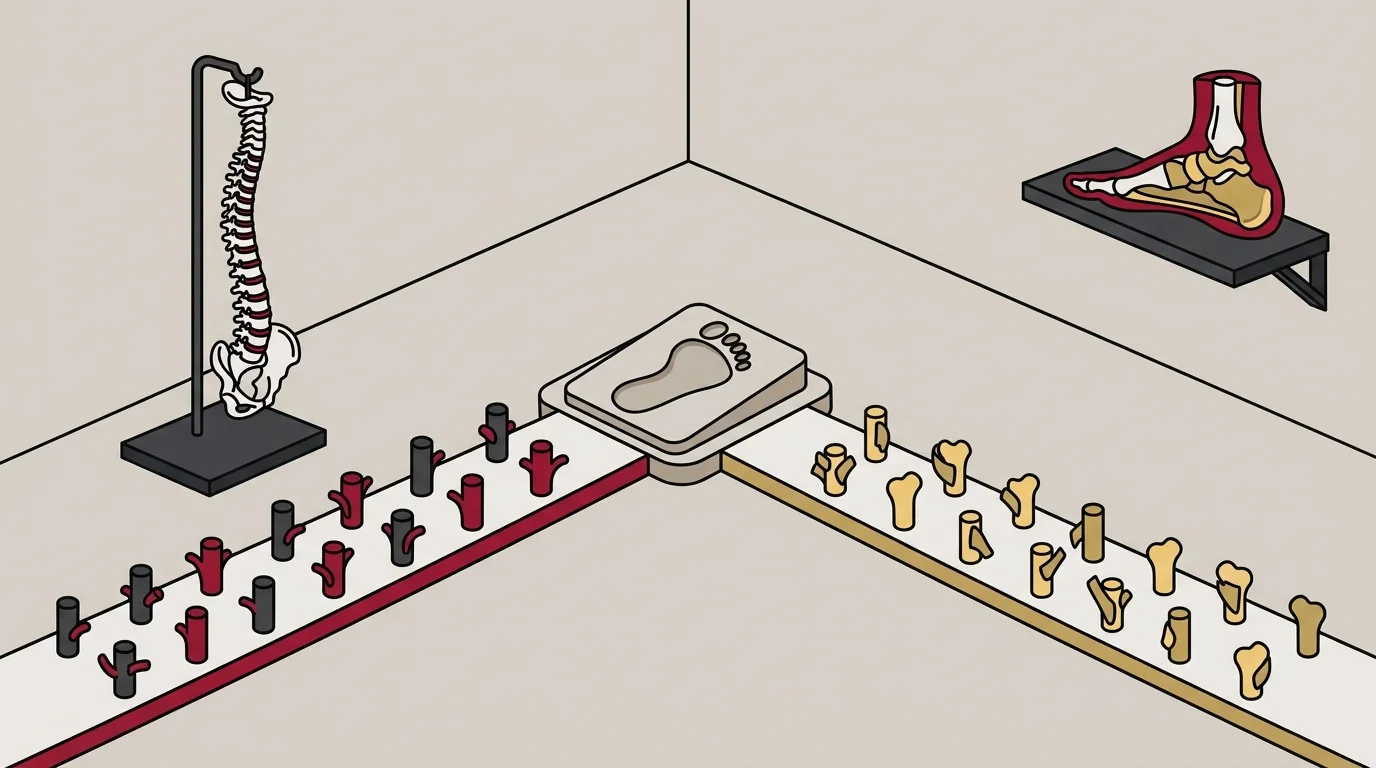
Here's the fork in the road: the same spot on the foot can mean two unrelated problems. Heel or arch pain might come from a nerve, or from the structure around it. That ambiguity is where a real diagnosis starts.
Foot pain is a common complaint, but its source is notoriously difficult to pinpoint, which sends many patients through a frustrating diagnostic journey before anyone names the mechanism. Unexplained does not mean untreatable. Distinguishing neuropathic pain from musculoskeletal pain is the foundational step toward an effective treatment plan, and that starting point is exactly what Tazewell County patients should check first.
Why One-Protocol Thinking Fails Foot Pain
One-protocol thinking treats every foot complaint as the same problem in a different costume. Nerve damage and structural strain get the same stretch, the same brace and the same generic advice.
No protocol is proven for every patient. A routine built for mechanical stress won't calm a misfiring nerve pathway. Running it anyway just pushes the real diagnosis further down the road.
The Problem With Treating Every Foot Complaint the Same Way
That's assembly-line medicine, and it fails by design. Generic foot protocols are built for the most common presentation, not the mechanism in front of the practitioner. They answer the average case, not the one in the chair.
So a thorough evaluation looks past the sore spot entirely, often tracing the kinetic chain up through spinal alignment to find where the signal really starts. Skip that step, and structural treatments end up aimed at nerve problems. Once the pattern looks neurological, where to start for nerve symptoms in Tazewell County is the better first move.
How Nerve Pain and Structural Pain Actually Differ
Telling nerve pain from structural pain starts with new words, not a new spot on the foot. The pain has to be described precisely, not just pointed at.
That precision is what separates a real evaluation from a generic protocol. So the next step is learning what each mechanism actually sounds like when a patient puts it into words.
| Characteristic | Neuropathic Pain Pattern | Musculoskeletal Pain Pattern |
|---|---|---|
| Pain Quality | Burning, tingling, numbness, or an electric-shock sensation | Dull ache, sharp pinch, or stiffness localized to one structure |
| Timing and Triggers | Often worsens at rest or at night, independent of movement | Correlates with weight-bearing, first steps, or specific activity |
| Distribution Pattern | Follows a specific nerve pathway, sometimes radiating from the spine | Stays confined to the point of mechanical stress, such as the heel or arch |
| Response to Physical Exam | Sensory and reflex testing reveal altered nerve conduction | Palpation reproduces pain at the exact site of strain or inflammation |
| Underlying Mechanism | Nerve signal disruption, sometimes originating in the spine | Tissue overload, inflammation, or joint mechanics at the painful site |
Reading the Pain Itself
The patient's own words matter more than most protocols give them credit for. Character, timing, and triggers of the pain provide critical clues that guide the physical examination before a single test is run.
Burning or electric sensations that get worse at night point toward a nerve pathway. But pain that spikes with the first steps out of bed points toward mechanical strain.
Recognizing the Patterns That Overlap
Some symptoms refuse to sort cleanly. Numbness under the heel can read as nerve involvement or as compressed tissue, and only testing resolves which it is.
That overlap is where a specific evaluation earns its keep. Learning how to judge a neuropathy-focused practice starts with one rule: the pattern decides the diagnosis, not the location.
What Happens When a Generic Workup Misses the Mark
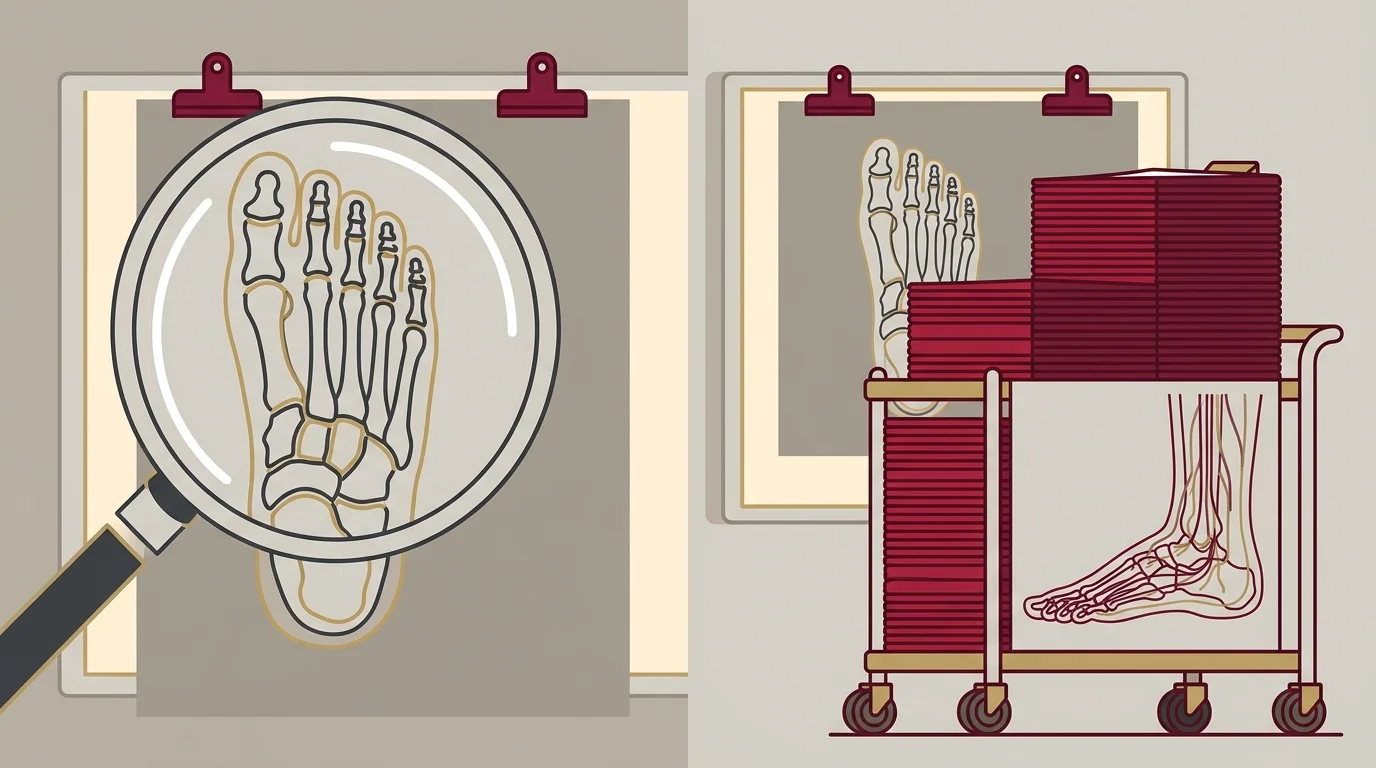
A generic workup doesn't separate the two mechanisms. It files a nerve problem and a structural problem under the same complaint. The cost doesn't show up right away; it shows up later.
If a treatment isn't working and the same protocol keeps running anyway, that's the clinical definition of failure. A missed mechanism doesn't announce itself.
Undiagnosed nerve involvement carries its own stakes beyond the foot. In a 2024 paper by Beshyah et al. in Diabetes Therapy, the authors note research suggesting that up to 90% of people with "idiopathic" peripheral neuropathy may have undiagnosed prediabetes. That makes the diagnostic step a metabolic question, not just a mechanical one.
A workup that stops at the symptom site never asks that question. The practice's approach to spinal treatment starts from the premise that the mechanism has to be named before the plan is built.
The Hands-On Tools That Separate Nerve From Structure
Naming the mechanism is only half the job. Confirming it takes specific tools, used in a specific order, not a quick look at where the pain sits.
| Diagnostic Tool | What It Measures | What It Rules In or Out |
|---|---|---|
| Monofilament Testing | Light touch sensation at the skin surface | Rules in sensory nerve involvement; rules out purely mechanical tenderness |
| Tuning Fork Evaluation | Vibratory sense along the nerve pathway | Rules in early peripheral nerve disruption; rules out soft tissue strain alone |
| Reflex and Strength Checks | Motor response and muscle output patterns | Rules in nerve entrapment or compression; rules out simple overuse |
| Spinal Alignment Assessment | Signal path from the spine through the kinetic chain | Rules in referred nerve pain traveling to the foot; rules out a foot-only source |
Sensory Testing in Practice
Monofilament testing checks whether the foot can feel light touch at all. Tuning fork testing measures vibration sense, a separate signal that nerve damage can disrupt. Reflex and strength checks finish the picture, flagging entrapment patterns a visual exam would miss completely.
Tracing Pain Back to the Spine
And none of that testing stays at the foot. A thorough evaluation follows the kinetic chain upward, checking spinal alignment for a signal that only looks like it started at the heel. Chiropractic adjustment enters the plan once that source is confirmed, never before.
Following the Evaluation From First Visit to Diagnosis
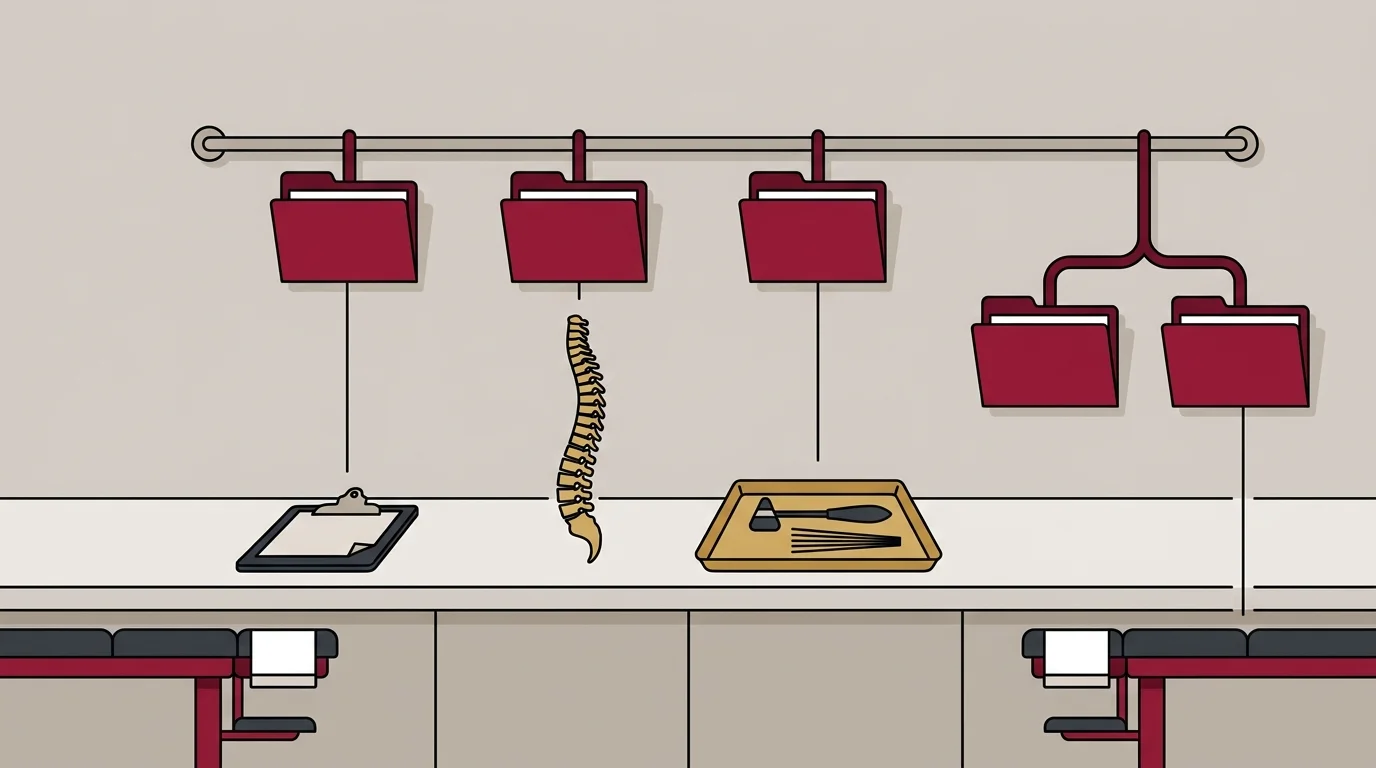
Once the mechanism question is on the table, every evaluation runs in the same order. Intake and symptom history come first, then sensory and reflex testing, then spinal assessment, and only then a working diagnosis.
| Evaluation Stage | What Happens | What It Establishes |
|---|---|---|
| Intake and Symptom History | The patient describes the pain's character, timing, and triggers, including whether it worsens at rest or with movement. | Which mechanism, nerve or structure, the early pattern points toward before any physical test begins. |
| Sensory and Reflex Testing | Monofilament assessment, tuning fork evaluation of vibratory sense, and reflex and strength checks measure how the peripheral nerves and muscles are actually responding. | Whether sensory signals are intact or disrupted, confirming or ruling out nerve involvement at the tissue level. |
| Spinal and Kinetic Chain Assessment | The evaluation traces upward from the foot, checking spinal alignment and the kinetic chain for a signal that only appears to originate at the heel or arch. | Whether the foot pain is a local structural issue or referred nerve pain traveling down from the spine. |
| Working Diagnosis | Findings from history, sensory testing, and spinal assessment are combined into a single, named mechanism rather than a general symptom label. | The specific route the care plan takes next, toward Neuropathy Care or toward Chiropractic Care and Chiropractic adjustment. |
Why the Evaluation Doesn't Stop at the Foot
Specialized nervous system and spinal care is the identity here, not a feature bolted onto general practice. That's why a foot evaluation doesn't stop at the foot: it follows the nerve pathway up to the spine.
What a Working Diagnosis Changes About Next Steps
A working diagnosis changes the next step because it names the mechanism, not just the symptom. Nerve involvement routes toward Neuropathy Care. Structural findings route toward Chiropractic Care, with Chiropractic adjustment applied only once the source is confirmed.
Frequently Asked Questions
Seeing that sequence in action raises sharper questions. These answers stay on mechanism and definition, because that's where the diagnosis actually lives.
What specific tests does a chiropractor use to diagnose nerve damage in the feet?
Monofilament testing checks light-touch sensation. Tuning fork evaluation measures vibratory sense, and reflex and strength checks flag nerve entrapment patterns.
How can a chiropractor tell if my foot pain is from my back or from the foot itself?
The exam follows the kinetic chain up from the foot to the spine. If spinal findings match the symptom pattern, the signal is referred. If they don't, the source sits in the foot itself.
Is burning or tingling foot pain always a sign of nerve damage?
No. Burning or tingling often indicates a nerve pathway, but overlapping sensations can also come from compressed tissue. Testing resolves which mechanism is actually present.
If my doctor couldn't find a cause for my foot pain, what different approach would a chiropractor take?
It starts with a different question: which mechanism, not where it hurts. That shift leads straight to sensory testing and spinal assessment.
Can chiropractic diagnosis determine the specific cause of my neuropathy?
An evaluation shows whether a nerve pathway or a structure is driving the symptoms. Research suggests many people with unexplained neuropathy may have undiagnosed prediabetes, so it's worth asking your medical doctor about blood sugar.
What's the difference between seeing a chiropractor and a podiatrist for foot pain diagnosis?
A chiropractor traces symptoms through the spine and nervous system as a possible source. A podiatrist typically evaluates the foot's own structure first. Both angles matter, but they start from different ends of the kinetic chain.
Where This Leaves the Diagnosis
So back to the fork in the road. It was never about where the pain sits — it was always about which mechanism put it there, nerve or structure.
A precise evaluation answers that question before a plan gets built.
Nerve involvement routes toward Neuropathy Care, and structural findings route toward Chiropractic Care. That split is the whole point of a hands-on diagnosis. The next move is finding out which path is yours by scheduling a diagnostic evaluation.