
Touch of Wellness Chiropractic says individualized care is not optional. It is the clinical standard. The Illinois Chiropractic Society says the more defensible modern approach to re-checks is not a rigid calendar rule. It is a short trial of care, then a measured re-check of your pain, how well you move and function, and how you are progressing. At the end of a trial, the questions are: Is pain getting better? Is function getting better? Are daily activities getting better? Are objective findings, which are things the doctor can measure or see, getting better? If the patient is not getting better, the doctor should rethink the plan. That might mean changing treatment, using less passive care, using more active care, ordering or sending the patient for more testing, or sending the patient to another provider.
Where Reassessment Starts: Your First-Visit Baseline
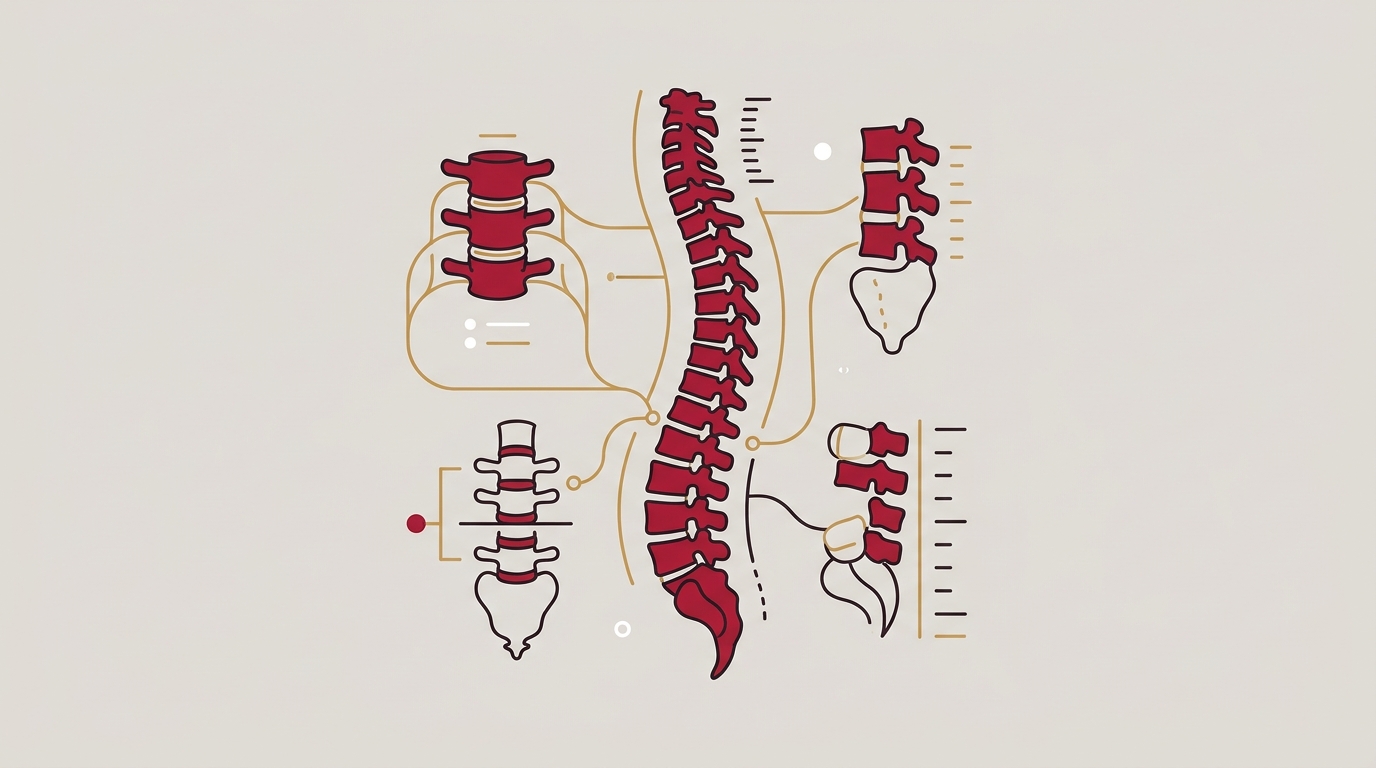
A re-check needs something to compare against, and that's your first visit. The consultation and the hands-on evaluation set your starting point. Every later check is measured against it.
Dr. Karen Hannah, DC, is the founder of Touch of Wellness Chiropractic in Morton, IL. She holds a Doctorate of Chiropractic from Palmer College of Chiropractic (2009) and an Illinois license. Yes, patients are adjusted on the first visit.
Your first visit starts with a consultation. A hands-on evaluation is another step.
I take your report as real. Many people come in after other doctors brushed them off. They're describing real symptoms, so I listen, I believe them, and I never hint that it's in their heads.
Why Care Plans Are Built Around You, Not a Fixed Routine
Individualized care isn't optional. It's the clinical standard.
Touch of Wellness Chiropractic exists to give you real answers about what's happening in your body. It also exists to build your care plan from what you actually report, and to change course when something isn't producing results.
A 2023 guideline in the Journal of Manipulative and Physiological Therapeutics says approaches with fewer targeted treatments and procedures may be more appropriate for low-risk patients. More intensive targeted treatments may be more appropriate for patients at higher risk of poor outcomes.
I won't run one fixed routine on everyone. That treats people like units on a line, and I don't call it care. I fit the plan to the person in front of me.
Nor will I hand every complaint the same standard routine, because I don't count on any single approach to work for every patient. Each plan is built for the patient it belongs to.
How Many Visits Come Before a Reassessment
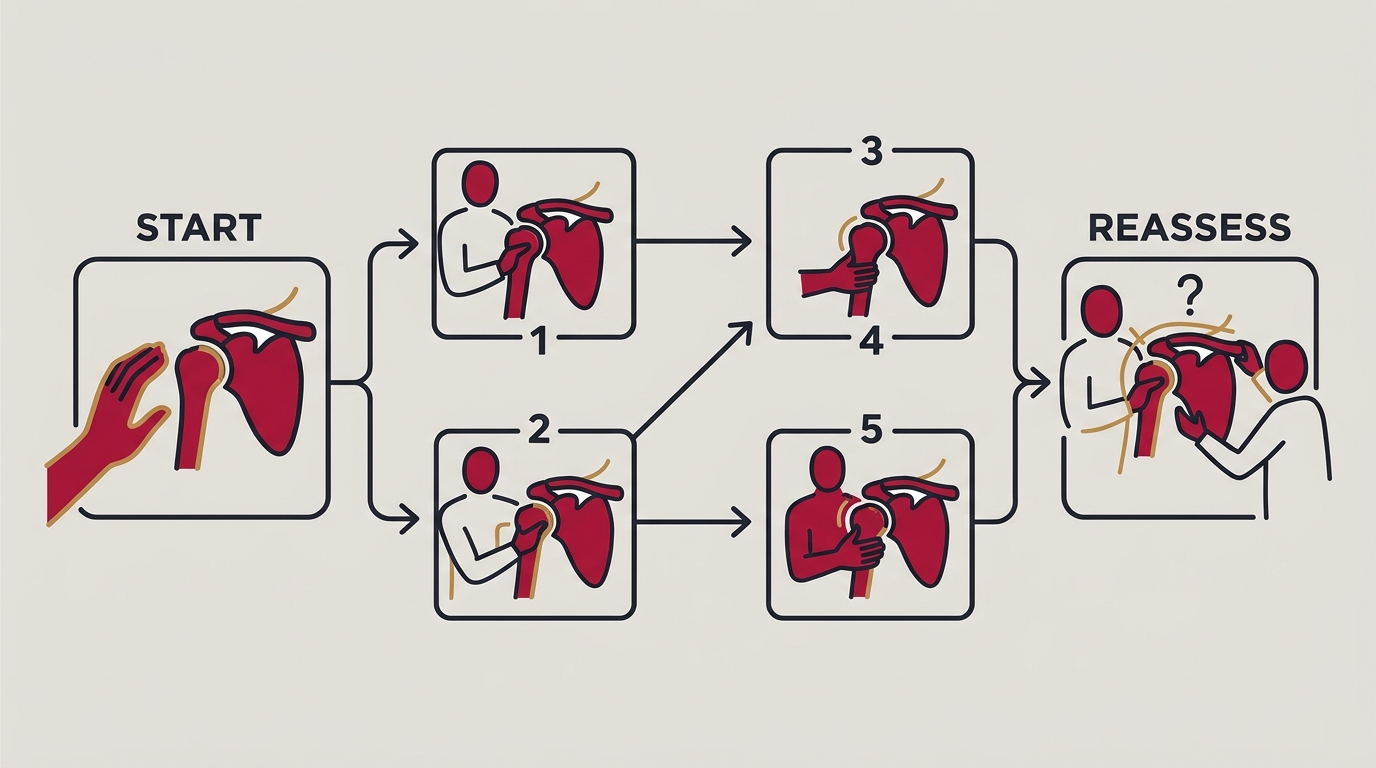
Several sources give visit counts for a trial of care before a formal check. The authors at the Illinois Chiropractic Society say the more defensible modern approach is not a rigid calendar rule. It is a short trial of care, followed by a measured re-check of pain, function and progress.
The article gives sample wording to tell patients. "We will recommend 2 to 6 first visits, then check your pain and how well you function to make sure treatment is helping. If you get better but still have pain, we will recommend another 2 to 6 visits. We keep repeating until your recovery levels off or you recover 100%."
The Clinical Compass low back pain summary lists how often to visit and when to re-check, too. For sudden or recent low back pain (acute or subacute), it lists 2 to 3 visits a week for 2 to 4 weeks, with a re-check in 2 to 4 weeks. For scheduled ongoing care of long-lasting pain, it lists 1 to 4 visits a month, with a re-check every 6 visits or as needed.
A treatment-guideline method the article cites says patients should be formally checked after a "six-visit clinical trial." The check is to find out whether you're moving in a good direction, no direction, or a bad direction before care goes on.
The American Chiropractic Association's 2016 guideline summary says a typical therapeutic trial of chiropractic care is 6 to 12 visits over two to four weeks.
The table lines up these checkpoints.
| Source | Visits or timeframe | Checkpoint |
|---|---|---|
| Illinois Chiropractic Society trial-of-care wording | 2-6 initial visits | Evaluate pain and function; another 2-6 visits if improved but still in pain, repeating until a plateau in recovery or 100% recovery |
| Clinical Compass low back pain summary | Acute/subacute: 2-3 times per week for 2-4 weeks; scheduled ongoing chronic pain management: 1-4 visits per month | Acute/subacute: re-evaluation in 2-4 weeks; chronic: re-evaluation every 6 visits or as needed |
| ODG method | Six-visit clinical trial | Formal assessment: positive direction, no direction, or negative direction |
| American Chiropractic Association 2016 guideline summary | 6-12 visits over two to four weeks | Not stated; this is a typical therapeutic trial of chiropractic care |
I don't scare people into signing up for care, and I don't stretch treatment out longer than it needs to be. I treat both as an ethical breach, not a business tactic. The trials of care I use have a clear end.
Want to know more about the four-week mark? Read Why Four Weeks Without Relief Triggers a Full Re-Evaluation. You can also read the source article, Frequency of Re-Exams in Chiropractic Care: Intervals or Outcomes?, from the Illinois Chiropractic Society.
What Happens When Six Visits Bring No Improvement
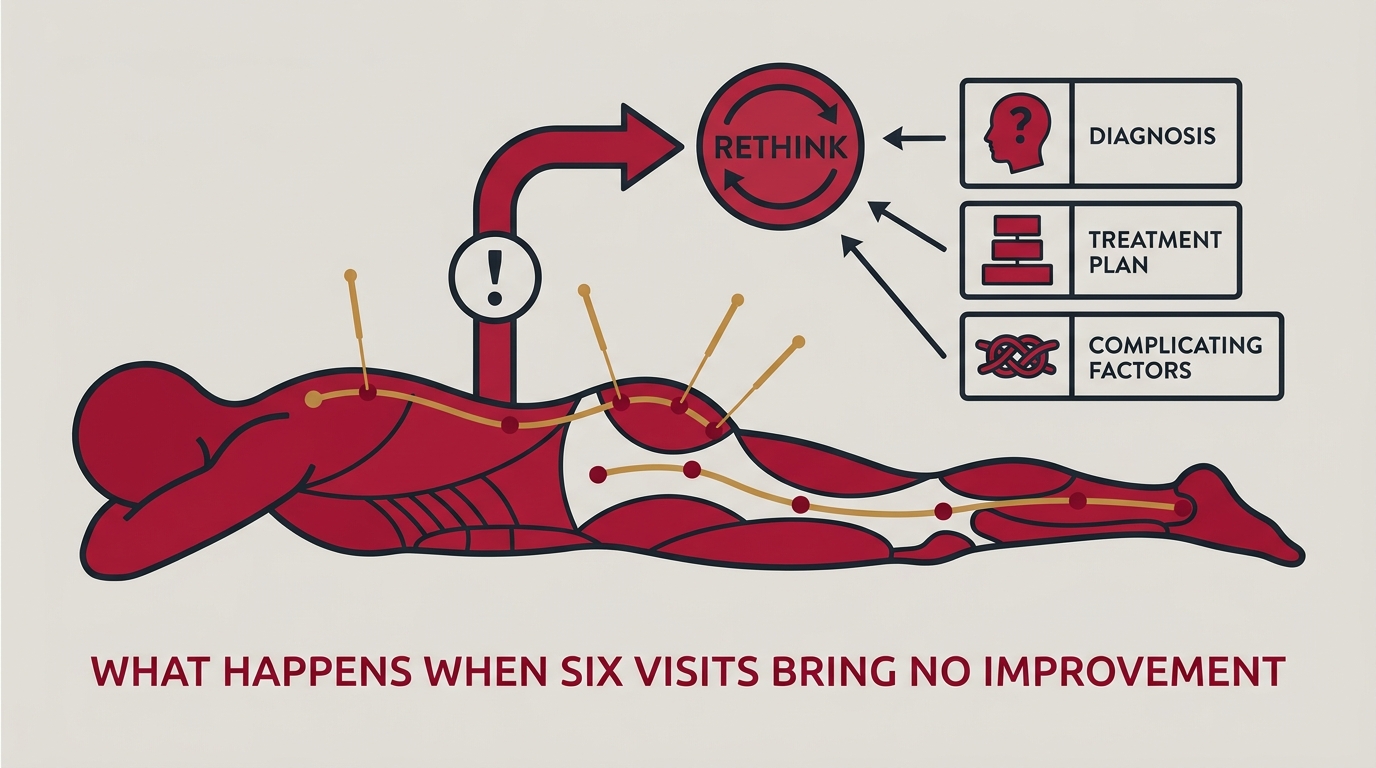
The article says that after six visits with no meaningful improvement, the doctor should rethink the diagnosis, the treatment approach, and any factors that complicate the case. The doctor should also look at whether the patient is following the plan, warning signs of serious problems (red flags), the need for imaging, or sending the patient to another provider.
If the patient is not getting better, the doctor should rethink the plan. That might mean changing treatment, using less passive care, using more active care, ordering or sending the patient for more testing, or sending the patient to another provider.
The article also says that if a patient isn't getting better after six visits, waiting until day 30 to re-check may be too late.
The American Chiropractic Association guideline says that after the first course of care, clinicians should decide whether more treatment is needed, based on how you've responded so far. If you've fully recovered or stopped improving, further care should be tapered off or stopped.
Most patients respond to care in an expected timeframe. But how often and how long you need treatment may be affected by individual factors, such as other health conditions at the same time (comorbidities) and what the guideline calls yellow flags.
To me, keeping up a therapy that shows no results is the failure. I judge care by whether you respond. If you don't, I change course. Six visits with no change means I change the plan.
I also refuse to treat a symptom with no known cause as one that can't be helped. A missing explanation isn't a missing option. If someone has told you nothing can be done, I keep looking for the next thing to try.
To go deeper, read Why Repeating the Same Adjustment Plan Without Progress Is a Red Flag and Referral Out vs. Continued Care: How We Decide Which Path Fits. The guideline is also in Research Review: Clinical Practice Guideline: Chiropractic Care for Low Back Pain from the American Chiropractic Association.
The Questions Asked at a Re-Evaluation Visit
The Illinois Chiropractic Society article lists four questions to ask at the end of a trial of care. Is your pain getting better? Is your function getting better? Are your daily activities getting better? Are the objective findings, the things your doctor can measure or see, getting better?
Medicare asks for the same kind of check. The CGS Administrators fact sheet says treatment effectiveness must be assessed at appropriate intervals during later visits, using goals that can be objectively measured.
Under the same fact sheet, later visits use an interval exam. The doctor documents the changes since your last visit. A full repeat of the complete exam is not expected.
Two more pages explain the difference. Read Plateau or Progress: How Re-Evaluation Visits Tell the Difference and Reassessment vs. Routine Adjustment Visits: What Is Different.
When Imaging Becomes the Next Step
The American Chiropractic Association guideline says imaging should also be considered in two cases. One is when you're failing to respond to a reasonable course of conservative care. The other is when there's suspicion of an underlying anatomical anomaly.
Anthem's guideline says magnetic resonance imaging (MRI) is often preferred over x-rays when surgery or another procedure is being considered. It's also often preferred when your symptoms continue despite appropriate treatment.
Anthem also says imaging can expose people to unnecessary radiation. It may find changes that are not causing symptoms, which can lead to needless worry or to treatments that do not help.
The American Chiropractic Association guideline also says clinicians should stay alert for clinical red flags. They can show up at any time during your care.
I'd rather give you an honest answer you don't want than a nice one that explains nothing. So I make imaging decisions on what is true, not on what is comforting.
Read more in Signs Advanced Imaging Is Needed Beyond Chiropractic Adjustment. The Anthem guideline is CG-RAD-29 X-rays for Low Back Pain.
How Insurance Rules Shape When a Plan Gets Reassessed
The Illinois Chiropractic Society article notes that BCBSIL also requires a written treatment plan covering the type, amount, frequency, and duration of care. The plan must be updated as the member's condition changes. It must include functional improvement goals. It must also include objective measures to evaluate treatment effectiveness.
The CGS Administrators Medicare fact sheet asks for records of each later visit. The documentation should show how that day's treatment fits within the plan of care, for example "visit 4 of planned 7 treatments." It should also show any way the treatment plan is being changed.
The same fact sheet covers what happens when goals aren't met. If you haven't reached the goals written in your Plan of Care, the practitioner should end the episode of chiropractic care at the last visit. To do that, the practitioner documents the clinical factors that kept the stated goals from being met.
I watch for the pull of payment systems that pay for volume, which I see pushing providers toward quantity over quality. When that money pressure gets presented to patients as medical necessity, I name the incentive out loud. I won't let it pass as clinical judgment.
You can read how we work in Chiropractic Care. To see how coverage can shift, read How Insurance Coverage Changes When Your Care Plan Is Revised. The Medicare sources are the Chiropractic Services (L37254) Fact Sheet from CGS Administrators, LLC and MLN Matters SE1601: Medicare Coverage for Chiropractic Services from the Centers for Medicare & Medicaid Services.
Frequently Asked Questions
Do I need a full re-exam every 30 days?
The Illinois Chiropractic Society article cites a quality measure, Measure 182. It states that the intent is for a functional outcome assessment tool to be used at least every 30 days. Ask your doctor how your progress will be measured.
What if my pain flares up again after it had been improving?
It may be what the CGS Administrators Medicare fact sheet calls an acute exacerbation. That is a temporary but marked deterioration of your condition. It causes significant interference with daily activities because of an acute flare-up of a condition that was treated before. Tell your doctor about the flare-up so your plan can be looked at again.
How long can treatment take for a new strain or a long-standing spinal problem?
The Centers for Medicare & Medicaid Services says acute subluxation problems, such as strains or sprains, may need as many as three months of treatment, but some need very little. It says a long-lasting spine joint condition may need a longer treatment time, but not more frequent visits. Ask your doctor which one fits you.
When should I call 911 instead of waiting for my next visit?
Call 911 or your doctor right away if you have trouble controlling your bladder or bowels. Anthem's guideline lists this as a warning sign. It may suggest cauda equina syndrome, a rare but serious condition that needs urgent care. Don't wait for your next visit.
From Baseline to a Changed Plan
Your first visit sets the baseline. A short trial of care follows, then a measured re-check of your pain, function and progress. If that check shows no change, the plan changes.
Touch of Wellness Chiropractic exists to give you real answers about what is happening in your body, a care plan built from what you actually report, and a willingness to change course when something isn't producing results. Dr. Karen Hannah holds an Illinois license and a Doctorate of Chiropractic, Palmer College of Chiropractic, 2009. Touch of Wellness Chiropractic offers chiropractic care in Morton, Illinois.
If you have a sudden severe headache, numbness or weakness in an arm or leg, trouble speaking or seeing, or loss of bladder or bowel control, call 911 or your doctor right away.
Are you ready to Book Appointment with Dr. Hannah?
Results may vary.