
The Michigan Quality Improvement Consortium guideline covers assessment, diagnosis and management of acute low back pain in adults, which it defines as low back pain lasting 4 weeks or less. It says that if pain or disability lasts past 4 weeks, clinicians should consider a referral to a multidisciplinary back pain program, especially if there are mental or social risks to returning to work. It also says to assess both pain and function, which means daily activities and the ability to work, exercise and do household tasks.
Why Guidelines Treat Four Weeks as a Turning Point
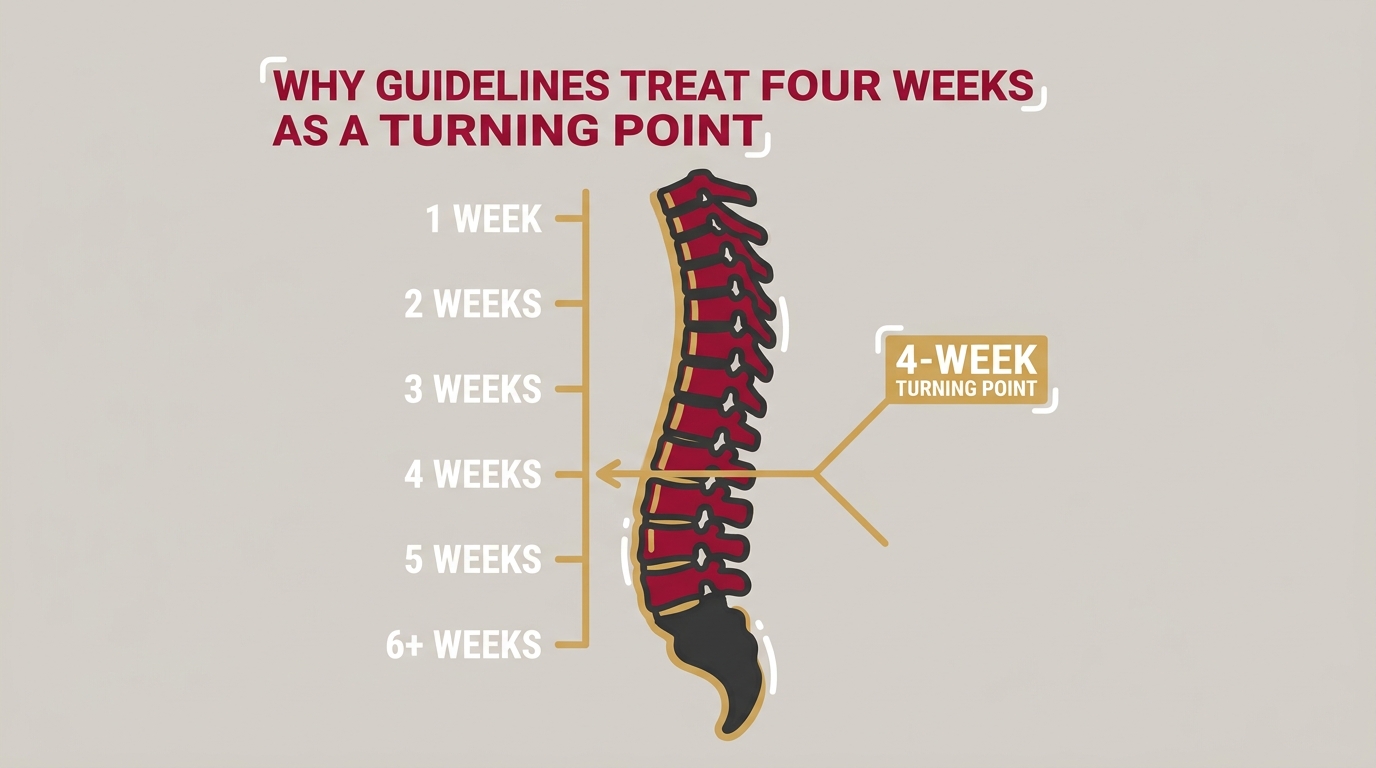
The Michigan Quality Improvement Consortium guideline covers acute low back pain, which it defines as pain lasting 4 weeks or less. If your pain or disability lasts past 4 weeks, it says clinicians should consider a referral to a multidisciplinary back pain program, especially when there are mental or social risks to returning to work.
That same guideline tells clinicians to reassure patients that up to 9 in 10 episodes (up to 90%) get better within 6 weeks, whatever the treatment.
Other groups draw the line in different places. Alberta Health Services calls low back pain acute if it has lasted less than 6 weeks in a row. It calls the pain sub-acute from 6 weeks up to less than 3 months in a row, and chronic at 3 months or more in a row. It calls pain recurrent if there have been at least 2 episodes in the past 12 months. Anthem uses definitions that call pain acute at 0 to 4 weeks, subacute at 4 to 12 weeks, and chronic when it lasts more than 12 weeks.
The table below puts the three side by side.
| Guideline | Acute pain means | What comes after |
|---|---|---|
| Michigan Quality Improvement Consortium | 4 weeks or less | Pain or disability past 4 weeks: consider referral to a multidisciplinary back pain program |
| Alberta Health Services pathway | Less than 6 weeks | Sub-acute from 6 weeks to less than 3 months; chronic at 3 months or more |
| Anthem guideline | 0 to 4 weeks | Subacute 4 to 12 weeks; chronic more than 12 weeks |
If you want to know what happens to a plan when pain does not improve, read Reassessing Care Plans When Pain Does Not Improve: A Complete Guide. You can read the Michigan Quality Improvement Consortium guideline here: Management of Acute Low Back Pain in Adults (June 2026).
What a Full Re-Evaluation Checks
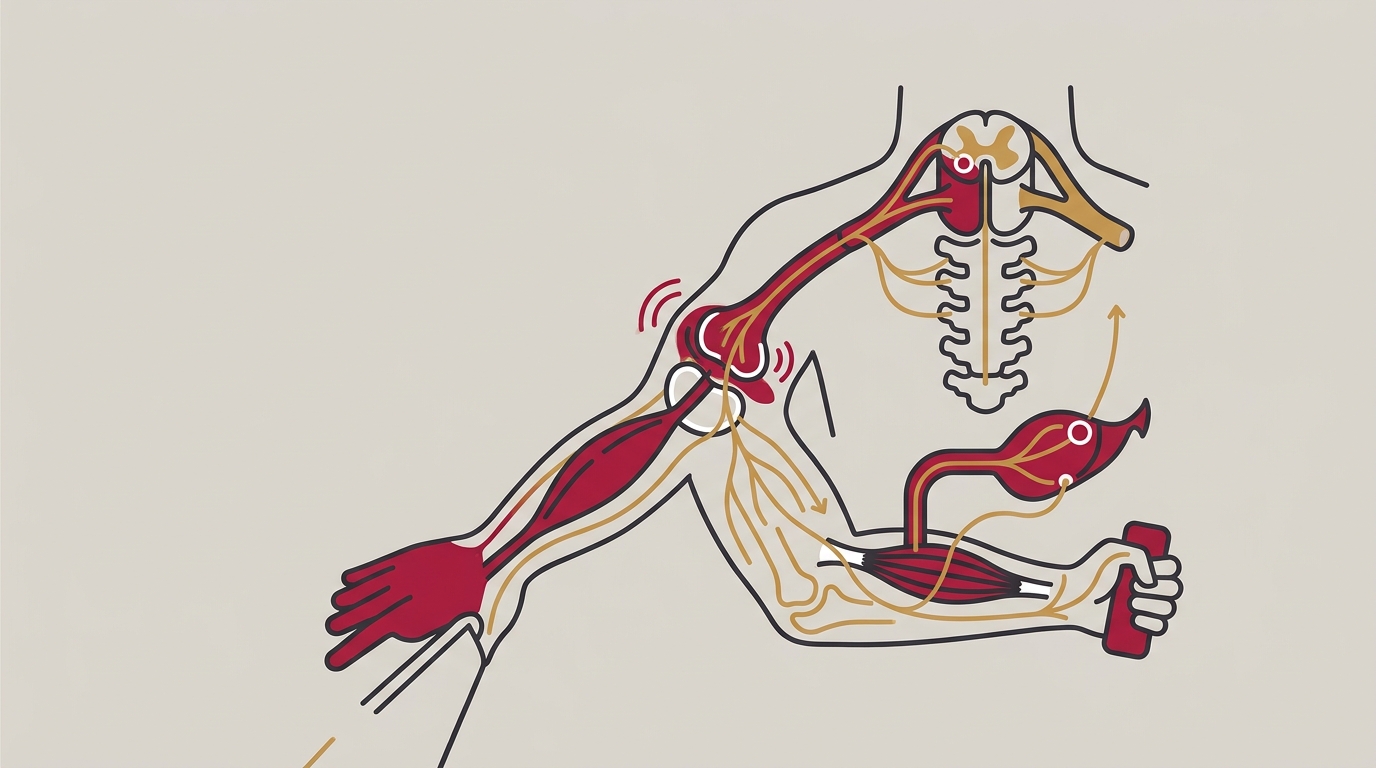
A re-check starts with pain and function. The Michigan Quality Improvement Consortium guideline says to assess both. Function means your daily activities and your ability to work, exercise and do household tasks. At our office, the point that matters is not discomfort. It's disruption.
I don't run everyone through the same routine, and I won't treat you like a unit on a line. When I re-check you, I fit the questions to you and to what is going on in your life.
I also take what you tell me at face value. If other doctors brushed you off, I still believe the symptoms you describe. When you say pain is getting in the way of sleep or work, that's where the re-check begins.
Alberta Health Services has a follow-up visit at 6 weeks in its pathway. At that visit, the provider:
- checks your symptoms and risk factors again
- takes a fresh look at the diagnosis
- goes over ways you can manage your own care, with more follow-up as needed
The pathway also says you should be checked for the risk of a poor recovery. It names things like fear, avoiding pain, low mood, being unhappy at work, and an ongoing lawsuit.
To see which tests come back around, read What Functional Tests Get Re-Run When Pain Has Not Improved. You can read the Alberta pathway here: Spine: Low Back Assessment Clinical Pathway (2022).
What Should Change When Pain Stays the Same
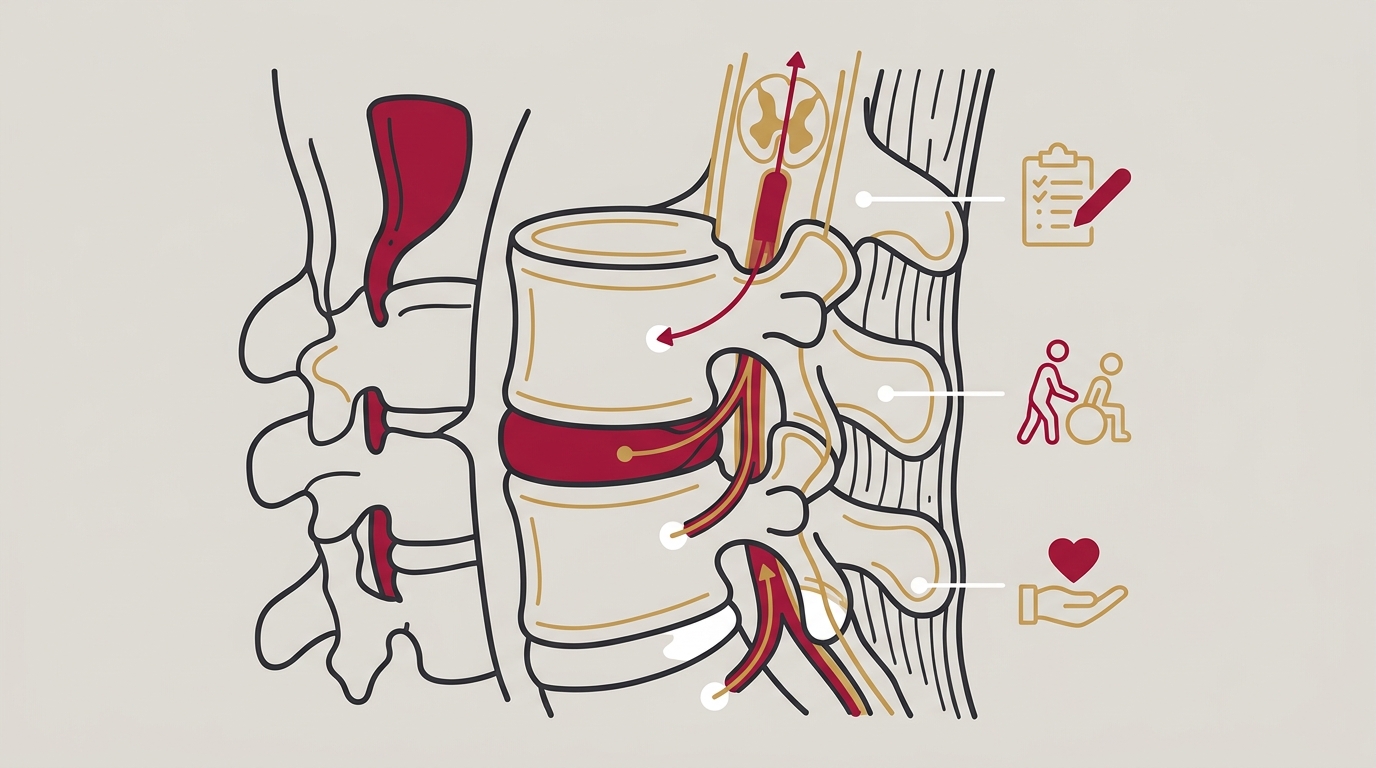
The American Academy of Pain Medicine has a 2026 guideline for clinicians who care for adults with acute low back pain that is not from an injury. That pain lasts less than six weeks and may or may not include nerve root pain (radiculopathy). The guideline gives practical advice for outpatient care, and it stresses a step-by-step approach. That approach starts with lower-risk options, patient education and shared decision-making.
When your symptoms stay the same or get worse, the guideline says clinicians may consider more options, both drug and non-drug, that are backed by evidence. They should choose based on your health, your preferences, how you respond to treatment, access, safety and cost.
I treat an unchanged plan that shows no results as the failure. I judge care by how you respond. If you don't respond, I change course.
On treatment choices, the Michigan Quality Improvement Consortium says stretching exercises and spinal manual therapy may be considered. It adds massage and acupuncture for patients who are interested. It also says current evidence does not support extra treatments such as yoga, traction and injections next to the spine (paraspinal injections) for acute low back pain.
The Alberta pathway lists what to consider when a patient is not improving:
- changing the treatment methods
- getting the right lab tests and imaging
- referring the patient to other services that work together
- reviewing signs that the outcome may be poor
You may have been told nothing can be done because nobody can name the cause. I don't accept that. When the cause has no name yet, I still look for steps to try.
For more on this, read Why Repeating the Same Adjustment Plan Without Progress Is a Red Flag. You can find the American Academy of Pain Medicine news page here: New Acute Low Back Pain Guideline and Systematic Review.
Why Imaging Is Not Automatic at Four Weeks
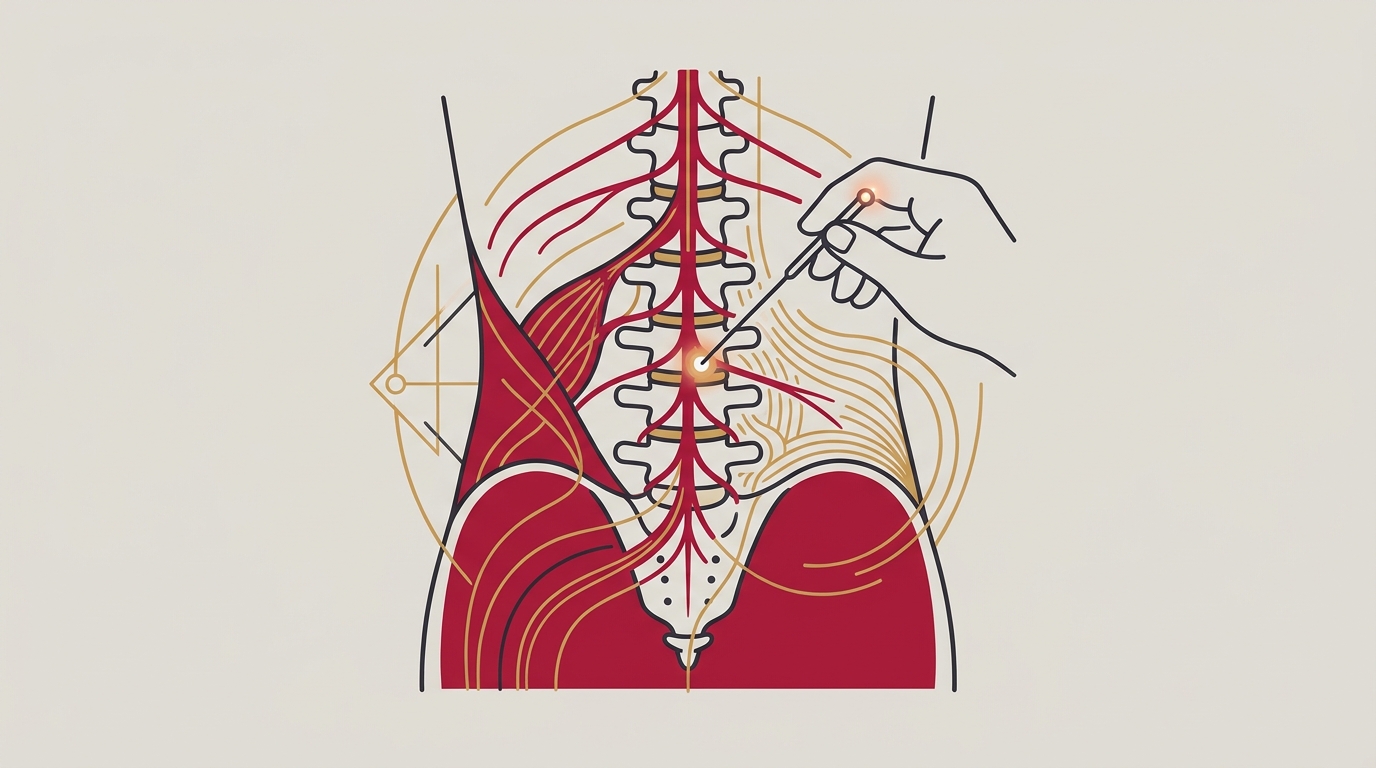
A month of pain doesn't call for a scan by itself. These sources advise against routine or early imaging when nothing points to a serious problem:
- The American Chiropractic Association says guidelines from many kinds of health fields recommend against routine spinal imaging for sudden low back pain lasting less than six weeks, when no clear clinical signs call for it.
- The American Academy of Pain Medicine guideline advises against routine early imaging for most people with uncomplicated acute low back pain. It points to education, staying active with low-impact activity, and suitable self-care instead.
- The Michigan Quality Improvement Consortium guideline says tests or imaging are rarely required for sudden back pain that doesn't come from an injury, unless a serious condition is suspected.
- A review in BMC Musculoskeletal Disorders says guidelines recommend against early MRI (magnetic resonance imaging) in the first 4 to 6 weeks of conservative care for acute low back pain, when there's no clinical suspicion of serious underlying conditions. Those conditions are called red flags.
- The Alberta Health Services pathway says not to do routine imaging for low back pain, no matter how long symptoms have lasted. The exceptions are a clinical reason to suspect a serious underlying problem, or imaging needed to plan or carry out a specific treatment backed by evidence for a specific spine condition.
The Alberta pathway goes further. For most low back complaints, it says spinal imaging doesn't make patient care better. It can lead to treatments that aren't appropriate and may harm how patients do.
So when does imaging come into play? An article indexed by the National Library of Medicine says it's considered for patients who have had up to 6 weeks of medical management and physical therapy with little or no improvement in their back pain. The same source says uncomplicated sudden low back pain, with or without nerve root pain, is a mild condition that gets better on its own and doesn't call for any imaging studies.
I'd rather give you an honest answer you don't like than a soft one that explains nothing. That's why I tell you plainly why a scan waits.
What the Evidence Says About Early MRI
Early MRI (magnetic resonance imaging) for acute low back pain is common anyway. A systematic review in BMC Musculoskeletal Disorders estimated that 27.7% of patients get one, a little more than one in four. The range the true figure likely falls in is 21.3% to 35.1%. Early MRI was linked to longer disability, more use of health care and higher medical costs.
The review concluded that early MRI is linked to longer work disability in people with acute low back pain who have no red flags. It also cites a systematic review and meta-analysis of imaging strategies. That one found imaging of the lower spine doesn't improve clinical outcomes in acute cases where no serious underlying condition is suspected.
There's one limit to keep in mind. All the studies in the review were done in the United States and used workers' compensation records, so the findings come only from that kind of data.
You can read the study here: The association between early MRI and length of disability in acute lower back pain. To see how we do the work, visit our Chiropractic Care page.
Frequently Asked Questions
Which warning signs mean a scan should not wait for a re-check?
Red flags. A review in BMC Musculoskeletal Disorders says guidelines recommend against MRI (magnetic resonance imaging) in the first month of conservative care for acute nonspecific low back pain, unless red flags are suspected. Those red flags include fracture, tumor, infection and nerve loss, called neurological deficit.
What happens if a spinal fracture is suspected?
The Michigan Quality Improvement Consortium guideline gives a 10-day mark. After 10 days, if a fracture is still suspected or you have pain in multiple sites, it says to consider an MRI (magnetic resonance imaging) scan or a referral.
Do age-related changes on an MRI explain my back pain?
Not necessarily. A review in BMC Musculoskeletal Disorders says MRI (magnetic resonance imaging) often shows changes from aging, called degenerative changes, in people who have no low back pain. Ask your provider how any scan result fits with your symptoms.
Why might I be asked about my mood at a re-check?
Because mood can affect your back. The Michigan Quality Improvement Consortium guideline says to consider depression screening with a tool called the PHQ-9. Its reason is that depression at the same time as back pain worsens the outlook.
Should opioids be the first treatment for new back pain?
No. The Michigan Quality Improvement Consortium guideline says opioids, including tramadol, and benzodiazepines aren't meant as first-line treatment. It also says using opioids early is linked to longer disability.
Book a Re-Evaluation If Four Weeks Have Passed
The four-week point is there to catch stalled care early and change it, not to repeat the same routine.
If your pain or disability lasts past 4 weeks, the Michigan Quality Improvement Consortium guideline says to consider a referral to a multidisciplinary back pain program. When you're not improving, the Alberta Health Services pathway says providers should consider changing treatment methods, getting the right lab tests and imaging, referring you to other services, and reviewing signs of a poor outcome.
I call out payment systems that pay for volume. They push providers toward more visits instead of better care, and I won't let that money pressure pass as medical necessity. If I book you a repeat visit, it's because your pain and daily life call for it.
If you have a sudden severe headache, numbness or weakness in an arm or leg, trouble speaking or seeing, or loss of bladder or bowel control, call 911 or your doctor right away.
Touch of Wellness Chiropractic in Morton, Illinois, offers chiropractic care, shockwave therapy, neuropathy care, acupuncture, cold laser therapy, massage therapy and DOT physicals. Ready to have your care looked at again? Book Appointment
Results may vary.