
At Touch of Wellness Chiropractic, when a treatment approach is not producing results, it is changed, not repeated. Blue Cross and Blue Shield of Illinois says maintenance begins when the goals of a treatment plan have been reached, or when no more progress in how the patient functions is seen or expected. Aetna considers chiropractic care not medically necessary for people whose condition is neither getting worse nor getting better.
Why Sameness Without Progress Is a Warning Sign
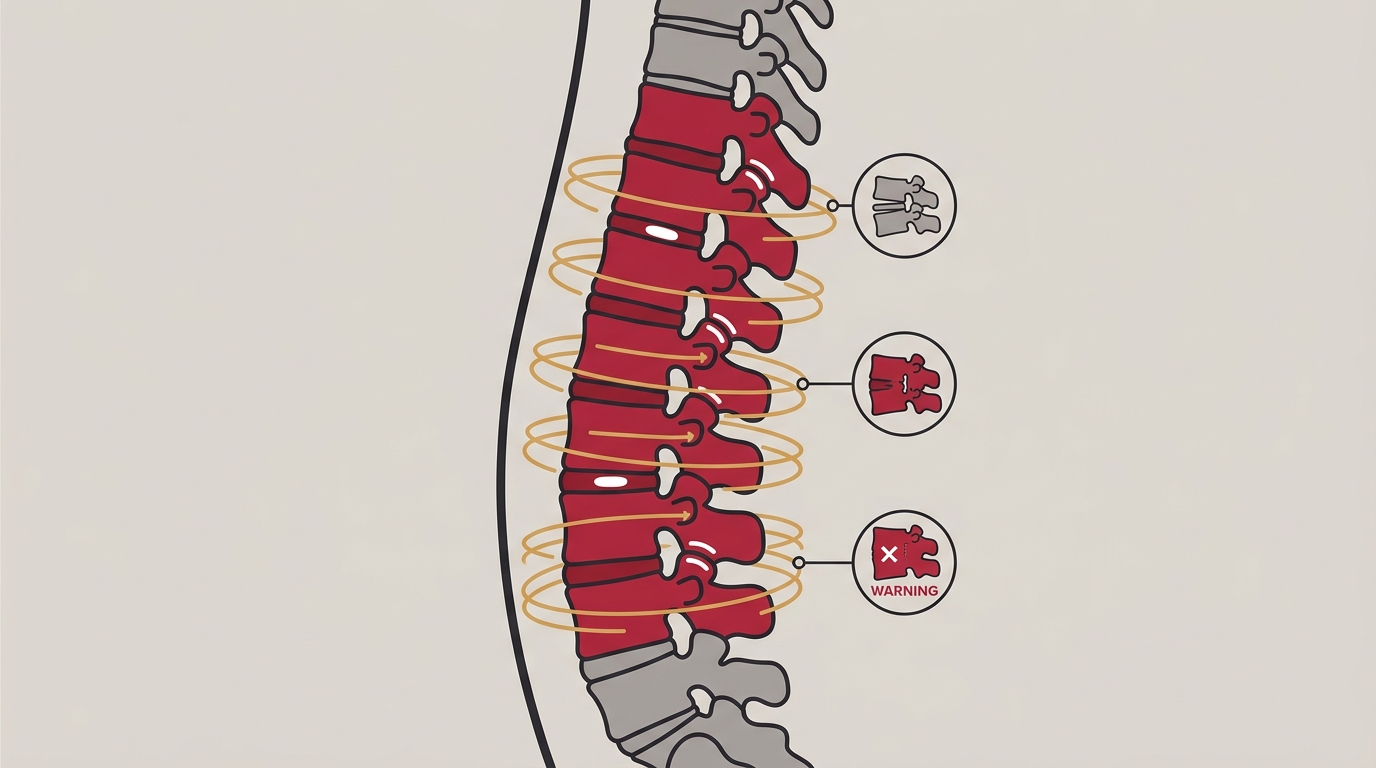
A plan that does not work should change
At Touch of Wellness Chiropractic, the rule is plain: "When a treatment approach is not producing results, it is changed, not repeated." Care gets judged by how a patient responds. Sticking with a therapy that shows no results is the failure, not the fix.
So a plan isn't a fixed routine you run no matter what happens. If it isn't producing results, it changes.
If pain has stalled, our guide Reassessing Care Plans When Pain Does Not Improve: A Complete Guide walks you through taking a fresh look at a care plan.
What payers say about care that stays the same
Aetna considers chiropractic care for people whose condition is neither getting worse nor getting better "is considered not medically necessary."
The HHS Office of Inspector General (OIG) raised the same concern. In its report Vulnerabilities Involving Chiropractic Services, it said earlier OIG work found that as more services are provided to a Medicare patient, it becomes more likely that those services are medically unnecessary or maintenance treatment.
Where BCBSIL Draws the Line Between Active and Maintenance Care
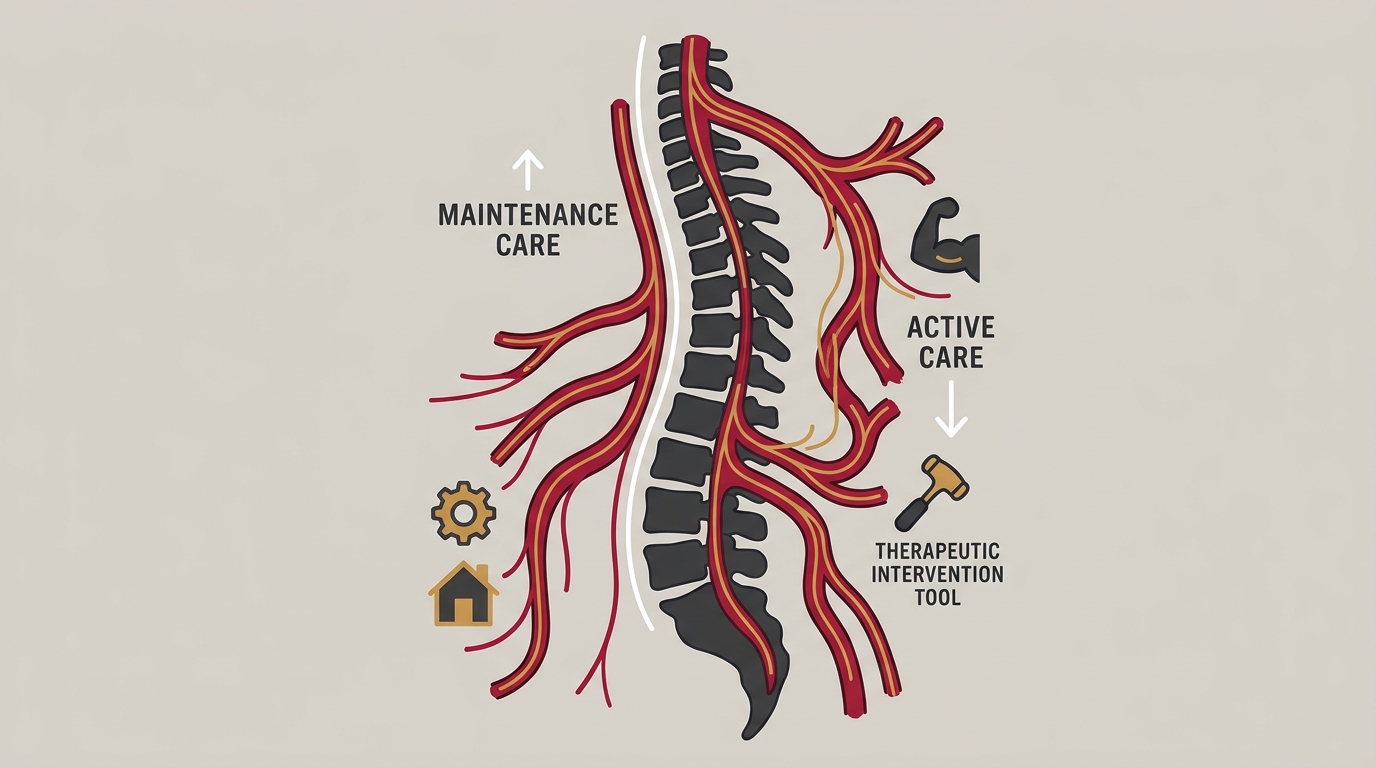
What counts as maintenance care
Here's a plain definition of maintenance care, even if it isn't the one you were hoping for.
Blue Cross and Blue Shield of Illinois (BCBSIL) says maintenance begins "when the therapeutic goals of a treatment plan have been achieved, or when no additional functional progress is apparent or expected to occur." Put simply, maintenance starts when the goals are met. It also starts when you no longer see, or expect to see, more progress in how the patient functions.
BCBSIL adds that ongoing treatment after a condition has stabilized or reached a clinical plateau (Maximum Therapeutic Benefit) does not qualify as medically necessary. It calls that maintenance care.
To see how this can affect your plan, read How Insurance Coverage Changes When Your Care Plan Is Revised. The rule itself comes from Chiropractic Care Services (CPCP016), a BCBSIL policy.
What BCBSIL Expects the Record to Show Before Care Continues
The reason for continuing or changing care
BCBSIL wants your record to say why care should go on or why it should change. It requires your record to "provide rationale for continued care or changes in the therapeutic direction." It also requires a review of how well the treatment is working, and the progress made or not made, compared with the treatment goals and plan of care.
Goals with time frames and measures
BCBSIL requires you to write down specific treatment goals. Each one needs the time frame you expect and objective measures to judge whether the treatment works.
To see the kind of checks that can be done again when pain hasn't improved, read What Functional Tests Get Re-Run When Pain Has Not Improved.
Time Limits and Visit Caps That Force the Question
Windows, plan limits and yearly caps
Aetna says that if no improvement is written down in the first 2 weeks, more chiropractic treatment is not medically necessary unless the treatment is changed. Even after a change, if no improvement is written down within 30 days, Aetna says continued treatment is not medically necessary.
Aetna also says that once you reach the maximum therapeutic benefit, meaning the most good the treatment can do, continuing chiropractic care is not medically necessary. You can read the full policy in the Chiropractic Services Clinical Policy Bulletin.
Blue Cross and Blue Shield of Illinois requires the plan of care to be updated as your condition changes. A treatment plan is not valid for longer than 90 calendar days from the first treatment day under the certified treatment plan.
One Blue Cross and Blue Shield of Illinois plan outline, Your Health Care Benefits Program (2026), lists "Chiropractic and Osteopathic Manipulation" with a 25 visit maximum per calendar year.
The table below puts four rules side by side: Aetna at the start of care, Aetna after peak benefit, the Blue Cross and Blue Shield of Illinois plan of care, and the Blue Cross and Blue Shield of Illinois 2026 benefits program outline. Each row shows the time frame or limit and what it means.
| Payer rule | Time frame or limit | What it means |
|---|---|---|
| Aetna, start of care | No improvement documented in the first 2 weeks; none within 30 days despite changed treatment | After 2 weeks, more care is not medically necessary unless treatment is changed; after 30 days despite the change, continued care is not medically necessary |
| Aetna, after peak benefit | Once maximum therapeutic benefit is reached | Continuing care is not medically necessary |
| BCBSIL plan of care | Not valid longer than 90 calendar days from the first treatment day under the certified plan | Plan must be updated as the condition changes |
| BCBSIL 2026 benefits program outline | 25 visit maximum per calendar year | Visits for this benefit are capped |
What Federal Audits Found About Repeated Chiropractic Care
Maintenance claims in Medicare
HHS Office of Inspector General (OIG) evaluations from 2005 and 2009 found that between 40 and 47 percent of all paid chiropractic claims were for maintenance therapy, which Medicare does not cover. That is about 4 in 10 to nearly half.
Questionable and improper payments
In 2013, $76 million in Medicare payments for chiropractic services were questionable. Almost half of those questionable payments were for claims that suggested maintenance therapy.
From 2010 to 2014, the improper payment rate for chiropractic services rose from 43.9 percent to 54.1 percent. That's more than half. You can read the details in Vulnerabilities Involving Chiropractic Services.
Stretched-out care and the money behind it
I call it an ethical breach when a patient is scared into signing up, or when treatment is stretched out longer than needed. It isn't a business tactic, and it isn't a style of practice.
I also name the money behind repeated, unchanged care. Payment that rewards volume pushes providers toward more visits instead of better care. When that pressure gets handed to a patient as "medical necessity," I don't accept it as clinical judgment.
To see how we do the work, visit our Chiropractic Care page.
Frequently Asked Questions
Does BCBSIL pay for maintenance care?
No. Blue Cross and Blue Shield of Illinois says "Maintenance Care and Supportive Care are not medically reasonable or necessary and are NOT payable." So if your care has become maintenance, don't count on it being paid. Ask your doctor whether your care still has goals and shows progress.
Can a separate exam be billed on top of an adjustment visit?
Sometimes, yes. Blue Cross and Blue Shield of Illinois gives these examples of when it may be appropriate to bill an added evaluation and management (E/M) service: new patients, new injuries, flare-ups, or periodic re-evaluations. If you see a separate exam charge, ask which reason fits your visit.
How is my response to each adjustment recorded?
It's written down in your record. To bill a spinal adjustment, Blue Cross and Blue Shield of Illinois requires a note on how you responded. That includes whether the pain or condition being treated got worse, got better, or went away. Tell your doctor honestly how you feel after each visit so the note is true.
What does Aetna need to see to keep covering care?
Aetna wants three things in your records: clinical improvement in your condition, specific goals to be reached from the ongoing services, and how long and what kind of ongoing services are expected. Ask your doctor to show you where your records cover all three.
Make a Plan That Changes When Your Progress Stops
A plan that never changes even when you aren't getting better is a red flag. Care should be looked at again and changed based on how you respond. At Touch of Wellness Chiropractic, "when a treatment approach is not producing results, it is changed — not repeated." The HHS Office of Inspector General found that as more services are given to a Medicare patient, it is more likely they are medically unnecessary or maintenance treatment.
If you were told nothing more can be done, I don't take that as the end. Not having an explanation yet is different from having no options. When progress stalls, I build a new plan. I don't give up.
If you have a sudden severe headache, numbness or weakness in an arm or leg, trouble speaking or seeing, or loss of bladder or bowel control, call 911 or your doctor right away.
Touch of Wellness Chiropractic in Morton, IL provides chiropractic care, Shockwave Therapy, Neuropathy Care, Acupuncture, Cold Laser Therapy, Massage Therapy and DOT Physicals. Will you Book Appointment so we can build a plan around how you respond?
Results may vary.