
Lasting relief from desk-related pain requires an individualized care plan, not one treatment type repeated on its own. That plan addresses posture, movement habits, and spinal function together. Prolonged sitting and forward head posture place uneven, sustained stress on the cervical and lumbar spine. This stress strains muscles, joints, and connective tissue in ways a single session cannot fully address. A chiropractic adjustment can restore joint motion and reduce immediate discomfort. However, the biomechanical patterns created by hours at a keyboard keep working against the spine after the visit ends. Effective plans typically combine several elements. Chiropractic adjustments restore joint mechanics. Therapeutic exercise builds the strength and endurance needed to support better posture. Ergonomic guidance changes how a workstation interacts with the body throughout the day. Postural retraining is often included as well. Forward head posture and rounded shoulders develop gradually, so they require deliberate correction over time. Neck tightness, shoulder pain, and headaches that build through the workday frequently share a common root. That root is a spine and surrounding musculature held in a compensatory position for extended periods. Treating only the symptom that appears first tends to leave the underlying cause untouched. The postural and biomechanical pattern producing that symptom also needs examination. Workstation setup, posture habits, and physical history differ from one person to the next. As a result, the combination and sequence of care typically varies between individuals. A plan built around these factors, rather than one isolated treatment, allows the body to adapt. It also helps the body hold its improved function once active care tapers off.
Why Desk-Related Pain Resists the One-and-Done Adjustment
So why does the relief from a single visit fade so fast? Most workdays now mean hours hunched over a keyboard, and that posture has created a category of chronic pain people have quietly decided is just normal.
But normal isn't the same as unavoidable. Lasting relief rarely comes from one magic-bullet session. It comes from a step-by-step process that corrects the habits and biomechanics causing the pain in the first place.
The Assembly-Line Approach to Spinal Care
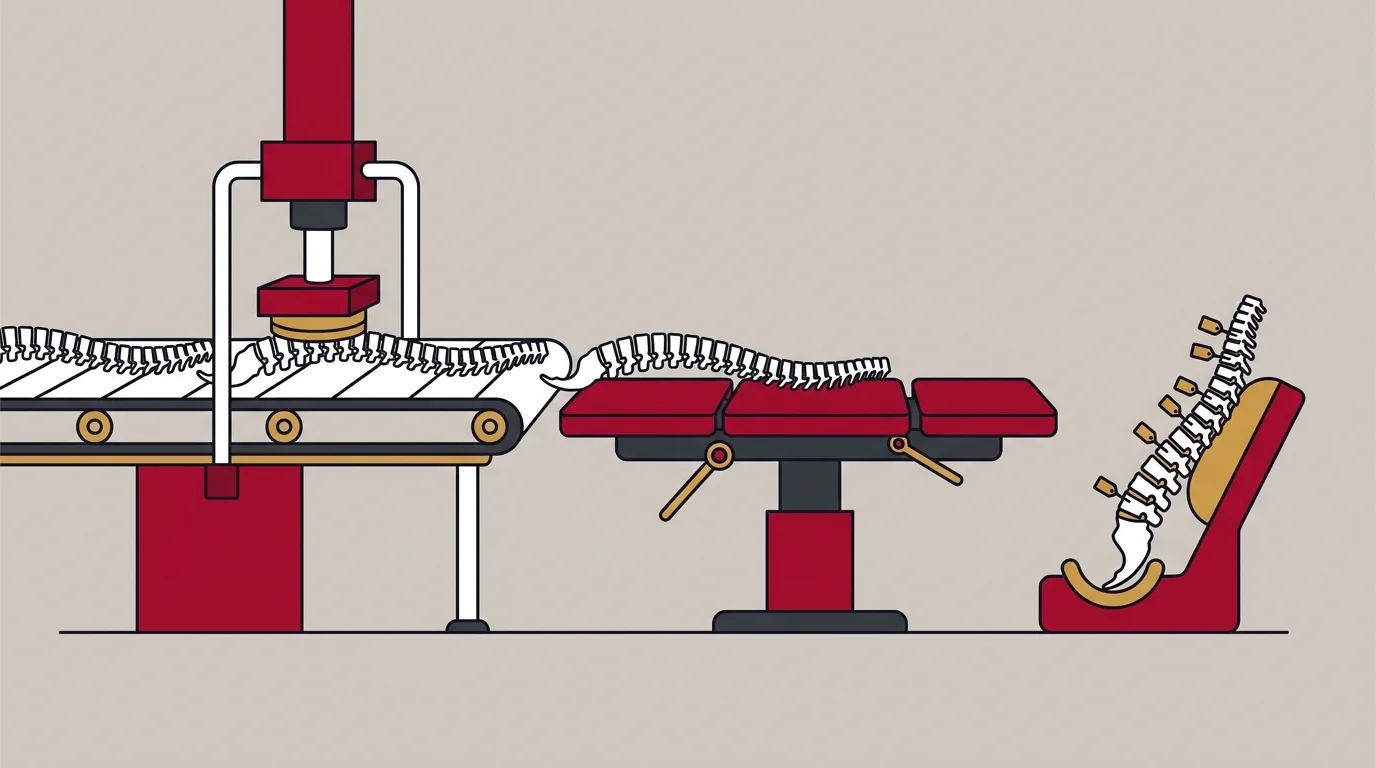
Here's the problem: giving every desk-pain case the same single adjustment, no matter what's driving it, is assembly-line medicine, not an individualized plan. The protocol never changes because it was never built around the person to begin with.
That approach treats the spine like a part on a conveyor belt, not a system shaped by one person's workstation, habits, and history. A plan grounded in how chiropractors design plans from exam findings starts from what the exam actually shows. It doesn't start from a fixed sequence run on everyone who walks through the door.
Why the Same Adjustment Plan Can't Serve Every Spine
A chiropractor's job is not to run the same proven protocol on every presenting condition. No protocol is proven for every patient, because no two spines arrive carrying the same workstation setup, posture habits, or injury history.
From the outside, desk pain looks the same: tight shoulders, a stiff neck, a dull headache by mid-afternoon. But the mechanism behind those symptoms changes from person to person. A protocol built for the average case will miss the specific pattern driving the pain that's actually in front of it.
Where Adjustment-Only Protocols Break Down Under Real Conditions
Now, an adjustment-only approach holds up right until the environment that created the problem kicks back in. Working on the joint without correcting the posture and habits feeding it leaves the conditions doing the damage unchanged, so the relief fades.
That's where uniform protocols fail under real conditions. Two people with the same job title can need entirely different plans, which is why sitting habits matter in spinal plan design when a plan gets built. A fixed sequence applied to everyone treats a biomechanical problem like a scheduling problem instead.
What Years at a Keyboard Actually Do to the Cervical Spine
So what does a protocol-driven approach actually miss? The forces at work on a bent neck are measurable, not theoretical.
Years of leaning toward a monitor do more than feel different from neutral posture. They change the physical load the spine carries, joint by joint and disc by disc.
Mapping Stress From Neutral Posture to Full Forward Lean
A computer model of the neck, covering the segments from C2 through C7, was built to predict disc and ligament stress at neck angles from 0 to 60 degrees of forward flexion. That's the exact motion a keyboard and monitor pull the body into for hours at a time.
That work is described in a 2024 study by Dandumahanti and Subramaniyam in The International Journal of Artificial Organs. It's a simulation, not a measured patient outcome, so it frames the question rather than proving an answer. It's also part of why individualized plans differ from routine adjustments: they account for the posture a person actually works in.
How Forward Head Posture Connects to Neck-Related Headaches
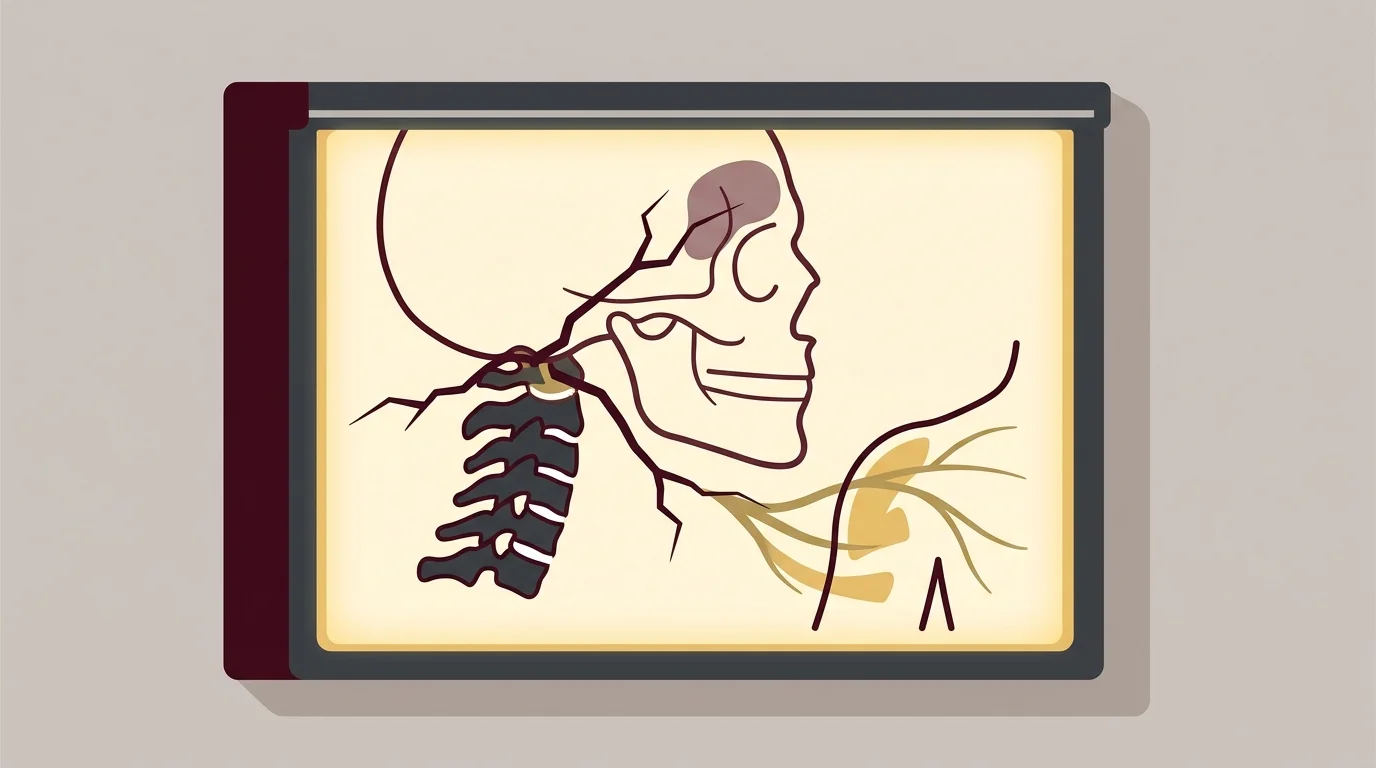
Forward head posture doesn't stay put in the neck. Once the head drifts out ahead of the shoulders, the upper cervical joints and soft tissue carry a constant, low-grade load all day. And that load changes how pain signals travel from the neck up into the head.
So a headache that builds through a desk day isn't always separate from a stiff neck. It can be part of the same postural pattern, and that's part of what the exam checks. Unexplained doesn't mean untreatable. It usually means nobody has traced the mechanism back far enough yet.
Tracing the Path From Upper Cervical Structures to Head Pain
The upper cervical spine houses structures that, when irritated, can refer pain into the head rather than staying local to the neck. A 2025 study by Hwang et al. in Frontiers in Pain Research included 531 office workers, 135 of whom had cervicogenic headache, the kind of headache that starts in the neck. When a headache like that traces back to the neck, chiropractic adjustment and spinal treatment aims at the neck, not just the headache that surfaces from it.
Building a Plan That Targets the Actual Cause
A protocol applied the same way to every desk-pain case is assembly-line medicine, not a plan built around a person. Correcting the actual cause takes a structure that layers several elements together, in a sequence shaped by what the exam finds.
The Layers a Comprehensive Plan Has to Include
A 2001 trial by Bronfort et al. in Spine found that patients with chronic neck pain who got chiropractic adjustment plus exercise showed greater gains in strength, endurance and range of motion than those who got chiropractic adjustment alone. That finding comes from chronic neck pain patients, not a desk-pain sample specifically.
That gain didn't come from the joint work by itself. It came from pairing it with exercise that rebuilds the muscle support the joint leans on.
What a Personalized Care Plan Looks Like in Practice
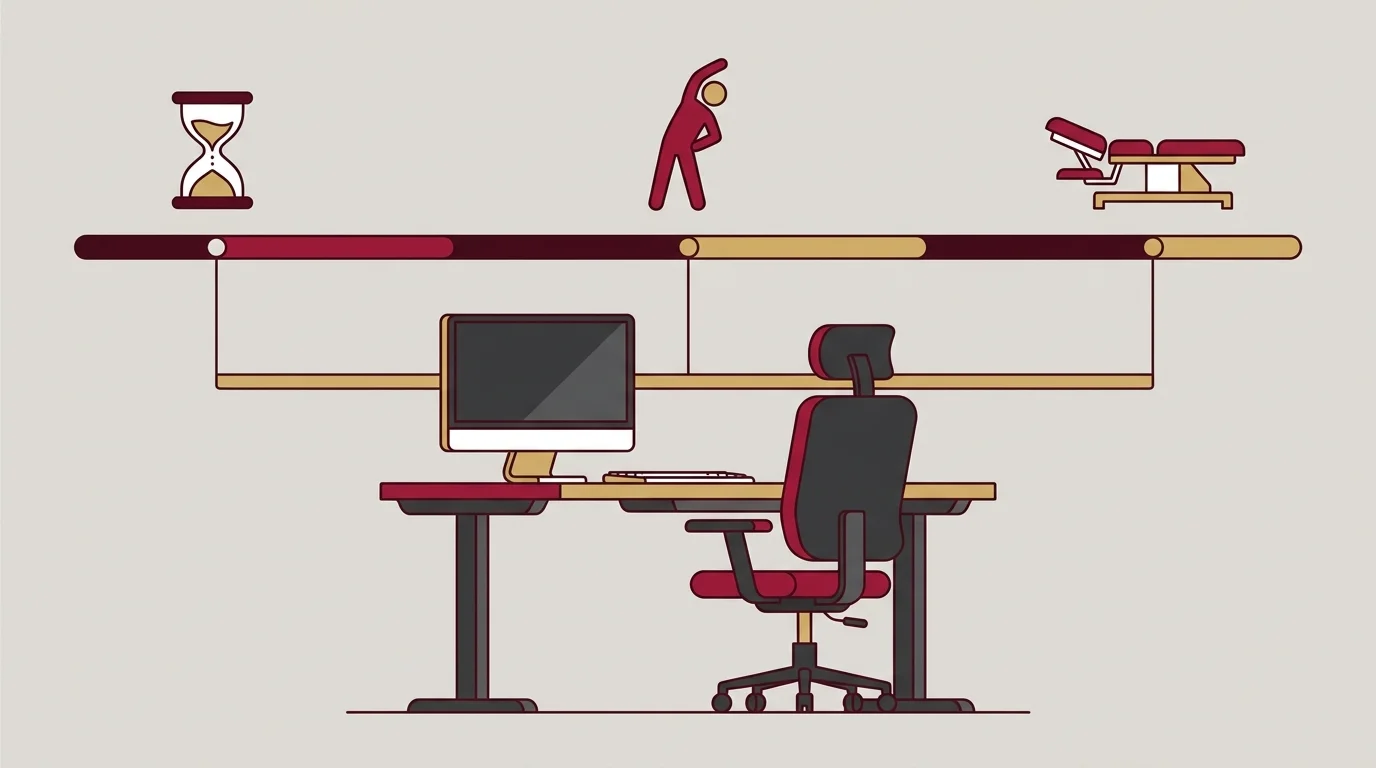
What does that layered structure look like once it leaves theory and becomes a real plan? It starts with what the exam finds, not a fixed menu handed to every patient who walks in. Chiropractic adjustment, exercise, ergonomic correction, and posture retraining each get weighted by whichever biomechanical pattern is driving the pain.
| Plan Component | What It Addresses | Where It Happens |
|---|---|---|
| Chiropractic Adjustment | Restricted joint motion and immediate discomfort in the neck and upper back | In-office, typically during the earlier visits of a plan |
| Therapeutic Exercise | Strength and endurance deficits that leave posture unsupported once the workday resumes | In-office instruction, carried out independently between visits |
| Ergonomic Guidance | The workstation setup actively reinforcing the postural pattern causing pain | Applied at the desk, built around the person's own equipment and habits |
| Postural Retraining | Forward head posture and rounded shoulders that developed gradually over months or years | Practiced throughout the day, reinforced during in-office visits |
Mapping the Plan to the Workday
Here's how that typically plays out across a workday. Early visits tend to focus on restoring joint motion and calming irritated tissue. As that settles, exercise and posture work take on more of the load, aimed at the habits a desk and a monitor reinforce for eight hours straight.
Frequently Asked Questions
A few questions come up again and again once people understand why a single visit type doesn't hold. Here are the direct answers.
Why does my neck and shoulder pain come back even after a chiropractic adjustment?
Relief fades when the chiropractic adjustment addresses the joint but not the posture habit reloading it every day. Without exercise and ergonomic correction, the same mechanical pattern simply rebuilds itself.
How many chiropractic visits does it take to address posture from sitting at a desk all day?
Your visit count is set from your exam findings and checked at each re-exam, and visits get spaced out as strength and posture habits improve.
Is one chiropractic visit enough for sudden desk-related back pain?
One visit can calm acute pain. But sudden back pain at a desk usually has a postural driver behind it. Leave that driver alone, and the same strain tends to come back.
What treatments besides adjustments are part of a plan for chronic desk-related pain?
A plan built for chronic desk-related pain typically layers the chiropractic adjustment with targeted exercise, ergonomic correction, and postural retraining. Each piece addresses a different part of the mechanical pattern.
Can a chiropractic plan address headaches from computer work?
Yes. Headaches that build through a workday at a desk can trace back to neck posture, and that's part of what the exam checks.
What This Means
A pothole patched in the rain doesn't hold. The water keeps working underneath, and within weeks the patch gives way again.
Desk pain works the same way. A chiropractic adjustment on its own patches the pothole, but it does nothing about the hours of forward head posture still raining down on the spine every single day.
So a plan that holds needs more than one visit type: the adjustment, the exercise that rebuilds supporting strength, and the posture correction that changes what's doing the damage in the first place. That's the difference between a protocol and a plan built around the person in front of it. If your desk job has turned into a list of symptoms you've stopped questioning, a personalized plan starts with an exam, not an assumption. When you're ready, talk it through with us.
Results may vary.