
Desk workers need spinal plans built around their own posture because prolonged sitting creates individualized patterns of spinal strain that generic treatment protocols cannot address. Hours spent at a computer encourage forward head carriage, rounded shoulders, and flattened lower back curvature, and the specific combination and severity of these changes differs from one person to the next based on desk height, screen position, chair support, and years of accumulated habit. A standardized treatment protocol applies the same sequence of adjustments to every patient regardless of these individual differences, which limits its ability to correct the precise misalignment pattern a given spine has developed. A personalized spinal plan begins with a detailed assessment of an individual's vertebral alignment, movement patterns, and workplace ergonomics, producing a clinical picture unique to that person. This assessment identifies which spinal segments carry the most postural load, how the neck and shoulders compensate for forward head posture, and where mobility has been lost through repetitive sitting. Treatment is then sequenced to address those specific findings rather than following a fixed template. Ergonomic improvements, such as better chairs or standing desks, create a healthier working environment, but they cannot correct spinal misalignments that have already developed through years of sitting. Restoring proper alignment requires clinical intervention matched to the existing condition of the spine, not just a change in the surrounding environment. The goal of a posture-centric plan extends beyond temporary pain relief. It aims to restore proper nervous system function along the spine and build structural resilience against the physical demands that desk work continues to place on the body, session after session, week after week.
What Desk Work Actually Does to a Spine
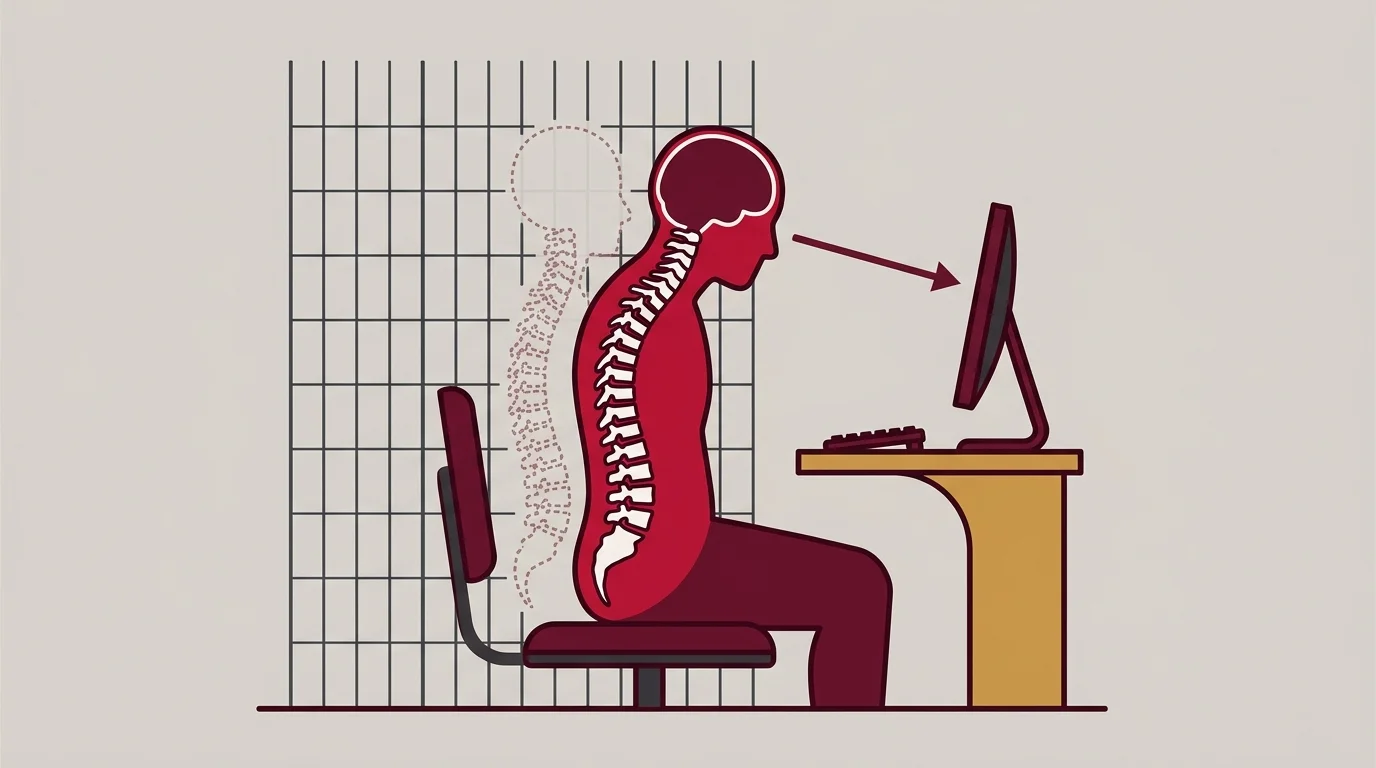
Long hours at a desk put steady strain on the neck and back, and that strain quietly reshapes the natural curves of the spine. Yet the industry's standard response treats every strained spine the same way. It acts as if an eight-hour workday produces one uniform injury instead of a thousand individual ones.
Think of the desk-bound spine as a building settling unevenly on its own foundation. The load is constant, but the settling pattern depends entirely on the ground beneath that specific structure. A plan that ignores the foundation and treats only the cracks in the wall isn't really addressing the building at all, which is why the chiropractic plan-building process starts with the foundation.
Why the Assembly-Line Adjustment Protocol Falls Short
No protocol is proven for every patient. That one truth is the whole problem with treating spinal strain as a single uniform injury instead of a thousand individual ones.
So the standardized adjustment protocol was built for a generic spine, not the one sitting at any real desk. It runs the same fixed sequence no matter which segments carry the load or how far posture has shifted. That's a design mismatch with the varied foundations it's asked to correct.
Why One-Size-Fits-All Protocols Break Down Under Repeated Strain
And repeated strain exposes that mismatch fast. A spine compensating through the neck responds differently than one compensating through the lower back, yet a fixed protocol can't tell the two apart.
That's exactly the gap routine versus individualized care for desk pain tackles head-on. Without that distinction, treatment keeps circling the same symptoms week after week instead of correcting the pattern behind them.
How a Postural Assessment Maps an Individual Spine
So what does a plan built to avoid that failure actually start with? A postural assessment, the diagnostic step that swaps guesswork about compensating segments for a direct reading of this one spine as it stands today.
The clinical picture drawn from vertebral alignment, movement patterns, and workplace ergonomics only has value once it is translated into measurable detail. That translation happens in two places: how the vertebrae sit, and how the body moves around them.
| Assessment Component | What It Measures | Why Desk Work Changes It |
|---|---|---|
| Vertebral Alignment | Where each vertebra sits relative to the spine's expected curve, segment by segment | Hours of forward head carriage and rounded shoulders pull specific segments out of their natural position, and the pattern differs by desk setup and posture habits |
| Movement Patterns | How the neck, shoulders, and hips compensate once alignment has shifted, including where mobility has been lost | Prolonged sitting locks certain joints into fixed positions, forcing neighboring segments to absorb movement they were never built to carry |
| Workplace Ergonomics | Monitor height, chair depth, keyboard position, and the physical habits a workstation reinforces day after day | Desk setup shapes which compensations develop and how severe they become, which is why the assessment reads the workstation alongside the spine itself |
Reading the Vertebral Alignment
Reading vertebral alignment means locating exactly where the spine has drifted from its expected curve. One person's forward head carriage may originate in the mid back, while another's traces back to the base of the neck.
That distinction decides where a Chiropractic adjustment needs to apply pressure and how much correction a given segment can tolerate. Treating the wrong segment, even with a well-intentioned adjustment, leaves the actual source of strain untouched.
Mapping Movement Patterns and Workstation Ergonomics
Movement mapping looks at how the body compensates once alignment has shifted. A shoulder that no longer rotates freely often means the neck or upper back has been absorbing work it was never built to carry.
Desk setup closes the loop on this picture. Monitor height, chair depth, and keyboard position all shape the compensations an assessment uncovers, which is why a plan has to read the workstation along with the spine, something explored further in combining techniques for durable desk pain relief.
What the Research Shows About Targeted Spinal Care
Unexplained does not mean untreatable. A spine that keeps producing symptoms no one can name is not a dead end, it is a measurement problem waiting on better data.
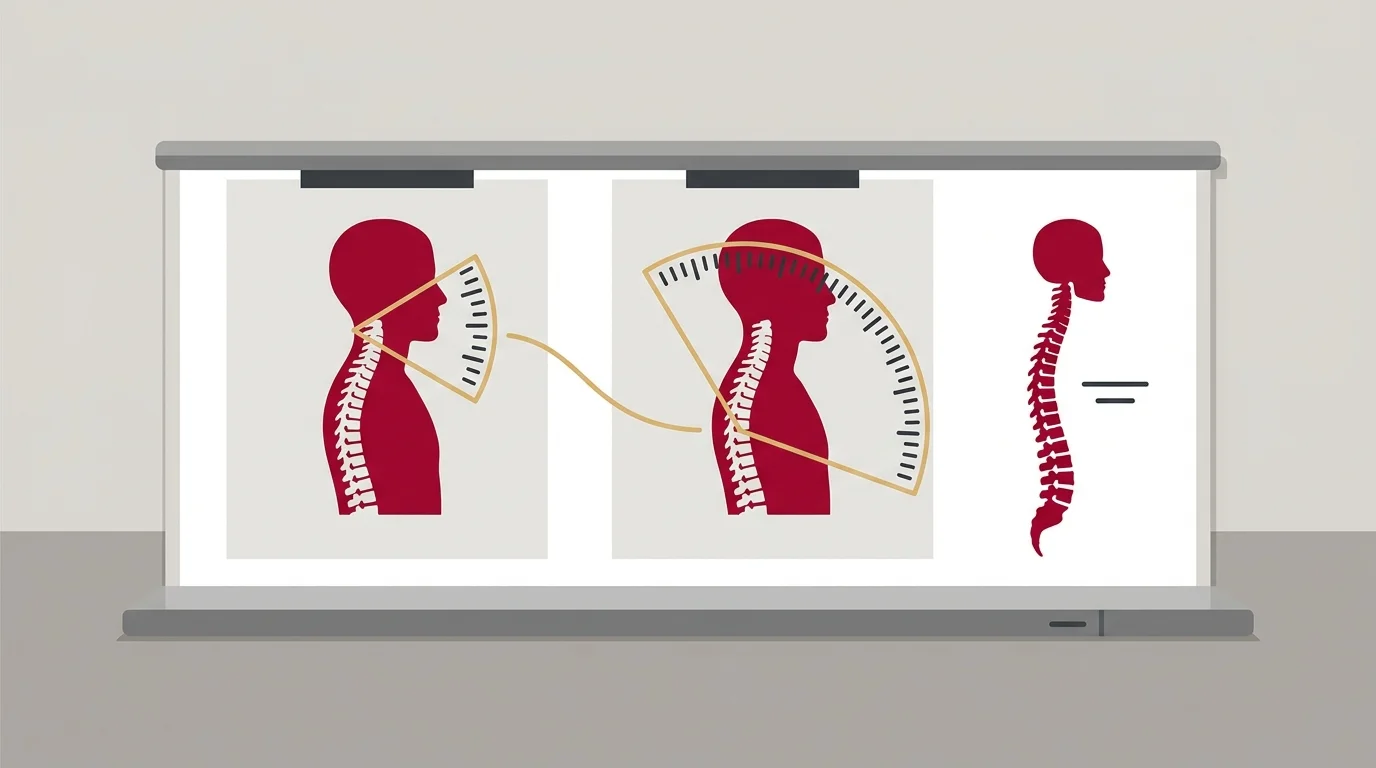
According to a 2023 study by Suwaidi et al. in the Journal of Clinical Medicine, in a randomized controlled study of elderly people with chronic neck pain and forward head posture, the Chiropractic Biophysics group had a statistically significant improvement in craniovertebral angle after 18 sessions over 6 weeks, while the standard exercise group did not.
That six-week window is the point. A specific correction, tracked against a specific baseline, moved a specific marker, where a generic exercise routine did not.
That's the principle behind root-cause chiropractic treatment: care matched to measured findings, not one rigid template stamped onto every spine.
Why Ergonomic Fixes Alone Leave the Underlying Pattern Unchanged
A better chair or a standing desk can't undo a misalignment that's already formed. And reimbursement structures rarely reward the slower work of confirming it has changed. Volume-based billing favors quick, repeatable visits over the individualized reassessment a shifting spine actually needs.
That financial pressure gets dressed up as clinical judgment, but it is a market incentive, not a diagnosis. The nervous system does not reset on a billing schedule. Building resilience against future strain means tracking the same spine over time, not treating a single desk swap as the answer.
How a Personalized Plan Is Sequenced Over Time
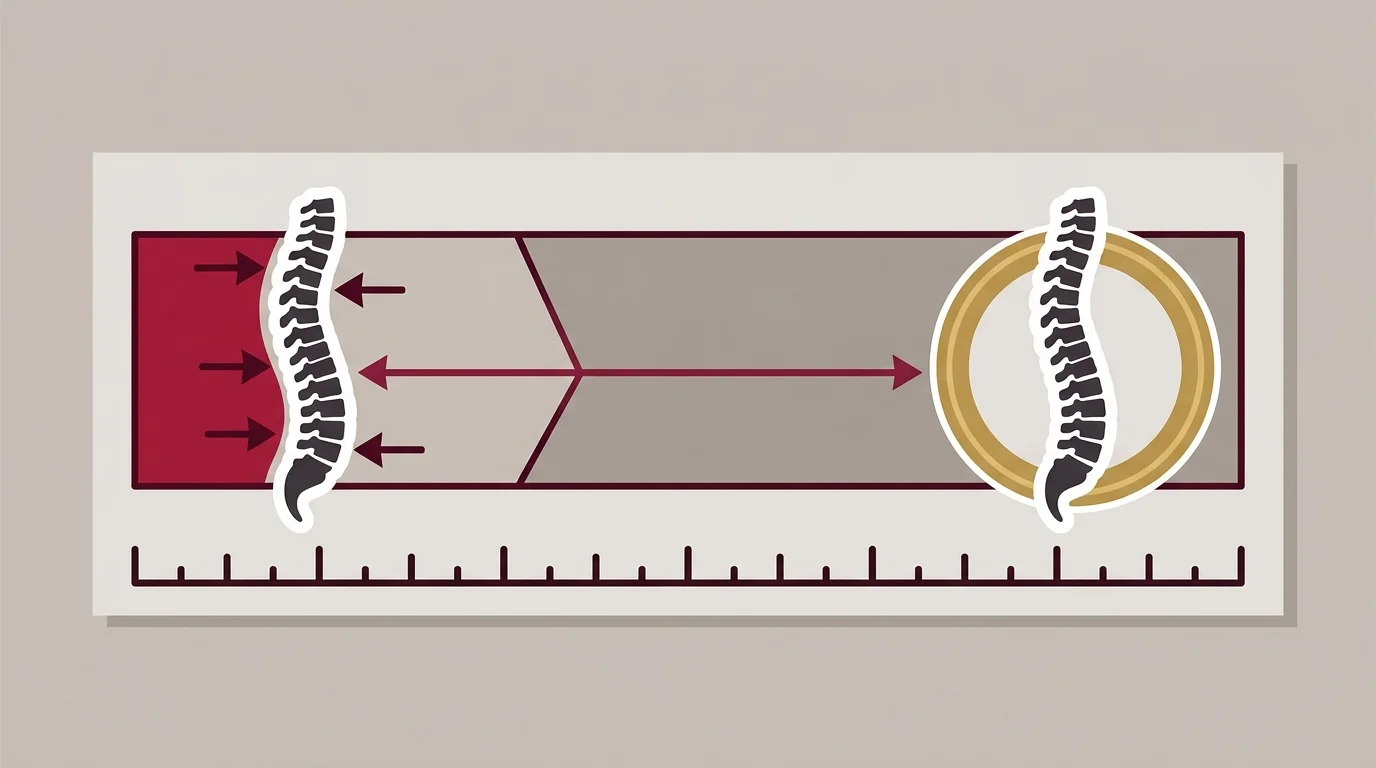
A personalized spinal plan does not stop at the assessment. It unfolds in phases, each one matched to how the specific foundation beneath that spine is responding to care.
A spine under desk strain doesn't stabilize in one pass, so early work shores up the weakest points first and only later turns to reinforcing the whole structure against future load.
| Plan Phase | Primary Focus | Typical Duration |
|---|---|---|
| Initial Correction | Address the segments carrying the heaviest postural load identified during the vertebral and movement assessment | Early phase, while baseline findings still guide each adjustment |
| Pattern Stabilization | Confirm that the spine is holding alignment rather than drifting back into its original compensation pattern | Middle phase, measured against progress from the initial baseline |
| Resilience Building | Build the spine's capacity to withstand ongoing desk-related load and support nervous system function over time | Later phase, continuing as long as the workstation keeps placing demand on the body |
Early Phase: Establishing a Baseline and Initial Correction
So the early phase goes straight to the segments carrying the heaviest postural load, the ones the vertebral and movement assessment flagged. Each Chiropractic adjustment here is sequenced to those findings, not run as a uniform starting routine.
That means progress gets measured against this spine's own baseline, not a generic timeline. A segment compensating through the neck is checked differently than one compensating through the lower back.
Ongoing Phase: Building Resilience Against Re-Strain
Once the initial correction holds, the plan turns toward resilience. Now the work is building the spine's capacity to handle what desk work keeps demanding of it. That's how a posture-centric plan protects the nervous system function and durability it set out to restore.
Frequently Asked Questions
Once it's clear why a personalized spinal plan matters, the same questions keep surfacing. Here are straight answers, built for the desk-bound spine, not generic ones.
How does a chiropractor build a spinal plan specifically for a desk job?
It starts with a postural assessment, not a template. That assessment maps vertebral alignment, movement restrictions, and the workstation itself. Then treatment gets sequenced from those specific findings.
Can chiropractic adjustments correct years of bad posture from sitting at a computer?
Years of sitting reshape how the spine carries load, and that pattern can be addressed through sequenced Chiropractic adjustment matched to the segments involved. Correction depends on the specific compensation pattern, not on time alone.
How long does it take for a personalized chiropractic plan to relieve chronic neck and back pain for a desk worker?
Progress is checked against your own baseline at set re-exams, and the plan changes if a check shows progress has stalled.
What's the difference between a generic chiropractic adjustment and a personalized spinal plan?
A generic adjustment applies the same sequence to every spine regardless of where it compensates. A personalized spinal plan reads this specific foundation first and sequences care to the segments actually carrying the load.
What does a postural assessment actually measure before a plan is built?
It measures where vertebral alignment has drifted, where movement has been restricted, and how desk setup is shaping those compensations. Monitor height, chair depth, and keyboard position all factor into that reading.
The Case for Building Around the Spine You Actually Have
Go back to that building one last time. The foundation under a desk-bound spine never settles the same way twice, and running every patient through the same fixed sequence of Chiropractic adjustment pretends it does.
So here's where we stand: a plan built around the spine someone actually has is the only approach that reaches the segments truly carrying the load. Not a borrowed template, but a structure that's read, measured, and corrected on its own terms.
That is the whole case for getting back to being you instead of cycling through symptoms a fixed template was never built to resolve. If years at a desk have reshaped the way your spine carries weight, the next step is a plan built around the one you actually have — you can talk it through with us.
Results may vary.