
A chiropractic re-examination visit is a formal progress check within a treatment plan. At this appointment, current findings are compared against measurements recorded at earlier visits. The comparison shows whether the treatment plan is producing measurable change. The doctor repeats specific orthopedic, range-of-motion, and functional tests from the initial exam. Results are then placed side by side with the original findings. The doctor also reviews patient-reported outcome measures. These are standardized questionnaires describing pain levels, functional limitations, and daily activity tolerance since care began. Together, these measurements are compared against the patient's starting baseline. The result is an objective picture of change over the course of care. When the data shows measurable improvement, the treatment plan generally continues as designed. When the data shows little or no improvement, the plan is modified. An unexpected change in reported symptoms also prompts a plan modification. Modifications can include a change in technique, a change in visit frequency, or added supportive therapies. Re-examinations also determine when a course of active care has met its goals. At that point, care transitions to a different phase or concludes altogether. Documentation from the visit becomes part of the patient's clinical record. The interval between re-examinations is set by the complexity of the condition and the patient's early response to care. The point of each checkpoint is to show whether treatment is actually producing results.
What a Re-Examination Actually Checks
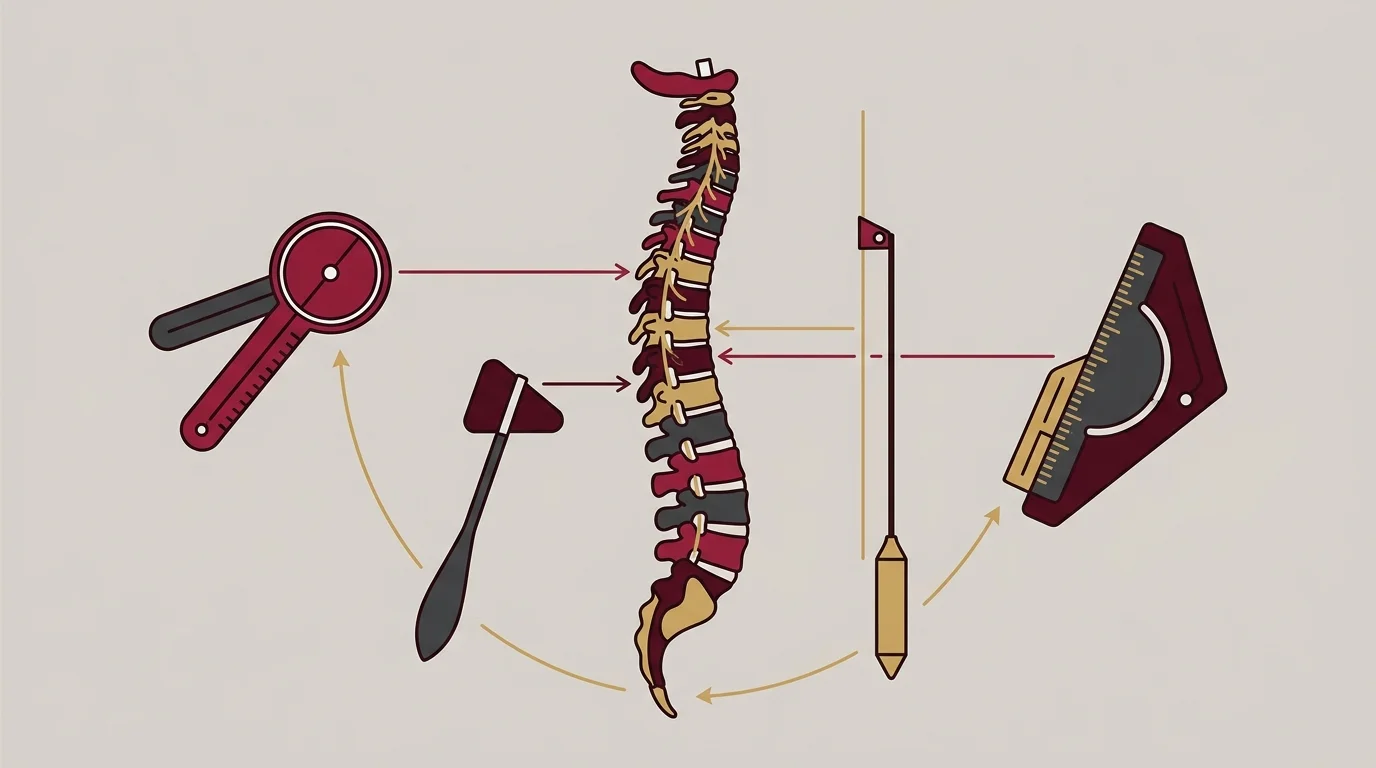
So what is a re-examination? It's a dedicated appointment built to formally measure progress and decide what comes next in a plan of care. It isn't a treatment visit wearing a different name.
A regular visit delivers care. A re-examination is a strategic pause that looks hard at what's working and what has to change, and that difference is the whole point of the checkpoint.
Most plans never reach that checkpoint with clear data waiting for them. Without it, a plan just keeps running on assumption instead of evidence, which is part of what goes into a custom chiropractic plan worth understanding from the start.
Why 'Just Keep Coming Back' Isn't a Plan
Think of a re-examination as a checkpoint on a route, not just another stop along it. At that checkpoint, the data either confirms the direction or forces a correction.
But most plans never reach that checkpoint at all. They just keep rolling, visit after visit, on the hope that more care will eventually mean better results.
The Problem With Running the Same Protocol Regardless of Response
Parts of the industry treat a chiropractor's job as running one proven protocol on every condition that walks in. But no protocol is proven for every patient. Repeating the same frequency and technique regardless of response isn't consistency, because knowing when a chiropractor should revise an active plan means checking that response against data.
The Data Behind the Decision
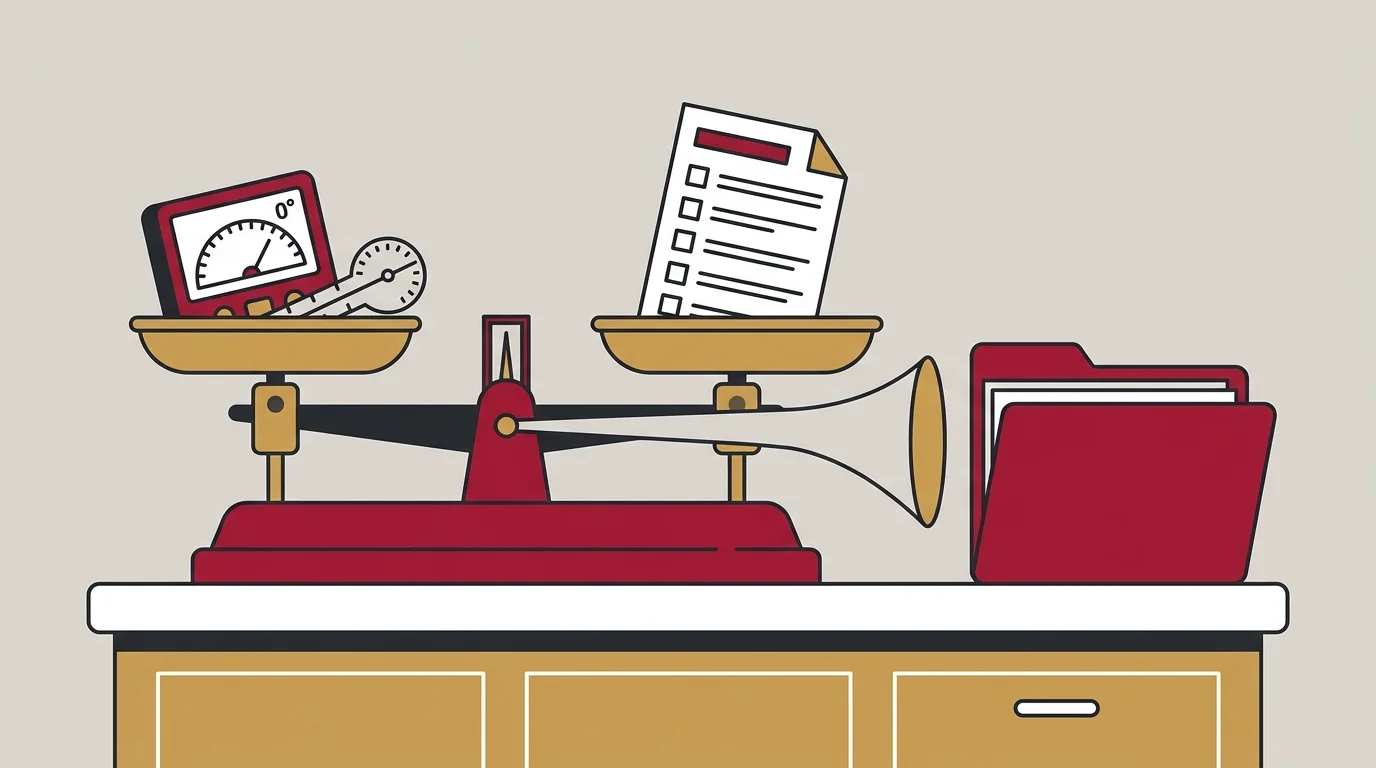
A checkpoint's only worth stopping at if what gets measured is real. That's the whole job of a re-examination: trade impression for data.
That data splits into two tracks. One is objective, measured by a clinician. The other is subjective, reported by the patient.
| Measurement Type | What It Captures | Example Tool or Method |
|---|---|---|
| Objective Clinical Measures | Orthopedic and range-of-motion findings scored by a clinician using the same protocol applied at intake | Standardized range-of-motion and orthopedic testing repeated under consistent conditions |
| Patient-Reported Outcome Measures | Pain levels, functional limitations, and daily activity tolerance described directly by the patient | Standardized questionnaires completed at set intervals across the course of care |
| Symptom Status Review | Any unexpected change in a patient's condition since the prior checkpoint, favorable or unfavorable | Structured comparison of current complaints against the patient's documented baseline |
| Functional Milestone Tracking | Real-world activities a patient can or cannot perform compared against where care began | Side-by-side comparison of documented functional goals set during the initial exam |
Objective Measures: What Gets Tested
Objective measures repeat the same orthopedic and range-of-motion tests performed at intake, scored the same way each time so the numbers can be compared directly. But the instrument doing the measuring matters as much as the test itself.
In a 1994 study by Stude, Goertz and Gallinger in the Journal of Manipulative and Physiological Therapeutics, the authors concluded that the Orthoranger II digital inclinometer was not reliable, between or within examiners, for measuring lumbar flexion, extension or lateral flexion. That finding does not discard range-of-motion testing. It argues for consistency in who tests, how, and under what conditions, so a change in the number reflects a change in the patient rather than a change in the measurement.
Patient-Reported Measures: What Gets Asked
So patient-reported outcome measures cover the ground objective tests can't reach. They ask the patient straight out how pain, function, and daily activity tolerance have shifted since care began.
Per a 2023 study by Young et al. in Chiropractic & Manual Therapies, one outcomes database collects this information from patients at the first clinical visit, then again at 14, 30, and 90 days afterward. That schedule turns a single impression into a trend line. Reviewing what to ask about care plan progress before that visit helps a patient bring sharper answers to the questions a re-examination asks.
Where Coast-Along Care Breaks Down
Coast-along care treats an unexplained plateau as a dead end instead of a data point. Unexplained does not mean untreatable. It means the plan hasn't been checked against a measurement yet, and a system that skips that check mistakes silence for an answer.
A plan that never pauses to compare numbers can drift for months before anyone notices nothing has changed. That drift is the failure mode: not a bad adjustment, but the absence of a moment where the data could have corrected course. Reviewing in-office chiropractic treatment options makes more sense once that checkpoint exists to direct them.
How the Findings Decide What Happens Next
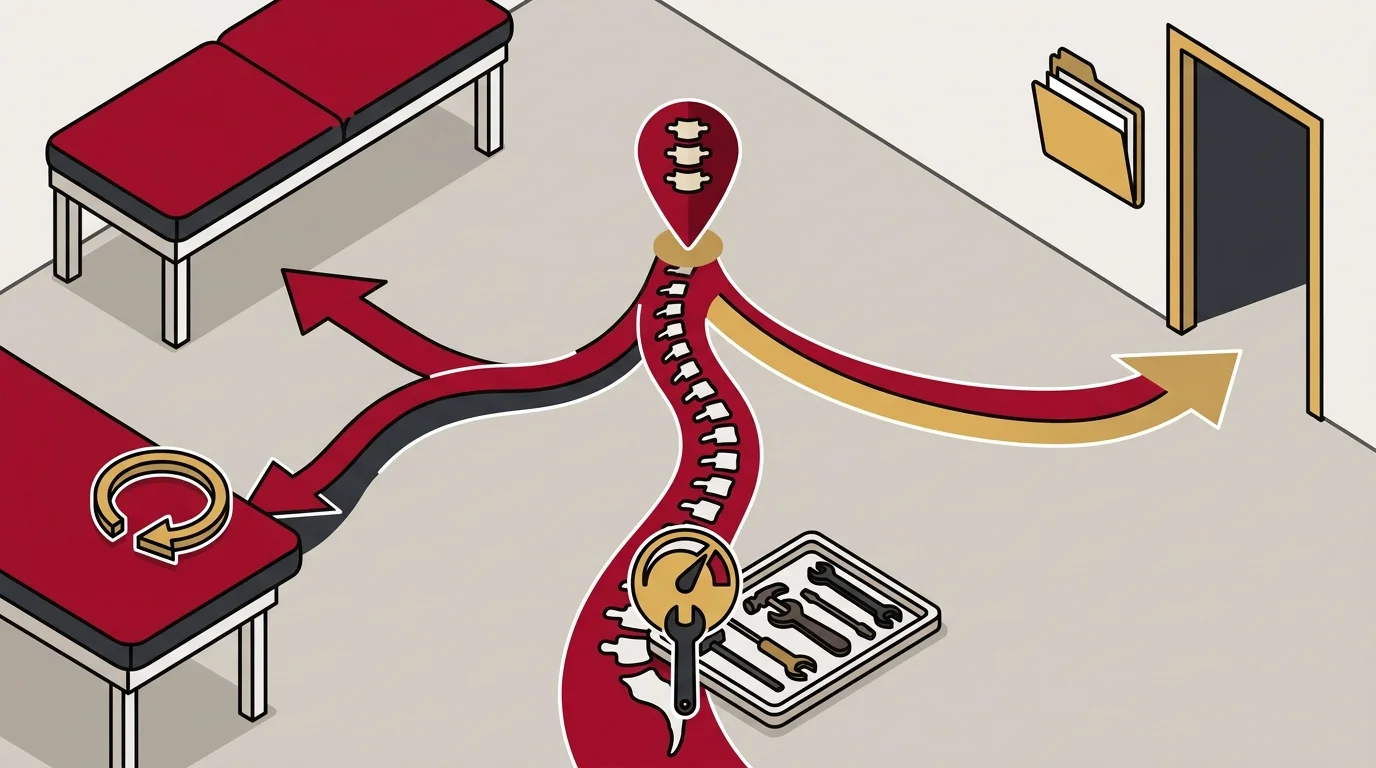
So once the findings are in, the decision isn't a judgment call. It's a straight comparison against baseline.
Three outcomes exist. The plan continues as designed, the plan gets modified, or the plan transitions toward conclusion. The data decides which one, not the calendar.
| Re-Examination Finding | What It Signals | Typical Next Step |
|---|---|---|
| Measurable improvement across objective and patient-reported measures | The plan is producing the response it was designed to produce | Treatment continues as designed, with the same technique and frequency maintained |
| Little or no change from baseline despite consistent care | The current approach has plateaued and the variable, not the patient, needs to change | The plan is modified, which can include adjusting technique, frequency, or adding supportive therapies |
| Unexpected change in symptoms, better or worse, since the last checkpoint | The condition has shifted in a way the original plan did not anticipate | Findings trigger an off-cycle review rather than waiting for the next scheduled interval |
| Functional milestones met and patient-reported tolerance normalized | The goals set at intake have been reached | Active care transitions toward a different phase or concludes altogether |
But Doesn't Feeling Better Already Prove It's Working?
Feeling better is a signal, not a verified outcome. A system that treats it as proof skips the very comparison that would confirm it or contradict it.
Comfortable answers take the feeling at face value and move on. Real answers check that feeling against the same tests run at intake. Only one of those approaches is willing to find out it's wrong.
From Findings to the Next Adjustment
This visit is built into a modern, evidence-based chiropractic approach precisely so the plan evolves with the patient rather than running on inertia. The goal is replacing guesswork with objective data that shows functional improvement in plain terms.
And that data points straight at the next adjustment. Technique, visit frequency, and added supportive therapies all get decided by what the findings showed, not by what the schedule assumed.
Frequently Asked Questions
So what actually happens in the room? Here are the practical questions patients ask most about the visit itself.
How often should a chiropractic re-examination happen?
A re-exam happens at set points in a care plan, and sooner if symptoms change in a way nobody expected.
What's the difference between a regular visit and a re-examination?
A regular visit delivers care. A re-examination pauses that care to compare today's measurements against baseline. Then it decides whether the plan continues, changes, or wraps up.
What specific things are measured to track progress?
Objective tests repeat the same orthopedic and range-of-motion measures taken at intake, scored consistently so the numbers compare directly. Patient-reported outcome measures add how pain, function, and daily activity tolerance have shifted since care began.
What happens if the re-examination shows no improvement?
The plan gets modified rather than continued unchanged. That can mean adjusting technique, frequency, or adding supportive therapies based on what the data actually shows.
Does insurance cover a chiropractic re-examination?
Insurance is checked at your first visit, so you'll know your costs before treatment starts.
The Checkpoint Is Where the Plan Earns Its Next Mile
A checkpoint isn't a formality you roll past on the route. It's where the plan either proves itself or gets rewritten.
Continuing a plan without measurable progress is the clinical definition of failure. A re-examination exists so that failure gets caught at the checkpoint instead of discovered months later, after the drift has already cost the patient time.
That's the standard worth holding a plan to: not comfort, not routine, but evidence that the direction is still correct. If a re-examination is due, or overdue, schedule a visit with Touch Of Wellness Chiropractic.
Results may vary.
Insurance coverage varies by plan and should be verified before your visit.