
Patients should ask about chiropractic plan changes in a direct conversation scheduled after a re-examination. That conversation works best with specific examples of symptom changes in hand. It should also cover which clinical markers would show progress or justify a change in frequency, technique, or duration. A chiropractic treatment plan is a working roadmap built from an initial exam. It is not a set prescription meant to run unchanged for months. Conditions, lifestyles, and goals shift over time, and the plan guiding care should shift with them. A formal re-evaluation is appropriate whenever symptoms improve, plateau, or worsen. It is also appropriate when a new factor appears, such as a job change or a new exercise routine. Useful questions cover the objective findings that support the current frequency of chiropractic adjustment. They also cover the specific signs that would signal readiness to reduce visits. A reasonable timeline for the next reassessment belongs in the same discussion. Patients can describe their own experience in plain terms. Reported symptoms, function, and daily impact count as meaningful clinical information, not a side note. A provider should explain, in clear language, why a particular phase of care is recommended. The provider should also name the specific outcome that marks the end of that phase. A plan that has run unchanged for an extended period without measurable improvement deserves direct attention. Ongoing care without progress toward a defined goal signals a plan that needs review, not continuation. Open, two-way communication between patient and provider is the mechanism that keeps a treatment plan matched to a person's current condition.
What a Chiropractic Treatment Plan Is Actually Built to Do
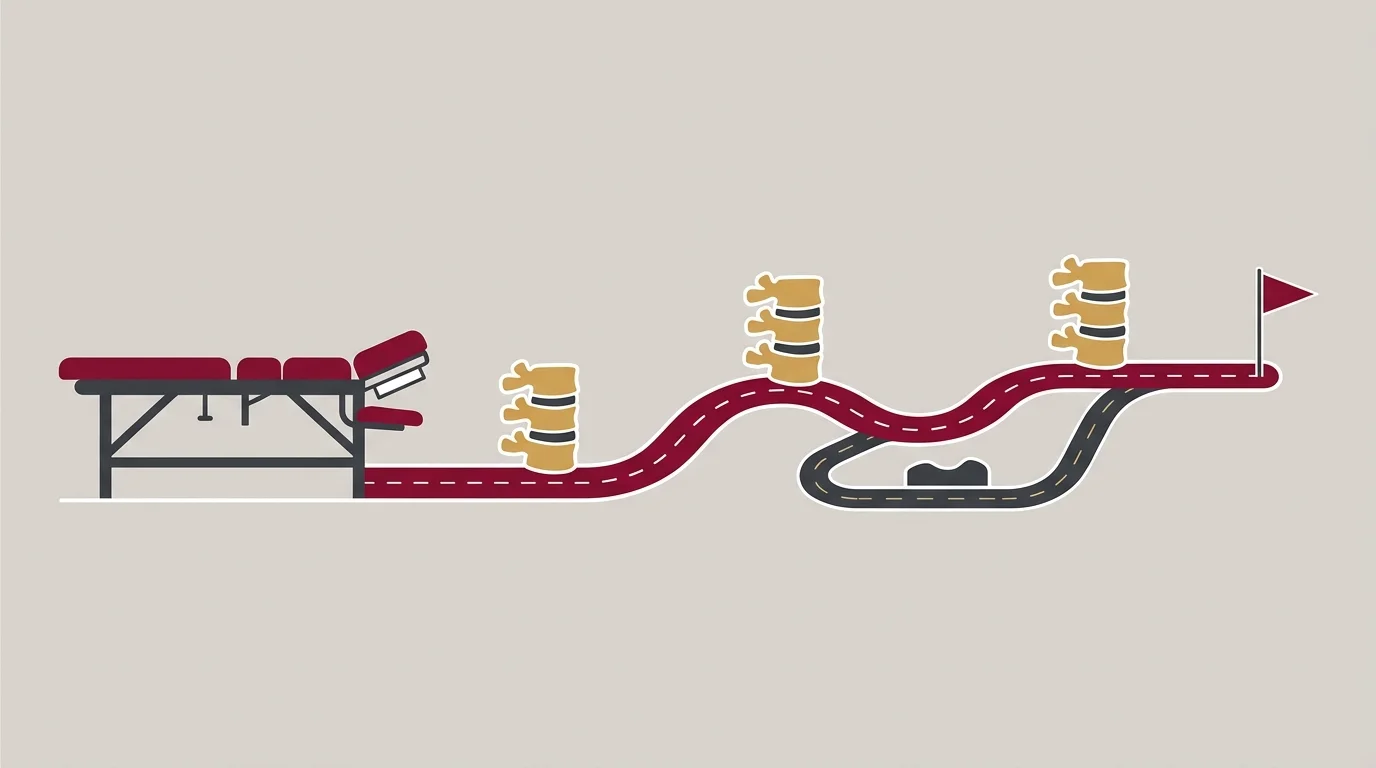
A treatment plan is a living document. It's built to be read, checked against how you're actually doing, and redrawn when the facts change. It's not meant to sit in a file and run on autopilot.
So effective chiropractic care works as a dynamic process rather than a static prescription written on day one and followed blindly for months. That distinction is the entire point of what comes next.
How a Plan Moves From One Step to the Next
A plan usually starts by easing the main complaint, then works on the pattern behind it, and each step gets checked before the plan moves on.
From there, what patients should know about plan construction shows how those steps tie into decisions about how often and how long. Each step exists to answer one clinical question before the plan moves on.
Why a Plan Is a Roadmap, Not a Prescription
Your treatment plan is best understood as a collaborative roadmap, one that should be expected to evolve as your condition and health goals change. A roadmap gets redrawn when the terrain changes.
That means a plan that never changes was never a roadmap. It was a script.
Why the Static Treatment Plan Became the Industry Default
So why did the static plan become the default in the first place? It was easier to build once than to keep rebuilding. And nobody was checking whether it still matched the patient in front of it.
The Assumption Behind a One-Size Protocol
A chiropractor's job is not to run the same proven protocol on every presenting condition. No protocol is proven for every patient, because every spine arrives with a different history attached to it.
Watching for indicators that an active plan needs changes is how that assumption gets corrected in practice.
Every spine arrives with a different history, so one course of care that never changes can't serve them all. A static plan assumes everyone's the same, and nobody is.
The Mechanics of a Plan That Never Gets Reopened
Look at a fixed visit count. It's the clearest version of this flawed default, set at intake and run on a calendar instead of on evidence of change.
That treats a guess made on day one as more reliable than what the next few weeks actually show.
| Review Checkpoint | What a Reopened Plan Catches | What a Fixed Plan Misses |
|---|---|---|
| Re-examination after acute phase | Whether pain and function have actually improved enough to justify reducing visit frequency | A fixed visit count keeps running on calendar time regardless of what the exam would show |
| Functional and symptom reassessment | New or changed presenting symptoms that were not part of the original exam findings | A static plan keeps addressing the original complaint even after the condition has shifted |
| Stabilization checkpoint | The point where further chiropractic adjustment stops producing objective improvement, signaling a shift toward maintenance or discharge | A plan without checkpoints keeps running past stabilization with no defined stopping point |
| Lifestyle or goal change review | New factors, such as a job change or exercise routine, that alter what the plan needs to accomplish | A plan built once at intake has no mechanism for absorbing a goal that did not exist on day one |
How a Fixed Visit Count Outlives Its Usefulness
So a count built before any adjustment happened cannot account for a patient who improves early or plateaus late. The number stays fixed while the condition does not.
Running a schedule past the point it stops producing change is how a plan drifts.
What a Plan Without Checkpoints Costs
A plan without checkpoints has no mechanism for noticing that drift. A provider's training, covered in how training influences treatment approach, shapes how those checkpoints get built in.
What the Research Says About Communication and Satisfaction

So what does research say about the conversation itself? It points to communication as something patients notice and value. Care plans built from what the patient actually reports are the premise behind our approach to spinal treatment.
Communication as a Measured Predictor of Outcomes
Communication isn't a soft add-on. A 2025 study by Gentile, Whetten and Alcantara (Journal of Chiropractic Medicine) found that communication and an interpersonal style that treated the patient as an equal were the most important predictors of shared decision-making among chiropractic clinic patients. A Danish study of chiropractic patients found that overall satisfaction was tied to examination and communication, patient involvement and information, and perceived effectiveness and reassurance.
The Clinical Signals That Say a Plan Needs to Change
Unexplained doesn't mean untreatable. A symptom that won't take an easy label still leaves findings someone can observe. And those findings are exactly what a reviewed plan tracks.
Symptom-Based Signals Worth Tracking
Pain that moves location, intensity that spikes after a plateau, or function that stalls despite consistent visits are all signals worth naming out loud. A trial of care addresses this directly: progress gets measured over a short, defined period before any longer-term commitment gets made. That structure turns a vague feeling into a checkpoint with a deadline attached.
Lifestyle Shifts That Change the Equation
Now add real life. A new job, a heavier training load or a change in sleep can shift how a condition responds to the same frequency of chiropractic adjustment. So a plan built before that shift can't account for what the shift actually changed.
How to Structure the Conversation When Your Plan Needs to Shift
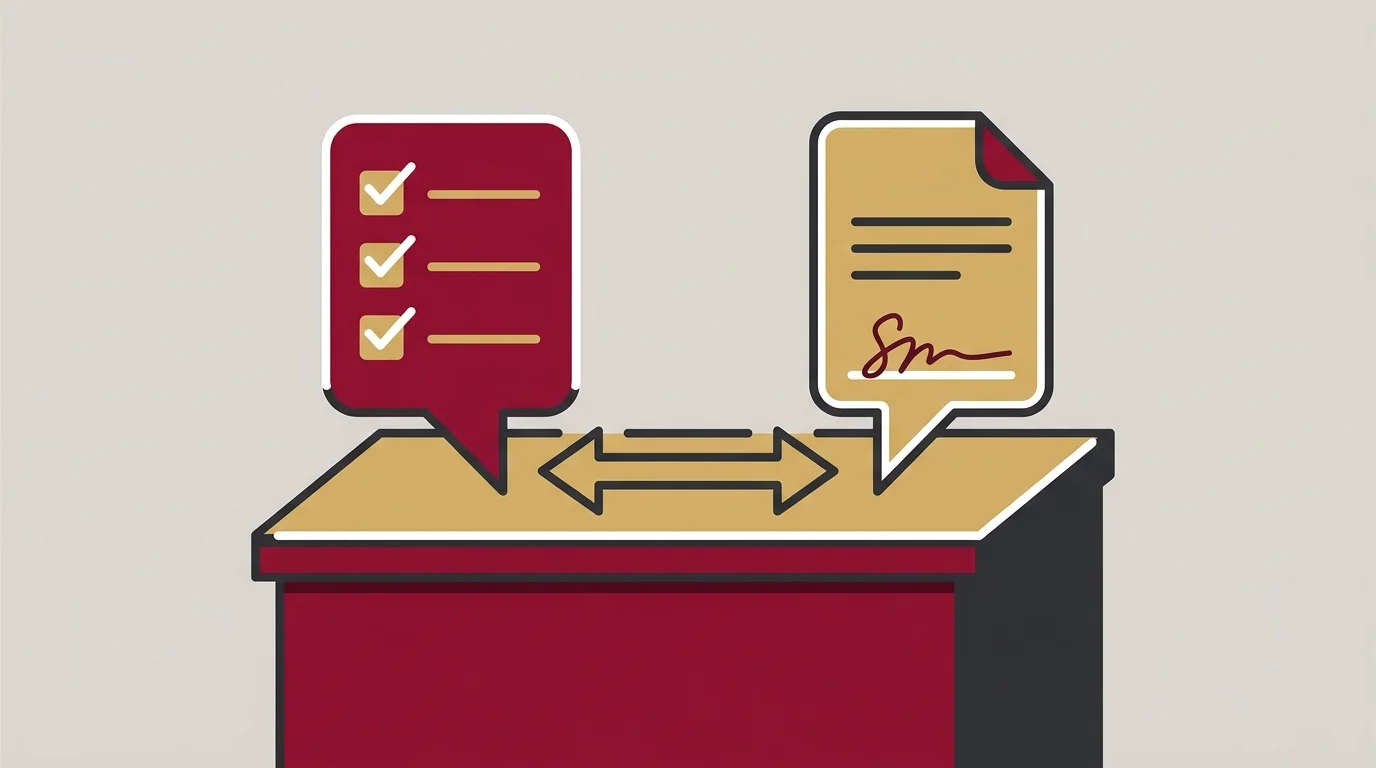
So how do you open this conversation without it feeling like a fight? Proactive, honest communication is one of the best ways to keep a care plan matched to your recovery. That means how you structure the talk matters as much as being willing to have it.
| Conversation Starter | What It Asks the Provider to Show | Why It Matters |
|---|---|---|
| "What specific finding changed since my last exam?" | A documented clinical marker, not a general impression, tied to this phase of care. | Ties the conversation to evidence a provider already tracks, not a vague sense of progress. |
| "What outcome would justify a different visit frequency?" | A defined threshold for reducing, increasing, or holding the current chiropractic adjustment schedule. | Turns frequency into a measured decision instead of a number set once at intake. |
| "What does a trial of care look like from here?" | A short, defined window with a named endpoint and the specific result that would end it. | Gives stagnation a deadline instead of letting an unchanged plan run indefinitely. |
| "How does my own experience factor into this plan?" | Acknowledgment that reported symptoms and daily function count as clinical information. | Keeps the plan aligned to the person's actual condition, not just the original intake note. |
Questions That Open an Honest Review
Start a review with a question, not a complaint. Ask what specific finding has changed since your last exam, and your provider has something concrete to answer. Ask what outcome would justify a different visit frequency, and you'll get the same kind of answer.
What a Trial of Care Actually Measures
A trial of care only works if its endpoint was named before it started. So the real questions are simple: what gets measured, over what window, and what result ends it? Without that structure, a plan can't tell improvement from drift.
Frequently Asked Questions
A few questions come up again and again once patients understand that a plan is supposed to evolve. Here are direct answers to the ones asked most.
How often should my chiropractic plan be reviewed or re-evaluated?
Ask for a re-exam at set points in your plan, and sooner if pain stops dropping, moves, or a new symptom shows up. That way a plateau gets caught before months pass unnoticed.
What specific signs or changes in my symptoms mean my treatment plan needs an update?
Watch for pain that moves, intensity that spikes after a plateau, or function that stalls. Each one says it's time for a review. New symptoms outside your original complaint count too.
Is it normal for the type or frequency of my chiropractic adjustments to change over time?
Yes, and it should. As acute symptoms settle, frequency and focus usually shift toward corrective and functional goals. That's a plan tracking a changing condition, not a fixed script.
What happens if I'm not seeing the expected progress on my current chiropractic plan?
That's when a trial of care gets measured against the endpoint it started with. If a treatment isn't producing measurable progress toward a defined goal, the plan changes.
How do I talk to my chiropractor if I feel my treatment plan is too long or isn't working?
Open with a specific finding, not a complaint. Asking what result would justify a different frequency turns the conversation into a clinical question instead of a confrontation.
Can my lifestyle, like a new job or exercise routine, affect my chiropractic care plan?
Absolutely. A new job, a heavier training load, or disrupted sleep can change how a condition responds to the same adjustment frequency, which is exactly what a reviewed plan accounts for.
Where This Leaves You
So where does this leave the roadmap metaphor? A roadmap that never gets redrawn was never guiding anything — it was just a page someone drew once and stopped looking at.
Scare tactics and treatment plans stretched past their usefulness have no place in care that actually serves a patient. A plan that keeps running without measurable progress toward a defined goal is a clinical failure, not a reason to keep showing up. Asking what changed, what's next, and what marks the finish line is how a patient keeps a plan honest.
And that conversation starts in the room, not on a worksheet. Bring your questions and talk it through with us.
Results may vary.
Insurance coverage varies by plan and should be verified before your visit.