
A personalized chiropractic plan has no single price tag, so the honest comparison with routine visits is about when and how the cost is explained. A personalized plan usually starts with a first visit that includes a consultation, a hands-on evaluation, and a report of findings. That report covers what was found, how care can help, and what the care will cost, so the full cost is known before treatment starts. Insurance can be checked at that same first visit, which shows what coverage applies before any plan begins. A clearly priced plan also carries no hidden admin fees. Routine visits work differently. Each visit is paid on its own, and nothing in the routine model sets a defined course of care, so the total grows with however many visits pile up over time. That makes the routine model hard to judge in advance, even when a single visit looks simple. The useful comparison is not one visit against one visit. It is a plan whose costs are laid out before treatment starts, with checkpoints that show when care should change or end, against an open-ended string of visits with no stated total.
What Separates a Personalized Chiropractic Plan From a Routine Visit
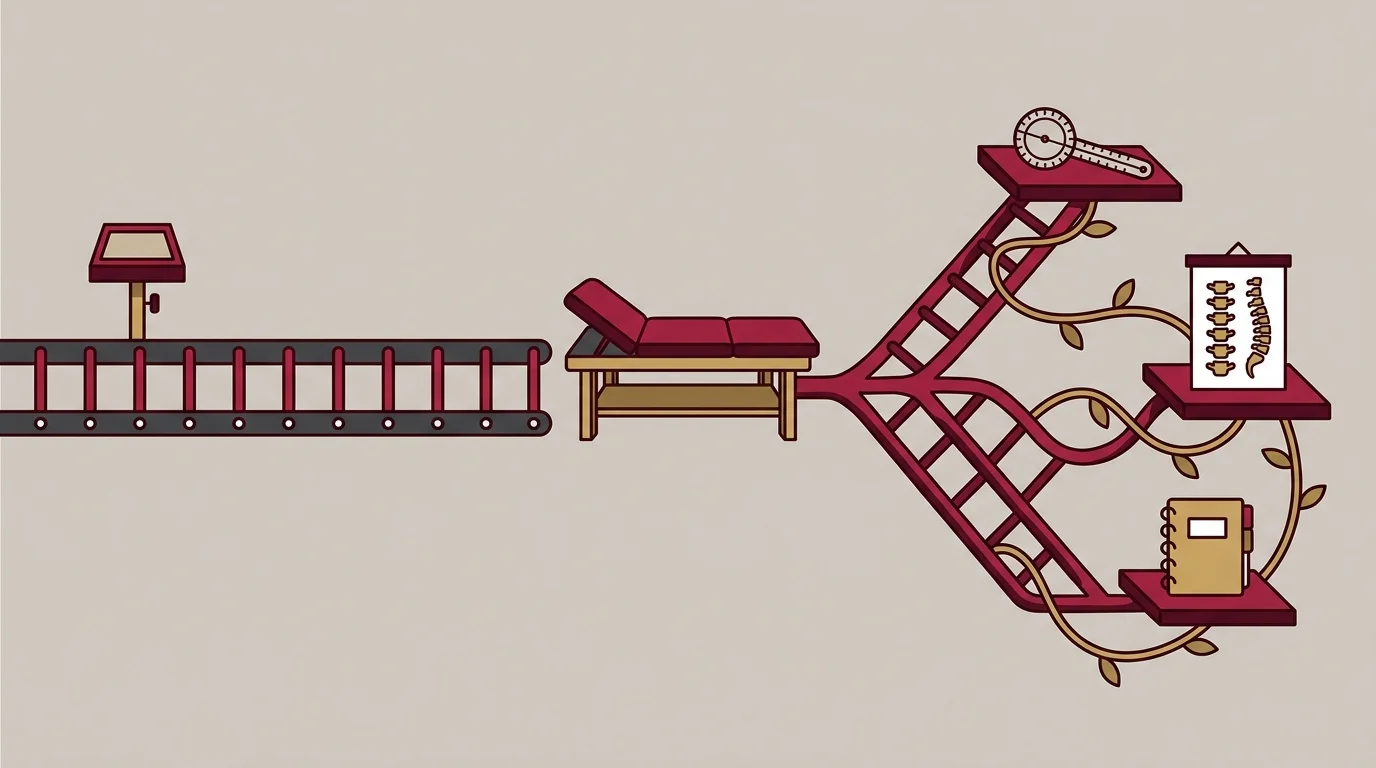
So what actually separates these two models? Plenty of people picture chiropractic care as a string of identical adjustments, one after another. A personalized chiropractic plan is different: it's a detailed roadmap for one person's health goals, built only after a thorough first assessment.
The debate isn't just about cost. It's about the value derived from two fundamentally different approaches to care. One hands every patient the same adjustment regardless of what brought them in, and the other builds toward a defined outcome — the difference between a roadmap and a vending machine. For a deeper breakdown of how that roadmap gets built, a plain-language guide to chiropractic plan building walks through the process step by step.
Why the Same Adjustment for Every Presenting Condition Is a Flawed Model
Now picture a practice that runs the same protocol on every condition that walks through the door. A method built for one complaint gets forced onto a different one, with a different mechanism driving it.
No protocol is proven for every patient. A fixed sequence of adjustments cannot account for a desk-pain case and a sports injury case at the same time, because the underlying cause isn't the same.
A fixed protocol skips the exam that would tell those cases apart. For a closer look at what tailored care actually changes for one common condition, differences between standard and tailored desk pain care breaks down the comparison in full.
What a Thorough Initial Exam Actually Measures
So what does a real exam actually measure? It's not a quick scan for the obvious complaint. It's a full accounting of what brought a patient in, and why.
| Exam Component | What It Measures | Why a Routine Visit Skips It |
|---|---|---|
| Health History Review | Past injuries, existing conditions, and lifestyle factors that shape the plan | A routine visit treats the current complaint as the whole story, with no record of what came before it |
| Physical Examination | Posture, range of motion, and the mechanical pattern behind the pain, not just the spot where it hurts | A routine visit checks the painful area alone and moves straight to the chiropractic adjustment |
| Goal Translation | Exam findings converted into a written set of goals and a defined sequence of care | A routine visit ends at the adjustment, with no translation of findings into a forward plan |
| Progress Reassessment | Whether the current approach is working, built into the plan as a scheduled checkpoint | A routine visit has no checkpoint, so a stalled approach can repeat indefinitely unnoticed |
The Components a Comprehensive Exam Covers
A comprehensive exam starts with health history, not just the current complaint. Past injuries, existing conditions, and lifestyle factors all shape what an effective plan looks like.
From there it moves into physical examination — posture, range of motion, and the mechanics behind the pain. For a closer look at how that process differs from a quick symptom check, comparing tailored exams to standard checkups lays out the distinction in full.
How Exam Findings Translate Into a Written Plan
And those findings don't get filed away. They become the written plan itself, turned into specific goals and a defined sequence of care.
Those written goals also give a patient something to measure progress against. A 2024 study by Newell and Holmes (Journal of Patient Experience) found that patient satisfaction with chiropractic care was consistently high in comparison to other professions. A plan built from real findings gives a patient something a routine adjustment never does — a stated destination, not just a repeated stop.
What Patients Pay and When They Find Out
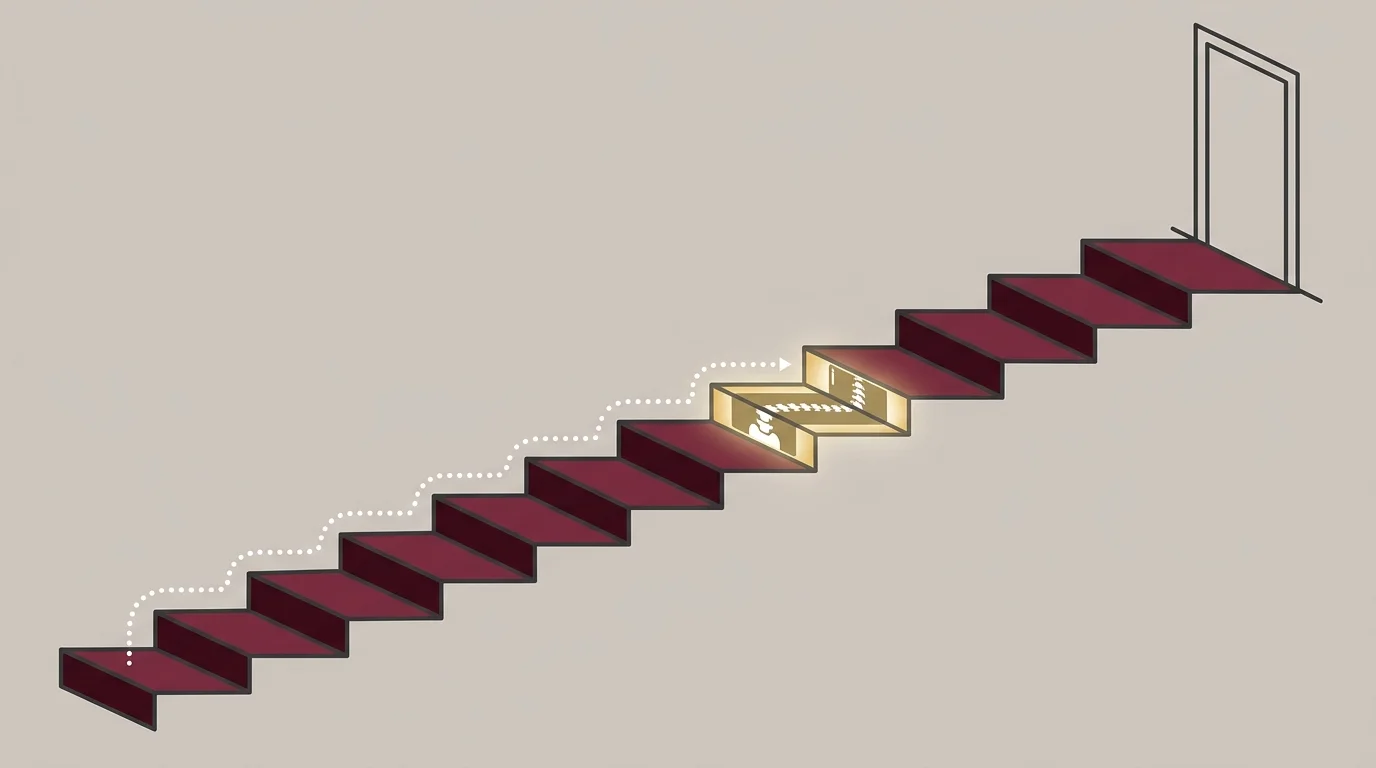
At Touch of Wellness Chiropractic, the cost question gets answered before care starts, not after. The first visit moves through a consultation, a hands-on evaluation, and a report of findings. That report covers what was found, how the practice can help, and what it will cost. Insurance is checked at that first visit, so patients know their costs before treatment starts.
The practice uses courtesy pricing, and there are no hidden admin fees. Patients can pay with insurance, cash, credit cards, HSA or FSA accounts, Affirm, personal checks, or AutoDebit, and payment plans and care plans are available. Personal injury cases are accepted as well. Patients who want to see what that care involves can read about the practice's nervous system focused chiropractic treatment.
How the Routine-Visit Model Fails Over a Full Course of Care
So what happens when that same adjustment gets repeated for months without a plan behind it? The per-visit model has no mechanism for catching stalled progress, because nothing in it was built to measure progress in the first place.
How a Series of Disconnected Visits Loses the Thread of a Case
Here's where the failure compounds. A disconnected series of visits treats each appointment as its own event, with no record connecting today's session to last month's.
Scare tactics and prolonged treatment plans are ethically indefensible, and a model with no defined endpoint invites exactly that kind of drift.
And nothing forces a routine sequence to end, so without a stated destination a case can run on indefinitely.
Frequently Asked Questions
So let's clear up the mechanics. These are the questions that come up most about cost and planning.
How will I know what a personalized chiropractic plan costs?
You'll know before treatment starts. At Touch of Wellness Chiropractic, the report of findings at your first visit covers what was found, how the practice can help, and the cost. There are no hidden admin fees.
How is a personalized chiropractic plan developed?
It starts with a full health history, not just the complaint that brought you in. From there comes a physical exam covering posture, range of motion, and mechanics. Those findings get translated into a written plan with specific goals.
Do I have to commit to a long-term plan to see results?
No. A personalized plan is built around your findings and your timeline, not a fixed contract length. It tracks progress against defined checkpoints, so the plan adjusts as your case does.
Can I use my insurance for a personalized chiropractic plan?
Yes. The practice takes insurance, and it's checked at your first visit.
What happens if my condition improves faster than the plan outlines?
A plan with checkpoints catches that. Faster progress means the plan adjusts forward instead of running out the clock on a fixed number of visits you no longer need.
What This Means
So come back to the vending machine. It hands the same item to everyone who walks up, no matter what they actually need. A roadmap gets charted for one destination.
Cookie-cutter protocols are not care. They are assembly-line medicine, and they stop looking like a bargain the moment a case stalls with no plan behind it to catch it.
A personalized plan is built to get you back to being you, not just in the door and out again. If that roadmap is what you're after, book an appointment at Touch of Wellness Chiropractic and start with an assessment instead of a guess.
Results may vary.
Insurance coverage varies by plan and should be verified before your visit.