
Surprise billing happens when an out-of-network provider or facility (one outside your insurance network) unexpectedly bills a consumer for the uncovered balance remaining on the bill, which is the part your insurance did not cover, according to the Centers for Medicare & Medicaid Services (CMS). Tebra says that giving patients written cost estimates, even rough ones, helps set what patients expect and builds trust. At Touch of Wellness Chiropractic, one step of your first visit is a report of findings, including what care costs, before treatment starts.
How Many Patients Put Off Care Because of Cost
In a KFF poll (Americans' Challenges with Health Care Costs), about three in ten adults (28%) said they skipped or put off care they needed in the past 12 months because of the cost. Among adults with no insurance, it was roughly six in ten (62%). Insurance does not fully protect you. Three in ten insured adults ages 18 to 64 still said they did not get care they needed because of cost.
A Tebra survey found that 60% of Americans (6 in 10) said they would put off or skip at least one type of medical care in 2026 because of cost.
A survey that Nice Healthcare paid for found that 38% of Americans put off care because of high out-of-pocket costs, and 29% put off care because they were unsure what it would cost. Those are two different reasons: high costs, and not knowing the cost. Asked for a primary reason for avoiding care, 26% (about 1 in 4) cited not knowing the cost. That is more than the 20% (1 in 5) who complained about waiting times for appointments. The survey write-up is New Survey Reveals Over Half of Americans Delayed Healthcare in Past Year.
The table below lists what each survey found.
| Survey | Finding |
|---|---|
| KFF, all adults, past 12 months | About three in ten (28%) skipped or postponed needed care because of cost |
| KFF, uninsured adults | Roughly six in ten (62%) skipped or postponed needed care due to cost |
| KFF, insured adults 18-64 | Three in ten still report not getting needed care due to cost |
| Tebra, January 2026 | 60% said they would delay or skip at least one type of medical care in 2026 due to cost |
| Nice Healthcare-commissioned survey | 52% delayed or skipped necessary care in the past 12 months |
The Nice Healthcare survey found that 52% of U.S. adults (about half) put off or skipped care they needed in the past 12 months. It also found that 21% (about 1 in 5) reported their condition had become more serious. For the price of waiting on nerve pain, see The True Long-Term Cost of Staying on Nerve Pain Medication.
What a Surprise Bill Is and Why Careful Patients Still Get One
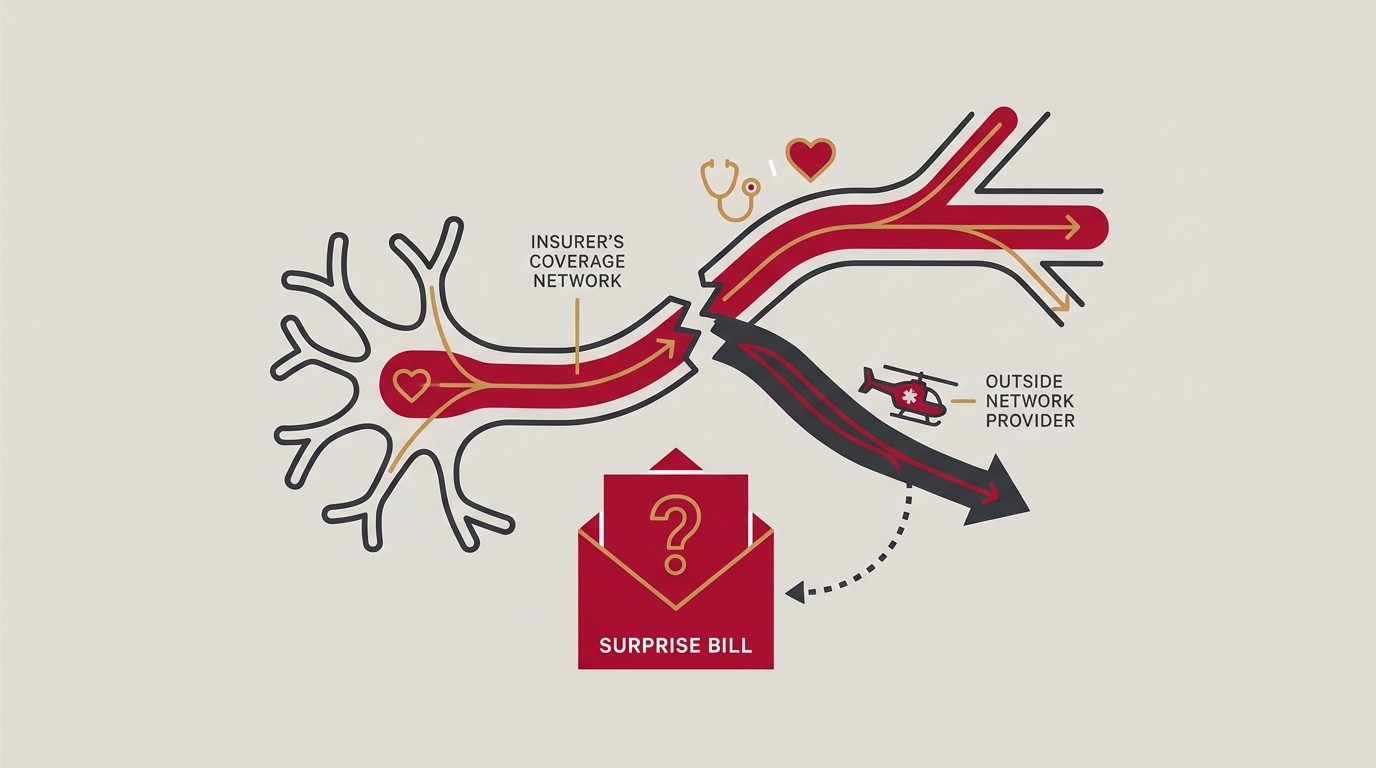
Before the No Surprises Act, the American Heart Association says, a patient could get a surprise bill after unknowingly getting care from a provider, hospital or air ambulance company that was outside the insurer's coverage network.
CMS says nearly 1 in 5 patients who go to the emergency room, have an elective surgery (one that is planned ahead), or give birth in a hospital get surprise bills. On average, these cost from $750 to $2,600 per episode.
Checking ahead doesn't always stop the shock. In a January 2026 Tebra survey (Medical price transparency: How cost confusion delays care), nearly 7 in 10 Americans (69%) said they were surprised by the cost of a routine medical service. That was true even after they checked with their insurance or asked the provider about the price beforehand.
The same survey tested what people know about their coverage. Only 23% of Americans knew they would owe the full $1,000 cost of a medical test if they hadn't met their deductible (the amount you pay before insurance pays), even if their insurance "covers 80%."
Nearly 1 in 3 (32%) said they weren't confident they understood the charges on their last medical bill.
Before a nerve visit, you can read Understanding Insurance Verification Before a Neuropathy Consultation.
What the No Surprises Act Covers and Where It Stops

The Urban Institute explains the main rule. Starting on January 1, 2022, providers and facilities have been banned from sending patients balance bills (bills for the leftover amount) for these services:
- emergency services
- air ambulance services (but not ground ambulance)
- some services after a patient is stabilized
- nonemergency services at in-network facilities
The ban doesn't apply when, under certain circumstances, a patient signs a waiver agreeing to treatment by an out-of-network provider.
The Urban Institute also describes a cap on what you owe. Patients treated by an out-of-network provider are only responsible for the cost-sharing amount they would have paid if the service had been in network. Providers and facilities cannot send balance bills to patients for a higher amount.
CMS says the rules also cover an in-network setting other than an in-network hospital, hospital outpatient department, critical access hospital, or ambulatory surgical center. That could include community health clinics or some doctors' offices. CMS posted the CAA enforcement letter – Illinois.
How Rising Costs Feed the Fear of a Bill

The Consumer Financial Protection Bureau says the average deductible for people with insurance through an employer went up 336 percent, from $650 in 2002 to $1,945 in 2020. A deductible is what you pay before insurance starts to pay.
The bureau also says recent research shows about half of adults in the U.S. find it hard to afford their health care.
In the Tebra survey, almost half of Americans (47%) said they avoided care in the past year after getting a bill that was higher than they expected.
In an American Heart Association poll (Poll: Majority of patients fear return of surprise medical bills), half of adults nationwide (50%) said they would not have the money, or were not sure they would have it, to pay an unexpected medical bill of more than $1,000 that they thought insurance would cover. A chief executive quoted in that source said, "Before the No Surprises Act, patients were often hit with unexpected medical bills that could throw them into financial crisis and led some to avoid seeking care or treatment altogether."
The Urban Institute covers the law's balance-billing protections in No Surprises Act: Perspectives on the Status of Consumer Protections Against Balance Billing.
For nerve care costs in this area, read Neuropathy Care Costs and Coverage in Tazewell County: A Guide.
How This Practice Tells You the Cost Before Treatment Starts
The patients we see want explanations. They value quality over cost. They want to be treated like an adult, not processed like a number. Tebra says private practices can lead the way in reducing cost confusion by having open talks about prices, explaining insurance benefits in simple terms, and telling patients early what costs to expect. It also says written cost estimates, even rough ones, help set expectations and build trust.
Since 2010, Dr. Karen Hannah's practice has turned away from high-volume models. It chose unhurried, 15-minute evaluations and results-driven care instead. I call volume-based pay what it is, a money incentive, and I won't let that pressure be passed off to you as medical need.
Scaring patients into months or years of treatment they may not need is a business model, not a clinical model. I call it an ethical breach, and I refuse to defend it as a style of practice.
If you're dealing with nerve pain, see our Neuropathy Care page. Our Chiropractic Care page explains how the work is done.
The Report of Findings: Cost Disclosed Before Treatment
Your first visit has steps, and one of them is a report of findings. It includes what care costs, and it comes before treatment starts. I'd rather give you the real cost and an honest finding, even an unwelcome one, than a nice-sounding answer that explains nothing.
Courtesy Pricing, Stated Plainly
You're told what care costs before treatment starts.
Frequently Asked Questions
Does having insurance mean no cost surprises?
No. In the Tebra survey, 57% of insured people (a little over half) put off or skipped care because they were unsure about the cost. Among people without insurance, it was 81% (about 8 in 10). Ask what your care will cost before you start.
Who can an Illinois patient contact about a surprise or balance bill?
You can call the federal No Surprises Helpdesk at (800) 985-3059. You can also call the Illinois Department of Insurance Office of Consumer Health Insurance at (877) 527-9431. Illinois Legal Aid Online lists both numbers for surprise bills and balance bills.
How many insured adults worry about unexpected medical bills?
About 2 in 3. In a 2020 poll, 65 percent of insured adults were at least "somewhat worried" about unexpected medical bills, the Urban Institute reports.
Does Illinois have its own dispute process for self-pay patients?
Not one that Illinois reported. The Centers for Medicare & Medicaid Services says Illinois did not indicate that any applicable state resolution process for payment disputes between providers and patients currently exists.
Start Nerve Care Knowing the Cost
Our doctors in Morton, Illinois, give chiropractic care and neuropathy care to adults with back, neck, joint or nerve pain. At your first visit, one step is a report of findings, including what care costs, before treatment starts.
You're told what care costs before treatment begins.
I'd rather show you a documented cost step than tell you how warm we are. I let substance, not niceness, set this practice apart.
If you have a sudden severe headache, numbness or weakness in an arm or leg, trouble speaking or seeing, or loss of bladder or bowel control, call 911 or your doctor right away.
Ready to hear the cost first and start your care? Book Appointment
Results may vary.