
At Touch of Wellness Chiropractic, patients get clear, honest answers about what their insurance covers and what it doesn't, without runaround. HealthCare.gov says your plan may require preauthorization for certain services before you get them, except in an emergency, and that preauthorization is not a promise your plan will cover the cost. A deductible is an amount you could owe during a coverage period, usually one year, for covered services before your plan begins to pay. The federal departments are finalizing a rule that gives people real-time, personalized access to cost-sharing information, including an estimate of what they would owe, through an online self-service tool.
The Plan Terms a Benefits Check Looks At
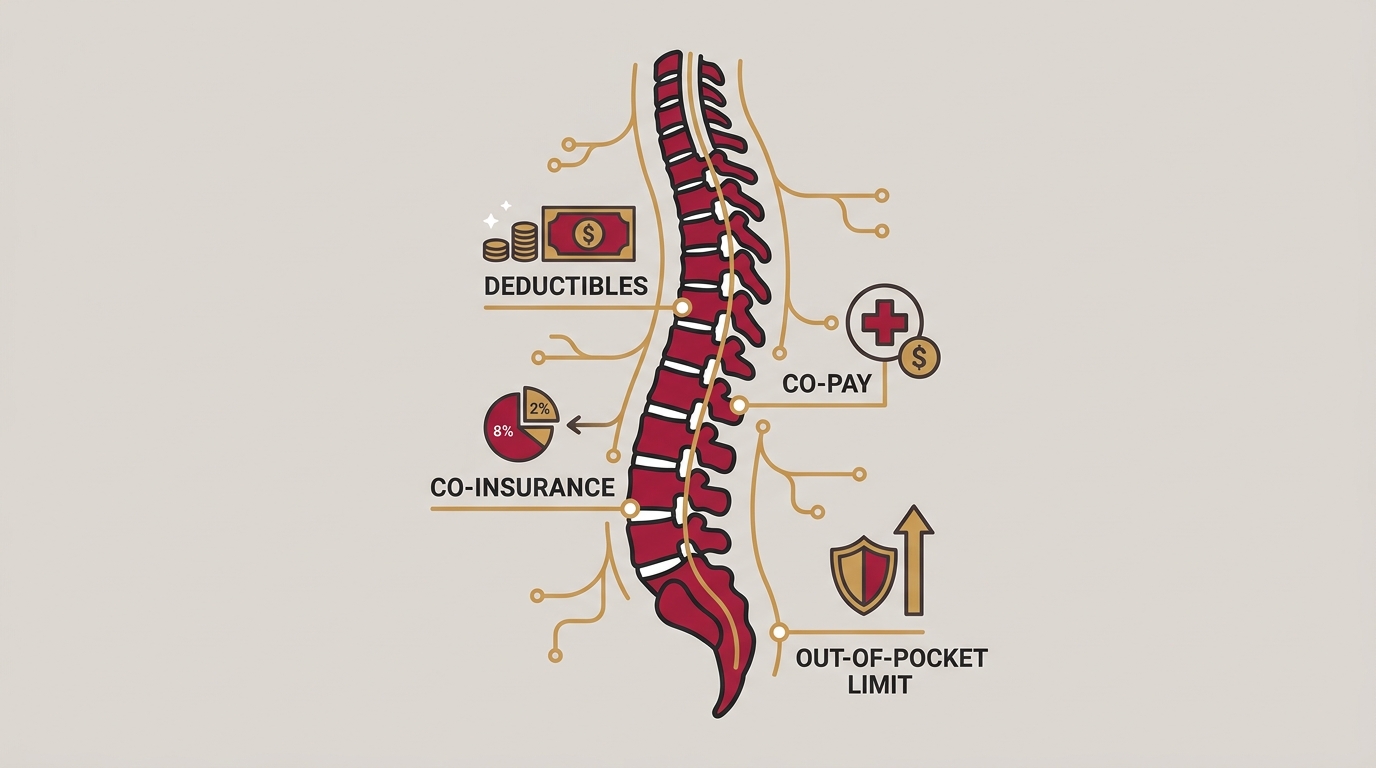
A benefits check looks at a few terms in your plan. If you want to see what costs look like in our area, start with Neuropathy Care Costs and Coverage in Tazewell County: A Guide.
A deductible is an amount you could owe for covered health care services before your plan begins to pay. It applies during a coverage period, which is usually one year.
Coinsurance is your share of the cost of a covered service. It's figured as a percentage of the allowed amount for the service, and 20% is one example. You generally pay coinsurance plus any deductibles you owe.
Illinois limits what a plan can charge you. The Illinois Department of Insurance says deductibles and copayments are the only allowable charge, other than premiums. Each one has to be a specific dollar amount or a specific percentage of the cost of the care.
HealthCare.gov has more plain-language meanings in its Glossary of Health Coverage and Medical Terms.
How Your Plan Lets You Check Your Own Costs

The federal departments are finalizing a rule that would give you real-time, personalized access to cost-sharing information. Cost-sharing is the part of the bill you pay yourself. The access comes through an online self-service tool, and it includes an estimate of how much of the cost you would owe.
You can also ask for an estimate. The Centers for Medicare & Medicaid Services says that if you have insurance, the estimate will generally be shared with your insurance plan.
What Prior Authorization Is, and What It Doesn't Promise
HealthCare.gov calls it preauthorization, which means approval in advance. Your plan may require it for certain services before you get them, except in an emergency. But preauthorization is not a promise that your plan will pay the cost.
Illinois law uses the term "prior authorization." It's the process insurers, or the utilization review companies they contract with, use to decide whether a service that's otherwise covered is medically necessary and appropriate. That decision comes before the service is given. You can read the law on the Illinois Compiled Statutes-215 ILCS 200. Prior Authorization Reform Act page from the Managed Care Legal Database.
The table below lines up each Illinois rule with what it requires.
| Rule | What it requires |
|---|---|
| Non-urgent decision | No later than 5 calendar days after all necessary information is obtained |
| Urgent decision | No later than 48 hours after all information needed to complete the review is received |
| New or changed requirement | Written notice to contracted providers no less than 60 days before it is implemented |
| Requirement not in effect on the date of service | Claim cannot be denied for failure to obtain prior authorization |
| Approval still valid | Cannot be revoked or further limited, conditioned or restricted |
Illinois Prior Authorization Rules
Here's what the Illinois law says insurers must and must not do.
- A full list. An insurer must keep a complete list of services that need prior authorization. This includes services where a company under contract with the insurer does the prior authorization.
- Start dates. For each service that needs prior authorization, the insurer must say when the requirement started for policies issued or delivered in Illinois. That means the effective date or dates, and the end date or dates if there are any.
- Rules not yet in effect. An insurer may not turn down a claim for failure to obtain prior authorization if that requirement was not in effect on the date of service.
- Notice of new rules. Before an insurer starts a new or changed prior authorization requirement, it must send written notice to its contracted health care professionals and providers at least 60 days ahead.
- Regular decisions. An insurer must decide to approve or deny no later than 5 calendar days after it has all the information it needs.
- Urgent decisions. For urgent care, the insurer must decide no later than 48 hours after it gets all the information needed to finish the review.
- Approvals stay put. An insurer, or the company it hires to review care, may not revoke a prior authorization approval it already gave while the approval is still valid. It also may not further limit, condition or restrict it.
- One approval only. An insurer may not make both you and your health care professional get prior authorization for the same instance of a service. It also may not require more than one prior authorization for that same instance.
How Prior Authorization Can Delay Care

Doctors say prior authorization can slow care down. The American Medical Association (AMA) surveyed doctors, and here is what they said:
- Doctors complete an average of 40 prior authorizations per week.
- Nearly one in three (32%) say requests are often or always denied.
- More than nine in 10 (95%) say prior authorization delays access to necessary care.
- Nearly four in five (79%) say patients give up on treatment because of authorization problems.
You can read the full release, AMA survey: Prior authorization reform pledge falls short with physicians.
Why Checking Coverage at Intake Helps Prevent Denials
Plans change their rules. Medical Economics says a service a practice has billed routinely for years can be denied overnight when a plan narrows its coverage policy or adds an authorization requirement.
Medical Economics reports on the 2026 Experian Health survey. In it, four in 10 respondents (40%) said 10% or more of their claims are denied. That compares with 41% in 2025, 38% in 2024 and 31% in 2022.
The same survey found that 43% of respondents said wrong data collected at sign-up and intake causes 5% to 15% or more of their denials. That's down from 52% in 2025 and 53% in 2024.
For testing and billing, see Nerve Conduction Testing and Insurance: What Gets Billed. Medical Economics reports these figures in Why are claims being denied in 2026? 'Services not covered' now tops the list.
If You Choose Not to Use Your Insurance
You can have insurance and still count as self-pay. The Centers for Medicare & Medicaid Services says you are generally considered an uninsured or self-pay individual if you do not have health insurance. You also count if you do not plan to use your insurance to pay for a medical item or service. For the purposes of the good faith estimate, a person in that position is considered self-pay.
Some people are left out. The No Surprises Act requirements don't apply to people covered by Medicare, Medicaid, Indian Health Services, Veterans Affairs Health Care, or TRICARE.
To see what care costs, read How to Request a Courtesy Pricing Breakdown for Neuropathy Care.
How Insurance Questions Are Handled at Touch of Wellness Chiropractic
At Touch of Wellness Chiropractic, patients get clear, honest answers about what their insurance covers and what it doesn't, without runaround. I give you the plain coverage answer even when it is not the one you hoped for, and I'd rather tell you the truth than offer a kind-sounding answer that explains nothing.
Cost is part of your first visit. One step is a report of findings, which includes what care costs, and it happens before treatment starts. You can learn about Neuropathy Care here, and Chiropractic Care explains how the work is done.
If you have a sudden severe headache, numbness or weakness in an arm or leg, trouble speaking or seeing, or loss of bladder or bowel control, call 911 or your doctor right away.
Frequently Asked Questions
Which plans are not covered by the Illinois prior authorization law?
Some plans are left out. The Illinois law doesn't apply to employer self-insured health plans under the federal Employee Retirement Income Security Act of 1974. It also doesn't apply to care under the Workers' Compensation Act or the Workers' Occupational Diseases Act. State, employee, local government, and school district health plans are left out too. Ask your plan which kind you have.
What must a prior authorization denial tell me?
It must tell you why. In Illinois, a notice that turns down a request must give the reasons for the denial and the evidence-based rules behind it. It must also describe any papers that were missing or not enough. Read the notice closely to see what was missing.
Can I get a standing referral to a specialist?
Yes. In Illinois, your health plan must set up a way for you to get a standing referral if you need a specialist. The referral can last up to one year, and it can be renewed again and again. Ask your plan how to start.
Are federal prior authorization rules changing?
Yes. Major parts of the 2024 Centers for Medicare & Medicaid Services Interoperability and Prior Authorization Final Rule take effect on Jan. 1, 2027. As the date gets close, ask your plan what that means for you.
Before Your First Neuropathy Consultation
Before your first neuropathy consultation, you get clear, honest answers about what your insurance covers and what it doesn't, without runaround. Touch of Wellness Chiropractic offers Neuropathy Care and Chiropractic Care in Morton, Illinois. Our team can help with billing questions and a courtesy pricing breakdown. Would you like to Book Appointment and start with your questions?