
Standard doses of pregabalin or duloxetine alone give meaningful pain relief in only about 4 out of 10 (40%) patients with painful diabetic neuropathy, which is nerve pain from diabetes. This nerve pain greatly lowers quality of life. It is closely linked with sleep problems, depression or anxiety, and a higher risk of foot problems such as sores (ulcers), infections, and amputations of a leg or foot that are not caused by injury. On December 19, 2019, the United States Food and Drug Administration issued a warning about an increased risk of breathing problems, which doctors call respiratory depression, when using gabapentin or pregabalin.
Why Nerve Pain Drugs Help Only Some Patients
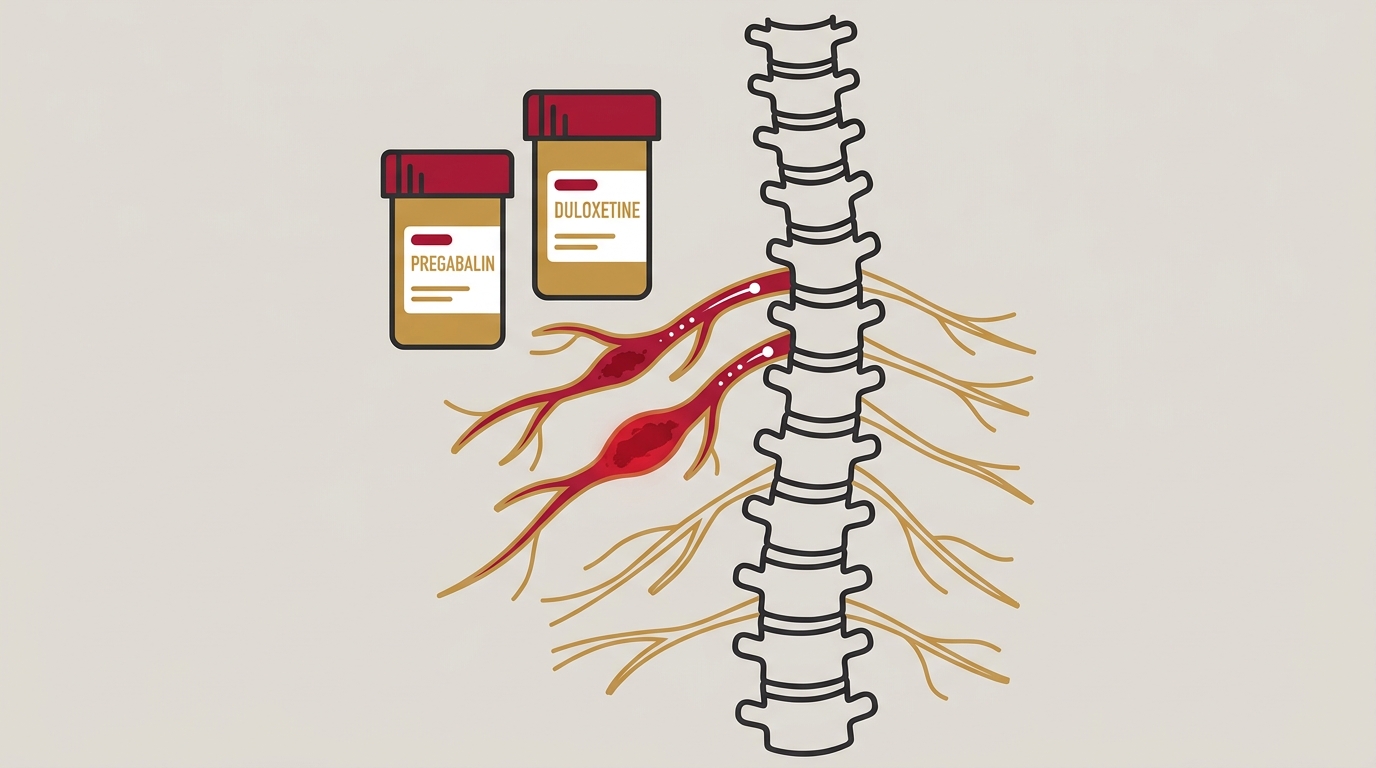
Only two drugs are approved by the United States Food and Drug Administration for painful diabetic neuropathy, which is nerve pain from diabetes: pregabalin and duloxetine. That comes from a systematic review and meta-analysis in Frontiers in Endocrinology, Pregabalin and duloxetine combination for painful diabetic neuropathy: a systematic review and meta-analysis.
Even so, standard doses of pregabalin or duloxetine alone give meaningful pain relief to only about 4 out of 10 patients (40%).
A higher dose is not the answer either. A daily dose of 60 mg is usually enough to balance how well the drug works and how well people tolerate it. Doses above 60 mg per day generally do not give more pain relief, but they may increase side effects.
Staying on a drug that only partly works isn't care in my book. I judge care by whether the patient responds. If there's no response, I change course.
Side Effects That Come With Each Refill
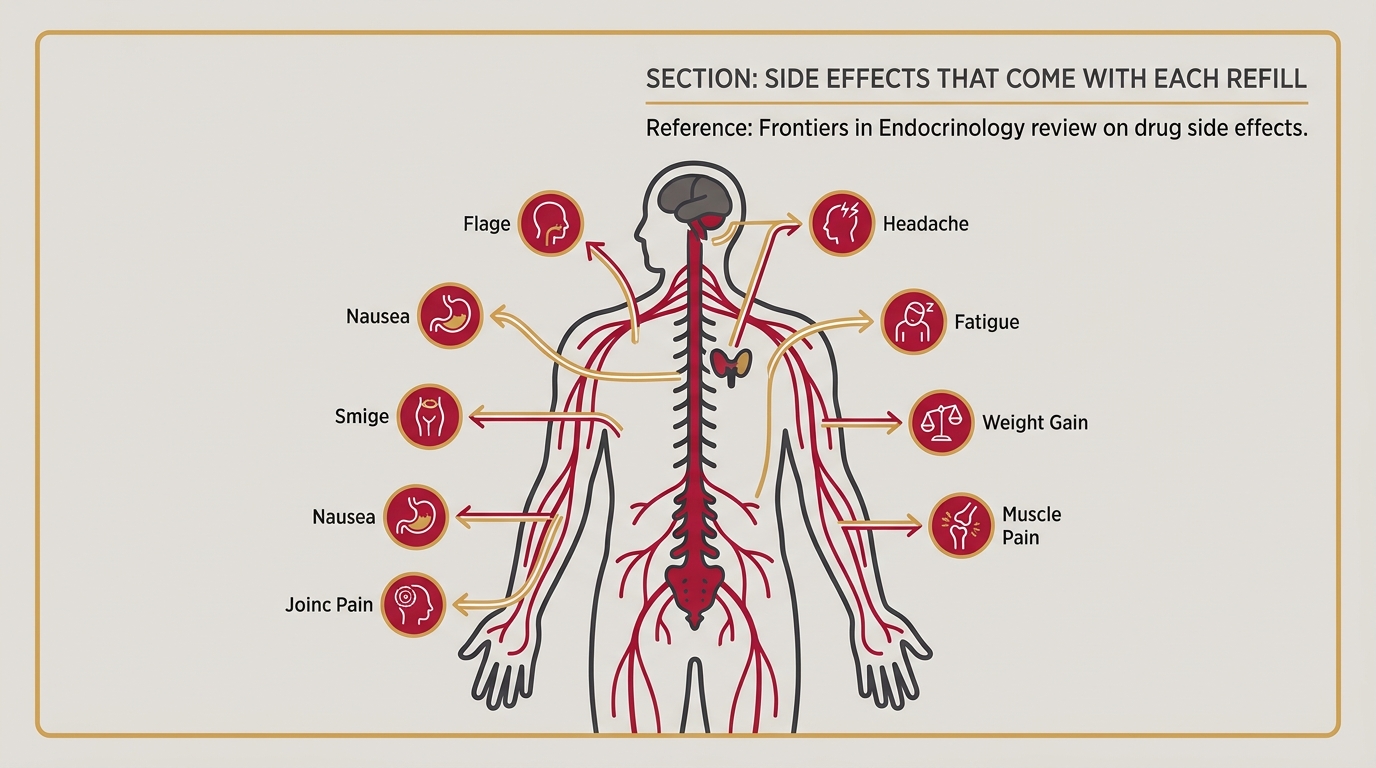
The Frontiers in Endocrinology review lists the side effects of these drugs. In one list, the most common are nausea (feeling sick to your stomach), sleepiness (somnolence) and dry mouth.
Another list names dizziness, sleepiness (somnolence), fluid retention (your body holding extra water) and weight gain as the typical ones.
Your kidneys matter here too. A dose adjustment is required for patients with reduced kidney function.
Added Risks for Older Adults on Gabapentin or Pregabalin
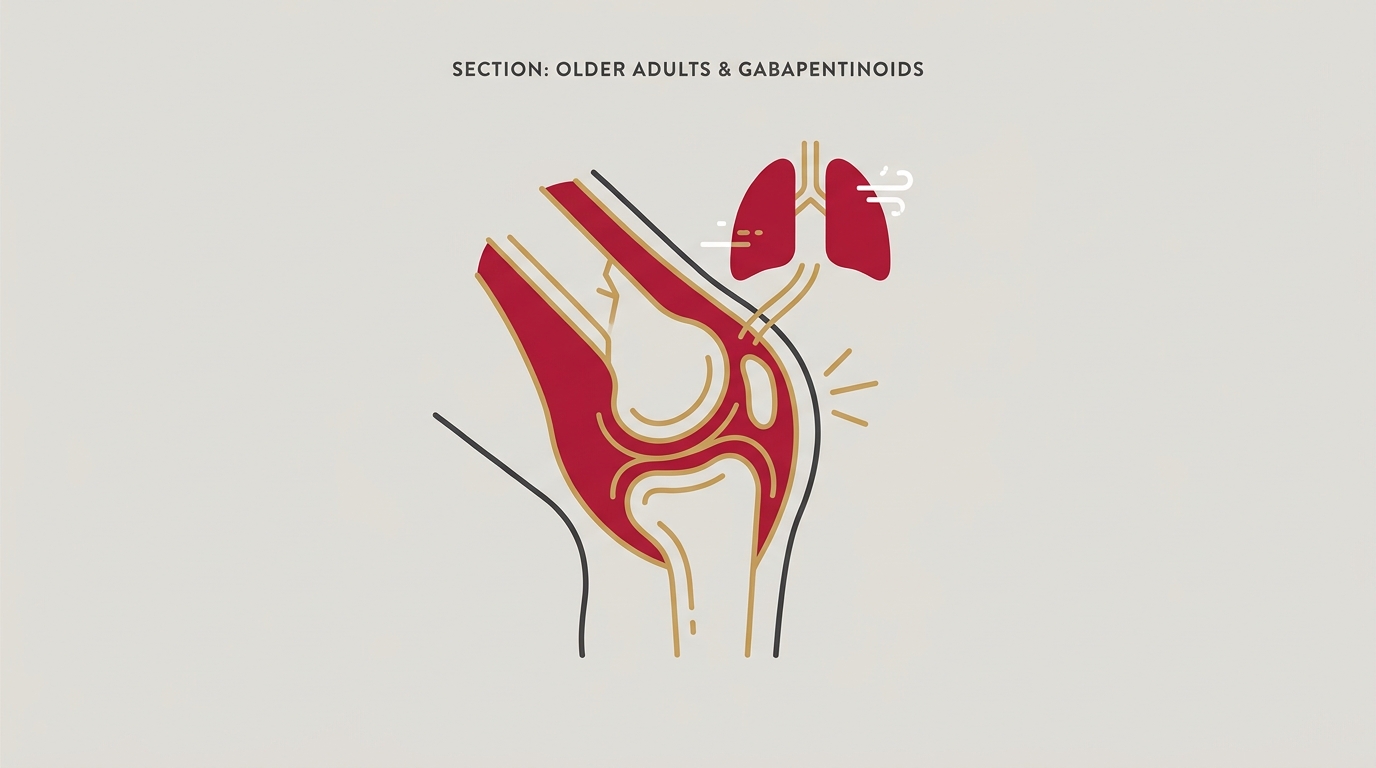
Older adults face extra risks, some about broken bones and others about breathing. I'd rather give you the whole picture, even the odd or unwelcome parts, than hand you comfort that explains nothing. That's why I include the timing of the fracture risk, which I didn't expect.
Broken bones
Healio's report, Gabapentinoid use may not lead to sustained increase in fracture risk for older adults, quotes the study's senior author. In older adults, even when gabapentinoid treatment was just starting, the risk of a broken bone was about 30% higher than in periods without treatment.
The study pooled its results using a random-effects model. The risk of a broken bone was higher in the pre-exposure window (the time before treatment began) than in focal window 1 (the first treatment window): 2.92 compared with 1.31, on the study's own measure of fracture risk. The researchers did not see a higher risk in the later windows.
Patients who were coprescribed opioids or benzodiazepines (a type of sedative) along with gabapentinoids had a higher risk of a broken bone during focal window 1. The study's incident rate was 3.15 for patients taking opioids and 1.91 for patients taking benzodiazepines.
Breathing problems
The University of Utah Pharmacy Services shared an alert titled Gabapentin and Pregabalin May Increase Risk of Respiratory Depression. On December 19, 2019, the United States Food and Drug Administration warned health care providers and patients about an increased risk of respiratory depression (slowed or troubled breathing) with gabapentin or pregabalin.
The chance is highest when a patient has risk factors. Those include being 65 or older, having underlying lung dysfunction, and using central nervous system depressants at the same time, which are drugs that slow the brain and nerves.
The alert also describes a review of case reports sent to the Adverse Event Reporting System of the Food and Drug Administration from 2012 to 2017. It found 49 cases of respiratory depression, and 12 of them ended in death. Respiratory risk factors were present in 92% of the cases, which is more than 9 out of 10.
The Food and Drug Administration is requiring that a warning of respiratory depression be added to the package inserts for gabapentin and pregabalin.
Here's a quick look at what the research found.
| Issue | What the research found | Who or when |
|---|---|---|
| Fracture risk at treatment start | 30% higher than in periods without treatment | Patients starting gabapentinoids |
| Fracture risk over time | Higher in the pre-exposure window (2.92) than in focal window 1 (1.31); no rise seen in later windows | Before treatment began, compared with the first treatment window |
| Fracture risk with other drugs | Elevated in focal window 1; incident rate 3.15 with opioids, 1.91 with benzodiazepines | Patients coprescribed opioids or benzodiazepines |
| Breathing problem reports | 49 cases of respiratory depression reported to the FDA from 2012 to 2017, 12 deaths, respiratory risk factors in 92% | Highest risk: age 65 or older, underlying lung dysfunction, or CNS depressants used at the same time |
If you have a sudden severe headache, numbness or weakness in an arm or leg, trouble speaking or seeing, or loss of bladder or bowel control, call 911 or your doctor right away.
How Prescribing After Surgery Can Turn Into Long-Term Use
A JAMA Network Open study, Trends in the Use of Gabapentinoids and Opioids in the Postoperative Period Among Older Adults, tracked what gets prescribed after surgery. The numbers were adjusted for age, sex, race and ethnicity, and the type of procedure in each year.
New gabapentinoid prescriptions after surgery went from 2.3% in 2014 to 5.2% in 2018. The 95% confidence intervals, which are the ranges the true numbers likely fall in, were 2.2% to 2.4% and 5.0% to 5.4%. The study says the rise is statistically significant (p less than .001), so it's very unlikely to be due to chance.
Getting a gabapentinoid and an opioid at the same time also became more common. That went from 1.6% in 2014 to 4.1% in 2018, with 95% confidence intervals of 1.5% to 1.7% and 4.0% to 4.3%. This rise is statistically significant too (p less than .001).
Gabapentinoids are a group of nerve-pain drugs. After surgery, they make you sleepier, dizzier and more likely to be confused (delirium), both soon after and over the long run.
Doctors know that prescribing gabapentin after surgery can lead to prolonged use, meaning you take it for a long time. That comes with its own risks. One is altered mental status, a changed mental state like confusion. Another is polypharmacy, which means taking many drugs at once.
Patients with a new gabapentinoid prescription got a median supply of 30 days. A median is the middle value. The interquartile range, which covers the middle half of patients, was 14 to 30 days.
What Partly Controlled Nerve Pain Costs in Daily Life
Painful diabetic neuropathy greatly lowers quality of life. It is closely linked with sleep problems, depression or anxiety, and a higher risk of foot problems such as sores (ulcers), infections, and amputations of a leg or foot that are not caused by injury.
If another doctor brushed you off, I believe you. I treat your symptoms as real, and I never hint that the pain is in your head. Nerve pain is real, daily harm, and I treat it that way.
For the money side, see our guide, Neuropathy Care Costs and Coverage in Tazewell County: A Guide. One paper also looks at costs: Healthcare costs and medical utilization patterns associated with painful and severe painful diabetic peripheral neuropathy.
Weighing Refill Costs Against a Care Plan Built for You
I won't run one fixed routine on everyone. That treats people like units on a line. I fit the plan to the person in front of me, and that's you.
At Touch of Wellness Chiropractic, your care plan is built from what you actually tell us. It is not a set routine applied to a diagnosis code. If a treatment approach is not producing results, we change it.
Your first visit includes a report of findings before treatment starts. That report covers what care costs, so you know before you begin.
To compare the numbers, read Comparing a Nerve Care Plan's Cost to Ongoing Medication Copays. To see what a plan holds, read What a Multi-Week Nerve Care Plan Actually Includes for the Cost. You can also learn about our Neuropathy Care service. To see how the work is done, visit our Chiropractic Care page.
Frequently Asked Questions
Does combining two nerve pain drugs work better than one?
Possibly, but the evidence is weak. Low-certainty evidence suggests that taking pregabalin plus duloxetine together may improve short-term pain scores more than one drug alone for painful diabetic neuropathy.
Should older adults be checked for fall risk before starting gabapentin or pregabalin?
Yes. The study's senior author, quoted by Healio, said one crucial thing is for clinicians and physicians to check a patient's risk of falling before treatment starts.
What do geriatric guidelines say about taking gabapentinoids with opioids?
Gabapentinoids are on the American Geriatrics Society Beers Criteria, a list of medicines that may be wrong for older adults. It strongly recommends avoiding gabapentinoids with opioids, except when switching from one to the other. Using the two together has been shown to raise the risk of overdose, trouble breathing (respiratory depression) and death.
Are opioids recommended for diabetic nerve pain?
No. Routine use of opioid pain medicines is not recommended.
Your Next Step When Nerve Pain Drugs Fall Short
Standard doses of pregabalin or duloxetine alone give meaningful pain relief in only about 4 out of 10 patients (40%) with painful diabetic neuropathy. This nerve pain also greatly lowers quality of life. It's closely linked with sleep problems, depression or anxiety, and foot complications.
I don't treat a missing explanation as a dead end. When a patient has been told nothing more can be done, I keep looking for options after drugs fall short. Your care plan is built from what you tell us, and if an approach is not producing results, we change it.
Touch of Wellness Chiropractic provides chiropractic care and Neuropathy Care for adults in Morton, Illinois and the Peoria area. Would you like to book a visit and talk through a plan fitted to you? Book Appointment
Results may vary.