
Muscle weakness that keeps getting worse, like dropping things, a weaker grip, tripping, or a weak foot, is a sign the spine may be threatening how your nerves work, not just causing discomfort. New trouble emptying your bladder, sudden loss of bladder control, or numbness in the groin and inner thighs can point to cauda equina syndrome, which is severe squeezing of the nerve roots in the lower spine. Pain after a major injury, back pain in someone who has had cancer, fever along with spine pain, weight loss with no known reason, or pain that gets worse at night or when lying down can all be a sign of something that affects the whole body or the spine's structure. Clinical guidelines suggest that patients whose symptoms last or keep getting worse after six or more weeks of the best medical care may be candidates for talking with a surgeon.
Signs of cauda equina syndrome, a surgical emergency
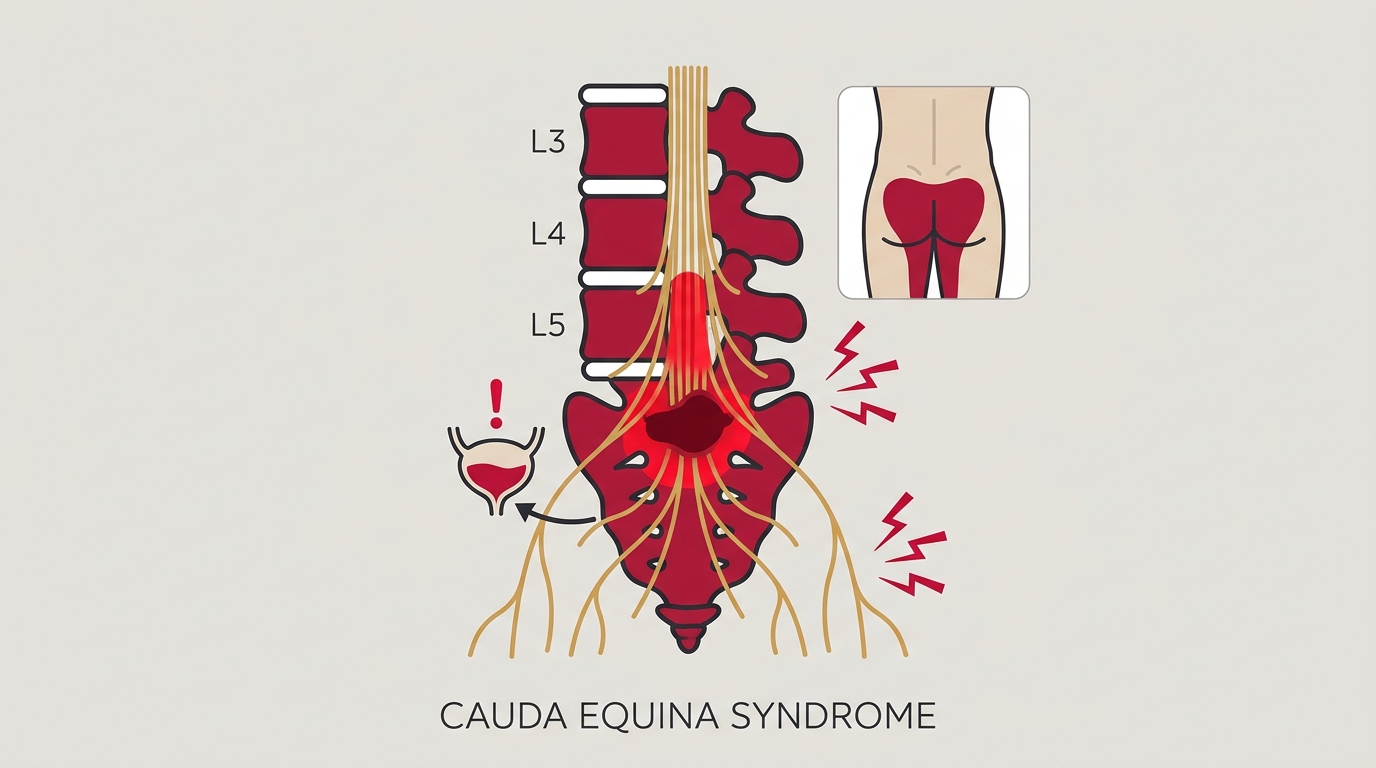
The Royal Cornwall Hospitals NHS Trust's Emergency Department Cauda Equina Syndrome Pathway Clinical Guideline describes cauda equina syndrome like this: you have nerve-root pain down your leg and/or back pain, along with a problem with bladder or bowel function and/or a change in feeling in the saddle area or the genitals.
Neurosurgery CNJ (Neurosurgical Associates of Central Jersey) says new trouble emptying your bladder, sudden loss of bladder control, or numbness in your groin and inner thighs can point to cauda equina syndrome. It describes the condition as severe squeezing of the nerve roots in the lower spine.
The Royal Cornwall guideline calls an MRI (magnetic resonance imaging) scan the gold standard test for diagnosing it. The scan should be done as an emergency, as soon as possible.
The same guideline spells out what delay can cost you. If cauda equina syndrome goes unrecognised or surgical treatment is delayed, the result may be permanent loss of bladder and bowel function, loss of sexual function, and paralysis of the legs.
Warning signs a chiropractor should catch early
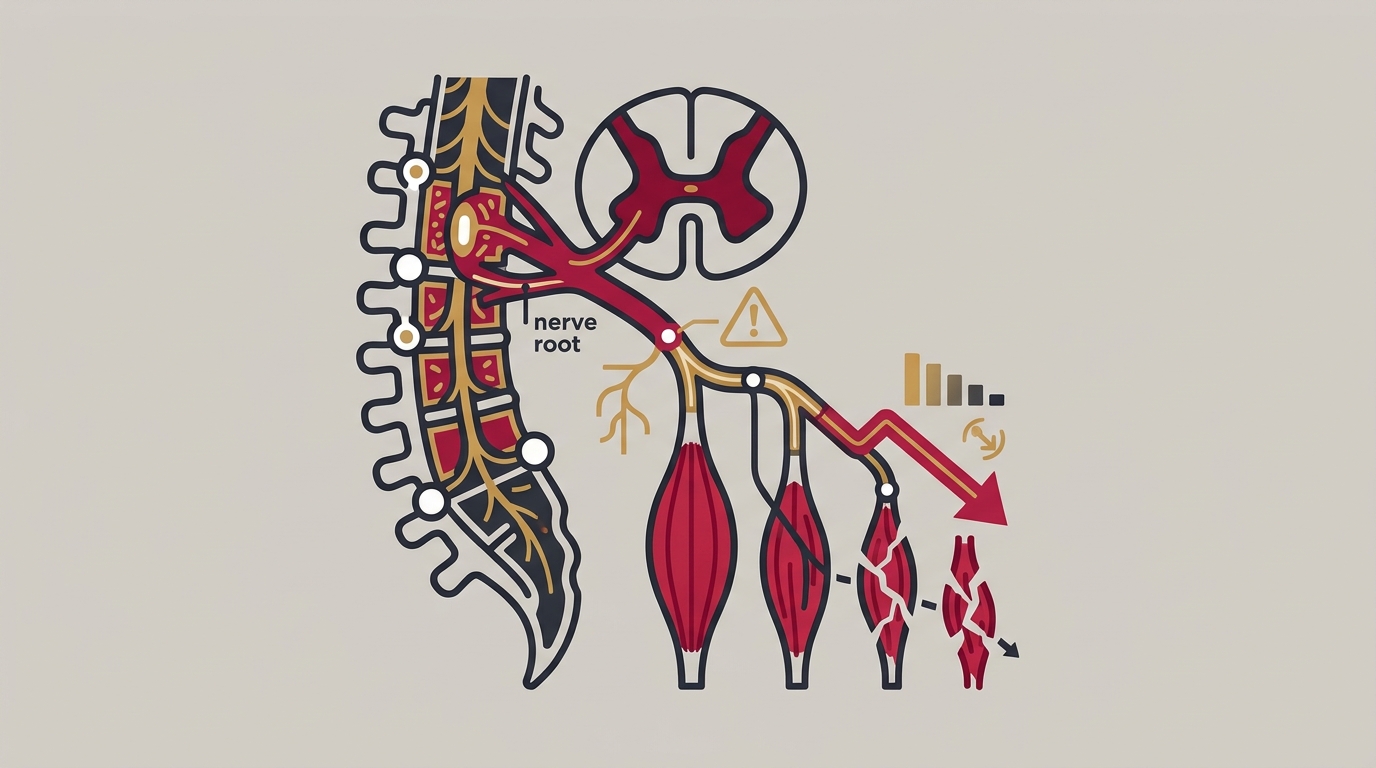
Muscle weakness that keeps getting worse is one. Think dropping things, a weaker grip, tripping, or a weak foot. In Signs You Need to See a Spine Surgeon, Neurosurgery CNJ says this is a sign your spine may be threatening how your nerves work, not just causing discomfort.
Early cervical myelopathy can show up in small ways. You might notice worse handwriting, trouble buttoning clothes, an unsteady walk, frequent stumbling, or a slow loss of hand coordination.
History counts too. These can all signal something that affects the whole body or the spine's structure:
- Pain after a major injury
- Back pain if you've had cancer
- Fever along with spine pain
- Weight loss with no known reason
- Pain that gets worse at night or when you lie down
If other doctors have brushed off symptoms like these, I treat them as real warning signs. I won't hint that they're in your head.
Why red flags are often missed between providers
Red flags are signs that point to a serious underlying problem. A study in Neuro-oncology practice, The use of red flags during the referral chain of patients surgically treated for symptomatic spinal metastases, looked at how they were recorded as patients moved from one provider to the next.
On average, about a third (33.3%) of red flags were documented as present. A few (3.6%) were documented as absent. About 6 in 10 (63.1%) were undocumented, which means they were not written down either way.
Having red flags was not found to decrease delays before referral to a spine surgeon. The authors say this shows that healthcare providers don't yet sufficiently recognize how much red flags matter.
Red flags were also documented as present more often for patients who developed nerve symptoms at any point during the referral chain than for patients whose nerve function stayed normal.
With most red flags undocumented, each provider along the way has to look for them. I would rather give you an honest read of a red flag, even an unwelcome one, than hand you nice-sounding reassurance that explains nothing.
How long to try conservative care before seeing a spine surgeon
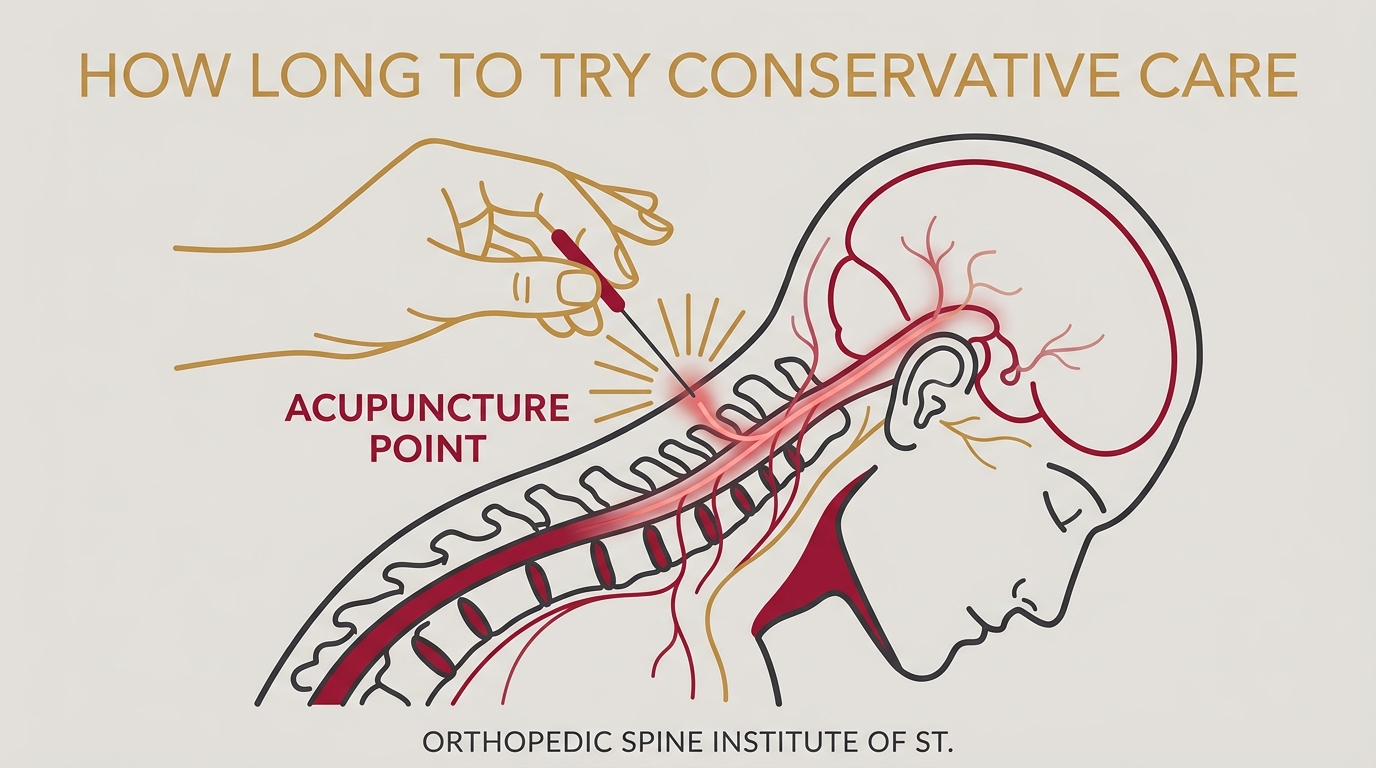
Orthopedic Spine Institute of St. Louis, in Comparing Conservative and Surgical Spine Treatment Paths, notes that clinical guidelines from the American College of Physicians and the North American Spine Society consistently recommend a trial of 6 to 12 weeks before considering surgery, unless an absolute neurological emergency is present.
Neurosurgical Associates of Central Jersey (Neurosurgery CNJ) lists other marks, each tied to its own symptoms:
- If your symptoms last or keep getting worse after six or more weeks of the best medical care, you may be a candidate for talking with a surgeon.
- Twelve or more weeks of ongoing moderate-to-severe arm or leg pain that limits what you can do each day is another recognized point to think about seeing a spine surgeon.
- Nerve-root pain you rate 7 out of 10 or higher, matched by imaging that shows a squeezed nerve, carries real weight when deciding whether surgery is the right path.
According to Orthopedic Spine Institute of St. Louis, the strongest indicators for a surgical evaluation include nerve compression symptoms that do not go away, such as numbness, tingling, or weakness in the arms or legs. If, after 6 to 12 weeks, a patient still has severe pain, nerve problems that keep getting worse, or trouble with daily activities despite sticking with the conservative regimen, its team re-evaluates for minimally invasive surgical options.
The table below lines up these time and symptom thresholds and where each one comes from.
| Threshold | What it signals | Source |
|---|---|---|
| Six or more weeks of optimal medical care with persistent or worsening symptoms | May be a candidate for surgical consultation | Neurosurgery CNJ, citing clinical guidelines |
| 12 or more weeks of moderate-to-severe arm or leg pain that limits daily function | Another recognized threshold | Neurosurgery CNJ |
| Nerve-root pain rated 7/10 or higher that lines up with imaging confirming nerve compression | Carries real weight in deciding whether surgery is the right path | Neurosurgery CNJ |
| 6 to 12 week trial before considering surgery | Recommended unless an absolute neurological emergency is present | Orthopedic Spine Institute of St. Louis, citing American College of Physicians and North American Spine Society guidelines |
I judge care by whether you respond to it. If a therapy isn't working, sticking with it is the failure, so I change course. You can read more in Reassessing Care Plans When Pain Does Not Improve: A Complete Guide.
I don't run one routine for every complaint, because I haven't seen any single approach work for every patient. I set the timing by the person in front of me, not by a fixed script.
What surgery changes, and what it doesn't
Orthopedic Spine Institute of St. Louis cites a lumbar disc herniation study that compared a surgery group with a conservative care group. At one and two years of follow-up, the two groups had no statistically significant differences for most outcomes, including pain, function, and quality of life. That means the differences were too small to rule out chance.
Surgery has risks too. Elective spine surgery carries complication rates from 2 to 5 percent for minimally invasive lumbar fusion, up to 10 to 15 percent for extensive deformity corrections.
Some people are told nothing can be done because no one has found the cause. I don't accept that. I don't treat a missing explanation as a missing option, and when surgery isn't the answer, I keep working through other options with you.
Why referral to an orthopedic surgeon is part of chiropractic care
The Illinois Chiropractic Society's page Your Scope of Practice explains that Illinois describes chiropractic physicians as people who may practice any method of diagnosing and treating human ailments without the use of prescription drugs or operative surgery. So when a case needs prescription drugs or operative surgery, I refer.
Surgeons refer the other way too. The Institute for Work & Health summarizes a survey in Orthopedic surgeons hold diverse views of chiropractors. About half of the surgeons sent patients for chiropractic care each year, mainly because the patients asked. Positive views of chiropractic were linked to surgeons who learned about it from a relationship with a specific chiropractor or during residency, their hospital training years.
To see how we decide between sending you out and staying on course, read Referral Out vs. Continued Care: How We Decide Which Path Fits. You can also learn how the work is done in Chiropractic Care.
Frequently Asked Questions
How fast should an MRI happen if cauda equina syndrome is suspected?
The Royal Cornwall Hospitals NHS Trust pathway sets the standard for suspected cauda equina syndrome at an MRI (magnetic resonance imaging) scan within 4 hours of the request.
How common are bladder problems and saddle numbness in cauda equina syndrome?
Clinical reviews report bladder problems in up to about 9 in 10 cauda equina cases (92%) and numbness in the saddle area in up to about 9 in 10 (93%). Bowel problems show up in up to about 7 in 10 (72%).
Do most people with low back pain need to see a surgeon?
Probably not. Research suggests most people with low back pain get better within a month, even without treatment.
Will my insurer want proof I tried conservative care before surgery?
Often, yes. Insurance carriers typically require records showing a trial of non-surgical care, often 6 to 12 weeks, before they authorize surgery.
Do orthopedic surgeons think chiropractic care is effective?
Many do, for some problems. In a survey, 82 percent of surgeons (more than 8 in 10) believed chiropractors give effective therapy for some muscle and bone complaints. But 90 percent (9 in 10) said not for conditions that are not muscle and bone problems, and 66 percent (about two in three) said not for rehab after surgery.
Referral is a normal part of responsible care
Referral is a normal part of responsible care when a threshold or a red flag shows up. Clinical guidelines suggest that symptoms that last or keep getting worse after six or more weeks of the best medical care may be a reason to talk with a surgeon. In Illinois, chiropractic physicians may practice any method of diagnosing and treating human ailments without the use of prescription drugs or operative surgery. Touch of Wellness Chiropractic gives chiropractic care to adults in Morton and the Peoria area, and we send you on when your case needs more than we can offer.
If you have a sudden severe headache, numbness or weakness in an arm or leg, trouble speaking or seeing, or loss of bladder or bowel control, call 911 or your doctor right away.
Ready to have someone look at your pain and build a plan around what you tell us? Book Appointment