
Under the federal rule, a provider must treat any talk or question about what services might cost as a request for a good faith estimate. When an uninsured (or self-pay) person asks for one, the provider must give it not later than 3 business days after the date of the request. The estimate must have an itemized list of the services you can reasonably expect for the main service, along with services reasonably expected with it, grouped by each provider or facility.
What Counts as Asking for an Estimate

Any cost question counts. Under the federal rule, a provider must treat any talk or question about what services might cost as a request for a good faith estimate. So if you ask what care might cost, you've asked for an estimate.
The rule also covers how you hear about this. Information on how to get an estimate has to be given out loud, either when you schedule a service or when questions about cost come up.
Which providers does this cover? The rule defines a health care provider as a physician or other provider acting within what their license or certification allows under state law. Air ambulance providers are included.
CMS says the good faith estimate rules also apply to consumers whose only coverage is a health care sharing ministry, short-term limited duration insurance, a farm bureau plan, or a self-funded student health plan. If you plan to use insurance, Understanding Insurance Verification Before a Neuropathy Consultation covers that check. You can also read the rule itself at 45 CFR 149.610 – Good faith estimates for uninsured (or self-pay) individuals.
How to Ask and Where to Find the Instructions
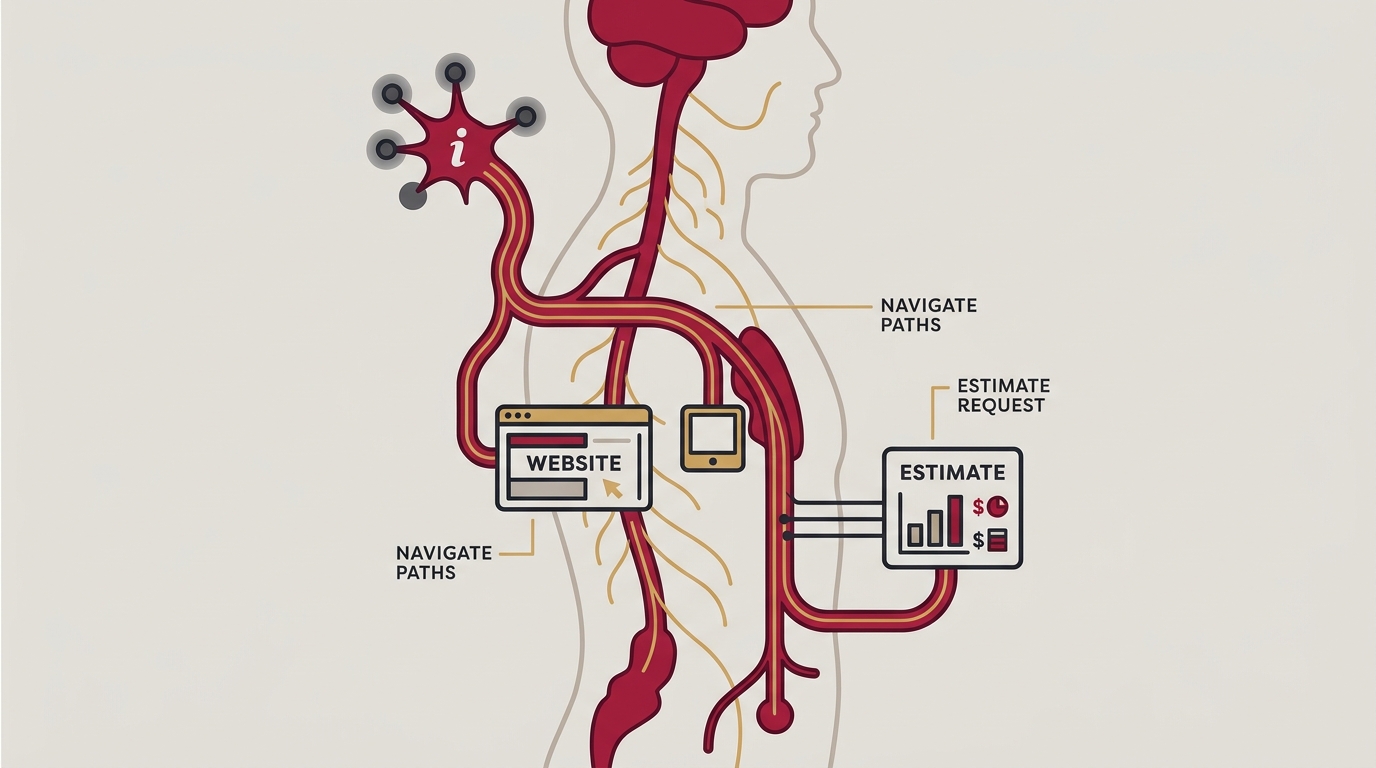
Look for information about good faith estimates on your provider or facility's website. You should also find it in their office, or on-site wherever you might schedule services or ask about costs.
Providers and facilities must give this estimate to an uninsured (or self-pay) person, or their authorized representative, who asks for it or who schedules a service. CMS publishes a Sample Notice of Uninsured (or Self-Pay) Individual's Right to Receive a Good Faith Estimate.
The table below puts the timing and delivery rules side by side.
| Situation | Requirement |
|---|---|
| Uninsured (or self-pay) patient requests an estimate | No later than 3 business days after the request |
| Patient asks before scheduling | In writing within 3 business days of the ask |
| Main service scheduled at least 3 business days ahead | No later than 1 business day after scheduling |
| Delivery format | On paper or electronically, in the format the patient prefers |
How Fast It Must Arrive and in What Format
When an uninsured (or self-pay) person asks for an estimate, the provider must give it no later than 3 business days after the date of the request.
You can ask any provider or facility for an estimate before you schedule a service. If you do, make sure you get it in writing within 3 business days after you ask.
Say a main service is scheduled at least 3 business days before it will be given. In that case, the estimate must come no later than 1 business day after the date it was scheduled. The 3 business days is just a cutoff for how far ahead the service is booked. The 1 business day is the deadline.
The estimate has to arrive on paper or electronically, such as through the provider's patient portal or email. And it must be in the format you prefer.
What an Itemized Estimate Must Include

An estimate must include an itemized list of the services you can reasonably expect for the main service. It must also list services reasonably expected along with the main service. The list is grouped by each provider or facility.
The price shown is the expected charge. That's the cash pay rate, or the rate the provider or facility sets for an uninsured (or self-pay) person. It reflects any lower prices for those people.
Some care may be needed before or after the main service, beyond the period of care. For that care, you'd get separate estimates when it's scheduled or when you ask.
I'd take an itemized, accurate estimate over a kind word that explains nothing. I'd rather hand you a plain number you didn't want to see than comfort you. You can read how CMS describes these rules in the No Surprises Act Good Faith Estimate and PPDR requirements (slides).
How Estimates Work Across a Recurring Course of Care
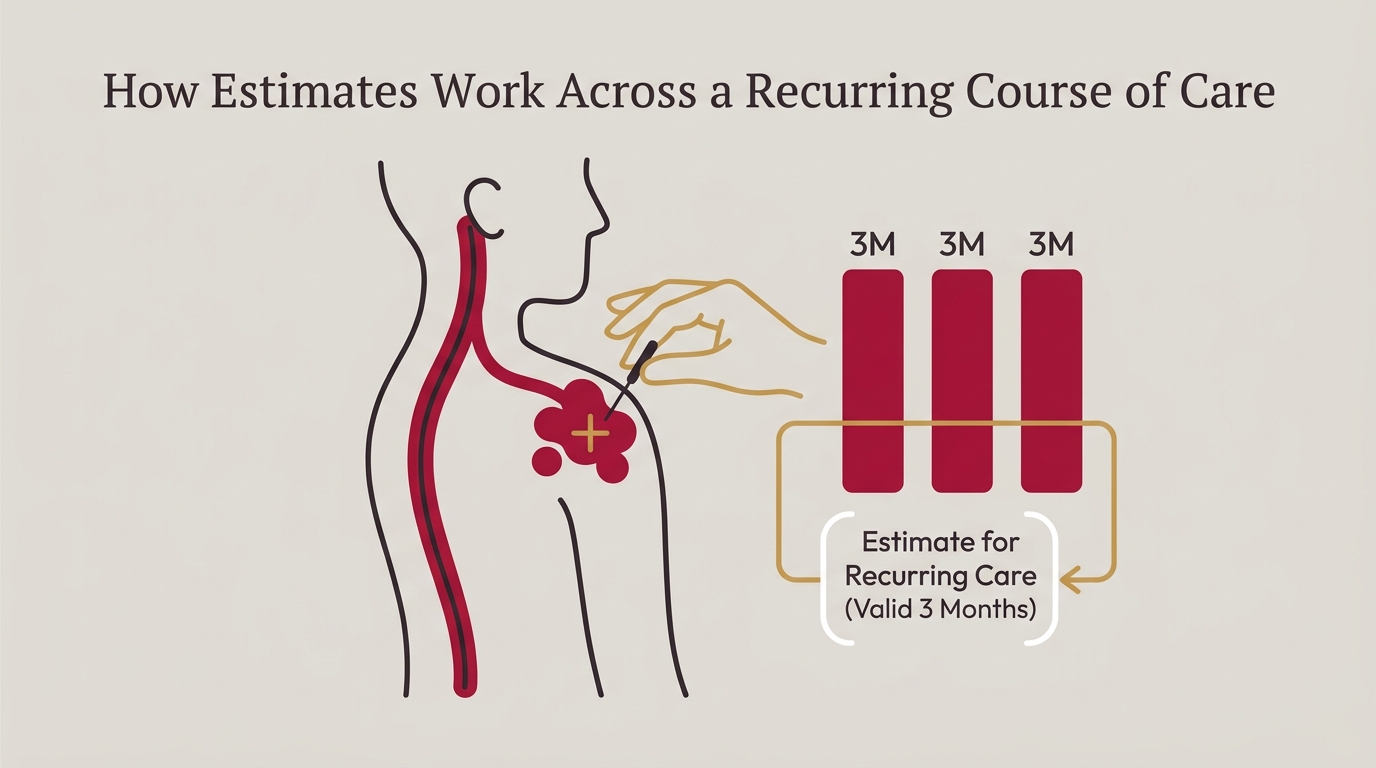
For a main service that repeats, an estimate must not cover more than 12 months.
An estimate for repeat care must say, in a clear way that is easy to understand, what to expect. That includes the timeframes, how often, and the total number of repeat services.
If the expected services or charges change, you're owed a new estimate. When you're uninsured (or self-pay), it has to reach you no later than 1 business day before the services are scheduled to be given.
For local cost details, see Neuropathy Care Costs and Coverage in Tazewell County: A Guide. CMS also publishes the Transparency in Coverage Final Rule Fact Sheet (CMS-9915-F).
What to Do if the Bill Is Higher Than the Estimate
First, keep your estimate. You'll want it on hand to compare with any bills you get later.
If a bill comes in $400 or more above your estimate for a provider or facility, you may dispute the charges.
Your estimate must include a notice, and it tells you what you can do when the billed charges come in higher. You can ask your provider or facility to change the bill to match the estimate. You can ask to negotiate the bill. You can also ask if financial help is available.
To start a federal dispute, you must send an initiation notice within 120 calendar days of getting the first bill. You can send it electronically or have it postmarked in that time. The bill also has to show charges substantially more than the expected charges in your estimate.
If you're uninsured (or self-pay), you'll need to pay a $25 administrative fee to start the patient-provider dispute resolution process.
While that process is pending, a provider can't move your bill into collections or threaten to do so.
Before you start care, Questions to Ask About Nerve Restoration Costs Before You Start can help you plan what to ask. For the full steps, read Good Faith Estimate & Patient-Provider Dispute Resolution for Uninsured or Self-Pay Individuals.
What Illinois Law and Legal Aid Say About Itemized Bills
If a medical bill does not have enough detail, or lists services you do not know, ask the provider for an itemized bill. An itemized bill lists each charge on its own.
Under Illinois law, a hospital bill has to include a notice that you can get an itemized bill if you ask for one. A hospital has to answer a phone request within 2 business days. It has to answer a written request within 10 business days after it gets the request.
Illinois Legal Aid Online also says that if you have no insurance, the provider usually has to give you a good-faith estimate of what you're expected to be charged before you get care. You can read more in Medical bills and debt (FAQ) from Illinois Legal Aid Online.
How Touch of Wellness Chiropractic Shares Costs at the First Visit
One step of your first visit at Touch of Wellness Chiropractic is a report of findings, and it includes what care costs. You hear it before treatment starts. If you're coming in for Neuropathy Care, that step is part of your first visit too. You can read how the work is done on our Chiropractic Care page.
You're told what care costs before treatment starts.
Our payment setup is a hybrid, so you have many ways to pay. That includes insurance, cash, credit cards, health savings and flexible spending accounts, Affirm, payment plans, care plans, pay-in-full courtesy pricing, personal checks, personal injury cases and AutoDebit.
If you have a sudden severe headache, numbness or weakness in an arm or leg, trouble speaking or seeing, or loss of bladder or bowel control, call 911 or your doctor right away.
Frequently Asked Questions
Can I ask for an estimate before I've scheduled anything?
Yes. A provider or facility must give you a good faith estimate when you ask for it, even if you don't schedule the service.
I have insurance. Can I still get a good faith estimate?
It depends on whether a claim goes to your plan. The federal rule describes a person who has benefits under a group health plan, under individual or group health insurance from a health insurance issuer, or under a health benefits plan under chapter 89 of title 5, United States Code, but who does not seek to have a claim for that service submitted to that plan or coverage.
Can Medicare or Medicaid patients get a good faith estimate?
No, not under this rule. People enrolled in federal health care programs are not eligible, because those programs have other protections against surprise bills.
Who can I contact about a surprise or balance bill?
Illinois Legal Aid Online lists two places you can call. One is the federal No Surprises Helpdesk at (800) 985-3059. The other is the Illinois Department of Insurance Office of Consumer Health Insurance at (877) 527-9431.
Does the estimate cover costs that come up unexpectedly?
No. Your estimate is based on what was known when it was made. It leaves out unknown or unexpected costs that may come up during treatment.
Ready to Ask for Your Courtesy Pricing Breakdown?
Touch of Wellness Chiropractic provides chiropractic care and neuropathy care for adults in Morton and the Peoria area. You're told what care costs before treatment starts. Would you like to book a visit and ask for your breakdown? Book Appointment