
At Touch of Wellness Chiropractic, one step of your first visit is a report of findings, which includes what care costs, before treatment starts. Neuropathy Resource says nerve conduction studies are a real and valuable tool for finding out what is wrong, and that when they are used once, at the start, to show what kind of nerve damage is present, they are worth their cost. Your care plan at the practice is built from what you actually tell the practice, not from a set routine applied to a diagnosis code. If a treatment approach is not producing results, the practice changes it. neuropathyresource.com defines patient responsibility as your share of the allowed amount, set by your deductible, coinsurance and copay.
What Goes Into the Cost of a Nerve Care Plan
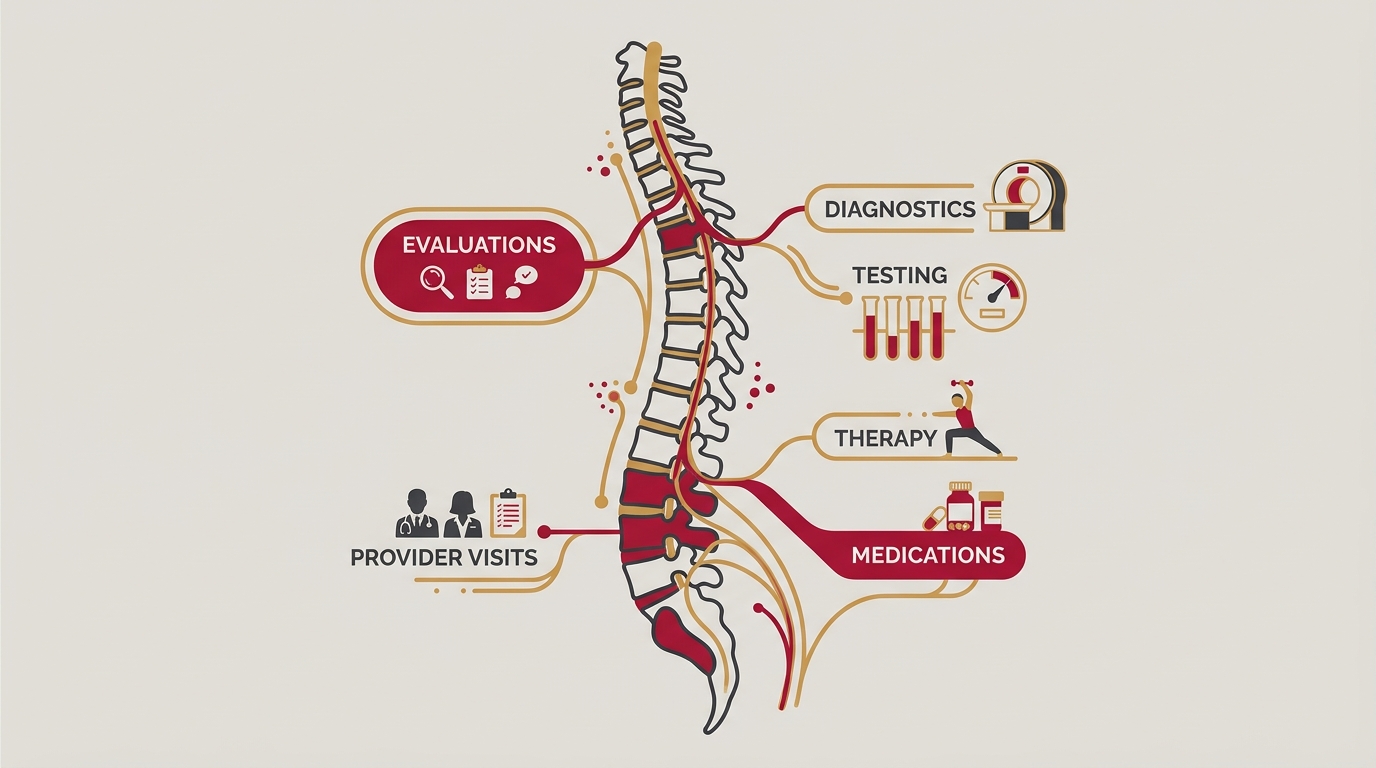
A nerve care plan has a few parts, and each one adds to the cost. For the wider price picture in this area, read Neuropathy Care Costs and Coverage in Tazewell County: A Guide. To see how the practice works with nerve problems, visit Neuropathy Care.
The table below lists each part of a plan and what it includes.
| Component | What it includes |
|---|---|
| First visit | 45–60 minutes |
| Report of findings | Includes what care costs, before treatment starts |
| Nerve conduction testing | Worth its cost when used once, at the start, to show what kind of nerve damage is present (Neuropathy Resource) |
| Treatment visits | A stated clinical standard of 15-minute door-to-door efficiency and same-day availability |
| Added therapies | Hands-on care plus Shockwave Therapy and Cold Laser Therapy |
The First Visit and Report of Findings
Your first visit takes 45 to 60 minutes. One of its steps is a report of findings. In that step, you hear what care costs before treatment starts.
Nerve Conduction Testing: Worth It Once, at the Start
Neuropathy Resource calls nerve conduction studies a real and valuable tool for finding out what is wrong. It says that when they are used once, at the start, to show what kind of nerve damage is present, they are worth their cost. For a closer look at how to judge a nerve clinic, see Are Neuropathy Clinics Legitimate? How to Evaluate One.
Treatment Visits and Added Therapies
Touch of Wellness Chiropractic says it gives individualized, root-cause chiropractic care in Morton, Illinois. It says it uses spinal adjustment and advanced therapy methods to restore nervous system function and resolve muscle, bone and nerve-related conditions.
Its stated clinical standard is 15-minute door-to-door visits, from the time you arrive to the time you leave, with same-day availability. The clinic uses hands-on care plus Shockwave Therapy and Cold Laser Therapy. You can read how the work is done on the Chiropractic Care page.
So when you plan your day, plan around that 15-minute standard. It runs from the moment you walk in to the moment you walk out.
Why Visit Numbers Vary From Patient to Patient
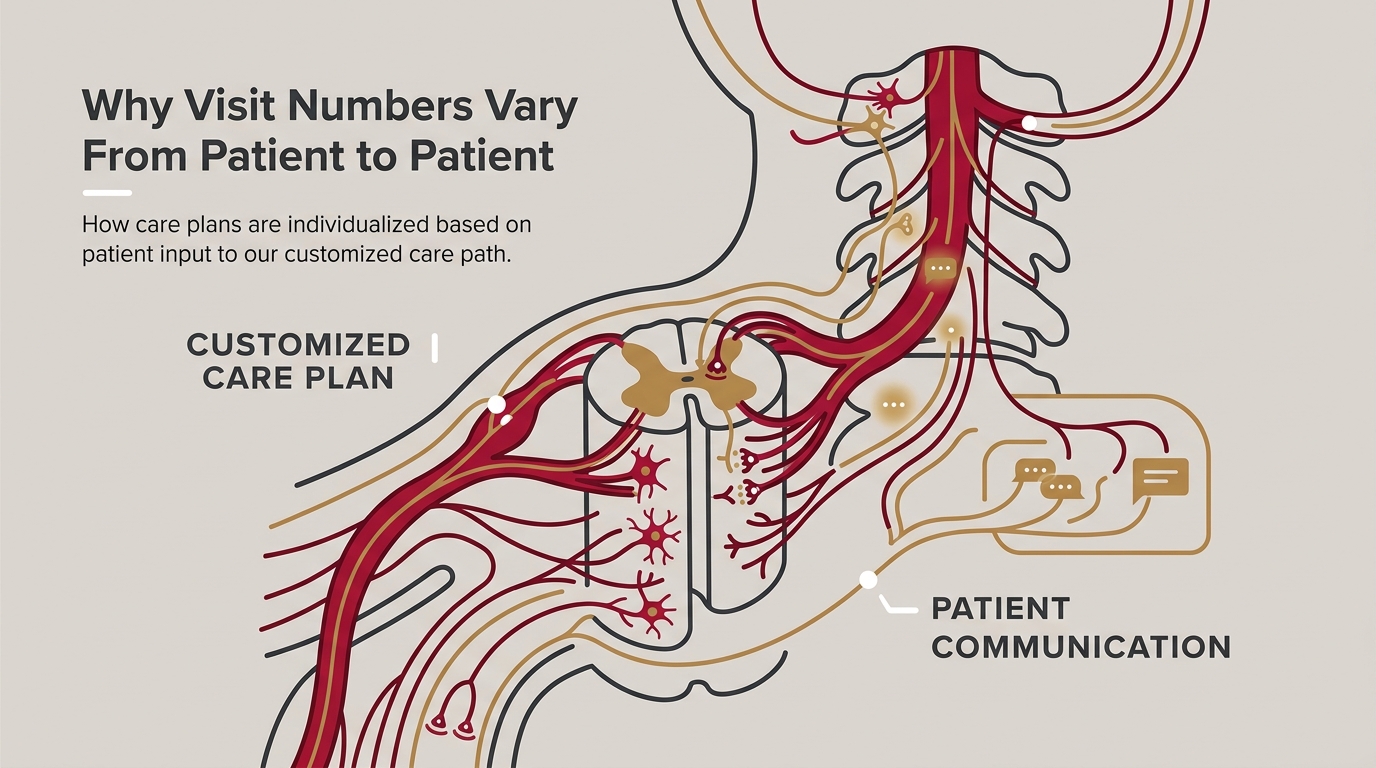
Your care plan is built from what you actually tell the practice. It is not a set routine applied to a diagnosis code. If a treatment approach is not producing results, the practice changes it. Dr. Hannah works from a Clinical Response standard. Treatment plans change based on what the patient's body actually does, not on what a protocol predicts it should do.
Your starting pain matters too. A study hosted by the National Library of Medicine found that patients with worse pain and function at the start used more chiropractic visits. In the same study, for patients with chronic low back pain, only visits more than once per week were linked to significantly better improvement.
That's why your number of visits isn't set before the practice hears from you. It's fit to you, not to a fixed routine.
The same goes for the complaint itself. Whether it's your back, neck or a nerve problem, your plan starts from what you report, not from one standard routine.
How Progress Is Measured So Visits Aren't Wasted

The National Library of Medicine says to use validated patient-reported outcome measures. These are tools you fill out yourself. They help assess your symptoms and characteristics, and they track your progress over time.
It also says that using patient-completed and clinician-completed measures together should be seen as the expected standard of care. That protects you from unclear treatment limits and needless costs, especially when there's no set end point of care.
The American Chiropractic Association says your treatment plan can be changed from time to time, based on re-examination. The changes respond to how you respond and to your changing goals or needs.
Care is judged by whether you respond. If a therapy shows no results, the practice changes course.
What Research Shows About Maintenance Care for Low Back Pain
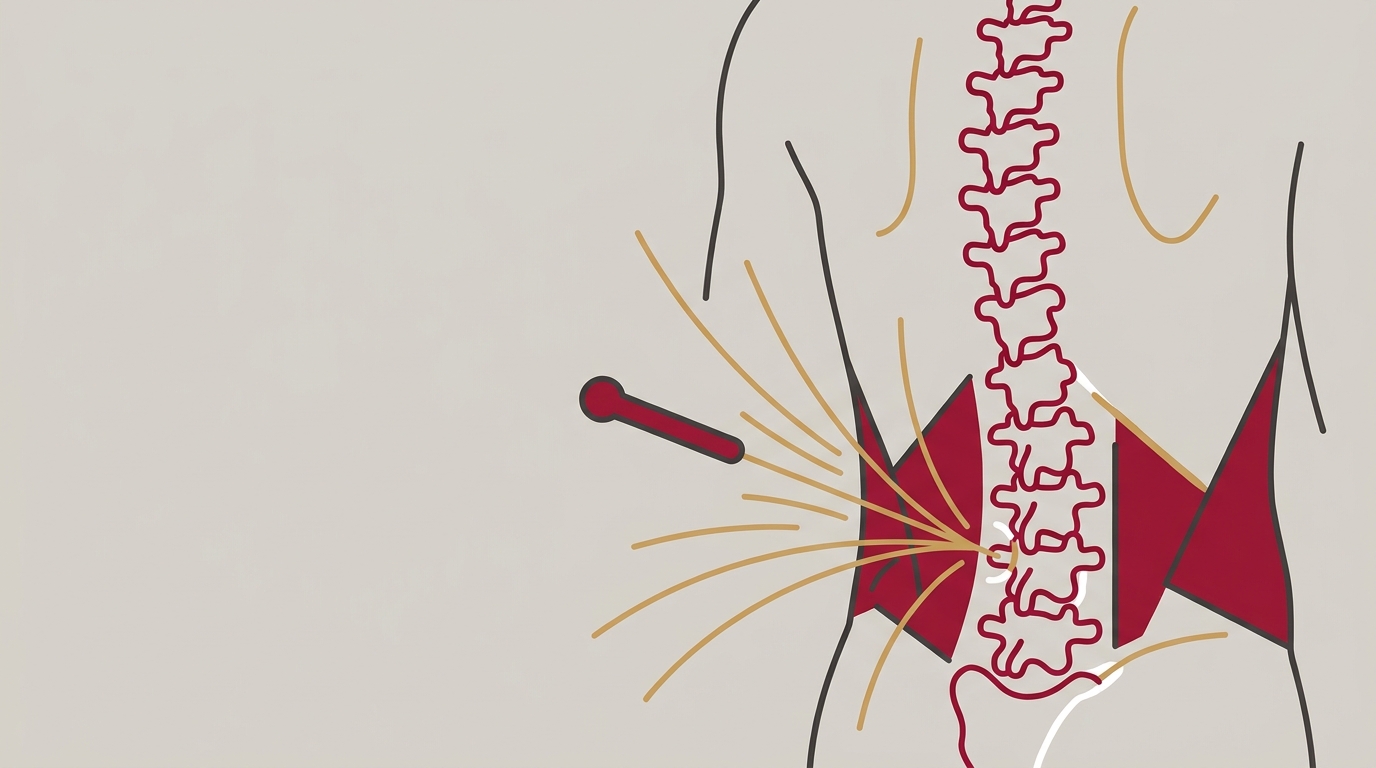
Research hosted by the National Library of Medicine describes maintenance care as something chiropractors use for patients who are no longer in an acute state of pain. The goal is to keep an episodic condition from coming back (secondary prevention), to maintain a level of function you want (tertiary prevention), or both.
Researchers in a paper hosted by the National Library of Medicine said the definitions of maintenance care they found were not based on scientific evidence that maintenance care is clinically valid, but perhaps more on opinion and consensus, meaning agreement among people.
Here's what the research on low back pain reported.
- Patients who got maintenance care had flat pain trends around each new treatment period.
- They reported fewer days with pain than patients who got the control treatment.
- The whole effect came from the dysfunctional subgroup.
- Those patients reported fewer days of pain that limited activity within each new low back pain episode.
- They also had longer total pain-free periods between episodes. The difference was 9.8 weeks compared to the control group, and the 95% confidence interval, the range the true difference likely falls in, was 3.3 to 16.3 weeks.
Warning Signs of a Neuropathy Clinic That Inflates Testing and Injections
The Foundation for Peripheral Neuropathy wrote about expensive schemes aimed at people with peripheral neuropathy in Beware of Expensive Treatments of Peripheral Neuropathy. Here are the patterns it describes.
- A typical scheme protocol includes nerve conduction testing, which is expensive and sometimes painful.
- The treatment for the nerve pain is frequent injections of an anesthetic (numbing medicine), often Marcaine. They're given 2 to 3 times a week into the peripheral nerves of the arms, wrists, legs, calves and/or feet.
- There have been cases where patients received over 100 treatments, with up to 5 injections in a single day.
- In most of the schemes, you see a medical doctor briefly on the first visit. That doctor orders all the tests, braces and injections.
- Claims sent to your insurance company can add up to thousands of dollars. They can use up the insurance benefits you may need for regular health care.
- A review of peer reviewed science journals and position statements from recognized professional medical and chiropractic societies did not find studies that support a reason for frequent peripheral nerve blocks for peripheral neuropathy.
When a clinic scares patients into signing up or stretches out treatment longer than needed, I call it an ethical breach. I won't call it a business tactic or a style of practice.
I'll also name the money behind it. Reimbursement systems pay for volume, and that pushes providers toward quantity over quality. When a clinic bills for volume and calls it medical necessity, I call it what it is: money pressure, not clinical judgment.
What You'll Pay With or Without Insurance, and Why Year One Looks Bigger
neuropathyresource.com defines patient responsibility as your share of the allowed amount. Your deductible, coinsurance and copay set that share.
If you have no insurance, you are exposed to the full charge instead of the allowed amount. neuropathyresource.com says that is why asking for the self-pay or cash price before a service is one of the highest-value questions in medicine.
It also says year one is front-loaded by diagnosis, so the cost is concentrated early. That's why people who judge the lifetime cost from their first twelve months consistently overestimate it.
For more, see Comparing a Nerve Care Plan's Cost to Ongoing Medication Copays. You can also read What Neuropathy Treatment Costs: A Real Price Breakdown from neuropathyresource.com.
Frequently Asked Questions
Why are braces a warning sign in some neuropathy programs?
In the schemes the Foundation for Peripheral Neuropathy describes, the braces that get ordered are expensive, and the bills add up to thousands of dollars. Before you agree to any item, ask what it's for and what it costs.
Does maintenance care mean more visits?
Not necessarily. An earlier secondary analysis of the same data suggested the result doesn't depend on the number of treatments. In the dysfunctional subgroup, the maintenance care effect came with the same number of visits as in the control group. Ask your doctor what each visit is meant to do for you.
Will exercise be part of my plan?
It can be. The American Chiropractic Association says exercise, also called active care, should be built more and more into a plan of management. Ask your doctor which exercises fit you.
Can I book Massage Therapy on its own?
Massage Therapy is an add-on to other care. The practice does not promote it on its own. If you want it, ask about adding it to your plan.
Do I need X-rays for my plan?
We don't take X-rays here. If you already have imaging, such as X-rays or MRIs (magnetic resonance imaging scans), bring it to your first visit.
Ask for a Plan Built for You
Your cost comes from the first visit, any testing, and each visit after that, and how you respond shapes the plan. Your care plan is built from what you actually report, not from a set routine applied to a diagnosis code. The American Chiropractic Association says plans can change after re-examination, in response to how you respond and to changing goals or needs.
I'd rather give you an honest answer, even one you don't want to hear, than comfort that explains nothing. So your plan starts with what you tell me.
If you have a sudden severe headache, numbness or weakness in an arm or leg, trouble speaking or seeing, or loss of bladder or bowel control, call 911 or your doctor right away.
Touch of Wellness Chiropractic offers Chiropractic Care, Neuropathy Care, Shockwave Therapy, Cold Laser Therapy and Acupuncture in Morton, Illinois. Ready to Book Appointment and ask for a plan built for you?
Results may vary.