
(309) 321-8412 | 1101 W Jackson St, Suite A, Morton, IL 61550
(309) 321-8412 | 1101 W Jackson St, Suite A, Morton, IL 61550
Why Is My Neuropathy Treatment Not Working in Morton? The Truth About Nerve Healing
Most neuropathy treatments fail because they're designed to suppress pain signals — not restore the biological health of the nerve itself. That's the short answer. And it's the one most patients in Morton have never heard.
Medications like Gabapentin and Lyrica interrupt the signal. They don't fix what's breaking it. The nerve continues to deteriorate while the patient continues taking the prescription — sometimes for years — until the dose stops working and someone adjusts it upward.
In Morton, the standard neuropathy path looks like this: a primary care visit, a prescription, a follow-up, a dosage adjustment, and eventually the phrase "you'll just have to manage it." That's not a care plan. That's an exit ramp from the clinical conversation.
Real nerve recovery requires two things that standard pharmaceutical management doesn't provide: identifying the biological interference that's driving the damage, and creating conditions in the body where nerve tissue can actually repair itself. That process takes time. It requires a structured clinical roadmap — not a prescription refill.
This article breaks down exactly why common treatments fail, what genuine treatment failure looks like, what biological nerve restoration actually requires, and who this approach is — and isn't — built for.
Last Updated: April 8, 2026
- Why Standard Neuropathy Treatments Fail
- What Nerve Restoration Actually Requires
- If You're Expecting a One-Visit Fix, This Isn't For You
- Warning Signs Your Current Treatment Is Failing
-
Frequently Asked Questions
- Why Does Gabapentin Seem to Stop Working After a Few Months?
- My MRI Was Normal. So Why Do I Still Have Neuropathy Pain?
- Is It Too Late to Restore Nerve Function After Years of Pain?
- Why Didn't My Primary Care Doctor Mention Nerve Restoration?
- How Long Should I Give a New Treatment Before Deciding It Isn't Working?
- Isn't Neuropathy Just a Normal Part of Aging?
- What's the Difference Between Seeing a Chiropractor Versus a Neurologist?
- What If I've Already Tried Chiropractic and It Didn't Work?
- The Answer Most Morton Neuropathy Patients Never Get
Why Standard Neuropathy Treatments Fail
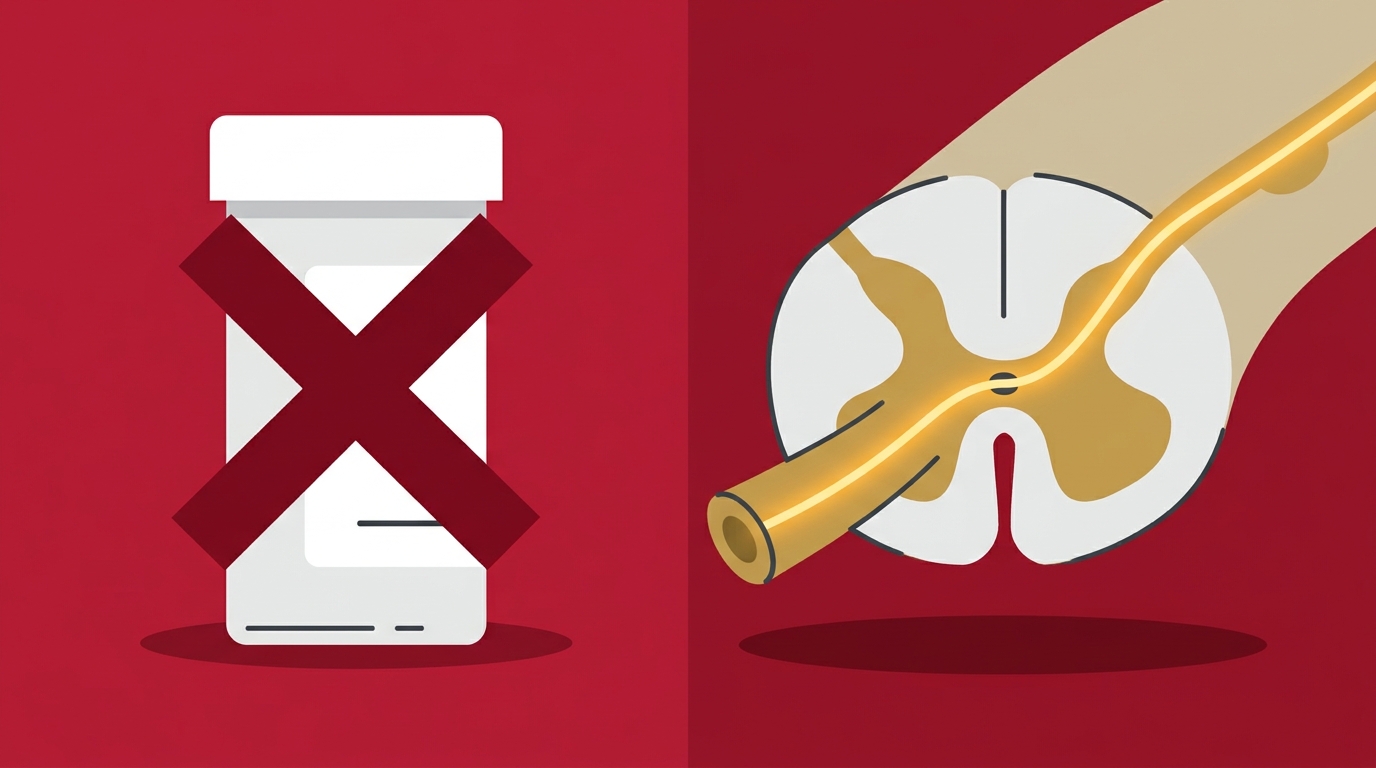
You've been through the cycle. The prescription helped for a month. Then it didn't. The dose went up. A new medication was tried. Now you're further into the problem than when you started — with a provider who calls that "managed."
That's not a care failure. That's the model.
Most neuropathy treatment isn't designed to heal the nerve. It's designed to quiet the signal. Root-cause chiropractic care asks a different question from the first appointment: what's actually creating the damage?
- The pharmaceutical model is built for acute pain — quieting the alarm makes sense when the alarm is temporary. Chronic nerve damage isn't temporary. Suppressing a signal that's telling you the nerve is declining isn't treatment. It's misdirection.
- Management is accepted as the ceiling — when a provider calls a condition "managed," they've stopped looking for the cause. That's a clinical decision, and it has a cost that compounds over time.
- The protocol doesn't change when the patient doesn't respond — the dose adjusts. The drug changes. The cycle continues. The nerve damage progresses underneath all of it, quietly and on schedule.
The Problem With Medications That Only Mask Symptoms
Gabapentin and Lyrica were developed for seizures. That's not a knock on the drugs — for seizures, they work. The problem is what happens when you apply a seizure medication to nerve pain and call it neuropathy treatment.
It blocks the signal. The nerve keeps declining. The patient feels better. For a while.
Research published on PMC via the NIH shows that most patients with neuropathic pain achieve less than 50% relief from standard medications, with high rates of discontinuation because the drugs stop working or the side effects become unmanageable. That's not a treatment plateau. That's the medication doing exactly what it was designed to do — suppress a signal — while the actual nerve damage goes unaddressed underneath it.
Here's what's still happening while the signal is quiet. Peripheral nerves need blood flow, oxygen, and a clear neural channel to function. When structural compression, metabolic dysfunction, or inflammatory load cuts that off, the nerve degrades — continuously, silently — while the medication quiets the output above it.
When the drug stops working, the body has adapted. The signal gets louder. The dose goes up, or the prescription changes. None of that touches the nerve. Understanding why neuropathy medications only mask symptoms is the question that actually needs answering.
- Signal suppression is not nerve repair — when the alarm goes quiet, the problem didn't go away. The nerve is still deteriorating. The medication is reducing your awareness of it. Those aren't the same clinical outcome.
- Tolerance builds predictably — the body adapts to the suppression threshold. Effectiveness drops. The dose climbs. The pattern repeats. This is expected — and it resolves nothing.
- The interference stays active — structural compression, metabolic dysfunction, and inflammatory load don't resolve because a medication is quieting the output. They stay active. The damage continues.
What Happens When "Management" Is the Entire Plan
Here's the thing about "management" as a clinical endpoint: it accepts that the nerve is going to keep declining. It doesn't ask why. It doesn't look for what's creating the interference. It measures success by whether you report feeling less pain — not by whether you're actually getting better.
Those aren't the same thing.
A patient can feel better while their nerve function continues to decline. The medication is doing its job. The nerve is not improving. By the time the drugs stop working — and they usually do — the damage is more advanced than when treatment started. That's not a side effect. That's what happens when you manage a progressive condition instead of treating it.
- No restoration plan means no endpoint — management doesn't build toward resolution. It maintains a status quo while the underlying problem advances on its own timeline.
- Pain score is the wrong metric — a better pain score doesn't confirm the nerve is healing. It confirms the signal is being suppressed more effectively. Clinically, those findings point in different directions.
- "Managed" and "improving" describe opposite trajectories — they get used interchangeably in standard neuropathy care. They shouldn't be.
What Nerve Restoration Actually Requires
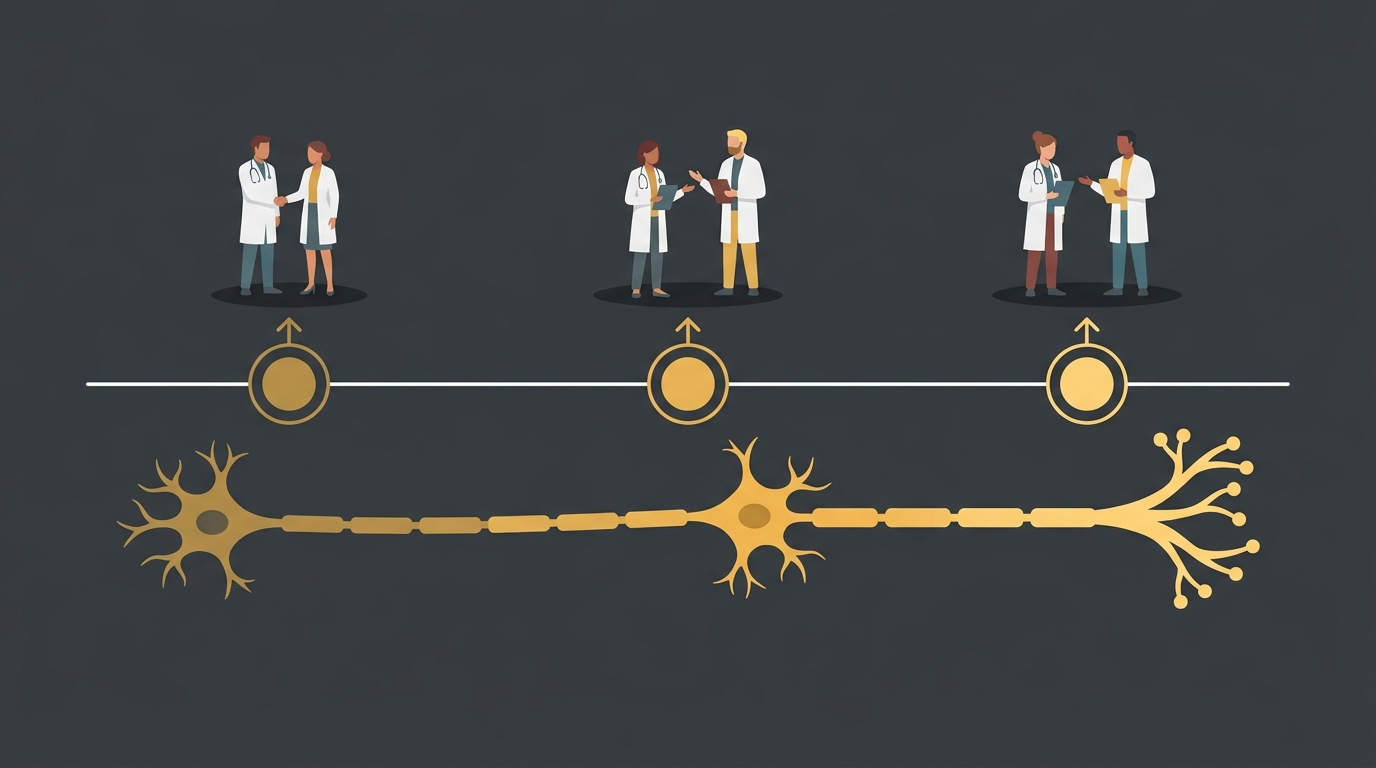
Nerves can heal. That's the thing most patients in Morton have never been told by a provider.
Not every case, and not always fully — but nerves have a real ability to repair themselves when the conditions are right. The problem is that the standard neuropathy management protocol doesn't create those conditions. It suppresses the output and calls that done.
Research on neuroplasticity and chiropractic published in MDPI confirms what the clinical picture shows: correcting structural interference is critical for functional nerve recovery — not as a replacement for medical care, but as the foundational step that pharmaceutical management skips entirely.
The Three Pillars of Biological Nerve Repair
The Nerve Restoration Protocol at Touch of Wellness Chiropractic isn't complicated. Dr. Karen Hannah's background in zoology — whole-body biological systems — shapes how the assessment gets done. Three things, and none of them are optional.
- Identify the interference — spinal compression, blood sugar dysregulation, chronic inflammation, or some combination. Assessment comes before assumption. Every care plan is built from what the patient actually reports, not from what a diagnosis code implies they should have.
- Restore the neural pathway — chiropractic adjustments address the structural component. When the spinal interference is corrected, the pathway opens. The nerve gets what it needs to function. That's the step the pharmaceutical model skips entirely — and it can't be skipped.
- Track functional milestones, not just pain scores — nerve tissue heals slowly. A clinical roadmap that tracks whether sensation is returning, whether you're moving better, whether anything is actually changing tells you whether the process is working. A pain score alone doesn't.
Why the Clinical Roadmap Is the Non-Negotiable Part
Most patients who come through the door haven't been given a roadmap. They've been given a prescription. Maybe a referral. Sometimes a treatment timeline that turned out to be a billing schedule, not a clinical projection.
Here's the difference. A real roadmap has checkpoints. It tells you what improvement looks like at 30 days, at 60, at 90 — not just "give it time." And if something isn't producing measurable results after a fair clinical trial, the plan changes.
If a treatment isn't working and you keep doing it anyway — that is the clinical definition of failure.
Whether chiropractic care can actually help heal damaged nerves depends on what's driving the damage. Assessment first. Every time.
- Milestones make progress measurable — "give it time" is not a milestone. If a provider can't tell you what functional improvement should look like at 60 days, they don't have a roadmap. They have a schedule.
- Reassessment is built in from the start — if a protocol isn't producing functional improvement after a fair clinical trial, it changes. That's not a red flag. That's what clinical competence looks like.
- The willingness to pivot is the standard — continuing a treatment that isn't working because it's the established protocol isn't persistence. It's template care. There's a clinical difference.
If You're Expecting a One-Visit Fix, This Isn't For You

Going to say this directly: one chiropractic adjustment isn't going to fix years of nerve damage. If that's the expectation coming in, this conversation is going to be a short one.
Nerve restoration is a structured process. It takes a real commitment to the roadmap, willingness to follow where the assessment leads, and honest expectations about what healing actually requires. This isn't for everyone — and it's better to know that on day one than two months in.
Who This Approach Is NOT Built For
If you're coming in expecting one adjustment to resolve years of nerve damage — that's not how nerves actually heal, and telling you otherwise wouldn't be honest.
Nerves don't regenerate in a single session. The process that damaged them took time. The process that restores them takes time.
If the plan is to "try a couple of visits and see" without any real commitment to the clinical roadmap — the outcome is going to match the commitment level. Partial follow-through produces partial results. That's just what happens.
One more. If you arrive ready to override the assessment before it's finished — if the care plan needs to match what a previous provider did before we've had a chance to evaluate what that approach actually produced — that's worth naming before the first visit. The plan here is built from what the assessment reveals, not from someone else's protocol.
- Single-visit expectations — years of nerve damage don't resolve in one session. Peripheral nerve regeneration is measured in months, not appointments.
- Trial without commitment — "a couple of visits to see" produces a couple of visits' worth of results. The roadmap exists because the process requires one.
- Pre-override of the assessment — the care plan is built from what evaluation reveals. If that needs to match a previous protocol before the evaluation is done, the assessment has already been bypassed.
| Looking For... | Right Fit? | Why |
|---|---|---|
| One visit to resolve years of nerve damage | No | Nerve tissue heals over months — not days |
| A clinical roadmap with measurable milestones | Yes | That's where every care plan starts |
| A replacement for assessment-driven recommendations | No | Assessment always drives the plan |
| A provider who changes course when something isn't working | Yes | That's the clinical standard here |
| A practice that skips the hard honest answer | No | Real answers are the whole point |
Who This Approach Is Built For
This is for patients who are done. Done cycling through prescriptions that work for six weeks and then don't. Done being told the imaging is normal when they're clearly not well. Done with "management" as the endpoint when there's been no functional improvement in months.
It's for patients who will follow a structured clinical plan through to actual measurable milestones — not just the first few visits when things feel like they might be improving.
- Assessment-driven from day one — the care plan is built from what you actually report. Not from what a diagnosis code implies you should have. Your clinical response is the starting data.
- Milestones, not maybes — you'll know what improvement should look like before you reach each stage. Progress is tracked. Not assumed.
- Same-day availability — if something changes between visits, you're not waiting two weeks to get in.
- 15-minute door-to-door — that's the standard. Efficient care isn't rushed care. Your time and your outcome both matter.
Warning Signs Your Current Treatment Is Failing
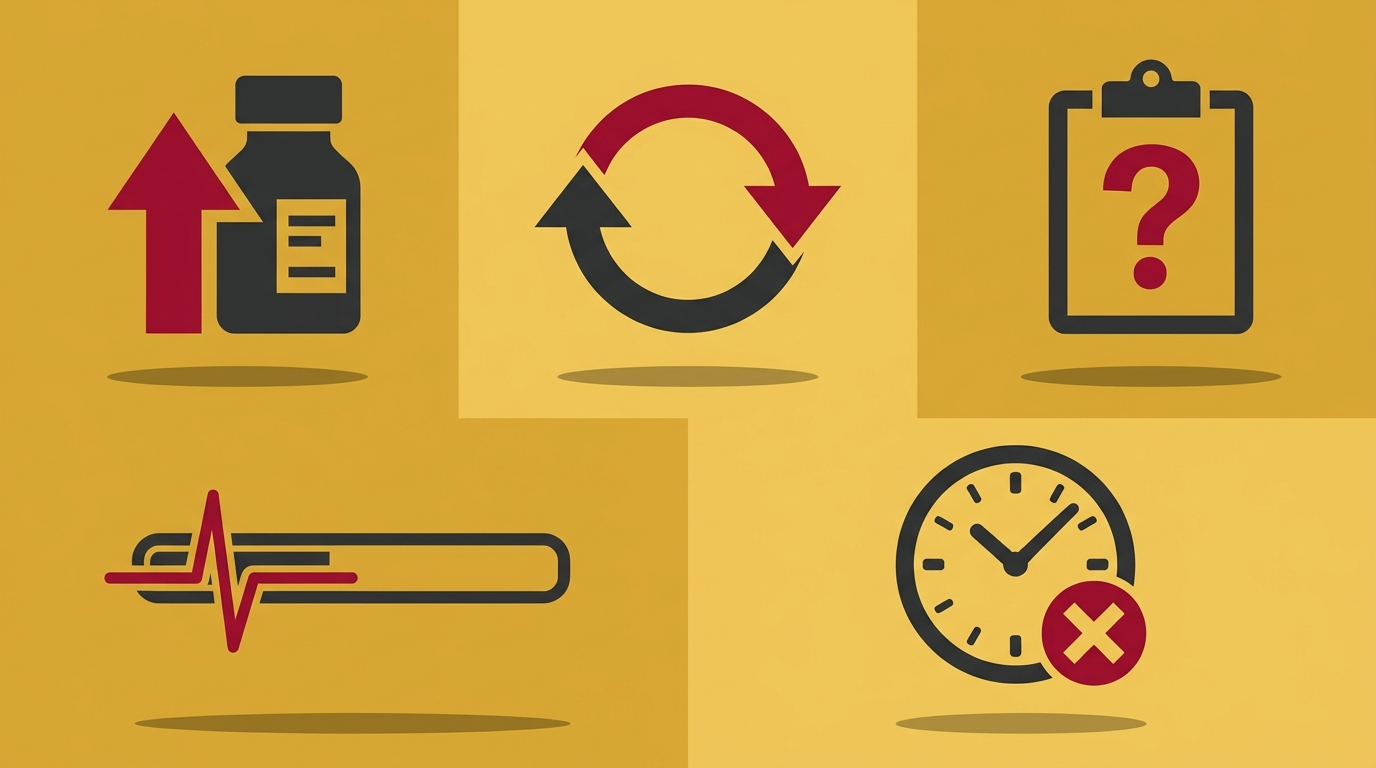
Most patients see these signs and file them under "this is just how neuropathy is." It isn't. These are your treatment plan communicating that it's not working.
| Warning Sign | What It Usually Means | What to Do |
|---|---|---|
| Medication dose keeps increasing | Body has adapted; nerve damage continues | Reassess the approach — not just the dose |
| Symptoms return within days of a "good" stretch | Underlying interference still active | Root-cause evaluation needed |
| Normal test results but still in pain | Functional decline not visible on standard imaging | Seek a functional assessment |
| Told to "just manage it" with no restoration plan | Provider isn't working toward recovery | Find someone working toward milestones |
| 6+ months of treatment with no functional improvement | Protocol isn't producing results | Clinical reassessment is overdue |
Understanding how nerve restoration compares to surgical intervention for neuropathy matters — especially if your current provider has started raising surgery as the next step.
- Dose escalation is not progress — when the medication dose keeps climbing, the previous level stopped doing its job. The nerve damage underneath is continuing on its own schedule.
- The pattern keeps coming back — good stretches followed by bad ones with no upward trend means whatever's driving the damage is still active and unaddressed.
- Normal labs with real symptoms are a clinical red flag — not a reassurance. Standard diagnostics miss functional nerve decline. "Normal" imaging with active symptoms means the right tool wasn't used, not that nothing is wrong.
The Difference Between Pain Relief and Nerve Function
Here's a distinction that almost never gets made in a standard neuropathy appointment — and it explains why so many patients are still in pain after years of "successful" treatment.
Pain relief is a feeling. Nerve function is actual tissue recovery. Those two things don't always move in the same direction.
A patient can feel less pain while the nerve continues to deteriorate. The medication is working as designed. Feeling better and getting better aren't the same thing. That's the question most management-based care never asks — and the one that drives every clinical decision at Touch of Wellness Chiropractic.
| Metric | Pain Relief Model | Nerve Restoration Model |
|---|---|---|
| Primary goal | Reduce pain signal | Restore nerve function |
| How progress is measured | Patient-reported pain score | Functional milestones: sensation, motor, balance |
| Response to a plateau | Increase dose or change medication | Reassess and adjust the care plan |
| Treatment timeline | Indefinite management | Structured and milestone-based |
| Root cause addressed | Rarely | Always |
- Functional improvement is measurable — sensation testing, balance evaluation, and motor response produce trackable data that a pain score doesn't capture. One tells you how the signal feels. The other tells you how the nerve is actually doing.
- Plateau is a signal, not a stage — if progress has flatlined, the approach needs to change. Continuing the same protocol and calling it persistence isn't clinical care. It's a template running out the clock.
- Restoration and management have incompatible timelines — management has no designed endpoint. Restoration is built around one.
Frequently Asked Questions
These questions reflect what neuropathy patients face most often when their current treatment stops producing results.
Why does Gabapentin seem to stop working after a few months?
Gabapentin blocks pain signals — it doesn't heal the nerve producing them. Over time, the nervous system adapts to the suppression while the underlying nerve damage continues to progress. When the medication stops working — and it will — the nerve has deteriorated past what the drug could suppress. That's not a side effect. That's the expected endpoint of suppression-only care. Why neuropathy medications only mask symptoms — and what actually addresses the source — is the question worth asking next.
My MRI was normal. So why do I still have neuropathy pain?
MRI is built for structural imaging — tumors, herniated discs, obvious compression. It doesn't capture functional nerve distress: metabolic interference, early demyelination, or the kind of signal disruption that produces real symptoms without leaving a visible finding on film. "Normal" on an MRI means the specific tool used didn't find it. That's not the same as nothing being wrong. The neuropathy care approach at Touch of Wellness Chiropractic starts with a functional evaluation — which asks different questions than the imaging that already came back clear.
Is it too late to restore nerve function after years of pain?
Peripheral nerves have a real capacity for healing when the biological environment supports repair. Duration matters — longer-standing damage takes longer to reverse, and some cases have a ceiling on how much recovery is achievable. Years of pain doesn't automatically mean the ceiling has already been reached. What matters is whether the interference driving the damage has ever actually been identified — and addressed. For most patients who've been managed rather than treated, the answer is no. The starting point is an honest look at what's actually going on — not an assumption in either direction. Results may vary by patient.
Why didn't my primary care doctor mention nerve restoration?
The standard medical model is built for management, not restoration. The pharmaceutical framework produces prescriptions — that's what it was designed to do, and for many conditions it's the right tool. For nerve damage that has a structural or metabolic component, it's the wrong tool — applied efficiently — to the wrong problem. A nerve restoration roadmap is a different scope of practice. What the Nerve Restoration Protocol at Touch of Wellness Chiropractic looks like is worth understanding before writing off the option.
How long should I give a new treatment before deciding it isn't working?
"A few weeks" isn't enough time for nerve tissue. "Six months with no functional change" is too long to continue without a full clinical reassessment. The real answer depends on what milestone you're measuring against — which is exactly why the roadmap exists. You need defined checkpoints from the beginning. A provider who can't tell you what measurable improvement looks like at 60 days doesn't have a clinical plan. They have a schedule.
Isn't neuropathy just a normal part of aging?
Some change in nerve sensitivity comes with age. Progressive, debilitating neuropathy is not inevitable. Aging slows the healing process — it doesn't change whether the right clinical question has ever been asked. Whether what's actually causing the nerve damage has ever been identified and addressed — that's what matters. For most patients who've been told to manage it, the answer is no. Age changes the timeline. It doesn't determine the outcome.
What's the difference between seeing a chiropractor versus a neurologist for neuropathy?
Neurology identifies and classifies nerve conditions. Restoration-focused chiropractic addresses the structural interference contributing to nerve dysfunction. In most neuropathy cases, both have a legitimate role — this isn't either/or. What most patients can't find is a provider focused on restoring function rather than classifying the condition. Whether chiropractic care can actually help heal damaged nerves — and what the research shows — is the more useful starting point.
What if I've already tried chiropractic and it didn't work?
The right question isn't whether you've had chiropractic care — it's whether the care you received was built around nerve restoration or around a standard adjustment protocol. A chiropractor running the same sequence on every patient regardless of clinical response isn't doing the same thing as a provider executing an assessment-driven, milestone-based nerve restoration roadmap. If previous chiropractic care didn't produce results, the question worth asking is what that protocol was actually targeting — because an adjustment sequence and a nerve restoration roadmap are not the same thing.
The Answer Most Morton Neuropathy Patients Never Get
If your neuropathy treatment isn't working, the most likely explanation isn't that neuropathy can't be treated. It's that what you've been receiving was never designed to treat it. It was designed to quiet it.
Most patients who arrive at Touch of Wellness Chiropractic after years of neuropathy management haven't failed. Their treatment has. The protocol was built for suppression. It suppressed. The nerve kept declining. That's not a personal failure — it's what happens when the wrong tool gets applied to the right problem and no one stops to ask why the results aren't there.
The nervous system runs everything. When it's compromised — structurally, metabolically, or both — nothing functions the way it should. No medication restores what it was designed to suppress. The only path to functional recovery is identifying what's creating the interference, removing it, and giving the nerve what it needs to do what nerves actually do: heal.
If you've read this far, you already know your current treatment isn't producing what you need.
The next step isn't a new prescription. It's a clinical assessment that starts with what you actually report — your symptoms, your history, what you've already tried — and builds a restoration roadmap from there.
No 12-month plan handed over before the evaluation is finished. No diagnosis code driving the care plan. What you're experiencing, what's driving it, and what a realistic restoration path looks like for your specific situation.
That's a different appointment than anything that's come before it.
Find out what your assessment looks like
If you're in Morton or the surrounding central Illinois area and you've been in a management cycle that isn't moving — that's the conversation worth having.
Copyright Touch of Wellness Chiropractic 2026
1101 W Jackson St, Suite A Morton, IL 61550
Web Design by iTech Valet