
(309) 321-8412 | 1101 W Jackson St, Suite A, Morton, IL 61550
(309) 321-8412 | 1101 W Jackson St, Suite A, Morton, IL 61550
Nerve Restoration vs. Surgical Intervention: Choosing the Right Neuropathy Path
Surgical intervention for neuropathy addresses physical nerve entrapment — it creates space by removing or releasing a structural obstruction. Nerve restoration works on the biological environment surrounding the nerve, improving circulation, metabolic health, and signal integrity so the body can carry out its own repair process. These aren’t competing versions of the same solution. They’re targeting different parts of a different problem.
Which path is appropriate depends entirely on what’s actually driving the nerve damage. If the cause is purely mechanical — a herniated disc, narrowed carpal tunnel, or bone spur physically compressing a nerve root — surgery may be the right tool. But most neuropathy, particularly peripheral neuropathy, isn’t driven by structural compression at all. It’s driven by poor circulation, metabolic dysfunction, nutritional deficits, and systemic inflammation. For these patients, surgery has no mechanism to produce improvement. There’s no structural obstruction to remove.
The gap between those two realities is where a lot of patients get lost. They’re told surgery is the answer. They go through it. The symptoms remain. That’s not because surgery failed — it’s because surgery wasn’t designed to solve what was actually happening.
Understanding the difference between mechanically driven and biologically driven nerve distress is the clinical question that should come before any treatment decision, surgical or otherwise. This article lays out both paths: what each does, what each misses, and how to assess which approach fits the actual source of the nerve damage. Results may vary.
Last Updated: April 8, 2026
- Two Different Tools for Two Different Problems
- Why the Surgical Referral Isn’t Always the Right Next Step
- Building the Biological Case for Restoration
- Who This Path Is — and Isn’t — For
- Frequently Asked Questions
- Why does surgery sometimes fail to stop neuropathy pain?
- Can nerve restoration help even if my doctor recommended surgery?
- What are the risks of choosing surgery over a restorative approach first?
- How long does it take to see results from a non-surgical nerve restoration protocol?
- What if I’ve already had surgery and my neuropathy symptoms didn’t improve?
- Is neuropathy always caused by nerve compression that surgery can fix?
- What does the Nerve Restoration Protocol do that medications don’t?
- The Case Is Clear
Two Different Tools for Two Different Problems
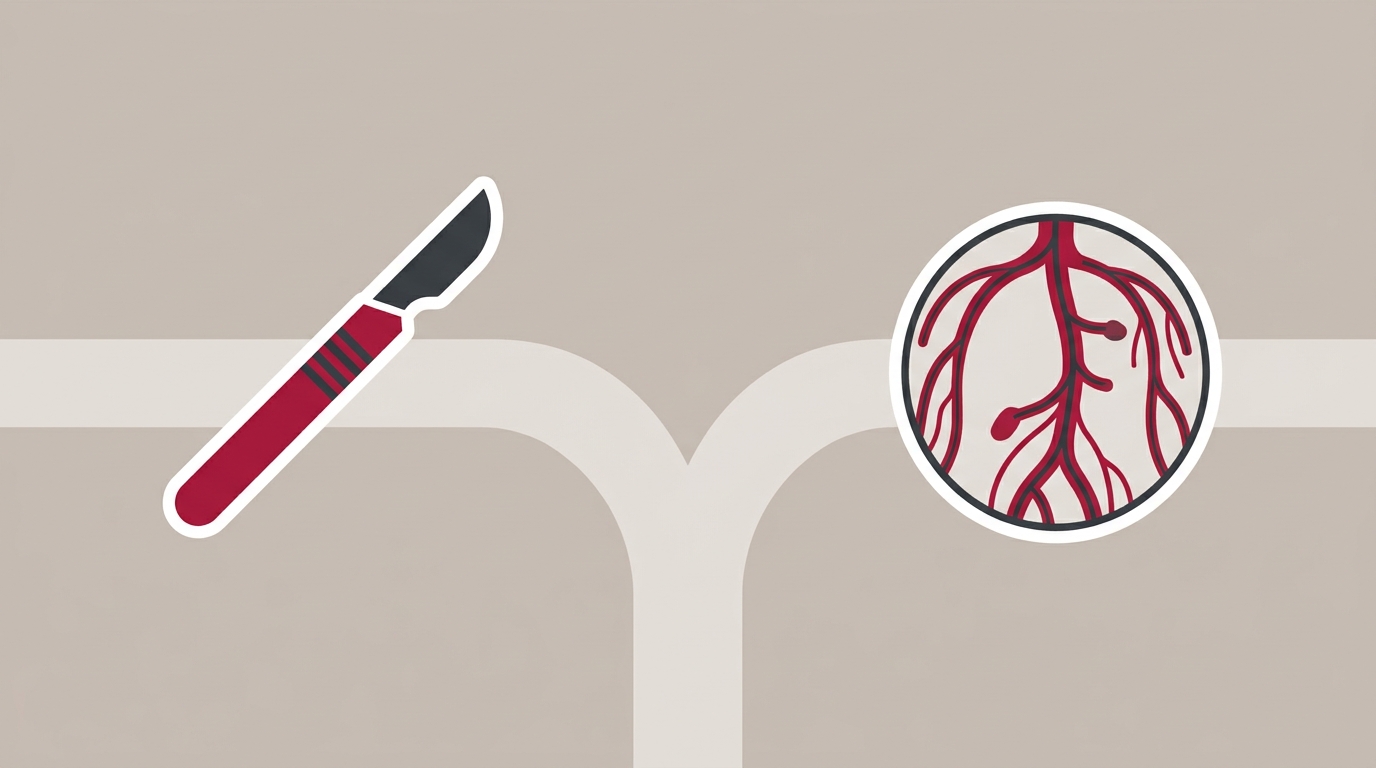
Most patients who get a neuropathy diagnosis leave their doctor’s office with one of two things: a prescription or a referral. Not because their clinical picture required either one. Because that’s what the pipeline produces.
The assumption baked into that path is that neuropathy is a structural problem — something to locate, release, or surgically correct. For a specific subset of cases, that’s accurate. For the rest — cases driven by poor circulation, metabolic breakdown, or systemic inflammation — surgery has no mechanism to help. There’s nothing structural to remove.
Root-cause chiropractic care starts with a different question: what’s actually driving this? That investigation should happen before any treatment decision, surgical or otherwise.
What Surgical Decompression Actually Does
Surgery for neuropathy is built for one scenario. A nerve is being physically compressed — a herniated disc, a bone spur, narrowed carpal tunnel tissue — and removing that obstruction creates space. From there, the nerve has the opportunity to recover.
That works when structural compression is the confirmed driver. The Mayo Clinic identifies conservative, non-surgical management as the standard approach for systemic nerve distress — because surgical decompression is designed for compression, not biology. Even in cases where surgery is appropriate, what happens after depends entirely on whether the biological environment surrounding the decompressed nerve is capable of supporting recovery. Most of the time, no one evaluates that before the surgical recommendation is made.
- Structural compression — what surgery addresses — Creating physical space by removing a confirmed mechanical obstruction. Effective when entrapment is the documented driver and the surrounding biology is healthy enough to recover.
- Biological recovery capacity — what surgery doesn’t supply — The decompressed nerve still needs adequate circulation, myelin health, and metabolic conditions to actually heal. Removing pressure doesn’t create those things.
- Systemic and metabolic causes — where surgery is simply irrelevant — Diabetes-related neuropathy, circulatory insufficiency, and metabolic dysfunction don’t respond to decompression. The nerve isn’t being squeezed. It’s being starved.
What Nerve Restoration Actually Does
Restoration works at the biological level. The target isn’t a structure — it’s the environment the nerve lives in.
Here’s what that looks like in practice. Your spine is the central communication pathway for everything connected to it. When that pathway carries interference — through dysfunction, misalignment, accumulated structural stress — the peripheral nerve doesn’t just receive a weaker signal. It loses the coordination it needs to maintain and repair itself at the biological level.
Research confirms this connection: spinal adjustments that restore central neural function improve peripheral motor and sensory recovery. Not by masking the problem — by clearing what’s blocking the system from doing its own repair work.
That’s the line. One approach turns the signal down. The other clears what’s disrupting it.
- Circulation improvement — Restoring blood flow to nerve-dependent tissue creates the delivery mechanism for everything nerves need to repair and maintain themselves over time.
- Spinal signal integrity — Chiropractic adjustments that restore proper alignment remove central interference that compounds peripheral nerve dysfunction. The central and peripheral nervous systems aren’t separate problems. They’re one connected system.
- Metabolic support — Addressing the nutritional and metabolic conditions that sustain nerve tissue gives the body the raw materials it needs to rebuild damaged fibers.
Why the Surgical Referral Isn’t Always the Right Next Step
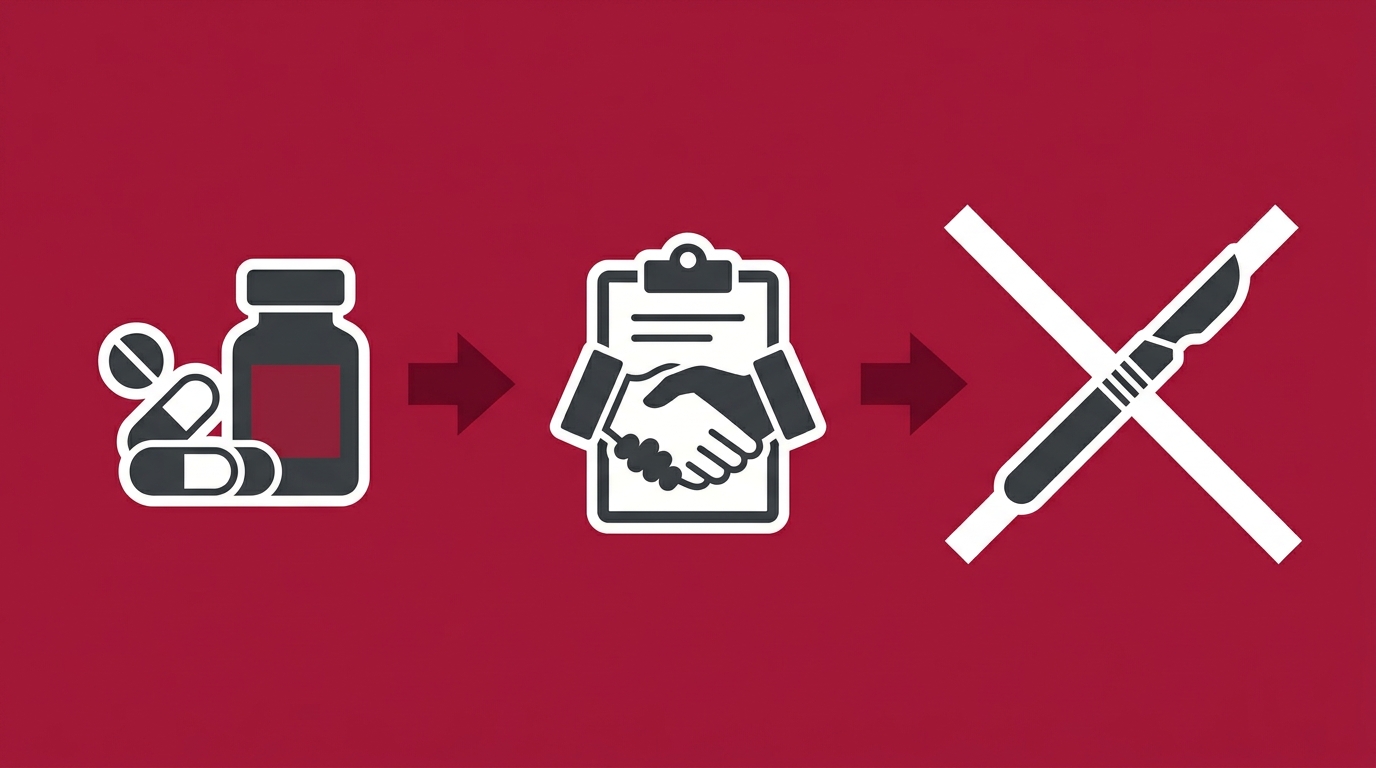
Here’s what the standard neuropathy pathway looks like from the inside. Medication is tried. It helps — for a while. When the results plateau, you get referred to a specialist. The specialist finds something that could be structural. Surgery becomes the conversation.
That path is built around what primary care medicine knows how to do. Not around what neuropathy actually requires.
The Cleveland Clinic notes that many neuropathy cases remain unresolved by standard medicine because of complex underlying metabolic factors that fall outside the standard diagnostic and referral framework. That’s not a patient failure. That’s a system running a process it wasn’t built for and calling the result a diagnosis.
Why the Standard Pipeline Fails Neuropathy Patients
The assembly-line neuropathy sequence: medication → plateau → specialist referral → surgical evaluation. Thousands of patients go through it every week. For a significant number of them, it ends with surgery that doesn’t fix what they went in with.
Here’s the mechanism. Primary care providers are trained in diagnosis and medical management. Most aren’t trained to investigate the circulatory, metabolic, and structural contributors to nerve distress that fall outside the standard diagnostic code framework. The NIH’s NINDS confirms that neuropathy treatment must address the specific underlying cause — not manage the symptom presentation while the referral clock runs. When a case gets labeled “idiopathic” — no confirmed cause — the downstream default is a specialist and, eventually, a surgical workup.
Idiopathic doesn’t mean there’s no cause. It means the cause hasn’t been found yet.
Running a patient through surgery because no one identified the cause isn’t clinical reasoning. It’s what happens when a system runs out of other moves. And for the patient who comes out the other side with the same symptoms — now with permanent structural changes — that default has cost something they can’t get back.
I’ve seen patients come through this practice after having had surgery. The compression was released. The symptoms stayed. What they needed wasn’t structural intervention. It was an investigation into the biological environment the surgery never touched.
- The Idiopathic Trap — When a cause can’t be confirmed, the referral pipeline treats the case as untreatable by conservative means. That’s not a clinical conclusion — it’s a system limitation closing the restorative window before anyone looked.
- Pre-operative biological evaluation — Whether the nerve’s surrounding environment supports post-surgical recovery is rarely assessed before surgery is recommended. It should be the first evaluation. Not an afterthought.
- Scar tissue as a secondary structural problem — Surgical procedures create scar tissue at the intervention site. In nerve tissue, that scar tissue can itself become a new compression point — replacing the original problem with a new structural one.
- The irreversibility cost — Once structural changes are made, the anatomical landscape doesn’t go back. Restorative care on altered tissue is more complicated. That’s a preventable clinical disadvantage.
The Biological Gap Surgery Doesn’t Fill
Neuropathy driven by poor circulation or metabolic dysfunction doesn’t respond to decompression. There’s nothing to decompress.
The nerve is failing because it’s being starved. Circulation isn’t reaching the tissue at therapeutic levels. Myelin is degrading because the metabolic conditions for its maintenance aren’t present. The nerve’s communication is breaking down not because something is squeezing it — but because the system supporting it stopped working.
Surgery can release a compressed nerve. It can’t feed a starved one.
| Neuropathy Driver | Surgery Applicable? | Clinical Reasoning |
|---|---|---|
| Confirmed structural compression (disc, tunnel, bone spur) | Yes — in documented cases | Surgery creates physical space and removes mechanical obstruction |
| Circulatory insufficiency | No | Decompression doesn’t restore blood flow to nerve tissue |
| Metabolic dysfunction (e.g., diabetes-related) | No | No structural obstruction to remove; biology is the driver |
| Systemic inflammation | No | Inflammatory processes aren’t corrected by structural intervention |
| Idiopathic — cause unconfirmed | Not first | Surgical commitment before cause identification is premature and irreversible |
Building the Biological Case for Restoration
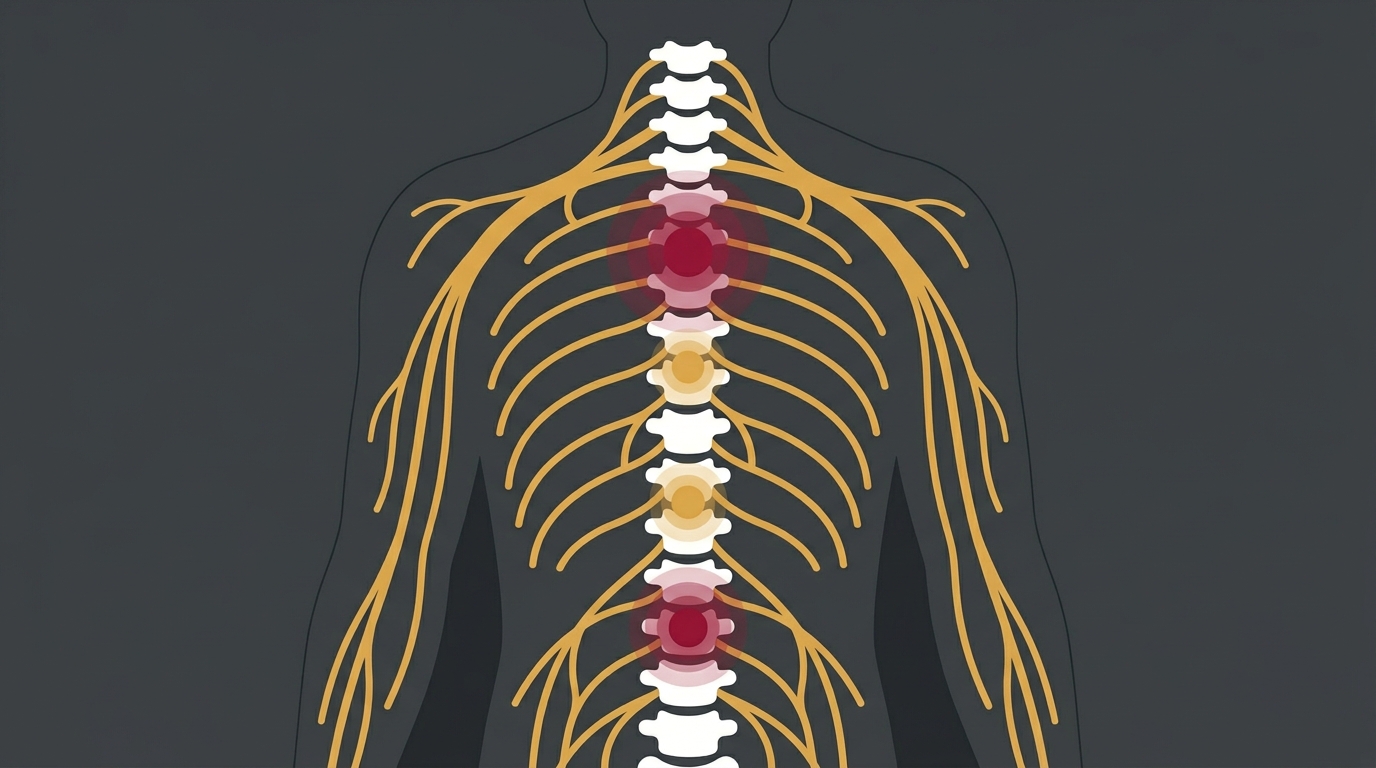
Nerves don’t fail on their own. They fail because the systems keeping them alive stop working — blood flow, metabolic support, spinal signal integrity, continuous cellular repair happening beneath the surface. When those systems break down, the nerve deteriorates. Regardless of whether anything structural is pressing on it.
The Nerve Restoration Protocol at Touch of Wellness Chiropractic addresses those systems directly — before any structural decision gets made, not after. Not as a last resort. As the investigation that should have happened first.
What the Clinical Investigation Looks Like
Before any protocol runs, the clinical picture has to be clear. What’s driving the nerve distress — and is it structural, biological, or both?
At Touch of Wellness Chiropractic, the assessment starts with what you actually report. Not what a diagnosis code says you should have. Not what a previous provider assumed based on a template. What’s happening in your body, what’s been tried, and what response it produced.
That’s the diagnostic map. The care plan is built from it. Understanding whether specialized chiropractic care can support damaged nerve recovery starts with the right questions — and the willingness to stop and reassess when the clinical picture changes. If something isn’t producing results, it changes. Not gets repeated.
- Clinical intake — Symptom history, prior treatment, what helped, what didn’t. This is the diagnostic map that drives every decision in the care plan.
- Circulatory evaluation — Is blood flow reaching the affected nerve tissue at therapeutic levels? Circulation is the delivery mechanism for everything nerves need to repair themselves.
- Spinal assessment — Is there central interference in the communication pathway between the brain and the peripheral nerve? A chiropractic adjustment that restores alignment removes that interference before it compounds what’s already happening at the periphery.
- Response tracking — If something isn’t producing measurable functional change in appropriate time, it changes. The plan follows the patient’s clinical response. Not the other way around.
What Nerve Restoration Targets That Medications Miss
Gabapentin. Duloxetine. Pregabalin. These medications do one thing: they suppress the pain signal. They reduce the perception of the problem.
That’s not nothing. But it’s not repair.
The reason standard neuropathy medications only mask symptoms is because that’s exactly what they were designed to do. They weren’t designed to repair myelin. They weren’t designed to restore circulation. They weren’t built to remove the central spinal interference compounding a peripheral nerve problem. Suppressing the signal doesn’t address why the signal is wrong.
Restoration targets what medication skips. The goal isn’t a quieter symptom — it’s a nerve that’s actually healing. Less pain is the byproduct. Recovery is the objective. Those aren’t the same thing, and which one you’re working toward determines everything about what the care plan looks like.
Understanding how the Nerve Restoration Protocol repairs the human nervous system makes the distinction concrete: one approach treats the sensation. The other pursues the source.
| Treatment Approach | Primary Target | What It Doesn’t Address |
|---|---|---|
| Neuropathy medication | Pain signal perception | Underlying nerve condition, circulation, myelin health |
| Surgical decompression | Structural compression | Biological environment, metabolic factors, circulatory drivers |
| Nerve Restoration Protocol | Biological nerve environment | Active structural compression (assessed separately, addressed if confirmed) |
| Chiropractic adjustment | Spinal signal interference | Non-spinal metabolic causes (addressed through full protocol) |
Who This Path Is — and Isn’t — For
Nerve restoration isn’t for every patient. That’s not a caveat. It’s a feature.
Biological repair takes time. It takes consistency. It takes a full commitment to a care plan built for months, not a single session. If you’re looking for something different from that, this is the right moment to know it — not two appointments in.
This Is Not a One-Appointment Fix
If you want an alternative to surgery that works in a single visit, nerve restoration isn’t that.
No legitimate clinical approach produces instant biological repair. If someone’s framing it that way, that’s not a protocol — it’s a pitch.
The patient who abandons care in the first week because the pain hasn’t disappeared is not going to get results from this approach. That’s a clinical mismatch that reliably produces the worst outcome for the person most in need of the right care. Myelin doesn’t rebuild in days. Circulation restores in stages. The nervous system recalibrates on its own biological timeline. When you understand what’s actually happening in the tissue, the process stops feeling like a delay and starts making sense.
Partial commitment produces partial results. Partial results get mistaken for protocol failure. That cycle is the most common way restoration doesn’t work — and it has nothing to do with whether restoration was the right answer.
- Symptom fluctuation early in care — Some patients experience shifts in symptom presentation as the nervous system recalibrates. This isn’t the protocol failing. It’s the system responding.
- Functional milestones before full pain resolution — Improved sensation, reduced tingling, better balance. These arrive before pain fully resolves and they’re measurable signs of biological progress — not coincidences.
- Consistency is clinical — Missed appointments interrupt the biological process. The protocol is a sequence. Dropping out mid-sequence and calling it a failure is like stopping an antibiotic on day four and concluding antibiotics don’t work.
- Protocol adjustment — If something isn’t working, it changes. But evaluation and adjustment require time. Abandoning care before that window closes is the most preventable way restoration doesn’t deliver.
Who This Approach Is a Strong Clinical Fit For
Restoration works for patients who’ve done the medical route and are still where they started.
It works for patients labeled “idiopathic” with no clear biological explanation for what’s happening. That label isn’t a diagnosis. It’s a system admitting it ran out of options before the biology was properly investigated.
It works for patients who’ve had surgery and still have symptoms. If the surgery was clinically appropriate and the symptoms persisted, the biological environment is the next investigation. Not the first surgical question all over again.
And it works for patients who want to understand what’s actually happening in their body before committing to something irreversible.
The neuropathy care approach at Touch of Wellness Chiropractic starts with that investigation. Not with a referral default. With what the clinical picture actually shows.
| Patient Profile | Restoration Fit | Why |
|---|---|---|
| Idiopathic neuropathy — cause unconfirmed | Strong | Biological investigation before structural intervention is the appropriate clinical sequence |
| Post-surgical — symptoms unchanged or returned | Strong | Surgery missed the biological driver; restoration targets it directly |
| Medication plateau — symptoms managed but not resolved | Strong | Medications suppress signals; restoration addresses the biological source |
| Confirmed structural compression — no biological workup completed | Evaluate first | Biological factors still require assessment before or alongside any structural path |
| Expects resolution in 1–2 visits — won’t commit to a full plan | Not a fit | Biological repair requires consistent care over time; partial commitment produces partial results |
Frequently Asked Questions
Why does surgery sometimes fail to stop neuropathy pain?
Surgery addresses structural compression — it removes or releases the mechanical obstruction on the nerve. But when neuropathy is driven by poor circulation, metabolic dysfunction, or systemic factors, there’s nothing structural for surgery to fix.
Decompression doesn’t restore blood flow. It doesn’t repair myelin. It creates space and steps back. Whether the nerve actually recovers depends on whether the biological environment supporting peripheral nerve function is capable of doing the rest of the work — and that’s rarely evaluated before the surgical recommendation is made.
Can nerve restoration help even if my doctor recommended surgery?
Yes — and this is worth understanding clearly. A surgical recommendation doesn’t automatically mean surgery is the only viable path.
A recommendation made before the biological picture is evaluated isn’t a complete clinical picture. If the nerve is being starved of circulation, or the metabolic environment is actively working against repair, those are conditions restoration can address. When they’re the real driver, correcting them may resolve what surgery was intended to fix. A thorough evaluation to determine whether the problem is mechanical, biological, or both should always precede an irreversible structural commitment.
What are the risks of choosing surgery over a restorative approach first?
Beyond standard surgical risks — infection, anesthesia, and recovery time — the Mayo Clinic positions conservative management as the standard first approach for systemic nerve distress, precisely because surgical risk isn’t trivial when a non-invasive path exists.
Two risks are specific to premature neuropathy surgery. First: scar tissue. Surgical intervention creates scar tissue at the nerve site, and in nerve tissue that scar tissue can become a new compression point — replacing the original problem with a structural one that wasn’t there before. Second: irreversibility. The anatomical landscape after surgery isn’t what it was before. Restorative care on altered tissue is more complicated. Exhausting conservative options first isn’t a delay — it’s the lower-risk clinical sequence.
How long does it take to see results from a non-surgical nerve restoration protocol?
Biological repair doesn’t run on a fixed timeline. Any provider who hands you a specific number without a clinical evaluation isn’t giving you an honest answer.
What’s predictable is the direction. Functional milestones become measurable over weeks, with more significant recovery emerging over months as nerve fiber repair and neural function improve. How quickly depends on how long the nerve has been compromised, the severity of the biological disruption, and how consistently the care plan is followed. The body repairs nerve tissue when the conditions for repair exist. Building those conditions is the work.
What if I’ve already had surgery and my neuropathy symptoms didn’t improve?
This is one of the clearest signals that the original problem wasn’t purely structural.
If surgery addressed confirmed compression and the symptoms persisted — or temporarily improved and returned — the driver of the nerve distress wasn’t the compression itself. It was the biological environment the surgery left entirely untouched. Circulation doesn’t improve because a disc was removed. Myelin doesn’t rebuild because a tunnel was widened. The biological factors producing nerve distress before the surgery are still producing it after, because nothing addressed them. That’s the investigation restoration begins with.
Is neuropathy always caused by nerve compression that surgery can fix?
No. Peripheral neuropathy involves sensory signaling disruption that can stem from diabetes, circulatory insufficiency, nutritional deficiencies, autoimmune conditions, and systemic inflammation — none of which present a structural target for surgery.
Decompression is appropriate only when the nerve is physically entrapped by something that can be removed. When the cause is metabolic or systemic, surgery has no mechanism to produce improvement. Identifying the actual driver is the clinical question that should come before any treatment decision — not an afterthought once surgery hasn’t worked.
What does the Nerve Restoration Protocol do that medications don’t?
Medications for neuropathy primarily suppress pain signals — they reduce the perception of the problem without addressing its source.
That has a place in symptom management. But most neuropathy cases driven by metabolic and circulatory complexity stay unresolved because pain suppression and biological repair are not the same intervention. Restoration works on what medication skips — the circulation, the spinal signal integrity, the metabolic conditions the nerve tissue needs to actually repair. One approach quiets the symptom. The other addresses why it exists.
The Case Is Clear
Surgery is the right tool for a specific, well-defined problem: a nerve physically entrapped by something structural that can be removed, in a patient whose biological environment is healthy enough to recover once the pressure is gone. That patient exists. For them, surgery may be exactly right.
But that patient is not most people who get a neuropathy diagnosis.
Most neuropathy isn’t driven by something a scalpel can reach. The nerve is failing because the biological system supporting it has stopped working. Circulation isn’t adequate. The metabolic conditions for myelin maintenance aren’t there. Central nervous system interference is compounding the problem at the periphery. None of that changes on a surgical table. If the treatment path isn’t addressing the actual source of the nerve problem — and you keep going down that path anyway — that’s the clinical definition of failure. Stop. Reassess. Ask whether the right question is even being asked before the next intervention is committed to.
Unexplained doesn’t mean surgery is the next step. It means no one’s looked at the biology hard enough yet. At Touch of Wellness Chiropractic, root-cause chiropractic care starts with that investigation — not with a referral default, but with what the clinical picture actually shows. Results may vary.
Most of the patients I’ve worked with who were told surgery was their only option had never had a serious biological workup. Nobody had looked at their circulation. Nobody had assessed the metabolic environment surrounding the nerve. Nobody had evaluated the central spinal interference compounding the peripheral problem.
That’s not surgery failing as a tool. That’s a failure of sequence.
Surgery shouldn’t be the first irreversible decision when the biology hasn’t been investigated. If your neuropathy symptoms have plateaued on medication, returned after surgery, or been labeled “idiopathic” without an explanation for why — that’s the signal the right clinical question hasn’t been asked yet.
At Touch of Wellness Chiropractic, that’s where we start.
Find out whether nerve restoration is the right path for your case.
When the biology is the problem, the biology is where the answer is. A surgical consult can happen any time. An honest biological assessment first gives it a real chance to be unnecessary.
Copyright Touch of Wellness Chiropractic 2026
1101 W Jackson St, Suite A Morton, IL 61550
Web Design by iTech Valet