
(309) 321-8412 | 1101 W Jackson St, Suite A, Morton, IL 61550
(309) 321-8412 | 1101 W Jackson St, Suite A, Morton, IL 61550
What to Expect During Your First Nerve Restoration Session at Touch of Wellness Chiropractic
Your first nerve restoration session at Touch of Wellness Chiropractic is a focused 15-minute clinical assessment — not a generic intake, and not a sales pitch.
Dr. Karen Hannah evaluates your neurological function, maps your specific symptoms — numbness, tingling, burning, radiating sensation — and determines whether you're a candidate for the Nerve Restoration Protocol.
You're not walking in to get adjusted and handed a 12-month plan. You're walking in so Dr. Hannah can understand exactly what your nervous system is reporting right now. Not what a diagnosis code says you should have. Not what another provider assumed years ago. What you're actually experiencing today.
The assessment has three clear stages. First, a neurological evaluation — testing how your nervous system is functioning at the level of your current symptoms. Second, symptom mapping — tracing what you report to a biological root cause, not a template. Third, candidate determination — an honest clinical conclusion about whether the Nerve Restoration Protocol can realistically help your condition, and what that plan would actually look like.
If the findings support it, your care plan gets built from your clinical picture. If they don't — you'll hear that directly, along with a clear explanation of why.
That's the standard here. Real answers, not comfortable ones.
This article walks through each stage of that first session — what happens, why the 15-minute structure exists, who this session is for, and who it's not.
Last Updated: April 8, 2026
- What the First 15 Minutes Actually Look Like
- Why Most “New Patient Appointments” Fall Short
- How Your Nerve Restoration Plan Gets Built
- This Session Is Not for Everyone
-
Frequently Asked Questions
- Will I receive a chiropractic adjustment on my very first visit?
- How long should I expect to be at the office for my first appointment?
- Should I bring my previous MRI or EMG results with me?
- Am I going to be pressured into a long-term treatment contract?
- Can I just come in for a quick adjustment without the nerve assessment?
- The First Session Is a Clinical Commitment — and That's the Point
What the First 15 Minutes Actually Look Like
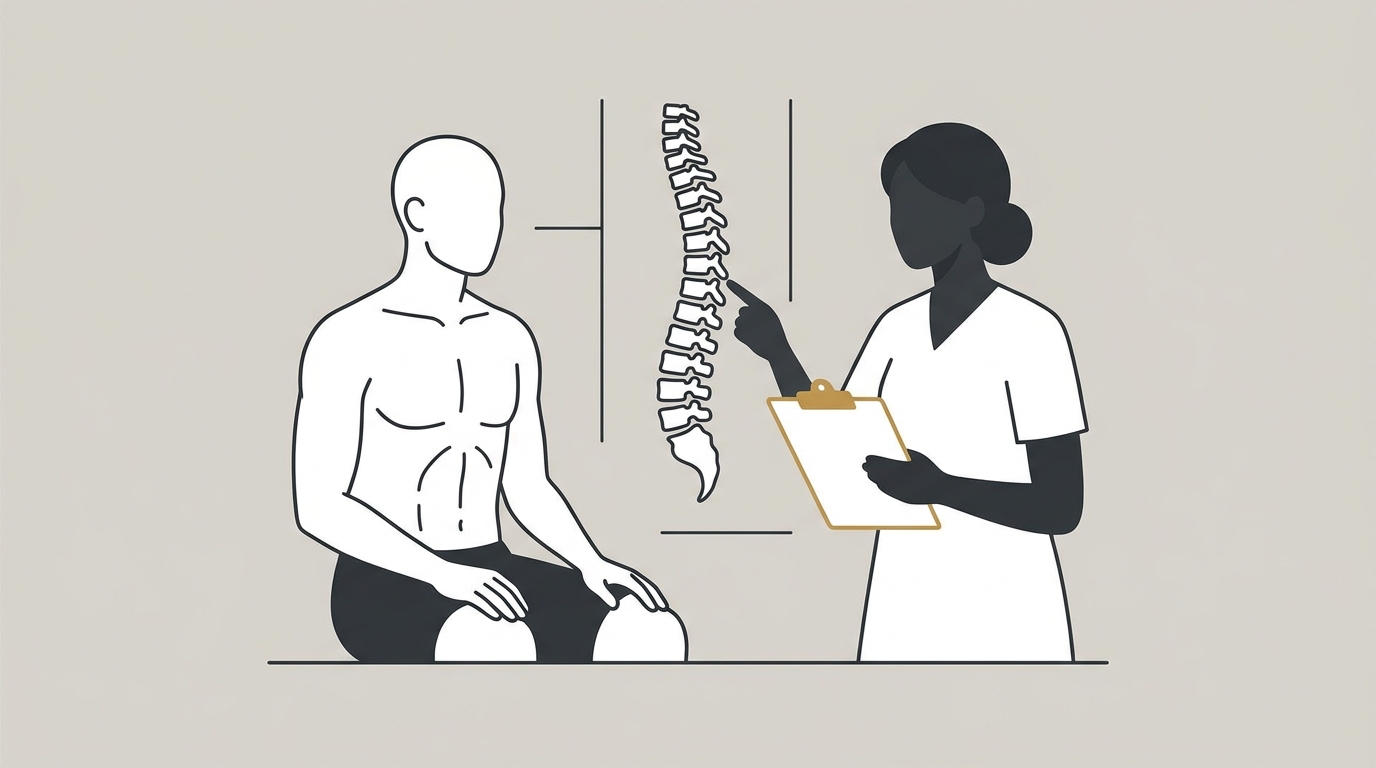
Most patients who've seen other chiropractors already know the drill. Clipboard. A few range-of-motion checks. Then someone sits down and tells you what you need — before anyone's actually looked at your case.
That's the template. That's what most offices run. And when it doesn't produce results, they run it again.
Here, the first 15 minutes are the assessment. All of them. Not the warm-up to the assessment. The whole thing.
Root-cause chiropractic care at Touch of Wellness Chiropractic starts from a different premise: you don't know what someone actually needs until you look at their case — not at a diagnosis code, and not at whoever walked in before them.
The Neurological Mapping Process
Your numbness and your neighbor's numbness are not the same condition.
They might look identical on a standard intake form. But the nerve disruption driving yours could be metabolic, structural, traumatic, or some combination of all three. According to the NIH's National Institute of Neurological Disorders and Stroke, consistent oxygen and nutrient delivery is what keeps nerve signals transmitting correctly — and when that's disrupted for any reason, symptoms look completely different from one patient to the next.
That's the biological reality. It's also why a template fails before it even starts.
The assessment maps what you're actually reporting. Not what your last provider assumed. Not what a billing code suggests. What your nervous system is doing right now, at the level of your current symptoms.
- What gets evaluated — Neurological function at the site of your symptoms: reflexes, sensation testing, motor response, and the specific pattern of your nerve presentation right now.
- What gets mapped — Your symptom timeline, where and how symptoms appear, what makes them worse or better, and what prior care produced or failed to produce.
- What gets determined — Whether your presentation is a clinical match for the Nerve Restoration Protocol, and if not, what the honest clinical direction actually looks like.
Your Clinical Picture Isn't a Template
A "peripheral neuropathy" diagnosis tells a provider what billing category you're in. That's it.
It doesn't tell them where your nerve signal is disrupted. It doesn't tell them what's causing the disruption. It doesn't tell them what kind of intervention matches your biological reality. That's what the assessment is for.
Research published in Brain Sciences (MDPI) confirms that spinal adjustments improve central neural function and peripheral nerve recovery — but only when the intervention is matched to the patient's specific neurological picture. A generic protocol applied to a mismatched case doesn't produce average results. It produces nothing.
The care plan that comes out of this session is built from your findings. Not from the code that brought you in the door.
| What You Report | What Gets Mapped | Why It Matters |
|---|---|---|
| Numbness in specific areas | Neurological distribution pattern | Identifies nerve level and likely mechanism |
| Symptom onset and timeline | Injury, metabolic change, or gradual progression | Distinguishes structural from systemic causes |
| Previous treatment response | What worked, what didn't, and why | Prevents repeating non-productive interventions |
| Current functional limitations | Work performance, sleep, activity disruption | Establishes clinical baseline and care priority |
Why Most “New Patient Appointments” Fall Short
You've probably already been through one of these.
You come in. Someone takes an X-ray. And then a provider sits down with a treatment plan — one that clearly existed before you walked through the door — and tells you that you need six months of care.
That plan didn't come from your assessment. It came from a billing model.
The neuropathy care approach at Touch of Wellness Chiropractic was built specifically to be its opposite.
Why the Fear-Based Sales Model Is a Clinical Failure
The Fear-Based Sales Model works like this. You sit down for your first visit. The intake takes a few minutes. Before you've even finished explaining what's been happening to your body — before the clinical evaluation is done — someone slides a treatment plan across the desk. It says you need 18 months.
That number didn't come from your case. It came from a retention target.
I've seen this happen to patients who transferred to this practice. The timeline their previous provider handed over on visit one had nothing to do with what they clinically needed. It had everything to do with a volume model that requires high visit counts to operate.
This is where the "chiropractor who kept me coming back forever" story comes from. And it's why so many patients arrive here already skeptical — not about chiropractic, but about whether anyone is actually going to look at their case or just process them through it.
Mayo Clinic's clinical guidance on peripheral neuropathy is direct on this: a thorough physical and neurological examination has to happen before any treatment recommendation is made. Assessment first. Plan after. That's the standard. It's just not what most practices run.
- What the Fear-Based Model produces — Long treatment timelines that generate revenue but don't match the clinical picture. Patients following plans that aren't working. And eventually, patients who abandon care entirely because nothing changed and they don't know why.
- What honest assessment produces — A plan built from your findings. A clear biological explanation for why your symptoms are happening. A timeline that adjusts when the clinical picture changes — not when a calendar says it should.
- What clinical failure actually looks like — Running the same treatment when it's producing no results and calling that a care plan. Stop. Reassess. Pivot. That's not a sign of weakness in a provider. That's the marker of a competent one.
What an Honest First Assessment Produces
An honest assessment produces three things: clarity on your case, a plan that fits the findings, and — when appropriate — a direct "we're not the right fit."
Some presentations don't match the Nerve Restoration Protocol. Some cases have nerve involvement that's progressed beyond what conservative care can realistically address. Some patients need a referral, not an adjustment. Dr. Hannah will say that directly — with an explanation of why and a clear direction for what makes more clinical sense for the situation.
That honesty isn't a liability. It's the only thing that makes a recommendation from this practice worth something.
Handing someone a 12-month timeline before the evaluation is done isn't aggressive care planning. It's indefensible. If an honest recommendation results in a shorter plan — good. That's the point. That's the only standard worth practicing under.
| Honest Assessment Model | Fear-Based Sales Model |
|---|---|
| Plan built after full evaluation is complete | Plan presented before evaluation is finished |
| Timeline based on clinical findings | Timeline based on visit-volume targets |
| Plan adjusts when patient response changes | Plan runs on schedule regardless of outcomes |
| "Not a candidate" is a valid clinical conclusion | Every patient is a candidate by design |
| Shorter plans accepted when appropriate | Volume incentivized independent of clinical results |
How Your Nerve Restoration Plan Gets Built
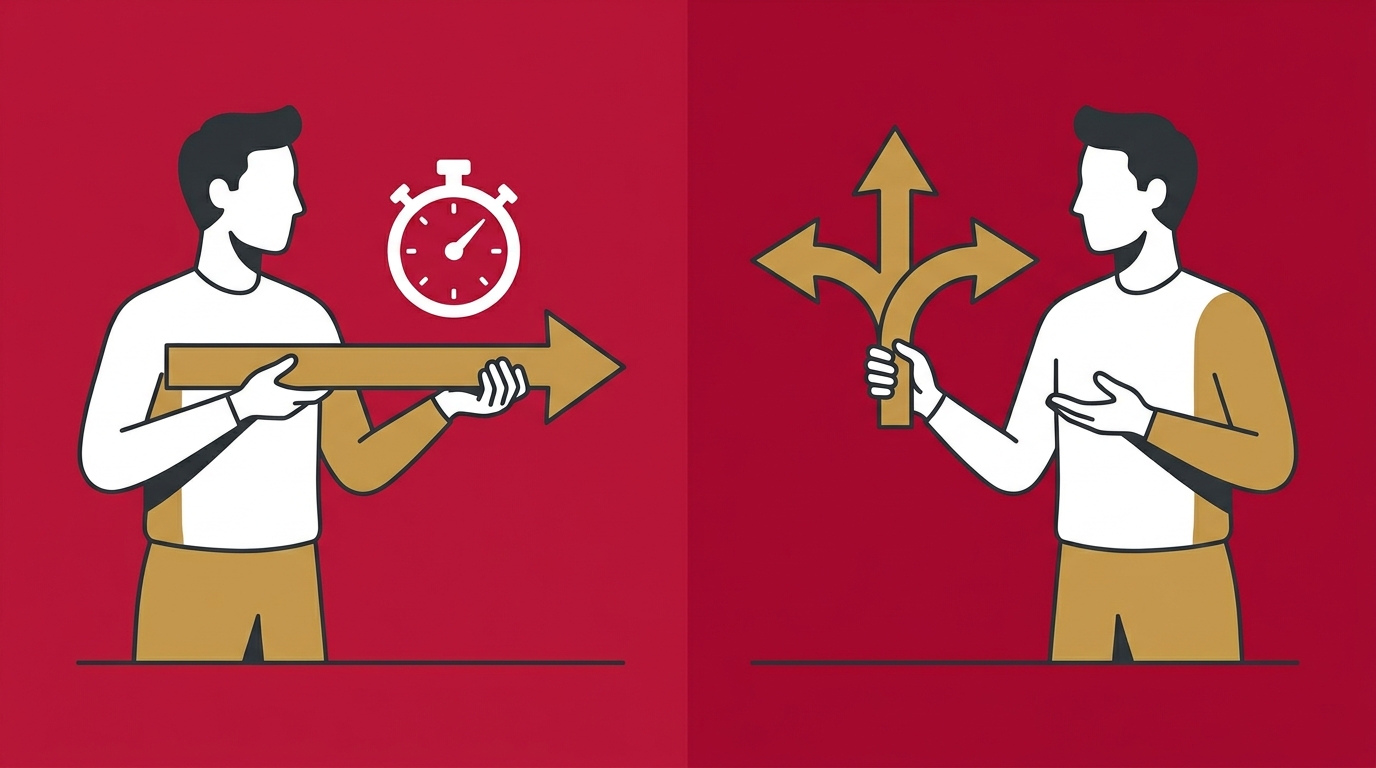
If the assessment confirms you're a candidate, the plan gets built from the ground up.
Not from a template. Not from a code. From what your nervous system is actually doing right now.
Reading What Your Nervous System Is Reporting Right Now
Your MRI from two years ago is useful context. It doesn't tell us what's happening today.
The Cleveland Clinic's clinical guidance on peripheral neuropathy is clear: individualized assessment of underlying metabolic and structural factors has to happen before any treatment approach is selected. The assessment drives the plan. The plan doesn't exist before the assessment is complete.
Here's the thing. When something in that plan isn't producing the expected response after a few sessions — it changes. Not because someone arbitrarily decided to switch approaches. Because the clinical evidence says it's time to adjust course. If a treatment isn't working and you keep running it anyway, that's the clinical definition of failure. Stop. Reassess. Pivot.
Starting with conservative care before pharmaceutical intervention is the right clinical sequence for most nerve-related presentations — research on conservative care pathways supports this as a way to reduce long-term reliance on symptom management — but "conservative care is often the right first step" doesn't mean every case belongs here. The assessment answers that question directly.
- What informs the plan — Your neurological evaluation results, your symptom map, your functional limitations, and your clinical history with prior care approaches.
- What updates the plan — Your biological response after the first few sessions. If expected changes aren't appearing, the plan adjusts. Non-negotiable.
- What an honest non-candidate conclusion looks like — A direct explanation of why, with a clear recommendation for what to pursue instead. No vague "let's see how it goes." Clarity.
Results may vary. Individual responses to care depend on the nature, duration, and progression of each patient's condition.
What “Nerve Restoration” Actually Requires
Nerve restoration isn't a single adjustment. It's a biological process — and biology doesn't move on an administrative schedule.
Recovery isn't linear. The first few sessions establish a baseline response. They're not designed to produce a dramatic shift. They're designed to tell us whether the restoration process can move forward for your specific case.
The goal of the first session is not to feel better when you leave. It's to understand where your case stands clinically and whether the protocol can realistically move forward.
For the full methodology — and a realistic picture of what the timeline actually looks like — what is the Nerve Restoration Protocol at Touch of Wellness covers both. The question of how long nerve restoration takes to show clinical results gets a direct answer there as well.
This Session Is Not for Everyone

Most practices don't say this before you book. They don't want to lose the appointment.
We'll say it anyway. Sending the wrong patient home with a care plan that won't fit their case doesn't help anyone.
If You're Expecting an Instant Fix, This Isn't the Right Fit
If you're coming in expecting to feel significantly different by the time you leave — this probably isn't the right fit.
Nerve restoration is biological. It takes time. It takes clinical follow-through. And it requires a patient willing to engage a plan — not just show up once and decide based on how they feel 48 hours later.
The One-Adjustment Miracle Seeker shows up in every practice that doesn't set expectations clearly. Come in. Get adjusted. Feel no dramatic shift within two days. Decide chiropractic doesn't work. Leave.
What happened there isn't a failure of care. It's a failure of expectation. And it's entirely preventable when the first visit is used to establish what the process actually involves.
If your plan is to try one session and evaluate from there — that's not a plan the Nerve Restoration Protocol can work with. We're not the right match. That's honest, and both of us are better off knowing it before the appointment is booked.
- This session is for — Patients experiencing numbness, tingling, or burning that hasn't resolved with standard care, who are willing to follow an assessment-driven plan and see clinical recommendations through.
- This session is not for — Patients who need resolution in one visit, aren't willing to hear an honest candidate determination, or plan to selectively follow the care plan while ignoring the rest.
- What happens if you're not a clinical match — A direct explanation of why, with a clear direction for what makes more sense for your case. You leave knowing where you stand — not with a vague follow-up scheduled to fill a slot.
What Happens After the Assessment
If you're a match, the Nerve Restoration Protocol starts. The first few sessions establish your baseline biological response. The plan adjusts from there based on what the evidence shows.
If the findings show nerve involvement that's progressed beyond what conservative care can realistically address — you'll hear that clearly. With an explanation and a referral direction if that's the appropriate next step.
There's no version of this where you leave the office not knowing where you stand.
One of the most common questions patients arrive with: whether their nerve symptoms mean permanent damage has already occurred. That gets a direct answer in the article on nerve pain and its relationship to permanent nerve damage — worth reading before the first session.
If coverage is a question before you commit to booking, the article on insurance coverage for the Nerve Restoration Protocol in Illinois covers what most patients want to know.
| Patient Presentation | Expected Assessment Outcome |
|---|---|
| Recent symptom onset, strong candidate match | Care plan built; protocol begins next visit |
| Complex history, multiple prior providers | Phased plan with monitored baseline response |
| Partial candidate — some aspects addressable | Honest scope defined; plan adjusted accordingly |
| Advanced nerve involvement, not a protocol match | Direct explanation; referral direction provided |
| Ambiguous presentation, symptoms unclear | Assessment produces clarity — candidacy confirmed or ruled out |
Frequently Asked Questions
Will I receive a chiropractic adjustment on my very first visit?
Not necessarily. Every session starts with the clinical assessment.
If the findings confirm you're a candidate and treatment can begin, it may. But the priority of the first visit isn't to adjust you as quickly as possible — it's to understand what your nervous system is doing and whether the Nerve Restoration Protocol is the right match for your case.
A provider who adjusts before understanding the neurological picture isn't delivering individualized care. They're following a script.
How long should I expect to be at the office for my first appointment?
Fifteen minutes, door to door.
That's the clinical standard at Touch of Wellness Chiropractic — and it's a commitment, not a concession.
A focused 15-minute evaluation tells you more than an hour of processing at a high-volume practice. A provider who knows what to look for doesn't need to pad the clock to justify the appointment.
Should I bring my previous MRI or EMG results with me?
Bring them if you have them — they add useful context.
But here's the thing. The assessment is built from what your nervous system is reporting now. A scan from two years ago tells us what was happening then. What matters clinically is what's happening today — not what the last set of images captured.
The plan gets built from current clinical reality. Historical documentation informs it. It doesn't drive it.
Am I going to be pressured into a long-term treatment contract?
No.
The Fear-Based Sales Model — presenting months or years of treatment before the evaluation is even complete — is a practice this office explicitly rejects. Recommendations here are honest and outcome-based. If your clinical picture supports three months of care, that's what you'll hear. If it supports six visits, you'll hear that. If conservative care isn't the right path for your presentation, you'll hear that too.
A provider who commits you to 18 months before your first session is finished is serving their billing calendar. Not your recovery.
Results may vary. Care plan length is determined by individual clinical findings, not a standard schedule.
Can I just come in for a quick adjustment without the nerve assessment?
If you're dealing with a nerve condition and looking for a single-visit fix — this isn't the right fit.
Nerve restoration is biological. It requires a clinical starting point, a plan that comes from that starting point, and a patient willing to engage that plan. A quick adjustment without a full assessment means getting a template applied to a presentation that may not match it at all.
That's the exact model this practice was built to not be.
The First Session Is a Clinical Commitment — and That's the Point
Here's the thing most patients don't hear before any first appointment: the first visit matters more than every single visit that follows. Rush it, template it, hand over a 12-month plan before the evaluation is done — and everything downstream inherits that failure. The 15-minute door-to-door standard at Touch of Wellness Chiropractic exists because the assessment is the work.
If you've already sat across from someone who handed you a year-long plan before the evaluation was finished — that wasn't care. That was a retention strategy. The frustration you carried out of that office is exactly what a real clinical assessment is built to prevent.
This isn't a sales process. It's a diagnostic invitation. Come in ready to receive an honest answer — whatever that turns out to be. Real answers are more valuable than comfortable ones. That's not a tagline here. That's the operating standard.
If nerve pain, numbness, or tingling has become something you're managing around instead of resolving — that's the right reason to come in.
A clinical assessment at Touch of Wellness Chiropractic starts with what you actually report. No pre-built plan. No pressure. A clear look at what your nervous system is doing and whether the Nerve Restoration Protocol is a realistic fit for your case.
If you're in Morton, Peoria, or anywhere in central Illinois and want to know where you stand — find out what the assessment actually involves.
Book AppointmentThe difference between a diagnostic invitation and a sales appointment comes down to one thing: which one starts with your clinical picture. You deserve to know which one you're walking into.
Copyright Touch of Wellness Chiropractic 2026
1101 W Jackson St, Suite A Morton, IL 61550
Web Design by iTech Valet