
Is Non-Invasive Disc Recovery Safe For Seniors In Morton? Here's The Real Answer
The safety question most seniors are asking isn't "Is this safe?" It's "Will someone actually look at me first?" That's the entire difference. For seniors in Morton dealing with disc-related back pain, the safety of non-invasive disc recovery comes down to whether the provider assesses your specific condition before recommending anything. A thorough evaluation of spinal health, bone density, medication interactions, and overall physical condition dictates the appropriate approach. When care is built from what your body actually needs — not from what a standard protocol says you should receive — non-invasive methods are a safe alternative to surgery for managing disc pain in older adults.
The question most seniors are really asking isn't just "Is this safe?" It's "Will someone see me as an individual with a unique health history, or will I be processed through the same protocol given to a 35-year-old?" That distinction is the entire difference between safe care and risky care. A cookie-cutter protocol applied to a 75-year-old with osteoporosis isn't just ineffective. It's dangerous. Safety for a senior isn't a feature of a machine or a named technique. It's the direct result of a provider who rejects one-size-fits-all protocols and builds a care plan from the ground up based on your clinical reality.
At Touch of Wellness Chiropractic in Morton, the standard is individualized assessment before any treatment recommendation. That means a detailed health history review, evaluation of bone density concerns, medication interactions, and specific orthopedic and neurological tests to determine what your spine can handle. If something isn't appropriate for your condition, you're told that up front. The goal isn't to run you through a protocol. The goal is to restore function and independence — safely.
Last Updated: April 30, 2026
- Why The Safety Question For Seniors Is Different
- Non-Invasive Disc Recovery: What It Actually Is
- The Real Safety Mechanism: Individualized Assessment
- Why Some Providers Get This Wrong
- This Isn't For Everyone
- Alternatives To Surgery Don't Mean "No Assessment Needed"
- What Happens If You Don't Treat Chronic Disc Pain
- Frequently Asked Questions
- What if I have osteoporosis? Can I still get chiropractic care?
- Is non-invasive disc recovery the same as a traditional chiropractic adjustment?
- How is a chiropractic assessment for a senior different?
- Are there any conditions that would make disc recovery unsafe for a senior?
- What are the risks of not treating chronic disc pain in seniors?
- Can I try just one or two sessions to see if it works?
- My doctor told me to avoid chiropractors. Should I listen?
- Conclusion: Safety Is Built Into The Assessment, Not The Protocol
Why The Safety Question For Seniors Is Different
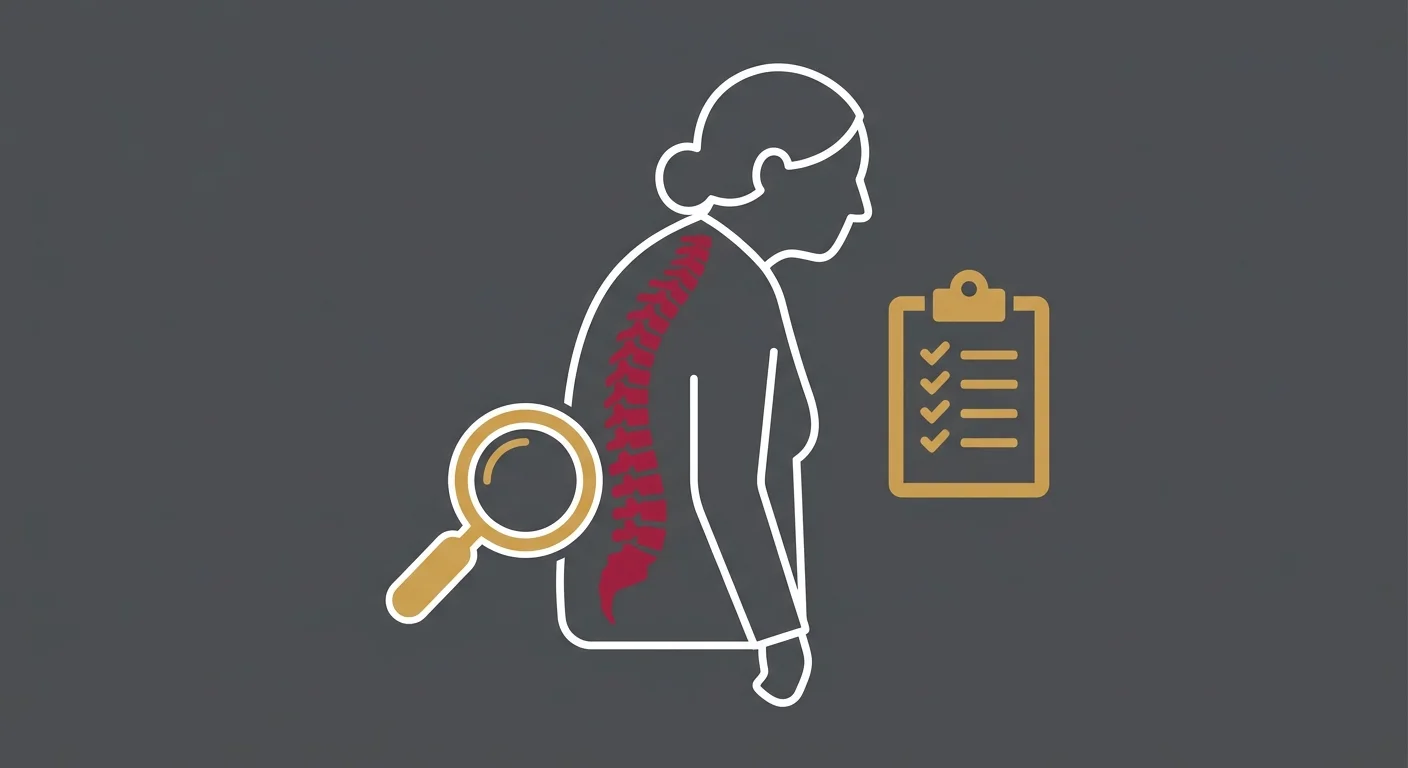
Walk into most chiropractic offices and watch what happens.
Nerve pain? Same adjustment. Headache? Same adjustment. Sciatica? Same adjustment.
The protocol doesn't change. The patient does.
For a 35-year-old with solid bones and no medication list, that might work. For a 75-year-old on blood thinners with brittle bones, it's gambling with your spine.
The safety question for seniors isn't "Is this technique safe?" It's "Will this provider actually look at me before they decide what to do?"
The Cookie-Cutter Protocol Problem
Here's what the cookie-cutter looks like in real life.
You walk in with chronic disc pain. The provider asks three questions, takes you to the table, runs the sequence they memorized in school. High-velocity thrust to your lower back. Rotation adjustment to your mid-spine. Maybe some soft tissue work if there's time.
No one asks about your bone density. No one reviews your medication list. No one checks if your joints can actually handle that kind of force anymore.
Same adjustment on a 35-year-old and a 75-year-old isn't individualized care. It's template medicine wearing a lab coat.
When a provider ignores what age does to your body — osteoporosis, arthritis, blood thinners, past surgeries — they're not treating you. They're treating a billing code.
The code doesn't care if your bones can handle force. The code doesn't account for medication that makes you bruise. The code just says "disc pain," so the provider runs the protocol.
I've seen patients transfer here after exactly that. They weren't assessed. They were processed. And when the treatment made things worse, the previous provider kept doing it because that's what the script said.
For seniors, that's not just bad care. That's a safety failure.
What Makes A Treatment "Safe" For A Senior
Safety isn't in the name of the technique.
It's in what the provider knows about your body before they touch you.
Three things determine whether a treatment is safe for you:
Bone density. Not every senior has osteoporosis, but the provider better know before they apply force to your spine. If your bones can't handle a high-velocity adjustment, that information drives everything.
Medication interactions. Blood thinners change how your tissue responds. Anti-inflammatories change healing speed. Corticosteroids change inflammation patterns. A provider who doesn't ask about your medication list isn't thinking about safety. They're thinking about speed.
Joint stability. Your ligaments aren't what they were at 40. Your muscle tone has changed. An adjustment that's appropriate for stable joints can create instability in yours if those biomechanical shifts aren't accounted for.
| Safety Factor | Generic Protocol Approach | Individualized Assessment Approach |
|---|---|---|
| Bone Density | Assumes average bone strength regardless of age | Reviews bone density concerns, adjusts force levels or avoids high-impact techniques entirely |
| Medication Interactions | Rarely asks about full medication list | Documents all medications, identifies contraindications before treatment |
| Joint Stability | Applies standard force without stability testing | Tests ligament laxity and joint play, modifies technique based on findings |
When a provider builds the care plan from the assessment — not from muscle memory — safety is built in from the start.
That's the standard at Touch of Wellness Chiropractic. Individualized, root-cause chiropractic care means the assessment dictates the treatment. Not the other way around.
According to research published in Chiropractic & Manual Therapies, chiropractic care adapted for older adults is generally safe and effective for musculoskeletal pain. The key word: adapted. When the method fits the patient, outcomes improve and risk drops. When it doesn't, you're rolling dice.
Non-Invasive Disc Recovery: What It Actually Is
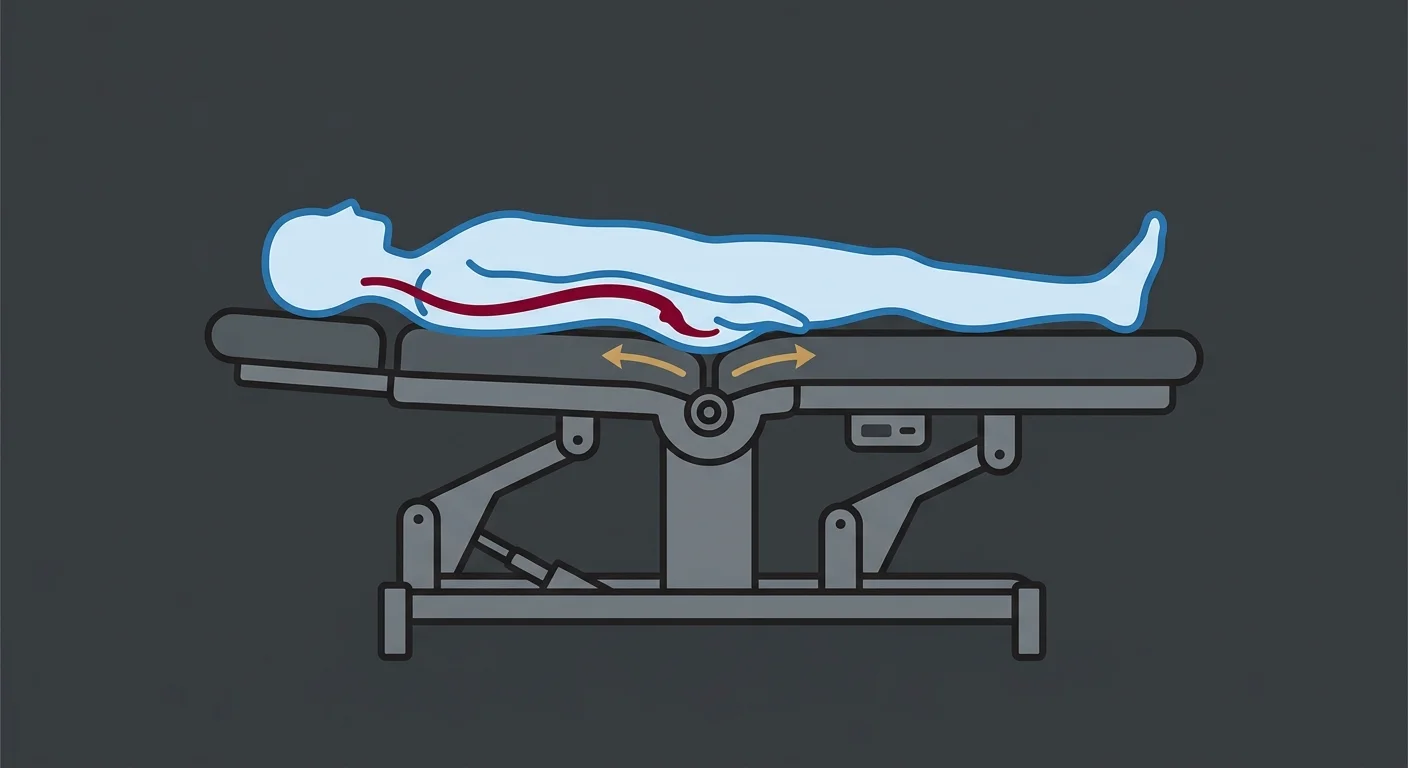
Non-invasive disc recovery — spinal decompression — uses a specialized table to apply a controlled, gentle stretch to your spine.
The goal is relieving pressure on your discs and nerves without cutting you open.
Here's the mechanism: The table pulls your spine in a very specific way, creating negative pressure inside the disc. That negative pressure lets herniated or bulging disc material retract slightly, which reduces nerve compression. It also improves nutrient flow into the disc, which supports healing over time.
It's not instant. It's a process. And it works when it's paired with the right assessment and the right patient.
How non-invasive disc recovery works involves a series of sessions where the traction force is gradually increased based on how your body responds. According to WebMD's overview of nonsurgical spinal decompression, the gentle stretching mechanism can help relieve pressure on spinal discs and nerves when applied correctly.
For seniors, the advantage is low force. No high-velocity thrusts. No sudden rotations. Just controlled, gradual traction that's adjusted session by session.
But low-force doesn't mean no-risk.
Even gentle traction applied to the wrong patient — or applied without proper assessment — can cause problems.
How It Differs From Traditional Adjustments
Non-invasive disc recovery and traditional chiropractic adjustments aren't the same thing.
A traditional adjustment applies a quick, controlled force to a specific joint to restore motion. It's effective for joint restrictions, muscle tension, and nerve interference caused by misalignment.
Spinal decompression applies a slow, sustained stretch to the entire spinal segment. It targets the disc itself, not the joint.
For seniors, that distinction matters.
| Treatment Type | Mechanism | Force Level | Typical Senior Candidacy |
|---|---|---|---|
| Traditional Adjustment | Quick thrust applied to joint to restore motion | High-velocity, low-amplitude force | Appropriate for seniors with good bone density and stable joints; contraindicated for severe osteoporosis |
| Spinal Decompression (Disc Recovery) | Slow, controlled traction to relieve disc pressure | Low-force, sustained stretch | Appropriate for most seniors if assessed properly; contraindicated for certain spinal instabilities |
| Low-Force Adjustment Techniques | Gentle mobilization or instrument-assisted adjustment | Very low force, no thrusting | Appropriate for seniors with osteoporosis or fragility; requires skill and experience |
Some seniors are candidates for traditional adjustments. Some need low-force techniques. Some benefit most from decompression. Some need a combination.
The assessment determines the right approach. Not the name of the technique. Not what the last provider did. Your clinical reality.
The Real Safety Mechanism: Individualized Assessment
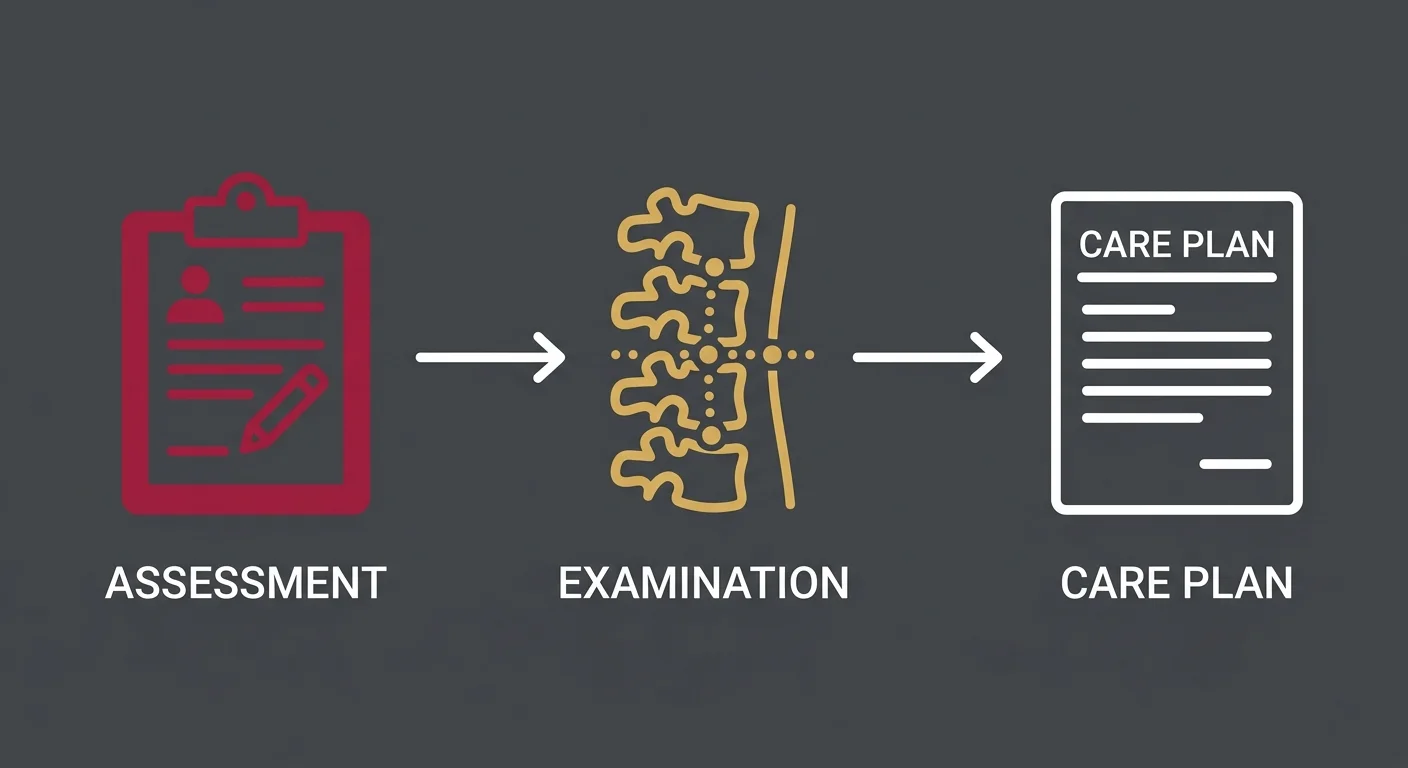
Safety for a senior doesn't come from choosing a technique with "gentle" in the name.
It comes from a provider who assesses first and builds the care plan second.
Individualized care isn't optional. It's the clinical standard.
For seniors, it's non-negotiable.
A proper assessment for an older adult isn't a five-minute intake form and a couple range-of-motion tests. It's a full clinical picture that accounts for everything your body's been through and everything it's dealing with now.
What A Proper Senior Assessment Includes
A thorough assessment for a senior at Touch of Wellness Chiropractic starts with a detailed health history. Every past injury. Every surgery. Every chronic condition. Full medication list documented. Potential interactions identified before any treatment gets recommended.
Then comes bone density evaluation. Not every senior has osteoporosis, but the provider has to know. If bone density is compromised, high-force techniques are off the table immediately. That's not a limitation. That's safety.
Next is orthopedic and neurological testing. Joint stability tested. Nerve function evaluated. Range of motion measured. The goal is determining what your body can safely handle — and what it can't.
According to the American Chiropractic Association's guidance on geriatric patients, the standard chiropractic approach must be modified for older adults. That means low-force techniques where appropriate, a comprehensive health history review, and ongoing reassessment throughout care.
What the assessment looks like at Touch of Wellness Chiropractic is simple: it's thorough. Nothing gets skipped to save time. Nothing gets assumed based on age alone.
- Health History Review (comprehensive) — Every past injury, surgery, chronic condition documented. Medication interactions identified before any treatment recommendation.
- Bone Density Evaluation (critical for seniors) — Not every senior has osteoporosis, but the provider must know before applying any force to the spine.
- Orthopedic and Neurological Testing (functional assessment) — Joint stability, nerve function, range of motion evaluated to determine what the body can safely handle.
The assessment dictates the care plan. Not the protocol. Not what worked for the last patient. Your clinical reality.
Conditions That Require Modified Care
Some conditions mean no treatment at all. Some mean a different treatment.
The provider has to know the difference.
Contraindications are absolute. If you've got a condition that makes a specific treatment unsafe, a competent provider will tell you that before anything starts. They won't try to work around it. They won't minimize it. They'll name it and recommend an alternative.
Modified care is different. That's where the provider adapts the technique to fit the condition. Lower force. Different positioning. Slower progression. The goal is still disc recovery or pain relief — just with a customized approach.
| Condition | Standard Care Impact | Modified Approach |
|---|---|---|
| Severe Osteoporosis | High-force adjustments contraindicated | Low-force techniques, instrument-assisted adjustments, or alternative therapies only |
| Spinal Fracture (recent or unhealed) | All manual therapy contraindicated | Referral to appropriate specialist; chiropractic care delayed until cleared |
| Blood Thinners (Warfarin, etc.) | Increased bruising and bleeding risk | Gentle soft tissue work only; high-force adjustments avoided; close monitoring |
| Advanced Spinal Stenosis | High-force extension movements may worsen symptoms | Flexion-based decompression or gentle mobilization; symptoms monitored closely |
| Ligament Instability | Standard adjustments may increase joint laxity | Stabilization exercises prioritized; adjustments minimized or avoided |
According to the National Institute on Aging's overview of spinal surgery risks for seniors, older adults face significant surgical risks including infection, blood clots, and longer recovery times. That's why non-invasive options are worth pursuing — when they're done right.
But "non-invasive" doesn't mean "risk-free."
The assessment determines whether the treatment is appropriate. Without it, you're guessing.
Why Some Providers Get This Wrong
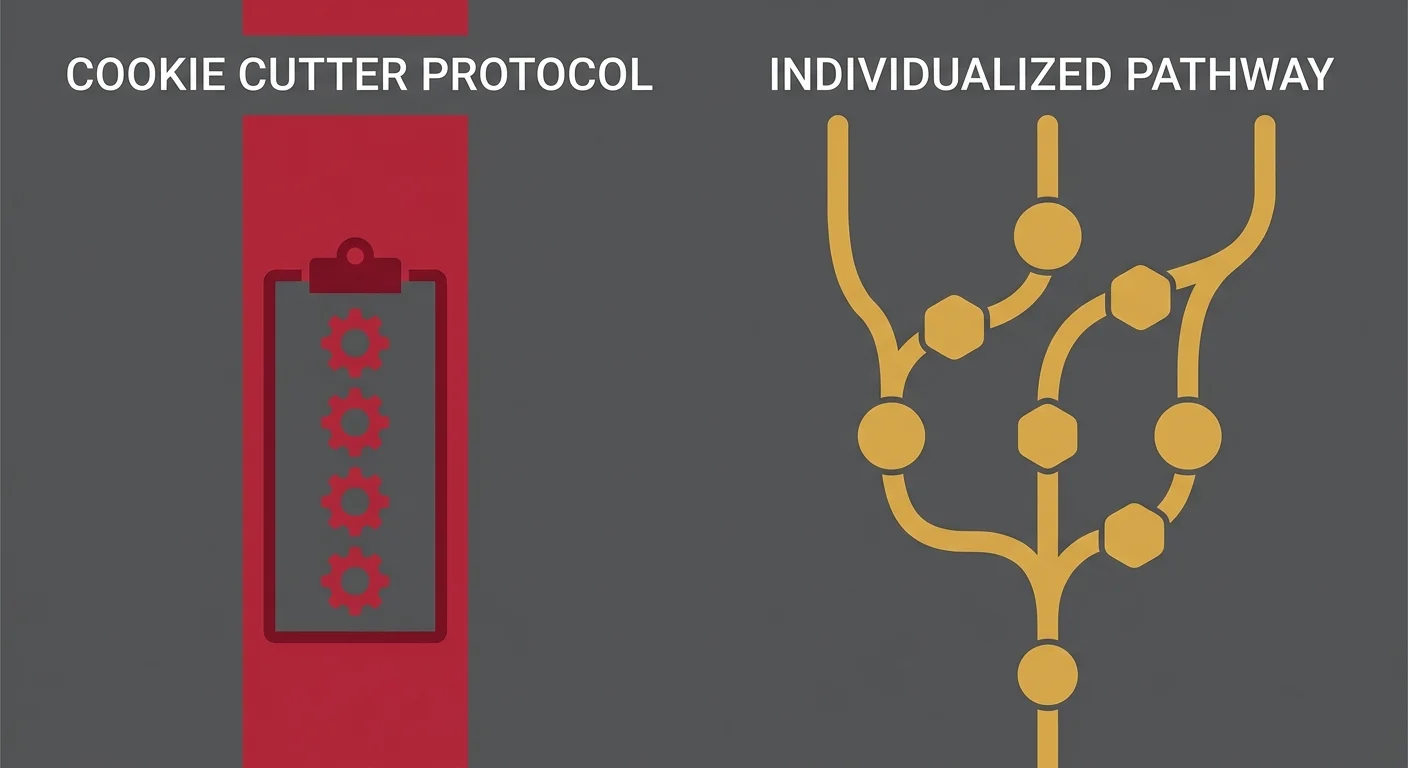
Most providers don't get the safety question wrong because they're incompetent.
They get it wrong because they're operating inside a system that rewards volume over outcomes.
The volume-first model works like this: See as many patients as possible in a day. Keep appointments short. Run the same protocol on everyone because it's faster than customizing. Bill the insurance company. Repeat.
When reimbursement is tied to visit counts instead of results, the incentive is processing patients quickly. Assessment takes time. Customization takes thought. Reassessment when something isn't working takes clinical judgment.
None of that fits the volume model.
So the provider memorizes a protocol. They apply it to every presenting condition. And when it doesn't work, they keep running it because that's what the system trained them to do.
For seniors, that model isn't just inefficient. It's unsafe.
Some doctors tell their older patients to avoid chiropractors entirely. That advice usually comes from one assumption: chiropractic care is a single, high-force technique applied universally.
If that were true, the advice would be correct.
But chiropractic care is a spectrum. It includes high-velocity adjustments. It also includes low-force mobilizations, instrument-assisted techniques, and specialized therapies like spinal decompression.
The problem isn't chiropractic. The problem is providers who don't adapt their method to the patient in front of them.
If you've been told to avoid chiropractic care because of your age, the real question to ask is: "Does this provider assess first and build the care plan from my clinical reality — or do they run the same protocol on everyone?"
Alternatives to spinal surgery exist. But they only work when they're paired with a provider who's willing to think instead of just execute.
According to the CDC's report on chronic pain in older adults, chronic pain is highly prevalent among seniors and significantly impacts quality of life. That makes effective, safe pain management strategies essential — not optional.
This Isn't For Everyone
If you're coming in with a list of which parts of the care plan you'll follow and which parts you'll ignore, this isn't the right fit.
For seniors, partial commitment isn't just ineffective. It's dangerous.
Recovery from chronic disc pain doesn't happen in one visit. It doesn't happen by showing up for adjustments but skipping the exercises. It doesn't happen by committing financially but not clinically.
The care plan at Touch of Wellness Chiropractic is built from the assessment. That means specific recommendations for treatment frequency, home exercises, activity modifications, and follow-up visits.
Each piece supports the others.
When a senior picks and chooses which recommendations to follow, the structure collapses. Consistency with the care plan isn't a preference. It's how safety is maintained throughout treatment.
If you're not willing to commit fully — clinically and financially — that's worth knowing before we start.
Partial engagement produces partial results. For seniors dealing with disc pain, that often means prolonged recovery, increased risk of re-injury, or no improvement at all.
This practice doesn't operate on a discount model. There's no "new patient special." There's no promotional pricing to drive volume.
What exists is courtesy pricing for eligible patients who aren't on Medicare or government-funded programs. That pricing reflects the time and depth of the individualized assessment — not a marketing tactic.
Alternatives To Surgery Don't Mean "No Assessment Needed"
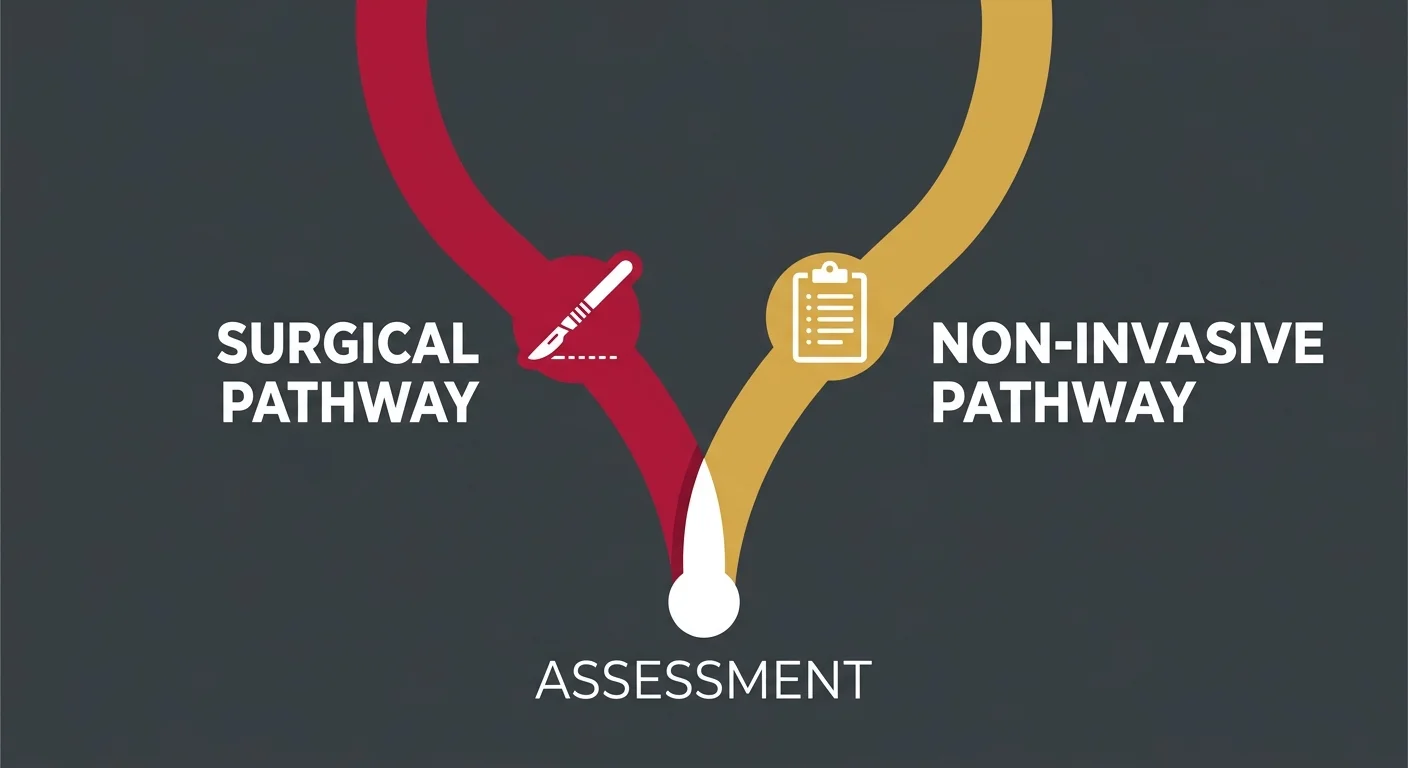
"Non-invasive" sounds safer than surgery. And in many cases, it is.
But "non-invasive" doesn't mean "no evaluation required."
The assessment is how the provider knows whether the treatment is safe. It's how they know whether it's appropriate for your condition. It's how they identify contraindications before they become complications.
Skipping the assessment to get to treatment faster isn't efficient. It's reckless.
I've seen patients who transferred here after trying non-invasive disc recovery at another clinic with no upfront evaluation. They were told it was "safe for everyone" and "no risks."
When the treatment caused increased pain or didn't work at all, the previous provider had no clinical baseline to compare against. They didn't know what changed because they never documented what existed in the first place.
Pain that never fully resolves isn't bad luck. It's what happens when the treatment doesn't match the condition.
And the only way to match them is through assessment.
At Touch of Wellness Chiropractic, the evaluation comes first. Always. Not because it's a policy. Because it's the clinical standard.
What Happens If You Don't Treat Chronic Disc Pain
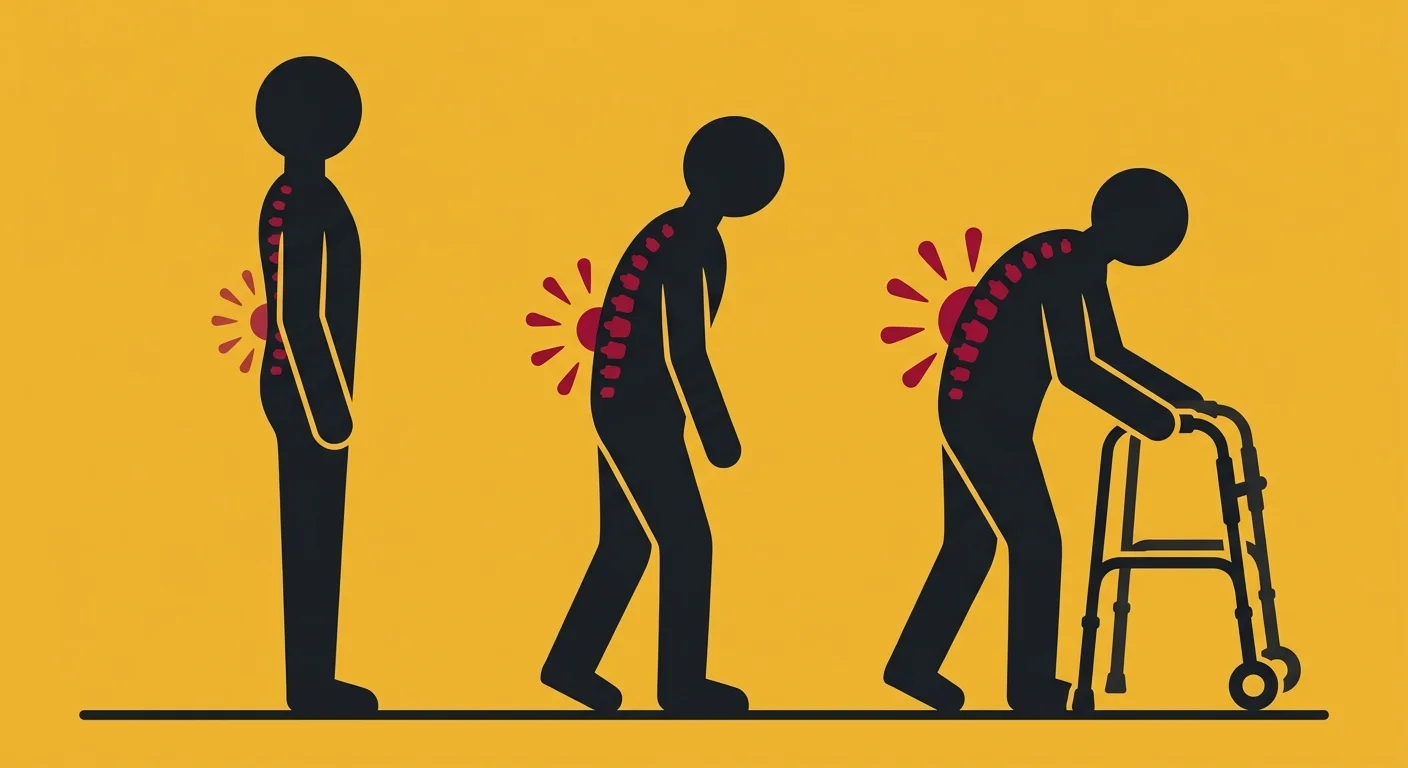
Chronic disc pain in seniors doesn't stay static.
It compounds.
When pain limits movement, your body compensates. Muscles weaken. Balance declines. Gait changes.
And those changes create more pain.
The cycle accelerates faster in older adults.
- Mobility Loss (functional decline) — Pain that limits movement leads to muscle weakness, which leads to more pain. The cycle accelerates faster in seniors.
- Independence Decline (daily living impact) — When pain prevents you from doing basic tasks, dependence on others increases. That's not just physical; it's psychological.
- Fall Risk Increase (safety concern) — Chronic pain alters gait and balance. For seniors, that's a direct line to fractures and hospitalization.
Untreated disc pain doesn't just hurt. It takes away function. It takes away independence.
And for seniors, those losses are harder to recover once they've set in.
The goal of treatment isn't just reducing pain. It's restoring the function that allows you to live independently.
When pain interferes with that, waiting isn't a strategy. It's a gamble.
Frequently Asked Questions
What if I have osteoporosis? Can I still get chiropractic care?
Yes, but the approach must be modified.
Osteoporosis doesn't automatically disqualify you from chiropractic care. It changes the type of care that's appropriate.
High-force adjustments are off the table. That's not negotiable. But low-force techniques — instrument-assisted adjustments, gentle mobilization, and targeted soft tissue work — can still be effective and safe when applied correctly.
The key is the assessment. A provider who understands geriatric care will evaluate bone density concerns before recommending any treatment. They'll avoid techniques that place excessive stress on fragile bone. And they'll adjust the care plan as needed based on how your body responds.
If a provider tells you "everyone gets the same adjustment regardless of bone density," walk out.
Is non-invasive disc recovery the same as a traditional chiropractic adjustment?
No. They're different mechanisms serving different purposes.
A traditional chiropractic adjustment applies a quick, controlled force to a specific joint to restore motion and reduce nerve interference. It's effective for joint restrictions and muscle tension.
Non-invasive disc recovery — spinal decompression — applies a slow, sustained stretch to the spine using a specialized table. The goal is relieving pressure inside the disc itself, allowing herniated or bulging material to retract and reducing nerve compression.
Both require assessment. Both serve a purpose. But they're not interchangeable.
For seniors, the distinction matters because the force levels are different. Decompression is generally lower-force than a traditional adjustment, which makes it appropriate for some patients who wouldn't be candidates for high-velocity techniques.
The assessment determines which approach — or combination of approaches — is right for your condition.
How is a chiropractic assessment for a senior different?
It's more thorough.
A standard assessment for a younger patient might include a health history, orthopedic tests, and a basic neurological exam. That's a starting point.
For a senior, the assessment expands. Medication review becomes critical because blood thinners, anti-inflammatories, and corticosteroids all affect how your body responds to manual therapy. Bone density evaluation is essential because osteoporosis changes what techniques are safe. Joint stability testing is required because ligament laxity and decreased muscle tone are common with age.
The assessment for a senior doesn't just ask "What's wrong?" It asks "What has this body been through? What medications are influencing tissue response? What biomechanical changes have occurred with age? What can this spine safely handle?"
That level of detail takes time. It can't be rushed. And it can't be skipped.
Are there any conditions that would make disc recovery unsafe for a senior?
Yes. Contraindications exist.
Severe osteoporosis with a history of compression fractures is an absolute contraindication for spinal decompression. So is an unhealed spinal fracture, certain types of spinal instability, and active infections in or near the spine.
Some conditions require modified care instead of complete avoidance. Advanced spinal stenosis, for example, might mean adjusting the traction angle or reducing the force. Blood thinners might mean avoiding certain soft tissue techniques that could cause bruising.
That's why the comprehensive initial examination is non-negotiable. The provider has to know what they're working with before they recommend anything.
If a condition makes disc recovery unsafe, a competent provider will tell you that before treatment starts. They'll explain why and recommend an alternative. They won't try to work around a contraindication to avoid losing a patient.
What are the risks of not treating chronic disc pain in seniors?
Decreased mobility. Loss of independence. Increased fall risk. Significant decline in quality of life.
Chronic pain doesn't just stay at the same level indefinitely. In seniors, it compounds.
Pain limits movement. Limited movement leads to muscle weakness. Weakness leads to balance problems. Balance problems lead to falls.
And falls in older adults often result in fractures, hospitalization, and a cascade of complications.
Beyond the physical risks, untreated chronic pain affects mental health. Depression and anxiety rates are higher among seniors with chronic pain. Social isolation increases when pain prevents participation in activities.
The longer pain goes untreated, the harder it becomes to reverse those effects. Muscles that have been weak for years take longer to rebuild. Balance that's been compromised takes longer to restore. Function that's been lost takes sustained effort to recover.
The goal of early intervention is stopping that cascade before it starts.
Can I try just one or two sessions to see if it works?
Recovery doesn't happen in one visit.
If you're expecting to come in once, feel completely better, and never return, you're going to be disappointed. That's not how disc recovery works. And for seniors especially, expecting immediate results from minimal commitment is a setup for failure.
The care plan at Touch of Wellness Chiropractic is built from the assessment. That means a recommended treatment frequency based on your condition, your body's healing capacity, and the clinical timeline for the type of problem you're dealing with.
Partial commitment produces partial results. For seniors, that often means prolonged recovery or no improvement at all because your body needs consistent input to change.
If you're not willing to commit to a full care plan, that's worth knowing before we start. The goal of every care plan here is getting you to a point where you don't need ongoing treatment. But that requires showing up for the process, not just the first visit.
My doctor told me to avoid chiropractors. Should I listen?
Some doctors inherited bias against chiropractic because they think it's one forceful technique applied universally.
That's not how individualized chiropractic care works.
The question isn't "Is chiropractic safe?" The question is "Does this provider assess first and adapt their method to my condition?"
If your doctor's concern is rooted in the belief that all chiropractors use high-velocity adjustments on every patient regardless of bone density or health history, that's a reasonable concern about bad providers — not about chiropractic as a discipline.
A competent chiropractor doesn't apply the same technique to a 75-year-old with osteoporosis that they would apply to a 35-year-old athlete. They modify the approach based on the clinical picture.
At Touch of Wellness Chiropractic, the chiropractic evaluation determines what's appropriate for your body. If something isn't safe for your condition, you're told that before any treatment starts. The assessment is the safety mechanism.
If your doctor's concern is that you'll be processed through a generic protocol without evaluation, bring them this article. The standard here is individualized assessment before any treatment recommendation. That's not negotiable.
Conclusion: Safety Is Built Into The Assessment, Not The Protocol
The nervous system runs everything. When disc pressure disrupts spinal nerve function, nothing works right.
For seniors, that shows up as pain. Mobility loss. Independence decline.
What you don't need is a provider who runs the same protocol on every patient and calls it care.
If you've been told to "wait and see," handed a vague timeline, or dismissed because of your age, that's not clinical judgment. That's convenience.
Safety for a senior isn't in the technique name. It's in the provider's willingness to assess, adapt, and change course when needed.
At Touch of Wellness Chiropractic in Morton, the standard is individualized care. That means a detailed assessment before any treatment recommendation. It means modifying the approach when your clinical picture requires it. And it means stopping and reassessing when something isn't working — not repeating it.
Disc pain doesn't get better by waiting. It gets better when the cause is addressed and the care plan matches what your body actually needs.
If chronic disc pain has been limiting your mobility or independence — and you're tired of being told to "manage it" without anyone actually investigating the cause — that's worth a real conversation.
A chiropractic assessment at Touch of Wellness Chiropractic starts with what you actually report. Not a standard protocol. Not a 12-month plan handed over before the evaluation is finished.
The assessment dictates the care plan. Not the other way around.
If you're in Morton, Peoria, or the surrounding area and want to know what's driving your symptoms, find out what your assessment looks like.
Safety isn't in the technique. It's in the provider's willingness to adapt. And for seniors, that's the only standard that matters.