
(309) 321-8412 | 1101 W Jackson St, Suite A, Morton, IL 61550
(309) 321-8412 | 1101 W Jackson St, Suite A, Morton, IL 61550
Can a Herniated Disc Heal on Its Own? The Role of Specialized Care
Yes, a herniated disc can heal on its own — but not by doing nothing. Your body has natural mechanisms to resorb the displaced disc material. Macrophages break down the herniated tissue, inflammation reduces, and nerve pressure drops. But that process only completes when the interference is removed. Specialized chiropractic care focuses on three layers: reducing spinal pressure so the disc has room to decompress, restoring proper nervous system function so your body can regulate inflammation correctly, and correcting the mechanical patterns that caused the herniation in the first place. When those three things happen, your body's natural healing process works the way it's designed to. That's not passive waiting — that's creating the conditions for active recovery without surgery.
Last Updated: April 30, 2026
- The Body's Natural Disc Healing Process
- Why Most Herniated Discs Don't Heal on Their Own
- What Specialized Chiropractic Care Actually Does
- The Cookie-Cutter Protocol Problem
- Signs Your Disc Is Healing
- What to Avoid During Recovery
- Realistic Timelines and Expectations
- When Surgery Actually Becomes Necessary
- FAQ
- Conclusion
Yes. A herniated disc can heal on its own — but not by doing nothing.
Your body's already designed to resorb that displaced disc material that's pressing on your nerve. When disc material pushes through the outer wall, your immune system treats it like foreign tissue. Macrophages move in and break it down, piece by piece. That process happens naturally when the conditions are right.
The problem? Most people never create those conditions.
They're told to rest, take anti-inflammatories, and wait. Some improve. Most don't. And the ones who don't end up being told surgery's their only option.
Here's what that advice misses: healing isn't about time. It's about removing the interference that's stopping your body from doing what it's built to do. Three things block natural disc healing — mechanical pressure that keeps the disc compressed, nerve irritation that maintains the inflammation cycle, and faulty movement patterns that recreate the injury every time you bend or sit. If those three things stay in place, your body can't complete the resorption process. Not because it's incapable. Because you're actively maintaining the problem faster than your body can fix it.
Specialized chiropractic care doesn't instantly repair a herniated disc. It removes the interference. Spinal adjustments decompress the area so the disc has room to heal. Nerve pathway restoration lets your body regulate inflammation correctly. Mechanical correction stops you from recreating the injury pattern with every movement. When those three layers of interference drop, the natural healing process your body was already trying to run works the way it's supposed to.
That's not passive waiting. That's active recovery.
The difference between a disc that heals and one that doesn't isn't time. It's whether the three interference layers ever get addressed. Most people are told their body will heal on its own if they just wait long enough. That's technically true — but only if the mechanical pressure, nerve irritation, and faulty movement patterns stop blocking the process. If those stay in place, waiting six months produces the same result as waiting six weeks. No improvement. Just adaptation to pain.
That's why so many herniated disc patients plateau. The body tries to heal. The interference stays. The cycle repeats.
This article explains how that process works, why most standard approaches fail to support it, what actually drives disc healing, and what a realistic care plan looks like when the goal's function — not just symptom management.
The Body's Natural Disc Healing Process
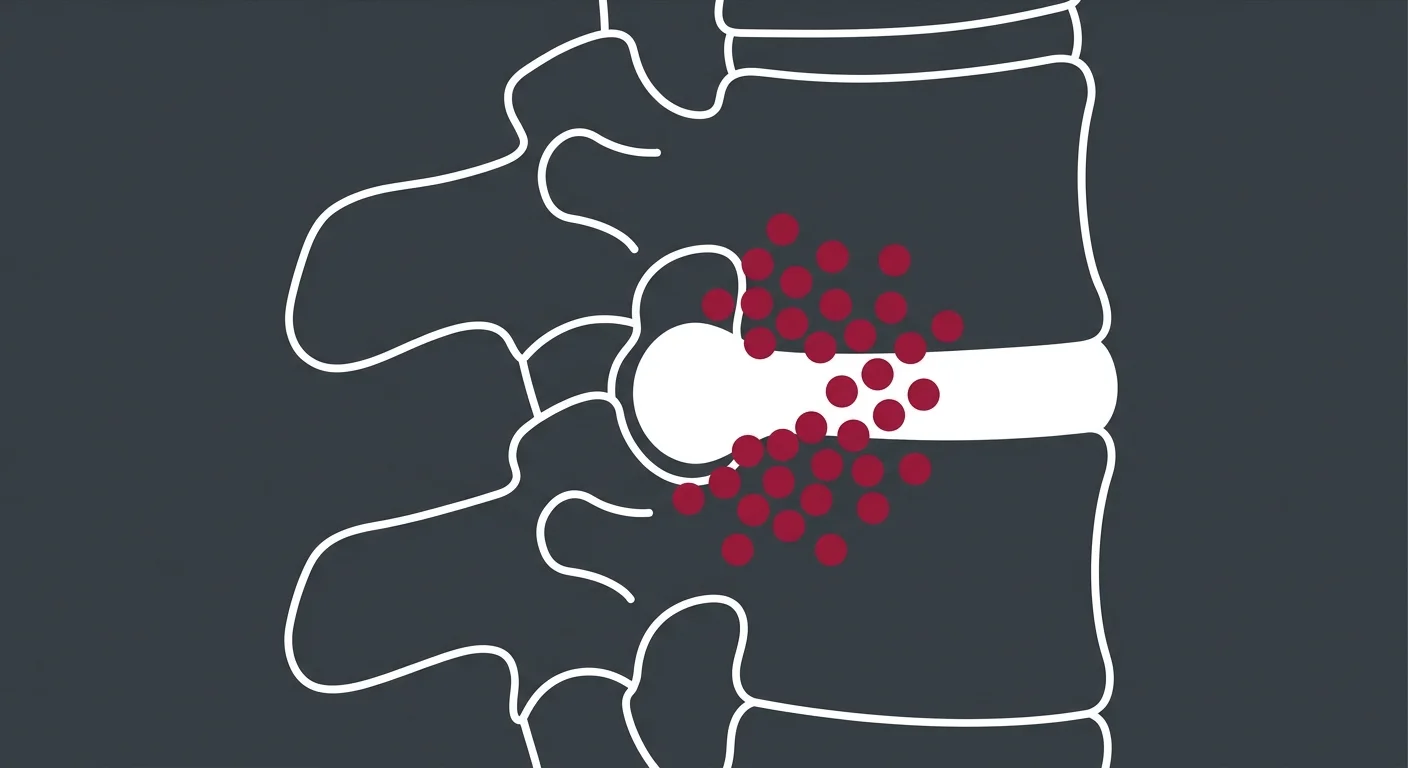
Your body already knows how to heal a herniated disc.
When disc material pushes through the outer wall and presses on a nerve, your immune system recognizes it as foreign tissue. Macrophages — specialized immune cells — move in and break down that displaced material over time. According to research published in The Spine Journal via NIH/PubMed, this spontaneous regression happens in a significant percentage of herniated discs. The body resorbs the material. The inflammation reduces. The nerve pressure drops.
That's the natural process.
And it works — when nothing blocks it.
How Disc Material Gets Reabsorbed
The herniated material sits outside the disc's normal boundary. Your body treats it like an injury.
Blood flow increases to the area. Inflammatory markers arrive to manage the tissue damage. Then macrophages begin breaking down the extruded disc material, piece by piece.
This isn't instant. It takes weeks to months depending on the size of the herniation and how much inflammation's present. But the mechanism's built in. Your body doesn't need to be taught how to do this.
It just needs the interference removed so the process can run correctly.
Why This Process Fails for Most People
Here's the problem: most people are told to rest and wait.
That sounds reasonable.
But resting doesn't change the mechanical pressure that caused the herniation in the first place. If your spine's still compressed in the same pattern, if the nerve's still irritated, if the inflammation cycle never breaks — your body's trying to heal while you're actively maintaining the problem.
Passive rest buys time. It doesn't create conditions for recovery.
That's why so many people plateau after a few weeks and never fully improve. The body's healing process stalls because the interference's still there.
| What Supports Natural Recovery | What Your Body Needs | What Blocks Recovery |
|---|---|---|
| Reduced spinal pressure | Space for the disc to decompress and nerve pathways to function | Sustained mechanical compression from poor posture, prolonged sitting, repetitive bending |
| Restored nerve function | Open communication between brain and affected area | Continued nerve irritation and inflammation maintaining the pain cycle |
| Corrected movement patterns | Proper spinal mechanics that don't recreate the herniation | Unchanged daily habits that keep loading the disc incorrectly |
Why Most Herniated Discs Don't Heal on Their Own
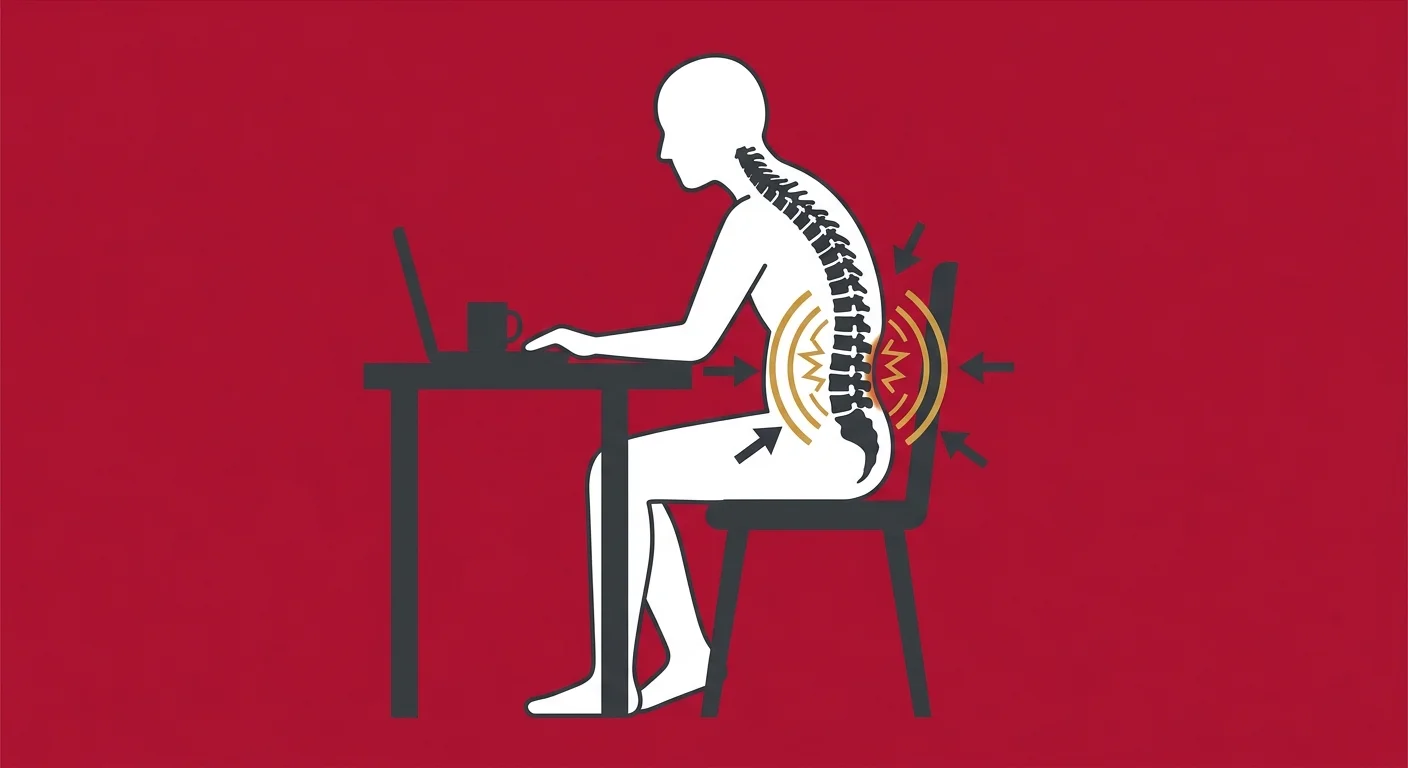
The disc didn't herniate randomly.
Something caused it.
Usually it's sustained mechanical stress — years of poor posture, repetitive lifting with bad form, prolonged sitting that loads the lumbar spine incorrectly. The disc weakens over time. Eventually the outer wall tears and the inner material pushes out. That's the herniation.
But here's what most people miss: if you don't fix the mechanical pattern that caused it, resting just delays the inevitable.
You might feel better for a while. Then you go back to the same movements, the same posture, the same daily habits — and the pain comes back. Because the root cause never changed.
Your spine doesn't heal by accident. It heals when the conditions that caused the injury are removed and replaced with conditions that support recovery. Resting removes activity — but it doesn't replace the faulty mechanics. That's the gap. And that gap is why most herniated discs either plateau or recur. The body tries to heal while you unknowingly maintain the exact pattern that broke it in the first place.
The Interference Pattern
Three things prevent natural disc healing:
- Mechanical pressure — The disc stays compressed. There's no room for it to resorb material or reduce the bulge.
- Nerve compression — The herniated material keeps pressing on the nerve root. Your body stays in a protective, inflammatory state.
- Inflammation cycle — Pain triggers muscle guarding. Muscle guarding increases pressure. Pressure maintains inflammation. The cycle repeats.
That's the interference pattern.
And no amount of time breaks it if the underlying mechanics stay the same. You're not healing slowly — you're healing while actively blocking the process. This is the core difference between treating the symptom versus the cause.
Why "Rest and Wait" Isn't a Plan
Rest reduces activity. It doesn't correct alignment.
It doesn't restore nerve function. It doesn't change how you move.
According to the Mayo Clinic, conservative treatment — avoiding painful positions, gentle movement, and anti-inflammatories — is the standard first-line approach for most herniated discs. That's valid. But "conservative" doesn't mean "passive." The American Academy of Orthopaedic Surgeons reports that about 90% of people improve with nonsurgical treatment — but improvement isn't the same as recovery.
Feeling better doesn't mean the disc healed. It means you adapted to the pain.
Real recovery requires removing the interference. Not just managing symptoms while you wait.
What Specialized Chiropractic Care Actually Does
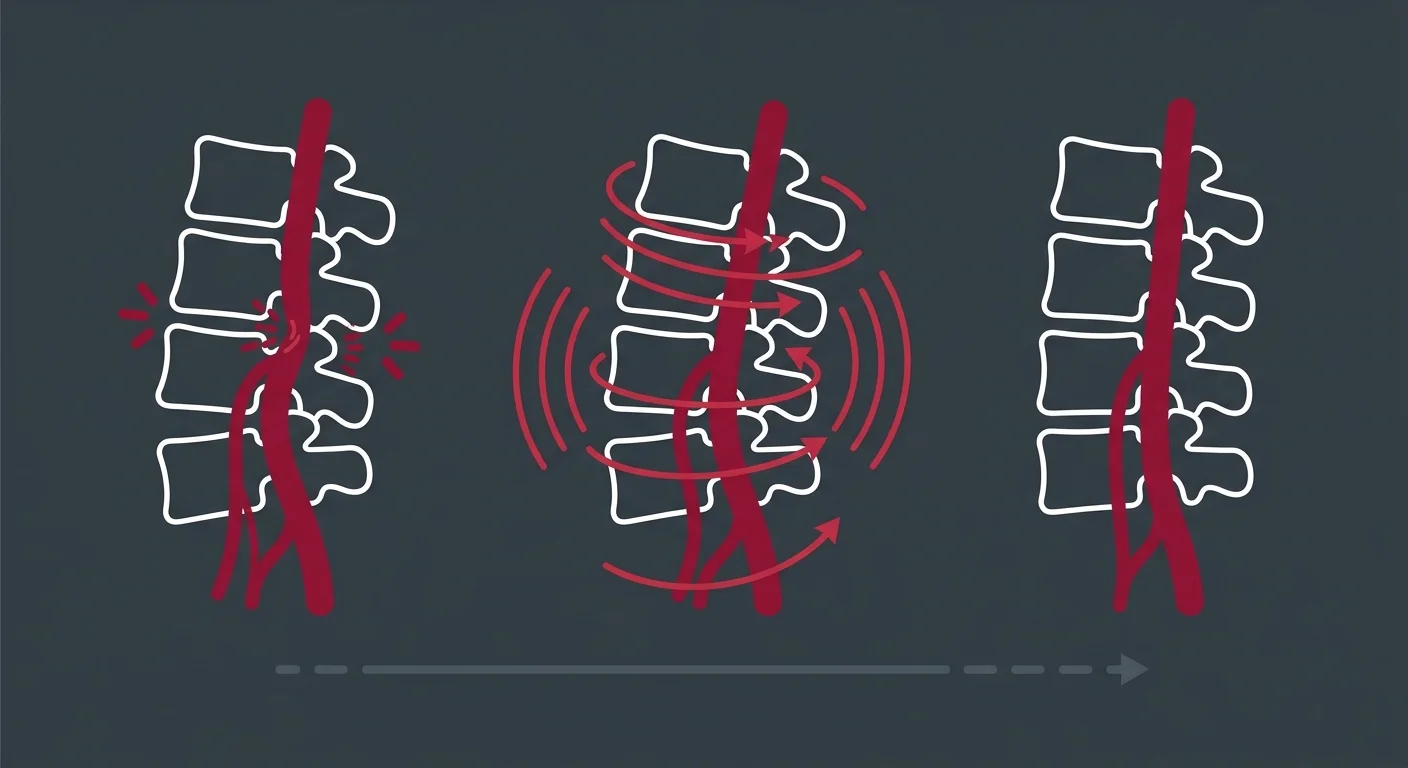
Individualized chiropractic care doesn't "pop the disc back in." That's not how anatomy works.
The goal's three things: decompress the area, restore nerve function, and correct the mechanical pattern that caused the problem.
When those three things happen, your body's natural healing process works correctly. The immune response kicks in. The inflammation reduces. The disc material resorbs. You start moving without triggering the pain cycle.
That's not passive waiting. That's creating the conditions your body needs to do what it's already designed to do.
Spinal Decompression Through Adjustment
A chiropractic adjustment is a specific, controlled force applied to a restricted joint.
When the lower back's locked up around a herniated disc, the surrounding segments compensate. That increases pressure on the injured area. The adjustment restores movement to those restricted segments, which reduces the load on the herniated disc itself.
Less pressure means more space for the disc to heal. It also means less direct compression on the nerve root.
That's where the pain relief starts — not because the disc's been forced back into place, but because the mechanical interference dropped.
Restoring Nervous System Function
When a nerve's compressed, it doesn't just cause pain. It disrupts communication between your brain and the affected area.
Muscles don't fire correctly. Inflammation stays elevated. Your body can't regulate the healing process efficiently.
Clearing that nerve pathway allows the nervous system to function correctly again. Blood flow improves. Inflammatory markers normalize. The healing process accelerates. This is especially critical for patients dealing with radiating nerve pain — sciatica, numbness, tingling down the leg. Those symptoms mean the nerve's involved.
You can't heal the disc if the nerve's still screaming.
Mechanical Realignment
The third piece is correcting the faulty movement pattern that caused the herniation in the first place.
If you don't change how you move, you'll recreate the problem. That's not a scare tactic — it's mechanical reality.
Non-invasive disc recovery works because it addresses all three layers: decompress the area, restore nerve function, and retrain movement patterns. That's a complete approach. Not a protocol. Not a template. A plan built from what your body actually reports.
| Approach | Primary Target | Typical Timeline | What It Misses |
|---|---|---|---|
| Rest and anti-inflammatories | Symptom management | 2-4 weeks for temporary relief | Doesn't address mechanical cause; pain often returns |
| Physical therapy alone | Strengthening and range of motion | 6-8 weeks for functional gains | May not decompress nerve or restore spinal alignment if PT starts before mobility is restored |
| Generic "herniated disc protocol" | Following a template regardless of patient presentation | Varies — often extends indefinitely | Ignores individual mechanical patterns and what the patient's body reports |
| Specialized chiropractic care | Root cause resolution — decompression, nerve restoration, mechanical correction | 4-6 weeks for significant improvement; ongoing correction for full recovery | Requires active patient participation and adherence to care plan |
A case study published in the Journal of Chiropractic Medicine documented significant symptom reduction and functional improvement in a patient with a lumbar disc herniation using chiropractic adjustments and flexion-distraction techniques.
The mechanism isn't magic. It's removing the interference so the body can do its job.
The Cookie-Cutter Protocol Problem
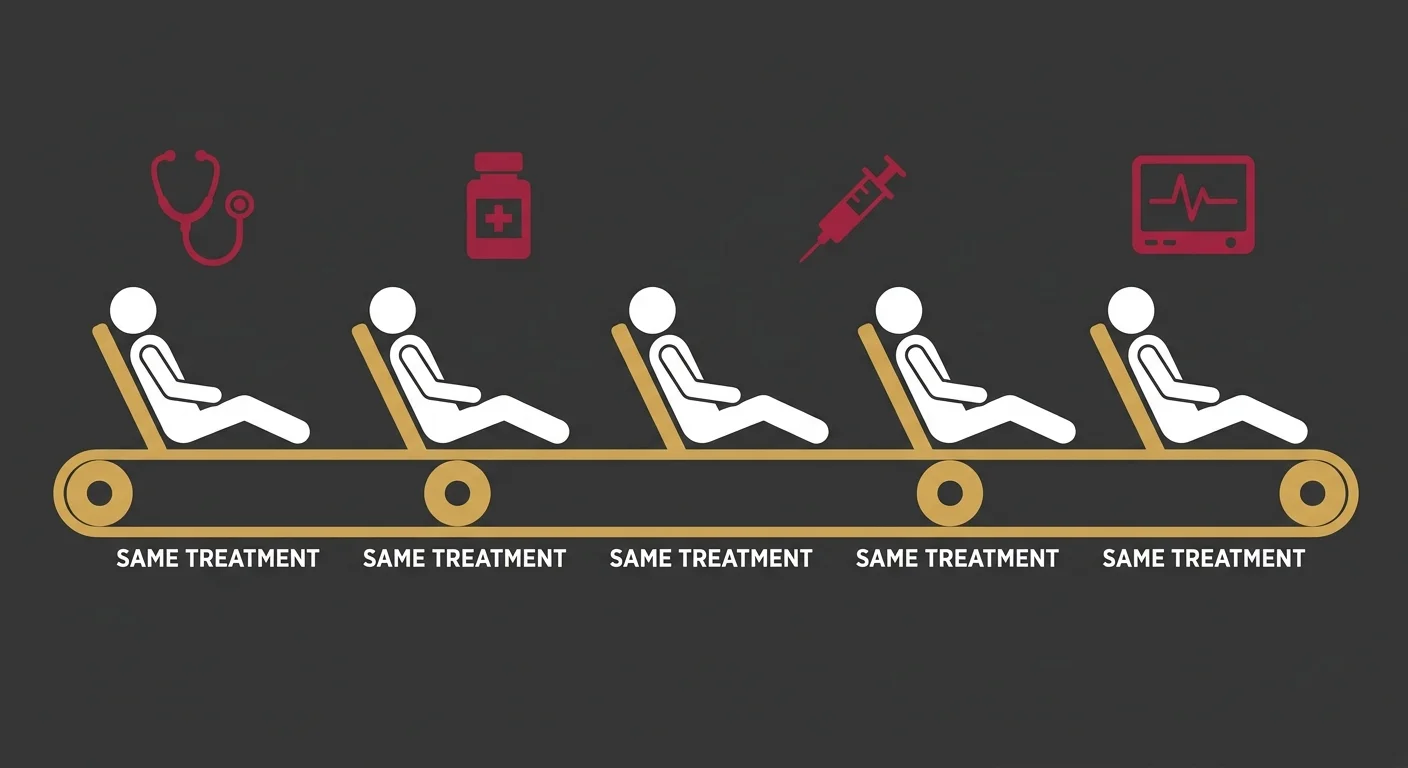
Most chiropractic offices run the same protocol on every herniated disc patient.
Same adjustment sequence. Same treatment frequency. Same timeline.
Walk in with a disc injury, walk in with sciatica, walk in with nerve symptoms — you get the same care plan.
When it doesn't work, they run it again. That's not individualized care. That's a template.
Why One Protocol Can't Work for Every Herniated Disc
Herniations don't present identically.
Location matters. L4-L5 behaves differently than L5-S1. Central herniations compress different nerves than lateral ones. Severity matters — a small bulge versus a large extrusion. Patient history matters — is this acute trauma or chronic degeneration? Nerve involvement matters — is there just pain, or are there motor deficits?
A protocol can't account for all of that. It's designed for the average patient — which means it's not quite right for anyone.
The body reports what it needs. If you're not listening to that feedback, you're guessing. And when your care plan's built on a guess instead of an assessment, the results are inconsistent at best.
What Individualized Care Actually Looks Like
Assessment drives the care plan here. Not the diagnosis code. Not a pre-built template.
What you actually report — where the pain is, how it moves, what triggers it, how your body responds to the first few adjustments.
If something isn't producing results after a reasonable trial, we change it. Not repeat it. The willingness to stop and reassess isn't a weakness. It's the clinical standard. That's what separates an honest care plan from a retention strategy.
Signs Your Disc Is Healing
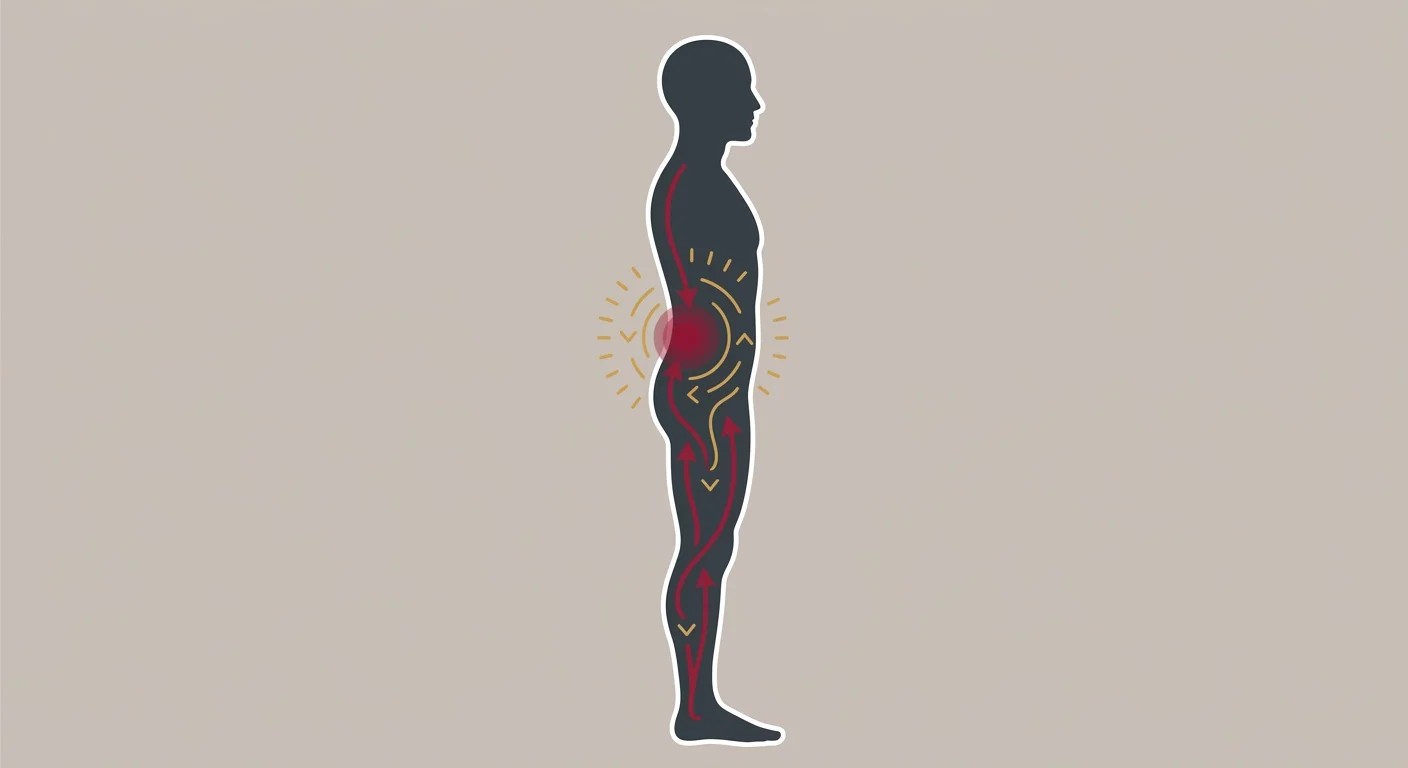
You want to know if it's working. Here's what to watch for.
Pain Centralization
When pain moves from your leg back toward your spine, that's progress.
It sounds counterintuitive. The pain's getting closer to the source — shouldn't that be worse?
No.
Centralization means the nerve irritation's decreasing. The herniated material's no longer pressing as hard on the nerve root. The pain's retreating from the peripheral distribution back to the central injury site.
That's the first major sign the disc's starting to heal. If your pain stays in your leg, that's nerve compression. If it moves back to your lower back and the leg symptoms start clearing, your body's recovering.
Functional Improvements
You can bend further without triggering symptoms. You can sit longer before the pain starts. You can stand, walk, or lift without the sharp nerve pain shooting down your leg.
Those are functional markers. They mean the mechanical interference's dropping. The disc has more room. The nerve has less pressure. Your body's adapting in the right direction.
Nerve Symptom Reduction
Numbness starts clearing. Tingling reduces. Weakness improves.
If you had a foot drop or trouble lifting your toes, that starts coming back.
Nerve symptoms are the lagging indicators. They take longer to resolve than pain. But when they start improving, that's confirmation the nerve's recovering. Not just adapting to compression — actually healing.
| Timeline | What You Should Notice | What It Means |
|---|---|---|
| Week 1-2 | Pain centralization — symptoms move from leg back toward spine | Nerve pressure is decreasing; healing process has started |
| Week 3-4 | Increased range of motion — you can move further without triggering pain | Mechanical interference is reducing; disc decompression is working |
| Week 4-6 | Significant functional improvement — daily activities are easier, nerve symptoms start clearing | Your body is actively recovering; the root cause is being addressed |
| Month 3+ | Complete or near-complete resolution of nerve symptoms; sustained functional gains | Disc material has resorbed; nervous system function is restored |
What to Avoid During Recovery
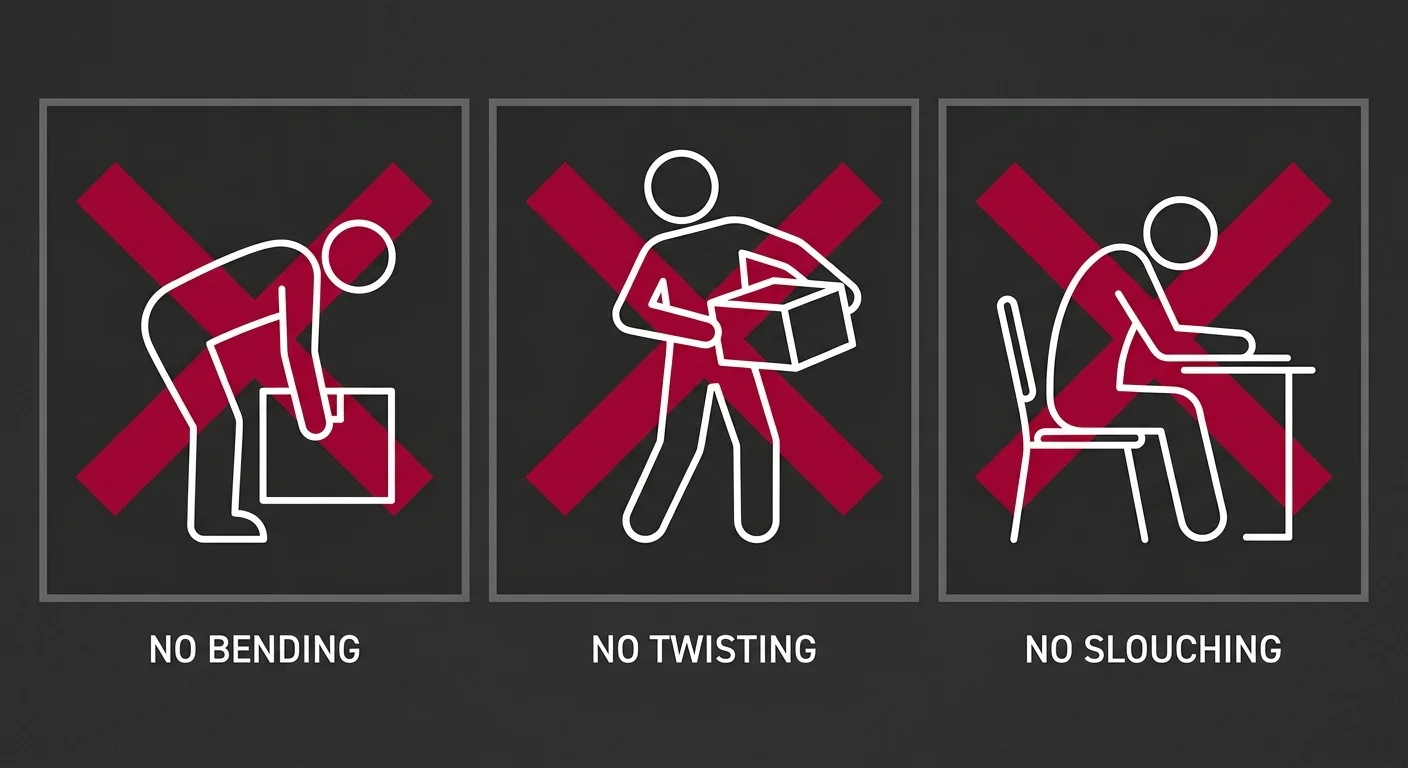
You can't heal a disc while you're actively recreating the injury.
Here's what to stop doing.
Movements That Increase Disc Pressure
Forward bending while lifting is the worst offender.
When you bend at the waist to pick something up, the disc compresses on one side and bulges on the other. If you already have a herniation, that motion pushes more material out through the tear.
Repetitive flexion — bending forward over and over — has the same effect. One bend might not cause a problem. Twenty bends in an hour will. Your disc doesn't get a chance to recover between each compression cycle.
If you need to lift something, hinge at the hips. Keep your back neutral. Let your legs do the work.
That's not just advice for people with disc injuries — it's how your spine was designed to function.
Positions That Maintain Nerve Compression
Prolonged sitting is a massive problem for herniated discs.
Sitting loads the lumbar spine more than standing. When you sit for hours, the disc stays compressed. The nerve stays irritated. The inflammation never drops.
Unsupported standing isn't much better. If you're standing in a locked, arched position for extended periods, you're compressing the back of the disc. Same injury mechanism, different posture.
Break up long sitting sessions every 20-30 minutes. Stand. Walk. Move. Give the disc a chance to decompress.
And if pain's disrupting your ability to rest properly, that's a separate issue worth addressing — how pain disrupts sleep slows recovery across every system.
Realistic Timelines and Expectations
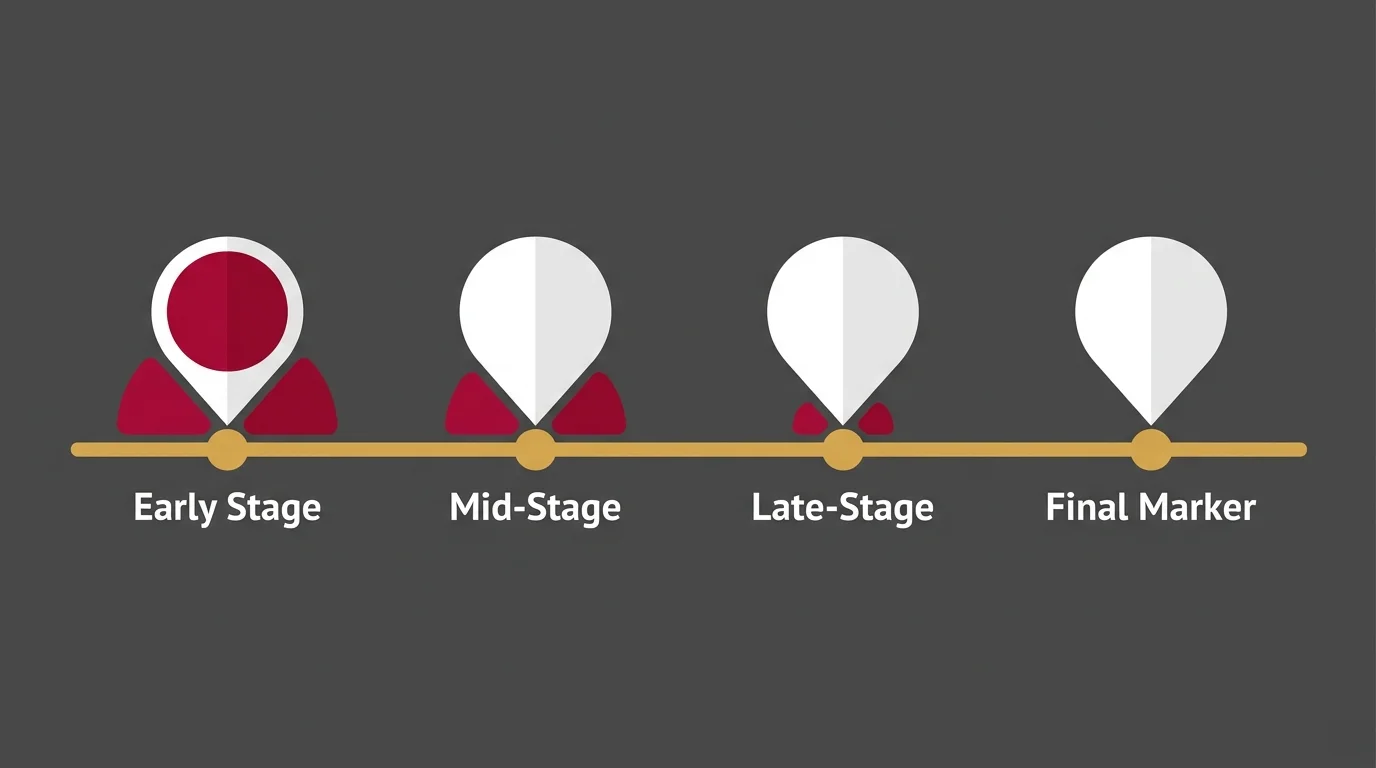
Here's what recovery actually looks like.
Not what you hope for. What happens.
What Happens in the First Month
Most patients see significant functional improvement within four to six weeks.
Pain centralizes. Range of motion increases. You can do more without triggering symptoms. That doesn't mean the disc's fully healed — it means the interference dropped enough for your body to start functioning correctly again.
Some people improve faster. Some take longer. It depends on how severe the herniation is, how long it's been there, and how consistent you are with the care plan.
But four to six weeks is a reasonable target for noticeable, sustained change — not just temporary relief.
Long-Term Recovery
Complete resorption of the herniated material takes months. The immune system breaks down that tissue slowly.
But here's the critical point: you don't need to wait for complete resorption to get your life back. Function returns much sooner.
The goal is to restore movement, clear nerve symptoms, and eliminate the pain cycle so you can return to normal activities while the body finishes the healing process in the background. That's realistic.
Waiting until the disc is "perfect" before resuming life isn't.
Addressing the Objections
"This sounds too good to be true."
It's not. It's biology. Your body already has the mechanism to heal this. Specialized care just removes the interference so that mechanism works correctly. The alternative is passive waiting — which fails for most people — or surgery, which is irreversible and comes with its own risks.
"Won't adjustments make it worse?"
Not if they're done correctly. A trained provider assessing your specific case uses gentle, targeted techniques designed to decompress the area — not force it. If you've had a bad experience with a chiropractor who ran the same protocol on everyone, that's a valid concern.
But that's not the standard here. Assessment drives care. Not guesswork.
When Surgery Actually Becomes Necessary
Surgery isn't the enemy. It's a tool.
And like any tool, it has a specific use case.
Emergency Surgical Indicators
Some herniated discs require immediate surgical intervention.
If you lose bowel or bladder control, that's cauda equina syndrome — a medical emergency. If you develop progressive weakness in your leg or foot that's getting worse by the day, that's a motor nerve deficit that may require decompression surgery to prevent permanent damage. If you have saddle anesthesia — numbness in the groin or inner thigh area — that's another emergency indicator.
Those situations are rare. But when they happen, surgery's the correct response.
Conservative care can't address acute, progressive neurological damage.
When Conservative Care Has Truly Failed
If you've done consistent, correct conservative care for six to twelve weeks and you're not improving — not plateauing, not seeing partial relief, but genuinely not improving — surgery may be the next step.
But here's the distinction: "conservative care" doesn't mean passive rest. It doesn't mean taking painkillers and hoping it gets better. It means active, root-cause intervention — chiropractic adjustments, mechanical correction, nerve decompression — applied consistently over a reasonable trial period.
Most people who are told "conservative care failed" never actually received it. They rested. They took pills. They waited. That's not the same thing.
According to data from The Lancet Rheumatology, lumbar disc herniation is extremely common — and the vast majority resolve without surgery when the right conditions are created.
Surgery's always an option. But it shouldn't be the first option.
Not when the body already has the tools to heal this.
FAQ
How long does it take for a herniated disc to heal without surgery?
Most patients experience significant functional improvement within four to six weeks of consistent, specialized care. That's when pain starts centralizing, range of motion increases, and daily activities become manageable again.
Complete resorption of the herniated disc material takes longer — typically several months — but you don't need to wait for full resorption to regain function. The goal is to restore movement and eliminate the pain cycle while your body finishes the healing process in the background.
What are the signs that a herniated disc is healing?
The clearest sign is pain centralization — when symptoms move from your leg back toward your spine. That means nerve irritation's decreasing.
You'll also notice increased range of motion without triggering pain, and a reduction in nerve symptoms like numbness, tingling, or weakness. Those are functional markers that confirm your body's actively recovering, not just adapting to the injury.
Is a chiropractic adjustment safe for a herniated disc?
Yes — when performed after a thorough assessment by a provider trained in root-cause care.
The adjustments are specific and gentle, designed to decompress the area and restore nerve function, not to force anything. If you've heard stories about aggressive adjustments making things worse, that's usually the result of a cookie-cutter protocol applied without proper evaluation.
Assessment-driven care's different. It starts with what your body reports, not a template.
Can a bulging disc turn into a herniated disc?
Yes. A bulging disc is a precursor to a herniation.
The outer wall of the disc weakens and bulges outward, but it hasn't torn yet. If the underlying mechanical stress that caused the bulge isn't addressed — poor posture, repetitive loading, sustained compression — the outer wall can eventually tear. That's when it becomes a herniation, and the inner material leaks out.
Early intervention on a bulging disc can prevent it from progressing. But that requires fixing the root cause, not just waiting.
If you're noticing signs of a bulging disc, that's the time to act — before it ruptures.
What movements should I avoid with a herniated disc?
Avoid loaded spinal flexion — bending forward at the waist to lift something. That increases pressure on the disc and can push more material out through the tear.
Prolonged sitting's another major problem because it compresses the lumbar spine continuously. Twisting motions — especially while holding weight — are high-risk movements that can aggravate the injury.
The rule's simple: if a movement triggers your pain, stop doing it. Your body's telling you that motion's recreating the injury pattern. Listen to it.
What's the difference between a bulging disc and a herniated disc?
A bulging disc is like a tire with a weak spot that bulges outward but hasn't broken. The outer wall of the disc is intact, but the disc is compressed unevenly, causing it to protrude.
A herniated disc is when the outer wall tears and the inner gel-like material leaks out. That leaked material's what presses on the nerve and causes radiating pain, numbness, or weakness.
A bulge can progress to a herniation if the mechanical stress continues, which is why addressing it early matters.
Conclusion
Your body's already trying to heal this.
The immune system's designed to resorb displaced disc material. The nervous system's built to regulate inflammation and restore function. The healing mechanisms are there. The question isn't whether your body can heal a herniated disc.
It's whether you're creating the conditions it needs to do so.
Passive rest doesn't create those conditions. Waiting and hoping doesn't address the mechanical interference that's blocking recovery. Specialized chiropractic care removes that interference — decompresses the area, restores nerve function, and corrects the movement patterns that caused the herniation in the first place.
That's not a treatment that instantly repairs the disc. It's a system that allows your body to do what it was already designed to do.
If you've been told to rest and see what happens, or if you've been handed a surgery timeline before anyone assessed what's actually driving your symptoms, this is a different conversation. Unexplained doesn't mean untreatable. Serious doesn't mean surgical.
It means no one's looked at the right thing yet.
One final point: healing a disc is a partnership. The provider's job is to create the plan, deliver the care, and remove the interference. Your job is to follow through.
If you're the type of person who picks and chooses which parts of a care plan to follow while skipping others, partial commitment will produce partial results. This isn't about perfection. It's about consistency.
The body heals when you give it the full opportunity to do so — not halfway.
Most providers won't tell you that. They'll run the same protocol on every herniated disc patient, regardless of presentation. When it doesn't work, they'll run it again. That's not individualized care — it's a template. And templates fail because they don't account for what your body's actually reporting. The willingness to stop, reassess, and change course when something isn't working isn't a clinical weakness. It's the difference between a care plan built for you and one built for a billing calendar.
If your herniated disc's been explained away, handed a surgery date, or treated with a protocol that helped for a week and then didn't, that's worth a real assessment.
A chiropractic evaluation at Touch of Wellness Chiropractic starts with what you actually report. Not a standard protocol. Not a 12-month plan handed over before the evaluation's finished.
The goal is to identify the specific mechanical interference blocking your recovery, remove it, and create the conditions your body needs to heal.
If you're in Morton, Peoria, or the surrounding area and want to know what's actually driving your symptoms, find out what your assessment looks like.
Unexplained doesn't mean it's not real. It means no one's looked at the right thing yet. And if the pain's been going on long enough that it's affecting your work, your sleep, or your ability to function — that's past the threshold of waiting it out.
Copyright Touch of Wellness Chiropractic 2026
1101 W Jackson St, Suite A Morton, IL 61550
Web Design by iTech Valet