
Physical therapy patients turn to certified acupuncture for nerve pain because that pain travels on two separate roads at once, and physical therapy alone can only repair one of them. The first road is mechanical: strained joints, tight muscles, and restricted movement patterns that physical therapy is well designed to correct through targeted exercise and rehabilitation. The second road is neurological: the nerve pathway itself, where inflammation and heightened nerve signaling keep transmitting pain even after the mechanical problem improves. Exercise-based physical therapy strengthens and mobilizes tissue, but it was never built to modulate the nervous system directly. Acupuncture works through a different mechanism entirely, calming irritated nerve pathways and reducing the inflammatory activity that surrounds compressed or damaged nerves. That is why nerve pain is a complex condition that often does not respond fully to conventional treatments alone. Many patients follow a consistent exercise regimen and still hit a point where progress stalls, not because the exercises stopped working, but because the neurological component of the pain was never addressed in the first place. Certified acupuncture, delivered by a provider with post-doctorate acupuncture certification, targets that second road directly rather than treating it as background noise. The goal is not to abandon physical therapy or treat it as inferior. It is to integrate both approaches so the mechanical and neurological components of nerve pain are addressed together, rather than leaving one road open while the other gets all the attention. That combined approach creates the conditions for more complete, longer-lasting recovery than either treatment produces on its own.
When Nerve Pain Outruns the Exercise Plan
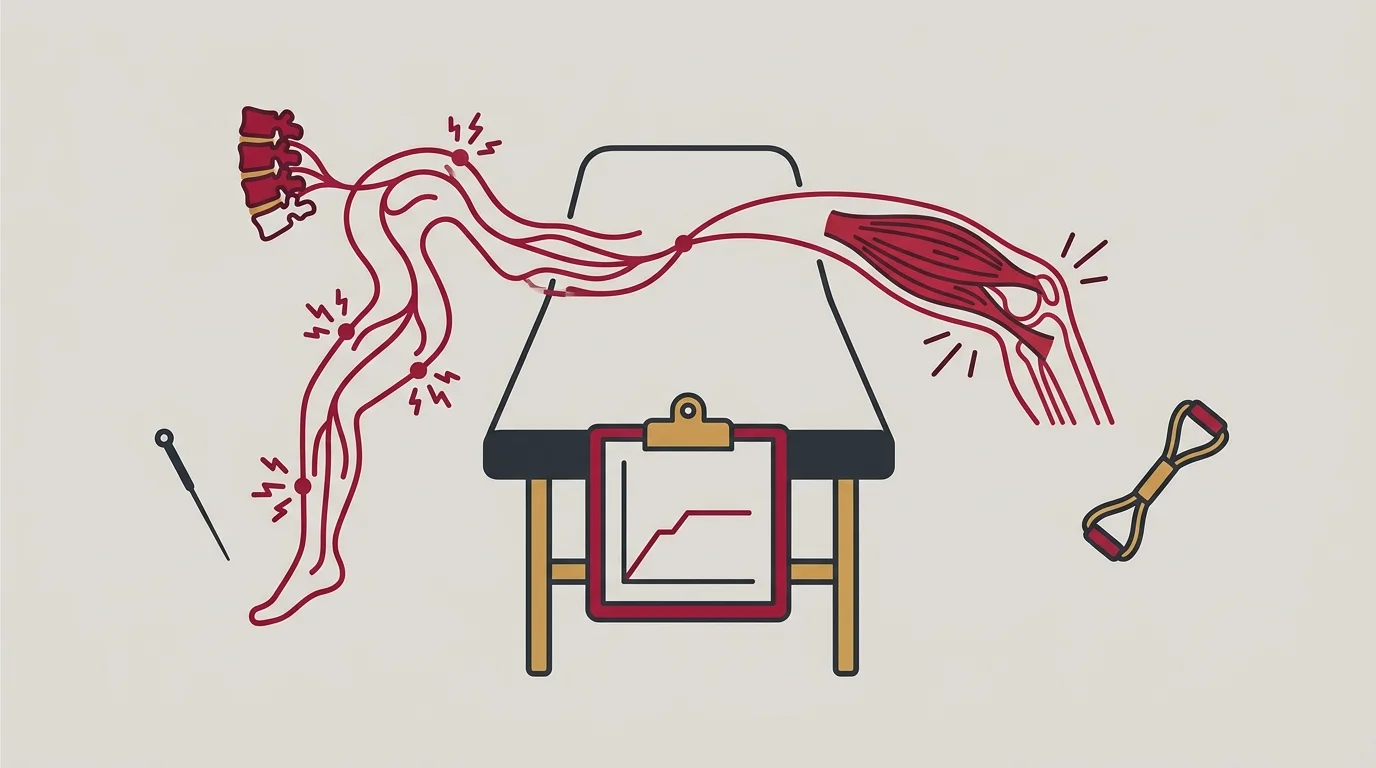
The two-road problem shows up most clearly when progress plateaus. Many physical therapy patients find they hit a plateau, where their progress stalls despite following their exercise regimen. The exercises are not failing. The neurological road was simply never addressed.
Nerve pain is a complex condition that often doesn't respond fully to conventional treatments alone. That gap is exactly where certified acupuncture and other targeted approaches enter the conversation, including the mechanism explored in how certified acupuncture earns its results. Understanding why one road stays open helps explain what comes next.
Why Exercise Alone Cannot Quiet an Irritated Nerve
A strengthening-only protocol treats the mechanical road as the whole map. It builds tissue tolerance and restores range of motion, and it does that job well.
But a firing nerve pathway does not quiet down just because the muscles around it grew stronger. The signal keeps traveling on its own road, regardless of how sound the mechanics become.
The Mechanical Ceiling of a Strengthening-Only Protocol
Exercise loads tissue. It does not reach into the nervous system and calm the pathway carrying the pain signal itself.
That is the ceiling. No amount of added resistance or repetition changes how an irritated nerve is firing, because the intervention was never designed to touch that road in the first place.
Where the Plateau Actually Shows Up on a Progress Chart
The plateau shows up as a flat line on the progress chart, not a setback. Strength numbers hold steady, range of motion holds steady, and the pain stays exactly where it was.
That flat line is the neurological road announcing itself. Certified acupuncture is built to work on that road directly, and for patients researching non-drug options for lingering nerve and joint pain, Resolving Chronic Pain Without Medication lays out how that comparison plays out against muscle relaxers.
What the Research Shows When Acupuncture Joins the Nerve Pain Picture
Belief only carries a claim so far. The numbers below are where the two-road idea either holds up or falls apart.
| Nerve Pain Population | Comparison Group | Measured Outcome | Scale Used |
|---|---|---|---|
| Type II diabetic patients with neuropathy symptoms | Waiting list control | Overall complaints reduced by 24.7 points | Visual Analog Scale |
| Chemotherapy-induced peripheral neuropathy patients | Vitamin B1 and gabapentin | Significantly greater reduction in nerve pain symptom severity | Numerical Rating Scale |
| Knee osteoarthritis patients receiving 12 acupuncture-plus-therapy sessions | Non-penetrating acupuncture | WOMAC response rate of 31.6% for true acupuncture versus 30.3% | WOMAC Response Rate |
Diabetic and Chemotherapy-Related Nerve Pain in the Data
Type II diabetic patients with neuropathy symptoms saw overall complaints drop by 24.7 points on a visual analog scale compared to a waiting list control. That is a nerve pathway responding to a different kind of input than exercise alone provides. Research published through PubMed Central found acupuncture treatment reduced overall complaints in patients with diabetic peripheral neuropathy by 24.7 points on a visual analog scale compared to waiting list control.
Chemotherapy-induced peripheral neuropathy tells a similar story. Acupuncture cut nerve pain symptom severity significantly more than vitamin B1 and gabapentin did. Work available through Pain Research and Management indicates acupuncture produced a significantly greater reduction in nerve pain symptom severity on the Numerical Rating Scale compared to vitamin B1 and gabapentin for chemotherapy-induced peripheral neuropathy. For anyone wary of stacking on more medication to manage nerve symptoms, that comparison lands.
Where Acupuncture and Physical Therapy Measure the Same Joint Together
Knee osteoarthritis research shows the same pattern from a fresh angle. Across twelve acupuncture-plus-therapy sessions, the WOMAC response rate came in at 31.6% for true acupuncture and 30.3% for non-penetrating acupuncture. Both groups improved, which is the mechanical and neurological roads getting worked together, and it's also common ground for Patients Who Are Skeptical of needle-based care.
How a Credential Is Built Before It Ever Reaches a Treatment Table
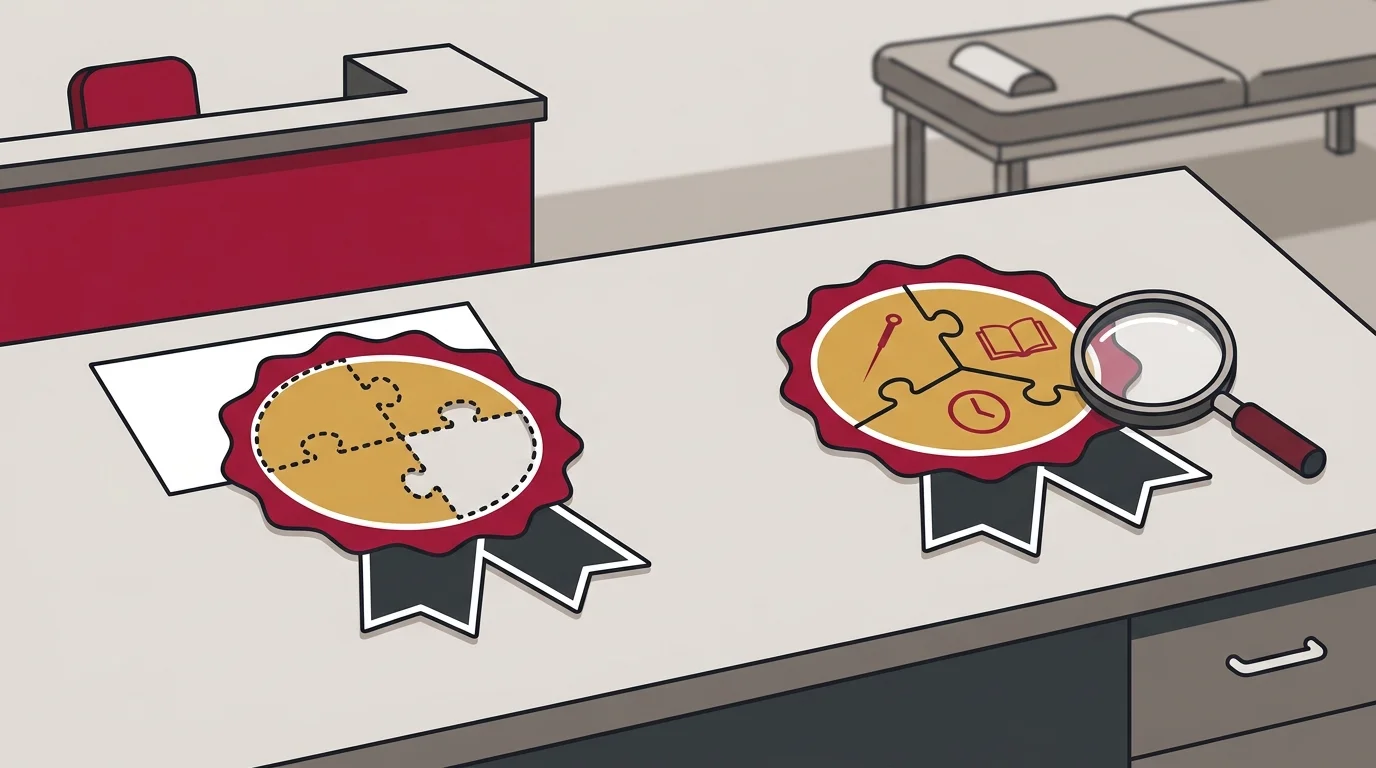
Those outcomes only mean something if the credential behind them was earned the honest way. A certified acupuncture credential is built on hours, not a weekend seminar.
| Credential Element | What It Requires | Why It Matters to Nerve Pain Care |
|---|---|---|
| Accredited Training Hours | A minimum number of supervised classroom and clinical hours completed at an institute recognized by the state's licensing body. | Confirms the provider has practiced needle placement and safety protocols under direct oversight before treating a nerve pathway unsupervised. |
| Post-Doctorate Acupuncture Certification | Advanced study completed after a doctoral-level credential is already in hand, layering acupuncture training onto an existing clinical foundation. | Lets a provider read a nerve pain case through both a structural and a neurological lens instead of treating acupuncture as a standalone add-on. |
| Certificate or Diploma From an Approved Institute | Formal documentation issued only after the training hours and clinical requirements are verified by an accrediting body. | Gives a patient a way to confirm the credential is real rather than a weekend workshop dressed up as certified acupuncture. |
| Ongoing Scope of Practice Standards | Continued adherence to state-set rules governing what a certified provider can and cannot treat with acupuncture. | Keeps the neurological road being worked on by someone accountable to a defined standard, not an informal or unregulated practice. |
What the Training Hour Requirement Actually Covers
Training hour requirements exist because acupuncture works on the nervous system, and that carries real risk when done carelessly. Rhode Island sets its own bar, requiring applicants to complete not less than one thousand nine hundred five (1,905) hours of training and receive a certificate or diploma from an approved institute before licensure. That hour count is not classroom time alone. It covers supervised clinical practice, needle safety, and the physiology of the pathways being treated. Research published through published government guidance found must complete at least 1,905 hours of accredited training and receive a certificate or diploma from an approved institute to qualify for acupuncture licensure in Rhode Island.
Reading a Credential Correctly Before Trusting the Outcome Behind It
A credential is only as trustworthy as the hours and oversight standing behind it. Readers weighing where acupuncture fits alongside other care paths can see that context on the a broader look at chiropractic services. That standard is what separates certified acupuncture from a weekend course.
How Two Nerve-Calming and Tissue-Repair Systems Work on the Same Timeline
Credentialing settles who can be trusted to work on the neurological road. The next question is timing. When does each system run relative to the other on the calendar?
Sequencing the Nervous System Before the Muscular System
Calming the nerve pathway first can open a window where the mechanical work lands easier. A nerve pathway that is still firing hot tends to guard the tissue around it, which makes exercise feel harder than it should. Sequencing certified acupuncture ahead of a physical therapy session gives the muscular system less resistance to push against.
Why Treating Acupuncture and Physical Therapy as Competing Systems Fails
Treat these as rival systems, and you force a choice that never needed making. The goal isn't to replace physical therapy. It's to integrate both approaches for a more comprehensive, more effective answer to nerve pain, because splitting the two roads into competing camps just leaves one of them unattended.
What an Integrated Nerve Pain Protocol Actually Looks Like Week to Week
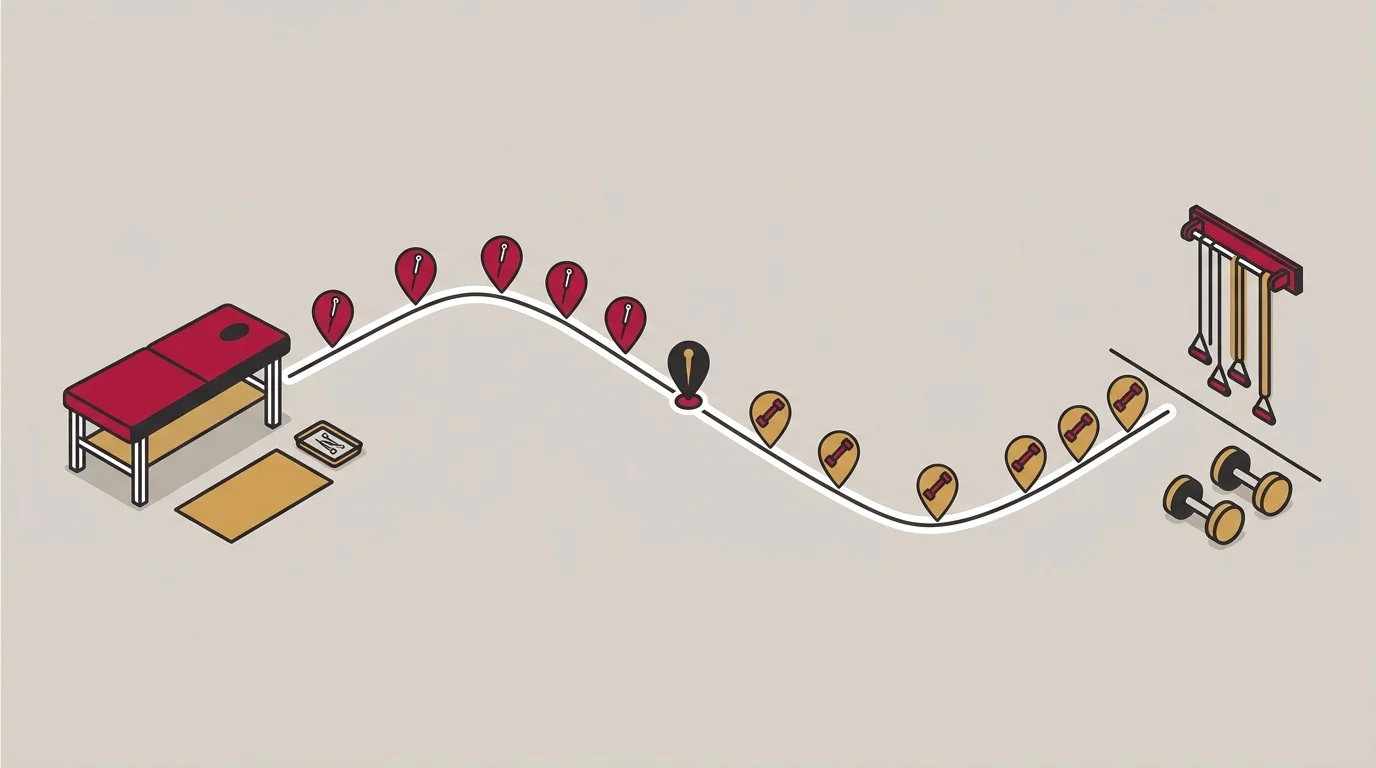
An integrated protocol doesn't hit both roads at once on day one. It sequences the care so the neurological road settles before the mechanical road picks up the heavier work.
| Protocol Phase | Primary Focus | Typical Timing |
|---|---|---|
| Opening Phase | Calming the neurological road with certified acupuncture while physical therapy loads stay conservative | Early weeks of the protocol |
| Transition Phase | Shifting balance as the nerve pathway settles and physical therapy begins carrying more structural work | Middle stretch of the protocol |
| Rebuilding Phase | Physical therapy expanding into fuller strength, range of motion, and mobility work as the mechanical road becomes the primary focus | Later weeks of the protocol |
The Early Weeks Focused on Calming the Nerve Pathway
The opening weeks lean on certified acupuncture to quiet the irritated nerve pathway and cool the inflammation around it. Physical therapy keeps going, but the loads stay light while the nervous system stops guarding.
The Later Weeks Shifting Toward Structural Rehabilitation
As the neurological road quiets, physical therapy sessions carry more of the structural rebuilding. Strength work, range of motion, and mobility drills expand because the tissue is no longer fighting a hot nerve signal underneath it. Week to week, the balance simply shifts from calming the pathway toward rebuilding the mechanics around it.
Frequently Asked Questions
A few questions come up again and again once the two-road idea clicks into place. Here are the ones worth answering directly.
How many acupuncture sessions are typically needed for nerve pain?
Neuropathy care protocols run 8 to 12 weeks. Sessions taper as the neurological road settles.
Is acupuncture for nerve pain covered by insurance?
Coverage swings by plan and diagnosis, so check your benefits before you start. Where a plan comes up short, courtesy pricing keeps care within reach.
What's the difference between a licensed acupuncturist and a certified acupuncturist?
Licensure sets the legal floor for practicing acupuncture in a given state. Certification through post-doctorate acupuncture certification reflects additional advanced training layered on top of that floor, similar in spirit to the accredited hour requirements states already enforce for licensure.
Can acupuncture be combined with physical therapy for nerve pain?
Yes, and the two are meant to work together rather than compete. Certified acupuncture quiets the neurological road while physical therapy rebuilds the mechanical one.
What does acupuncture for nerve pain feel like, and are there side effects?
Most people feel a light tap or mild pressure at the needle site, not sharp pain. Minor bruising or brief soreness can happen, but serious side effects are rare when the provider is properly trained.
How does acupuncture affect the nervous system to reduce nerve pain?
Acupuncture seems to modulate the somatosensory pathways carrying the pain signal, calming an irritated nerve and cooling the inflammation around it. That's the mechanism behind the neurological-road relief described throughout this article.
Where This Leaves the Nerve Pain Plateau
Two roads, one pain signal. Physical therapy holds the mechanical road. Certified acupuncture holds the neurological one.
Treat both at once and the plateau stops making sense as a stopping point. The nerve pathway quiets, the tissue stops guarding, and the mechanical work finally gets to finish the job it started.
That is what integrated care closes: the gap between two systems that were never actually competing. If the plateau sounds familiar, the next step is a conversation about which road still needs attention, and that conversation starts with scheduling a visit at Touch of Wellness Chiropractic.