
Dry needling fails to calm nervous system hypervigilance because it activates the sympathetic nervous system rather than downregulating it. Nervous system hypervigilance is a state of high alert where the body's fight or flight response becomes the default, even without a real threat present. Dry needling works by inserting a filament needle directly into a myofascial trigger point to provoke a local muscle twitch response, a mechanical action that the body's nervous system frequently interprets as a new, acute threat signal. This provocation triggers an immediate sympathetic response, the same fight or flight pathway responsible for hypervigilance in the first place. Certified acupuncture operates on an entirely different physiological principle. Rather than provoking a single point of tissue, acupuncture is applied within a whole-system framework that engages specific points along recognized meridians to influence the autonomic nervous system directly. This approach has been associated with regulation of hypothalamic-pituitary-adrenal axis activity and better control of the hormones connected to stress. The distinction matters because releasing a tense muscle band does not, by itself, shift the nervous system out of a stress state and into a rest and digest state. A trigger point can loosen while the underlying alarm response stays fully activated. Nervous system hypervigilance requires a systemic recalibration, not a localized mechanical release. Because dry needling targets tissue while acupuncture targets systemic regulation, the two techniques produce fundamentally different outcomes for a nervous system stuck in a state of high alert. One approach provokes the site of the symptom. The other addresses the broader neurological state driving it.
What Nervous System Hypervigilance Actually Looks Like
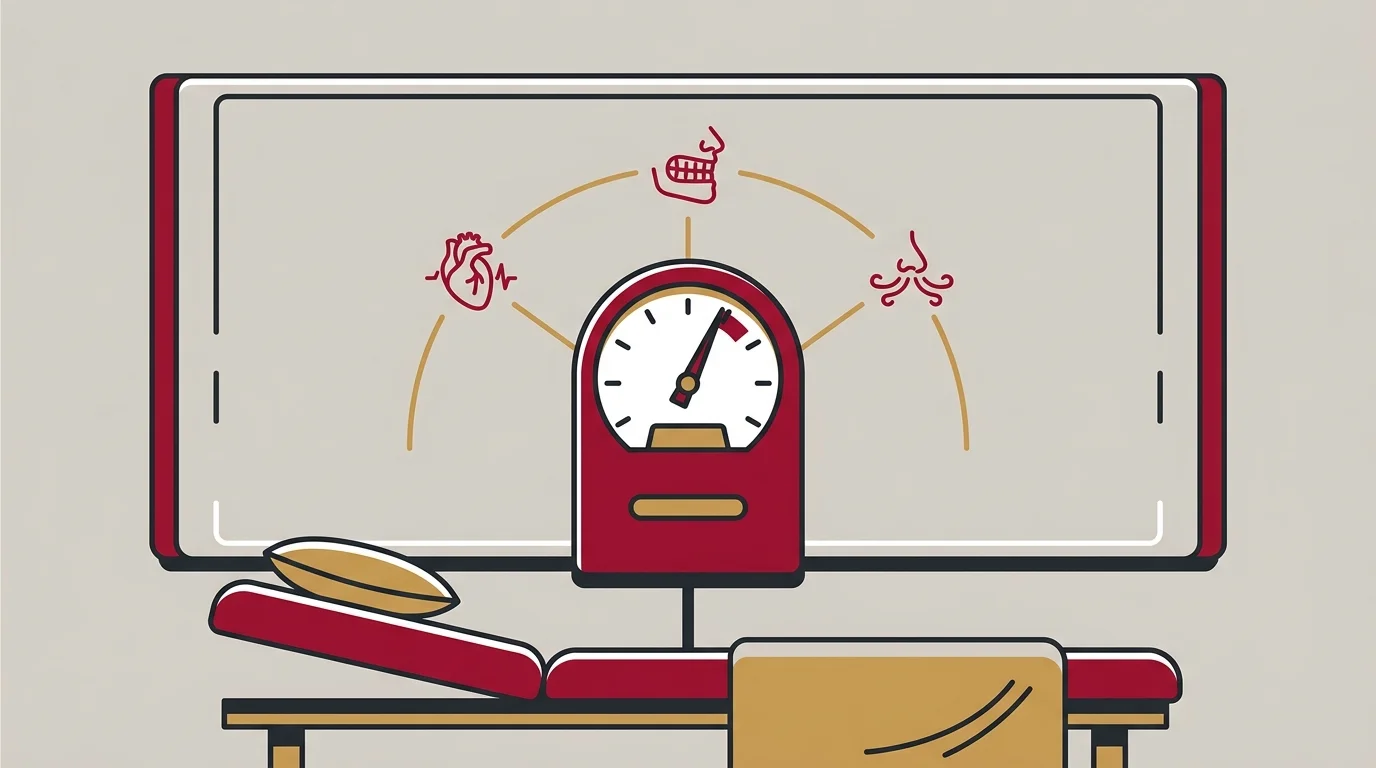
Picture the nervous system as a security system wired into a building. When it's calibrated right, it stays quiet until real smoke shows up.
A hypervigilant nervous system loses that calibration. The alarm fires constantly, whether or not any actual threat exists, and the body pays the metabolic cost of staying on guard around the clock.
The Alarm State
Stuck in that alarm state, the body reads ordinary sensations as danger — a tight muscle, a sharp movement, a little stress. Dry needling pulls the fire alarm right at the source of the smoke, provoking the exact tissue where the twitch response fires.
That local pull can quiet one signal and never touch the control panel running the whole system. A the training gap behind needle-based therapies approach may loosen isolated tissue, but the alarm circuitry stays untouched. What calms a nervous system stuck in alarm mode is resetting the control panel, not silencing one bell.
Why the Muscle Knot Is a Symptom, Not the Source
Most muscle pain therapies hammer away at the exact spot that hurts. A knotted muscle gets all the attention, while the neurological state that created it goes ignored.
That focus matters because a knot is rarely the origin point. It is a downstream signal from a nervous system already running in a state of high alert.
Trigger Points and Acupuncture Points Are Not the Same Target
Myofascial trigger points and acupuncture points often occupy overlapping anatomical real estate, which fuels the assumption that the two techniques are interchangeable. The distinction between a technique that provokes a local muscle and one that regulates the entire autonomic nervous system is critical for long-term relief.
A trigger point is defined by local tissue irritability. An acupuncture point is defined by its position within a mapped system connected to broader physiological regulation, which is the mechanism explored in Acupuncture Regulate Nervous System Overdrive. Same coordinates on the body, entirely different functional targets.
Measuring What Dry Needling Actually Does to the Nervous System
Same coordinates, different targets, but what does that difference actually measure inside the body? The answer comes down to autonomic response, not anatomy.
Heart rate gives you a clean window into that response. It moves within seconds of a needle hitting tissue, long before your conscious mind catches up.
| Measurement | Dry Needling Group | Placebo Group | What It Indicates |
|---|---|---|---|
| Heart Rate Response | Sharp increase immediately after needle insertion | Minimal change from baseline | A sympathetic surge consistent with a threat response, not a calming effect |
| Onset Timing | Measurable shift within seconds of insertion | No comparable shift observed | Confirms the reaction is autonomic and reflexive, occurring before conscious perception |
| Duration of Autonomic Activation | Sustained elevation beyond the moment of insertion | Returns to baseline without a comparable spike | Suggests the nervous system stays braced rather than settling after the local twitch response |
| Underlying System Engaged | Sympathetic fight or flight pathway | No meaningful autonomic engagement recorded | Shows the measured response mirrors the same circuitry driving nervous system hypervigilance |
The Sympathetic Spike After the Needle Goes In
Researchers measured exactly this reaction in healthy volunteers getting dry needling. Heart rate climbed sharply in the seconds after the needle went in, far past what a placebo produced in the same setting. According to PubMed Central, dry needling produces immediate activation of the sympathetic nervous system, with heart rate increasing significantly more in the dry needling group compared to the placebo group immediately after the intervention.
That spike is the sympathetic nervous system firing, not settling. A Trigger Points: A Neurological Comparison makes the mechanism plainer, but the measured heart rate change alone tells you the body is bracing rather than calming.
How Certified Acupuncture Is Built to Reach the Autonomic System
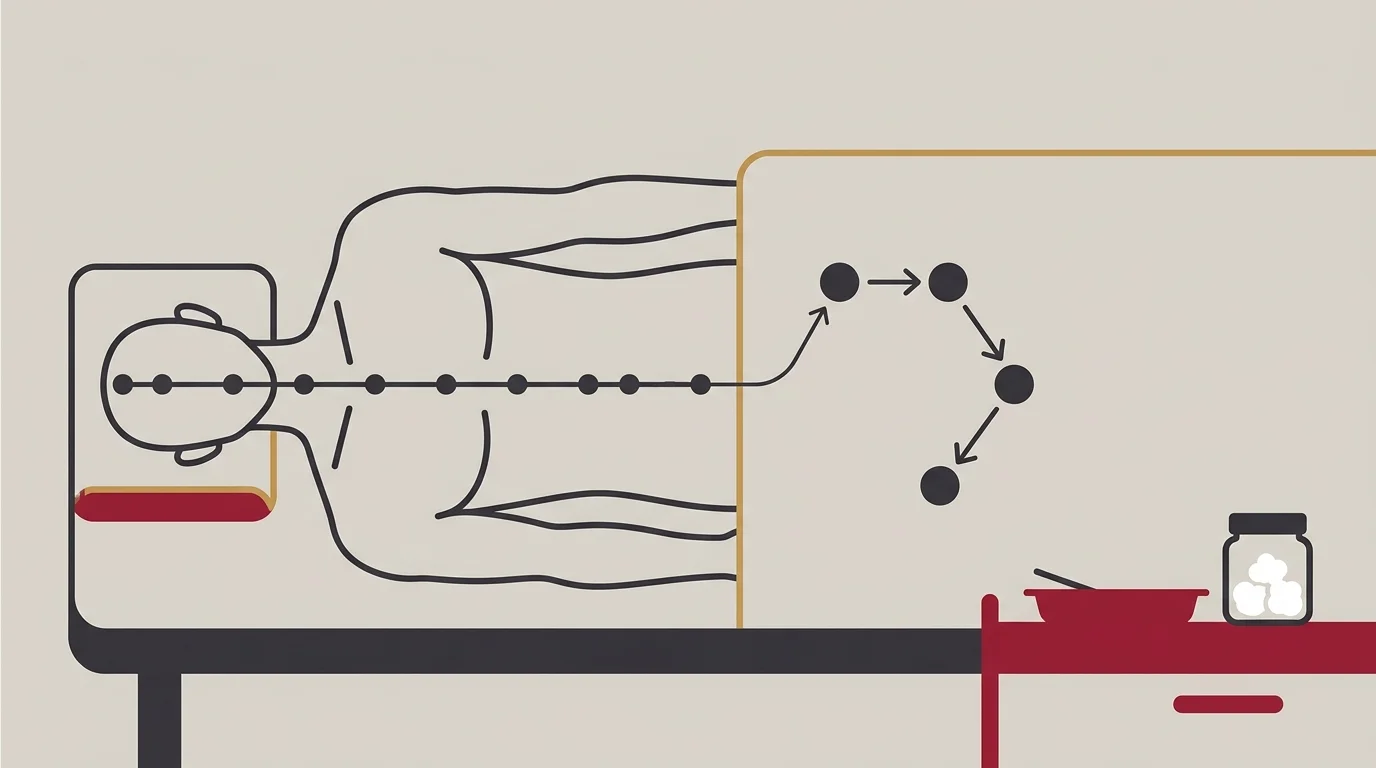
Certified acupuncture is built around a different question than dry needling asks. Instead of finding the loudest local signal, it maps points along recognized meridians known to influence broader autonomic function.
| Design Element | Trigger Point Targeting | Meridian Mapping |
|---|---|---|
| Selection Criteria | Chosen for local tissue irritability at the exact site of a muscle knot | Chosen for position along a mapped meridian tied to autonomic function |
| Primary Target | The muscle fiber itself, provoking a local twitch response | Regulatory pathways connected to the hypothalamic-pituitary-adrenal axis |
| Nervous System Goal | Releases tension at a single site without addressing systemic alarm state | Engages the parasympathetic system to support cortisol regulation and calm |
| Scope of Application | Isolated to the specific point where irritable tissue is identified | Applied within a whole-system framework spanning multiple meridian points |
| Underlying Framework | A mechanical, symptom-site approach with no systemic diagnostic layer | A structured system built on recognized meridians linked to broader physiology |
Meridian Mapping Versus Trigger Point Targeting
A trigger point earns attention because the tissue is irritable. An acupuncture point earns it because of a known relationship to systemic regulation, and that anatomical distinction is the one explored in Stimulating Anatomical Meridians vs Trigger Points: A Neurological Comparison.
That difference in selection criteria is why overlapping coordinates do not mean overlapping function. One point provokes a muscle. The other engages a regulatory pathway.
The Vagal and HPA Axis Pathways Acupuncture Engages
Acupuncture has been associated with regulation of hypothalamic-pituitary-adrenal axis activity and better control over cortisol secretion, the hormone most tied to a body stuck on high alert. Research published through The Iranian Journal of Public Health found acupuncture has been associated with the regulation of HPA axis activity and control of cortisol secretion — one expert assessment rather than a study finding. That association matters because cortisol regulation sits at the center of resetting the control panel rather than silencing one more alarm bell.
Why Provoking a Trigger Point Can Backfire on an Already Hypervigilant System
A hypervigilant nervous system already runs the alarm circuit hot. Introduce a needle that provokes a sharp local twitch, and that circuit reads the input as one more reason to stay on guard.
The sympathetic spike documented earlier does not land on a calm system. It lands on one already primed to escalate.
The Cost of Mistaking Local Release for Systemic Calm
Simply releasing a trigger point does not guarantee the nervous system shifts from a stress state into rest and digest. The muscle can soften while the alarm circuitry stays fully armed.
That gap is the real cost. A quiet muscle can sit inside a nervous system still bracing for the next threat.
How a Systemic Nervous System Evaluation Is Actually Structured
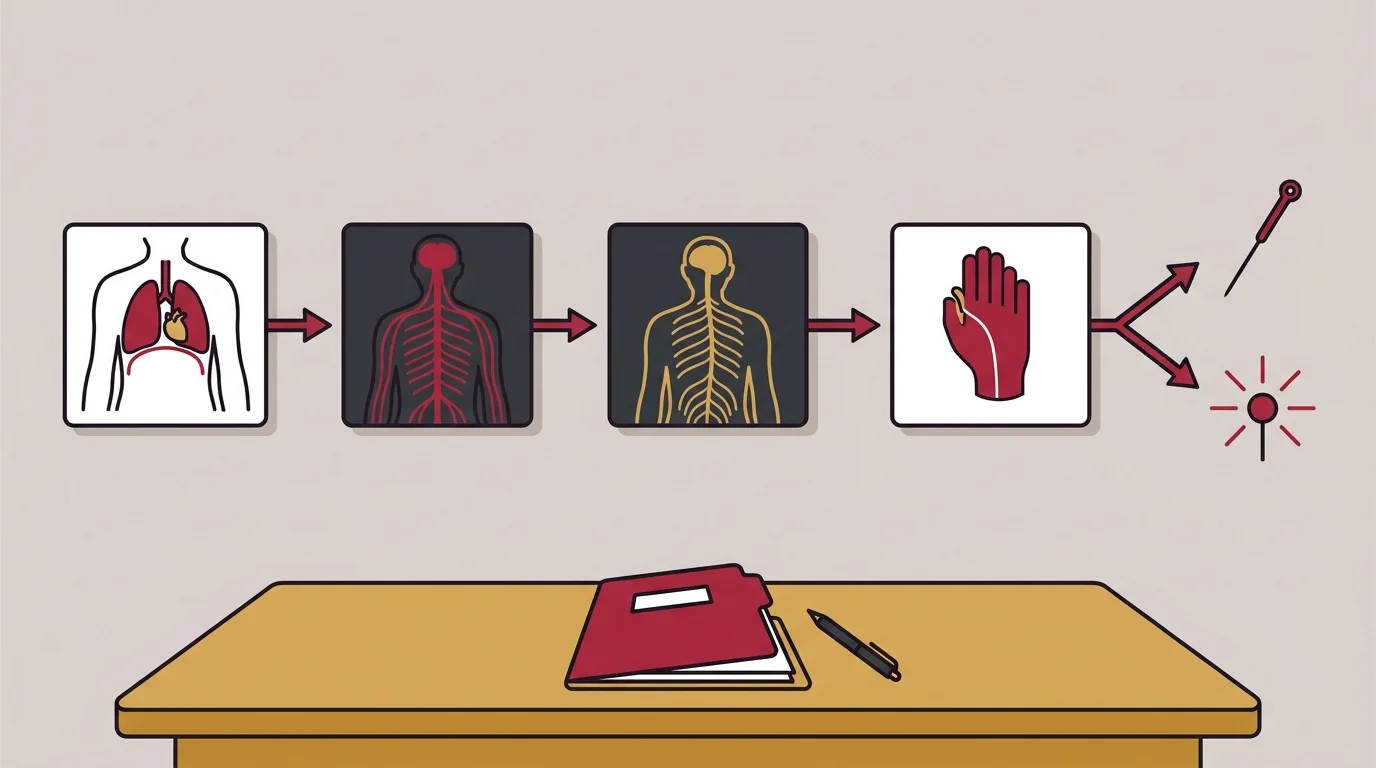
A systemic nervous system evaluation does not start with a needle. It starts with a question: is this signal local, or is it evidence of a nervous system running hot everywhere at once.
| Evaluation Step | What Is Assessed | Why It Determines Technique |
|---|---|---|
| Intake and History | Whether symptoms cluster in one local area or spread across multiple regions of the body, alongside sleep quality and general stress load | Widespread or diffuse patterns point toward a nervous system running hot everywhere, while a single isolated complaint may point toward tissue alone |
| Autonomic Indicator Review | Signs that the alarm circuitry itself is miscalibrated, including a stress response that seems disproportionate to the trigger | This step confirms whether the nervous system is stuck in high alert before any technique gets chosen |
| Tissue Findings Cross-Check | Local trigger point activity weighed against the autonomic signals gathered earlier, rather than treated as the whole picture | Weighing tissue findings against systemic signals keeps the plan from pulling one more local alarm instead of resetting the panel |
| Technique Selection | Whether the presenting picture calls for systemic regulation, local tissue work, or a combination of the two | Matching the technique to the actual state of the nervous system, not the loudest local complaint, is what separates a systemic evaluation from a reflexive one |
Reading the Signals Before Choosing a Technique
Some signals point straight at systemic trouble, not one angry muscle. Widespread sensitivity, broken sleep, a stress response way out of scale with the trigger — those all say the alarm circuitry itself is miscalibrated. Pick a technique before reading them, and you risk pulling one more local alarm instead of resetting the panel.
Sequencing the Evaluation From Intake to Technique Selection
A properly built evaluation moves in sequence. Intake first establishes whether symptoms cluster locally or spread across the body. From there, autonomic indicators get weighed against tissue findings before any technique is chosen, so the selected approach matches the actual state of the nervous system rather than the loudest local complaint.
Frequently Asked Questions
A few questions come up again and again once the alarm-panel distinction clicks into place. Here are the mechanical answers, stated plainly.
What is the difference between dry needling and acupuncture for nervous system issues?
Dry needling provokes a local muscle twitch response, triggering a sympathetic alarm signal. Certified acupuncture targets meridian points connected to systemic autonomic regulation, engaging the parasympathetic system instead.
Can dry needling make anxiety or hypervigilance worse?
Yes. A nervous system already running hot can read that sharp local twitch as one more threat. It adds to the hypervigilance rather than calming it.
How does true acupuncture help calm a fight or flight response?
Certified acupuncture engages recognized meridian points tied to broader autonomic function, which has been linked to steadier stress-hormone regulation. That systemic engagement is what shifts the body toward rest and digest, not just a quieter muscle.
Why do I feel more tense or wired after a dry needling session?
The twitch response itself is a mechanical provocation of tissue. The body's alarm circuitry can interpret that provocation as acute threat, producing the wired feeling that follows.
If dry needling hits a trigger point, isn't that helping the nerve problem?
Releasing a trigger point can quiet one local signal. But it doesn't, on its own, pull the alarm circuitry out of a stress state. That circuitry is the real driver of hypervigilance.
What are the signs that a nervous system is in a state of hypervigilance?
Widespread sensitivity, poor sleep, and a stress response disproportionate to the trigger all point toward a nervous system running hot everywhere at once. Those signals suggest systemic involvement rather than one isolated muscle.
What This Means
A hypervigilant nervous system is not a muscle problem wearing a disguise. It is a control panel stuck on alarm, and the technique chosen either resets that panel or pulls another local alarm.
Dry needling pulls the alarm at the source of smoke. It provokes tissue, and the provoked tissue reports back to a circuit already primed to escalate. Certified acupuncture works the panel itself, engaging the parasympathetic system so the whole alarm circuit can stand down, not just one bell inside it.
That distinction is the entire case for choosing a whole-system approach over a local one. Touch of Wellness Chiropractic built its Acupuncture care around exactly that principle, evaluating the nervous system before ever placing a needle. If a trigger point keeps returning no matter how many times it is released, the panel deserves a look before the bell rings again — schedule a nervous system evaluation.