
Feeling tired but wired happens when spinal tension keeps the nervous system locked in a fight or flight state, blocking the shift into rest and digest mode needed for genuine sleep. The nervous system operates on a single dial with two settings. One setting mobilizes the body to handle threats, raising heart rate and muscle tension. The other setting, governed by the parasympathetic branch, allows digestion, tissue repair, and sleep onset to occur. Tension in the spine, particularly around the neck and upper back, can create ongoing neurological interference that keeps the dial stuck on high alert. This is not a psychological state or a matter of willpower. It is a physical condition rooted in how the spine communicates with the brainstem and the autonomic nervous system. When that communication is disrupted, the body continues producing stress signals even during moments meant for rest. The result is a paradox familiar to many people: physical exhaustion paired with a mind and body that will not power down. Muscles ache with fatigue while the heart rate stays elevated and thoughts continue racing. Sleep may be delayed, interrupted, or shallow, leaving the body without the deep recovery phase it requires. Addressing this condition involves identifying and correcting the specific areas of spinal misalignment contributing to the interference. Reducing that structural tension allows the nervous system to recalibrate, giving the body access to its natural parasympathetic response. Once that access is restored, the transition from alertness to genuine rest becomes physiologically possible again, rather than something forced through external aids alone.
What Does It Mean to Feel Tired But Wired?
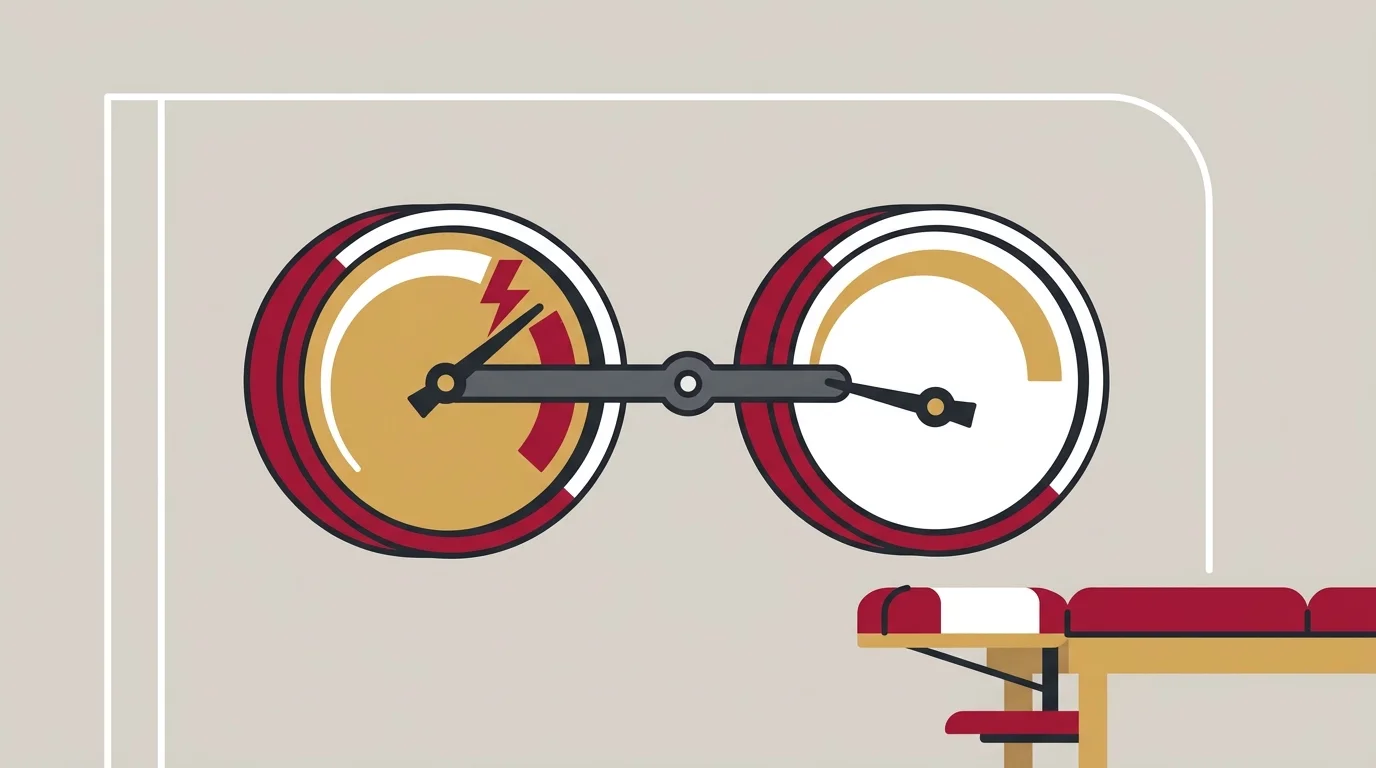
Tired but wired is a strange, modern kind of exhaustion. Your body is running on empty. Your mind flat-out refuses to switch off.
That paradox comes down to one dial with two settings. Fight or flight handles threats, and rest and digest handles recovery. Being stuck in the first mode is the entire problem, not a mood or a mindset failure. For a deeper look at what genuine recovery requires, see how nervous system care shapes sleep quality.
Why Chasing the Symptoms Never Quiets a Wired Nervous System
Here's what usually happens. People chase the symptoms and never touch the source. Fatigue gets treated like an energy problem, and anxiety gets treated like a mood.
But both roads dead-end at the same physical root. A body stuck on high alert throws off both symptoms from one mechanical origin, and chasing them separately leaves that origin untouched.
Why Treating Fatigue and Anxiety as Separate Problems Fails
Treating fatigue and anxiety as two unrelated complaints falls apart for one reason. It ignores the wiring they share. Both trace straight back to a nervous system locked in fight or flight by spinal tension.
A stimulant handles the fatigue. A calming trick handles the anxiety. Neither one reaches the structural interference jamming the dial on high alert, so both symptoms come right back.
Why Sleep Aids and Relaxation Apps Cannot Reach a Structural Cause
Sleep aids and relaxation apps work on the mind, never the spine. They can't reach a structural cause, because the disruption lives in how the spine talks to the brainstem.
True resolution isn't about forcing sleep with pills or meditation apps. It's about removing the interference that's blocking your body's natural ability to transition into a state of rest. Correcting the spinal misalignment behind that interference, as covered in Tension Blocks Melatonin Production Pathways, addresses the mechanism directly instead of masking it.
How the Fight or Flight Switch Gets Stuck in the On Position
The switch does not get stuck by accident. Specific points along the spine carry the interference that keeps the dial locked on high alert.
| Anatomical Zone | Structure Involved | System Affected | What Interference There Disrupts |
|---|---|---|---|
| Upper Cervical Junction | Base of skull where the spine meets the brainstem | Autonomic signaling between brain and body | Direct communication controlling rest cues and stress responses |
| Mid Cervical Spine | Neck vertebrae supporting head position and posture | Sympathetic nervous system activity | Postural signals that keep the body reading danger instead of safety |
| Upper Thoracic Spine | Vertebrae between the shoulder blades feeding nerve pathways to the heart and lungs | Cardiovascular and respiratory regulation | Rhythmic signals needed to slow heart rate and deepen breathing for rest |
| Craniovertebral Angle | Alignment relationship between the neck and shoulders shaped by posture | Sympathetic versus parasympathetic balance | The tipping point between a body that can downshift and one stuck on alert |
What Happens at the Base of the Skull
The base of the skull is where the spine meets the brainstem directly. Misalignment here disrupts signals traveling through that junction. Research published through the journal Nature found cervical spine alignment correction produced statistically significant changes in brainstem P14 potential amplitudes compared to placebo control (P < 0.001). That changes how the nervous system processes rest signals, not just how the neck feels.
This context matters most for younger adults carrying misalignment without obvious symptoms yet. The interference exists before pain shows up, quietly shaping how the brainstem responds to stress cues. For a mechanism-level look at reversing that pattern, see Activating Parasympathetic Sleep Transitions Naturally.
How Posture Quietly Recruits the Stress Response
Posture plays its own role in keeping the switch locked. Forward head posture reduces the angle between the neck and shoulders. Research published through PubMed Central found forward head posture with a reduced craniovertebral angle is associated with heightened sympathetic nervous system activity, as measured by an increased LF/HF ratio on heart rate variability analysis. A smaller angle means more sympathetic activity, not less. Poor posture is not just cosmetic. It is a mechanical driver of the same fight or flight lock.
How the Body Measures Its Own Stress State
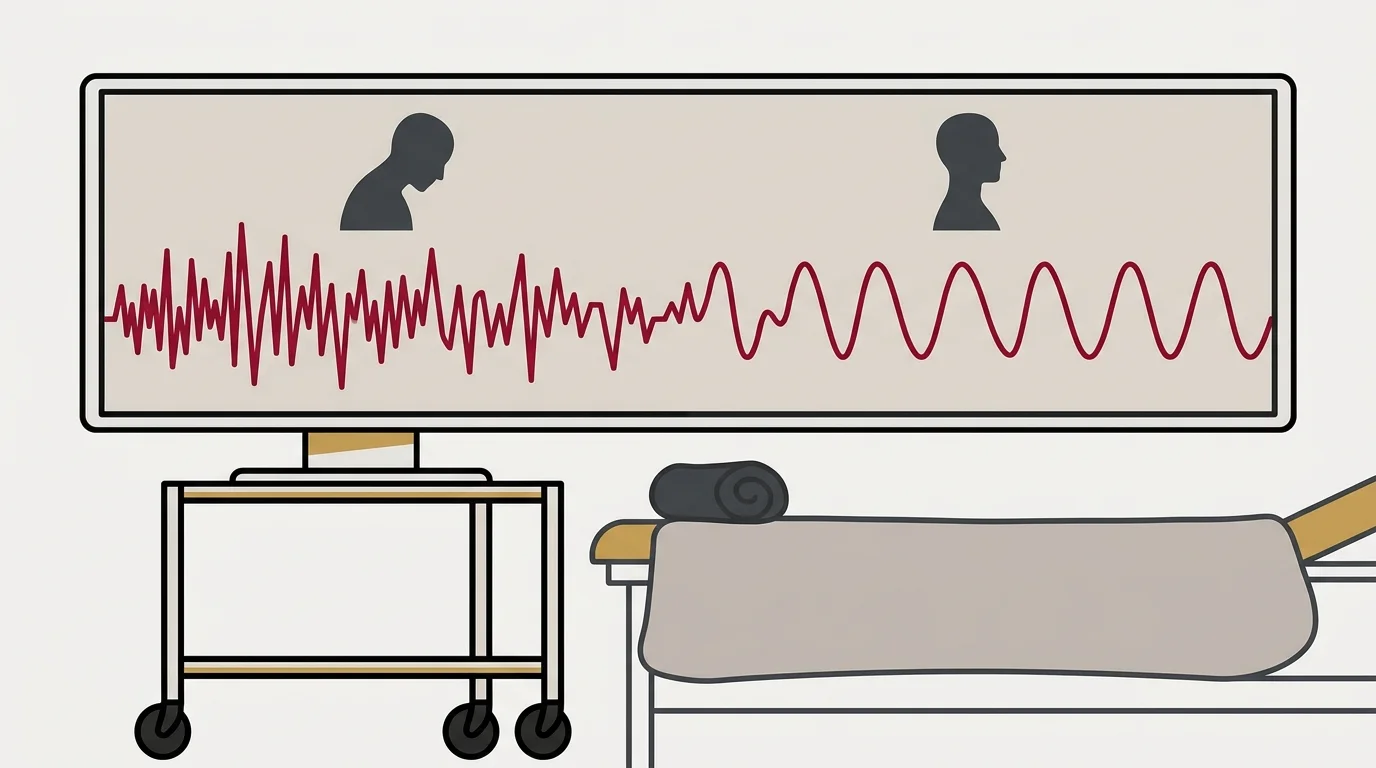
The nervous system leaves measurable evidence when it stays locked in fight or flight. Researchers can track it through heart rate patterns, posture angles, and sleep quality data.
| Measured Signal | What It Tracks | Pattern Under Sympathetic Dominance |
|---|---|---|
| Heart Rate Variability (LF/HF Ratio) | The balance between sympathetic and parasympathetic nervous system activity | Rises as the craniovertebral angle narrows, signaling heightened sympathetic activity |
| Craniovertebral Angle | Forward head posture and its structural effect on neck alignment | A reduced angle correlates with increased sympathetic nervous system activity |
| Sleep Disturbance Duration | How long disrupted sleep has persisted alongside neck pain | Association with neck pain strengthens as the duration of disturbance increases |
| Neck Pain Presence | Whether neck pain is reported alongside sleep quality complaints | Significantly associated with sleep disturbance rather than occurring independently |
Why the Vagus Nerve Is the Bridge Back to Rest
The vagus nerve carries the signal that tells the body it is safe to rest. Spinal tension along its pathway interrupts that signal before it reaches its target. Restoring clear communication there is central to the mechanism behind managing chronic pain and stress.
What Sleep Architecture Looks Like Under Chronic Sympathetic Load
Chronic sympathetic load reshapes sleep itself, not just the ability to fall asleep. Neck pain tied to spinal tension carries a documented relationship with disrupted sleep. According to BMC Musculoskeletal Disorders, sleep disturbance was significantly associated with neck pain, and the association was stronger as the duration of sleep disturbance increased. That relationship grows stronger the longer the disturbance continues. A brief bout of poor sleep behaves differently than a pattern stretching on for months.
What the Research Shows When Spinal Tension Is Addressed
Correcting the mechanism produces measurable change, not just symptom relief. Chronic low back pain patients tracked over four weeks showed shifts in sleep architecture itself. According to The journal Brain Sciences, patients reported significant improvements in light sleep stage and overall quality of life following four weeks of chiropractic care, including significant reductions in anxiety, depression, fatigue, and pain. That timeline matters. Real recalibration takes weeks, not a single visit.
| Population Studied | Duration | Measured Change | Outcome Category |
|---|---|---|---|
| Asymptomatic young adults with cervical misalignment | 10 weeks and 3 months | Statistically significant changes in brainstem P14 potential amplitudes versus placebo (P < 0.001) | Neurological signal correction |
| Chronic low back pain patients | Four weeks of chiropractic care | Significant improvements in light sleep stage and overall quality of life | Sleep architecture improvement |
| Chronic low back pain patients | Four weeks of chiropractic care | Significant reductions in anxiety, depression, fatigue, and pain | Symptom reduction across multiple domains |
How the Findings Compare Across Study Populations
The pattern holds across more than one measure. Sleep stage improved alongside drops in anxiety, depression, fatigue, and pain, all from correcting the same structural input. That spread of results points back to one dial with two settings. Fix the interference, and every downstream symptom tied to fight or flight starts to loosen at once. Neuropathy care protocols run 8 to 12 weeks.
What a Structural Assessment Actually Evaluates
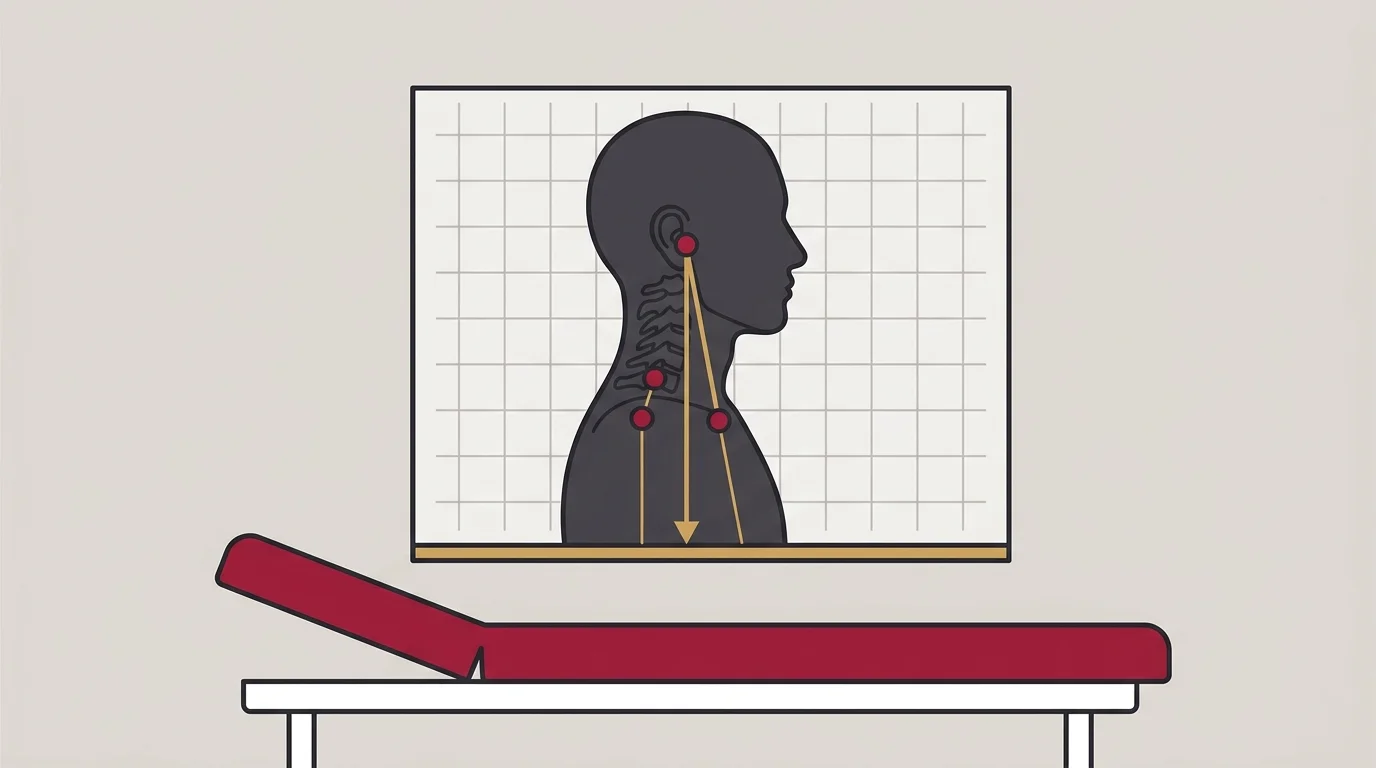
All that research points to the same practical question. How does a structural cause actually get identified in a given spine?
A structural assessment locates where the interference lives before any care begins.
| Assessment Step | What Is Measured | Why It Matters |
|---|---|---|
| Upper Cervical Alignment | The position of the top two vertebrae relative to the skull and brainstem junction | This junction carries the signals that tell the nervous system whether to stay alert or shift into rest |
| Craniovertebral Angle | The angle formed between the neck and shoulders, reflecting forward head posture | A reduced angle here tracks with heightened sympathetic activity, keeping the dial locked toward fight or flight |
| Weight Distribution | How load is carried across the feet, hips, and shoulders relative to the spine | Uneven distribution places ongoing mechanical strain on the same structures feeding brainstem interference |
| Spinal Curve | The natural curvature through the neck and upper back compared to expected alignment | Loss of normal curve changes how tension travels along the spine and toward the vagus nerve pathway |
Which Landmarks Get Measured First
The base of the skull and the upper neck get measured first. This is where the brainstem connection sits, and where the earlier findings on nervous system disruption concentrate.
Posture markers come next, especially the angle between the neck and shoulders. Weight distribution and spinal curve get checked alongside those two points.
How Findings Translate Into a Course of Care
Findings from that assessment shape a specific course of care, not a generic one. Sleep, mood, and energy already showed measurable movement together in the research above.
That same pattern is what a course of care aims to reproduce. Correcting the located misalignment is what lets the dial move again.
Frequently Asked Questions
The same handful of questions comes up every time this topic lands in the office. So here are the straight answers.
Can a misaligned neck really cause anxiety and insomnia?
Yes. The neck sits closest to the brainstem, and misalignment there disrupts the signals that tell the nervous system it is safe to power down. That disruption shows up as anxiety during the day and insomnia at night.
How is spinal tension different from just being stressed out from work?
Work stress fades once the workday ends. Spinal tension does not, because it is a mechanical block on the nervous system rather than an emotional reaction. That is why relaxing after work does not always bring relief.
How many chiropractic sessions does it take to start feeling less tired but wired?
Recalibration is a process, not a switch you flip. Real change builds over weeks of consistent care, never one visit.
What is the vagus nerve and what does it have to do with my sleep?
The vagus nerve carries the one signal that shifts the body into rest and digest. Spinal tension along its path can cut that signal off before it ever lands.
Are there specific adjustments for improving sleep and reducing stress?
A Chiropractic adjustment targeting the base of the skull and upper neck addresses the areas where brainstem communication concentrates. Posture and spinal curve get corrected alongside that focus, since both feed the same interference.
Besides chiropractic care, what can I do to improve my nervous system's ability to relax?
Sleep aids and relaxation apps work on the mind, never the structural cause. Clearing the spinal interference gives the nervous system a real shot at shifting into rest and digest on its own.
Where This Leaves the Tired but Wired Body
The dial was never broken. It was jammed by tension the body could not release on its own.
Spinal interference kept that switch stuck on high alert, not stress and not willpower. Correct the interference and the nervous system does what it was built to do again: it shifts into rest and digest, and genuine sleep comes back.
That correction is the entire path back, and it starts with locating where the interference actually lives in a given spine. Touch of Wellness Chiropractic in Morton offers that structural assessment as the first step toward getting back to being you, and the way to start is to talk it through with us.