
Photobiomodulation is a clinical process in which specific wavelengths of red or near-infrared light, delivered through cold laser therapy, penetrate tissue to stimulate activity inside the cell's mitochondria. This process is non-invasive and non-thermal, meaning it does not heat, cut, or otherwise damage tissue the way surgical lasers do. Instead, the light energy is absorbed by mitochondrial structures, triggering a photochemical reaction that increases the cell's production of adenosine triphosphate, the molecule cells use for energy. That increased energy output supports several downstream effects relevant to musculoskeletal recovery, including reduced local inflammation, improved circulation to the treated area, and accelerated repair of damaged soft tissue. Because the mechanism operates at the cellular level rather than the surface level, photobiomodulation is classified differently from surgical or thermal laser devices. The clinical science behind this therapy centers on restoring the cell's own capacity to generate energy and repair itself, rather than simply numbing or masking a symptom at the surface. This distinction matters because pain and inflammation are often signals that cellular function has been disrupted by stress or injury. Addressing that disruption directly, at the mitochondrial level, is a fundamentally different clinical target than temporarily interrupting a pain signal. Photobiomodulation is used across chiropractic and physical therapy settings as a non-pharmacological option for managing pain and inflammation tied to musculoskeletal conditions. Its clinical foundation rests on photochemistry, not heat or force, which is why it is distinguished from other laser-based or manual interventions in professional literature and regulatory classification.
Articles in this cluster
- Oxidase Without Generating Thermal Heat — How Cold Laser Therapy Stimulates Cytochrome C Oxidase Without Generating Thermal Heat
- Rapid Soft Tissue Injury Recovery — The Role of Mitochondrial ATP Upregulation in Rapid Soft Tissue Injury Recovery
- Cold Laser Therapy vs NSAIDs — Cold Laser Therapy vs NSAIDs: Why Cellular Photobiomodulation Outperforms Chemical Pain Blockers
- Than Consumer Red Light Panels — Why Clinical Cold Laser Wavelengths Penetrate Deeper Than Consumer Red Light Panels
- Which Is More Effective — Class 3B vs Class 4 Lasers for Chiropractic Photobiomodulation: Which Is More Effective
- Post-Adjustment Healing and Blood Flow — How Nitric Oxide Photodissociation Accelerates Post-Adjustment Healing and Blood Flow
- Chiropractic Adjustment Supports Recovery — Why Cold Laser Therapy Immediately Following a Chiropractic Adjustment Supports Recovery
- Acute Inflammation and Swelling Reduction — The Science of Photobiomodulation for Acute Inflammation and Swelling Reduction
- Laser Therapy vs Ice Packs — Cold Laser Therapy vs Ice Packs: Why Freezing Injured Tissue Delays Cellular Recovery
- Timelines and Sensations — What to Expect During Your First Cold Laser Therapy Session: Timelines and Sensations
- Post-Laser Movement Guidelines — Post-Laser Movement Guidelines: How to Utilize Increased ATP Production for Active Recovery
- Contraindications, Eye Protection — Is Cold Laser Therapy Safe? Contraindications, Eye Protection, and FDA Clearance Explained
What Photobiomodulation Actually Means at the Cellular Level
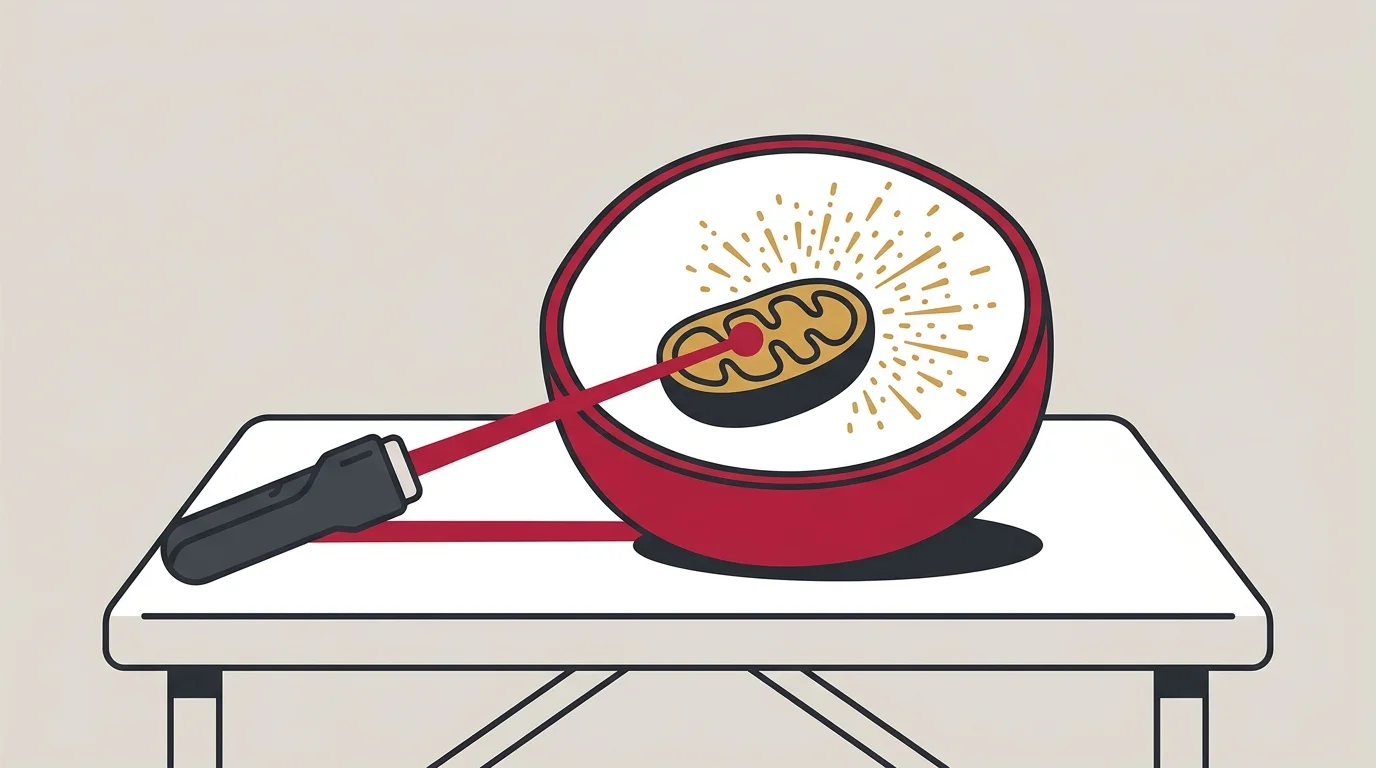
Think of a stressed or injured cell as an engine running low on fuel. The dashboard warning light in that analogy is pain and inflammation. Most pain management approaches focus on quieting that warning light.
Photobiomodulation goes after the fuel supply instead. It works inside the mitochondria, refueling the cell's own energy system rather than muting the signal it sends out. For anyone building out related knowledge about what chiropractic treatment involves, that cellular distinction is what separates real recovery from temporary relief.
Why Symptom-Only Framing Falls Short
Most marketing around cold laser therapy stops at the warning light. It gets described as a tool for pain relief, full stop, with no mention of what happens underneath that label.
And that framing treats every case like the last one. It skips the mitochondrial mechanism entirely, shrinking a cellular process down to a generic wellness buzzword.
The Problem With Marketing Cold Laser as Generic Pain Relief
So when the message is generic pain relief, the implied goal is just quieting the discomfort. That's a symptom-only target. It isn't a cellular one.
That's why the clinical science matters, for practitioners and patients both, when the search is for real non-pharmacological answers to pain and inflammation. Skip it, and the therapy gets flattened into one more gadget instead of a mechanism for cellular recovery.
How Regulatory Bodies Classify and Govern These Devices
Classification frameworks sort devices by risk and mechanism, not by how good the marketing sounds. A device's class decides what it's legally cleared to do and how tightly its use gets watched.
That distinction matters most when comparing devices that sound similar but function nothing alike. Two lasers can share a name in casual conversation while sitting in entirely different risk categories.
| Device Category | Regulatory Class | Typical Application | Tissue Interaction |
|---|---|---|---|
| Neurosurgical Laser | Class 3 | Cutting and cauterizing tissue during surgical procedures | Thermal — heats and destroys tissue to achieve a surgical effect |
| Cold Laser Therapy Device | Lower-risk photochemical class, separate from thermal surgical lasers | Stimulating mitochondrial activity for pain, inflammation, and soft tissue recovery | Photochemical — light energy is absorbed by the cell without heating or cutting tissue |
| Diagnostic Imaging Laser | Non-invasive imaging classification distinct from treatment lasers | Visualizing internal structures for assessment purposes only | None — no therapeutic tissue interaction, used for observation only |
Device Classifications and What They Signal
Take neurosurgical lasers. They cut and cauterize tissue with heat, which lands them in a higher-risk category. The FDA documents that neurosurgical lasers are classified as Class 3 devices by the FDA. That thermal mechanism is exactly why oversight for those devices runs stricter than it does for photochemical tools.
Cold laser devices sit outside that category entirely. They never generate the heat neurosurgical tools depend on. Their photochemical mechanism, the one refueling the cellular engine instead of cutting tissue, is what sends them down a different oversight path altogether.
Where Generic Application Protocols Break Down
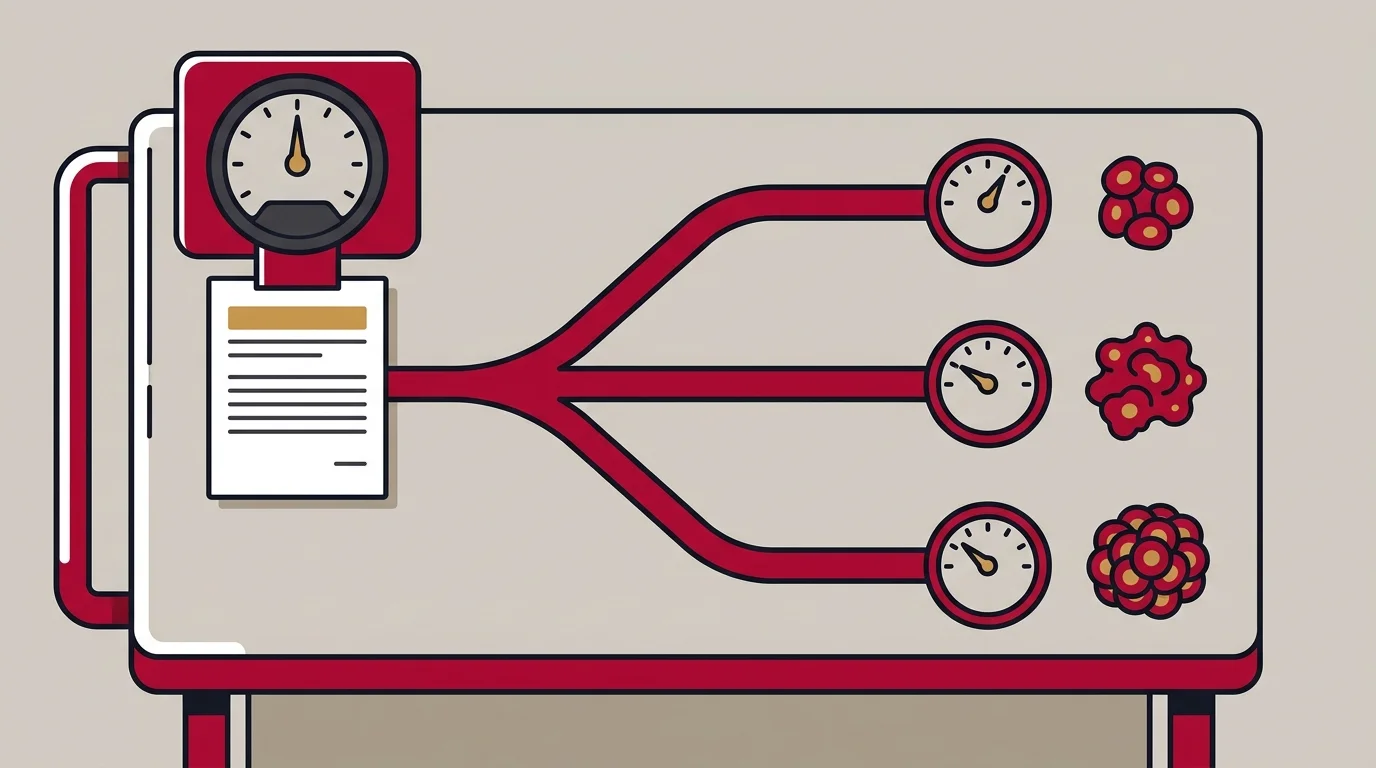
A generic application protocol treats every device and every condition as interchangeable. It applies one setting, one duration, and one target area regardless of tissue depth or the specific complaint underneath it.
And that ignores the mitochondrial mechanism entirely. Refueling a shallow, acute strain isn't the same job as refueling a deeper, chronic inflammatory pattern. Treat them the same, and the outcomes turn inconsistent, then the therapy takes the blame that belongs to the protocol.
What the Expert Consensus Guidelines Actually Cover
A generic protocol treats every diagnosis the same way. Structured clinical guidance does the exact opposite.
The World Association for Photobiomodulation Therapy has built expert consensus opinions for specific conditions rather than a single blanket setting. Two examples show what condition-specific guidance actually looks like in practice.
| Condition Category | Evidence Level | Guideline Body | Clinical Notes |
|---|---|---|---|
| Nerve-related facial and post-viral pain | Level of evidence II, condition-specific | World Association for Photobiomodulation Therapy | Guidance addresses idiopathic trigeminal neuralgia and post-herpetic neuralgia specifically, rather than treating all nerve pain as one category |
| Acute soft tissue strain | Emerging, protocol-dependent | Professional chiropractic and physical therapy literature | Shallow tissue depth generally calls for shorter energy delivery, distinct from the settings used for deeper or chronic patterns |
| Chronic musculoskeletal inflammation | Established but condition-specific rather than blanket | Combined chiropractic, physical therapy, and photobiomodulation research bodies | Deeper inflammatory patterns require sustained mitochondrial support, which is why a single generic setting cannot serve every case |
| Post-injury cellular recovery | Mechanism-supported through photochemistry research | World Association for Photobiomodulation Therapy and allied research bodies | Guidance centers on restoring ATP production at the mitochondrial level, not simply reducing surface-level discomfort |
Reading Wavelength and Dosage Data Without Getting Lost
Take idiopathic trigeminal neuralgia and post-herpetic neuralgia. Those are two conditions where that guidance already exists.
According to published research data, developed expert consensus opinions for idiopathic trigeminal neuralgia and post-herpetic neuralgia, both supported by level of evidence II. That level of evidence means the recommendation is not a guess pulled from a marketing sheet. It reflects a body of research strong enough to support a defined clinical approach for those two conditions specifically.
Matching Parameters to Tissue Depth and Condition
Consensus guidance like this exists because tissue depth and condition type change what the mitochondria actually need. A nerve condition and a soft tissue strain are not refueled the same way.
And that's the difference between a device setting and a clinical decision. One ignores the engine under the warning light. The other adjusts fuel delivery to match the specific damage being repaired.
What a Structured Course of Care Looks Like in Practice
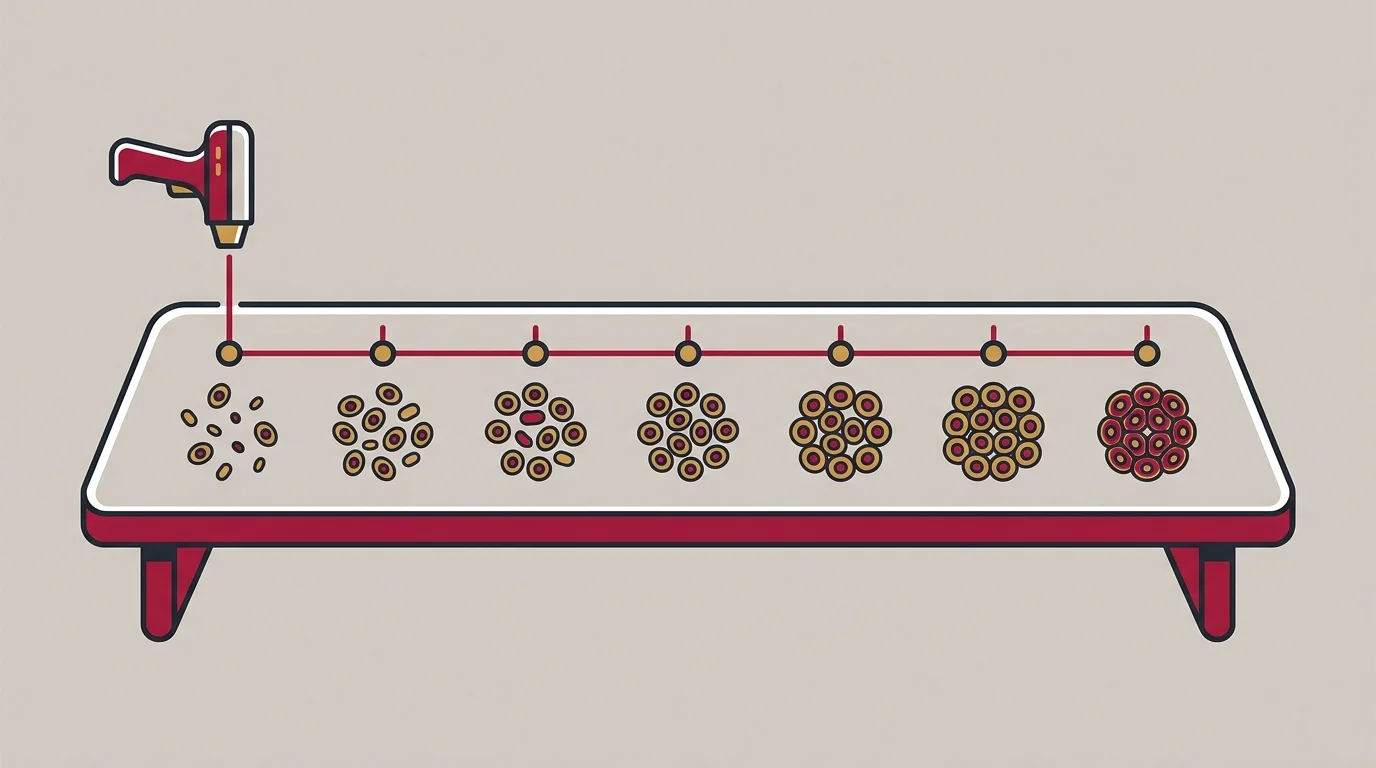
Consensus guidance only matters once it shapes an actual course of care. Structured photobiomodulation follows a sequence, not a single session treated as a fix-all.
Each visit builds on the last, refueling the same cellular engine repeatedly rather than chasing a fresh warning light every time.
| Phase | Session Focus | Cellular Activity Targeted |
|---|---|---|
| Early Phase | Managing acute inflammation and calming the initial injury response | Reducing local inflammatory activity and easing early cellular stress signals |
| Middle Phase | Reinforcing tissue repair as inflammation subsides | Supporting mitochondrial energy production tied to active tissue rebuilding |
| Later Phase | Consolidating structural recovery across the treated area | Sustaining the cell's own repair capacity so gains hold beyond the visit |
Sequencing Sessions Against the Cellular Repair Timeline
Sessions are spaced to match how mitochondria actually recover, not how a calendar happens to fall. Early visits target the acute inflammatory response, while later visits reinforce the tissue repair that photochemical activity already set in motion.
That sequencing is what separates a structured course of care from a single treatment aimed only at quieting discomfort.
Frequently Asked Questions
A handful of questions come up once the mitochondrial mechanism is on the table. Here are direct answers to the ones that matter most.
Is cold laser therapy the same as red light therapy?
No. Red light therapy is a broader consumer term, while cold laser therapy refers to a clinical device delivering specific therapeutic wavelengths at calibrated doses. The distinction is dosage and clinical control, not just the color of light.
How many photobiomodulation sessions are typically needed to see results?
Session counts follow the condition, not a fixed number for every case. Structured care builds one visit on the last, refueling the same cellular process again and again instead of stopping after a single session.
Is photobiomodulation therapy safe for all patients?
Photobiomodulation is non-invasive and non-thermal, which makes it a broadly tolerated option for many patients. Suitability still depends on the specific condition, which is why it fits into individualized care rather than a single blanket protocol.
Can cold laser therapy be combined with other chiropractic treatments?
Yes. Photobiomodulation is commonly paired with chiropractic adjustment and other conservative musculoskeletal care as part of a coordinated recovery plan. Combining approaches targets both the mechanical and cellular sides of the same injury.
What does a photobiomodulation treatment session actually feel like?
Most patients describe a mild warmth or no sensation at all during application. There is no heat, no cutting, and no discomfort tied to the treatment itself.
What is the difference between a Class 3 laser and other device classes?
Device class reflects risk level and mechanism, not effectiveness. Neurosurgical lasers sit in Class 3 because they cut and cauterize tissue through heat, while cold laser devices are classified separately because they work through photochemistry instead.
Where the Science Points Next
The cellular evidence lands in one place. A cell running low on fuel doesn't recover just because its warning light goes quiet.
It recovers when the fuel supply itself is restored. That is the clinical distinction between quieting a symptom and repairing the mechanism underneath it, and it is why Touch of Wellness Chiropractic treats photobiomodulation as a cellular recovery tool rather than a generic pain gadget.
Judge this therapy by anything softer than that mitochondrial standard, and you miss the whole point of the science. If you're ready to see what a structured, condition-specific course of photobiomodulation looks like for your own recovery, schedule a visit at Touch of Wellness Chiropractic.