
Parasympathetic sleep transitions are activated when the vagus nerve delivers an uninterrupted signal that shifts the body out of stress mode and into rest. The vagus nerve is the primary regulator of the parasympathetic nervous system, the branch of the nervous system responsible for slowing heart rate, lowering blood pressure, and permitting the body to power down for deep sleep. This process is not passive. Falling asleep depends on an active braking signal from the nervous system, not simply the absence of stimulation or the depletion of energy. When that signal is weak, delayed, or interrupted, the sympathetic nervous system, the body's stress response, continues to dominate even after the lights go off. This is the physiological basis for lying in bed exhausted yet mentally wired. The vagus nerve travels through the upper cervical spine on its path between the brainstem and the organs it regulates. Physical interference along this pathway, including misalignment in the upper neck, can disrupt the nerve's ability to transmit its calming signal efficiently. Restoring proper alignment in this region supports the vagus nerve's capacity to shift the body into parasympathetic dominance, the state required for entering and maintaining deep, restorative sleep. Activating this transition naturally means removing physical obstacles to the nerve's function rather than sedating the brain or suppressing symptoms. The nervous system must be permitted to complete this transition on its own terms. Sleep quality, in this framework, is directly tied to how efficiently the vagus nerve can communicate the shift from alertness to rest throughout the body's autonomic pathways.
What the Nervous System Is Actually Doing When You Try to Sleep
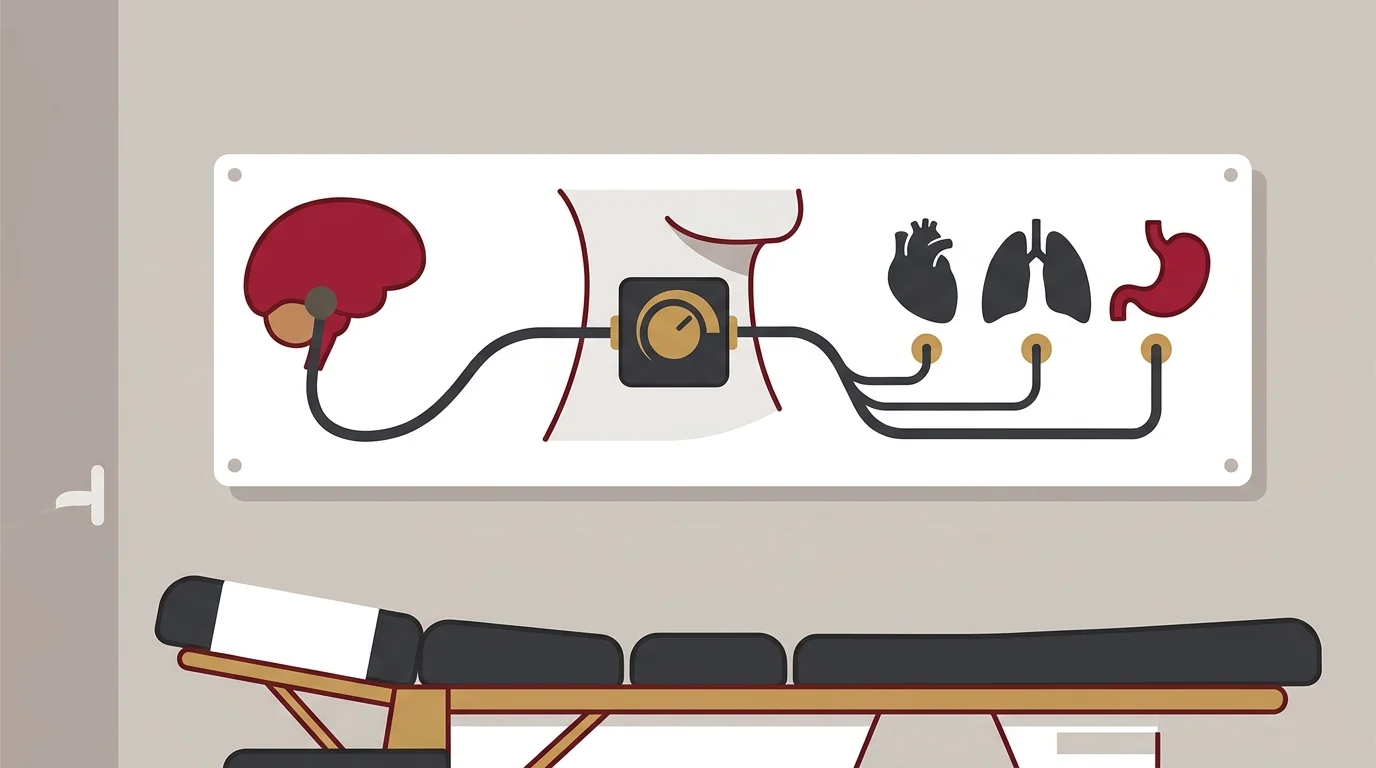
You're wiped out, but your mind won't quit. That's a familiar kind of frustration. It signals a disconnect between the body and the brain.
The transition into sleep is not just about being tired. It is an active physiological process managed by the autonomic nervous system, and it can stall even when fatigue is high.
Why Sleep Isn't Just About Being Tired
Tiredness means your energy is spent. Sleep readiness is a nervous system state. And the two don't always show up together.
Your body can be worn out while the nervous system still leans toward alertness. Until that balance tips, sleep stays out of reach no matter how tired you feel.
The Vagus Nerve's Role as the Body's Off-Switch
The vagus nerve functions as the primary brake pedal of the nervous system. It signals to the body that it is safe to power down and enter a state of rest and repair.
Without that braking signal reaching its targets, the body cannot fully disengage from alertness. Readers looking at how this transition unfolds across a full night can review why parasympathetic recovery drives deep sleep for a closer look at what restorative sleep architecture requires.
How Widespread the Tired But Wired Problem Really Is
This gap between exhaustion and rest is not rare. It shows up often enough to be measured across entire populations, not just described anecdotally by individuals lying awake at night.
| Sleep Disruption Marker | Population Studied | Reported Figure |
|---|---|---|
| Difficulty falling asleep | General adult population | Reported as a common complaint tied to persistent sympathetic activation |
| Difficulty maintaining sleep through the night | Adults surveyed on recent sleep patterns | Reported by a substantial share of respondents describing recurring mid-sleep waking |
| Waking feeling unrested despite adequate time in bed | Adults reporting chronic fatigue alongside sleep complaints | Described qualitatively as a mismatch between hours slept and recovery achieved |
Measuring the Sleep-Wake Divide
Nearly a third of German adults report the same fight to stay asleep once they drift off. Per this published analysis, 31.7% of German adults reported problems maintaining sleep in the past four weeks. That figure describes a population, not one person's isolated complaint.
A weak braking signal from the vagus nerve does not announce itself. It simply leaves the body stalled between fatigue and rest, night after night. Readers who recognize this pattern can start with Am I Tired But Wired to see how spinal tension can mimic chronic stress.
Why Sedation-First Approaches Miss the Underlying Signal
That kind of disconnect is widespread, yet the standard response rarely looks at the nervous system at all. Most sleep solutions target the brain directly, not the signal that should be reaching it.
| Approach | What It Targets | What It Leaves Unaddressed |
|---|---|---|
| Sedative Medication | Brain alertness signals | The upper cervical interference restricting the vagus nerve's braking signal |
| Sleep Hygiene Adjustments | Environmental and behavioral triggers before bed | Structural pressure along the vagus nerve's pathway through the neck |
| Chiropractic Adjustment for Upper Cervical Alignment | Physical interference disrupting vagus nerve transmission | Nothing suppressed; the nervous system is left free to complete its own transition |
The Chemical Shortcut Most Sleep Solutions Rely On
Many modern sleep solutions focus on sedating the brain, rather than addressing the reasons the body's fight or flight system remains active at night. Sedation quiets alertness without restoring the braking signal the vagus nerve was built to deliver. The result is unconsciousness, not the parasympathetic transition true rest requires.
What Gets Missed When the Nervous System Itself Is Ignored
When the nervous system itself is ignored, the sympathetic dominance driving the problem stays untouched. Physical tension along the vagus nerve's pathway can also affect the hormonal signals that prepare the body for sleep, a mechanism explored in Tension Blocks Melatonin Production Pathways. Forcing the body to shut down is not the same as permitting it to rest.
How Physical Interference Disrupts the Vagal Pathway
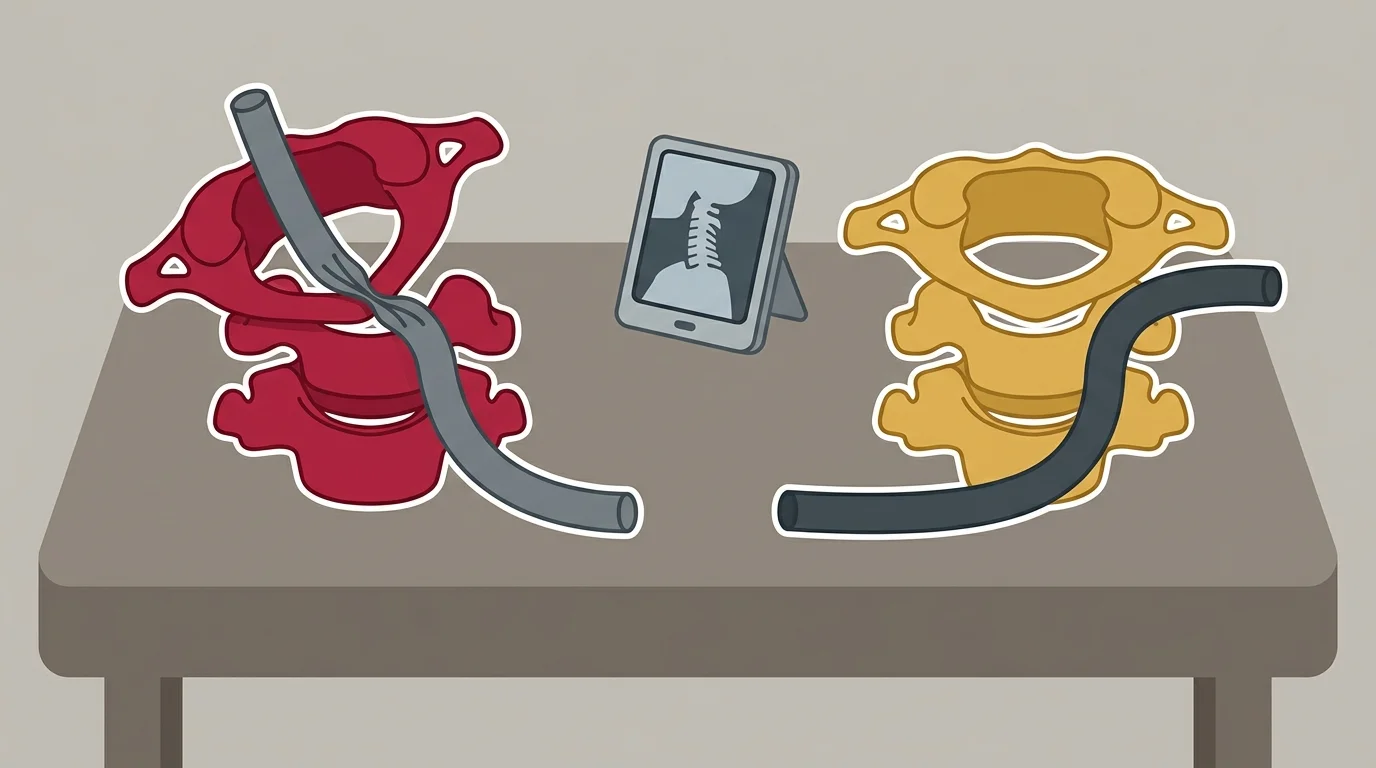
Physical interference does not politely announce itself before disrupting the vagal signal. It builds quietly at the exact point where the nerve is most exposed to structural stress.
The Upper Cervical Spine's Proximity to the Vagus Nerve
The vagus nerve exits the brainstem and runs straight through the upper cervical spine before it branches out. When this narrow region falls out of alignment, mechanical stress on the surrounding tissue can interfere with the signal long before it reaches the heart or lungs. Per PubMed Central, upper cervical spinal manipulation increased parasympathetic nervous system activity in healthy young volunteers, producing a statistically significant decrease in systolic blood pressure of approximately 11 mmHg. A drop of 11 points in systolic blood pressure among healthy volunteers marks a real, measurable shift toward parasympathetic dominance after correction in this exact spot.
What Happens When Sympathetic Dominance Persists at Night
When sympathetic dominance carries into the night, the body stays braced instead of braking. To see how correcting this pathway supports the shift, take a look at Chiropractic Care. The body was never built to sedate itself into rest. It's built to be permitted into it, brake pedal engaged.
What the Research Shows About Restoring Parasympathetic Function
One study on its own only proves so much. The real question is whether different research methods, run separately, all land on the same answer about vagal function and rest.
| Study Focus | Population | Measured Outcome |
|---|---|---|
| Slow wave sleep and brain connectivity | Older adults at-risk of dementia | Higher vagal tone during slow wave sleep is associated with stronger functional connectivity in brain regions of the central autonomic network |
| Transcutaneous vagus nerve stimulation for primary insomnia | Adults with primary insomnia receiving auricular concha stimulation | 73% effective rate compared to a 27% effective rate in the control group receiving stimulation to the periauricular area |
| Upper cervical spinal correction and blood pressure | Healthy normotensive volunteers | Statistically significant decrease in systolic blood pressure of approximately 11 mmHg after upper cervical correction |
Vagal Tone and Deep Sleep Brain Connectivity
Deep sleep is where vagal tone shows its clearest signature in the brain. The journal Brain Communications reports higher vagal tone during slow wave sleep is associated with stronger functional connectivity in brain regions of the central autonomic network, but this association does not occur during other sleep stages or waking periods. The connection matters most for older adults at-risk of dementia, where preserving these autonomic pathways carries added weight. A stronger braking signal during slow wave sleep does not just calm the body. It appears tied to the same brain regions that regulate stress and emotion overnight.
Stimulation Studies and the Vagus Nerve's Response
Direct stimulation research tests the vagus nerve's response under controlled conditions, rather than inferring it from brain activity alone. The journal Brain Sciences reports transcutaneous vagus nerve stimulation applied to the auricular concha area achieved a 73% effective rate compared to a 27% effective rate in the control group receiving stimulation to the periauricular area. For transcutaneous vagus nerve stimulation targeting primary insomnia, applying stimulation to the auricular concha area achieved a 73% effective rate, compared to 27% in the control group receiving stimulation to the periauricular area. That gap shows the vagus nerve responds to precise input, not general stimulation.
Upper Cervical Adjustment and Autonomic Shift
Correcting alignment in the upper cervical spine produces a similar shift toward parasympathetic dominance, already established through the measurable blood pressure change discussed earlier. The pattern holds across separate research methods. When physical interference along the vagal pathway is addressed, the nervous system moves toward rest rather than staying braced against it.
Where Vagal Activation Techniques Fit Into a Nightly Routine
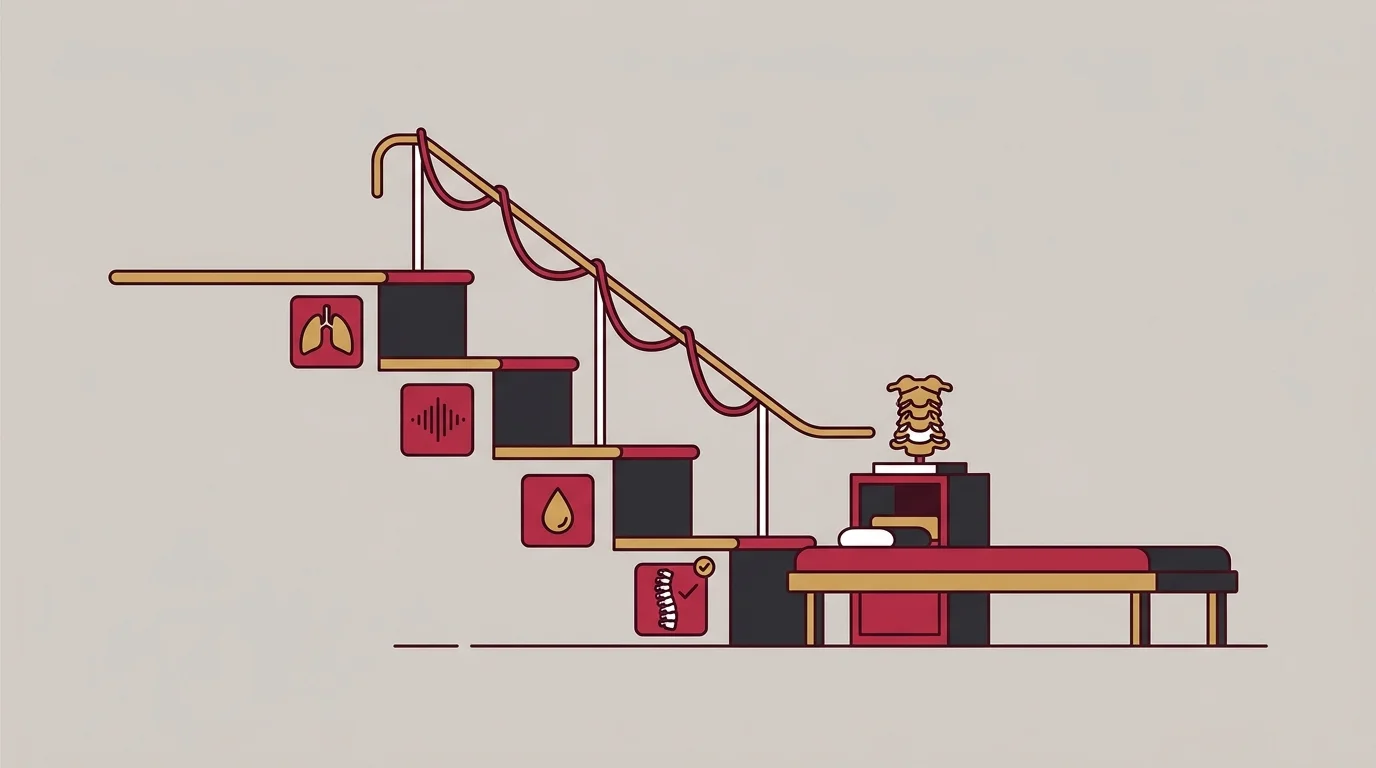
These mechanisms point toward a practical sequence, not just a set of isolated findings. Vagal activation is not a single action performed at bedtime. It functions best as a series of steps, timed to match the nervous system's own transition out of alertness.
| Step | Action | Purpose |
|---|---|---|
| Structural Assessment | Evaluate the upper cervical spine for physical interference along the vagal pathway | Confirms the braking signal has a clear route before other techniques are introduced |
| Early Wind-Down | Begin slow breathing, humming, or gentle movement well before attempting sleep | Cues the vagus nerve while the nervous system still has room to shift away from alertness |
| Environmental Quieting | Dim lighting and reduce sensory input in the hour before bed | Removes competing sympathetic triggers that can override the parasympathetic signal |
| Final Settling | Allow the body to rest without forcing sleep to occur on command | Lets the vagus nerve complete the transition into parasympathetic dominance on its own terms |
Sequencing Vagal Activation Before Sleep Onset
Vagal activation techniques work best earlier in the wind-down window, well before the body attempts to fall asleep. Slow breathing, humming, or gentle movement can begin cueing the braking signal while the nervous system still has room to shift. Introducing these steps too close to lights-out asks the vagus nerve to reverse sympathetic dominance all at once, rather than gradually.
Where Structural Assessment Fits in the Sequence
Structural assessment belongs earlier in that sequence, not as a last resort after other techniques fail. If the pathway through the upper cervical spine is physically obstructed, breathing exercises and relaxation cues are asking the brake pedal to engage through a compromised line. Assessing that pathway first determines whether the nervous system can even receive the signal these techniques are meant to deliver.
Frequently Asked Questions
A few questions come up again and again about vagal function and sleep. Here are direct answers to the ones that matter most.
Why can't I sleep even when I'm exhausted?
Exhaustion means depleted energy. It doesn't mean your nervous system is ready for rest. The body can be worn out while the autonomic nervous system still favors alertness over the parasympathetic shift sleep needs.
Can neck problems or poor posture actually affect my sleep quality?
Yes. The vagus nerve passes directly through the upper cervical spine, and misalignment there can place mechanical stress on the nerve. That interference can weaken the braking signal the body needs to power down.
What are some simple ways to activate my vagus nerve before bed?
Slow breathing, humming, and gentle movement can start cueing the vagus nerve early in the wind-down window. They work best well before lights-out, not as a last-minute push to force sleep.
How is a chiropractic approach to sleep different from taking sleep aids?
Sleep aids sedate the brain without restoring the braking signal underneath. A chiropractic approach clears the physical interference along the vagal pathway instead, permitting the nervous system's own slide into rest.
How long does it take to see sleep improvements from addressing vagus nerve function?
Timelines vary by the degree of structural interference present in the upper cervical spine. Improvement tends to follow as the vagal pathway clears and parasympathetic function is restored.
Is it possible for my nervous system to be stuck in stress mode?
Yes. A nervous system can stay locked in sympathetic dominance long after the original stressor is gone. Without a clear braking signal from the vagus nerve, the body keeps bracing instead of resting.
Getting Back to Being You
The vagus nerve was never meant to be forced into action. It was built to apply the brake once physical interference along its pathway is cleared.
Restoring alignment in the upper cervical spine does not sedate the nervous system into submission. It permits the brake pedal to engage the way it was designed to, shifting the body from bracing to resting.
That is what getting back to being you actually means. Not forcing sleep, but removing what stands between the nervous system and its own natural transition into rest. Schedule a chiropractic evaluation with Touch of Wellness Chiropractic to find out whether upper cervical alignment is interfering with your vagus nerve's braking signal.