
Photobiomodulation reduces acute inflammation and swelling by sending specific wavelengths of light into injured tissue, where it stimulates the mitochondria to produce more cellular energy for repair. That energy boost speeds up the body's own healing cascade instead of suppressing it. Acute inflammation is the body's necessary first response to injury. It brings immune cells and repair signals to the damaged area, much like a construction crew arriving at a job site. Photobiomodulation, also known as low-level light therapy, works alongside this response rather than interrupting it. At the cellular level, the mitochondria absorb these specific light wavelengths and increase their production of adenosine triphosphate, the molecule cells rely on for energy. With that added energy, cells complete their repair work faster, clearing damaged tissue and rebuilding healthy structures. The therapy also shifts the balance of the signaling molecules that drive inflammation. This helps the body move from the initial inflammatory phase into resolution and repair more efficiently. That is a fundamental departure from methods that use cold temperatures to numb pain and constrict blood vessels. Constricting blood flow slows the delivery of oxygen, nutrients, and immune cells the injury needs to begin healing. Photobiomodulation does the opposite. It increases circulation to the area and supports the transport of the cellular building blocks tissue recovery requires. The result is a mechanism-driven approach that respects the body's repair timeline instead of cutting it short. Devices used for this therapy are regulated as medical devices, reflecting an established framework for their clinical use. It represents a distinct model of recovery, one that gives cells the resources to finish their work rather than shutting the response down.
What Photobiomodulation Actually Does Inside Injured Tissue
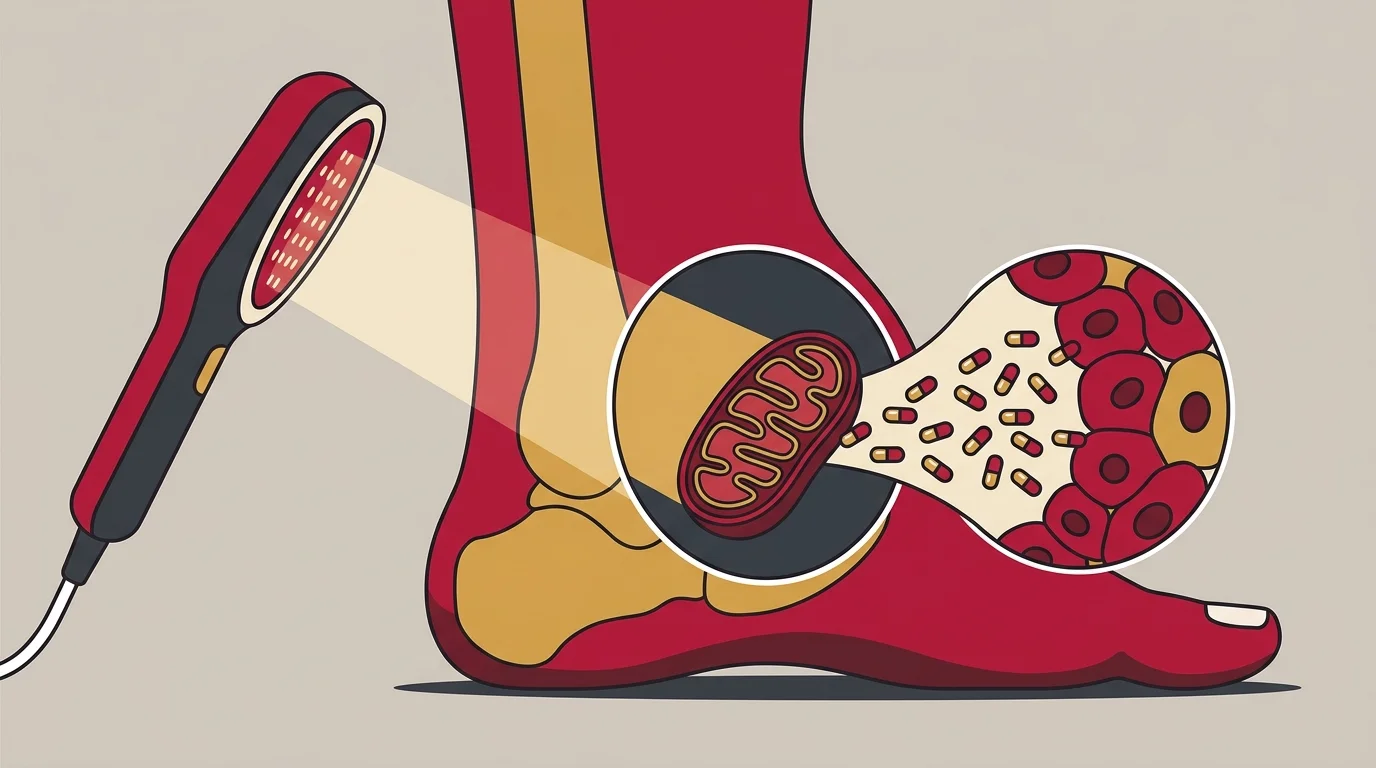
Picture acute inflammation as a construction crew showing up on site. The swelling, heat, and redness? That's the crew unloading equipment, not a fire alarm you need to silence.
That therapeutic use of specific light wavelengths to stimulate cells is called photobiomodulation, or low-level light therapy. To understand what it does inside the tissue, start with the crew itself, right down at the cellular level.
The Mitochondrial Trigger Behind the Light
Every cell carries mitochondria, the structures that generate its energy. Certain wavelengths of light penetrate tissue and get absorbed directly by components inside those mitochondria.
And that absorption sets off a cascade. It shifts mitochondrial activity into a higher gear, priming the cell to produce more usable energy for repair work that's already underway.
From Light to Energy: The ATP Connection
The energy mitochondria produce is adenosine triphosphate, or ATP. ATP is the fuel every cellular repair task runs on, from clearing debris to rebuilding tissue structures. Learn more in how cold laser therapy fits recovery care, which covers the clinical science behind this process in depth.
More ATP means the construction crew works faster with better resources, not louder alarms. Photobiomodulation is a paradigm shift, working with the body's natural healing mechanisms rather than against them.
Why Icing an Acute Injury Fights the Body's Own Repair Signals
For decades, the standard move for a fresh injury has been simple: grab an ice pack to bring down swelling and numb the pain. It's repeated so often it feels like settled science.
But the construction crew analogy exposes the problem. Icing doesn't invite the crew to work faster. It sends them home.
The Mechanism Behind Suppressed Healing
However, emerging scientific understanding reveals that inflammation is a necessary part of the healing process, and suppressing it can delay recovery. Cold temperatures constrict blood vessels, cutting off the very supply lines the repair crew depends on.
Less circulation means fewer immune cells, less oxygen, and fewer nutrients reaching the injury. Set that suppression next to a Chiropractic Adjustment Supports Recovery, and you can see how differently an energized approach behaves compared to a frozen one.
The Cytokine Shift: How Light Rebalances the Inflammatory Signal
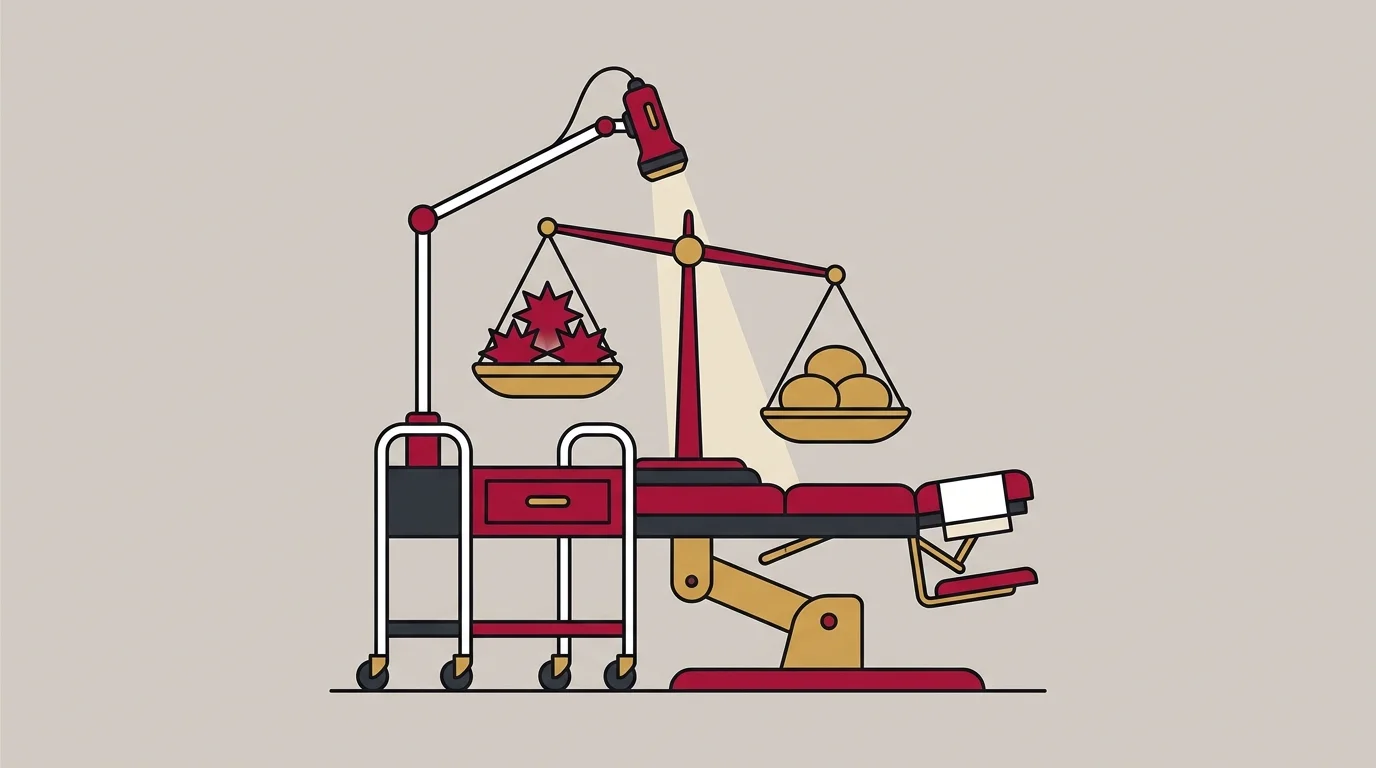
Not every construction crew moves at the same pace. Some sites see the work stall, with the crew stuck in the demolition phase far longer than the job requires.
That stall is what a body experiences when cytokines stay imbalanced. Pro-inflammatory signals keep sending crews to the site while too few anti-inflammatory signals arrive to call the job complete.
Photobiomodulation appears to shift that balance directly. Research on rat lung tissue exposed to formaldehyde inhalation found that low-level laser therapy reduced the pro-inflammatory cytokines IL-6 and TNF-α, while raising the anti-inflammatory cytokine IL-10. PLOS documents that low-level laser therapy reduced pro-inflammatory cytokines IL-6 and TNF-α while increasing anti-inflammatory IL-10 in lung tissue after formaldehyde exposure — a finding from animal research. That shift is the signal telling the crew the job is nearing completion, not the alarm calling more workers to the site. Laser Therapy vs Ice Packs walks through why interrupting that signal with cold temperatures works against this process.
| Cytokine or Marker | Direction of Change | Tissue Context |
|---|---|---|
| IL-6 | Reduced | Lung tissue after formaldehyde exposure |
| TNF-α | Reduced | Lung tissue after formaldehyde exposure |
| IL-10 | Increased | Lung tissue after formaldehyde exposure |
| Superoxide anion | Reduced | Cutaneous healing in animal models |
| Catalase, superoxide dismutase, glutathione peroxidase | Increased | Cutaneous healing in animal models |
Where Oxidative Stress Fits Into the Swelling Picture
Swelling isn't only a traffic problem of fluid and cells. Oxidative stress, the buildup of unstable molecules that can damage healthy tissue, plays a role in how long that swelling lingers.
A review of nine animal studies on cutaneous healing found that low-level light therapy consistently reduced oxidative stress markers like superoxide anion, while increasing antioxidant enzymes including catalase, superoxide dismutase, and glutathione peroxidase. Work available through published academic reference indicates low-level light therapy significantly reduced oxidative stress markers such as superoxide anion and increased antioxidant enzyme defenses including catalase, superoxide dismutase, and glutathione peroxidase. Fewer unstable molecules means less collateral damage at the site. That gives the repair crew a cleaner site to finish its work.
How Clearance Happens: Vasodilation and Lymphatic Flow
Cellular energy only solves half the puzzle. The other half is mechanical: that excess fluid still has to physically get out of the injury site.
Photobiomodulation opens that door through vasodilation, the widening of blood vessels near the treated tissue. Wider vessels move more blood, hauling oxygen and repair materials in and waste out.
That increased flow also supports lymphatic drainage, the body's system for clearing excess fluid and cellular debris. Better drainage means swelling recedes as the byproducts of the construction work get hauled off site instead of piling up.
Think back to the crew. Energized workers who can also get the debris trucked away finish faster than a crew working around it.
| Device Category | Regulatory Coverage | Example Combination Element |
|---|---|---|
| Standalone PBM Device | Class II medical device | Used alone for Cold Laser Therapy applications |
| Combination PBM Device | Class II medical device, PBM component covered | Paired with electrostimulation |
| Combination PBM Device | Class II medical device, PBM component covered | Paired with mechanical massage |
| Combination PBM Device | Class II medical device, PBM component covered | Paired with ultrasound |
Regulatory Standing: What FDA Classification Covers
Devices that deliver Cold Laser Therapy sit in an established regulatory category, not some unproven gadget class. Class II medical device status applies to these devices, and to the PBM component when it's combined with other modalities.
The FDA documents that FDA guidance applies to class II PBM medical devices and to PBM components of combination devices such as those with electrostimulation, mechanical massage, or ultrasound. So that classification covers devices used on their own and devices that pair PBM with electrostimulation, mechanical massage, or ultrasound. To round out the picture, the science behind adjustment timing is worth a look, as detailed in the practice's chiropractic treatment approach.
Sequencing Light Therapy Around a Chiropractic Adjustment
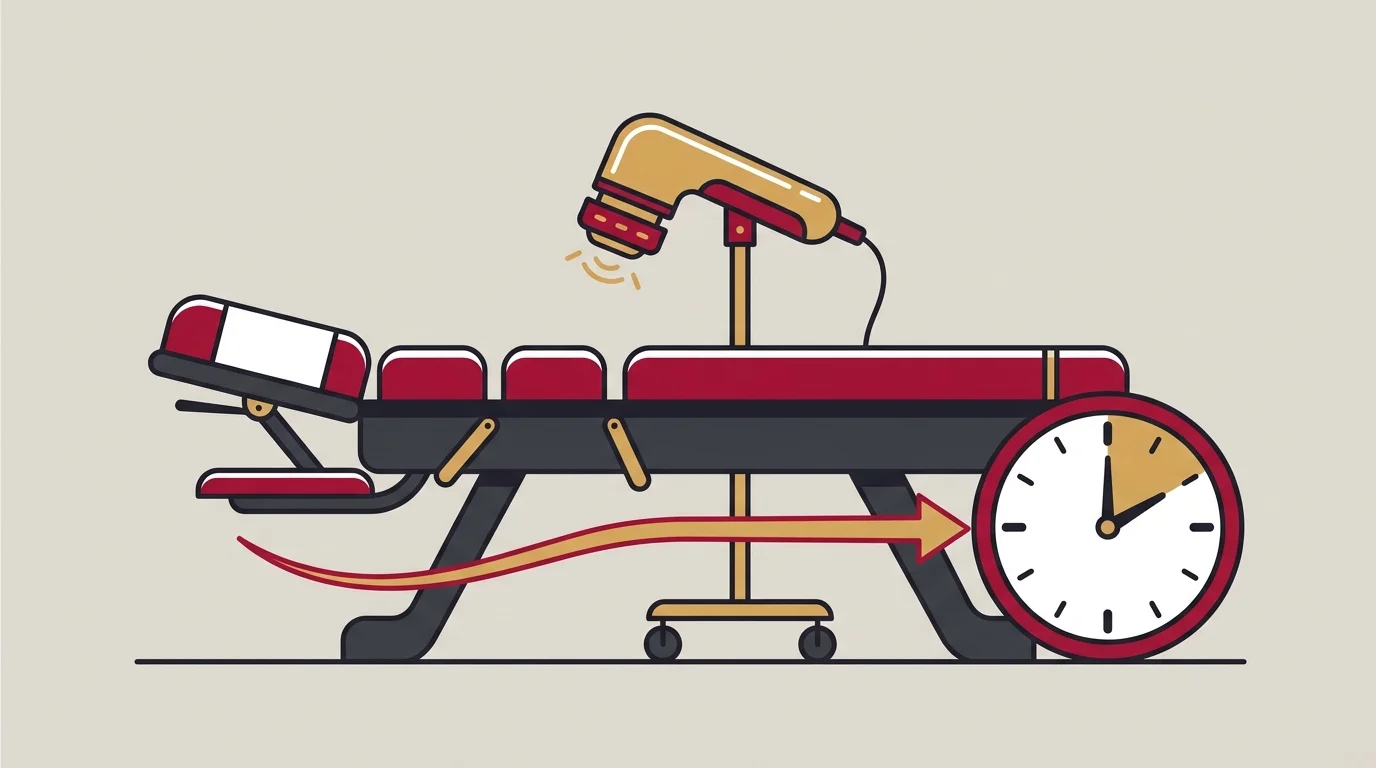
The mechanism only earns its keep in how it's applied. Sequencing decides whether the crew gets its energy boost at the right moment, or burns it standing around.
Cold Laser Therapy works best woven right into the visit, not tacked on as an afterthought.
| Recovery Stage | Session Focus | Typical Timing |
|---|---|---|
| Acute Phase | High-frequency sessions supporting early cellular energy needs | Immediately following the injury, sessions spaced close together |
| Adjustment Day | Cold Laser Therapy applied after the Chiropractic Adjustment | Same visit, directly following joint work |
| Tapering Phase | Reduced session frequency as swelling resolves | As inflammation visibly recedes |
| Maintenance Phase | Spaced sessions supporting tissue remodeling | Later in recovery, spaced further apart |
Dosing Windows and Session Cadence for Acute Cases
Acute cases respond best to sessions placed close together early on, tapering as swelling resolves. That front-loaded cadence matches the crew's own workload, heaviest right after the injury and lighter as repair finishes.
Spacing sessions too far apart in the early days lets the site cool between visits, losing the momentum the therapy is meant to build.
Sequencing Within a Single Visit
Inside a single visit, the light therapy usually follows the Chiropractic Adjustment. The adjustment handles joint alignment and mechanical restriction first.
Then the Cold Laser Therapy delivers cellular energy into tissue that's already been prepared, handing the crew fresh resources exactly when the site is most ready to use them.
Frequently Asked Questions
A handful of questions come up in nearly every conversation about this therapy. Here are the straight answers.
How does photobiomodulation actually reduce swelling at the cellular level?
Light energy gets absorbed by mitochondria inside injured cells. That absorption boosts ATP production, giving the repair crew the fuel to shift from swelling into resolution faster.
Is photobiomodulation therapy painful or uncomfortable?
No. Most patients feel nothing more than mild warmth, if anything at all. There's no discomfort during a Cold Laser Therapy application.
How many PBM sessions are typically needed to see a reduction in acute inflammation?
Acute injuries typically respond best to sessions placed close together early on, then tapering as swelling resolves. Your Doctor of Chiropractic adjusts that cadence to how the tissue is responding.
Why is photobiomodulation a better choice than ice for a new injury?
Ice clamps down on blood vessels and cuts off the supply lines the repair crew needs. Photobiomodulation does the opposite, raising circulation and cellular energy to support the healing cascade instead of stalling it.
Can photobiomodulation be used on the same day as a chiropractic adjustment?
Yes. Cold Laser Therapy generally follows the Chiropractic Adjustment inside the same visit. The adjustment clears mechanical restriction first, then the light delivers cellular energy into tissue that's already prepared.
What are the known side effects or contraindications for photobiomodulation therapy?
Reported side effects are minimal, and most patients experience none. Devices used for this therapy fall under an established medical device classification, reflecting a well-documented regulatory framework beyond just PBM alone.
How long do the anti-inflammatory effects of a PBM session last?
The cellular shift toward resolution builds across a course of visits rather than fading after one session. That's why front-loaded scheduling early in an injury matters so much.
Where This Leaves the Injured Tissue
The construction crew never needed silencing. It needed energy, open circulation, and a clear site to finish the job.
Icing sends the crew home early, and the work stalls. Photobiomodulation paired with a Chiropractic Adjustment keeps that crew fueled, working, and moving toward the finish.
That's the real difference between suppressing a response and supporting one. When an injury needs its repair crew working at full strength, talk it through with us.