
Systems Biology vs. Anatomical-Only Chiropractic Models
A systems biology chiropractic model treats your body as a network. The central nervous system — your brain and spinal cord that control all bodily functions — runs the whole system. When that control center's disrupted, everything downstream breaks.
An anatomical-only model treats pain like a broken part. Fix the hinge. Oil the joint. Move on.
The difference isn't subtle.
It's the difference between asking "where does it hurt?" and asking "why is the system breaking down?"
Systems biology is the computational and mathematical analysis and modeling of complex biological systems. In chiropractic care, that means looking at how your nervous system coordinates with your musculoskeletal framework, your stress response, your circulation, your inflammation pathways. When one part of that network fails, the whole system compensates. That compensation shows up as pain, numbness, headaches, digestive issues — symptoms that seem unrelated but stem from the same root cause.
An anatomical-only model looks at your spine like a mechanic looks at an engine. Adjust the misaligned vertebra. Run the protocol. Next patient.
If the pain comes back, run the same protocol again.
That's not care. That's a template.
A systems biology model starts with a different question: what's driving the nervous system dysfunction that's producing this symptom? The answer isn't always where the pain is. A patient with chronic low-back pain might have a cervical restriction affecting nerve signaling. A patient with migraines might have a sympathetic nervous system that's been running in overdrive for months. You can't fix that by adjusting the same three vertebrae every visit.
More than 20% of U.S. adults live with chronic pain, and 7.4% experience high-impact chronic pain that interferes with work and daily life. Most of them have tried something. And it helped — for a week. Then the pain came back and they were right where they started.
That's what happens when you treat the symptom and leave the cause alone.
Last Updated: May 16, 2026
- • What Is an Anatomical-Only Chiropractic Model?
- • What Is a Systems Biology Chiropractic Model?
- • How a Systems Biology Model Treats Chronic Pain Differently
- • The Real-World Implications
-
• Frequently Asked Questions
- • What is the primary difference between a systems biology and an anatomical-only chiropractic model?
- • Why can an anatomical model fail to provide long-term relief for chronic pain?
- • How does a systems biology approach change what happens during a chiropractic assessment?
- • If my previous chiropractor only adjusted my spine, was that an anatomical-only approach?
- • Does a systems biology approach mean more appointments or a longer care plan?
- • Why the Model You Choose Matters
What Is an Anatomical-Only Chiropractic Model?
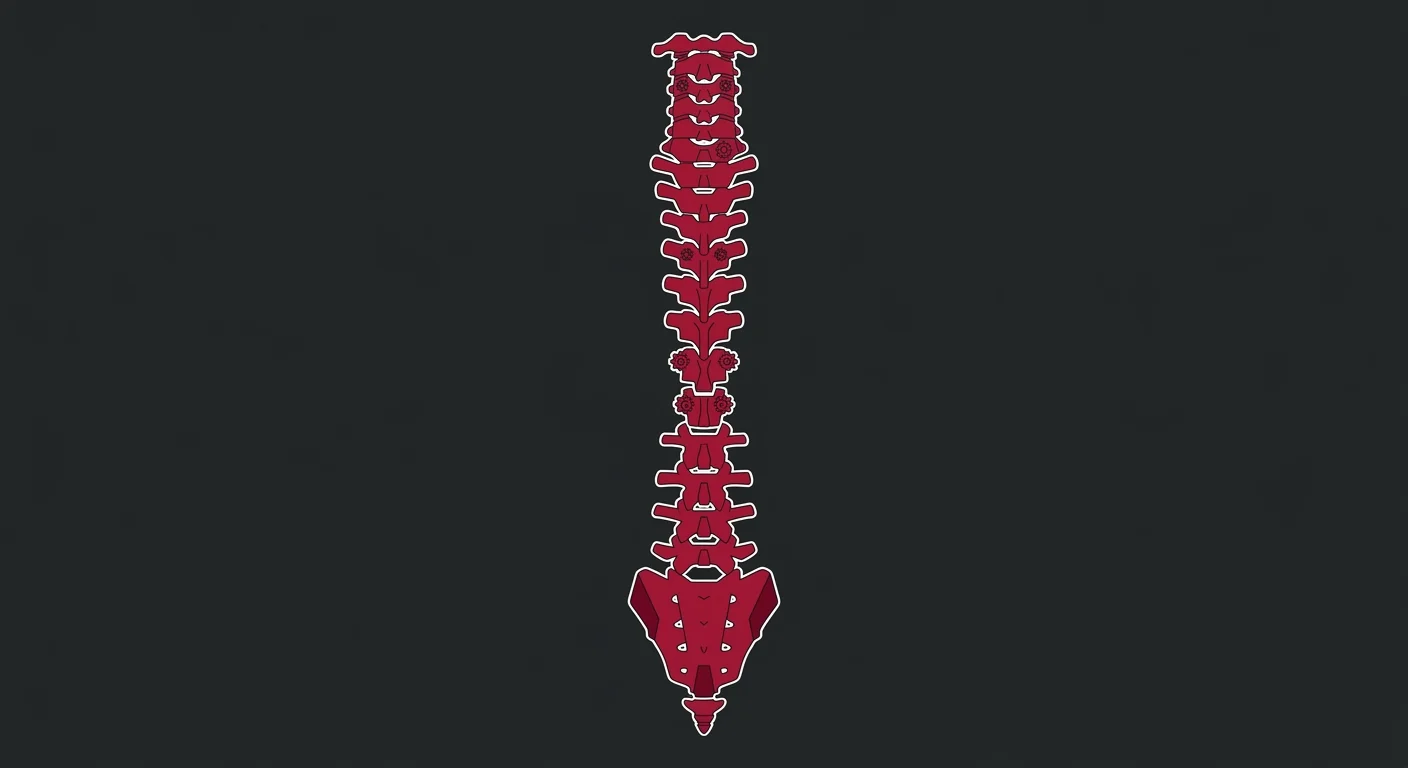
An anatomical-only chiropractic model treats pain like a broken part.
You've got a misaligned vertebra — we adjust it. Nerve impingement at L4 — we decompress it. Muscle tension in your upper trap — we release it.
It's a mechanical fix for a mechanical problem.
The protocol doesn't change. Walk in with sciatica, walk in with headaches, walk in with neck pain — you're getting the same adjustment sequence.
When it doesn't work after three visits, you get the same sequence again.
That's not assessment. That's routine.
That's the anatomical-only model. Symptom-chasing disguised as clinical care.
The Cookie-Cutter Protocol Problem
The cookie-cutter protocol isn't bad because it's inefficient.
It's bad because it ignores the patient sitting in front of you.
Most chiropractic offices run a volume-first model. Book 40 patients a day. Spend 7 minutes per visit. Run the same protocol on every patient because there's no time to reassess.
The entire system's optimized for reimbursement, not clinical outcomes.
And it works — for about a week. You leave feeling better. The pain's gone.
Then it comes back, exactly where it was before, and you're told to book another round of adjustments.
That's not treatment failure. That's a business model that depends on recurring symptoms.
Why the Same Adjustment Sequence Fails
The human body isn't a hinge that needs oil.
It's a network where one disruption cascades through the entire system.
Adjusting the same three vertebrae on every patient assumes pain location equals dysfunction location.
It doesn't.
A restriction in your cervical spine can produce numbness in your hand. A sympathetic nervous system stuck in overdrive can produce tension headaches that feel like they live in your skull but stem from stress signals running through your brainstem.
The pain's real. The location's lying.
The anatomical-only model can't see that. It's looking at parts, not patterns.
And when the adjustment doesn't hold — when the pain returns in three days — the model has no answer except to repeat the same protocol and hope for a different result.
What the Research Actually Says
There are more than 70,000 licensed chiropractors in the United States. Most are doing good work inside the constraints of the reimbursement system they're stuck in.
That system rewards volume, not depth.
The research on chiropractic care consistently shows effectiveness for acute pain — short-term mechanical issues that respond to adjustment.
But chronic pain's a different animal.
It's not a mechanical problem. It's a systems problem. And you can't fix a systems problem with a mechanical-only protocol.
| Anatomical-Only Model | What It Looks For | What It Misses |
|---|---|---|
| Pain-location assessment | Which vertebra is misaligned at the site of pain | What's driving the nervous system dysfunction producing the symptom |
| Standardized adjustment protocol | The specific segment to adjust based on diagnosis code | How the patient's system is compensating — stress response, inflammation pathways, nerve signaling patterns |
| Single-visit resolution expectation | Immediate mechanical correction at the adjustment site | The systemic factors that will pull the misalignment back if left unaddressed |
| Symptom recurrence response | Repeat the same protocol until symptoms reduce | Why the adjustment didn't hold — is there a cervical restriction affecting nerve signaling, a sympathetic overload, or a postural compensation pattern? |
| Clinical decision-making | Diagnosis code determines treatment sequence | What the patient actually reports — pain triggers, duration, what makes it better or worse, what's already been tried |
What Is a Systems Biology Chiropractic Model?
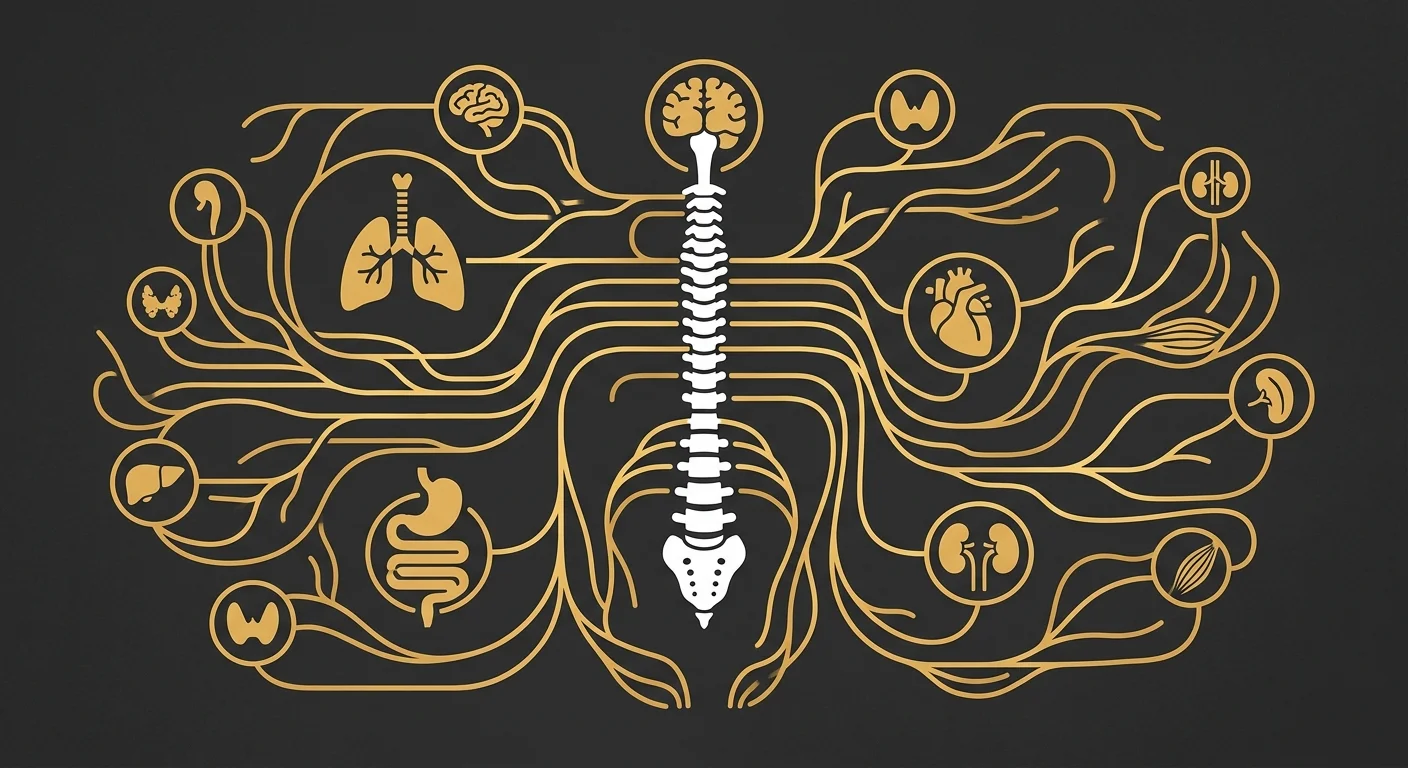
A systems biology chiropractic model treats your body as a network. Nervous system function drives every other system.
It's not a marketing term.
It's a clinical framework grounded in whole-organism biological science — the same lens used to study ecosystems, immune responses, and metabolic pathways.
Systems biology is the computational and mathematical analysis and modeling of complex biological systems. It contrasts with reductionist biology — the 'one problem, one solution' mindset.
Reductionist thinking isolates variables. Systems biology looks at how those variables interact.
In chiropractic care, that means evaluating how the central nervous system — the brain and spinal cord that control all bodily functions — coordinates with your musculoskeletal framework, your stress response, your circulation, and your inflammation pathways.
One part fails. The whole network compensates.
That compensation shows up as pain, numbness, headaches, digestive issues — symptoms that seem unrelated but stem from the same root cause.
A systems biology model doesn't ask 'where does it hurt?'
It asks 'why is the system breaking down?'
That's the question that leads to resolution instead of temporary relief.
The Live Operating System Discovery
Dr. Karen Hannah's Clinical Response Lens is the clinical foundation of this practice's systems biology model.
That lens wasn't built in a lecture hall. It was confirmed in a clinical intervention that proved, in real time, that the nervous system acts as a live operating system — not a passive structure to be mechanically corrected.
A veterinarian friend called Dr. Hannah about a 12-week-old kitten — paralyzed, surrendered for euthanasia. She adjusted that kitten every day for four days. By the end of the week, it was running down her office hallway.
That result forced a reckoning with every assumption the anatomical-only model rests on. The kitten didn't recover because a joint was realigned. It recovered because structural interference was removed and the nervous system — a live, self-regulating operating system — did what it's designed to do: coordinate healing across every system at once.
It's the opposite of 'adjust the hinge and move on.'
That systems-level clinical insight changes what you're looking for during an assessment.
You're not hunting for the misaligned vertebra. You're mapping the nervous system dysfunction that's producing the symptom.
That's a different clinical question. And it leads to a different care plan.
What Changes in the Assessment
A systems biology chiropractic assessment doesn't start with a protocol. It starts with what you actually report.
Not what the diagnosis code says you should have. Not what the last ten patients with low-back pain reported.
What you're experiencing right now.
Dr. Hannah asks about sleep, stress, work posture, and past injuries — not because those are 'lifestyle factors' to check off a form, but because they're all inputs into the nervous system.
A patient sleeping four hours a night for six months isn't dealing with a mechanical spine problem. They're dealing with a nervous system running in overdrive that can't regulate inflammation anymore.
That shows up as pain. But the pain isn't the problem.
The dysregulated nervous system is.
The assessment maps the pattern. Where's the restriction? What's the compensation? What's the stress load? How long has this been building?
Then the care plan is built from that clinical picture — not from a template.
And when something isn't producing results after a few visits, the plan changes. Not repeats. Changes.
That's what systems biology looks like in practice.
| Systems Biology Model | What It Assesses | Clinical Outcome |
|---|---|---|
| Nervous System Function | How the central nervous system coordinates with musculoskeletal structure, stress response, circulation, and inflammation pathways | Identifies the root-cause dysfunction driving the symptom — not just the symptom location |
| System-Wide Compensation Patterns | How the body adapts when one part of the network is disrupted — where restrictions cascade through connected systems | Resolves the compensation pattern instead of chasing the symptom it produces |
| Stress Load and Nervous System Regulation | Sleep quality, chronic stress, work posture, past injuries — inputs that affect how the nervous system regulates inflammation and pain response | Addresses the dysregulated nervous system, not just the mechanical restriction |
| Individualized Care Plan Built from Assessment | What you actually report — mapped to your clinical picture, not a diagnosis code or protocol template | Plan changes when something isn't working after a few visits — reassessment, not repetition |
| Cross-Species Clinical Lens | Whole-organism biological systems analysis — how systems interact, adapt, and fail under stress, confirmed through cross-species clinical training and AVCA-certified animal chiropractic practice | Produces long-term resolution by restoring nervous system function, not temporary relief by adjusting the same vertebrae |
How a Systems Biology Model Treats Chronic Pain Differently
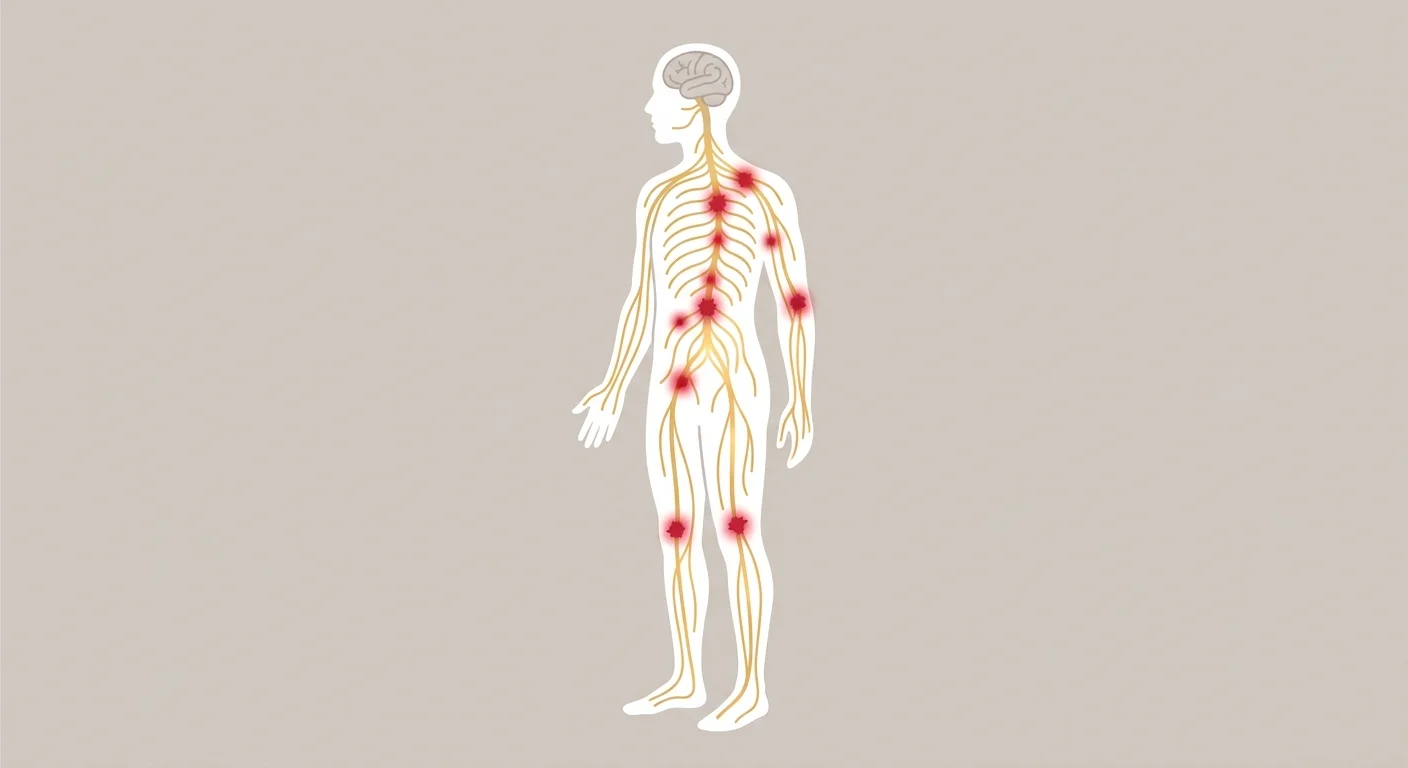
The assessment drives the care plan. When the assessment is systems-focused, the treatment stops chasing symptoms and starts addressing the control center.
A systems biology model treats chronic pain by identifying and resolving the nervous system function disruption that's driving the symptom. That's a fundamentally different clinical goal than reducing pain at the site where you feel it.
Pain is the signal.
The nervous system dysfunction is the source.
Here's what happens. Your nervous system gets overloaded — stress, poor sleep, repetitive strain, old injuries piling up. It stops regulating inflammation the way it should. Muscle tension doesn't release. Pain signals fire when they shouldn't.
That's allostatic load: the cumulative wear and tear on multiple systems from chronic stress. It hits your cardiovascular system, metabolic system, and immune system — all at once.
The pain you're feeling in your low back isn't a low-back problem.
It's a system-wide breakdown showing up in the weakest link.
Targeting Nervous System Dysfunction
So what does a systems biology model actually do first? It maps the nervous system dysfunction. Where's the restriction in spinal mobility? What's compensating? How's your stress load pushing your sympathetic nervous system into overdrive? How long has this been building?
The care plan targets the dysfunction — not the symptom. Spinal adjustments go where they'll restore nerve signaling, not where you feel the pain. Advanced therapy modalities like shockwave therapy come in when soft tissue dysfunction is feeding the nervous system overload.
Every few visits, we reassess. Is this working? Are we seeing the change we expected?
If not, the plan changes.
When it's not working? The plan changes.
That's the systems biology difference. You're not locked into a 12-visit protocol someone handed you on day one. The care plan adapts to your clinical picture — because your nervous system is adapting in real time.
Why This Approach Works When Protocols Don't
Protocols fail because they can't see the patient. They're built for efficiency, not outcomes.
A protocol assumes every patient with low-back pain has the same root cause. But one patient's low-back pain is compensating for a cervical restriction. Another's is a sympathetic nervous system stuck in overdrive from six months of terrible sleep. Another's is a sacroiliac joint dysfunction that's been there for ten years and finally hit the breaking point.
The protocol can't tell the difference.
A systems biology model works because it's built around what you actually report — not what a protocol says you should have. It identifies the nervous system dysfunction driving your symptom. Addresses that dysfunction with targeted care. Reassesses as your system responds.
That's individualized care. Not a buzzword. A clinical standard.
More than 20% of U.S. adults live with chronic pain. Most of them have been through a protocol already.
What they need isn't another round of the same adjustments. They need someone willing to ask a different question.
| Patient Presentation | Anatomical-Only Response | Systems Biology Response |
|---|---|---|
| Recurring low-back pain after multiple rounds of adjustments | Re-adjust the same spinal segment using the same protocol. If pain returns, schedule more visits. | Map the nervous system dysfunction driving the compensation pattern. Identify stress load, sleep quality, and sympathetic overload. Adjust the control center, not just the pain site. |
| Chronic neck tension with tension headaches and poor sleep | Adjust the cervical spine for mechanical restriction. Address headaches as a separate symptom. | Recognize the nervous system can't regulate tension when it's stuck in fight-or-flight. Address the cervical restriction and the stress response together. Sleep improves when the system recalibrates. |
| Nerve pain radiating down the leg with no imaging findings | Assume disc herniation or sciatica. Adjust the lumbar spine. Refer for imaging if symptoms persist. | Look for systemic nervous system dysregulation. Nerve pain without structural damage is a signaling problem, not a compression problem. Target the spinal segments controlling nerve signaling to that region. |
| Pain that moves — starts in the shoulder, shifts to the hip, then the knee | Treat each location as a separate mechanical issue. Adjust wherever the pain is today. | See the pattern for what it is: a nervous system that can't regulate inflammation or muscle tone. The pain moves because the system is breaking down, not because multiple joints failed simultaneously. |
| Patient reports improvement for two days, then pain returns at the same intensity | Continue the protocol. Attribute the relapse to patient activity or 'flare-up.' Schedule another visit. | Stop. Reassess. If the adjustment isn't holding, the nervous system isn't integrating the change. Investigate why — stress load, poor sleep, compensation pattern — and modify the care plan before repeating what didn't work. |
The Real-World Implications
Here's what that looks like in practice.
When a systems biology model runs the office, the patient experience changes. So does the timeline.
You're not walked through a standard protocol.
You're assessed as a complete system.
And that changes what happens in the first visit, what the care plan targets, and how long you're actually in treatment.
What Happens in Your First Visit
A systems biology first visit at Touch of Wellness Chiropractic doesn't start with an adjustment. It starts with mapping your nervous system function.
Dr. Hannah asks about sleep quality, stress load, work posture, past injuries, and how long the symptom's been building. Those aren't 'lifestyle factors' she's documenting for the chart. They're inputs into the central nervous system, which manages everything from movement to thoughts.
Those inputs don't live in separate boxes. They all feed the same control center.
The physical assessment isn't just palpating where it hurts. It's identifying where the restriction is, what the compensation pattern looks like, and where the nervous system dysfunction is originating.
A patient who's got right-sided low-back pain might have a cervical restriction that's been there for years.
The low-back pain is the compensation.
You can adjust the low back every week for six months and it'll keep coming back — because you're not treating the source.
That's what whole-organism clinical health means.
You're not targeting the symptom. You're restoring function to the system breaking down.
And that requires understanding what the system's doing — not what a protocol assumes it should do.
What This Means for Your Care Plan
An individualized care plan built from a systems biology model doesn't look like a 12-week, twice-a-week template.
It's built from your assessment.
If your nervous system dysfunction is driven by chronic stress and poor sleep, the plan addresses the spinal restrictions keeping your sympathetic nervous system stuck in overdrive — because allostatic load affects multiple systems, including your cardiovascular, metabolic, and immune function. You can't fix that with a standard protocol.
The care plan adapts. If something's not producing results after a few visits, Dr. Hannah stops and reassesses.
Not repeats the same adjustment sequence and hopes for a different outcome.
That's the root-cause approach in action — you're treating the dysfunction, not the diagnosis code.
And when you're done? You're done.
The goal of every care plan here is to restore nervous system function to the point where you don't need maintenance appointments.
Most practices don't operate that way. But it's the only way a systems biology model can operate — because the clinical goal isn't keeping you coming back. It's getting your system working right again.
| First Visit Component | What Gets Assessed | Why It Matters |
|---|---|---|
| Health History Intake | Sleep quality, stress load, work posture, past injuries, symptom timeline | These aren't lifestyle questions — they're nervous system inputs. A patient sleeping four hours a night isn't dealing with a mechanical problem. They're dealing with a dysregulated nervous system that can't manage inflammation anymore. |
| Spinal Mobility Assessment | Where the restriction is, what the compensation pattern looks like, where the dysfunction originates | The pain site isn't always the problem site. A cervical restriction can drive low-back pain for years. If you only adjust where it hurts, you're chasing the compensation — not treating the source. |
| Nervous System Function Mapping | Sympathetic dominance, stress response patterns, inflammation regulation capacity | Your nervous system controls how your body manages pain, tension, and repair. When it's stuck in overdrive, no amount of symptom-chasing will produce lasting relief. You've got to address the control center. |
| Clinical Picture Synthesis | How long the dysfunction's been building, what's maintaining it, what the realistic resolution timeline looks like | This is where a systems biology model separates from a protocol. The care plan isn't written before the assessment — it's written from the assessment. That's individualized care as a clinical standard, not a marketing term. |
| Treatment Target Identification | The specific spinal segments and soft tissue structures driving the nervous system dysfunction | Adjustments aren't placed where the pain is. They're placed where they'll restore nerve signaling and reset the system. That's a fundamentally different clinical goal — and it's why temporary relief becomes permanent resolution. |
Frequently Asked Questions
These are the questions you ask when you're trying to figure out whether your chiropractor's treating symptoms or fixing systems.
If you've been handed the same adjustment sequence every visit, or if your care plan arrived before your assessment finished, these answers matter.
What is the primary difference between a systems biology and an anatomical-only chiropractic model?
An anatomical-only model treats the site of pain. A systems biology model treats the nervous system dysfunction causing the pain.
The anatomical approach asks: where does it hurt? Then adjusts that area. The systems biology approach asks: what's disrupting the central nervous system that controls all bodily functions? Then restores function to that system.
One's a symptom fix. The other's root-cause resolution. They're not two versions of the same thing.
Why can an anatomical model fail to provide long-term relief for chronic pain?
Because it wasn't designed to.
An anatomical model assumes the pain's the problem. So it treats the pain. You feel better for a few days. Then the dysfunction driving the pain reasserts itself. You're back where you started.
That's not a failure of chiropractic. That's a failure of the model. If the nervous system dysfunction's still there — the stress overload, the compensation pattern, the allostatic load affecting multiple systems — the symptom comes back. Every time.
Treat the symptom and leave the cause alone.
How does a systems biology approach change what happens during a chiropractic assessment?
The assessment stops looking at where it hurts. Starts mapping how your nervous system's functioning.
Dr. Hannah asks about sleep, stress, work posture, past injuries, how long the current symptom's been building. Not as background information. As inputs into the nervous system that manages everything from movement to thoughts.
The physical exam identifies where the restriction is. What the compensation pattern looks like. Where the dysfunction's originating. A systems biology assessment doesn't assume your low-back pain's a low-back problem. It asks what your low back's compensating for.
If my previous chiropractor only adjusted my spine, was that an anatomical-only approach?
If the same adjustment sequence was used on every patient — yes. That's anatomical thinking.
If the care plan was handed to you before the full assessment was done — yes. That's a protocol, not a systems biology model.
If your chiropractor never asked about sleep, stress load, or how long the symptom's been building — that's a red flag. Those aren't lifestyle factors. They're clinical data points that tell you how the nervous system's responding to chronic stress.
Does a systems biology approach mean more appointments or a longer care plan?
Usually shorter.
When you're treating the root cause instead of chasing the symptom, the timeline compresses. You're not coming back indefinitely because the dysfunction was never addressed. You're coming back until the nervous system's functioning right again. Then you're done.
A systems biology model isn't built to keep you in the rotation. It's built to restore function and get you out. That's the clinical goal. If a provider's recommending a 12-month plan before they've finished the assessment, they're not operating from a systems biology framework.
Why the Model You Choose Matters
The model your chiropractor uses determines the question they ask.
An anatomical-only model asks: where does it hurt?
A systems biology model asks: what's causing the nervous system dysfunction that's showing up as this symptom?
Those aren't two ways of saying the same thing. They're two completely different clinical frameworks.
And when the anatomical model is all your provider knows — or all you keep choosing — you get temporary relief.
The adjustment feels good for a few days. Then the pain comes back.
So you go back. And you keep going back.
Not because chiropractic doesn't work. Because the model you're using wasn't built to find the source. It was built to quiet the symptom.
Treat the symptom and leave the cause alone.
That's not a treatment failure. That's a framework failure.
Your body isn't a collection of fixed parts.
It's a network.
When one system's disrupted, the whole network compensates. When you restore function to the control center — the nervous system — the entire network recalibrates.
That's the systems biology model. That's Dr. Hannah's clinical response lens.
Read more About Dr. Karen Hannah, DC to understand how her cross-species clinical training shaped this approach.
And that's the difference between chasing pain for years and actually resolving the thing driving it.
Your nervous system's been compensating for months. Maybe years. Every fix helped for a week, then the pain came back and you were right where you started. That's not bad luck. That's what happens when you treat the symptom and leave the cause alone. A systems biology assessment at Touch of Wellness Chiropractic maps nervous system function first. Not a template. Not the same sequence they ran on the last ten people. Find out what's actually driving it — or keep chasing the same symptom every few weeks. Your call.