
Why a systems biology approach is more effective for chronic pain.
Chronic pain isn't a broken part. It's a disrupted system.
A systems biology approach treats pain as a failure in your body's interconnected biological networks—not as a single site that needs adjustment. Systems biology analyzes complex interactions within biological systems, considering genes, proteins, and metabolic pathways together rather than in isolation. For the 20.9% of U.S. adults—an estimated 51.6 million people—living with chronic pain lasting or recurring for more than three months, that distinction is the difference between temporary relief and actual resolution.
Here's the thing.
Chronic pain isn't just acute pain that stuck around. The transition from acute to chronic pain involves neuroplastic changes in the brain and spinal cord. It becomes a central nervous system condition—not a tissue problem you can chase with a protocol. That's why treatments aimed at the injury site fail over and over. A systems biology approach views pain not as a single pathway but as a disruption of a complex pain network involving immunological, endocrinological, and neurological systems. Neuroinflammation—a critical factor in the development and maintenance of chronic pain—links your immune system directly to your nervous system, creating feedback loops that keep pain alive long after the tissue healed.
So the question changes.
It's not "Where does it hurt?"
It's "What system-level dysfunction is driving this?"
Dr. Karen Hannah's Clinical Response Lens gives her a clinical framework most chiropractors don't have. Forged through cross-species clinical training and a career-defining intervention — adjusting a paralyzed kitten back to full function in four days — she doesn't treat chronic pain as an anatomical puzzle. She treats it as a systems failure. That means identifying the root-cause disruptions in the nervous system that perpetuate pain—not chasing symptoms that keep coming back.
Last Updated: May 16, 2026
- • Why Most Chronic Pain Treatments Target the Wrong Thing
- • What a Systems Biology Framework Actually Does
- • How Dr. Karen Hannah's Clinical Response Lens Changes the Clinical Approach
- • What Systems-Level Assessment Looks Like in Practice
- • When Systems Biology Matters Most
-
• Frequently Asked Questions
- • How is a systems biology approach different from standard treatments for chronic pain?
- • What does a 'whole system' assessment for chronic pain actually involve?
- • Can a systems biology approach help when physical therapy or medication have failed?
- • Isn't focusing on the specific site of pain the most direct way to get relief?
- • How does the nervous system fit into a systems biology model for pain?
- • The System Runs Everything
Why Most Chronic Pain Treatments Target the Wrong Thing
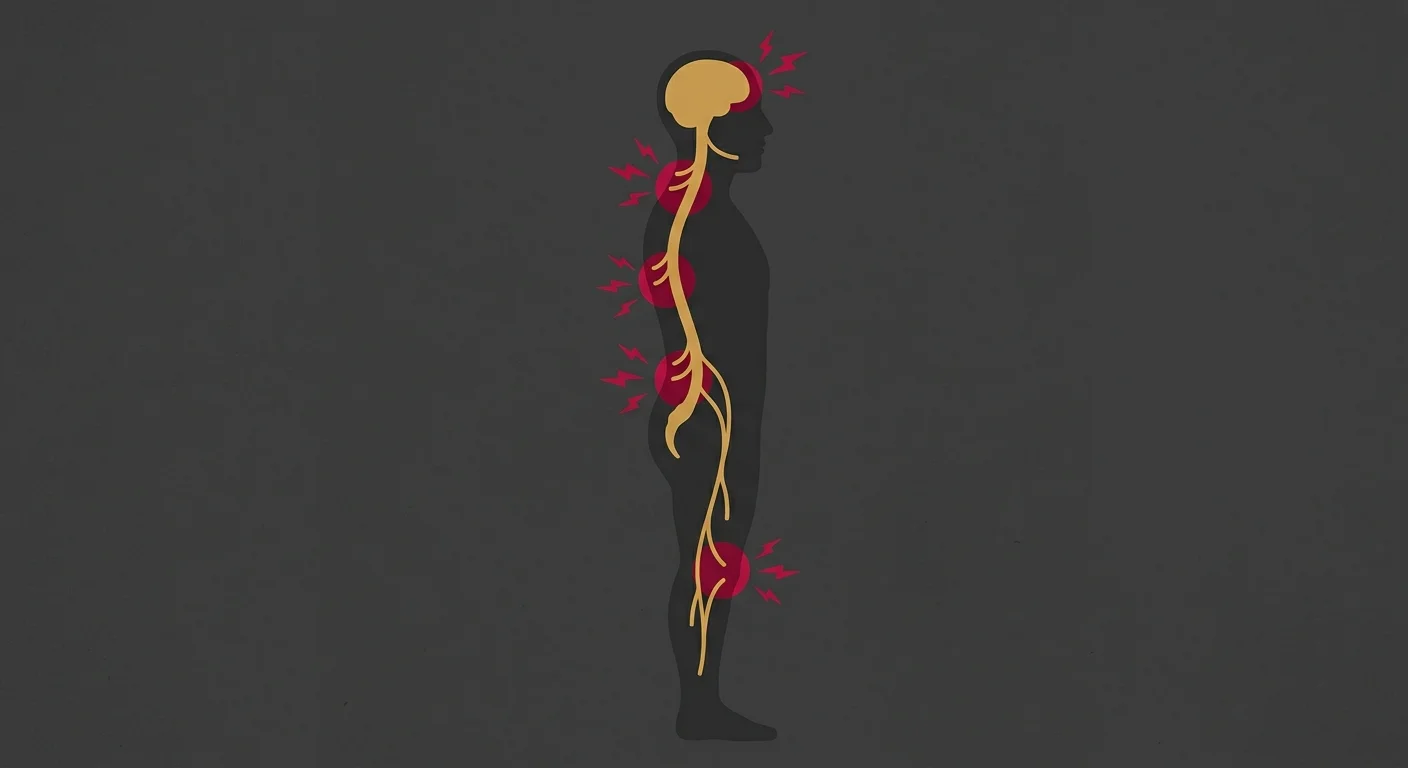
Most practitioners treat the site of pain.
That's the problem.
The standard approach in medicine, physical therapy, and even most chiropractic care is anatomical-only. You report lower back pain, so the treatment targets your lower back. You report knee pain, so the treatment targets your knee.
The assumption is simple.
If the pain is here, the cause is here.
Chronic pain doesn't work that way.
When pain persists or recurs for more than three months, your body's already shifted. It's no longer a localized tissue problem. It's a central nervous system condition.
The transition from acute to chronic pain involves neuroplastic changes in the brain and spinal cord. System-level dysfunction, not just a broken part.
Treating the site of pain at that point? You're turning off a smoke alarm without looking for the fire.
The Standard Model Treats Symptoms, Not Systems
The anatomical-only model works fine for acute injuries.
Sprain your ankle, ice it, rest it, it heals. Done.
But when pain becomes chronic, that model breaks down.
Your nervous system's adapted. It's amplifying pain signals, altering thresholds, reinforcing patterns that persist even after tissue damage is gone.
That's not a mechanical failure. It's a systems failure.
Standard treatments—medication, localized injections, even surgery—focus on suppressing symptoms or removing the presumed anatomical source.
None of them address the nervous system's role in maintaining the pain loop.
That's why relief is temporary. The system driving the pain is still disrupted.
What 'Cookie-Cutter' Protocols Miss
Cookie-cutter protocols assume every patient with the same diagnosis needs the same treatment.
Low back pain gets Protocol A. Sciatica gets Protocol B. Headaches get Protocol C.
Same sequence. Every time.
No two patients' nervous systems respond identically.
Your pain network—the interconnected web of immune, endocrine, and neurological factors driving your symptoms—is shaped by your history, your stress load, your inflammation levels, and your body's specific compensations.
A protocol built for an average case can't address your system's unique dysfunction.
Anatomical-only chiropractic models miss this entirely.
They treat the spine as a structure to be adjusted, not as the control center of a biological network that's gone off-course.
When the protocol doesn't work, it's repeated. When it still doesn't work, the patient's told they need more time.
What they actually need is a systems-level perspective on pain—one that identifies and addresses the root-cause disruptions keeping the pain alive.
| Standard Approach | What It Targets | Why It Fails for Chronic Pain |
|---|---|---|
| Medication (NSAIDs, opioids, muscle relaxants) | Pain signal suppression at the site of discomfort | Does not address the nervous system's amplified response or the underlying system disruption—relief is temporary, pain returns when the drug wears off |
| Localized injections (cortisone, trigger point) | Inflammation or muscle tension at the specific anatomical location | Ignores the central nervous system changes that maintain the pain loop—treats the symptom, not the neuroplastic adaptation driving recurrence |
| Physical therapy (standard protocol-based) | Strengthening or stretching the injured area | Assumes structural weakness is the root cause—misses the systemic dysfunction in how the nervous system processes and perpetuates pain signals |
| Surgery (disc removal, joint replacement) | Removal or repair of the presumed damaged anatomical structure | The pain network remains disrupted—many patients report continued or new pain after surgery because the central nervous system dysfunction was never addressed |
| Cookie-cutter chiropractic protocols | Generic spinal adjustment sequence applied to every patient with the same diagnosis | No two nervous systems respond identically—a protocol built for an average case cannot address your body's unique compensations and system-level imbalances |
What a Systems Biology Framework Actually Does
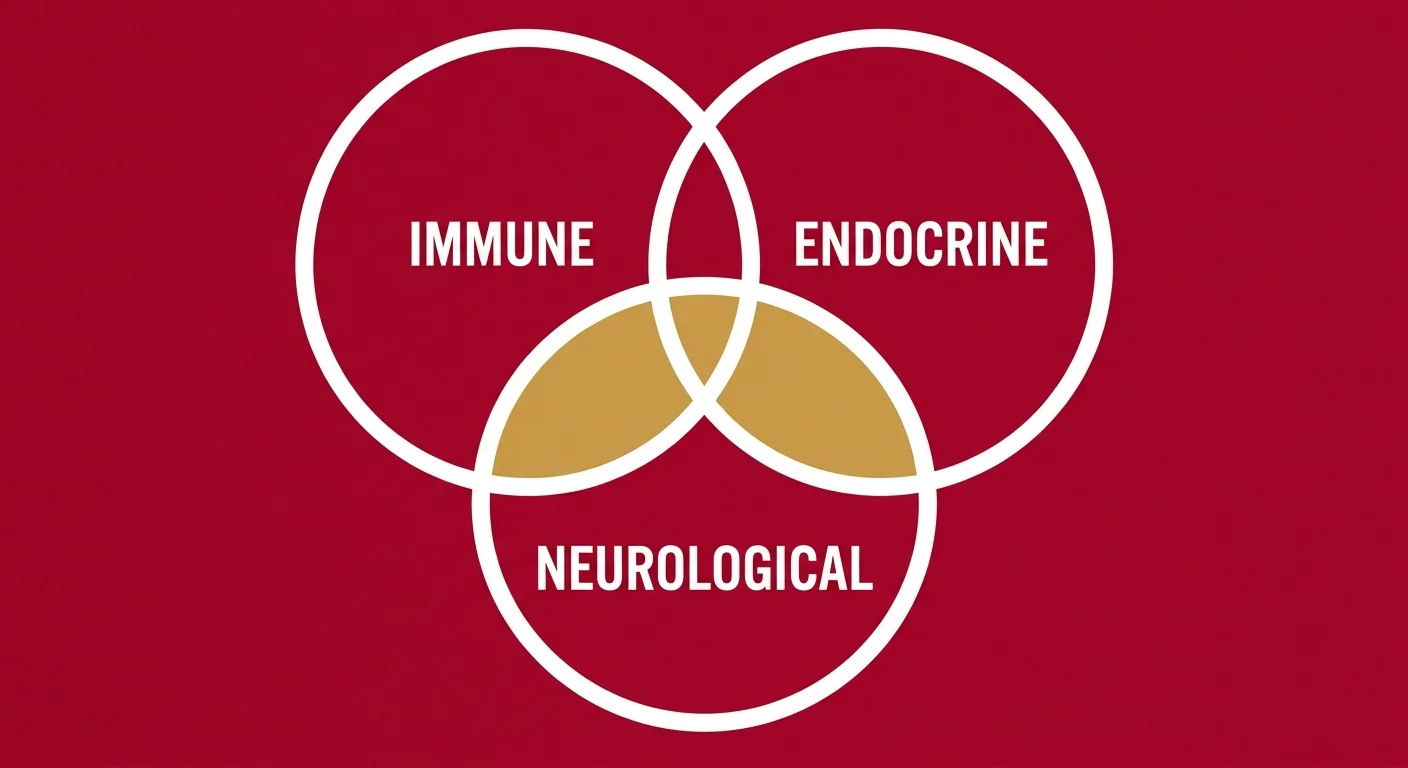
A systems biology framework doesn't ask where it hurts.
It asks what's driving the pain—and what interconnected networks are keeping it alive.
Systems biology analyzes complex interactions in biological systems—genes, proteins, and metabolic pathways studied together, not in isolation. Pain isn't a broken part. It's a disruption in a network involving immunological, endocrinological, and neurological systems.
You can't fix one and expect the others to fall in line.
So the clinical focus shifts.
From symptom suppression to system restoration.
The goal isn't to make the pain stop for a week. It's to resolve the root-cause disruptions that perpetuate it.
It Looks at the Pain Network, Not Just the Pain Site
The site of pain is rarely the source of pain.
That's the fundamental insight—and the reason anatomical-only treatments fail over and over.
Your immune system, your stress response, your inflammation levels, your nervous system's amplification patterns—they all interact to produce the pain you feel. That's the disruption of a complex pain network involving immunological, endocrinological, and neurological systems.
Treating one component in isolation doesn't address the network's dysfunction. It just shifts the load somewhere else.
When Dr. Karen Hannah assesses chronic pain, she's not just evaluating spinal alignment. She's analyzing the biological systems that control pain thresholds, inflammatory responses, and nervous system feedback loops.
That's what Dr. Hannah's Clinical Response Lens makes possible—a clinical framework trained to see interconnected networks, not isolated parts.
It Accounts for Central Nervous System Changes
Chronic pain isn't a tissue problem that's taking too long to heal.
It's a nervous system adaptation.
Once pain transitions to chronic, your nervous system has already changed. It amplifies signals. It lowers thresholds. It reinforces patterns that persist long after tissue damage is gone.
Treatments aimed at the injury site fail because they're addressing yesterday's problem. The nervous system is running today's pain loop.
A systems biology framework treats the nervous system as the control center driving the pain—not as background infrastructure you can ignore.
That shift is the difference between chasing symptoms and restoring function.
It Integrates Multiple Systems Simultaneously
Neuroinflammation is a critical factor in the development and maintenance of chronic pain, linking the immune system directly to nervous system function. Your immune response doesn't operate separately from your pain experience.
It's part of the feedback loop sustaining it.
A systems biology approach integrates those connections into the assessment and treatment plan. Stress affects inflammation. Inflammation affects nervous system signaling. Nervous system changes reinforce pain patterns.
Each system influences the others. Disruption in one creates cascading dysfunction across the network.
That's the understanding of pain mechanisms that makes resolution possible.
Not treating parts in sequence.
Treating the system as a whole—because that's what chronic pain actually is.
| System Involved | Role in Chronic Pain | What Happens When Disrupted |
|---|---|---|
| Nervous System | Controls pain thresholds, signal amplification, and feedback loops that determine pain intensity and persistence. | Neuroplastic changes lower pain thresholds and amplify signals, creating pain that persists long after tissue healing is complete. |
| Immune System | Regulates inflammation and cytokine signaling that directly influence nervous system sensitivity and pain perception. | Chronic neuroinflammation creates feedback loops linking immune response to nervous system dysfunction, sustaining pain. |
| Endocrine System | Manages stress hormones like cortisol that affect inflammation levels, nervous system reactivity, and pain tolerance. | Chronic stress and dysregulated cortisol production increase inflammation and lower pain thresholds, reinforcing pain patterns. |
| Metabolic Pathways | Influence cellular energy production, tissue repair capacity, and the body's ability to regulate inflammatory responses. | Impaired metabolic function slows recovery, prolongs inflammation, and reduces the body's capacity to restore system-level balance. |
How Dr. Karen Hannah's Clinical Response Lens Changes the Clinical Approach
Dr. Karen Hannah's Clinical Response Lens — forged through cross-species clinical training and AVCA-certified animal chiropractic practice — isn't decoration.
It's the clinical foundation of every assessment she runs.
The Clinical Response Lens is the study of whole-body biological systems in real-time clinical response. How organisms function as interconnected networks. How systems adapt under stress. How disruption in one area cascades through the entire structure.
That's the lens she brings to chiropractic care.
Not an anatomical-only model. Not a protocol-driven model. A systems biology framework that treats the body as an integrated network—not a machine with failing parts.
That difference matters.
Most chiropractors are trained to assess spinal alignment and musculoskeletal structure. Dr. Hannah was trained to assess biological systems—nervous system function, immune system interaction, metabolic pathways, and how those systems communicate. That training was reinforced and confirmed when a paralyzed kitten she adjusted daily for four days was running down the hallway by end of week: proof that when you unlock the nervous system, the body's self-healing operating system takes over.
When she evaluates chronic pain, she's not asking where it hurts. She's analyzing which system-level disruptions are driving it—and what's keeping the pain network active long after tissue damage is gone.
Whole-Body Biological Systems Analysis as a Clinical Lens
The Clinical Response Lens trains you to see organisms as interconnected biological networks. Every system—circulatory, respiratory, digestive, nervous—depends on the others.
Dysfunction in one system doesn't stay contained.
It ripples.
That's the clinical lens Dr. Karen Hannah's unique clinical lens applies to chronic pain.
Your nervous system controls pain thresholds, inflammation responses, and muscle tension patterns. Your immune system drives neuroinflammation, which reinforces pain signaling. Your stress response alters cortisol levels, which affect tissue healing and nervous system excitability.
Systems biology analyzes complex interactions within biological systems, considering genes, proteins, and metabolic pathways together rather than in isolation.
When one system is disrupted, the others compensate. And those compensations create the pain loop you're living with.
An anatomical-only approach misses those interactions entirely. It treats the spine as a structure to adjust—not as the control center of a biological network.
A systems biology approach doesn't just restore spinal alignment.
It identifies which nervous system, immune system, or metabolic disruptions are perpetuating the pain—and addresses the root cause, not the symptom.
Pattern Recognition Across Species and Human Musculoskeletal Dysfunction
One of the core skills built through cross-species clinical training is pattern recognition across biological systems. Identifying how nervous system networks respond to stress, injury, and environmental changes—regardless of the specific organism.
That skill translates directly to clinical practice.
Chronic pain follows patterns.
Not the same pattern in every patient. But predictable categories of nervous system adaptation, immune system dysfunction, and compensatory movement patterns that perpetuate pain.
Dr. Hannah's training allows her to recognize those patterns faster than practitioners trained only in human anatomy. She sees how your body is compensating—how one disruption is creating cascading dysfunction across multiple systems—and what needs to change to break the cycle.
That's why patients with unresolved nerve symptoms or pain that's followed them through multiple providers find answers here.
It's not that previous providers were incompetent.
It's that they were working with an anatomical-only model—and chronic pain isn't an anatomical problem. It's a systems failure.
Dr. Hannah's Clinical Response Lens gives her the clinical framework to identify and address that failure where anatomical-only models can't.
| Clinical Training Element | Clinical Application | Patient Outcome Benefit |
|---|---|---|
| Whole-organism systems analysis | Assessment includes nervous system function, immune response patterns, and metabolic pathway interactions—not just spinal alignment | Root-cause identification rather than symptom-only treatment |
| Multi-system interaction mapping | Care plans account for how stress affects inflammation, how inflammation alters nervous system signaling, and how those changes perpetuate pain | Addresses cascading dysfunction across biological networks instead of isolated anatomical sites |
| Pattern recognition across biological stress responses | Identifies nervous system adaptations, compensatory movement patterns, and immune system dysfunction driving chronic pain | Faster diagnosis of system-level failures that anatomical-only models miss entirely |
| Network-first thinking instead of part-first thinking | Treatment targets the disrupted pain network—immunological, endocrinological, neurological—as an integrated system | Resolution of chronic pain at the source rather than temporary suppression of symptoms |
| Adaptation and feedback loop analysis | Clinical evaluation of how the nervous system has changed in response to chronic pain—amplification patterns, threshold shifts, reinforced pain loops | Care plans designed to restore normal nervous system function instead of repeating protocols that ignore systemic adaptation |
What Systems-Level Assessment Looks Like in Practice
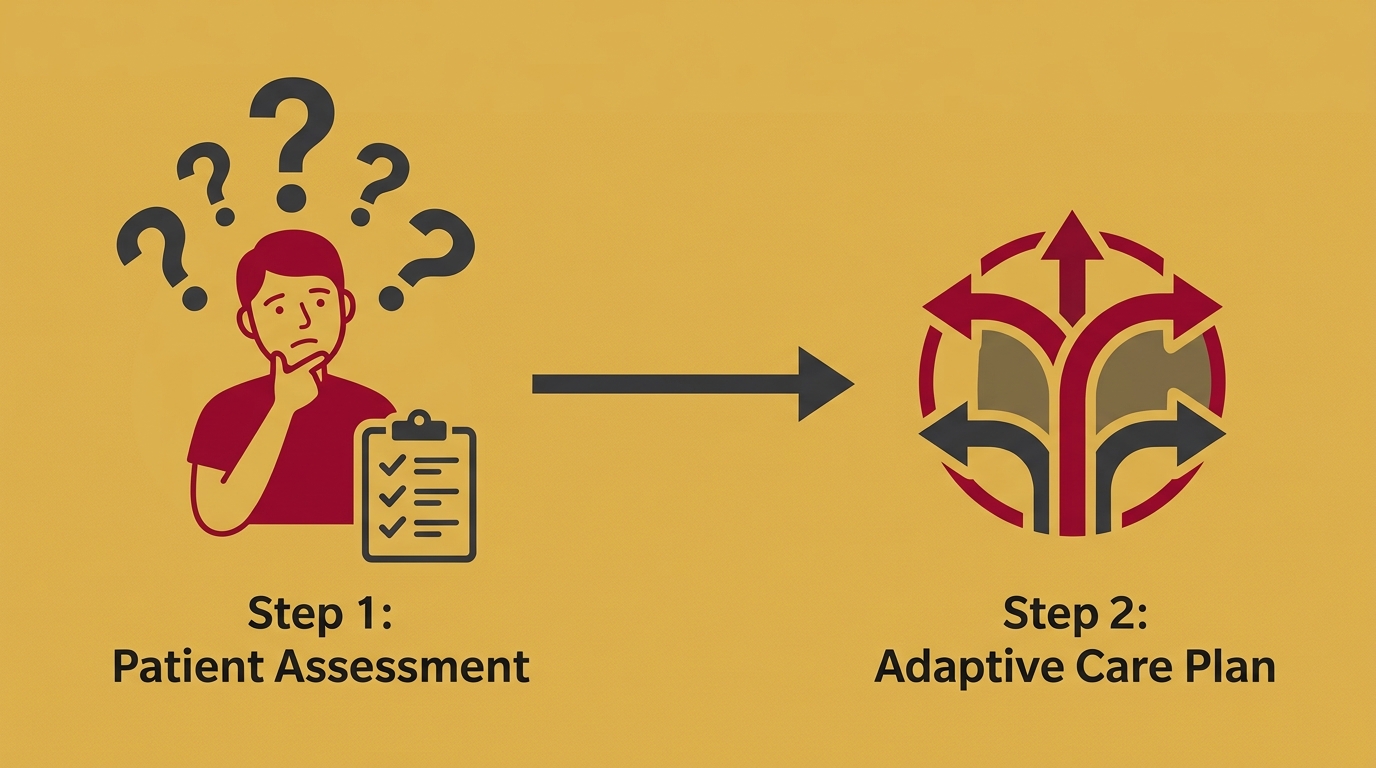
A systems-level assessment doesn't start with where it hurts.
It starts with what's driving the pain—and why your nervous system is still amplifying signals long after tissue damage is gone.
That shift changes everything.
Most providers run through a standard symptom checklist. Range of motion. Pain scale. Location. Duration. Then they apply the protocol that matches the diagnosis code.
A systems biology framework doesn't match your pain to a protocol. It identifies the specific nervous system, immune system, or metabolic disruptions keeping the pain network active in your body—not the average body.
This is what root-cause chiropractic care looks like when it's guided by a systems biology lens.
Not symptom suppression. System restoration.
The Initial Evaluation
The first evaluation at Touch of Wellness Chiropractic isn't a ten-minute intake form and a quick adjustment.
It's a full systems analysis.
Nervous system function. Inflammatory markers. Stress response patterns. Compensatory movement habits. And how those systems are interacting to produce your pain.
Dr. Hannah's Clinical Response Lens means she's looking at interactions between systems—not just isolated findings.
Your sleep disruption, your digestive issues, your stress levels, and your pain threshold all feed into the same biological network. Systems biology analyzes complex interactions within biological systems, considering genes, proteins, and metabolic pathways together rather than in isolation.
When one system goes off, the others compensate. Those compensations create the chronic pain loop you're stuck in.
That's why the initial assessment takes longer than a standard chiropractic visit—and why patients with complex, long-standing pain finally get answers here.
Dr. Hannah isn't treating the site of pain. She's identifying which system-level disruptions are driving it, and building a care plan that addresses the root cause instead of chasing symptoms.
Ongoing Reassessment and Adaptive Care Plans
A systems biology framework doesn't stop at the initial assessment.
Biological systems adapt. What's driving your pain in week one isn't necessarily what's driving it in week six.
If something isn't producing results after a few visits, the care plan changes.
Not repeated. Not extended. Changed.
That's the clinical standard here. Pain is a system-level disruption, not a broken part that needs more time to heal. When the nervous system adapts, the care plan adapts with it. When inflammation patterns shift, treatment modalities shift to match.
Advanced therapy modalities get layered in when the assessment shows they'll address the current dysfunction—not because they're part of a pre-written protocol.
This is what it looks like when chronic pain is treated as a disrupted biological network instead of a failing part.
The assessment drives the treatment. The patient's actual response—not the protocol's predicted timeline—determines what happens next. When something stops working, it gets replaced.
That's the willingness to reassess and pivot that most practitioners don't have. And the reason patients stuck in pain loops for years finally find resolution here.
When Systems Biology Matters Most
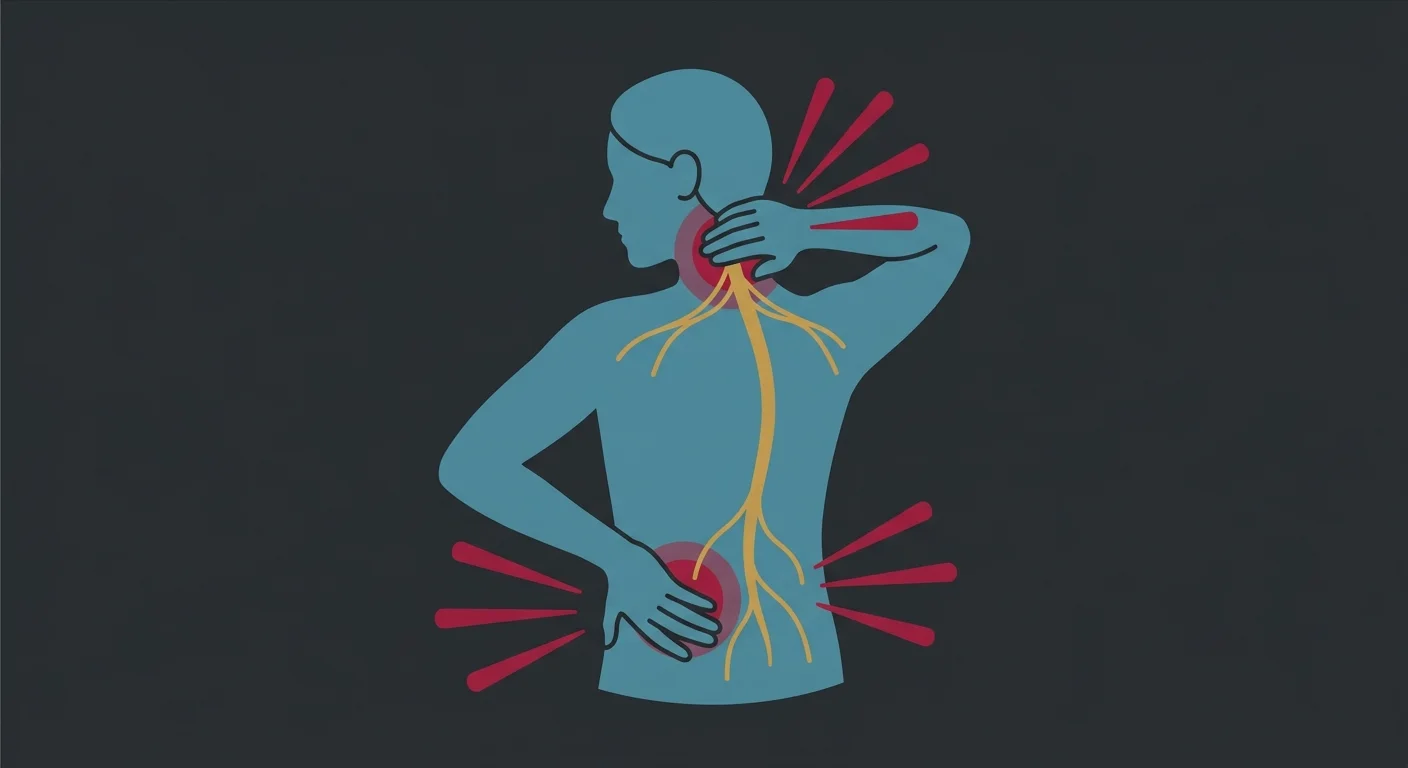
Not every patient needs a systems biology approach.
Some respond perfectly well to standard care. A few adjustments, some soft tissue work, maybe a short course of physical therapy.
Pain resolves. Function returns. They move on.
But there's a subset of patients for whom standard care doesn't stick.
The pain improves—then returns.
They're dismissed by their GP. They're told to wait and see. They're cycled through the same protocols over and over with diminishing returns.
That's where a systems biology approach isn't optional.
It's the only thing that works.
Because the pain isn't anatomical anymore—it's systemic. And anatomical-only models can't see it, let alone resolve it.
Chronic Pain That Returns After Standard Treatment
You did the treatment. It helped—for a week, maybe a month.
Then the pain came back, and you were right where you started.
That's not bad luck.
That's what happens when you treat the symptom and leave the cause alone.
Standard treatments target the site of pain—the inflamed joint, the tight muscle, the misaligned vertebra. They're built to resolve acute injury. But chronic pain is pain that lasts or recurs for more than three months—and by that point, it's no longer an anatomical problem. It's a nervous system problem.
A systems biology approach identifies why your nervous system is still amplifying pain signals long after tissue damage is gone.
It doesn't repeat the treatment that didn't work.
It addresses the root-cause disruption—nervous system dysregulation, immune system dysfunction, stress response amplification—that standard care never touched. That's the difference between temporary relief and lasting resolution.
Conditions Dismissed by Traditional Medicine
"We can't find anything wrong."
That's the line patients hear when imaging comes back normal, bloodwork is unremarkable, and the GP has run out of diagnostic codes to assign.
The implication: if nothing shows up on a test, the problem must not be real.
The problem is real. It's just not visible through an anatomical-only lens.
In 2021, 20.9% of U.S. adults (an estimated 51.6 million people) experienced chronic pain—and a significant portion of them have been dismissed by traditional medicine before they ever walk through the door of a chiropractic practice.
These are the patients whose conditions live in the gap between systems—nervous system dysregulation that doesn't produce a clean diagnostic label, inflammatory patterns that don't register on standard tests, pain that doesn't match the injury timeline.
A systems biology framework treats dismissed symptoms as clinical data, not noise.
If your nervous system is producing pain, there's a reason—and that reason lives at the system level, not the anatomical level.
Touch of Wellness Chiropractic doesn't dismiss what traditional medicine can't explain. Dr. Hannah investigates it—and how chronic pain affects millions of people means the clinical framework needs to evolve past anatomical-only models to keep up.
Multi-Site or Unexplained Nerve Symptoms
Pain that radiates. Numbness that migrates. Tingling that shows up in multiple locations without a clear injury pattern.
These are nervous system symptoms—and they don't fit neatly into anatomical-only diagnostic models.
Multi-site symptoms signal system-level dysfunction.
Your nervous system controls sensation, motor function, and pain signaling across your entire body. When it's dysregulated, symptoms don't stay localized—they spread along nerve pathways, shift locations as compensation patterns change, and produce pain in areas far from the original injury.
A provider trained only in anatomical models will treat each site separately—one adjustment for your neck, one for your lower back, one for your arm. But those aren't separate problems. They're different expressions of the same systemic disruption.
A systems biology approach identifies the root-cause nervous system dysfunction driving the multi-site symptoms—and treats that, not each individual site.
That's the clinical model that resolves unresolved nerve symptoms standard care can't touch.
And it's the reason patients with complex, unexplained pain patterns finally get answers at Touch of Wellness Chiropractic—because Dr. Hannah's Clinical Response Lens gives her the framework to see what anatomical-only models miss. When nervous system dysfunction is the driver, acupuncture as a complementary modality becomes part of the systems-level toolkit—not an add-on, but a strategic intervention that addresses nervous system regulation directly.
| Patient Profile | Why Standard Models Fail | What Systems Biology Addresses |
|---|---|---|
| Pain improves for a few days, then returns to baseline—cycle repeats every treatment round | Treats the site of pain, not the nervous system amplification driving chronic recurrence | Identifies why the nervous system keeps reactivating pain signals after tissue damage resolves |
| Multiple providers, multiple tests, no clear diagnosis—told 'we can't find anything wrong' | Relies on imaging and anatomical findings; dismisses symptoms that don't match diagnostic codes | Investigates system-level dysfunction—nervous system dysregulation, inflammatory patterns, stress response amplification |
| Symptoms in multiple locations—radiating pain, numbness that migrates, tingling without clear injury pattern | Treats each site separately; misses the nervous system disruption connecting them | Identifies the root-cause nervous system dysfunction producing multi-site symptoms across the body |
| Sleep disruption, digestive issues, chronic stress, and pain all present—no provider connects them | Isolates each symptom to a specialty; pain is orthopedic, sleep is behavioral, digestion is gastro—no integration | Recognizes these as interconnected biological systems—dysregulation in one amplifies dysfunction in the others |
| Tried physical therapy, medication, standard chiropractic—temporary relief followed by full return of symptoms | Repeats the same protocol when the first round doesn't hold; extends timelines instead of changing course | Reassesses when treatment stalls—pivots to address the system-level disruption standard care never touched |
Frequently Asked Questions
You've read the case. You get why anatomical-only models fail and what a systems biology framework does differently.
But understanding the theory and knowing whether it applies to your situation are two different things.
These are the questions patients ask before they book. And the answers that tell you whether a systems biology approach is the right fit for what you're dealing with.
How is a systems biology approach different from standard treatments for chronic pain?
Standard treatments target the site of pain. A systems biology approach targets the system producing the pain.
Physical therapy strengthens muscles around an injury. Medication blocks pain signals. Anatomical-only chiropractic adjusts misaligned vertebrae. All work when the problem is localized tissue damage.
A systems biology approach identifies why your nervous system keeps amplifying pain after tissue damage is gone. It treats the disruption of a complex pain network involving immunological, endocrinological, and neurological systems—not just the anatomical site.
That's the difference between relief that lasts a week and resolution that sticks.
What does a 'whole system' assessment for chronic pain actually involve?
It starts with what you actually report. Not a symptom checklist. Not a pre-written protocol. What you're feeling, where it's happening, what makes it better or worse.
Dr. Hannah assesses spinal function, nerve pathway integrity, inflammatory markers, and stress response patterns. She's looking for system-level dysfunction—nervous system dysregulation, immune system involvement, compensation patterns that shift pain across multiple sites.
The assessment finds the root-cause disruption driving your symptoms. The care plan is built from that—not from a standard protocol applied to everyone with low back pain.
Can a systems biology approach help when physical therapy or medication have failed?
Yes. But only if the reason they failed is systemic, not anatomical.
Physical therapy and medication treat tissue-level problems. When those treatments don't work, that's clinical evidence the problem isn't tissue-level anymore. The transition from acute to chronic pain involves neuroplastic changes in the brain and spinal cord, making it a central nervous system condition.
Physical therapy can't address that. Medication can't resolve it.
A systems biology approach can—because it treats the nervous system disruption those interventions never touched. If you've tried everything and nothing stuck, this is the framework that addresses what standard care missed.
Isn't focusing on the specific site of pain the most direct way to get relief?
It would be—if the site of pain were the cause. It's not.
Chronic pain doesn't live where you feel it. It lives in the nervous system feedback loops amplifying the signal. Treating the site produces temporary relief because you're interrupting the signal. But the loop keeps running. The dysregulation is still active.
And the pain comes back.
A systems biology approach shuts down the loop. It identifies why your nervous system is stuck in a pain-amplification pattern and addresses the root-cause disruption. That's the only way to stop chasing symptoms and get lasting resolution.
How does the nervous system fit into a systems biology model for pain?
The nervous system is the system. Everything else connects to it.
Your immune response, your inflammatory patterns, your stress regulation—all of it runs through nervous system pathways. Neuroinflammation is a critical factor in the development and maintenance of chronic pain, linking the immune system directly to nervous system function. When the nervous system is dysregulated, every other system follows.
A systems biology model treats the nervous system as the central hub. Restore nervous system function, and the pain network stops amplifying signals.
That's the clinical mechanism behind lasting resolution—and the reason Dr. Hannah's Clinical Response Lens matters. She sees the connections anatomical-only models miss.
The System Runs Everything
The nervous system runs everything.
When it's disrupted, nothing works right. Your sleep breaks. Your digestion stalls. Your pain threshold drops. Your ability to recover from stress collapses.
You feel that every day.
And all of it traces back to how well your nervous system is regulating the biological networks that keep you functional.
Most chiropractic practices treat pain as a broken part.
Adjust the spine. Release the muscle. Mobilize the joint. Move on.
That works for acute injury—tissue damage with a clear timeline and a predictable resolution.
But chronic pain isn't tissue damage. It's nervous system dysregulation that's amplifying signals long after the original injury is gone.
And anatomical-only models can't see it, let alone fix it.
About Dr. Karen Hannah, DC: Dr. Karen Hannah's Clinical Response Lens gives her a clinical framework most chiropractors don't have.
She sees your body as an interconnected biological system. Not a collection of isolated parts.
That systems biology framework is what identifies the root-cause disruptions standard care misses. The inflammatory patterns. The stress response amplification. The nervous system feedback loops that keep the pain network active.
Those are the drivers.
When you address the drivers instead of chasing symptoms, lasting resolution becomes possible.
If you've been dismissed, told to wait and see, or handed a twelve-month plan that never explained the why—this is a different conversation.
Unexplained doesn't mean untreatable.
It means no one's looked hard enough yet.
At Touch of Wellness Chiropractic, the assessment doesn't stop until the root cause is identified. Chronic pain isn't a broken part—it's a disrupted system. When you understand that, everything changes.
Find out what's actually driving your pain. Book an appointment.
Your pain has outlasted every standard treatment. You've been told it's stress, or age, or something you'll just have to live with. That's not the end of the conversation. That's the starting point for a systems biology assessment. Touch of Wellness Chiropractic doesn't run cookie-cutter protocols. Dr. Hannah investigates the root-cause nervous system dysfunction driving your symptoms—and builds a care plan from what your body is actually reporting. Not from what a diagnosis code says you should have. Find out what your assessment looks like. Real answers. Realistic timelines. A plan built for the system that runs everything—not just the part that hurts. Because chronic pain isn't a broken part—it's a disrupted system. And when you treat the system, lasting resolution becomes possible.