
What is the biological connection between spinal alignment and homeostasis?
The biological connection between spinal alignment and homeostasis is the nervous system. Your spine isn't scaffolding. It's the housing for the master control system that runs every process in your body — digestion, immune response, hormone regulation, tissue repair. When spinal alignment is compromised, it disrupts the nervous system's ability to coordinate those functions.
Homeostasis is your body's ability to maintain stable internal conditions despite external changes. That stability depends on constant communication between your brain and every organ, tissue, and cell. The nervous system controls and coordinates all other organs and structures through electrical signals traveling up and down the spinal cord. When vertebrae shift out of alignment, they interfere with that signaling. The result is compromised communication. When communication breaks down, homeostasis breaks down.
The spinal column is densely populated with mechanoreceptors — specialized nerve endings that send proprioceptive feedback to the brain about body position and movement. This feedback is essential for the brain to maintain an accurate map of the body. Misalignment distorts that map. Your brain receives inaccurate data. It can't regulate systems it doesn't understand.
Chiropractic adjustment restores alignment, which restores nervous system integrity. Spinal manipulation alters central nervous system processing, specifically how it integrates sensory and motor information. Adjustments influence the autonomic nervous system — the branch controlling your heart rate, digestion, and stress response. Higher heart rate variability (HRV) indicates better parasympathetic tone and adaptability. That's homeostasis in action.
Less than 10% of the nervous system is dedicated to perceiving pain. The other 90% is focused on controlling and coordinating bodily functions. Pain is a late-stage indicator. By the time you feel it, the disruption has already been affecting regulation, recovery, and resilience for weeks or months.
Last Updated: May 16, 2026
- • The Nervous System as Master Controller
- • What Homeostasis Actually Means
- • How Spinal Misalignment Disrupts Communication
- • What the Cookie-Cutter Protocol Misses
- • How Chiropractic Adjustment Restores Nervous System Function
-
• Frequently Asked Questions
- • Can a misaligned spine really affect my whole body's health?
- • How does a chiropractic adjustment influence the nervous system's communication?
- • What is the difference between simply treating pain and truly restoring homeostasis?
- • My medical doctor is skeptical of chiropractic care; what is the hard biological evidence for this connection?
- • How long does it take for nervous system function and homeostasis to improve after starting care?
- • The Bottom Line
The Nervous System as Master Controller
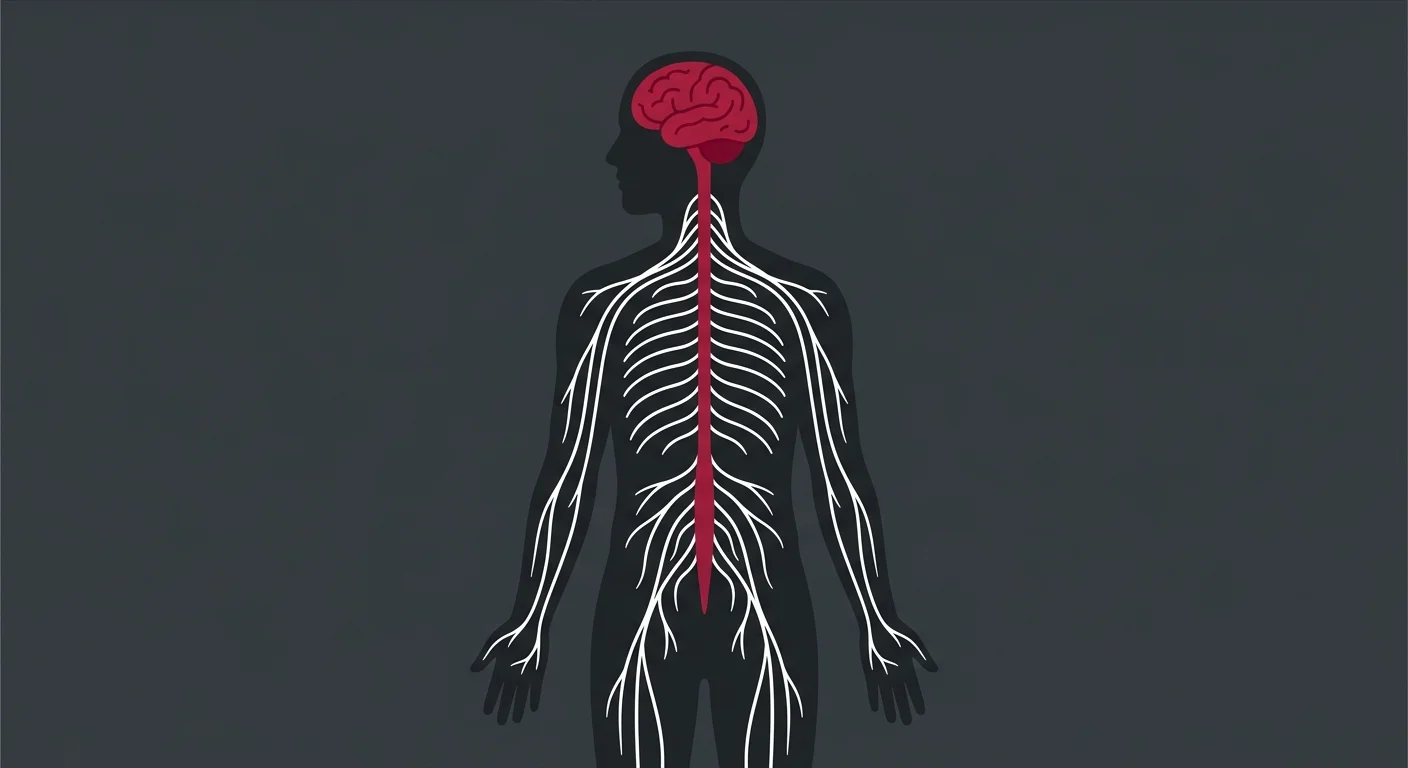
The nervous system is the master system that controls and coordinates all other organs and structures of the human body. It's not sharing that job.
Every function runs through nervous system commands. From cellular processes to complex movements, nothing happens without a signal.
Your heart doesn't decide when to beat. Your digestive tract doesn't self-regulate. Your immune cells don't coordinate their own response.
The nervous system tells them what to do and when to do it.
Here's what most people miss. Less than 10% of the nervous system is dedicated to perceiving pain. The other 90% is focused on controlling and coordinating bodily functions.
You're not feeling most of what your nervous system does all day.
It's running your temperature regulation. Your hormone cycles. Your tissue repair. Your blood pressure. All below conscious awareness.
Pain is a late-stage indicator. By the time something hurts, the nervous system's been struggling to maintain order for weeks or months.
And that brings us back: the spine as command center. Not scaffolding. The housing for the master controller.
The structural integrity of that housing determines whether the system inside it can do its job — or whether it's operating under constant interference.
When people ask about the biological connection between spinal alignment and homeostasis, they're asking what happens when the command center gets compromised.
The answer is: everything downstream starts breaking down.
What Homeostasis Actually Means
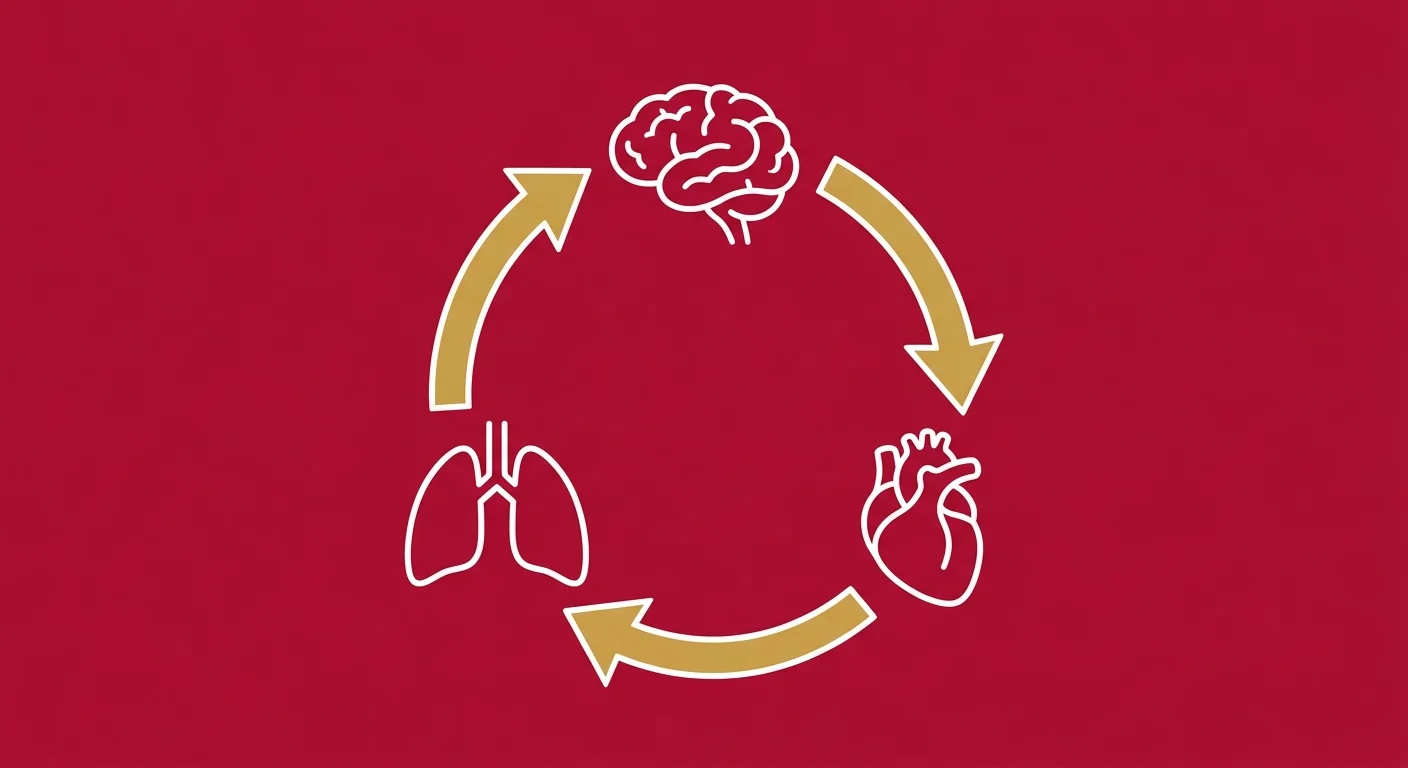
Homeostasis is your body keeping the internal environment stable — temperature, pH, blood sugar, hormone levels — no matter what's happening outside.
You're not managing any of that consciously.
Your nervous system runs it. Constantly. Adjusting thousands of variables every second to keep everything in a narrow functional range.
It's not a passive state. It's active, continuous management. The autonomic nervous system (ANS) runs that operation — the branch you don't consciously control.
It handles your heart rate, digestion, respiratory rate, immune response, glandular secretions. All the systems keeping you alive while you're not thinking about them.
When homeostasis works, you feel normal. When it doesn't, you feel off — and that's before anything shows up as a diagnosable condition.
The nervous system maintains that equilibrium. The spine protects the nervous system.
When the spine's structural integrity is compromised, the nervous system can't maintain maintaining physiological balance effectively.
The Autonomic Nervous System's Role
The autonomic nervous system has two main branches — sympathetic (fight or flight) and parasympathetic (rest and digest). They're supposed to balance each other.
Sympathetic ramps you up when you need to respond to stress. Parasympathetic brings you back down when the threat's over.
That oscillation is healthy. But when spinal misalignment creates constant interference, the system gets stuck in sympathetic dominance.
Chiropractic care influences the autonomic nervous system, as measured by improvements in Heart Rate Variability (HRV). Higher HRV means better parasympathetic tone and adaptability.
That's a measurable shift. Not subjective.
The nervous system's recovering its ability to regulate itself — which is the definition of restored homeostasis.
Why Disruption Compounds
Disruptions in the nervous system lead to an imbalanced inflammatory response, impacting the body's ability to maintain homeostasis. The neuro-immune axis is a critical component of physiological regulation.
When the nervous system's sending distorted signals, your immune system doesn't know what to do. It overreacts to things it should tolerate. It under-reacts to things it should fight.
That imbalance feeds forward.
And that's where most people get stuck. They're treating the inflammatory response. They're treating the sleep disruption. They're treating the digestive issue.
But nobody's addressing the fact that the command center's been compromised.
The symptoms compound because the root cause — disrupted nervous system communication — is still running.
| System | Homeostatic Function | Nervous System Dependency |
|---|---|---|
| Cardiovascular | Maintains heart rate, blood pressure, and vascular tone within stable ranges despite activity level or stress | Autonomic nervous system directly controls heart rate variability and vessel constriction; without accurate nervous system signaling, the heart can't adapt to changing demands |
| Digestive | Regulates enzyme secretion, peristalsis, nutrient absorption, and gut motility to process food efficiently | Parasympathetic branch activates digestive function; sympathetic branch shuts it down during stress. Imbalance traps digestion in a suppressed state. |
| Immune | Coordinates inflammatory response, identifies threats, and modulates immune cell activity to prevent overreaction or under-response | Neuro-immune axis links nervous system signals to immune cell behavior; disrupted signaling creates erratic inflammatory patterns |
| Endocrine | Balances hormone release — cortisol, insulin, thyroid hormones, reproductive hormones — to match metabolic and reproductive needs | Hypothalamus and pituitary glands receive nervous system input to trigger hormone cascades; interference distorts the entire feedback loop |
| Thermoregulation | Maintains core body temperature through vasodilation, vasoconstriction, sweating, and shivering | Nervous system receives temperature data from skin and core sensors, then activates the appropriate response; misalignment delays or misdirects those commands |
| Musculoskeletal | Maintains muscle tone, posture, and coordinated movement patterns without conscious effort | Proprioceptive feedback from spinal mechanoreceptors informs motor control; distorted feedback creates compensatory strain and inefficient movement |
How Spinal Misalignment Disrupts Communication
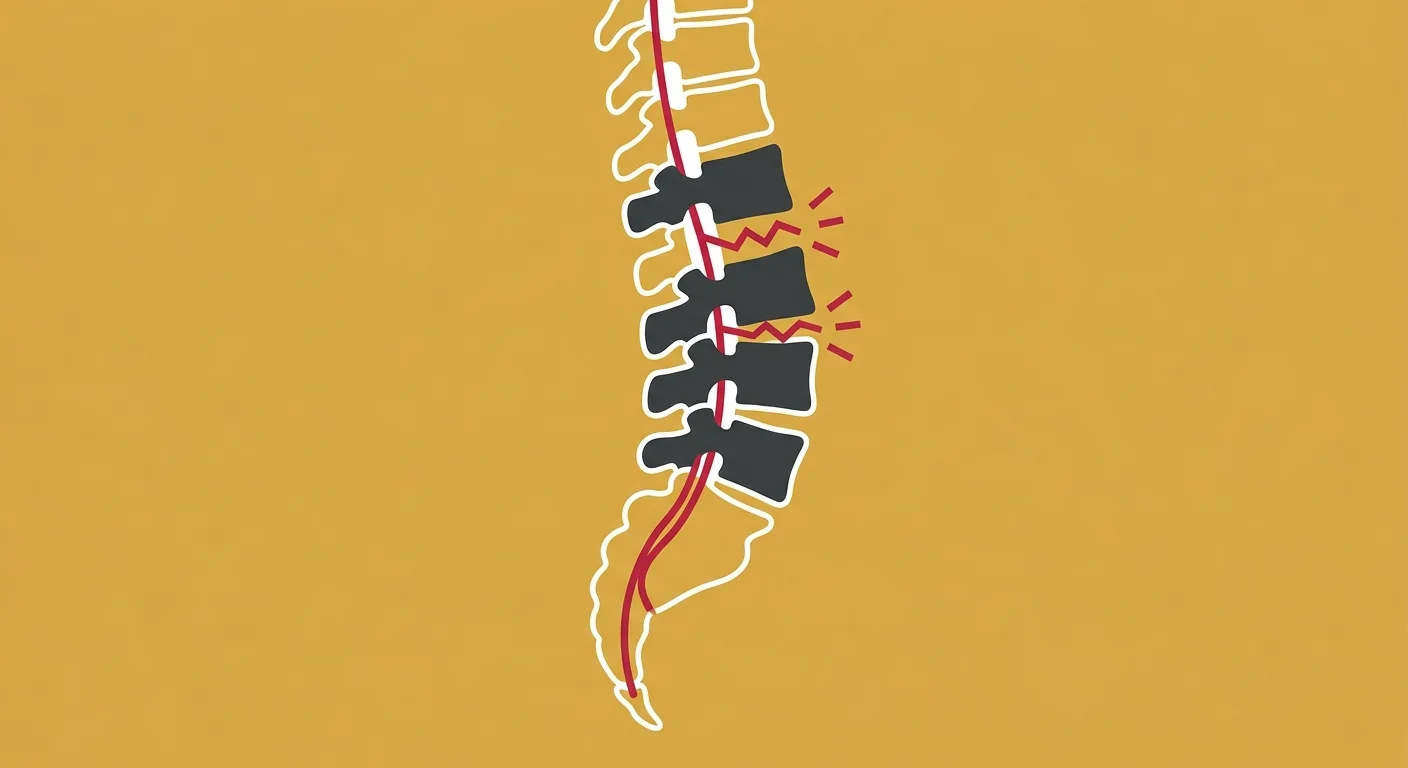
So here's where things actually break: the spine itself is the choke point.
Misalignment doesn't just compress a nerve and cause localized pain. It disrupts the constant stream of sensory data flowing from your body to your brain — and the motor commands flowing back down.
That two-way highway is how your nervous system maintains control.
When vertebrae shift out of position, the traffic slows. Signals get distorted. Your brain's operating on incomplete or inaccurate information.
The spinal column is densely populated with mechanoreceptors — specialized nerve endings that send proprioceptive feedback to the brain. This feedback is essential for the brain to maintain an accurate map of the body's position and movement.
When that map's wrong, your brain can't regulate what it can't see.
It's trying to maintain homeostasis with faulty data.
This isn't theoretical. Disruptions in the nervous system can lead to an imbalanced inflammatory response, impacting the body's ability to maintain homeostasis. The neuro-immune axis is a critical component of physiological regulation.
When communication breaks down at the spinal level, the ripple effects show up in every system your nervous system controls.
Which is all of them.
Mechanoreceptors and Proprioceptive Feedback
Proprioceptive information is how your brain knows where your body is in space. Mechanoreceptors in your joints, muscles, and tendons — especially along the spine — are firing constantly.
They're telling your brain: this joint is at this angle, this muscle is under this much tension, this limb is moving at this speed.
Your brain integrates that data into a real-time map of your body.
When vertebrae misalign, the mechanoreceptors in that segment send distorted signals. The brain's map becomes inaccurate.
It thinks your head's in one position when it's actually in another. It thinks a muscle's relaxed when it's under tension.
That distortion forces the brain to work harder to maintain basic coordination — and it has less bandwidth left over for regulating everything else.
You don't feel this consciously. But your balance gets worse. Your reaction time slows.
Your fine motor control degrades.
And deeper than that, your brain's ability to regulate autonomic functions — the ones you're not aware of — starts breaking down because it's spending too much processing power just trying to figure out where you are.
Autonomic Dysregulation
The autonomic nervous system controls everything you're not consciously managing. Heart rate. Digestion. Respiratory rate. Glandular secretions.
It's supposed to oscillate between sympathetic activation and parasympathetic recovery. That oscillation is heart rate variability (HRV) — a measurable marker of how well your nervous system's adapting to stress.
Higher HRV indicates better parasympathetic tone and adaptability.
Spinal misalignment locks the autonomic nervous system into sympathetic dominance. You're stuck in fight-or-flight mode.
Your body's prioritizing survival over maintenance. Digestion shuts down. Tissue repair slows. Immune surveillance drops.
You're not recovering between stressors because your nervous system thinks the threat never ended. Chiropractic care can influence the autonomic nervous system by removing the structural interference that's keeping it stuck.
The Neuro-Immune Axis
The neuro-immune axis is the communication loop between your nervous system and your immune system. Your immune cells don't make decisions independently.
They're responding to signals from the nervous system — chemical messengers, electrical impulses, neuro-endocrine regulation pathways.
When those signals are clear, your immune system knows when to attack, when to stand down, when to repair.
When nervous system communication's disrupted, the immune system loses coordination. It overreacts to harmless stimuli. It under-reacts to real threats.
That imbalance is what drives chronic inflammation, autoimmune flare-ups, and slow healing.
You're not dealing with an immune problem. You're dealing with a communication problem — and the choke point is the spine.
| Disruption Point | Biological Consequence | Clinical Symptom |
|---|---|---|
| Mechanoreceptor distortion in spinal joints | Brain receives inaccurate proprioceptive data about body position and movement | Balance problems, coordination decline, postural instability |
| Loss of accurate body mapping | Central nervous system can't coordinate motor control effectively when spatial data is corrupted | Slow reaction time, fine motor skill degradation, chronic muscle tension |
| Autonomic nervous system locked in sympathetic dominance | HRV drops — parasympathetic recovery can't activate, body stays in fight-or-flight | Poor sleep, digestive shutdown, elevated heart rate, chronic stress response |
| Neuro-immune axis dysfunction | Immune system receives distorted signals, loses coordination between attack and repair | Chronic inflammation, autoimmune flare-ups, slow tissue healing |
| Breakdown in nervous system communication pathways | Regulatory feedback loops fail — body can't maintain stable internal conditions | Temperature dysregulation, hormone imbalance, blood sugar instability |
What the Cookie-Cutter Protocol Misses
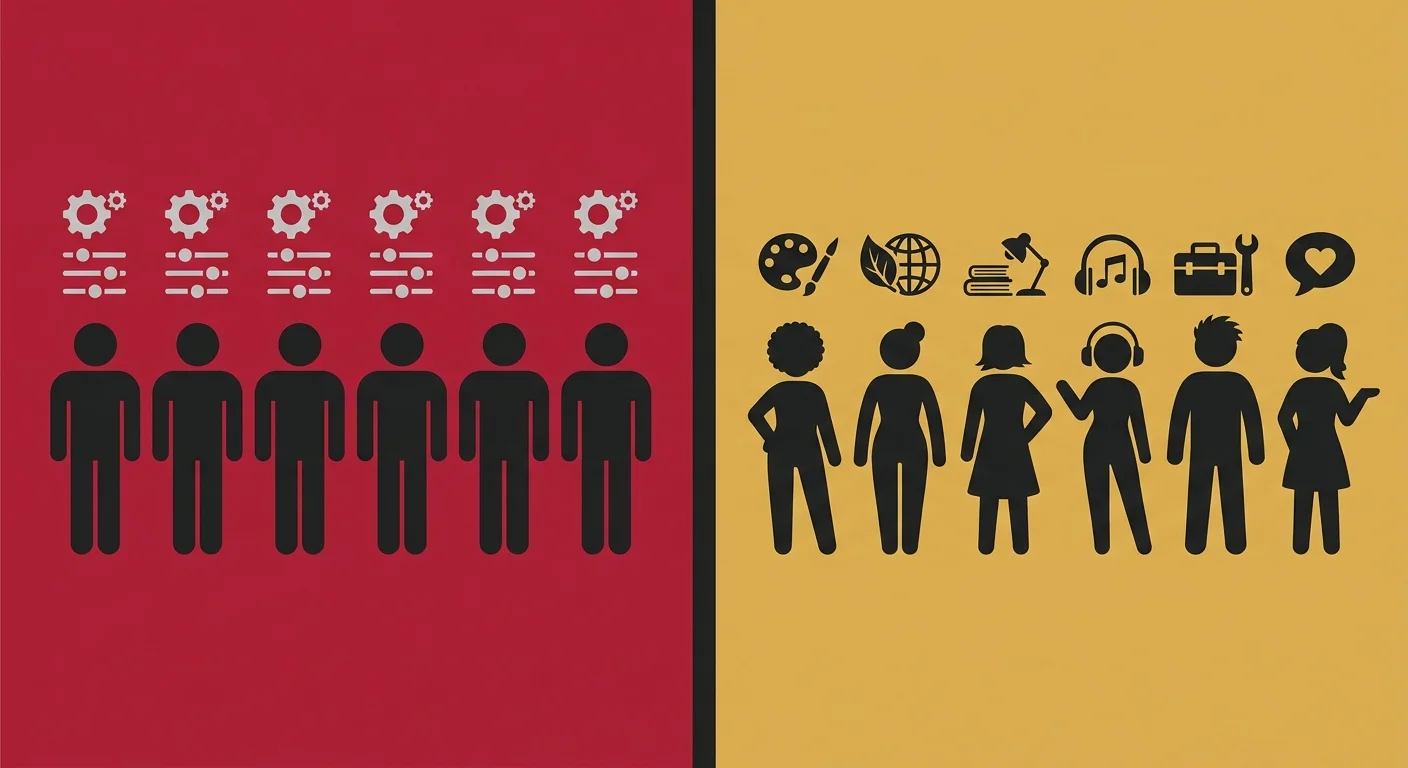
Most chiropractic offices run the same adjustment sequence on every patient. Walk in with a headache, you get adjusted at C1. Walk in with low back pain, you get adjusted at L5. Walk in with nerve symptoms radiating down your arm, same three-vertebra protocol.
The assumption is that the spine's a machine. Same parts, same fixes.
But here's what that assumption misses. The nervous system is recognized as the master system that controls and coordinates all other organs and structures of the human body. It controls every function, from cellular processes to complex movements.
Two people walk in with the same symptom. The root causes can be completely different. The disruption isn't in the spine itself. It's in how the nervous system's compensating for what's happening at that segment.
Same symptom. Different mechanism. And the protocol can't tell the difference.
Cookie-cutter protocols treat the spine like it exists in isolation. But the spine's the housing for the command center.
Homeostasis isn't a local event. It's a systems-level outcome.
When you adjust the same three vertebrae on every patient regardless of what their nervous system's reporting, you're not restoring function. You're running a template and hoping it sticks.
Why the Same Adjustment Sequence Fails Different Patients
Two patients walk in with the same symptom. Radiating nerve pain down the left leg. Same location. Same intensity. Same duration.
A protocol-driven approach adjusts L4-L5 on both. One improves immediately. The other sees no change — or gets worse.
The protocol didn't fail randomly. It failed because the two patients' nervous systems were compensating in opposite directions. One had a disc issue compressing the nerve root. The other had a muscle imbalance pulling the pelvis into rotation, which created tension on the nerve three segments away from where the pain showed up.
Same symptom. Different mechanism. Different solution.
Less than 10% of the nervous system is dedicated to perceiving pain. The other 90% is focused on controlling and coordinating bodily functions. Pain is a late-stage indicator of underlying functional problems.
By the time someone's in enough pain to walk into an office, the nervous system's been adapting for weeks or months. Compensating. Rerouting. Overworking other segments.
The protocol sees the pain. It doesn't see the compensation pattern.
And if you adjust into a compensation without understanding what the nervous system's trying to protect, you make it worse.
The Clinical Response Difference
Dr. Karen Hannah's Clinical Response Lens is the clinical differentiator here.
The framework wasn't built in a classroom. It was confirmed the day she received a call about a 12-week-old kitten — paralyzed, surrendered for euthanasia. She adjusted that kitten every day for four days. By the end of the week, it was running down her office hallway.
That result proved what no textbook had made viscerally real: the nervous system is a live operating system. When structural interference is cleared — when the spine's communication channel is restored — the body's capacity for self-regulation doesn't require coaching. It activates on its own. Homeostasis isn't a goal you reach by chasing symptoms. It's what the organism does when you stop blocking it.
That lens changes how you assess a patient. You're not looking for the spot that hurts. You're looking at how the entire system's compensating to keep that person functional despite the disruption.
You're tracking proprioceptive feedback. You're watching gait mechanics. You're noting which muscles are overworking and which ones have shut off.
You're building a whole-body biological systems analysis before you decide where to adjust. Because the site of pain and the site of the problem are rarely the same.
A cookie-cutter protocol assumes the spine's a static structure.
A systems-biology approach sees it as the dynamic housing for the body's master controller. And it understands that restoring nervous system integrity means addressing the compensation patterns the body's already built — not just the segment that's out of place.
That's the callback: the spine isn't scaffolding. It's the command center. And you can't restore command and control by running the same sequence on every patient.
How Chiropractic Adjustment Restores Nervous System Function
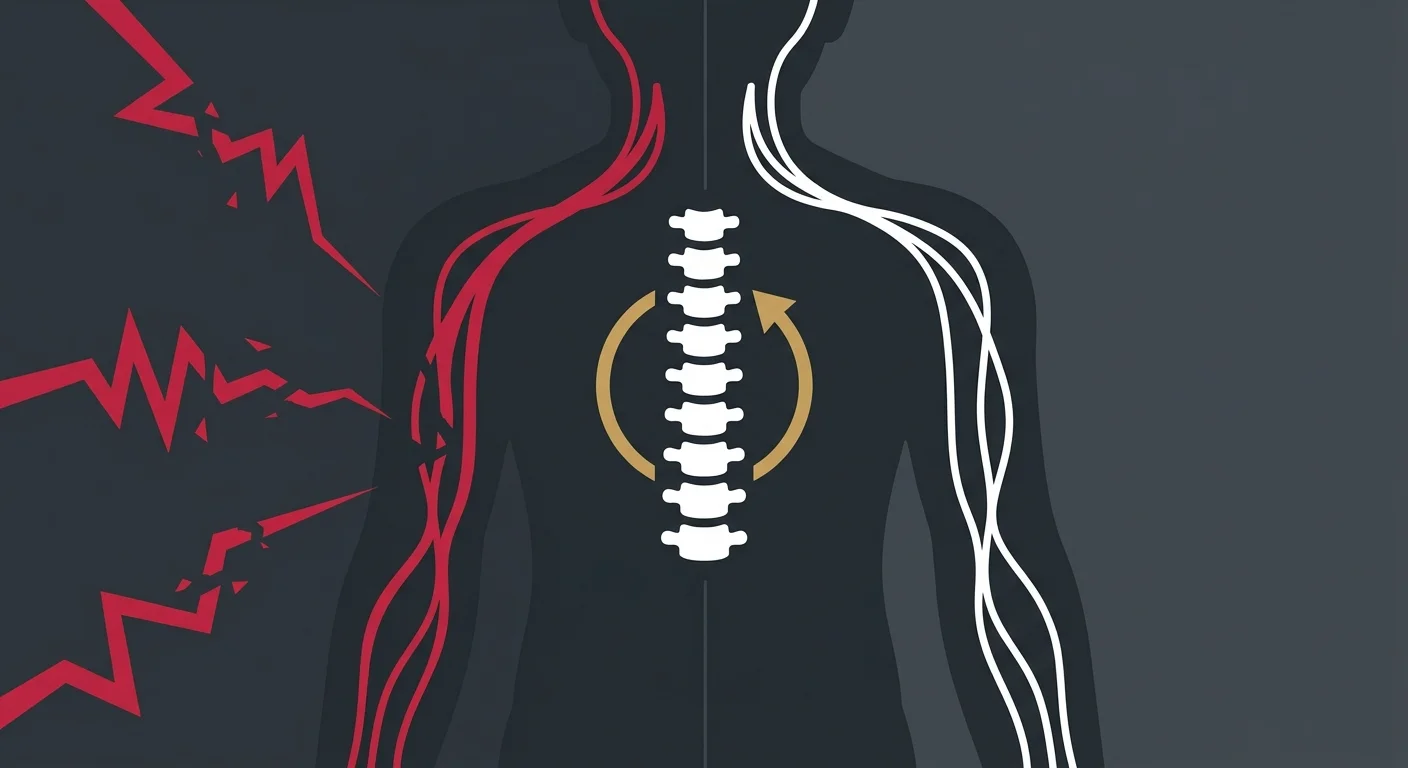
A chiropractic adjustment doesn't push a bone back into place. It delivers a specific, controlled force to a restricted spinal segment to restore motion.
That motion change sends a cascade of new sensory input into the central nervous system. Your brain wasn't getting accurate feedback from that segment before.
Now it is.
And the moment the brain receives clean proprioceptive data, it recalibrates how it's controlling the body.
Spinal manipulation has been shown to alter central nervous system processing, specifically in how it integrates sensory and motor information. Changes in somatosensory processing and motor control output are observed post-adjustment.
That's not placebo. That's measurable neurological change.
The brain's rewriting its internal map because the data coming in finally matches reality.
This is why individualized, root-cause chiropractic care starts with assessment — not protocol.
The adjustment isn't the goal. Restoring nervous system integrity is the goal. The adjustment's the tool.
And the specific segment, the specific vector, the specific force — all of that's determined by what the nervous system's reporting before you ever touch the patient.
Central Nervous System Processing Changes
Your visual system, vestibular system, and proprioceptive system are all feeding data about where you are, how you're moving, and what your environment's doing.
When one stream's corrupted — when spinal proprioception's sending distorted signals — the brain cross-references the other two and guesses.
That's why people with chronic spinal dysfunction report balance issues, coordination problems, and that vague sense something's off even when nothing hurts. The brain's not integrating. It's improvising.
An adjustment clears the distortion. The mechanoreceptors in the adjusted segment start firing accurately again.
The brain stops guessing.
Sensorimotor integration improves because the brain's working with clean data instead of fighting through static. Patients describe feeling more grounded, more coordinated, more present.
That's not subjective. That's central nervous system processing coming back online.
Autonomic Tone Improvement
Chiropractic care can influence the autonomic nervous system, as measured by improvements in Heart Rate Variability. Higher HRV indicates better parasympathetic tone and adaptability.
That shift isn't immediate. You don't walk out of an adjustment with perfect autonomic balance.
But over the course of care, as spinal motion's restored and proprioceptive input normalizes, the autonomic nervous system stops being locked in sympathetic overdrive.
Your body starts spending more time in parasympathetic recovery. Digestion improves. Sleep deepens. Heart rate variability increases. Tissue repair accelerates.
These aren't separate outcomes. They're all downstream effects of one thing: the nervous system's no longer treating every moment as a survival event.
That's what restoring homeostasis looks like. Not masking symptoms. Giving the master control system the structural integrity it needs to regulate the way it's designed to.
| Adjustment Effect | Measurable Change | Clinical Outcome |
|---|---|---|
| Restores spinal motion at restricted segment | Changes in somatosensory processing and motor control output observed post-adjustment | Brain receives accurate proprioceptive feedback — recalibrates body control and movement coordination |
| Delivers controlled force to spinal segment | Central nervous system processing altered — specifically in sensory and motor integration | Brain stops compensating for distorted proprioceptive data — balance, coordination, and body awareness improve |
| Clears proprioceptive distortion over course of care | Improvements in Heart Rate Variability measured | Autonomic nervous system shifts from sympathetic overdrive to parasympathetic recovery — digestion, sleep, tissue repair improve |
| Restores nervous system integrity through spinal correction | Higher HRV indicates better parasympathetic tone and adaptability | Body spends more time in recovery mode — chronic stress patterns release, homeostatic regulation stabilizes |
Frequently Asked Questions
Now let's address the objections you're already running through your head.
Most people walk in with the same concern. They've been told chiropractic isn't real medicine. Their primary care physician warned them off it. They're worried they'll need to keep coming back forever.
Those aren't unreasonable objections.
They're what happens when you've been handed vague explanations and no hard science. The research exists. The biological mechanism isn't speculative. The timeline isn't indefinite.
Can a misaligned spine really affect my whole body's health?
Yes. The nervous system is recognized as the master system that controls and coordinates all other organs and structures of the human body. Every function — from cellular processes to complex movements — runs through nervous system input.
When spinal misalignment restricts motion in a segment, the mechanoreceptors in that area send distorted proprioceptive signals to the brain. Your brain's now making regulatory decisions — heart rate, digestive enzyme release, gait coordination — with corrupted data.
That distortion doesn't stay local. It cascades through every system the nervous system controls.
Which is all of them.
How does a chiropractic adjustment influence the nervous system's communication?
A chiropractic adjustment delivers a controlled force to a restricted spinal segment to restore motion. That motion change floods the central nervous system with new sensory input.
Your brain wasn't receiving accurate proprioceptive feedback from that segment before. Now it is.
Spinal manipulation has been shown to alter central nervous system processing, specifically in how it integrates sensory and motor information. Changes in somatosensory processing and motor control output are observed post-adjustment.
The adjustment doesn't heal anything directly. It clears the communication pathway so the nervous system can do what it's designed to do — regulate the body without fighting through static.
What is the difference between simply treating pain and truly restoring homeostasis?
Treating pain means making the symptom quieter. Restoring homeostasis means addressing why the system's out of balance in the first place.
Less than 10% of the nervous system is dedicated to perceiving pain. The other 90% is focused on controlling and coordinating bodily functions. Pain is a late-stage indicator of underlying functional problems.
By the time it shows up, the nervous system's been compensating for weeks or months — rerouting signals, overworking other segments, suppressing feedback loops.
Pain treatment stops when the pain stops. Homeostasis restoration stops when the nervous system's integrity is re-established and the body can regulate itself without ongoing compensation.
Those aren't the same endpoint.
My medical doctor is skeptical of chiropractic care; what is the hard biological evidence for this connection?
Spinal manipulation alters central nervous system processing in measurable, observable ways. Changes in somatosensory processing and motor control output are documented post-adjustment.
Chiropractic care influences the autonomic nervous system, as measured by improvements in Heart Rate Variability. Higher HRV indicates better parasympathetic tone and adaptability.
The nervous system controls every function, from cellular processes to complex movements. When proprioceptive input from the spine is distorted, that control's compromised.
This isn't anecdotal. It's peer-reviewed neuroscience.
If your medical doctor's skepticism is based on outdated assumptions rather than current research, that's worth a conversation — but it doesn't change the biology.
How long does it take for nervous system function and homeostasis to improve after starting care?
That depends on how long the nervous system's been compensating and how severe the disruption is.
Some patients notice changes within a few visits — better sleep, improved coordination, less tension. Others take longer because the body's built compensation patterns over months or years. Those patterns don't unwind in a single adjustment.
The timeline's individual. It's determined by your clinical picture, not a standardized protocol.
What's consistent: the nervous system responds when it receives clean proprioceptive input again. The question isn't whether it'll improve.
The question is how much adaptation needs to be unwound before homeostasis stabilizes.
The Bottom Line
The spine isn't scaffolding. It's the command center.
And when the command center's compromised, nothing else can restore the system.
You can supplement. You can medicate. You can run a generic protocol.
But if the nervous system's still receiving distorted proprioceptive input from restricted spinal segments, homeostasis stays broken. The body keeps compensating. Inflammation stays elevated. Sleep doesn't improve.
The brain's working with corrupted data.
Restoring nervous system integrity isn't about fixing one vertebra.
It's about re-establishing the structural conditions the master control system needs to regulate the body the way it's designed to.
That's the biological connection between spinal alignment and homeostasis. And it's why a systems-biology, clinical response lens — the foundation you'll read more About Dr. Karen Hannah, DC — produces results that cookie-cutter protocols can't replicate.
The spine's the conduit. The nervous system's the network. Homeostasis is what happens when that network has clean communication again.
If you've been dismissed by primary care, told to wait and see, or handed a 12-month treatment plan before anyone explained what was actually broken — this is a different conversation.
Restoring nervous system function starts with understanding how your system's compensating. Not running the same adjustment sequence and hoping it works.
The command center controls everything.
And when it's working the way it should, the rest of the system follows.
Your symptoms have been explained away, waited on, or treated with something that worked for a week — then didn't. That's not bad luck. That's what happens when the nervous system disruption never gets addressed. A chiropractic assessment at Touch of Wellness Chiropractic starts with what you actually report. Not a protocol pulled from a drawer. Not a 12-month plan before the evaluation's finished. If you're in Morton, Peoria, or the surrounding area and you want to know what's actually driving your symptoms — restoring nervous system function starts with the spine. When it's working the way it should, the rest of the system follows.