
Can You Recover from Chronic Pain After a Failed Back Surgery?
Yes. Recovery from chronic pain after a failed back surgery is possible — but not by repeating what already failed.
Failed back surgery syndrome (FBSS) affects approximately 20% to 40% of patients who undergo lumbar spinal surgery. It is one of the most undertreated conditions in modern pain care. And it is almost always misframed.
The standard response is more intervention — another surgery, another round of injections, another referral. But up to 50% of patients who undergo a second corrective spine surgery still do not experience a successful clinical outcome. The surgery addressed the structure. It did not address what the nervous system had already learned.
That distinction matters more than most providers acknowledge.
Chronic pain after a failed back surgery is frequently maintained by central sensitization — a state where the central nervous system stays hyper-excitable long after the original tissue has healed. The spine appears stable on imaging. The pain continues anyway. The circuit never reset.
Over 30% of post-surgical patients report significant limitations in daily activity because of persistent pain. For most of them, the real problem was never named. They were told the surgery worked. They were told to wait. They were told the pain was unexplained.
Unexplained does not mean untreatable.
Conservative care and multimodal non-pharmacological interventions are recommended as early alternatives to repeat surgeries. Chiropractic adjustments, applied to carefully assessed candidates, can restore segmental motion and normalize the nervous system's afferent inputs — the signals traveling from the body back to the brain.
Real recovery starts with a different question. Not "what structural problem is left to fix?" but "why has the nervous system not calmed down?" That reframe is the foundation of the Chronic Pain Functional Rebirth protocol — an assessment-driven approach to restoring function after the surgical model has reached its ceiling.
Last Updated: July 20, 2026
- • What Failed Back Surgery Syndrome Actually Is
- • Why the Surgery Didn't Fix It
- • What the Nervous System Is Actually Doing After Surgery
- • Who This Path Is and Isn't For
- • The Chronic Pain Functional Rebirth Protocol: What Recovery Actually Looks Like
-
• Frequently Asked Questions
- • What is Failed Back Surgery Syndrome (FBSS)?
- • Why does back surgery fail to resolve chronic nerve pain?
- • Can chiropractic care safely help after a failed back surgery?
- • What is the Chronic Pain Functional Rebirth protocol at Touch of Wellness Chiropractic?
- • How does specialized chiropractic care break the pain-fear cycle?
- • The Circuit Has Been Tripped Long Enough
What Failed Back Surgery Syndrome Actually Is
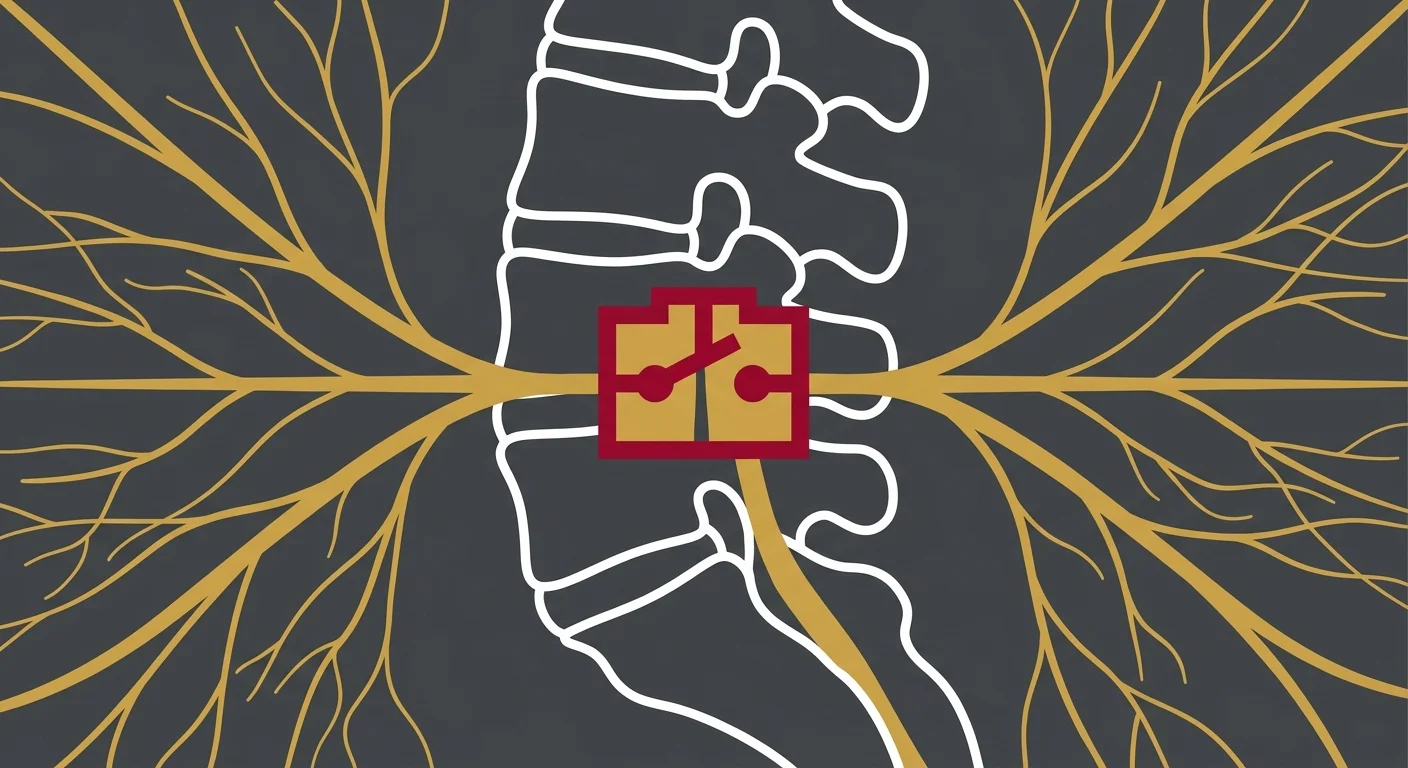
Most people with this diagnosis were never given a name for what they're living with.
The surgery went well, they were told. The imaging looked fine. The pain stayed anyway.
That gap — between what the scan shows and what the patient reports — is what Failed Back Surgery Syndrome describes.
It's not a surgical error in the traditional sense. It's a clinical outcome category: persistent or recurring pain after spinal surgery that the structural repair didn't resolve.
The structure was addressed. The problem wasn't.
That reframe changes everything about what treatment looks like.
You stop asking what's left to fix structurally. You start asking why the system hasn't calmed down. That shift — toward nervous system recovery — is where a different kind of care becomes possible.
It's what separates patients who find a path forward from patients who keep cycling through interventions that were never going to work.
The Clinical Definition Most Patients Never Get
Failed Back Surgery Syndrome is persistent or recurrent back or leg pain following one or more spinal surgeries.
The surgery didn't fail mechanically. The fusion held. The hardware is intact. The decompression was performed correctly.
The pain never stopped.
According to NIH research on spinal outcomes, FBSS affects approximately 20% to 40% of patients who undergo lumbar spinal surgery.
That's not a fringe outcome. That's a predictable result across a significant slice of every surgical cohort.
And most of those patients are still looking for an answer nobody's given them yet.
Here's what doesn't get explained in the surgeon's office: the spine was treated as the source of the problem. But in many FBSS cases, the nervous system had already started reorganizing around the pain signal before surgery ever happened.
The structural repair couldn't undo that reorganization.
No structural repair can. That's not a failure of the surgeon — it's a failure of the diagnostic frame.
How Common Is FBSS — And Why That Number Matters
These aren't abstract statistics. NIH findings on post-surgical function show that over 30% of post-surgical patients report significant limitations in daily activity because of persistent pain.
Work. Sleep. Standing in a kitchen. Sitting through a meeting without shifting every two minutes.
Those are the functional costs of a condition that keeps getting labeled "unexplained" — as if the label is the same as an answer.
That 30% isn't a statistical outlier. It's a consistent, substantial population walking into providers' offices every day asking for something that actually works.
More surgery isn't reaching them. More waiting isn't either.
Chiropractic care for chronic pain starts somewhere different — with what the nervous system is doing, not what the imaging shows.
| FBSS Characteristic | What It Means Clinically | Why Standard Follow-Up Misses It |
|---|---|---|
| Persistent pain after structural repair | The surgery addressed anatomy — fusion, decompression, hardware placement. It did not address what the nervous system had already learned about pain before or during that process. | Standard follow-up evaluates imaging and hardware integrity. If those look stable, the case is considered resolved — even when the patient is still in significant pain. |
| Central nervous system sensitization | The nervous system can shift into a hyper-excitable state and remain there long after tissue healing is complete. Pain signals continue arriving at the brain even without an active structural source. | Most post-surgical protocols don't assess nervous system state. There's no standard imaging marker for sensitization, so it rarely enters the clinical conversation. |
| Pain that doesn't match the imaging | FBSS patients frequently present with normal or near-normal post-operative imaging and ongoing, functionally limiting pain. The disconnect isn't a mystery — it's a nervous system issue that imaging can't capture. | When imaging looks acceptable, providers often have no next step to offer. Patients are told the surgery worked, the problem is unexplained, or they should continue waiting. |
| Functional loss exceeding structural findings | Daily activities — standing, sitting, sleeping, working — remain disrupted not because of mechanical instability, but because the body's pain-processing system hasn't returned to baseline. | Functional limitations are often documented but not treated as a separate clinical target. The assumption is that resolving structural findings will restore function automatically. |
| Recurrent pain cycles after temporary relief | Some patients experience short periods of improvement following surgery before pain returns. This pattern reflects nervous system remodeling, not a new structural failure — but it's frequently treated as one. | Recurrence triggers referral for additional intervention rather than a reassessment of the underlying nervous system dynamics driving the pain cycle. |
| Diagnosis by exclusion | FBSS isn't a single diagnosis with a clear structural cause. It's a clinical outcome category — pain persisting after surgery that the repair didn't resolve. The label describes what didn't work, not what's driving the problem. | Without a clear structural cause to address, standard follow-up often stalls. Patients are referred back into the same system that produced the outcome — more imaging, more specialist opinions, more waiting. |
Why the Surgery Didn't Fix It

Here's the question nobody says out loud after a failed back surgery: what if the surgery worked — and the pain stayed anyway?
That's not a hypothetical. The fusion held. The imaging looks fine. The decompression was textbook.
And the patient is still in pain.
That outcome has a name — Failed Back Surgery Syndrome — and it happens far more often than the surgical model ever admits.
Spinal surgery is designed to correct a structural problem. It was never designed to reset a nervous system. Those are two completely different jobs.
When pain persists, most patients get sent back into the same loop — more imaging, more intervention, more waiting. But NIH review data shows that up to 50% of patients who undergo a second corrective spine surgery don't experience a successful clinical outcome. At some point, the structural model has to come off the table.
The Structural-Only Model and Its Blind Spot
The structural-only model treats the spine like a broken machine. Find the fault. Fix the fault. Pain resolved.
For an acute mechanical injury, that's a clean framework. It works.
But chronic pain doesn't follow that logic. By the time a patient reaches surgery, the nervous system has spent months — sometimes years — running in a state of alarm. It's reorganized around that signal.
NIH central sensitization research confirms that chronic pain after failed back surgery is frequently maintained by central sensitization — the central nervous system stays in a hyper-excitable state long after the original tissue has healed. Surgery removes the structural trigger. It doesn't retrain a system that's still responding to one.
That's the blind spot. The model assumes the pain source and the pain signal are the same thing.
In FBSS, they're not. The circuit never reset. And no structural intervention will reset a circuit that's been running in override for years.
Why the Cookie-Cutter Adjustment Protocol Fails These Patients Too
So the structural model has a ceiling. Most FBSS patients have already hit it.
But here's where it gets complicated: the answer isn't chiropractic adjustment applied generically. A cookie-cutter protocol is its own kind of ceiling.
The cookie-cutter protocol works like this: same sequence, every patient, every visit. Doesn't matter what the patient reports. Doesn't matter how the nervous system is actually presenting. The protocol runs regardless.
For a first-time musculoskeletal case with no surgical history, that can produce a decent short-term result. For an FBSS patient, it's the wrong tool applied to the wrong problem.
These patients don't have a standard presentation. They have a nervous system that's been through surgery — possibly multiple surgeries — and is still running hot. They have scar tissue. They have altered movement patterns. They have a relationship with pain that predates your intake form.
Running the same adjustment sequence that works for a first-time low-back strain isn't a care plan. It's guesswork.
If something isn't working after a few visits, you stop and reassess. You don't repeat it.
That's the standard at Touch of Wellness Chiropractic — and it's why FBSS patients need a different entry point entirely. The advanced shockwave therapy and individualized assessment behind the Chronic Pain Functional Rebirth protocol exist because the one-size-fits-all model was never designed for this population.
| Intervention Model | What It Targets | What It Ignores | Typical Outcome for FBSS Patients |
|---|---|---|---|
| Spinal Surgery (First Intervention) | Structural fault — herniated disc, spinal stenosis, vertebral instability | Nervous system sensitization already underway before the procedure | Pain relief in some patients; persistent or recurring pain in 20%–40% of the surgical cohort |
| Revision Spinal Surgery (Repeat Structural Fix) | Residual or new structural findings on imaging | Central sensitization established in the first pain cycle; scar tissue complexity; altered movement patterns | Diminishing returns — up to half of second surgeries do not produce a successful clinical outcome |
| Pharmacological Pain Management | Pain signal intensity — blocking or dampening the symptom | Root cause of nervous system hyper-excitability; functional restoration; movement reintegration | Temporary relief without structural or neurological resolution; dependency risk without underlying change |
| Cookie-Cutter Adjustment Protocol | Segmental joint mechanics using a fixed, repeatable sequence | Surgical history, scar tissue, altered afferent inputs, and individual nervous system presentation | Possible short-term relief for standard cases; inadequate and potentially counterproductive for FBSS patients |
| Individualized Nervous System Assessment | Why the nervous system is still running in alarm — not just where the spine hurts | Nothing — this model is built around the gaps the structural model leaves behind | Entry point for genuine functional recovery; identifies what prior interventions missed |
| Chronic Pain Functional Rebirth Protocol | Nervous system sensitization, segmental mobility, and functional reintegration across all three phases | Nothing intentionally — the protocol is designed to adapt when something isn't working | Structured path toward restored daily function for patients who have already hit the ceiling of the structural model |
What the Nervous System Is Actually Doing After Surgery
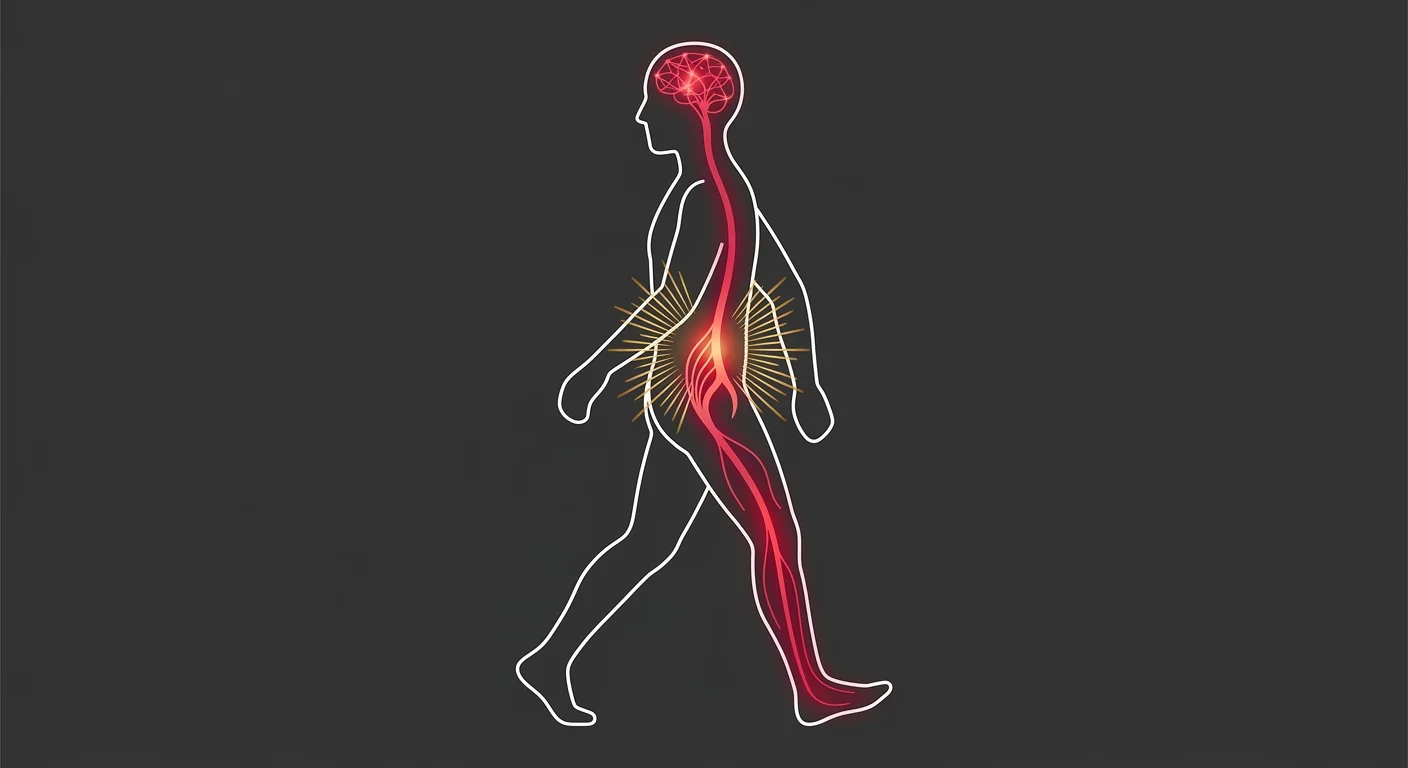
Your nervous system didn't calm down after surgery. That's the thing nobody put in the discharge paperwork.
Surgery was built to fix a structure. It was never built to retrain a system.
By the time most FBSS patients reach the operating table, their nervous systems have spent months — sometimes years — running in a state of alarm. The structural repair removes the mechanical trigger. But the system that reorganized around that trigger? It keeps running.
That's not a surgical failure. It's a category error.
The circuit never reset. And it's still running right now.
Central Sensitization: When the Alarm Won't Shut Off
Central sensitization is what happens when the nervous system stops responding to a threat and becomes the threat.
The original tissue damage is gone — or at least reduced. But the central nervous system stays hyper-excitable, firing as though the injury is still active. The alarm is still sounding. Nothing told it to stop.
That's not a pain response. That's a nervous system that's been permanently stuck in the on position.
This is why imaging contradicts what patients actually feel.
The scan shows a stable spine. The patient is in constant pain. Both are true — they're just describing two different systems. One structural. One neurological. And only one of them is still broken.
Providers trained to read the scan keep looking at the structure. The real problem stopped living there a long time ago.
Central sensitization also means the nervous system has undergone maladaptive remodeling. It's not just overreacting — it has physically reorganized to sustain the pain response.
That's not catastrophizing. That's not a mindset issue. That's a measurable neurological state that no spinal fusion touches.
And it doesn't stay static. Understanding how the pain-fear cycle deepens this sensitization is part of why breaking it requires a fundamentally different clinical approach — one that starts with the nervous system, not the spine.
Why Functional Limitations Outlast the Original Injury
Over 30% of post-surgical patients report significant limitations in daily activity because of persistent pain.
Work performance. Sleep. The ability to sit through a meeting or stand long enough to make dinner.
The injury is months old — sometimes years old. The functional cost keeps accumulating anyway. Because the nervous system never stopped charging interest.
That's what unaddressed central sensitization does. It doesn't stay contained to the original site.
It expands. It bleeds into every physical demand, every stress response, every moment before movement happens. The nervous system has learned to treat normal activity as a threat — and no structural repair reverses that learning.
That's the ceiling the surgical model hits. And that's where cold laser therapy applications — combined with individualized assessment — become part of a different kind of answer.
| Nervous System State | What the Patient Experiences | What a Standard Assessment Finds | What's Actually Driving It |
|---|---|---|---|
| Acute alarm state | Sharp, localized pain immediately following injury or surgery — feels like a direct response to tissue damage | Identifiable structural cause on imaging; pain correlates with a visible problem | Nervous system responding appropriately to real tissue threat — signal matches source |
| Persistent activation | Pain that doesn't resolve after the structural repair — continues weeks or months post-surgery despite 'successful' procedure | Imaging shows stable hardware, healed tissue, no new mechanical fault | Nervous system hasn't received — or accepted — the all-clear signal; alarm is still running |
| Central sensitization | Widespread, often unpredictable pain; normal movement or light touch triggers a disproportionate response | Physical exam and imaging appear inconsistent with reported pain severity — patient is frequently told results look 'normal' | Central nervous system has shifted from responding to a threat to generating one; pain signal is now self-sustaining |
| Maladaptive remodeling | Pain that has expanded beyond the original injury site; new areas become sensitized over time; fatigue and sleep disruption compound the picture | Multiple follow-up evaluations find no new structural cause; patient may be referred to pain management or psychology | Nervous system has physically reorganized to sustain the pain response — not a psychological state, a measurable neurological one |
| Pain-fear sensitization | Anticipatory pain before movement begins; avoidance of activity that previously caused flares; shrinking functional range over time | Functional decline noted but attributed to deconditioning or patient non-compliance | Fear of pain has become its own nervous system trigger — the brain treats anticipated movement as an active threat, reinforcing the sensitization loop |
| Functional collapse | Inability to sustain work, sleep, or basic daily activity; pain is no longer episodic — it is the baseline state | Patient presents as a chronic pain case with no clear surgical solution; often described as 'nothing more we can do structurally' | Nervous system sensitization has become the primary driver — the structural problem was addressed, but the system running on top of it was never reset |
Who This Path Is and Isn't For
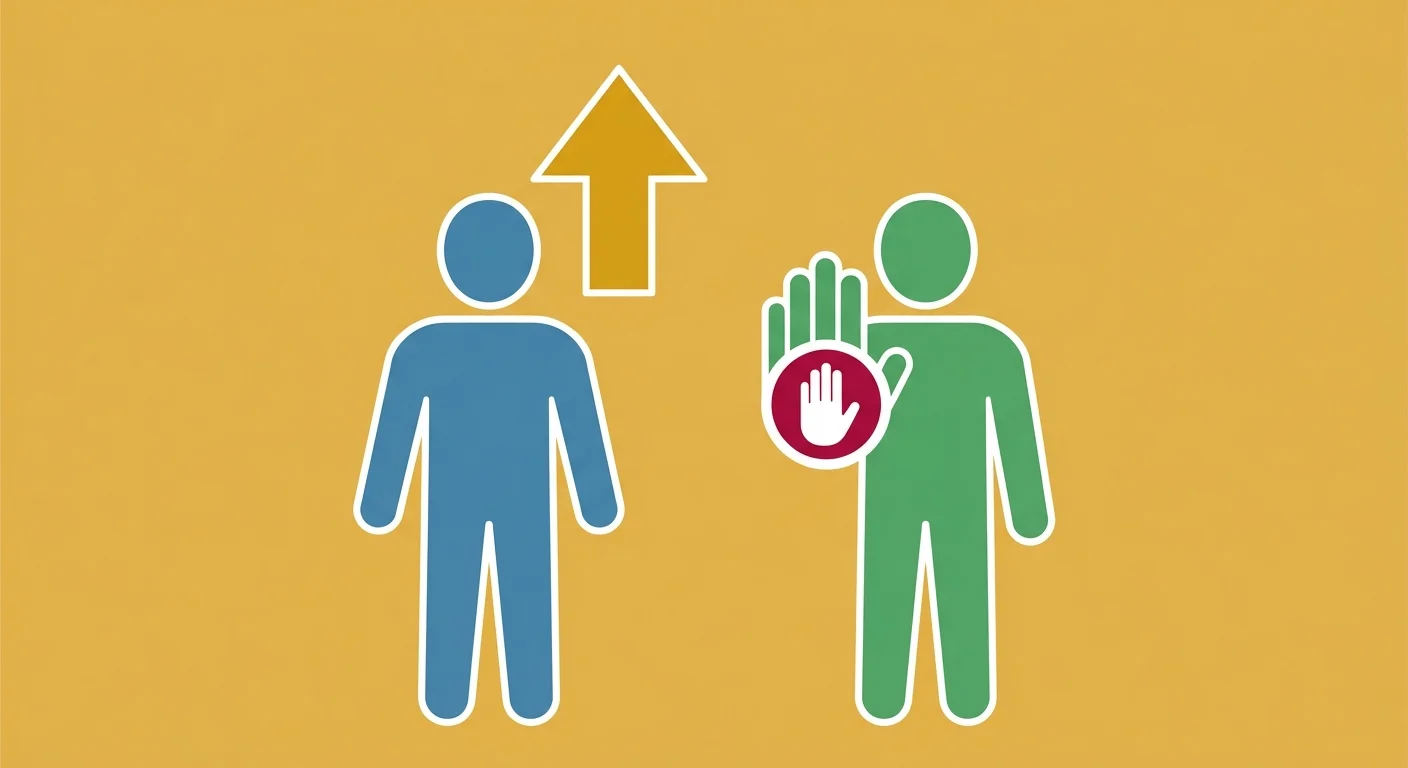
So who does this path actually fit? And who doesn't? That's worth answering directly.
The Chronic Pain Functional Rebirth protocol isn't a rebranded general service. It's a structured, individualized recovery path built for patients whose pain has outlasted every structural intervention they've tried.
That population is real. FBSS affects 20% to 40% of lumbar surgery patients. They deserve a straight answer about whether this is the right fit — before they spend another round of time, energy, and trust on a provider.
There are patients this path is built for. And there are patients it isn't.
Not because they're wrong to want help. Because what they're looking for and what this protocol delivers are two different things. Both deserve to know that upfront.
The Patient This Recovery Path Is Built For
This path is built for the patient who has already done everything the structural model asked.
They had the surgery. Completed the physical therapy. Followed post-operative instructions to the letter. And the pain is still there — not fading, not manageable. A daily functional ceiling they can't get past.
They're also the patient who shows up ready to be assessed — not ready to be validated.
That distinction matters more than it sounds. When surgical revision has stopped producing results, conservative multimodal care is the clinical standard. But it only works when the patient lets the clinical picture drive the plan. The right candidate doesn't walk in with the protocol already decided.
And they're the patient who understands that functional recovery takes real time — not indefinite time, but measurable time that looks different for every nervous system. That's not a hedge. That's an honest answer, and this practice gives it directly.
What this patient doesn't need is a provider manufacturing urgency to keep them scheduled. What they need is a provider willing to say what the process actually looks like — including when something isn't working and it's time to change course.
If You're Looking for a Shortcut, This Isn't It
If you're arriving with a list of what your last provider did — and the expectation that we'll run the same sequence — this isn't the right fit.
The assessment drives the care plan here. Not your previous provider's sequence. Not a protocol someone ran on you years ago that produced partial results.
An FBSS patient's clinical picture is rarely simple. It involves a nervous system that has been through surgery — sometimes multiple surgeries — and has reorganized around persistent pain. You can't shortcut the assessment when the presentation is that layered. The complexity isn't an obstacle. It's the point.
The patient expecting resolution in one or two visits isn't the right fit. Neither is the patient who plans to follow the parts of the care plan that feel convenient and skip the rest.
Partial commitment produces partial results. For a nervous system running in a hyper-excitable state, partial results almost always means no results at all. This path requires both parties showing up fully.
If that's not where you are yet — that's worth knowing before you start. Not three visits in.
The Chronic Pain Functional Rebirth Protocol: What Recovery Actually Looks Like
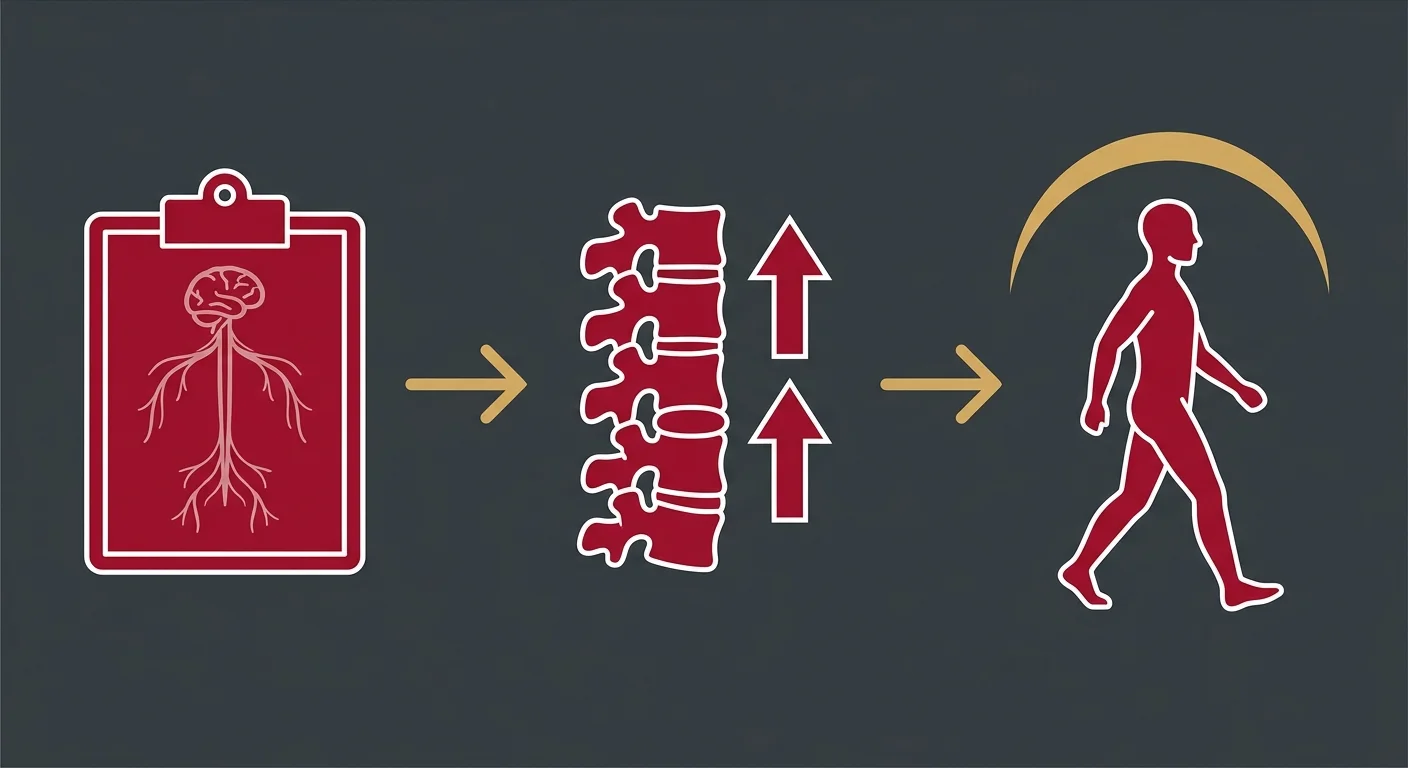
Here's what recovery actually looks like when the structural model has run out of answers.
Not in theory. In practice. In sequence. With a clinical logic that holds up.
The chronic pain functional rebirth protocol runs in three phases: Assessment and Nervous System Mapping, Segmental Restoration, and Functional Reintegration.
It doesn't start with treatment. It starts with understanding.
An FBSS presentation that nobody has fully mapped cannot be responsibly treated. The phases build on each other. You don't skip to Phase 2 because Phase 1 feels slow. The sequence exists because the nervous system has its own order of operations.
That's the circuit-reset model in practice.
Not rewiring the walls. Resetting the circuit — phase by phase, in the order the nervous system can actually receive it.
Phase 1: Assessment and Nervous System Mapping
Every honest recovery path for this population starts in the same place.
Not with adjustment. Not with therapy. With information.
What does the nervous system actually report? Where is the hyper-excitability concentrated — and where is it compensating?
Those aren't questions a form answers. They require a clinical conversation, a physical assessment, and a provider who's actually listening — not matching your diagnosis code to a pre-written protocol.
What's shifted in your movement since surgery? What does pain do when you try to return to normal activity? That's the data Phase 1 is built to collect.
Conservative, multimodal care is the clinical standard when surgical revision has failed. But that standard is only as good as the assessment behind it.
The map built in Phase 1 drives every decision that follows. Get the map wrong and the care plan is wrong — regardless of how experienced the provider is.
That's why Phase 1 doesn't get abbreviated. Even when the patient is ready to move faster than the assessment allows. Urgency doesn't change the nervous system's timeline. It just produces a worse map.
Phase 2: Segmental Restoration
Phase 2 is where chiropractic adjustment enters the picture.
But not generically.
Every adjustment in this phase is selected based on what the assessment revealed. Not on a standing protocol.
Chiropractic adjustments can restore segmental motion and normalize afferent inputs to the nervous system — but only in carefully assessed post-operative candidates. That phrase matters. Carefully assessed. The assessment in Phase 1 isn't administrative overhead. It's what makes Phase 2 clinically defensible.
Without it, you're applying a general tool to a specific nervous system presentation that nobody has actually read.
The advanced shockwave therapy integrated into this phase follows the same logic — selected because the assessment said it fits, not because it's the default next step.
Segmental Restoration also means the care plan changes if the response changes.
If something isn't moving — pain presentation, functional capacity, nervous system response — it stops. Reassessment happens. The plan adjusts.
That's not a weakness in the model. That's exactly how a post-surgical nervous system needs to be managed. A provider who keeps running the same protocol past the point of clinical return isn't being thorough. They're being careless.
Phase 3: Functional Reintegration
Phase 3 — Functional Reintegration — is where recovery stops being clinical and starts being real.
The nervous system has begun to recalibrate. Segmental motion is improving. Now the work shifts to restoring what chronic pain stripped away: the ability to sit, stand, work, sleep, and move through a normal day without the nervous system treating every movement as a threat.
That's the finish line. Not a cleaner scan. Function.
This is also the phase where the gains compound or collapse.
The provider brings the clinical adjustments, the multimodal support, and the honest reassessment when progress stalls. The patient brings consistent engagement and the willingness to follow a care plan built from their actual clinical picture — not their previous provider's habits.
Functional Reintegration doesn't happen to passive patients. It happens with them.
That's the whole model. Assessment drives the plan. The plan responds to the nervous system. Both parties show up. And the circuit — the one that never reset after surgery — finally gets a reason to.
| Protocol Phase | Primary Goal | Key Methods Used | What Changes for the Patient |
|---|---|---|---|
| Phase 1 — Assessment and Nervous System Mapping | Build an accurate clinical picture of the nervous system's current state — not the surgical history | Full clinical assessment, movement pattern analysis, nervous system response mapping, patient-reported symptom review | The patient is heard rather than processed. The care plan that follows is built from their actual presentation — not a diagnosis code. |
| Phase 2 — Segmental Restoration | Restore segmental motion and begin normalizing nervous system input pathways | Individualized chiropractic adjustments selected from assessment findings, modality support calibrated to response, ongoing reassessment with willingness to pivot | Pain presentation and functional capacity begin to shift. If the response changes, the plan changes — not on a fixed timeline, but on clinical evidence. |
| Phase 3 — Functional Reintegration | Translate nervous system recalibration into restored daily function | Multimodal support, activity-specific reintegration, care plan adjusted as functional capacity returns | Recovery stops being clinical and starts being real — sit, stand, work, and move without the nervous system treating normal activity as a threat. |
Frequently Asked Questions
But people who've been through surgery, physical therapy, and a dozen provider conversations that went nowhere don't arrive with big philosophical questions. They arrive with small, pointed ones.
Here's what's worth answering before you decide if this path is worth your time.
What is Failed Back Surgery Syndrome (FBSS)?
Failed Back Surgery Syndrome is the clinical term for persistent or recurring pain after spinal surgery — most commonly lumbar — where the surgery didn't resolve the pain it was supposed to address.
And it's not rare. It affects between 20% and 40% of patients who undergo lumbar spinal surgery. That's not a complication that slipped through the cracks. That's a predictable outcome across a significant portion of every surgical cohort.
The presentations vary — residual nerve pain, new pain patterns that emerged after the operation, or pain that briefly improved and then came back. But every FBSS case has one thing in common: the structural intervention was completed, and the pain didn't leave.
Why does back surgery fail to resolve chronic nerve pain?
Because the surgery fixed the structure — the herniation, the stenosis, the disc — but it didn't touch the nervous system's response to it.
By the time chronic pain is severe enough to require surgery, the central nervous system has already reorganized around that pain. It's learned to treat movement as a threat. It's running at a sensitivity level a scalpel can't reach.
Removing the original injury source doesn't reset the nervous system's memory of it. That's the gap no surgical report accounts for.
It's why up to 50% of patients who undergo a second corrective spine surgery still don't reach a successful clinical outcome. The second surgery is still aimed at the walls. The circuit never reset.
Can chiropractic care safely help after a failed back surgery?
For carefully assessed candidates — yes. And that qualifier isn't a disclaimer. It's the clinical standard.
Chiropractic adjustments can restore segmental motion and normalize how the nervous system receives input from the spine in post-operative patients who've been properly evaluated. The operative phrase is properly evaluated. Post-surgical spines require a complete clinical picture before any hands-on care begins.
Conservative, multimodal non-pharmacological approaches are the recommended pathway when surgical revision has already failed — and chiropractic care is one component of that approach. Not a standalone protocol. Not a generic sequence handed over before the evaluation is finished.
The assessment isn't optional. It's what makes everything that follows defensible.
What is the Chronic Pain Functional Rebirth protocol at Touch of Wellness Chiropractic?
It's a three-phase clinical framework built at Touch of Wellness Chiropractic for patients whose pain has outlasted every structural intervention they've tried.
The three phases are Assessment and Nervous System Mapping, Segmental Restoration, and Functional Reintegration — run in sequence, not by preference, but because the nervous system recovers in a specific order. Skipping phases doesn't save time. It just produces worse results.
Phase 1 builds the clinical picture. Phase 2 uses that picture to guide targeted chiropractic adjustments and begins recalibrating how the nervous system responds to movement. Phase 3 rebuilds the functional capacity that chronic pain stripped away.
And if the clinical response changes, the protocol changes with it. A care plan that keeps running when it's not working isn't a plan. That's not policy. That's the standard.
How does specialized chiropractic care break the pain-fear cycle?
The pain-fear cycle runs like this: pain produces fear of movement, fear produces avoidance, avoidance produces deconditioning, and deconditioning produces more pain. Every structural intervention that doesn't address the nervous system leaves that cycle completely intact.
Chiropractic adjustments — when delivered to a carefully assessed post-surgical presentation — begin normalizing the signals traveling from the spine back to the brain. That's the interruption. Not a metaphor. An actual mechanism.
When the nervous system starts receiving different inputs, the threat response begins to quiet. The patient moves with less anticipatory fear. That movement produces new sensory data. And new sensory data is what allows the nervous system to start revising its threat assessment.
It's not instant. But it's not theory either.
The Circuit Has Been Tripped Long Enough
The circuit tripped. Maybe during surgery. Maybe somewhere in the long stretch of failed interventions before anyone used the word "syndrome."
The exact moment doesn't matter anymore.
What matters is that it never reset. Every structural fix that followed was aimed at the walls — not the breaker.
That's the honest frame for Failed Back Surgery Syndrome. It's not a mechanical problem waiting for a better mechanical answer.
It's a nervous system that learned to treat movement as a threat — and stayed there.
No revision surgery reverses that learning. No repeat protocol reaches it. The only path through starts at the system itself: Assessment and Nervous System Mapping to build an honest clinical picture. Segmental Restoration to begin recalibrating how the system responds. Functional Reintegration to rebuild the capacity that chronic pain took away.
That sequence exists because the nervous system can only receive recovery in a specific order. The Chronic Pain Functional Rebirth protocol is that order.
At Touch of Wellness Chiropractic, Dr. Karen Hannah's approach to this population starts from one conviction: unexplained doesn't mean untreatable. Persistent doesn't mean permanent.
If you've been told there's nothing left to try — or handed another structural referral after years of structural interventions that didn't hold — this is a different conversation.
The circuit never reset. That's not a diagnosis of hopelessness. That's a starting point.
Stop asking whether another surgery might fix it. Start asking whether anyone has actually looked at the system that's still keeping you in pain. That's where recovery begins — and it doesn't start with a scalpel.
The circuit never reset. That's not a dead end — that's the opening. If you've been through surgery and the pain is still there, the Chronic Pain Functional Rebirth protocol starts with one thing: an honest look at what the nervous system is actually doing right now. Not a structural referral. Not a plan handed over before anyone's even finished asking questions. If you want to find out whether this is the right path, Book Appointment — and we'll start with what the assessment actually shows.