
What Is the Psychological Impact of Being Told 'Nothing Is Wrong' by Doctors?
Being told 'nothing is wrong' is one of the most damaging things a doctor can say to a patient in chronic pain.
The tests came back clear. The scans showed nothing. And the pain is still there — every morning, every night, every time you try to do something that used to be normal.
This is not rare. Approximately 20.9% of U.S. adults live with chronic pain. Medically unexplained symptoms account for up to 15% to 30% of all primary care consultations. That means millions of people are leaving appointments with no diagnosis, no answers, and one quiet implication hanging in the air: maybe it is in your head.
It is not.
Being told that it might be causes real, measurable harm. Up to 70% of undiagnosed chronic sufferers report moderate to severe psychological impairment. Delayed diagnostic validation correlates directly with increased clinical anxiety and depressive episodes. Patients dismissed by their providers show higher rates of social withdrawal and isolation. Systematic dismissal — sometimes called diagnostic gaslighting — actively erodes a patient's belief in their own body and delays corrective care.
The psychological damage compounds the physical one. A patient who has been told repeatedly that nothing is wrong stops advocating for themselves. They question their own perception. They delay follow-up care. The pain continues. So does the damage.
What standard clinical triage misses: not all pain has a visible structural cause. Some pain originates from functional nervous system disruption — pathways that are misfiring, overloaded, or stuck in a chronic alarm state that standard imaging and bloodwork are not designed to detect.
The absence of a finding on a test is not the same as the absence of a problem.
The alarm is real. The fire just needs the right detector.
Unexplained does not mean untreatable. It means the right lens has not been applied yet.
Last Updated: July 20, 2026
- • When the Tests Come Back Clear — and the Pain Does Not
- • Why 'Nothing Is Wrong' Is the Wrong Conclusion
- • What Standard Diagnostics Miss — and Why
- • The Feedback Loop: How Dismissal Makes the Pain Worse
- • What an Individualized Assessment Actually Looks Like
-
• Frequently Asked Questions
- • Why do medical tests show nothing is wrong when I am still in severe pain?
- • What are the long-term psychological effects of being told your pain is not real?
- • Can a chiropractor help with symptoms that medical doctors have dismissed as unexplained?
- • What steps should I take if a provider tells me my physical pain is psychological?
- • How does a lack of clinical diagnosis affect chronic pain recovery?
- • Is there a difference between psychosomatic pain and functional nervous system disruption?
- • Unexplained Does Not Mean Untreatable
When the Tests Come Back Clear — and the Pain Does Not

You already know how this appointment ends.
The doctor walks in. Sits down. Tells you the bloodwork is fine, the imaging is clear, everything looks normal. And you're sitting there — in the same pain you came in with — trying to figure out what 'normal' is supposed to mean when your body keeps insisting something is wrong.
That moment isn't a resolution. It's a rupture.
You walk out with the same pain you walked in with — except now it carries a layer of doubt that wasn't there before. Doubt you didn't generate. Doubt the system handed you on the way out the door.
CDC data puts chronic pain at 20.9% of U.S. adults. NIH research shows medically unexplained symptoms account for 15% to 30% of all primary care consultations.
That's not a fringe population. That's a massive group of people leaving appointments every week with no diagnosis and one quiet implication trailing behind them.
The system wasn't built to find what's wrong with them. It was built to rule out what imaging can see — and it has nothing to say about everything else.
The Moment the System Fails You
Here's the thing about a standard diagnostic workup: it's built to find the serious and the visible.
Fractures. Tumors. Organ failure. It does that well. But functional nervous system disruption — pathways that are overloaded, misfiring, or locked in a chronic alarm state — doesn't produce a lesion. It doesn't light up on a scan. It doesn't show in bloodwork.
The tool isn't wrong. It's just the wrong tool for this problem.
Think of it this way: a smoke alarm is going off in a room where no one can see flames.
The alarm is real. The signal is real. But the person holding the detector keeps insisting there's no fire — because the detector only reads heat, not smoke.
The patient's pain is the alarm. The standard clinical workup is the detector. When the detector reads clear, that's not proof the alarm is malfunctioning. It's proof you're holding the wrong instrument.
So the system doesn't fail these patients because the doctor is incompetent. It fails them because the tool in use was designed for a different problem.
When that tool comes back negative, most providers have nothing left to offer. And when a provider has nothing left to offer, they stop looking.
The patient leaves with the same pain, no plan, and a verdict that quietly points the finger at them — not at the instruments used to evaluate them.
Why Most Patients Blame Themselves First
And that's exactly what happens next.
The patient walks out of that appointment and starts asking a question they should never have to ask: What if it really is just me?
Self-blame in dismissed pain patients isn't a character flaw. It's a predictable response to a system that handed them a negative result and no alternative explanation.
When the tests say nothing is wrong and the provider has no next step, the only explanation the patient has left to construct is that they are the problem. That's what the 'nothing is wrong' verdict actually does — it doesn't just fail to help. It actively redirects distress inward.
Patients who break out of that cycle don't do it by waiting for a different test to come back different. They do it when someone finally evaluates the nervous system instead of stopping at the scan.
Once self-blame takes hold, patients stop advocating for themselves. They delay follow-up care. They start softening how they describe their pain — less dramatic, easier to dismiss — because they've absorbed the message that they're the ones getting it wrong.
That delay costs months. Sometimes years.
The back pain and sciatica relief these patients eventually find doesn't come from a third round of the same tests. It comes from a provider who evaluates the nervous system — not one who stops at the edge of what imaging can see.
| What the Patient Reports | What Standard Testing Looks For | What Standard Testing Misses |
|---|---|---|
| Burning, radiating, or shooting pain with no injury history | Structural damage — fractures, disc herniation, tears visible on imaging | Functional nerve pathway overload producing pain without visible structural lesion |
| Numbness or tingling that comes and goes without a clear trigger | Compressed nerves with measurable anatomical cause | Intermittent nervous system misfiring that does not produce consistent structural compression |
| Pain that shifts location or intensity from day to day | Fixed, locatable pathology that stays consistent between scans | Dynamic nervous system dysregulation that does not hold still long enough for imaging to capture |
| Fatigue, brain fog, or sleep disruption alongside physical pain | Organ dysfunction or systemic disease markers in bloodwork | Chronic nervous system overload affecting multiple body systems without producing abnormal lab values |
| Pain that worsens with stress, poor sleep, or inactivity but clears on scans | Acute inflammation, infection, or measurable tissue damage | Sensitized pain pathways responding to non-structural inputs the clinical workup was not designed to evaluate |
| Symptoms that have persisted for months or years despite normal results | Any condition that standard triage can name, classify, and treat pharmacologically | A nervous system stuck in a chronic alarm state — real, persistent, and invisible to tests built for a different problem |
Why 'Nothing Is Wrong' Is the Wrong Conclusion

A clean test result is not a verdict. It is the edge of what that tool was built to see.
Standard diagnostics rule out visible, serious problems. They do that job well. But they were never built to evaluate functional nervous system disruption. When that is the source, a clear scan isn't reassuring. It's incomplete.
Here's the thing: 'nothing is wrong' is only a valid conclusion if the tools used could actually find everything that could be wrong. Medically unexplained symptoms account for 15% to 30% of all primary care consultations. That's not a rounding error. That's a structural gap — a category of real physical experience that standard triage was never built to capture.
What Standard Diagnostics Are Actually Designed to Find
Standard diagnostic tools — imaging, bloodwork, orthopedic testing — are built around one core question: is there a visible structural abnormality or a measurable pathological marker? That's the right question for a fracture, a tumor, or organ dysfunction. It's the wrong question for a nervous system that's functionally overloaded but structurally intact.
Think of a smoke alarm going off in an empty room. The alarm is real. The signal is measurable — the patient feels it every single day. But the detector being used only reads heat. It cannot read smoke. So the person holding it keeps saying there is no fire. And within the limits of their tool, they are technically correct.
That's the gap. Nervous system disruption doesn't produce a visible lesion. It produces pain, numbness, tingling, and dysfunction — symptoms imaging passes right over. A patient who has exhausted standard testing and still carries unresolved pain isn't a mystery. They're a patient whose problem exists outside the detection range of every test that was run.
Why Most Chiropractors Get This Wrong Too
But the medical system isn't the only place this breaks down. Most chiropractic offices fall into the same trap — just with a different tool.
The cookie-cutter protocol runs the same adjustment sequence on every patient — regardless of how they present, what they report, or whether the previous visit produced any meaningful change. Walk in with nerve pain, walk in with unresolved post-surgical dysfunction, walk in with symptoms no one has explained — you get the same sequence. When it does not work, it gets run again. For anyone trying to recover from chronic pain after a failed back surgery, this is not a new pathway. It is the same dead end with different branding.
Systematic dismissal — from a GP who found nothing or from a provider who never asked — erodes a patient's self-efficacy and delays the corrective care they actually need. The cookie-cutter protocol is a quieter version of the same failure. It doesn't gaslight the patient. But it treats the spine the way the GP treated the scan: as a template problem with a template answer.
That is not care. That is guesswork with a protocol attached. And for patients who have already been failed by a system that insisted nothing was wrong, handing them a second system that runs the same sequence regardless of what they report is not a second chance. It is a second dismissal. Chiropractic care for sciatica in Morton, IL that actually works starts with looking at what the patient reports — not at what the template says to do next.
| Diagnostic Tool | What It Detects | What It Cannot Detect | Clinical Implication |
|---|---|---|---|
| X-ray / MRI | Fractures, disc herniation, structural lesions, tumors | Functional nervous system overload, misfiring pain pathways, chronic alarm-state signaling | A clear scan confirms no visible structural damage — it does not confirm the absence of a problem |
| Blood panel | Infection markers, inflammatory disease, organ dysfunction, metabolic imbalance | Neurological pathway disruption, postural compensation patterns, soft-tissue functional impairment | Normal bloodwork eliminates systemic disease — it says nothing about how the nervous system is functioning |
| Orthopedic testing | Range-of-motion deficits, joint instability, gross mechanical dysfunction | Subtle nerve compression, sensitized pain pathways, functional compensation that hasn't yet produced measurable loss | Passing an orthopedic screen means no gross mechanical failure — not that the patient's pain lacks a physical origin |
| Standard neurological exam | Acute nerve damage, reflex loss, measurable motor deficit | Low-grade chronic nerve irritation, early-stage neuropathic signaling, subclinical pathway disruption | A clean neuro exam rules out acute damage — it does not evaluate the full spectrum of functional nerve involvement |
| Primary care intake | Red-flag conditions, acute illness, conditions matching standard diagnostic criteria | Patterns that fall outside recognized diagnostic categories, cumulative functional disruption, symptoms without a matching billing code | When primary care finds nothing, the patient is discharged — not referred to someone whose tools are designed for what was missed |
| Repeat diagnostic workup | Any new structural changes since the prior test | The functional state of the nervous system between appointments, how the patient's symptoms have evolved in real time | Running the same tests again produces the same result — the problem was never inside the detection range of those tools to begin with |
What Standard Diagnostics Miss — and Why
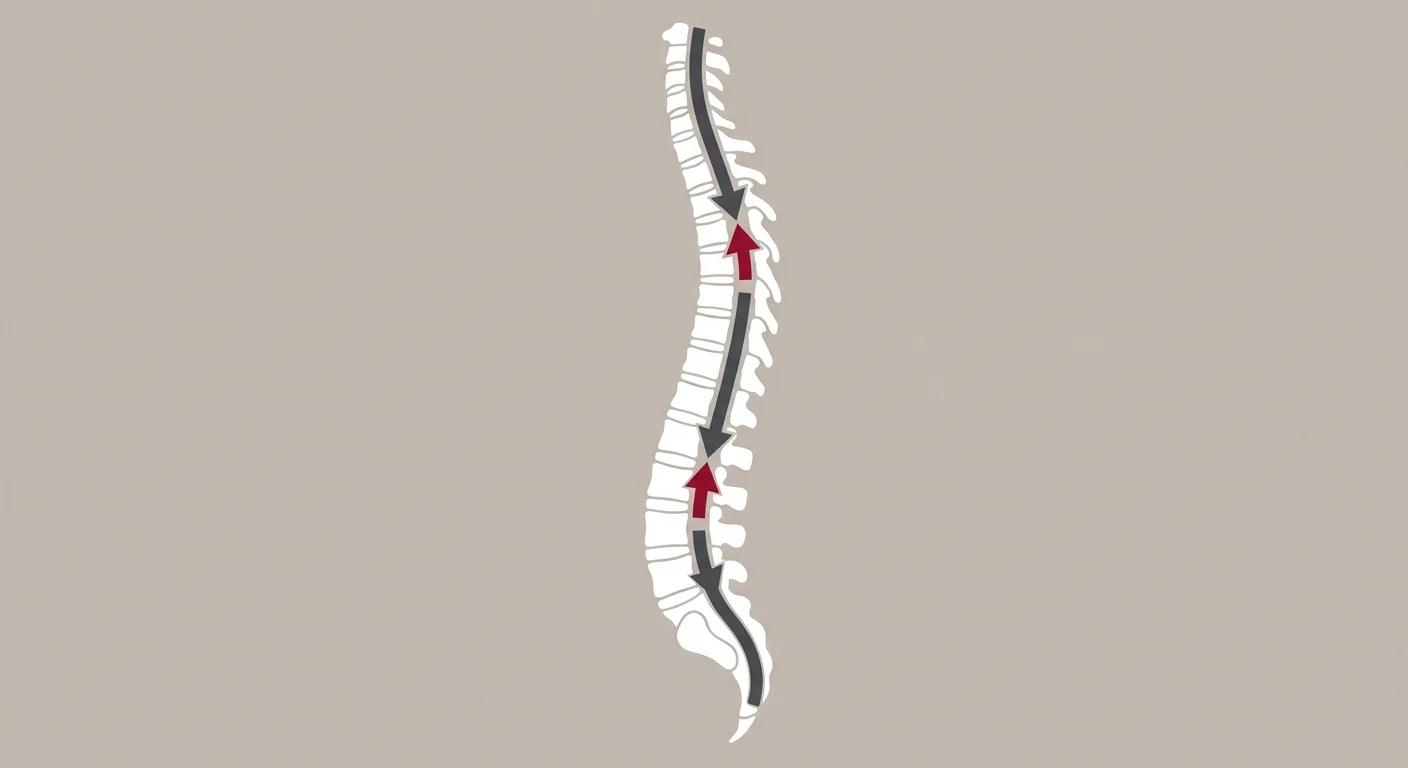
Standard diagnostics are exceptional at finding the visible. Fractures. Tumors. Organ failure. The structural catastrophes that show up on a scan — they catch those. But ruling out the catastrophic is not the same as ruling out that something is wrong.
Medically unexplained symptoms account for up to 15% to 30% of all primary care consultations. That is not a fringe category. That is a structural blind spot — a class of real, measurable physical experience that standard triage was never designed to capture. And it was never going to.
An absent finding is not a clean bill of health. It's the edge of what the tool can see. But nobody explains that. So the patient fills the silence with the only explanation left: that they're the problem.
Functional Nervous System Disruption: The Gap Between Structure and Signal
Here's the thing about nervous system disruption: it does not produce a visible lesion. It produces symptoms — pain, numbness, tingling, dysfunction — that imaging passes straight over. The pathway is misfiring. The system is overloaded. The architecture looks intact because it is intact. That does not mean it is working.
Think of a broken wire versus a wire carrying the wrong signal. Standard diagnostics find broken wires. They were never built to evaluate the signal itself. So when the signal is the problem — when the nervous system is locked in a chronic alarm state that produces real, daily pain — the workup comes back clean. And the patient walks out with nothing.
NIH findings on psychological distress show that up to 70% of undiagnosed chronic sufferers report moderate to severe psychological impairment. That is not a side effect of the pain. That is what happens when the gap between structural testing and functional reality is never closed. The pain keeps coming. The tests stay negative. And the patient — trying to understand what reclaiming their identity after chronic pain even looks like — is left carrying all of it alone.
This Is Not for Everyone — A Qualification
This isn't for everyone. That's not a disclaimer. It's a statement about fit.
If you arrive expecting this practice to replicate what your last provider did — before the assessment is even started — we're not the right fit. The clinical picture drives the care plan here. Not your previous provider's sequence. Not a protocol borrowed from a patient whose symptoms looked similar on paper. A dismissed patient who lands with a second provider that treats assessment as a formality hasn't found care. They've found the same problem wearing different branding.
But if you're willing to start from what your body is reporting right now — not from what a previous workup concluded — that's the conversation this practice is built for. The assessment is the starting point. Everything follows from it.
| Symptom Category | Standard Medical Finding | Functional Nervous System Explanation | Clinical Path Forward |
|---|---|---|---|
| Chronic low back pain with no injury history | Imaging clear — no disc herniation, fracture, or structural damage identified | Nervous system locked in a chronic alarm state; spinal segments are functionally restricted, producing real pain signals without visible structural cause | Assess spinal mobility and nervous system function directly — not through imaging alone |
| Radiating leg pain or numbness | MRI shows no nerve compression; neurological referral returns inconclusive | Nerve pathway disruption can exist as a functional communication failure between spinal segments and peripheral nerves without measurable compression | Evaluate nerve pathway function and segmental mobility at the source of the disruption |
| Persistent headaches with no identifiable trigger | Blood panels normal; neurological screening negative; referred to stress management | Upper cervical restriction alters nervous system tone and vascular signaling in ways no blood test or neurological screen is designed to detect | Evaluate cervical spine function and its relationship to the nervous system response driving the headache pattern |
| Unresolved post-surgical pain | Surgical site healed; structural repair confirmed; pain labeled as residual or psychological | Surgery corrects the visible structural problem but cannot recalibrate a nervous system already conditioned to a chronic pain state | Address the nervous system's learned response pattern — not just the mechanical repair that was already completed |
| Widespread muscle tension and fatigue | Bloodwork unremarkable; rheumatological workup negative; no inflammatory markers | Sympathetic nervous system overactivation produces diffuse muscular tension and fatigue as a functional output — none of which registers on inflammatory or metabolic panels | Identify and address the nervous system driver of the chronic tension pattern rather than chasing individual symptoms in isolation |
| Sleep disruption tied to physical discomfort | Sleep study inconclusive; no apnea or measurable sleep pathology found | Spinal restriction and nervous system dysregulation interfere with the body's ability to downregulate into restorative sleep — a functional problem invisible to sleep monitoring equipment | Restore nervous system regulation at the spinal level so the body can complete the physiological transition into recovery sleep |
The Feedback Loop: How Dismissal Makes the Pain Worse
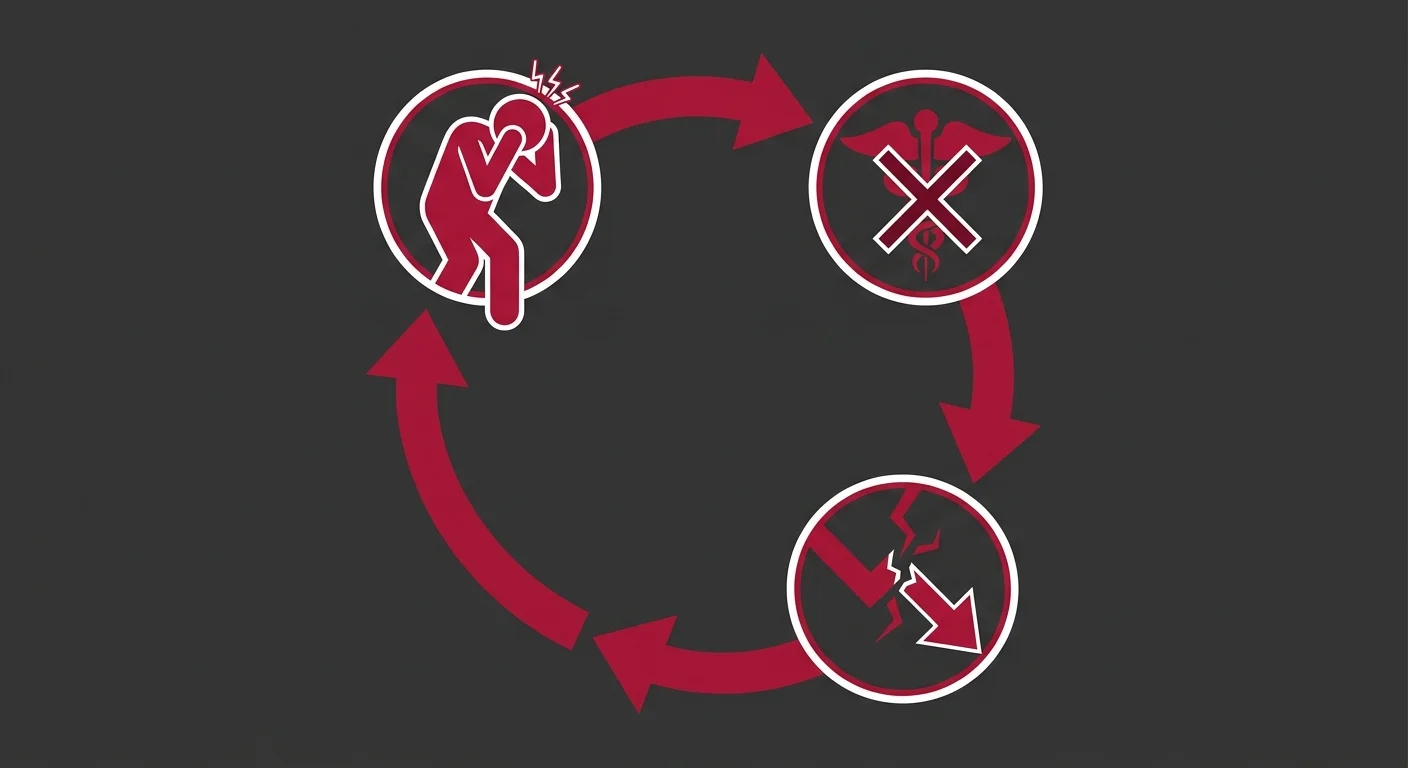
Dismissal does not end at the appointment.
It follows the patient home. And then it starts building.
Here's the thing about a feedback loop: it doesn't need one catastrophic event to cause serious damage.
It just needs the same negative message on repeat until the body and mind start organizing themselves around it. Every clean scan that leads nowhere. Every provider with no next step. Every 'nothing is wrong' — each one adds another layer to a structure the patient has no choice but to live inside.
And the structure that gets built is not neutral.
It is one where the patient learns — through direct, repeated clinical experience — that their pain does not register as real to the people whose job it is to evaluate it.
That lesson does not stay in the exam room.
The Psychological Weight of an Unvalidated Diagnosis
Up to 70% of undiagnosed chronic sufferers report moderate to severe psychological impairment.
That is not a side effect of chronic pain. That is the direct, measurable cost of a diagnostic gap that was never closed.
The longer a patient goes without a real explanation, the worse the psychological picture becomes — independent of whether the physical pain changes at all.
The pain can stay exactly the same. The mental health burden still escalates. Because the silence from the medical system is its own kind of answer.
But there's a second layer that doesn't get talked about enough: the social one.
Patients with medically unexplained conditions report higher rates of social withdrawal and isolation — because when the people around you can't point to a diagnosis, can't see a scan, can't confirm the injury, the pain becomes something you carry quietly. You stop talking about it. You start wondering whether talking about it was ever worth it.
The difference between functional recovery and simply enduring often starts right here — in whether someone finally validates what the patient already knows is real.
When the Body Stops Trusting the System — and Itself
So the feedback loop runs in both directions.
The pain produces distress. The distress amplifies the pain signal. The medical system confirms nothing. And a nervous system already under chronic load gets asked to carry the additional weight of being told it is not actually carrying anything.
That's not a psychological weakness.
It's a physiological response to sustained, unvalidated stress. The nervous system doesn't compartmentalize the clinical verdict the way a chart does. It registers the dismissal the same way it registers everything else — as a signal that the alarm is real, the danger is ongoing, and no one is coming.
For patients who've spent years trying to recover from chronic pain after a failed back surgery — or after any string of tests that led nowhere — this is exactly the state they arrive in.
The smoke alarm is still going off. The nervous system is still firing.
And the patient has been taught — by the very systems that should have helped — to doubt the alarm itself.
That is the real damage the feedback loop does. Not just that the pain was left unresolved. But that the patient was gradually trained to stop trusting the signal.
| Stage of Dismissal | Psychological Response | Physical Consequence | Recovery Impact |
|---|---|---|---|
| First dismissal — initial 'nothing is wrong' verdict | Confusion and self-doubt; patient questions the reality of their own symptoms | Pain continues unaddressed; no corrective intervention begins | Patient delays further care-seeking, assuming the problem is imagined |
| Repeated negative workups across multiple providers | Erosion of trust in the medical system; growing sense of helplessness | Nervous system remains in a chronic unresolved alarm state; pain persists or escalates | Each failed consultation adds time between symptom onset and actual treatment |
| Provider communication that attributes symptoms to stress or psychological causes | Internalized shame; patient stops advocating for themselves in clinical settings | Underlying functional disruption goes unexamined; no pathway to resolution is opened | Patient disengages from health-seeking entirely, further compounding the delay |
| Social invalidation — no visible diagnosis to show others | Social withdrawal and isolation; patient stops discussing pain with family or peers | Loss of social support removes a key buffer against psychological distress | Reduced accountability and engagement undermines follow-through on any care plan |
| Psychological distress amplifying the pain signal | Anxiety and depressive episodes that exist independently of whether physical pain changes | Nervous system load increases as psychological burden compounds the physiological signal | Recovery window narrows as mental health deteriorates alongside unresolved physical symptoms |
| Patient trained to distrust their own symptom reporting | Learned helplessness; patient begins to accept chronic pain as a permanent and unexplainable state | Pain becomes identity rather than condition — the nervous system normalizes the alarm state | Openness to a new clinical framework collapses; re-engagement requires significant trust-rebuilding before care can begin |
What an Individualized Assessment Actually Looks Like

Here's what actually finds the fire.
Not another scan. Not a longer list of ruled-out diagnoses. What actually finds it is an assessment that starts with what the patient walks in reporting — the specific location, the specific quality, the specific triggers — and builds the clinical picture from there. From the patient. Not from a template. Not from a diagnosis code that almost fit.
That distinction is the whole difference. Standard triage asks: what does the test show? An individualized assessment asks: what is this person's nervous system actually doing right now? Those aren't the same question. And they don't produce the same answers.
Starting With What You Actually Report
The assessment begins with what you report. Not what a referral form says your diagnosis should be. Not what a previous provider concluded before the evaluation was finished. Not a protocol built for a different patient who happened to share one symptom with you.
So the questions matter. Where does it hurt? When does it flare? What makes it worse — and has anything shifted since the last time someone actually asked? For patients who've spent years in a system that treated those questions as administrative checkboxes, being genuinely heard is a different experience. It's not a formality. It's the clinical starting point.
But the goal isn't validation. The goal is clinical accuracy — and getting there fast. Starting with what you report isn't the soft route. It's the fastest way to close a diagnostic gap that's already been open too long. The longer that gap stays open, the more damage accumulates. That's not a theoretical concern. That's the mechanism behind why dismissed patients keep getting worse.
When the Plan Needs to Change — and It Will
Here's the thing about an honest care plan: it is not written on the first visit and then followed regardless of what happens next.
If something isn't producing results after a few visits, the plan changes. Not the patient's commitment to the plan. The plan itself. That willingness to stop, reassess, and pivot isn't a weakness in the clinical model — it's the whole point. A provider who locks in a protocol and refuses to adjust it, regardless of what the patient reports back, is running the same failure mode as the system that dismissed them in the first place. Just with better branding.
That is what getting back to being you actually requires. Not a fixed timeline. Not a borrowed sequence. A care plan that moves with what the patient's nervous system is doing in real time. The alarm has been going off for a long time. The job now is to find the fire — not to keep running the same detector over the same empty room.
| Assessment Approach | What It Prioritizes | What It Produces | How It Differs From Standard Triage |
|---|---|---|---|
| Starts with what the patient reports | The patient's lived experience — specific location, quality, and triggers of symptoms | A clinical picture built from the ground up, unique to this patient | Standard triage starts with test results and works backward to the patient; individualized assessment starts with the patient and moves forward |
| Treats the nervous system as the organizing system | Functional status of neurological pathways, not just structural integrity of tissues and bones | A care hypothesis grounded in how this patient's nervous system is actually behaving right now | Standard triage looks for structural damage; individualized assessment evaluates whether the signal itself is the problem |
| Asks questions no referral form contains | The patterns, triggers, and timing that only the patient can describe | Clinical data that standard diagnostics never collect — and that often points directly at what standard tests missed | Standard triage relies on objective measurements; individualized assessment treats patient-reported experience as primary clinical data |
| Refuses to inherit a previous provider's conclusions | What the patient's body is doing now — not what a prior workup decided it should be doing | A fresh starting point that is not contaminated by diagnostic frameworks that already failed this patient | Standard triage frequently anchors to existing diagnoses; individualized assessment treats every assessment as a first look |
| Builds a care plan that adapts | Clinical response over time — what is improving, what is not, and what needs to change | A plan that pivots when results are absent, rather than repeating a protocol past the point of clinical usefulness | Standard triage produces a fixed protocol; individualized assessment produces a living plan that moves with the patient |
| Defines success as restored function, not resolved paperwork | The patient's ability to return to the activities and identity that chronic pain interrupted | A clinical goal the patient can actually feel — not just a scan result that satisfies a billing code | Standard triage closes the case when tests normalize; individualized assessment stays open until the patient is back to being themselves |
Frequently Asked Questions
These are the questions that never made it into the appointment.
Not because they're complicated. Because the appointment ended before you got to ask them.
So here they are. Direct answers. No referrals back to the same system that already ran out of ideas.
Why do medical tests show nothing is wrong when I am still in severe pain?
Because standard medical tests are built to find damage. Fractures. Tumors. Disc herniations large enough to register on imaging. That is what they were designed to find — and they do it well.
But a nervous system locked in a sustained stress response, over-firing, or generating pain through sensitized pathways does not produce a lesion. It does not show on an X-ray. It does not show on an MRI. The test comes back clean because the test is asking the wrong question.
Medically unexplained symptoms account for 15% to 30% of all primary care consultations. That is not a rare edge case. That is one of the most common presentations in medicine — and the standard toolkit was never built to resolve it.
What are the long-term psychological effects of being told your pain is not real?
The damage is real. And it builds.
Up to 70% of undiagnosed chronic sufferers report moderate to severe psychological impairment. Not as a character flaw. As a direct, measurable response to sustained, unvalidated pain.
Here's the thing: the nervous system can't separate the clinical verdict from the pain signal. When the message keeps coming back as 'nothing is wrong,' the system registers that as confirmation — the alarm is permanent, danger is ongoing, and no one is coming. That registers as threat. Sustained threat loads produce clinical anxiety, depression, and a progressive collapse of the belief that recovery is even possible.
The longer the gap stays open, the heavier that weight becomes. Independent of whether the physical pain changes at all.
Can a chiropractor help with symptoms that medical doctors have dismissed as unexplained?
Yes — specifically when the underlying cause is functional nervous system disruption that standard imaging was never built to detect.
Chiropractic care works directly with the spine and the nerve pathways running through it. When spinal misalignments are disrupting nerve communication, the downstream symptoms — pain, numbness, tingling, fatigue, tension — are real. And they're addressable.
But the assessment is what makes the difference. An individualized assessment starts with what you actually report: where it hurts, when it fires, what makes it worse, what has briefly helped. That clinical picture drives the care plan. Not a protocol borrowed from a patient who presented differently and happened to share one symptom.
What steps should I take if a provider tells me my physical pain is psychological?
First — don't accept the framing. A provider telling you your pain is psychological isn't delivering a diagnosis. They're telling you their instrument didn't find the cause. Those are two different things.
Second, find a provider who starts from what you report — not from what the last referral form concluded. The question worth answering isn't 'what does the scan show?' It's 'what is your nervous system doing right now?'
Third, understand that the doubt, frustration, and withdrawal you're carrying are documented consequences of a diagnostic gap — not evidence the pain was never real. That's a predictable response to a system that ran out of answers before it ran out of your time.
How does a lack of clinical diagnosis affect chronic pain recovery?
It delays it. Sometimes by years.
No clinical explanation means no treatment pathway. No treatment pathway means the patient either keeps cycling through the same triage system or stops seeking care entirely. Neither one produces recovery.
The social layer makes it worse. Patients facing unexplained conditions report higher rates of withdrawal and isolation — because when no one around you can point to a diagnosis or see a scan, the pain becomes something you carry quietly. You stop talking about it. You start wondering whether talking about it was ever worth it.
And up to 70% of undiagnosed chronic sufferers report moderate to severe psychological impairment as that gap stays open. The physical picture and the mental health picture deteriorate together. Recovery doesn't start until someone closes the gap with a real explanation.
Is there a difference between psychosomatic pain and functional nervous system disruption?
Yes — and the distinction matters clinically.
Psychosomatic pain is generated by psychological processes without a detectable physical driver. Functional nervous system disruption is a physical process. The nervous system is producing pain signals, sustaining them, amplifying them through sensitized pathways. That process has a structural cause — even when standard imaging doesn't detect it.
The pain isn't invented. The signal is real. Functional disruption requires a physical clinical response, not a psychological one. That's exactly why dismissed patients don't improve with reassurance alone.
The alarm is real. The fire just needs the right detector.
Unexplained Does Not Mean Untreatable
The smoke alarm was never the problem.
The nervous system was doing exactly what it's built to do — fire a signal, hold it, and keep firing until someone responds. That's not malfunction. That's the system working correctly.
The detector was the problem. And a detector calibrated for structural damage can't find a functional disruption. Doesn't matter how many times you run it over the same room.
What finds the fire is an assessment that starts with what you walk in reporting. Not what a referral form says. Not what the provider before this one decided before the evaluation was even finished.
At Touch of Wellness Chiropractic, that's the clinical standard — not a philosophy statement on a waiting room wall. Dr. Karen Hannah's Zoology background means she reads the signal the nervous system is sending. Not just the structural picture a scan produces. The whole system. What it's doing. What it's been protecting against.
Unexplained doesn't mean untreatable. It means no one has used the right instrument yet.
So if you've walked out of appointment after appointment with a clean scan and no next step — more of the same isn't the answer. It's the problem.
The assessment is where this starts. Everything that follows gets built from what your nervous system is actually doing right now. Not from a template. Not from a diagnosis code that almost fit.
The alarm is real. The fire just needs the right detector.
That alarm has been going off long enough. If no one's found the fire yet, that's not a verdict on your pain — it's a verdict on the detector they used. Dr. Karen Hannah at Touch of Wellness Chiropractic starts from what you actually walk in reporting. Not what the imaging missed. Not what the last provider decided before the assessment was finished. If your symptoms are real and your answers have been empty, that's worth a different conversation.