
Post-Adjustment Ergonomics: How to Keep Your Neck and Jaw Aligned After Chiropractic Care
The cervical spine and the jaw are one biomechanical loop. What you do after a chiropractic adjustment — at your desk, in your bed, in how you hold your head — determines whether the adjustment holds or quietly unravels.
A chiropractic adjustment resets your spinal joints. It does not reprogram the posture habits, the desk setup, or the muscle tension patterns that created the problem. The spine returns to the environment it lives in every day. The adjustment is a reset — your habits are the repair.
That connection between the neck and jaw is closer than most people expect. Up to 70% of patients with temporomandibular dysfunction also have measurable cervical spine tenderness and dysfunction. These are not two separate conditions. They are the same structural problem showing up in two places. The upper cervical vertebrae — C1 and C2 specifically — sit at the exact intersection of the trigeminal nerve system and the muscles that control jaw movement. When that region loses alignment, jaw tension, headaches, and facial pain follow.
Posture is the variable that either holds an adjustment or undoes it. Every inch the head drifts forward from neutral adds approximately 10 pounds of force on the cervical spine. Most people working at a desk let that drift happen across hours without noticing. After extended periods of static poor posture, functional cervical extension degrades in a predictable pattern.
Upper cervical adjustments have measurable effects on jaw pain. They reduce nerve sensitization along the trigeminal pathways. But those effects are not permanent on their own. Screen height, pillow support, sleep position, and muscle tension habits all determine how long a properly aligned cervical spine stays that way. Getting those variables right is what turns a single adjustment into lasting structural change.
Last Updated: August 25, 2026
- • Why the Neck and Jaw Are One Biomechanical System
- • Why the Adjustment Alone Is Not Enough
- • Desk Setup: The Daily Load Your C1-C2 Can't Ignore
- • Sleep and Off-Desk Habits That Protect the Adjustment
-
• Frequently Asked Questions
- • How does neck alignment affect my jaw alignment after an adjustment?
- • Can poor desk posture cause my C1-C2 vertebrae to fall out of alignment?
- • How long after a chiropractic adjustment should I wait to resume normal posture habits?
- • What sleeping position is best for keeping my neck and jaw aligned?
- • Why do I feel jaw tension when my neck muscles are tight?
- • Does a mouth splint address the root cause of jaw and neck pain?
- • The Adjustment Holds When the Environment Supports It
Why the Neck and Jaw Are One Biomechanical System
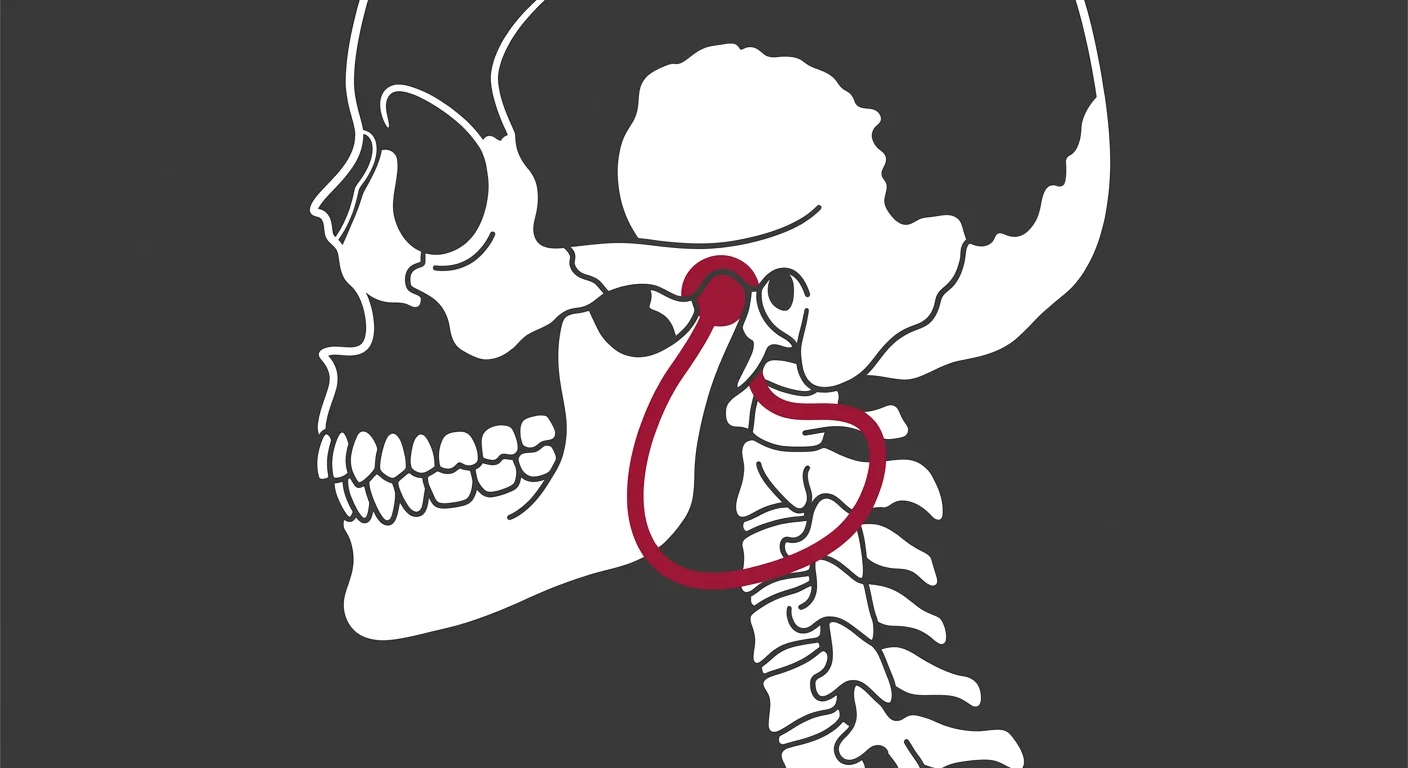
The neck and jaw aren't neighbors. They're the same system — and what disrupts one disrupts the other.
Most people have felt this without knowing what they were feeling. Jaw tension shows up first, then neck stiffness follows a day behind it. Or it runs the other direction — a stiff neck arrives Monday, and by Wednesday the jaw is clicking. That's not a coincidence. That's shared anatomy doing exactly what anatomy does.
That's why the rest of this article exists. Not posture for posture's sake. Keeping one integrated system from pulling itself apart after it's finally been reset.
The C1-C2 and TMJ Connection Explained
C1 and C2 — the first two cervical vertebrae — sit at the structural bridge between the skull and the spine. They're also the vertebrae closest to the temporomandibular joint. Shared musculature. Overlapping nerve pathways. A trigeminal system that pulls input from both regions simultaneously. That proximity isn't incidental. It's the whole problem.
When C1 or C2 shifts, the trigeminal nerve system responds. Research on upper cervical stabilization shows that restoring proper alignment directly reduces central sensitization along those trigeminal pain pathways. Jaw pain. Facial tension. Headaches. All of it — with no direct injury to the jaw. Just two vertebrae out of position, running the wrong signal.
That's the loop in action. An individualized chiropractic adjustment that restores C1-C2 position changes what the trigeminal system is receiving. The jaw relaxes — not because anyone touched it, but because the upstream signal changed. The jaw follows the cervical spine. Not the other way around.
Why Most Providers Treat These as Separate Problems
Here's where the standard model breaks down. Most dental and medical providers treat jaw pain as a jaw problem. Splints. Bite guards. Occlusal adjustments. All of it aimed at the jaw, with no evaluation of what's happening two inches above it. The patients who keep relapsing despite dental splint care aren't outliers. They're the predictable result of treating one end of a two-part system and calling it done.
Up to 70% of TMD patients have verified cervical spine tenderness and dysfunction running alongside their jaw symptoms. That's not a footnote. That's the majority of people sitting in a dental chair getting a bite guard while the structural driver of their pain sits untouched in their cervical spine.
This isn't about careless providers. It's about what specialization does to clinical sight lines. Dentists see the jaw. Neurologists see the nerve pain. Neither is routinely trained to evaluate C1-C2 mechanics. So the loop stays broken, and patients keep cycling through appointments that address the symptom without ever touching the system.
| Structure | Role in the Loop | What Breaks When It's Off |
|---|---|---|
| C1 (Atlas) | First cervical vertebra; supports the skull and governs rotational movement of the head | Misalignment shifts skull weight off-center, loading the jaw muscles unevenly and triggering trigeminal nerve irritation |
| C2 (Axis) | Second cervical vertebra; provides the pivot point for neck rotation and connects directly to the upper cervical nerve network | Loss of proper position compresses shared nerve pathways, producing jaw pain, facial tension, and headaches without any direct jaw injury |
| Trigeminal Nerve System | Registers sensory input from both the cervical spine and the temporomandibular joint simultaneously; acts as the shared communication channel between the two regions | Cervical misalignment increases central sensitization along trigeminal pathways — the jaw registers pain even when no jaw-specific damage is present |
| Suboccipital Musculature | Deep muscles at the base of the skull that stabilize head position and directly influence jaw muscle tension through shared fascial connections | Chronic tightness from forward head posture pulls the jaw out of its resting position, creating grinding, clicking, and uneven bite load |
| Temporomandibular Joint (TMJ) | The jaw hinge — the downstream end of the cervical loop; position and tension are heavily influenced by what's happening at C1-C2 | When the cervical spine is misaligned, the TMJ compensates with asymmetrical loading — splints and occlusal guards address this end of the loop while the structural driver at the cervical spine goes untreated |
| Cervical Postural Alignment | The overall position of the neck and head relative to the spine; determines how load is distributed across the entire system throughout the day | Forward head carriage multiplies mechanical stress on every structure above the shoulders — sustained poor posture progressively undoes cervical correction between visits |
Why the Adjustment Alone Is Not Enough
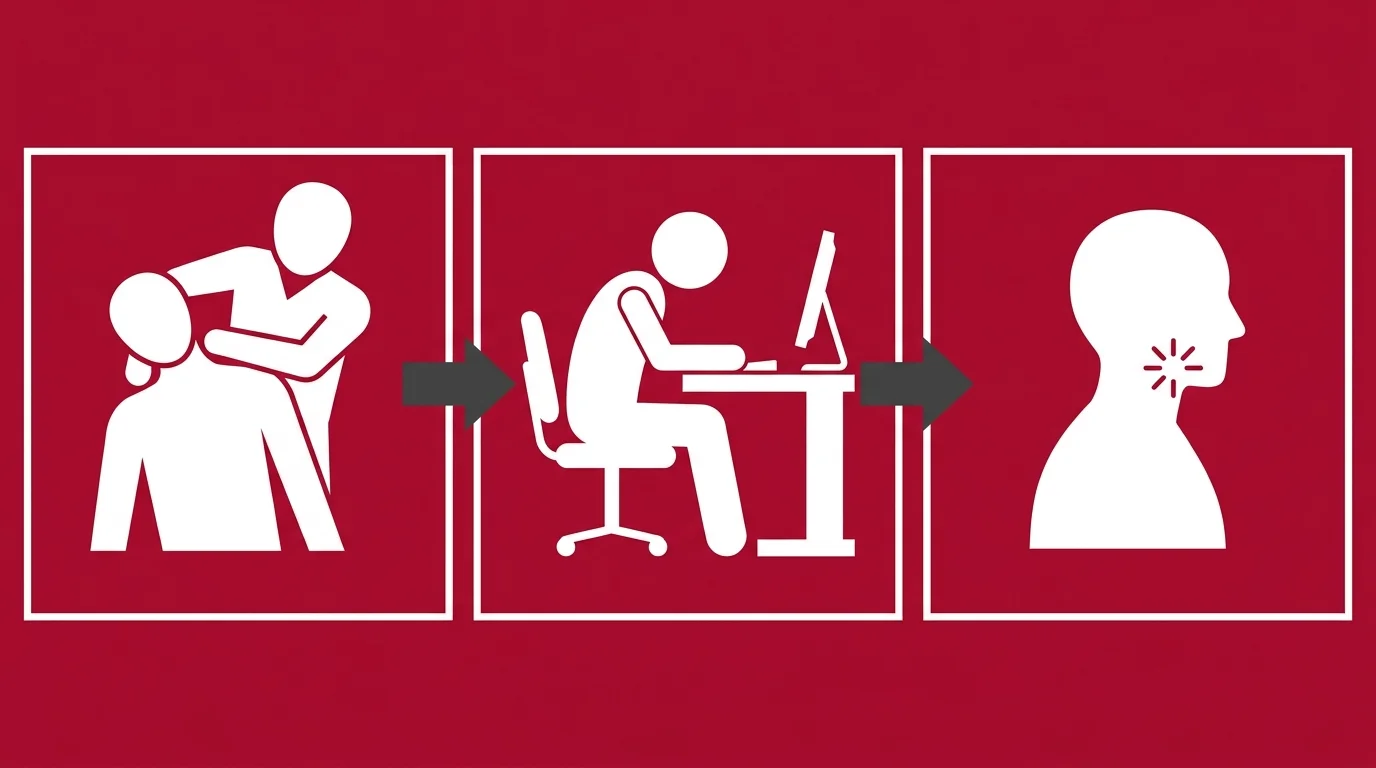
The adjustment does its job. The problem is everything that happens after you leave.
The table is a positional reset. What you do for the next eight hours — at a desk, in a car, slumped on a couch — is what decides whether that reset holds. The spine doesn't stay where it's put. It returns to the environment that shaped it. And if that environment hasn't changed, neither has much else.
That's the gap most care plans ignore. A clinical adjustment targeting upper cervical alignment produces measurable reductions in jaw pain pressure thresholds — that's what NIH research confirms. But those gains erode fast when the posture loads, muscle tension patterns, and sleep positions that built the dysfunction are left completely untouched.
The Cookie-Cutter Protocol Problem
Take a patient whose jaw pain is being driven by six hours of forward head carriage every workday. Repeating a cervical adjustment without correcting the ergonomics is bailing water without finding the leak. Every inch the head drifts forward adds approximately 10 pounds of force onto the cervical spine and surrounding musculature. Run that load across a full workday and the adjustment has been fighting that mechanical pressure since the moment the patient walked out the door.
The cookie-cutter protocol doesn't fail because the technique is wrong. It fails because it treats the appointment as the entire intervention. It's not. It's the beginning of one.
Patients dealing with recurring C1-C2 alignment issues describe the same pattern: relief that holds for a few days, then fades before the next visit. That's not evidence that chiropractic isn't working. That's evidence the biomechanical environment outside the clinic is undoing the adjustment faster than the visits can hold it.
A care plan that doesn't account for what you do between visits is incomplete by design. The adjustment resets position. The daily habits — desk setup, screen height, sleep position, jaw posture — determine whether that position holds. Treating one without the other means choosing to repeat the same correction indefinitely.
Who This Approach Doesn't Serve
Here's the thing — this approach isn't for everyone. And that's worth saying directly.
If you're arriving with a fixed expectation of what sequence your previous provider ran, unwilling to change your workstation, or planning to try two visits and see what happens — this isn't the right fit. Up to 70% of TMD patients have verified cervical spine dysfunction running alongside their jaw symptoms. That level of systemic involvement doesn't respond to partial commitment. It requires both the provider and the patient showing up fully, every time.
The clinical work is Dr. Karen Hannah's responsibility. The daily habits are yours. That split isn't optional — and no care plan at Touch of Wellness Chiropractic is built around the assumption that the adjustment does the work on its own.
| Approach | What It Addresses | What It Misses | Clinical Risk |
|---|---|---|---|
| Dental splint / bite guard | Jaw joint mechanics and occlusal pressure | Cervical spine alignment and upstream nerve input driving jaw tension | Jaw symptoms may persist or return because the structural driver — C1-C2 positioning — is never evaluated or corrected |
| High-volume chiropractic adjustment (template protocol) | Cervical joint position at the time of the visit | Daily postural load, screen height, sleep mechanics, and muscle tension patterns between visits | Adjustment gains erode rapidly when the biomechanical environment that built the dysfunction is left unchanged |
| Neurological / pain management referral | Nerve sensitization symptoms — headaches, facial pain, referred jaw ache | The musculoskeletal and joint mechanics producing the sensitization in the first place | Symptom management without structural correction creates a cycle of recurring flare-ups with no resolution pathway |
| Isolated jaw physiotherapy | Local muscle tension and range-of-motion deficits in the jaw | Upper cervical vertebral alignment and the shared trigeminal nerve input linking neck and jaw | Strengthening jaw musculature while C1-C2 remains misaligned reinforces dysfunction rather than resolving it |
| Individualized chiropractic adjustment with post-adjustment ergonomic protocol | C1-C2 joint position, trigeminal nerve load, and the daily mechanical environment sustaining the dysfunction | Nothing — this is the complete intervention loop: clinical reset plus environmental correction | Minimal, when both the in-clinic work and the between-visit habits are addressed together as a single care unit |
Desk Setup: The Daily Load Your C1-C2 Can't Ignore
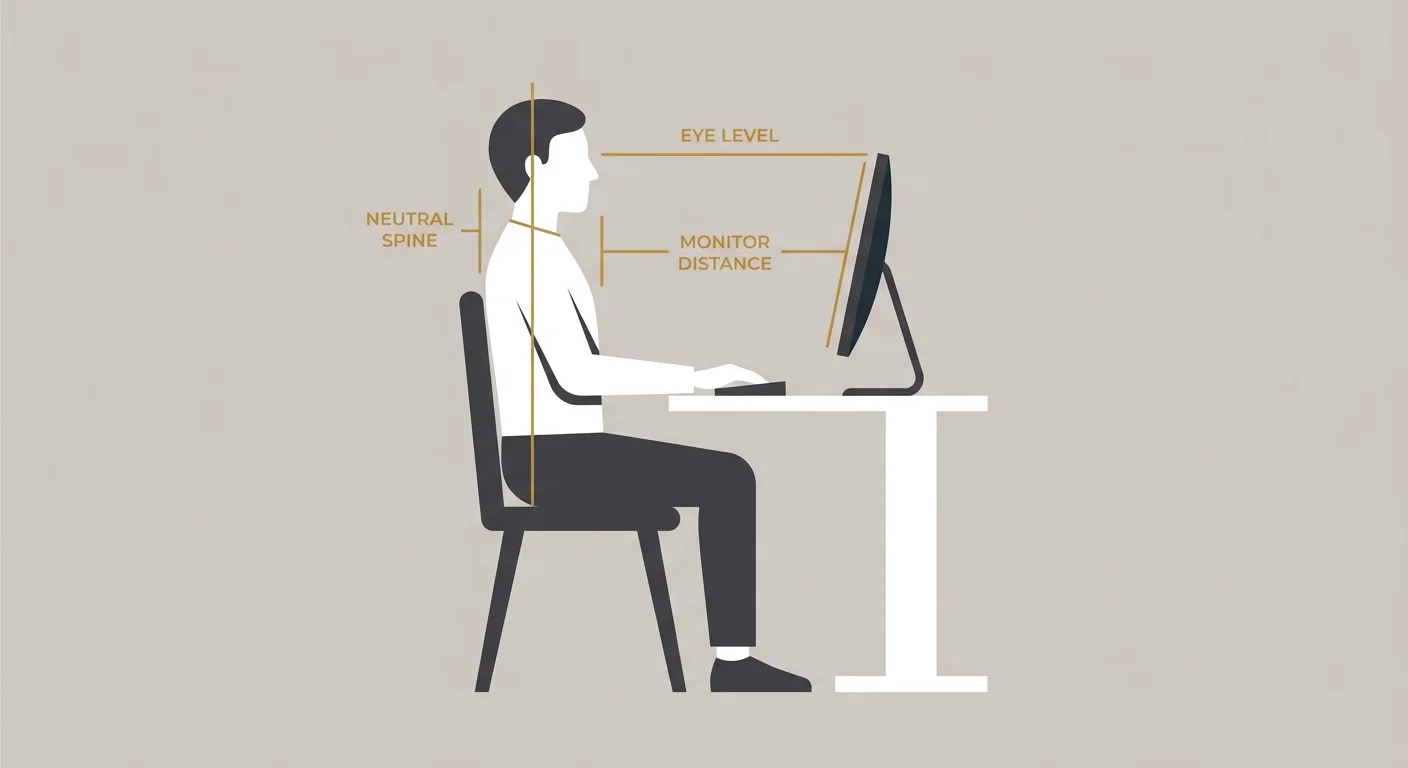
So where do adjustments fall apart? Not in the office. At the desk. Eight hours of slow, invisible, cumulative load — and the correction from the morning starts losing ground by noon.
Every inch the head drifts forward from neutral adds approximately 10 pounds of extra force onto the cervical spine and surrounding musculature. Four hours of static poor posture at a workstation produces a predictable loss of functional cervical extension. That's not a warning label. That's physics running its course whether you're paying attention or not.
The adjustment reset the position. The desk decides if it holds. Those aren't separate conversations.
Monitor Height and Head Carriage
Monitor height is where most people give up the most ground, and they don't even notice it happening. Screen sits too low, head drops forward — and that exact load pattern is what erodes C1-C2 positioning across a workday. Not dramatically. Just constantly.
NIH guidelines confirm that the top of the monitor should sit level with the eyes, positioned 18 to 30 inches from the face. That single change alters the angle of the entire cervical column. It's not a comfort preference. It's a structural decision with direct consequences for how long the adjustment holds.
Every inch of forward head carriage adds approximately 10 pounds of cervical load. A screen sitting two inches too low is a two-inch drift. Across eight hours, that mechanical pressure works directly against what the adjustment corrected. For patients managing jaw tension alongside cervical dysfunction, clinical shockwave therapy can address the soft-tissue component of that accumulated load. But the monitor height still has to be fixed first — or the tissue work is fighting a problem that hasn't been removed.
Seat Position, Jaw Clenching, and the Hidden Load
Here's the thing about seat position — it matters for the exact same reason the monitor does. A chair set too low tilts the pelvis backward. That collapses the lumbar curve, rounds the thoracic spine, and drives the head forward. The cervical spine doesn't fail on its own. It compensates for everything misaligned below it. Fix the monitor and ignore the chair, and you've solved half the problem.
And then there's jaw clenching — the load almost no one tracks. Stress-driven jaw tension while staring at a screen adds direct muscular pull on the same shared structures C1-C2 alignment depends on. The jaw follows the cervical spine — but a clenched jaw pulls right back. That bidirectional tension is what makes the desk environment so disruptive. A properly positioned cervical spine can still be pulled out of place by eight hours of untracked muscular stress.
Add clenching to static posture and the muscular load on the cervical column compounds — faster than four hours of bad positioning alone. That's not a worst-case scenario. That's a Tuesday for most desk workers. A break every 45 to 60 minutes to reset head position and release jaw tension isn't a wellness suggestion from a brochure. It's what keeps the adjustment from being undone before you've left the building.
| Workstation Element | Correct Setup Specification | Why It Matters for C1-C2 |
|---|---|---|
| Monitor Height | Top of screen level with eyes, positioned 18 to 30 inches from the face | Keeps the cervical column in neutral — preventing the forward head carriage that erodes C1-C2 positioning across a full workday |
| Head Position | Ears stacked directly over shoulders — zero forward drift from neutral alignment | Every inch the head moves forward adds approximately 10 pounds of extra force on the neck muscles and cervical spine — compounding across hours of work |
| Movement Breaks | Reset head position and release jaw tension every 45 to 60 minutes — do not sit static beyond four hours | Four-plus hours of static poor posture produces a predictable loss of functional thoracic and cervical extension — a mechanical pattern the spine runs regardless of awareness |
Sleep and Off-Desk Habits That Protect the Adjustment
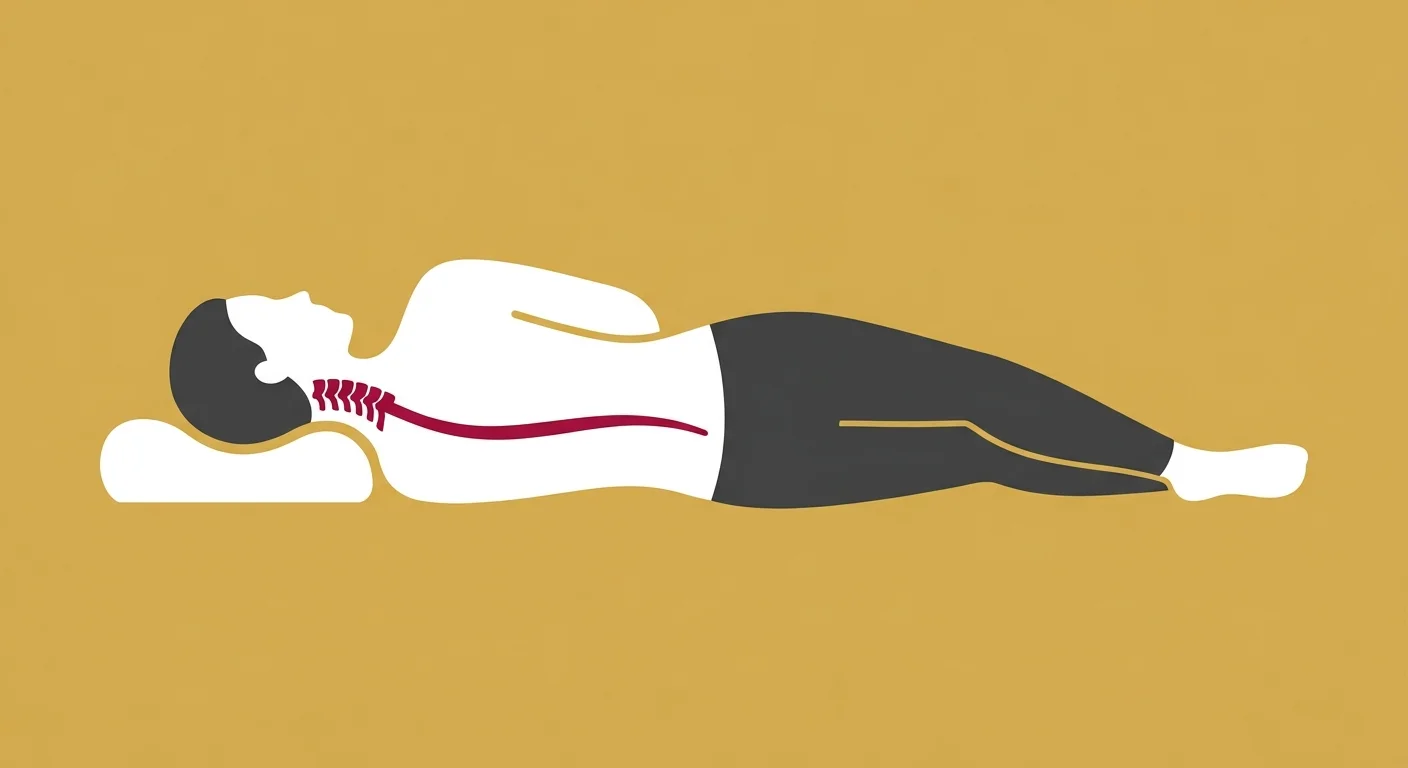
The desk gets the attention because it's visible. But the adjustment is at risk for eight more hours after you leave the office.
Seven or eight hours in a fixed position is the longest uninterrupted load your cervical spine takes all day. A bad screen position fights the adjustment while you're awake and aware enough to feel it. A wrong sleep position fights it while you can't do anything about it. The mechanical damage is the same either way. The difference is you won't notice the second one until it's already done.
Upper cervical stabilization directly dampens trigeminal pain sensitization. That's the mechanism behind why jaw pain patients feel relief after C1-C2 work. But those neurological gains require the joint mechanics to stay put. Sleep position is one of the fastest ways to lose that stability between visits — quietly, every night, with zero symptoms until the damage has already stacked.
Pillow Position and Cervical Curve
Stomach sleeping is the most disruptive position for C1-C2 mechanics. It holds the head in sustained rotation for hours. That's the exact loading pattern a cervical adjustment is designed to undo.
Side sleeping works — when the pillow does its job. The target is a neutral cervical curve: ear level with the shoulder, head neither dropping toward the mattress nor tilting up toward the ceiling. Most pillows are too flat for side sleepers and too thick for back sleepers. The pillow isn't a comfort accessory — it's a structural tool. A pillow that doesn't match your sleep position is undoing alignment work every single night. For patients unsure whether morning head pain reflects jaw tension, cervical strain, or something else, knowing how jaw and cervical symptoms differ from migraine patterns is a useful clinical starting point.
Back sleeping with a cervical-support pillow is the most protective position after an upper cervical adjustment. The head stays neutral. The jaw relaxes without gravity dragging it forward. The shared musculature between C1-C2 and the temporomandibular joint gets a genuine rest instead of a prolonged stretch. If jaw tension or clenching persists overnight, cold laser therapy options address the soft-tissue component of that accumulated load — but pillow position still comes first.
Daily Movement Habits That Reinforce Alignment
Alignment doesn't hold because of what happens during a chiropractic visit. It holds because of what happens in the twenty-three hours between visits.
Four hours of static poor posture produces a predictable loss of functional cervical extension. That pattern doesn't reset on its own. It needs a deliberate movement break to interrupt it before the mechanical load compounds. A short reset every 45 to 60 minutes isn't a stretching routine. It's closing the load cycle before the load wins.
Here's what actually works: chin tucks to restore neutral head position, shoulder rolls to release upper thoracic tension pulling the cervical spine forward, and deliberate jaw relaxation — tongue resting lightly on the palate, teeth apart, jaw muscles fully unloaded. The jaw follows the cervical spine. Daily movement is what makes that relationship work in your favor instead of against you. Clinical adjustments addressing upper cervical stabilization produce measurable reductions in jaw pain thresholds. The patients who hold those gains longest treat the space between visits as part of the care plan. Not a gap in it.
| Habit | Alignment Effect | Frequency Recommendation |
|---|---|---|
| Stomach sleeping | Forces sustained cervical rotation for hours — directly rebuilds the muscular imbalances an upper cervical adjustment corrects | Avoid entirely after adjustment; transition to side or back sleeping |
| Side sleeping with correct pillow height | Keeps the ear level with the shoulder and maintains a neutral cervical curve — prevents the head from dropping or tilting overnight | Every night; verify pillow fills the gap between ear and mattress without overcorrecting |
| Back sleeping with cervical-support pillow | Preserves the natural cervical curve, keeps the jaw relaxed without gravitational forward pull, and unloads the shared C1-C2 and jaw musculature | Preferred position post-upper-cervical adjustment; use consistently |
| Deliberate jaw relaxation before sleep | Tongue rests lightly on the palate, teeth apart, jaw muscles unloaded — interrupts overnight clenching that adds direct muscular pull to cervical structures | Each night before sleep and any time jaw tension is noticed during the day |
| Movement reset every 45 to 60 minutes of static position | Interrupts the predictable cervical extension loss that builds with prolonged static loading — chin tuck restores neutral head position, shoulder rolls release upper thoracic tension | Throughout the workday and during any extended seated activity |
Frequently Asked Questions
Most patients leave knowing something shifted. What they don't know is whether their daily habits are holding that shift — or quietly dismantling it.
Once the neck-jaw connection makes sense, different questions start coming up. Not 'what is TMJ' — but 'what does my monitor height have to do with it' and 'why does my jaw tighten when I'm stressed at my desk.' That's what these are for.
How does neck alignment affect my jaw alignment after an adjustment?
They're the same system. The neck and jaw share musculature, joint load, and neurological pathways — so when C1-C2 alignment is restored, the muscular tension pulling the jaw out of its resting position starts to release. That's why patients often notice jaw relief after an upper cervical adjustment even when they came in for neck pain.
Up to 70% of TMD patients have concurrent cervical spine tenderness and dysfunction. The jaw problem, more often than not, has a cervical spine component driving it. Correct the cervical position and the jaw follows. Let it drift, and the jaw tension returns with it.
Can poor desk posture cause my C1-C2 vertebrae to fall out of alignment?
Yes — and it doesn't take much. For every inch the head drifts forward from neutral, the cervical spine absorbs approximately 10 additional pounds of force. A poorly set monitor or a chair that pitches the pelvis back produces that forward drift without you feeling it in real time.
The load is slow and cumulative. By the time your neck is symptomatic, the mechanical pattern has been running for hours. That's the exact environment that erodes C1-C2 positioning. The desk doesn't cause one dramatic failure. It just applies constant, low-grade pressure in the wrong direction until the adjustment's gains are gone.
How long after a chiropractic adjustment should I wait to resume normal posture habits?
There's no waiting period. The ergonomic habits start the same day.
The adjustment resets the position. The environment determines whether it holds. Sitting at a poorly aligned workstation that same afternoon and spending six hours there is working against the correction immediately. Monitor height, jaw resting posture, and movement breaks are all things you can address right away. The sooner the daily environment supports the new position, the more the adjustment has to work with between visits.
What sleeping position is best for keeping my neck and jaw aligned?
Back sleeping with a cervical-support pillow is the most protective position after an upper cervical adjustment. The head stays neutral, the jaw rests without gravitational pull dragging it forward, and the shared musculature between C1-C2 and the temporomandibular joint gets actual recovery time.
Side sleeping works — but only when the pillow fills the lateral gap correctly. Ear level with the shoulder. Not dropping toward the mattress.
Stomach sleeping is the problem position. It locks the head in sustained rotation for hours and rebuilds exactly the muscular imbalances the adjustment corrected. The pillow isn't a comfort accessory. It's a structural tool — and a mismatched one undoes alignment work every single night.
Why do I feel jaw tension when my neck muscles are tight?
Because they share the same structural load. The upper cervical muscles connect directly into the musculature surrounding the temporomandibular joint. When the cervical muscles are tight, they pull on those shared structures and change the resting tension in the jaw.
Upper cervical stabilization directly dampens trigeminal pain sensitization — the same neurological pathway involved in jaw pain. When the neck is holding tension, that signal runs straight into the jaw. It's not referred pain the way most people think of it. It's a direct mechanical and neurological connection. Relaxing the jaw without addressing the cervical tension is treating the symptom and leaving the cause exactly where it was.
Does a mouth splint address the root cause of jaw and neck pain?
A mouth splint manages the jaw in isolation. It doesn't touch the cervical spine — and for patients where cervical dysfunction is driving the jaw symptoms, the splint isn't reaching the source of the problem.
Up to 70% of TMD patients have concurrent cervical spine tenderness. If that cervical component isn't assessed and corrected, the splint is managing the output of an unresolved input. That's not resolution. A splint that helps for a week and then stops working isn't failing — it's telling you the root cause is still active.
C1-C2 alignment work is asking a different clinical question: what is producing the jaw dysfunction, and is it coming from the cervical spine? That's a question a mouth splint can't answer.
The Adjustment Holds When the Environment Supports It
The neck and jaw aren't two separate problems. They're one system — shared musculature, shared load, shared consequences when either loses position.
A C1-C2 adjustment corrects the position. It doesn't touch the environment that keeps pulling that position back out of place.
That part is yours.
Here's what breaks the pattern. Treating the jaw in isolation — or running the same cervical protocol on every patient regardless of what they report — keeps people cycling through care without getting better. Same template. Same result. That's not a care plan. That's a holding pattern.
The adjustment opens a window. Monitor height, pillow selection, jaw resting posture, deliberate movement breaks — none of those are wellness extras. They're the structural conditions that determine whether the adjustment holds or gets quietly undone before the next visit.
That window doesn't stay open on its own. You hold it or you don't.
At Touch of Wellness Chiropractic, the care plan is built from what you actually report — and it accounts for what happens between visits, not just during them. The desk setup. The sleep position. The jaw habits compounding quietly while everything else looks fine.
If you've been managing jaw tension or recurring head pain without anyone asking about your monitor height, your pillow, or how you hold your jaw at a desk — you haven't had the full conversation yet. That conversation is where the real work starts.
The adjustment is a reset — your habits are the repair.
If no one has asked about your monitor height, your pillow, or how you hold your jaw at a desk — you haven't had the full conversation yet. At Touch of Wellness Chiropractic, that's where the assessment starts. Not with a protocol. With what you actually report. The adjustment is a reset. Your habits are the repair. Find out whether yours are holding the work — or quietly undoing it.