
(309) 321-8412 | 1101 W Jackson St, Suite A, Morton, IL 61550
(309) 321-8412 | 1101 W Jackson St, Suite A, Morton, IL 61550
How the Nerve Restoration Protocol Repairs the Human Nervous System
The Nerve Restoration Protocol repairs the human nervous system by removing mechanical interference from spinal segments — restoring signal integrity — while simultaneously using photobiomodulation (Cold Laser Therapy) and acoustic pressure waves (Shockwave Therapy) to accelerate cellular regeneration. This multi-modal approach creates a biological environment where Brain-Derived Neurotrophic Factor (BDNF) is modulated, facilitating the natural repair of damaged peripheral nerve fibers through neuroplasticity.
The protocol works in three coordinated stages. Stage one uses chiropractic adjustments to decompress spinal segments, restoring the signal pathways the rest of the body depends on. Stage two introduces Cold Laser Therapy — light energy the mitochondria inside nerve cells use to produce ATP, the fuel required for cellular repair. Stage three adds Shockwave Therapy, which delivers acoustic pressure waves that promote nerve regeneration and modulate pain pathways through mechanical stimulation.
What makes this approach different isn't just the combination of tools. It's the sequence and the biological rationale behind it. The nervous system isn't a collection of isolated wires. It's an interconnected ecosystem — and repairing it requires addressing the structural, cellular, and metabolic conditions at the same time.
This article explains the mechanism behind each stage, why the sequence matters, what the research says about each modality's effect on nerve tissue, and what realistic recovery looks like for patients who've been told their nerves are "dead."
Results may vary. Individual outcomes depend on the extent of nerve damage, time elapsed since onset, and patient compliance with the full care plan.
Last Updated: April 8, 2026
Why Most Neuropathy Treatments Miss the Point
Most people who show up here have already tried something. Medication. Physical therapy. A referral to pain management. Some have been through all three.
They're still here because none of it worked.
That's not a failure of effort. That's what happens when the treatment model is built around a broken assumption — that silencing the signal is the same as fixing the problem. It isn't. Root-cause chiropractic care starts from a different premise entirely.
The Problem With Pharmaceutical Nerve Management
Pain isn't the disease. Pain is the alarm.
Gabapentin, pregabalin, tricyclic antidepressants — they work by suppressing the electrical signal traveling along the nerve. The nerve is still damaged. The compression is still there. The blood flow is still compromised.
The alarm gets quieter. The fire keeps burning.
The NIH's Peripheral Neuropathy Fact Sheet is clear about what nerves actually need: adequate oxygen and nutrient delivery through blood supply. When that supply is cut off — by compression, poor circulation, or cellular depletion — the nerve malfunctions, then deteriorates.
Turning down the alarm doesn't restore the supply. That's the gap the pharmaceutical model never closes.
| Treatment Approach | Primary Target | Mechanism | What It Misses |
|---|---|---|---|
| Pharmaceutical (Gabapentin / Lyrica) | Signal transmission | Suppresses nerve firing | Structural compression, cellular depletion |
| General physical therapy | Mobility and strength | Muscular rehabilitation | Nerve tissue repair, blood flow restoration |
| Standard chiropractic (generic protocol) | Spinal alignment | Structural adjustment | Cellular fueling, regenerative stimulation |
| Nerve Restoration Protocol | Structural + cellular environment | Removes compression, fuels repair, stimulates regeneration | — |
Why the Cookie-Cutter Protocol Makes It Worse
Here's what the high-volume nerve treatment model looks like in practice.
Patient comes in. Same adjustment sequence. Maybe e-stim. Maybe ultrasound. Same protocol every visit — because the protocol wasn't built for this patient. It was written before this patient walked in.
Doesn't work after six sessions? Extend the plan. Doesn't work after twelve? Refer out.
The protocol never changes. Only the timeline does.
I've seen this with patients who transferred here after months of that model. They didn't fail the treatment. The treatment failed them — by running the same sequence regardless of where the compression was, what the metabolic picture looked like, or how the patient was actually responding.
Here's what that failure looks like from the patient's side:
- Temporary relief that doesn't hold (symptom cycling) — pain eases for a few days, returns to baseline. The nerve hasn't changed. The compression hasn't changed. The pattern repeats because nothing that drives the pattern has been addressed.
- No pivot point in the protocol — when the sequence isn't producing results, the response is more of the same sequence. Not reassessment. Not a new clinical direction. More sessions.
- Timelines that extend without clinical milestones — treatment continues on a billing calendar. No defined checkpoint where the approach is questioned. No trigger that forces a stop-and-reassess.
That's the Cookie-Cutter Protocol. Patient feedback stops informing care after session one. The plan is already written. Nothing the patient reports changes what happens next.
That's not a care plan. That's a template with a billing attachment.
If a treatment isn't working and you keep doing it anyway — that's the clinical definition of failure. Here, we stop. We reassess. We change course. That's not a weakness in the model. It's the whole point of it.
How the Nerve Restoration Protocol Works: The Three-Stage Mechanism
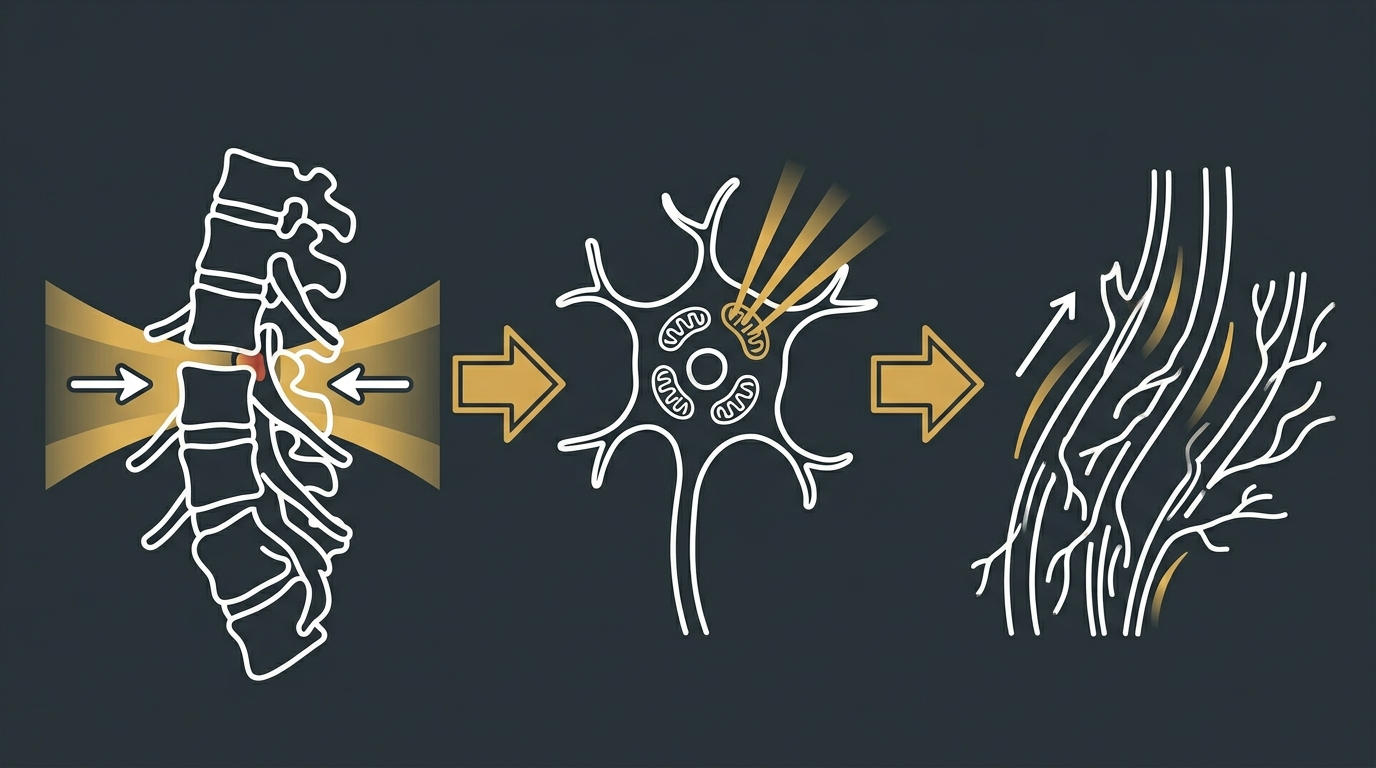
The Nerve Restoration Protocol isn't three modalities running simultaneously. It's a sequence. Each stage creates the conditions the next one requires.
Structural decompression first. Cellular fueling second. Regenerative stimulation third.
Clear the path. Restore the fuel. Trigger the repair.
Stage 1 — Removing Structural Interference With the Chiropractic Adjustment
Your spine isn't just holding you upright. It's the housing for the spinal cord — the relay station for every signal moving between the brain and the rest of your body.
Compress a spinal segment and you compress the nerve roots exiting at that level. The signal degrades. Blood flow to everything downstream drops.
That's where the chiropractic adjustment starts. A targeted adjustment at the compressed segment removes that interference. The pathway clears. Blood flow — oxygen, nutrients, everything the nerve depends on to function — begins to restore.
But there's a second effect most patients never hear about: BDNF modulation.
Brain-Derived Neurotrophic Factor (BDNF) is the protein the nervous system uses to grow, maintain, and repair nerve cells. A 2025 study published in PLOS One found that 12 weeks of chiropractic adjustments significantly increased blood BDNF levels — triggering the neuroplasticity the nervous system uses to repair itself.
The chiropractic adjustment isn't just mechanical. It's neurochemical.
Stage 1 delivers three distinct biological effects before the next stage begins:
- Spinal decompression (structural) — removes mechanical pressure from compressed nerve roots, clearing the signal pathway that every downstream nerve depends on. Without this step, the cellular repair in stages two and three has no clear channel to work through.
- Blood flow restoration (vascular) — decompression at the spinal level allows oxygen and nutrients to reach nerve tissue that's been operating under a compromised supply. The nerve tissue starts receiving what it needs to survive.
- BDNF modulation (neurochemical) — adjustment triggers production of the protein the nervous system uses to grow and repair nerve cells. This is the mechanism that activates the body's own neuroplasticity — and it's the piece most providers running generic nerve protocols never address.
Stage 2 — Fueling Cellular Repair With Cold Laser Therapy
Every cell that's going to repair itself needs fuel.
Nerve cells run on ATP — produced by mitochondria, used to power every repair function the cell performs. Damaged nerve tissue has depleted mitochondrial activity. The cells are still there. The cellular machinery is still intact. But the energy supply is starved.
Cold Laser Therapy (photobiomodulation) delivers specific light wavelengths that the mitochondria absorb and convert into ATP. It's not masking anything. It's restoring the energy supply so the repair machinery can actually run.
Research in Frontiers in Photonics (2025) confirms exactly that — photobiomodulation enhances mitochondrial function and supports neural repair in neuropathic pain cases.
Give the cell the fuel it needs. It does the rest.
Stage 3 — Stimulating Nerve Regeneration With Shockwave Therapy
Decompression cleared the path. Cold Laser Therapy restored the fuel. Shockwave Therapy creates the environment where new tissue actually grows.
Low-intensity acoustic pressure waves are delivered into the tissue surrounding the damaged nerve. Two things happen: nerve regeneration is promoted at the cellular level, and pain pathways are modulated — through a mechanism that has nothing to do with chemical suppression.
A 2025 PMC/NIH study confirmed it: low-intensity shockwaves promote nerve regeneration and modulate pain pathways through mechanical stimulation. The nerve is being repaired. Not silenced.
Frontiers in Neurology (2026) documents the broader capacity — non-invasive therapies can accelerate plastic regeneration of nerve tissue and support functional reorganization. The nervous system can rewire itself when the environment supports it.
| Protocol Stage | Tool | Biological Target | Clinical Outcome |
|---|---|---|---|
| Stage 1 | Chiropractic Adjustment | Spinal compression + BDNF modulation | Restored signal pathway and neuroplasticity activation |
| Stage 2 | Cold Laser Therapy | Mitochondrial ATP production | Cellular energy supply for nerve repair |
| Stage 3 | Shockwave Therapy | Nerve regeneration + pain pathway modulation | New tissue growth and non-pharmaceutical pain reduction |
The Systems Biology Lens — Why This Protocol Works When Others Don't
Dr. Hannah didn't build this protocol from a technique manual. She built it from a Zoology background — whole-body biological systems analysis — that most chiropractors never had.
Zoology trains you to see organisms as integrated systems. Not parts. Not components. Systems. A nerve doesn't fail in isolation. It fails inside a biological environment. And that environment has to change before the nerve can recover.
The Soil Before the Wire — What Most Providers Skip
Think about it this way.
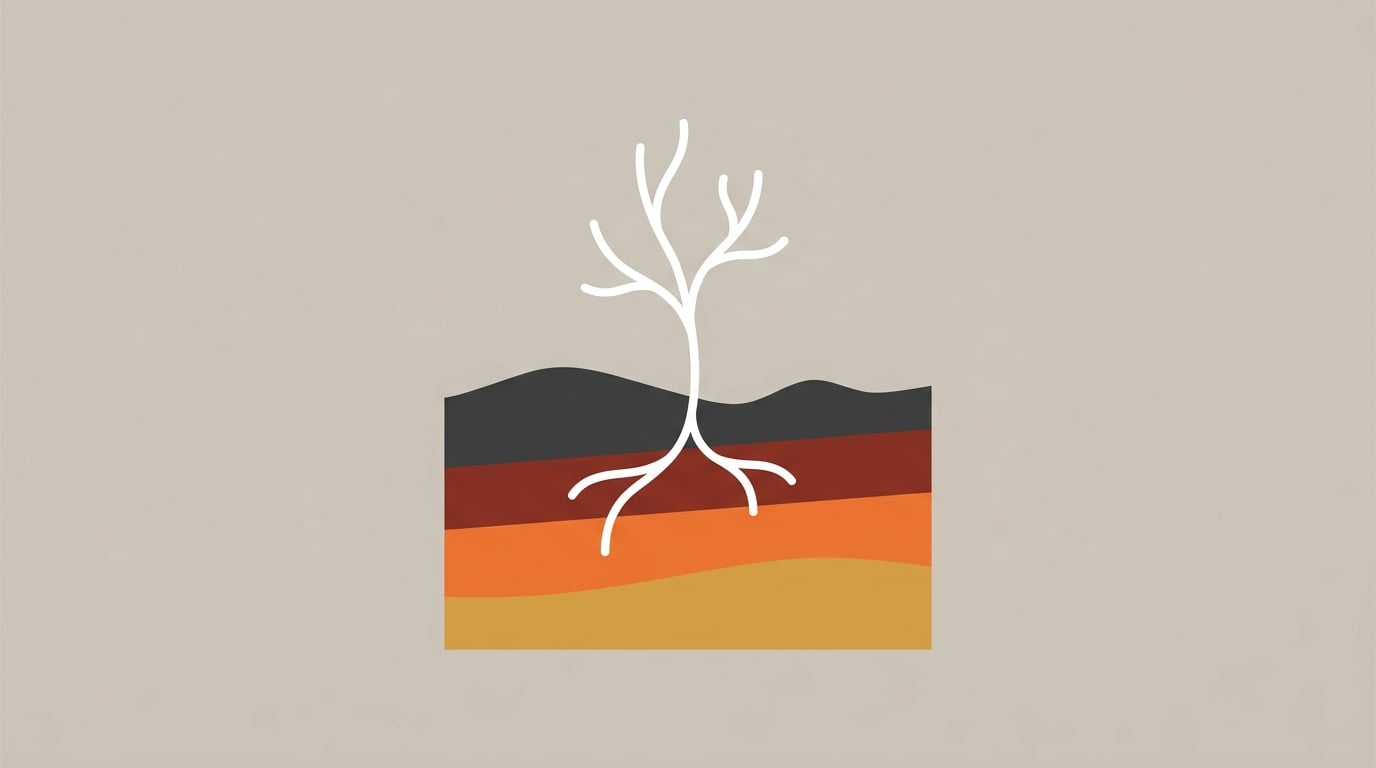
You can't grow a plant by fixing just the plant. You have to fix the soil first. Restore the water. Remove what's blocking the light. Correct the conditions the plant is trying to survive in.
The nerve fiber is the plant. The biological environment — blood flow, BDNF levels, mitochondrial function, freedom from mechanical compression — is the soil.
Most neuropathy care focuses entirely on the symptom the nerve is producing: pain, numbness, tingling. The nerve's distress signal gets treated as the target. The environment that nerve is struggling to survive in gets ignored.
That's backwards.
Restore the soil. Give the nerve what it needs to repair. That's the clinical logic the Nerve Restoration Protocol is built on — and it's the lens that Dr. Hannah's Zoology training put in place long before any of the current research started catching up to it.
| Environmental Component | What It Addresses | Why It Matters for Nerve Repair |
|---|---|---|
| Structural decompression | Spinal compression on nerve roots | Clears signal pathway and restores blood supply |
| BDNF modulation | Neurochemical repair environment | Activates the body's own neuroplasticity mechanisms |
| Mitochondrial fueling | Cellular energy depletion | Gives nerve cells the ATP needed to initiate repair |
| Acoustic stimulation | Nerve tissue regeneration | Promotes new nerve fiber growth and pain pathway normalization |
This Protocol Is Not for Every Patient
Let's be direct about something.
Nerve repair is a biological process. It has a biological timeline. One visit won't change that. Two visits won't either.
If you're expecting to walk out of the first appointment feeling like a different person — this isn't the right fit.
The One-Adjustment Miracle Seeker is a specific type of patient: expects complete resolution in a single session, stops care within the first week when that doesn't happen, and isn't willing to engage a care plan. They want the shortcut.
With nerve repair, the shortcut doesn't exist.
Damaged nerve tissue took time to reach its current state. Restoration takes time too. The protocol works because it builds the biological conditions for regeneration — and regeneration follows biology, not a convenience schedule.
If you're not willing to commit to a care plan, this protocol can't help you. That's not a judgment. It's physiology. And knowing it now is more useful than finding out three visits in.
What committed patients actually look like:
- They show up for the full assessment first — without a list of what the last provider did and a requirement to replicate it. The assessment is always the starting point. Not their previous provider's habits.
- They follow the care plan as it's built — not selectively applying the parts that feel convenient. Partial commitment produces partial results, and the clinical picture reflects it.
- They give the biological timeline the time it requires — understanding that the repair process follows biology, not a calendar, and that showing up consistently is part of what makes the protocol work.
What the Nerve Restoration Protocol Looks Like in Practice
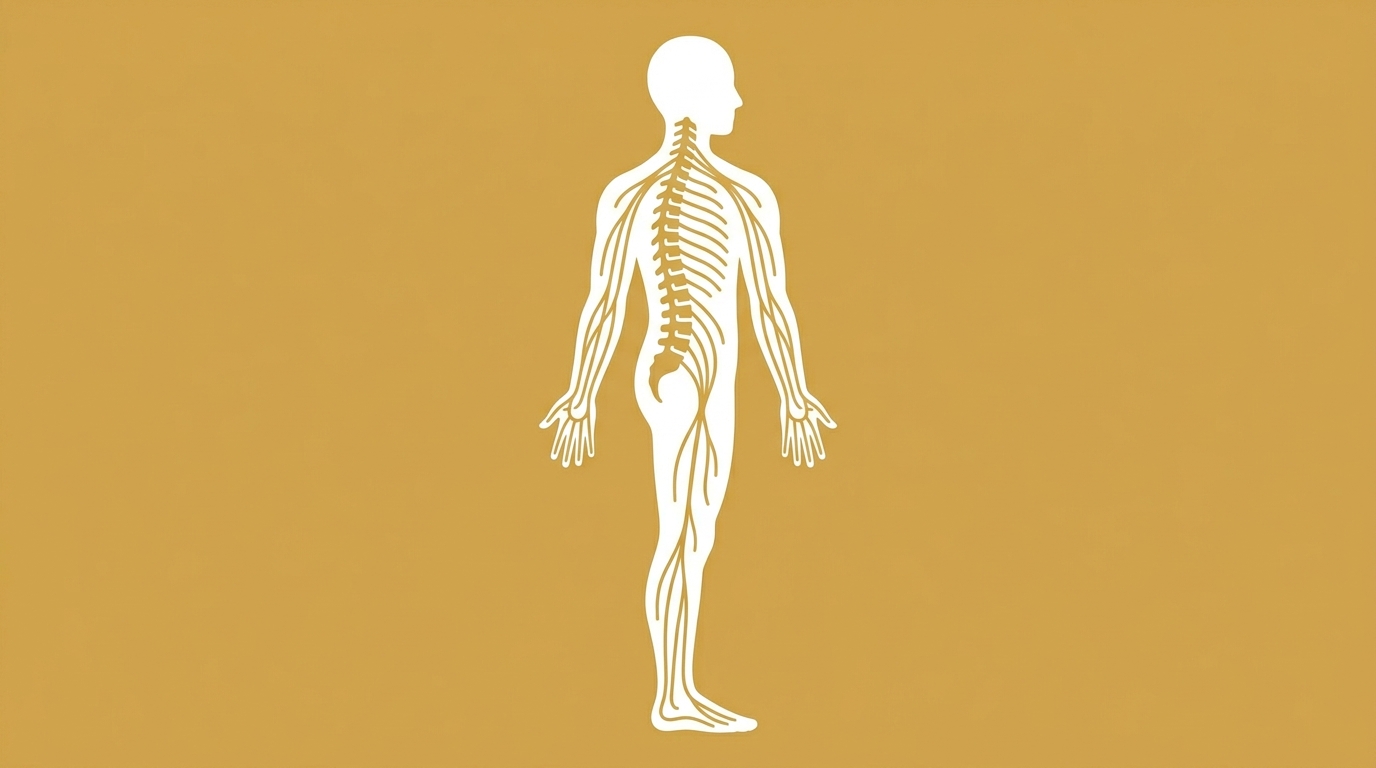
Most patients who come in for Neuropathy Care in Morton, IL have been told their options are limited.
Some have been told their nerves are dead. That the damage is done. That there's nothing left to repair.
That framing is usually wrong. Here's why.
Why "Dead" Nerves Usually Aren't Dead
Standard diagnostic tools for peripheral neuropathy — EMG, nerve conduction studies — are built to detect advanced nerve damage. They do that well.
What they miss is the earlier stage: functional distress.
A nerve in functional distress isn't transmitting cleanly. It's producing pain, numbness, tingling. But the nerve cells themselves are still alive. They're compressed. They're starving. The supply chain that keeps them functioning has been interrupted.
When testing misses functional distress and returns "normal," patients are told their nerves are fine. When it catches the advanced stage, they're told it's too late.
Both conclusions skip the stage where intervention actually works.
Neuroplasticity is real. It's not a motivational concept — it's a documented biological mechanism. The PLOS One BDNF research (2025) and Frontiers in Neurology (2026) both document the nervous system's capacity for repair and functional reorganization through non-invasive clinical intervention.
"Unexplained" and "untreatable" are not the same thing. Neither are "silent" and "dead."
- The Nerve Restoration Protocol article covers what the protocol involves and who it's designed for — worth reading before your first appointment.
- Can specialized chiropractic care actually heal damaged nerves? covers the research behind the approach directly, if you want the evidence before you commit.
The Management Phase — Protecting What's Been Restored
Restoration is the active phase. Management is what comes after.
Once nerve function is restored, the goal shifts. Maintain the spinal mechanics that keep compression off the restored pathways. Preserve the metabolic health of the tissue that was repaired.
That's not a lifetime of intensive treatment. It's an ongoing assessment cadence and a maintenance protocol built around your specific restored function — not a standing appointment that runs regardless of clinical need.
The full neuropathy care approach at Touch of Wellness Chiropractic explains what that looks like — including what the assessment process involves before any protocol begins.
And if you want to understand the clinical philosophy behind why this approach exists at all, root-cause chiropractic care is the right starting point.
Frequently Asked Questions
How does a back adjustment help nerves in my hands or feet?
The spine houses the spinal cord — the central relay point for every nerve signal traveling between the brain and the extremities. When a spinal segment is compressed, the nerve root exiting at that level loses signal clarity and blood flow.
The symptoms show up wherever that nerve terminates. For neuropathy patients, that's usually the hands, feet, or lower legs.
Correct the compression at the source, and the downstream signal has the pathway it needs to restore. It's not about the back. It's about what the back is running.
More on the specific mechanisms — heal damaged nerves.
What does Cold Laser Therapy actually do to the nerve cell?
It delivers energy. Specifically, it delivers photons — light energy at specific wavelengths — that the mitochondria inside the nerve cell absorb and convert into ATP.
ATP is what every cellular repair function runs on. Damaged nerve cells are running on empty — the mitochondria are there, the machinery is intact, but the fuel supply is depleted.
Cold Laser Therapy restores that supply. The cell gets what it needs to do what it's designed to do. That's not a theory. That's metabolic biology.
Is this protocol just masking pain like Gabapentin does?
No. That's the defining difference between this approach and pharmaceutical management.
Gabapentin reduces the volume of the alarm. It doesn't touch the compression, the cellular energy depletion, or the structural cause driving the signal in the first place.
The Nerve Restoration Protocol targets the source. When pain reduction happens, it's a byproduct of repair — not a chemical override. Not a suppression.
If the signal is going quiet, you want to know whether it's because the problem is resolved — or because the alarm has been turned off.
Can "dead" nerves actually come back to life?
Most nerves described as "dead" are in a state of functional distress — compressed, starving, metabolically depleted.
Standard diagnostic tools are designed for advanced damage. They frequently miss the functional distress stage — which means patients get told they're fine when they're not, or that it's too late when it isn't.
Neuroplasticity is a real biological mechanism. Restore the environment — remove compression, restore blood flow, fuel the cells — and the nerve has the conditions it needs to respond.
The question isn't always "can the nerve repair?" It's whether the environment has been corrected enough to let it.
How long does the Nerve Restoration Protocol take?
The honest answer: it depends on the extent of nerve damage, how long it's been present, and compliance with the full care plan.
What doesn't change: the assessment happens first, always. The care plan is built from what that reveals — not handed to you before the evaluation is finished.
Nutrition is also part of the repair environment. If you want that piece, proper nutrition for nerve fiber regeneration covers it directly.
Realistic timelines are discussed at the first appointment based on your clinical picture. Results may vary.
What makes the Nerve Restoration Protocol different from surgical intervention?
Surgery addresses specific structural causes — nerve entrapment, severe spinal stenosis, herniated discs creating direct compression. It's appropriate in those cases.
The Nerve Restoration Protocol targets the same structural interference non-invasively — and also addresses the cellular and metabolic environment surgery can't reach.
Surgery removes the problem. This protocol removes the problem and rebuilds the environment around it.
For patients who've had surgery and still have symptoms, that second piece — the cellular repair environment — is usually what was never addressed.
More on that comparison: surgical intervention for neuropathy.
Who is a good candidate for this protocol?
The best candidates are patients who:
- Have documented or suspected peripheral neuropathy — numbness, tingling, radiating pain, burning sensations in the extremities
- Have not found lasting resolution through pharmaceutical management alone
- Are willing to commit to a full care plan — not a single visit or two-week trial
- Are open to clinical assessment before assuming their previous provider's protocol applies here
The protocol isn't appropriate for confirmed advanced nerve death, certain structural conditions requiring surgical intervention first, or patients who need resolution in a visit or two.
The assessment determines fit. The symptom description doesn't.
What does the first appointment actually look like?
The first appointment is an assessment — not a treatment.
History. Symptom pattern. Physical examination. The care plan is built from what that reveals — not from a template waiting on the other side of the door.
If the Nerve Restoration Protocol fits your case, you'll know why. If it doesn't, you'll know that too.
Real answers. Not comfortable ones.
The Nervous System Runs Everything — Treat It Like It Does
The nervous system runs everything. When it's disrupted — when the compression builds, the blood flow drops, the cellular fuel runs out — nothing works right. And you feel every bit of that, every day. What most neuropathy treatment offers is noise management. The alarm gets quieter. The damage continues.
This protocol is built on a different premise. Restore the environment. Remove the interference. Give the nerve what it needs to repair — and let biology do what it's designed to do. Dr. Hannah's Zoology background isn't a biographical detail. It's the clinical lens this entire approach is built on. You can't restore the organism by treating a single symptom in isolation. You restore the system. You fix the soil before you try to fix the plant.
The patients who get results here aren't necessarily the ones with the mildest cases. They're the ones who show up ready to commit — who trust the assessment, engage the care plan, and give the biological repair the time it requires. Nerve repair isn't a procedure. It's a restoration process. When the environment is right and the patient is committed, it works.
If you've been told your nerves are damaged — and the treatment you've been given doesn't address why — the mechanism matters.
Suppressing the signal isn't the same as restoring the system. If your neuropathy symptoms have persisted through medication, physical therapy, or a previous chiropractic protocol that ran the same sequence regardless of how you responded — the root cause hasn't been addressed.
An assessment at Touch of Wellness Chiropractic starts with your specific clinical picture. The nerve pathway, the compression points, the metabolic environment. The care plan is built from that — not handed to you before the evaluation is finished.
Find out if your case fits the protocol.
Nerves in functional distress don't recover on their own. The biological window for intervention narrows as the damage deepens. If your symptoms have been present long enough to interfere with your daily function, that's past the threshold of waiting it out.
Copyright Touch of Wellness Chiropractic 2026
1101 W Jackson St, Suite A Morton, IL 61550
Web Design by iTech Valet