
Cold laser therapy is safe when the device holds proper FDA clearance and a trained practitioner follows established clinical protocols. Known scientifically as photobiomodulation, it uses specific wavelengths of light to interact with tissue at the cellular level, and it does this without generating heat. That non-thermal mechanism is what sets it apart from surgical lasers, which cut or burn tissue with concentrated thermal energy. Safety here rests on three interlocking factors: the device's regulatory classification, the practitioner's adherence to dosage and treatment protocols, and accurate screening of contraindications for a specific patient. Some conditions are recognized reasons to avoid treatment entirely. These include active cancer in the treatment area, pregnancy over the abdomen or lower back, and epilepsy where light stimulation could pose a risk. Photosensitizing medications, direct application over the thyroid, and use over the eyes without protection are further considerations a practitioner must weigh before care begins. Eye protection is a specific, non-negotiable measure, because certain wavelengths can affect ocular tissue even when the beam is not aimed at the eyes. A device's regulatory pathway, whether cleared through the FDA's 510(k) process or another route, signals a baseline of demonstrated safety, though it never replaces clinical judgment. Proper use by a trained professional, paired with a thorough understanding of a patient's health history, completes the safety equation. When these elements align, cold laser therapy carries a well-documented profile of low risk for the population it is appropriate for.
What Actually Happens Inside the Tissue When the Light Goes On
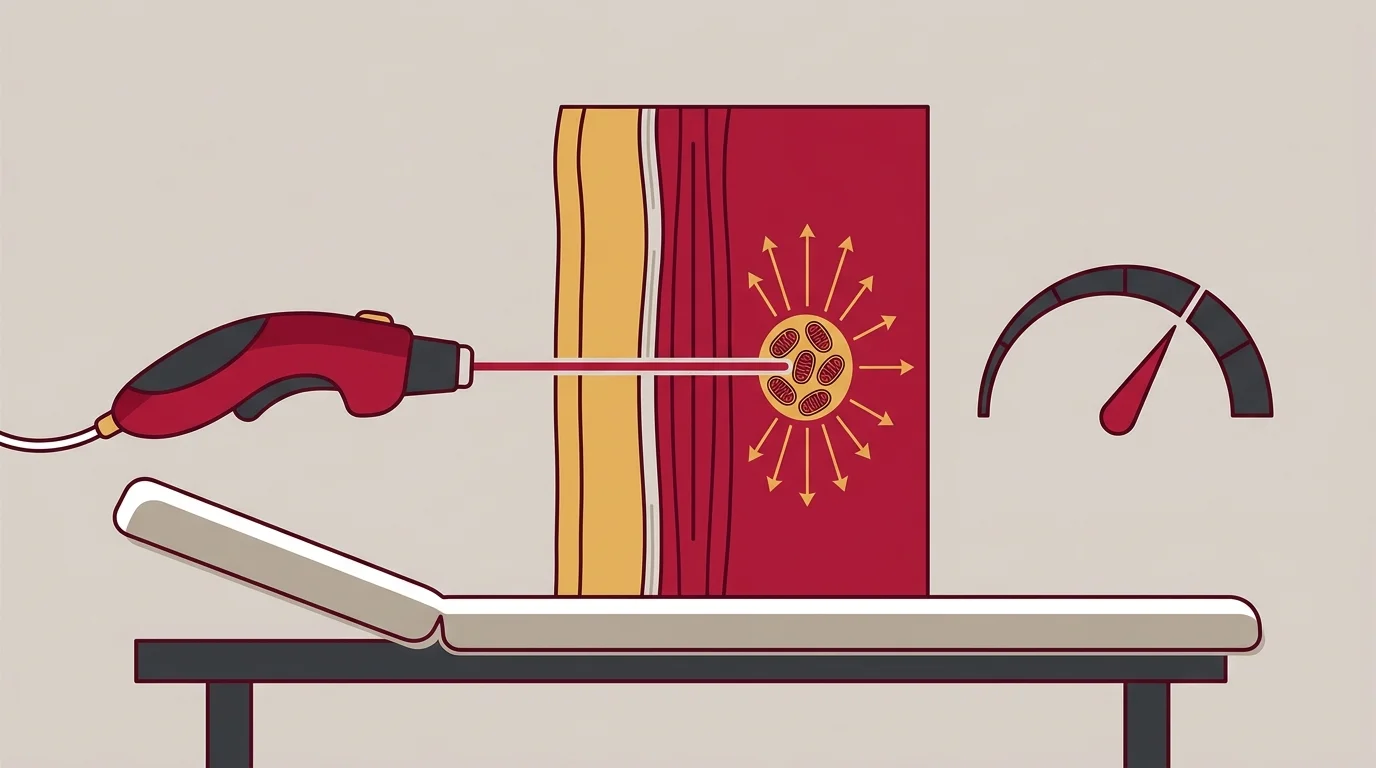
Every safety question about cold laser therapy eventually comes back to what the light is actually doing once it reaches tissue. That mechanism, not the housing or the buttons on the device, is what separates an instrument from a gadget.
While the term laser might bring to mind images of high-power cutting tools, cold laser therapy operates on a completely different, non-thermal principle. Photons pass into the tissue and interact with mitochondria rather than searing anything.
How Photobiomodulation Differs From a Surgical Laser
Cold laser therapy, also known by its scientific name photobiomodulation (PBM), is a treatment that uses specific wavelengths of light to interact with tissue and accelerate the healing process. A surgical laser works in the opposite direction entirely.
Surgical lasers concentrate thermal energy to cut, cauterize, or ablate tissue on purpose. Photobiomodulation is calibrated to stay well below that threshold, which is why the safety conversation moves away from burn risk and toward dosage and protocol. Anyone building out the fuller cellular science can dig into it in how photobiomodulation earns its place in care.
Why the Cellular Response Is Dose-Dependent, Not Instant
A single session does not flip a switch inside the tissue. The cellular response builds as mitochondria absorb photons over a course of visits, not in one exposure.
This is why dosage and session count function like a protocol, not a preference. A scalpel is safe in trained hands and dangerous in careless ones, and cold laser therapy answers to that same logic.
Where Cold Laser Devices Sit in the FDA's Classification System
The biology tells you why cold laser therapy skips burn risk. The regulatory system tells you why the device delivering that biology can be trusted to do it safely.
Powered laser surgical instruments occupy Class 2 in the FDA's medical device classification system. According to the FDA, powered laser surgical instruments are classified as Class 2 medical devices by the FDA. That classification places these devices under a moderate-risk category, subject to specific controls rather than the lightest oversight tier.
| Regulatory Pathway | What It Requires | What It Means for the Device |
|---|---|---|
| 510(k) Clearance | Manufacturer demonstrates the device is substantially equivalent to a legally marketed device not subject to premarket approval | The device reaches market on a comparison standard rather than independent proof of safety and effectiveness |
| Premarket Approval (PMA) | Manufacturer submits sufficient valid scientific evidence proving the device is safe and effective on its own merits | The device carries the most stringent marketing clearance the FDA issues, built on independent evidence rather than comparison |
| Class 2 Designation | Device meets defined performance standards and, in many cases, supplies clinical or bench data supporting its intended use | The device sits under moderate-risk oversight with specific controls, not the lightest regulatory tier available |
The Difference Between FDA Clearance and FDA Approval
Clearance and approval sound interchangeable outside regulatory circles, but they describe two different standards entirely. The FDA's device clearance listing documents that FDA 510(k) clearance requires demonstration that a device is substantially equivalent to a legally marketed device that is not subject to premarket approval, whereas Premarket Approval (PMA) is the most stringent type of device marketing application required by FDA and must be based on sufficient valid scientific evidence that the device is safe and effective. A 510(k) submission demonstrates that a new device performs comparably to one already on the market, while Premarket Approval demands independent scientific evidence of safety and effectiveness.
Most cold laser devices reach the market through the 510(k) pathway, not full Premarket Approval. For a researcher trying to pin down what clearance actually promises, that distinction is the whole point.
What Class 2 Status Actually Requires of a Device
Class 2 status is not a rubber stamp. It requires a manufacturer to meet defined performance standards and, in many cases, submit clinical or bench data proving the device behaves as intended.
But that framework only governs the instrument. It says nothing about what happens in the room where the instrument gets used, and that's where protocol and practitioner judgment take over. Anyone mapping out what an actual appointment involves can walk through Timelines and Sensations for a session-by-session breakdown.
Why Skipping the Contraindication Checklist Is the Most Common Point of Failure
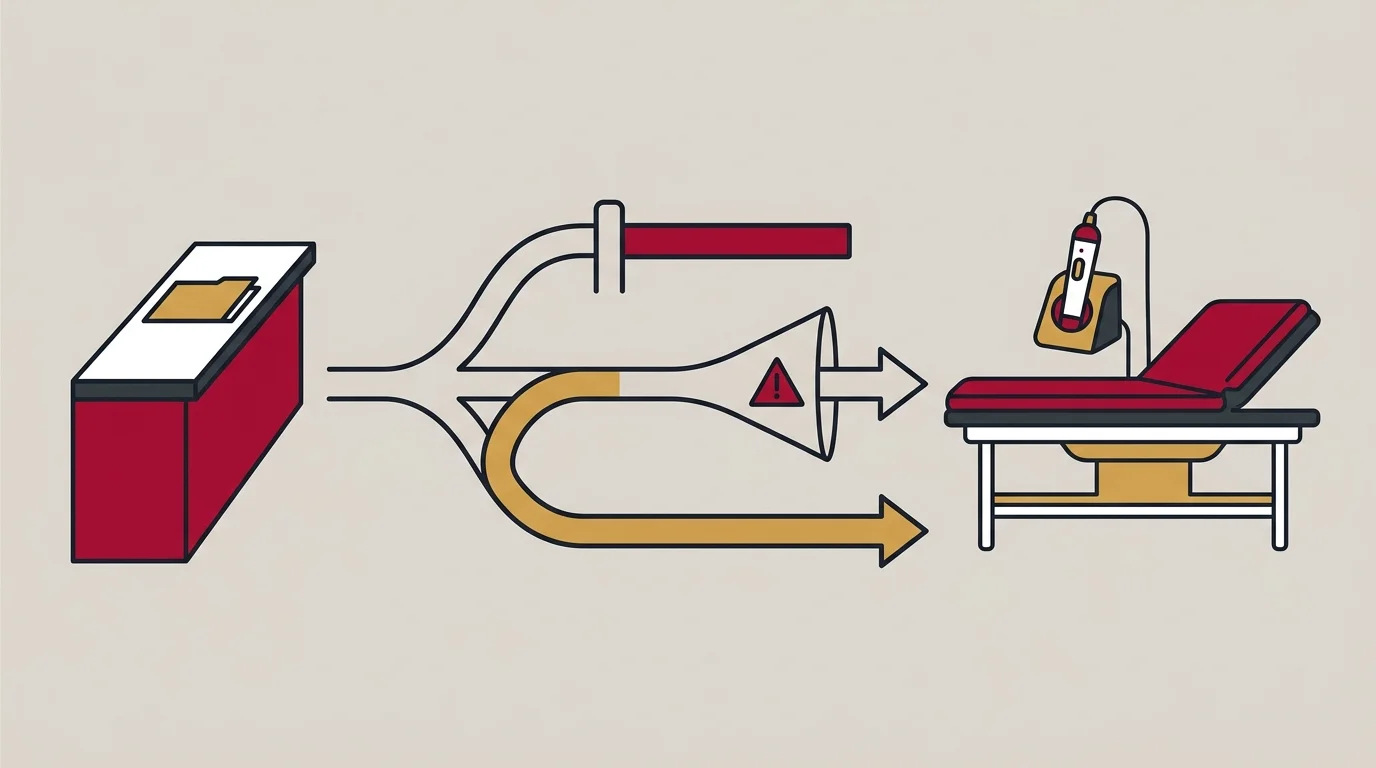
Clearance and cellular mechanism only carry the safety equation so far. The rest of it happens in the room, in the moment a practitioner either runs a contraindication check or waves it off.
The Conditions That Rule Out Treatment Entirely
A device's regulatory status, its proper use by a trained professional, and a patient's own health conditions all play a role in the safety equation. Skipping that third factor is where an otherwise safe instrument turns risky.
Some conditions belong in this category outright. Active cancer in the treatment area, pregnancy over the abdomen or lower back, epilepsy that light stimulation could trigger. None of these is a judgment call made session to session.
The Conditions That Require Modified Protocols Instead of Refusal
Other conditions call for a modified approach rather than an outright refusal to treat. Photosensitizing medications, thyroid proximity, and unprotected eye exposure all require the protocol to bend, not disappear. Readers curious about what a patient does once treatment concludes can review Post-Laser Movement Guidelines for that next phase.
What Happens When Eye Protection Protocols Are Treated as Optional
Contraindication screening and dosage discipline protect the tissue being treated. Eye protection protects everyone standing in the room, and it is the shortcut most likely to be skipped once a session starts to feel routine.
| Eyewear Attribute | Documented Range | Why It Matters |
|---|---|---|
| Product Count | 39 commercially available laser protective eyewear products documented in a market survey | A wide field of options exists, but only wavelength-matched pairs actually protect the eyes. |
| Price Range | $25 to $434 across surveyed products | Cost alone does not signal correct wavelength filtering, so price is not a proxy for protection. |
| Reported Injury Pattern | One adverse event report describing a superficial burn during treatment with a Ward Photonics Ultraslim low-level laser device | Documented outcomes trace back to device use and protocol gaps rather than the device category itself. |
How Protective Eyewear Is Actually Rated and Selected
Protective eyewear is matched to a wavelength, not sold as a universal category. According to published research data, a market survey identified 39 commercially available laser protective eyewear products with prices ranging from $25 to $434 — a finding from an industry survey. That spread in price and selection reflects wavelength-specific filtering rather than frame styling, and it is exactly why grabbing the nearest pair off a shelf defeats the purpose of wearing one at all.
What the Adverse Event Record Actually Shows
Adverse event records are where lapses like this eventually surface. The FDA's adverse event report documents that one adverse event report in the FDA MAUDE database describes a patient who allegedly sustained a superficial burn during treatment with a Ward Photonics Ultraslim fat-reducing low-level laser device — a single reported case. A single documented case will not indict the category, but it does show that when the instrument framing breaks down, the consequences land on skin and tissue rather than staying theoretical. Readers can review root-cause chiropractic treatment for how a compliant practice structures the sessions built around that instrument.
How a Properly Run Session Sequences Every Safety Check
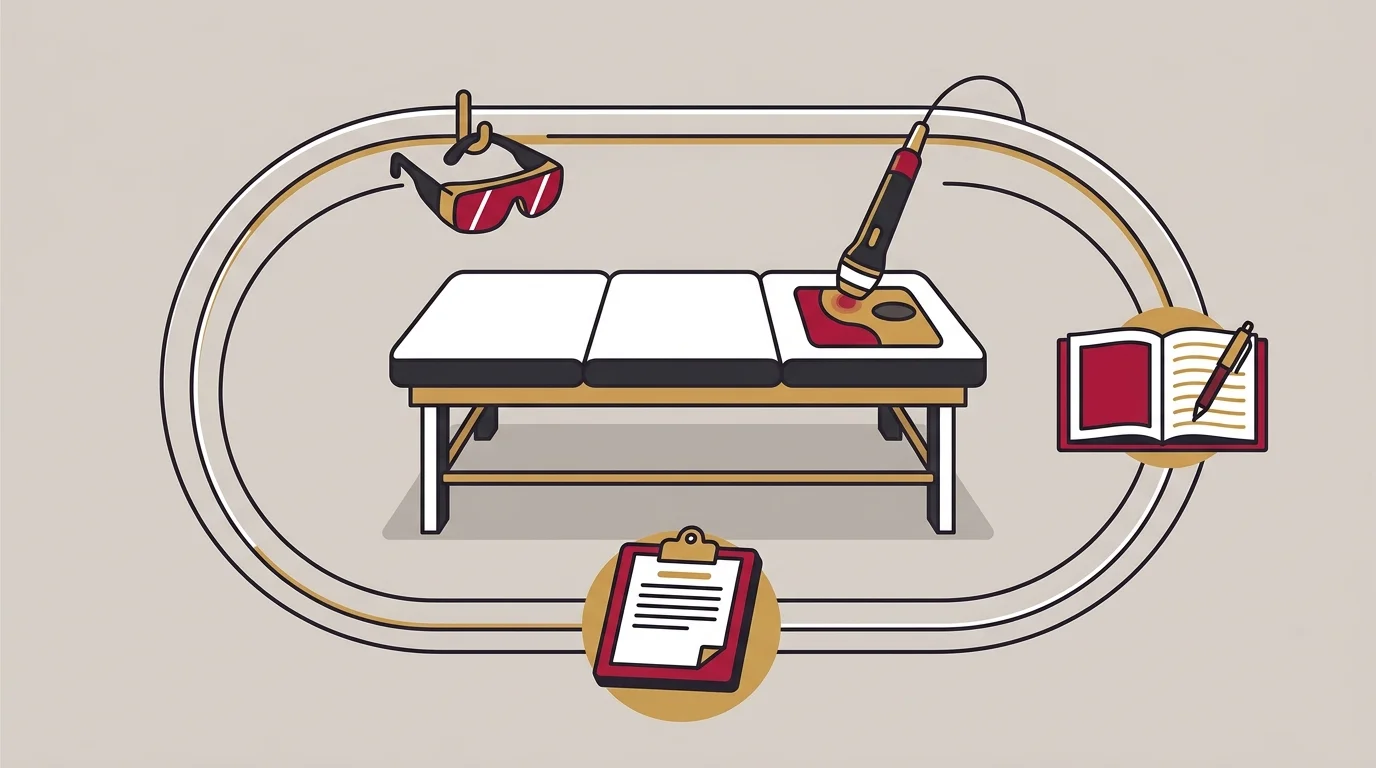
Mechanism and regulation explain why the instrument can be trusted. Sequence explains why a session stays safe from the moment a patient walks in.
| Session Stage | Safety Check Performed | Who Confirms It |
|---|---|---|
| Pre-Session Screening | Contraindication review against active cancer, pregnancy over the treatment area, epilepsy, photosensitizing medications, and thyroid proximity | The treating practitioner, working from the patient's health history |
| Device and Wavelength Setup | Confirmation that the device's Class 2 clearance and wavelength match the condition being treated | The treating practitioner, guided by the device's cleared specifications |
| Eye Protection Verification | Protective eyewear checked against the specific wavelength the device emits, not a generic pair | The treating practitioner, before the device is activated |
| Dosage and Duration Confirmation | Treatment time and session count set against established protocol rather than adjusted on preference | The treating practitioner, applying protocol to the patient in front of them |
| Post-Session Check-In | Patient response reviewed to confirm no adverse reaction occurred and the protocol can continue as planned | The treating practitioner, tracking the patient across the full course of care |
The Screening Steps That Happen Before the Device Is Ever Powered On
Understanding the safety protocols around any medical treatment is a non-negotiable first step for any patient. A compliant session starts with a contraindication review, not with the device.
The Documentation and Dosage Controls That Continue Session to Session
That review carries forward into wavelength selection, dosage, and treatment duration for that specific visit. A practitioner's judgment, layered onto the patient's own health picture, is what keeps the instrument pointed in a safe direction session after session. Neuropathy care protocols run 8 to 12 weeks.
Frequently Asked Questions
A few edge cases come up again and again once the broader safety picture is clear. Here are direct answers to the specific situations researchers ask about most.
Who should absolutely not get cold laser therapy?
Three situations rule out treatment outright: active cancer in the treatment area, pregnancy over the abdomen or lower back, and light-triggered epilepsy. These are absolute contraindications. A practitioner doesn't weigh them case by case.
Can cold laser therapy damage your eyes even if you aren't looking directly at the light?
Yes. Certain wavelengths can affect ocular tissue without a direct beam strike, which is why wavelength-matched eyewear is required for everyone in the room, not just the patient.
Is cold laser therapy safe to use over metal implants or a pacemaker?
Cold laser therapy works through light interacting with tissue, not electrical or magnetic signals, so it does not carry the same interference risk as some other modalities. A practitioner still reviews the full health history before treating near an implant.
What does it mean when a cold laser device is FDA cleared but not FDA approved?
Clearance means a device demonstrated substantial equivalence to a product already on the market. Approval is a stricter standard requiring independent scientific evidence of safety and effectiveness, and most cold laser devices reach the market through the clearance pathway.
Can cold laser therapy be used during pregnancy?
Pregnancy over the abdomen or lower back is treated as an absolute contraindication. A practitioner reviewing a pregnant patient's history will avoid those areas rather than proceed with a modified protocol.
Are there any medications that make cold laser therapy unsafe?
Photosensitizing medications change how tissue responds to light exposure, which calls for a modified protocol rather than an outright refusal to treat. A practitioner needs the full medication list before any session begins.
What This Means
Cold laser therapy is not safe because of the device sitting on a treatment table. It is safe because of everything surrounding that device.
Class 2 clearance sets the floor, and that's all it sets. What actually keeps an instrument pointed in a safe direction is contraindication screening, wavelength-matched eye protection, and dosage discipline. Drop any one of those, and the instrument stops behaving like one.
That is the standard Touch of Wellness Chiropractic holds every session to, treating cold laser therapy as an instrument rather than a gadget. If that protocol-driven approach to Cold Laser Therapy is what you have been researching, talk it through with us.