
How Shockwave Therapy Restores Blood Flow to Scar Tissue
Shockwave therapy restores blood flow to scar tissue by triggering the body's own vascular rebuilding process — not by masking pain, but by restarting the biological cascade that builds new vessels from scratch.
Scar tissue is dense, disorganized collagen. It lacks the vascular supply healthy tissue depends on. Without blood flow, the region stays oxygen-deprived, stiff, and chronically painful — because the biological supply chain the surrounding area relies on has been cut off.
Shockwave therapy works at the cellular level through mechanotransduction. Mechanical acoustic waves convert into biochemical signals. Those signals tell fibroblasts to stop overproducing collagen and tell the vascular system to start building new vessels. Within four weeks of treatment, research shows a significant increase in vessel density — driven by upregulation of VEGF and eNOS.
The clinical results follow directly from that biology. Treated tissue shows a sustained increase in local oxygen saturation for up to 24 hours post-treatment. Pain scores on the Visual Analog Scale drop by over 50 percent. Tissue pliability improves measurably. Those aren't symptom changes — they're signs the underlying vascular environment has been structurally rebuilt.
Protocols are non-invasive, using low to medium energy levels ranging from 0.05 to 0.25 mJ/mm². No incision. No injection. No recovery window between sessions.
That mechanism is what separates this from everything else. Cortisone injections reduce inflammation short-term but degrade local collagen over time. Shockwave therapy doesn't suppress the tissue's biology. It restarts it. That's the body's system coming back online — and it's why the results last.
Last Updated: July 29, 2026
- • What Scar Tissue Actually Does to Blood Flow
- • Why the Standard Playbook for Scar Tissue Falls Short
- • The Acoustic Mechanism: How Shockwave Therapy Talks to Tissue
- • What Shockwave Therapy Actually Does Inside the Scar
- • What a Shockwave Therapy Protocol for Scar Tissue Looks Like
-
• Frequently Asked Questions About Shockwave Therapy and Scar Tissue
- • How does shockwave therapy actually break down deep scar tissue?
- • How many shockwave therapy sessions are needed to restore blood flow to chronic scars?
- • Does shockwave therapy for scar tissue hurt during or after the session?
- • Why is shockwave therapy a better long-term solution than cortisone injections for scars?
- • Can shockwave therapy help old surgical scar tissue or only recent injuries?
- • The Body Already Knows How to Heal — Shockwave Gives It the Signal
What Scar Tissue Actually Does to Blood Flow
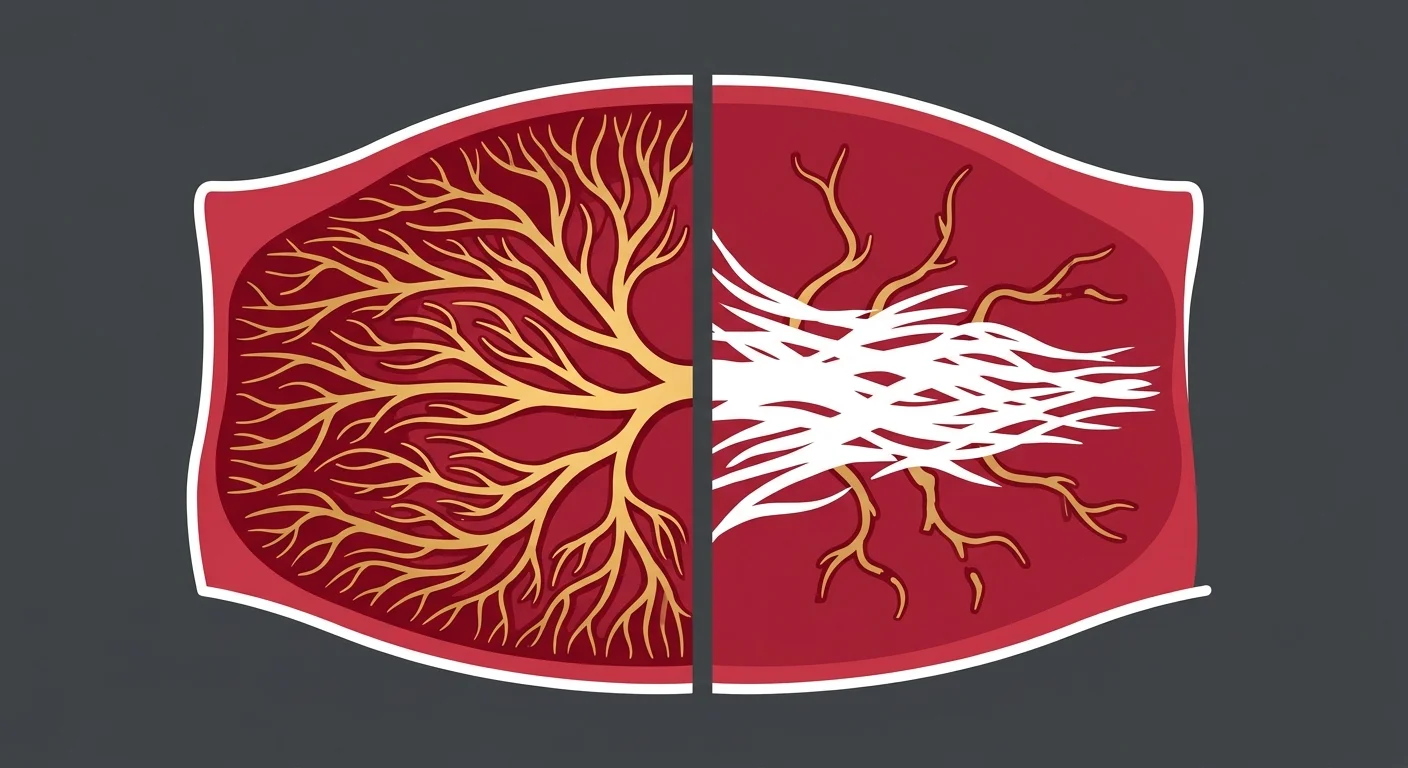
Scar tissue isn't just a cosmetic issue. It's a structural vascular blockade — and every region that depended on that blood supply pays the price.
Here's what happens: when the body patches damage fast, it lays down dense, disorganized collagen. That collagen is structurally strong. But it doesn't carry blood vessels. The vascular network that fed the original tissue doesn't grow back into scar formation. The region gets walled off.
That's the real problem. Not the scar itself. The void it creates. Everything downstream stays oxygen-deprived, nutrient-starved, and unable to clear metabolic waste. Biologically, the tissue isn't just stuck — it's cut off.
The Vascular Architecture Scar Tissue Destroys
Healthy soft tissue runs on a dense web of capillaries and microvessels. That network does three things: delivers oxygen, shuttles in nutrients, and clears the metabolic waste that piles up during normal tissue use. Take it away and cells can't repair themselves. They can't even stay functional. That's the architecture scar tissue wipes out.
Scar tissue replaces that architecture with something that looks solid but functions like a wall. Dense, disorganized collagen. Structurally rigid. Biologically inert. The tissue regeneration process that shockwave therapy targets is specifically about rebuilding what that wall sealed off. Not softening the surface. Rebuilding the supply chain beneath it.
Dr. Karen Hannah's systems-level training makes this visible fast. The scar isn't the problem. The vascular blackout the scar created is the problem. And every day that blockade holds, the surrounding region pays for it.
Why Restricted Blood Flow Keeps the Pain Cycle Running
Pain that won't quit after an injury is almost never a structural mystery. The tissue healed on the outside. It didn't heal vascularly. No blood flow means a local environment that stays acidic, inflamed, and mechanically oversensitive — indefinitely.
So the cycle doesn't break on its own. The nervous system keeps reading a threat signal from tissue that never got its vascular supply back. That oxygen deficit isn't a healing lag. It's an active, ongoing pain driver. And it doesn't stop until the circulation does.
This matters for anyone getting chiropractic care in Morton IL who also carries chronic pain layered over old scar tissue. Adjustments can restore motion. But if the vascular architecture underneath hasn't been rebuilt, the tissue environment driving that pain signal hasn't changed. That's the gap shockwave therapy fills.
| Tissue State | Vascular Status | Oxygen Delivery | Healing Capacity | Pain Signal Behavior |
|---|---|---|---|---|
| Healthy soft tissue | Dense capillary and microvessel network throughout | Continuous — oxygen and nutrients delivered on demand | High — repair signals reach cells quickly | Low — waste clears efficiently, pain threshold stays normal |
| Acute scar tissue (early formation) | Vascular network disrupted — new collagen laid down without vessels | Severely reduced — the sealed region receives minimal oxygen | Minimal — cells can't receive repair signals or nutrients | Elevated — nervous system reads ongoing threat from oxygen-deprived tissue |
| Chronic scar tissue (untreated) | Functionally avascular — no meaningful vessel regrowth over time | Persistently depleted — tissue remains in a biological holding pattern | Stalled — the environment required for repair never restores | Chronic and self-reinforcing — pain cycle can't break without vascular change |
| Scar tissue after Shockwave Therapy | Rebuilding — new vessel growth initiated through acoustic mechanotransduction | Recovering — oxygen saturation rises and holds post-treatment | Reactivated — cells receive the signals and supply they need to remodel | Declining — as circulation normalizes, the threat signal to the nervous system reduces |
Why the Standard Playbook for Scar Tissue Falls Short
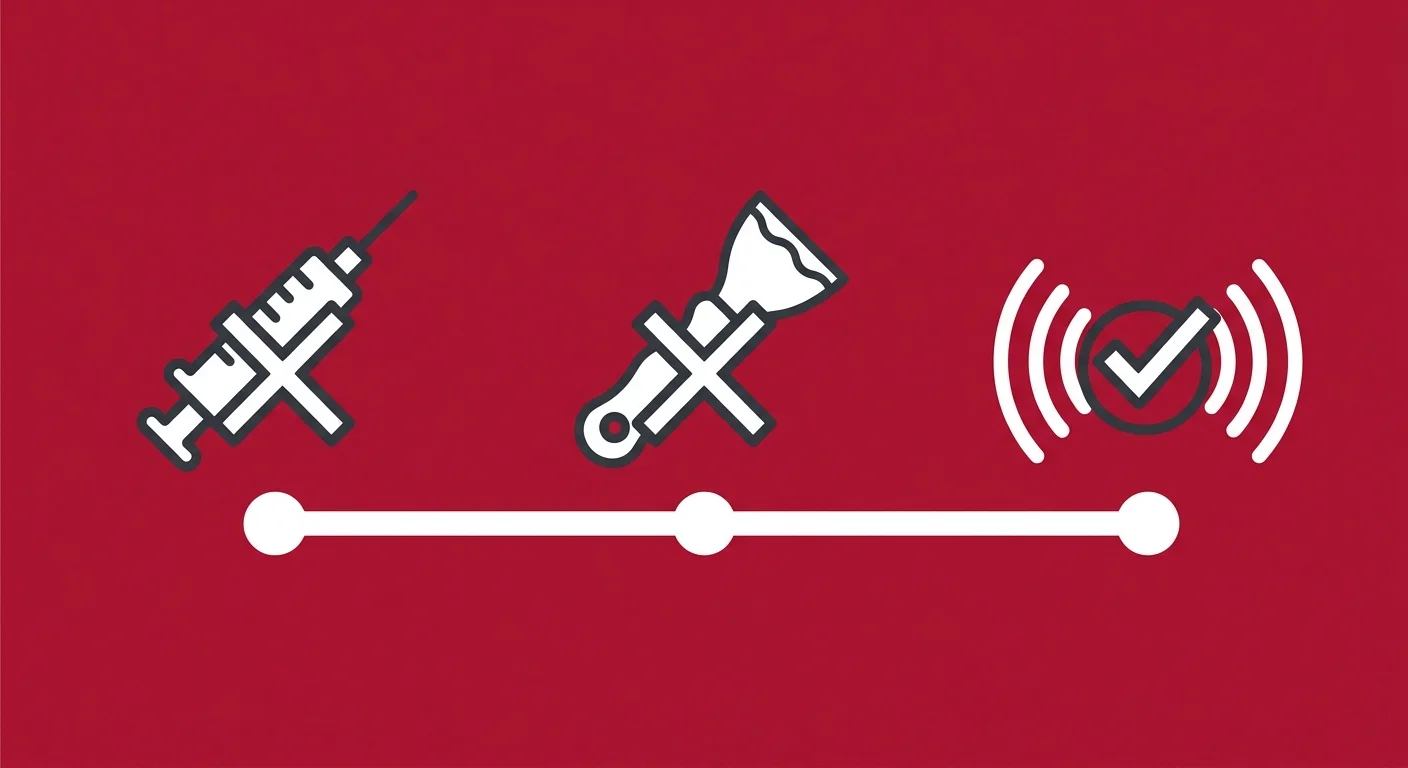
Two options. That's what most people get when chronic scar tissue pain won't quit.
A cortisone injection or aggressive manual tissue work. Both have a rationale. Neither touches the actual problem.
The actual problem is vascular.
The tissue healed structurally. The blood supply didn't come back with it. Any intervention that doesn't restart that biological supply chain is working on the surface of something that lives much deeper.
That's what the standard playbook gets wrong every time.
It treats the symptom — pain, stiffness, restricted range — without touching the mechanism driving all three. The tissue environment stays broken even when the symptoms temporarily quiet down.
What Cortisone Actually Does to the Tissue Environment
Cortisone is an anti-inflammatory. It's genuinely effective at what it does — suppress the immune response and quiet pain signals in the short term.
That's exactly why it gets overused in chronic scar tissue cases. Short-term relief gets mistaken for actual recovery. The patient feels better. The tissue doesn't get better.
Here's what it doesn't do: rebuild vascular architecture.
Cortisone doesn't instruct fibroblasts to stop overproducing collagen. It doesn't trigger angiogenesis. NIH research confirms that the TGF-beta1/Smad signaling pathway — the biological mechanism driving excessive collagen deposition — isn't disrupted by anti-inflammatory treatment. The collagen problem keeps compounding. The cortisone just keeps it quiet enough that no one notices until it's worse.
The deeper issue with repeated cortisone injections is that they actively degrade local collagen structure over time.
So the intervention designed to reduce pain is quietly worsening the structural environment producing it. That's not a treatment cycle. That's a trap.
Why Manual Scraping Doesn't Rebuild What Scar Tissue Destroys
Manual scraping works on a different theory.
Break the scar up. Force a healing response. It sounds aggressive enough to work. It isn't.
Here's what actually happens: aggressive mechanical disruption tears into tissue that's already structurally compromised.
Yes, it sparks local inflammation. That brings circulation to the area — briefly. But it doesn't build new vessels. It doesn't touch the TGF-beta1 signaling that keeps driving collagen overproduction. So the scar remodels. Back into the same disorganized structure. Because nothing changed the biological instruction set telling it to do exactly that.
That's the gap both approaches share.
They work around the biology instead of engaging it. The vascular blockade stays intact. The oxygen deficit continues. The pain signal doesn't go away — it just gets managed temporarily, while the tissue environment generating it stays exactly the same.
| Intervention | Mechanism of Action | Effect on Collagen | Effect on Vascularity | Durability of Result |
|---|---|---|---|---|
| Cortisone Injection | Suppresses immune response and quiets pain signals via anti-inflammatory action | Does not address excess collagen production — TGF-beta1/Smad signaling continues unchecked | No effect on vascular rebuilding — angiogenesis is not triggered | Short-term only — symptoms return as the tissue environment remains structurally unchanged |
| Aggressive Manual Scraping | Applies mechanical force to the scar surface to forcibly disrupt fibrotic tissue | Causes micro-tearing without suppressing the collagen overproduction signal — scar remodels back to disorganized structure | Produces momentary local inflammation that briefly increases circulation but does not build new vessels | Temporary — the biological instruction set driving fibrosis isn't changed, so the pattern repeats |
| Shockwave Therapy | Delivers focused acoustic waves that convert mechanical energy into cellular biochemical signals via mechanotransduction | Downregulates TGF-beta1 expression in fibroblasts, stopping excessive collagen deposition at the signaling level | Triggers angiogenesis by upregulating VEGF — builds new vascular networks within the previously blocked region | Durable — vascular remodeling creates a restored biological environment, not a suppressed symptom |
The Acoustic Mechanism: How Shockwave Therapy Talks to Tissue
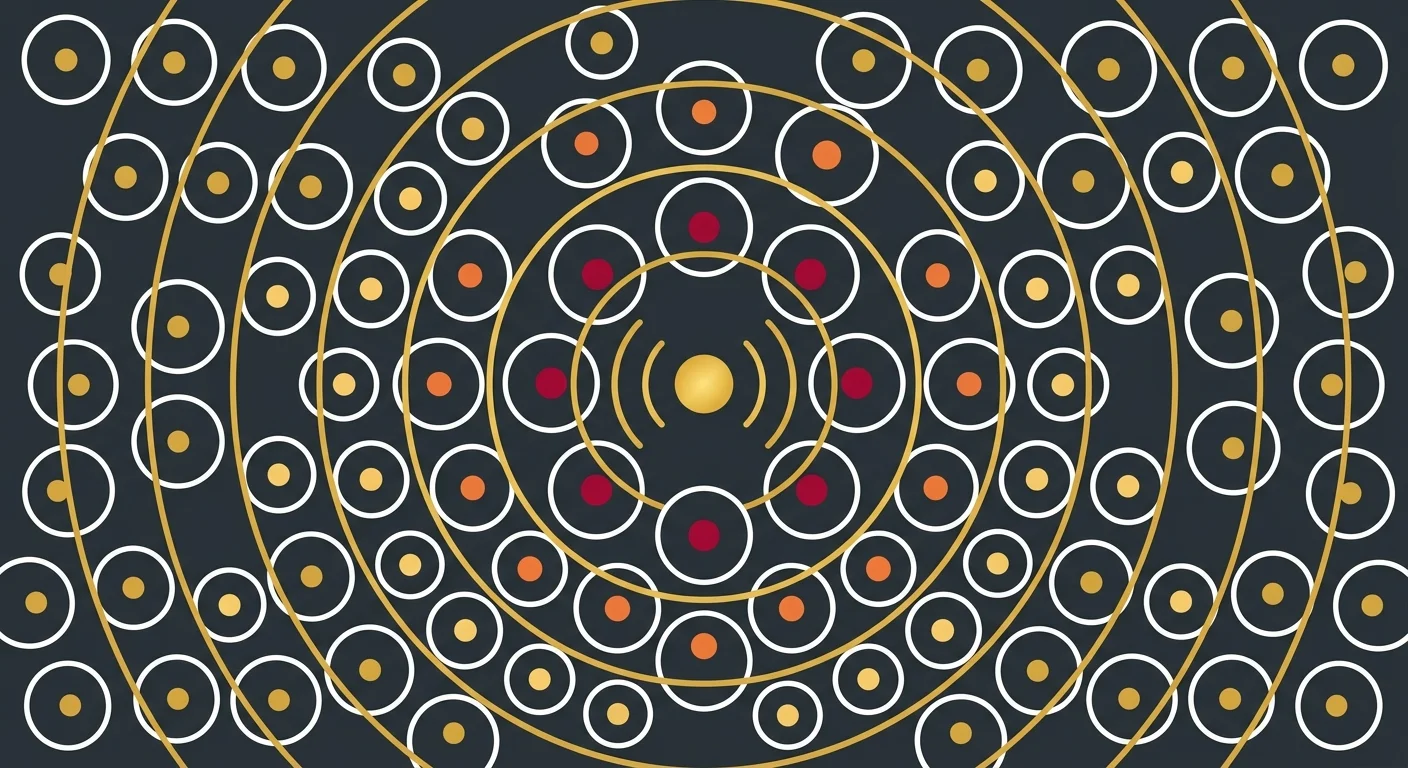
So what actually works?
Not suppression. Not forced disruption. Something that speaks to the tissue on its own terms.
Shockwave therapy doesn't fight the biology. It talks to it.
The acoustic waves don't force change. They give the cells the signal to change themselves.
That difference is everything. Interventions that suppress or override the body's biology produce temporary results — the signal quiets, the tissue stays broken.
Interventions that engage the biology — that restart the cellular instruction set — produce structural change. That's what shockwave therapy is. The second kind.
Mechanotransduction — When Mechanical Force Becomes a Biological Signal
Here's the actual mechanism: mechanotransduction.
Focused acoustic waves hit the cell. The mechanical force converts into a biochemical signal inside it. That's not a theory. That's what's happening.
The waves don't just vibrate the surface of the scar tissue. They create rapid pressure changes at the cellular membrane — and those pressure changes activate intracellular signaling pathways.
The cell reads that as an instruction. Vascular remodeling starts. Collagen reorganization begins. New vessel growth gets triggered.
The cell isn't being overridden. It's being told what to do.
That's Dr. Karen Hannah's systems-level read on this. Scar tissue isn't a surface problem. It's a biological systems failure — and corrections have to come from inside the system, not around it.
Mechanotransduction is what gets the acoustic signal into the cell. That's the entry point.
And the protocols are controlled. Low to medium energy levels — 0.05 to 0.25 mJ/mm² — precise enough to stimulate the tissue without damaging the structures around it.
Who This Treatment Is and Is Not For
There's a specific clinical picture this treatment fits: chronic pain that has outlasted the original injury.
The tissue healed. The blood supply didn't follow. The vascular blockade is still there, still driving the pain signal. That's the target — and that's exactly what Shockwave Therapy is designed to reach.
But it's not the right fit for everyone.
If you're looking for a single session that resolves everything, that's not how this works. Partial commitment to a care plan produces partial results — and that's not a caveat, it's a clinical fact.
And if you've already decided what the treatment should look like before the assessment happens, that's a problem. At Touch of Wellness Chiropractic, the clinical picture drives the protocol. Not the other way around.
One more boundary worth naming: if the scar tissue is still actively healing — fresh injury, acute post-surgical wounds — this isn't the starting point. Shockwave Therapy works on established fibrotic tissue. The kind where the body's standard repair process has already stalled and left the patient stuck.
That's the population it's built for.
If the biology has been failing you — if the standard interventions haven't reached it — the mechanism that's been missing finally has a tool that can engage it.
| Biological Signal Triggered | Target Cell Type | Healing Outcome | Timeframe |
|---|---|---|---|
| Mechanotransduction signal | Fibroblasts / soft tissue cells | Cellular healing cascades initiated; biochemical repair signals activated | Begins at time of treatment |
| Acoustic pressure wave delivery | Fibrotic scar tissue cells | Controlled cellular stimulation without surrounding tissue damage | Per treatment session |
What Shockwave Therapy Actually Does Inside the Scar
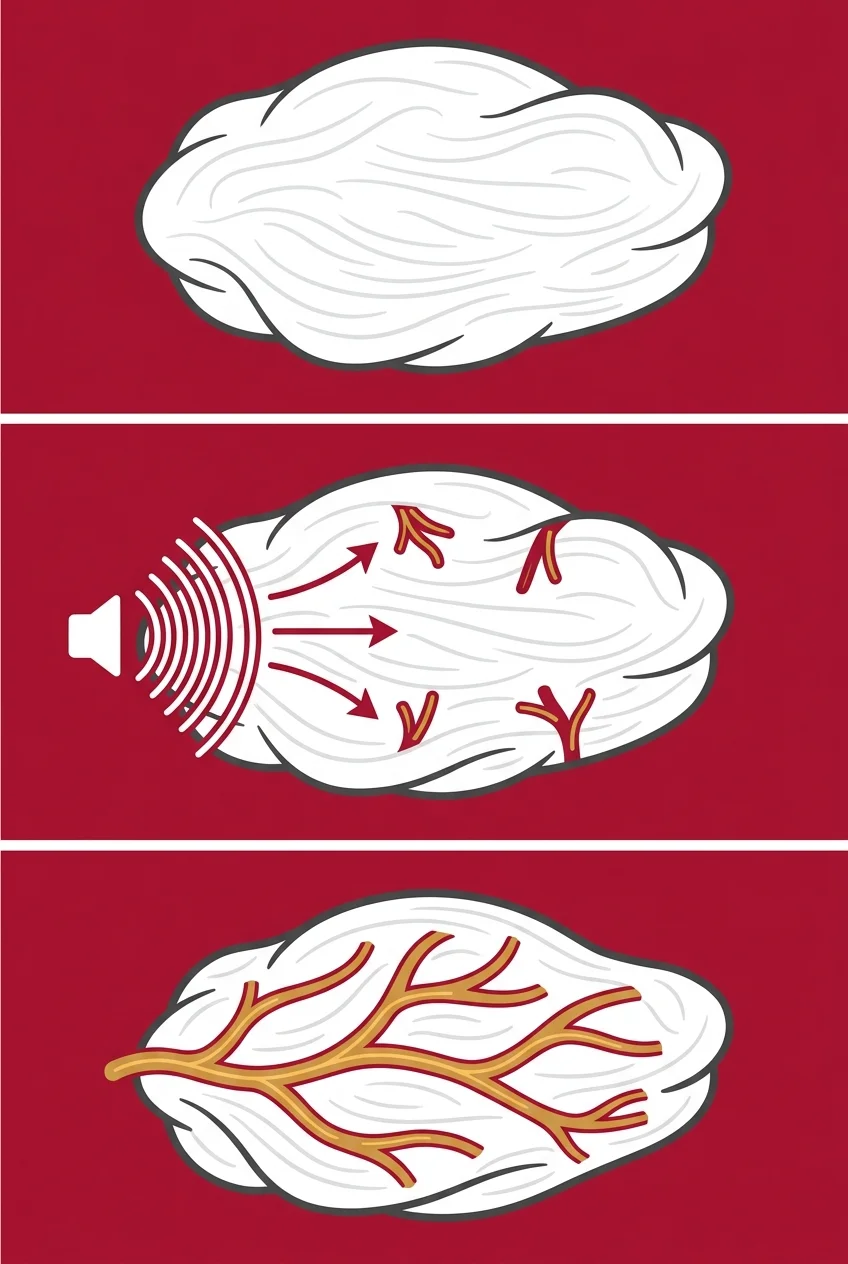
Mechanotransduction gets the signal inside the cell. What comes next is three distinct biological events — each one building the conditions the next one requires.
New vessel formation. Collagen remodeling. Sustained tissue oxygenation. That sequence matters because the treatment isn't quieting a signal — it's rebuilding the biological supply chain the scar sealed off.
The Neovascularization Cascade
The first event is angiogenesis — new blood vessel formation. Scar tissue doesn't just lack circulation. It actively suppresses the molecular signals that would normally trigger vessel growth. That's what shockwave therapy overrides.
NIH findings on angiogenesis confirm that shockwave therapy upregulates vascular endothelial growth factor (VEGF) and endothelial nitric oxide synthase (eNOS) — the primary molecular signals responsible for building new vascular networks. That's not a surface-level effect. That's the body constructing entirely new microvascular architecture inside tissue that had none.
Measurable increases in vessel density show up within four weeks of treatment. The region that spent months oxygen-deprived and nutrient-starved starts receiving a biological supply again. Not because something was forced on it — because the correct cellular instruction was finally delivered. The body's system came back online.
Collagen Remodeling and the TGF-Beta1 Brake
New vessels aren't enough on their own. The dense, disorganized collagen matrix that replaced healthy soft tissue has to be remodeled before those vessels can thread through it. You can't restore a supply chain through a wall.
The TGF-beta1/Smad pathway has been running the show inside that scar — and it's been giving the wrong instructions for months. It drives excessive collagen deposition. It keeps the matrix disorganized. And it never gets the signal to stop. Shockwave therapy suppresses that pathway directly, cutting collagen type I and collagen type III synthesis in the treated region. That's the exact overproduction that makes scar tissue rigid, avascular, and mechanically painful. The acoustic signal isn't masking that problem. It's correcting the command that created it.
That's what separates this from every surface-level approach. It doesn't just disrupt the collagen that's already there. It changes the cellular instruction set that keeps producing it. Even the pressure sensation you feel during treatment is part of that correction — the mechanical signal the cell needs to stop overproducing and start remodeling. The biology isn't overridden. It's corrected.
Microcirculation Restoration and Tissue Oxygenation
Here's the third event — and the one that explains why the pain finally stops. New vessels and remodeled collagen build the structural conditions for restored circulation. But the proof is in what the tissue environment actually reads after treatment.
NIH clinical data on ESWT in human scar tissue shows that pain on the Visual Analog Scale drops by over 50 percent following treatment, with significant improvements in Vancouver Scar Scale pliability scores. That's not suppression. Those are structural outcomes. The kind that only happen when the underlying tissue environment has actually changed.
Oxygen saturation in the treated tissue rises and stays elevated for up to 24 hours post-treatment. The tissue that spent months — or years — in a low-oxygen, high-acid state finally has a functioning supply line. The nervous system stops reading a threat signal from a region that isn't in crisis anymore. That's the whole point: not a treatment outcome. The body's system coming back online after being cut off.
| Biological Event | Molecular Mechanism | Clinical Effect | Research Evidence |
|---|---|---|---|
| Neovascularization (new vessel formation) | Upregulation of VEGF and endothelial nitric oxide synthase (eNOS) | Significant increase in vessel density within 4 weeks — restoring the biological supply chain to oxygen-deprived scar tissue | NIH — PMC4839845 |
| Collagen remodeling (fibroblast signaling correction) | Suppression of TGF-beta1/Smad signaling pathway — reducing collagen type I and III synthesis | Disorganized collagen overproduction halted; scar matrix shifts from rigid, avascular structure toward functional soft tissue | NIH — PubMed 24054411 |
| Restored microcirculation and tissue oxygenation | Increased local microcirculation at the site of fibrotic scar tissue | Oxygen saturation (sO2) rises and remains elevated for up to 24 hours post-treatment — ending the chronic low-oxygen state driving pain | NIH — PMC7602498 |
| Pain reduction (structural, not suppressive) | Downstream effect of vessel formation, collagen remodeling, and restored oxygenation combined | Visual Analog Scale pain score reduced by over 50% — with significant drops in Vancouver Scar Scale pliability scores confirming structural tissue change | NIH — PMC6029898 |
What a Shockwave Therapy Protocol for Scar Tissue Looks Like
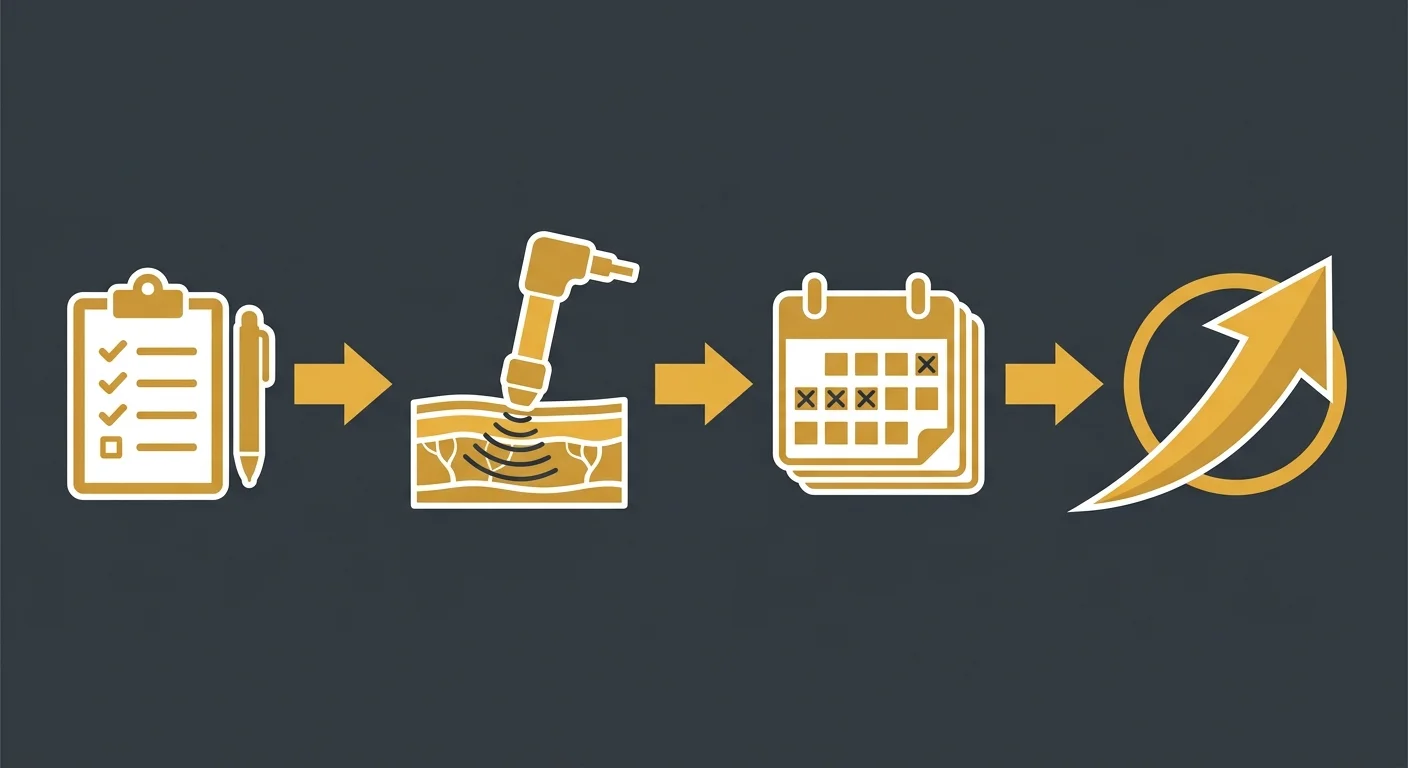
So that's the biology. Here's what it actually looks like in practice.
There's no template. What your tissue requires drives the protocol — and nothing else gets a vote.
Shockwave Therapy for scar tissue is non-invasive. A handheld applicator delivers focused acoustic waves directly into the fibrotic tissue.
You'll feel pressure — sometimes significant pressure. That's not a side effect to manage. That mechanical signal is exactly what triggers the cellular remodeling cascade. The discomfort is the biology responding. That's the point.
Energy Levels, Session Frequency, and What to Expect Between Visits
Energy levels aren't a guess. Standard protocols for fibrotic musculoskeletal tissue operate at low to medium levels — in the range of 0.05 to 0.25 mJ/mm².
That range is precise enough to trigger mechanotransduction without damaging the surrounding tissue that's already compromised. It's calibrated. Not defaulted.
Where you land in that range depends on the scar's depth, density, and how long it's been there. Older, denser fibrotic tissue responds at the higher end. Fresher or more superficial fibrosis responds at lower thresholds.
The assessment determines that. Not a default setting.
Sessions are spaced to let the cellular cascade progress between visits. New vessel density measurably increases within four weeks of treatment — but that process needs time to build.
Stacking sessions too close together doesn't accelerate healing. It interrupts it.
Between sessions, the tissue is actively remodeling. That window isn't downtime.
Stay hydrated. Skip the anti-inflammatory medications — they blunt the healing response you just paid to trigger. Follow whatever movement guidance your provider gives you. These aren't optional suggestions. They're part of the protocol. Partial commitment produces partial results.
How Assessment Drives the Protocol — Not the Other Way Around
The protocol isn't set before the assessment. It comes out of it. That's the part most patients don't expect — and the part that matters most.
Fibrosis depth, vascular state of the surrounding tissue, how the scar responds under palpation, what it's doing to adjacent structures — all of that shapes the energy parameters, the session cadence, and the criteria for progression.
Arriving with a predetermined number of sessions already decided is working against the process. The clinical picture is the protocol. Not the other way around.
And if the tissue isn't responding the way the data suggests it should — if pain scores on the Visual Analog Scale aren't moving, if pliability isn't shifting — the protocol changes.
That's not a failure. That's the system working correctly. Reassessment isn't an admission that something went wrong. It's the standard. A provider who keeps running the same protocol when the numbers say otherwise isn't being consistent. They're being negligent.
| Protocol Variable | Typical Range for Fibrotic Tissue | Clinical Rationale | Adjustment Trigger |
|---|---|---|---|
| Energy Level | 0.05 to 0.25 mJ/mm² | Low to medium energy triggers mechanotransduction without damaging compromised surrounding tissue | Scar depth, density, and chronicity — older or denser fibrosis targets the higher end of the range |
| Neovascularization Timeline | Measurable vessel density increase within 4 weeks | VEGF and eNOS upregulation requires uninterrupted time between sessions to build new microvascular architecture | If vessel density and oxygenation markers aren't progressing on expected trajectory, session cadence is re-evaluated |
| Pain Reduction Benchmark | Over 50% reduction on the Visual Analog Scale | VAS and Vancouver Scar Scale pliability scores provide objective markers that the tissue environment is structurally changing — not just temporarily suppressed | If VAS scores aren't tracking expected reduction trajectory, protocol parameters are reassessed and adjusted |
| Pliability Response | Significant statistical drops in Vancouver Scar Scale scores | Reduced VSS pliability scores confirm collagen remodeling is progressing — disorganized matrix is breaking down and reorganizing | Insufficient pliability improvement signals the collagen remodeling cascade hasn't engaged — protocol energy or cadence is adjusted |
Frequently Asked Questions About Shockwave Therapy and Scar Tissue
Here's where patients get specific. Before they decide, and after.
How it works at the tissue level. What a realistic session count looks like. What the pressure means. Why it outperforms the injection cycle. Straight answers — no timelines that exist to fill space.
How does shockwave therapy actually break down deep scar tissue?
It doesn't break scar tissue down the way scraping does. It changes the cellular instruction driving the problem in the first place.
Acoustic waves suppress the TGF-beta1/Smad signaling pathway — the biological driver behind excessive collagen deposition. That stops the overproduction cycle at the source. Collagen type I and III synthesis in the treated tissue drops. The dense, disorganized matrix that keeps deep scar tissue rigid and avascular starts to remodel from within.
At the same time, VEGF and eNOS upregulate — triggering new vessel formation inside tissue that had no functional circulation. The acoustic signal doesn't force the change. It delivers the cellular instruction the tissue needed to change itself.
How many shockwave therapy sessions are needed to restore blood flow to chronic scars?
There's no number that applies before the assessment. Session count depends on the scar's depth, density, age, and how the tissue responds between visits. Those variables aren't knowable in advance.
What is measurable: new vessel density increases significantly within four weeks of treatment. But that cellular cascade needs time between sessions to progress. Spacing matters as much as frequency.
The protocol is built from what the clinical picture actually shows — and it changes if the tissue isn't tracking. Arriving with a fixed number in mind works against the process.
Does shockwave therapy for scar tissue hurt during or after the session?
During the session, you'll feel pressure — sometimes significant pressure. That sensation isn't incidental. It's the mechanical signal your cells need to initiate the remodeling cascade. The discomfort is the biology responding.
After the session, some localized soreness is normal in the treated area. That's not damage. That's the biological process beginning.
The pain picture changes over the course of the protocol. Clinical data on ESWT in human scar tissue shows Visual Analog Scale pain scores reducing by over 50 percent following treatment. That's not a one-session result — it's the cumulative outcome of vascular and collagen remodeling happening between visits.
Why is shockwave therapy a better long-term solution than cortisone injections for scars?
Cortisone suppresses inflammation temporarily. It doesn't restore circulation, doesn't remodel collagen, and doesn't build new vascular architecture. The tissue stays avascular. The pain cycle restarts — usually right on schedule.
Shockwave therapy addresses the structural reason the tissue hurts. It upregulates VEGF and eNOS to trigger angiogenesis. It suppresses the TGF-beta1/Smad pathway to stop the collagen overproduction keeping the tissue rigid. It increases microcirculation and tissue oxygenation at the treatment site.
Those are biological outcomes cortisone injections don't produce. One option manages symptoms. The other restores the supply chain.
Can shockwave therapy help old surgical scar tissue or only recent injuries?
Age of the scar matters — but it doesn't disqualify. Older, denser fibrotic tissue presents a more established vascular blockade. It's not unreachable. It typically requires sessions at higher energy levels and a longer progression timeline.
The mechanism works on chronically fibrotic tissue because it targets the signaling environment, not just the surface structure. Oxygen saturation in treated tissue rises and stays elevated for up to 24 hours post-treatment — that response is present in long-standing fibrosis, not only in recent injuries.
Surgical scar tissue responds. So does post-injury fibrosis that's been there for years. What drives the protocol isn't when the scar formed. It's what the tissue actually shows on assessment.
The Body Already Knows How to Heal — Shockwave Gives It the Signal
Scar tissue isn't healed tissue. It's a substitute.
Dense, disorganized, and cut off from the biological supply chain everything around it depends on. The wound closed. But closed isn't the same as restored. Closed means the bleeding stopped. It doesn't mean the system came back online.
Here's what your body has been doing in the meantime: sending the same request — oxygen, nutrients, cellular instructions — into a region that stopped receiving them.
Shockwave therapy doesn't heal you. It doesn't override your biology. It doesn't suppress a signal or mask a symptom. What it does is deliver the acoustic trigger your tissue has been waiting for. The angiogenesis starts. The collagen remodels. The microcirculation rebuilds. That's not the treatment doing the work. That's your own biology finally getting the message through.
If you've been living with pain in a region that technically healed, the supply line is the problem. Not the tissue you can see. Not the scar on the surface. The vascular blockade underneath it.
At Touch of Wellness Chiropractic, Dr. Karen Hannah treats scar tissue as exactly that — a vascular blockade. Not a cosmetic complaint. Not a surface stiffness issue. Not something to manage indefinitely with injections that degrade the collagen structure they're supposed to protect. The goal isn't quieter symptoms. It's a functioning biological supply chain where one hasn't existed in months or years.
The question isn't whether shockwave therapy works. The question is how long you're willing to wait before you give the body the signal it's already asking for — and let it do what it's been trying to do all along: get the body's system coming back online.
The tissue healed. The supply line didn't come back with it. That's not a symptom you manage — that's a structural problem with a clinical solution. At Touch of Wellness Chiropractic, Dr. Karen Hannah treats scar tissue as the vascular blockade it actually is — not a cosmetic issue, not a wait-and-see situation. If you're in Morton, Peoria, or the surrounding area and the pain, restriction, or numbness has outlasted every other explanation, the assessment is where this starts.