
Physical spinal tension blocks melatonin production by keeping the nervous system locked in a sympathetic, fight-or-flight state that chemically suppresses the pathways responsible for producing sleep hormones. The spine houses the nervous system that governs communication between the brain and the endocrine glands, including the pineal gland, which produces melatonin. When vertebrae are misaligned or under chronic mechanical stress, sensory receptors along the spine send ongoing threat signals to the brain, even in the absence of any real danger. This keeps the sympathetic nervous system dominant instead of allowing the parasympathetic system to take over, and the parasympathetic system is what the body needs active in order to rest. A sympathetic-dominant state elevates cortisol production. Cortisol and melatonin operate on an inverse relationship, meaning that when cortisol stays elevated, melatonin synthesis is suppressed. This is a biochemical mechanism, not simply a matter of mindset or discipline. Structural tension in the cervical and upper thoracic spine sits especially close to the pathways connecting the brainstem to hormone-regulating centers, so tension held in these regions has an outsized effect on hormonal signaling related to sleep. The result is a body that feels exhausted yet remains physiologically braced, unable to downshift into the deep, restorative sleep state that requires low cortisol and adequate melatonin. Addressing the structural source of this tension, rather than only the behavioral or psychological symptoms surrounding sleep, is what allows the nervous system to shift out of a defensive posture and into one where natural hormone production can resume its intended rhythm.
What Physical Spinal Tension Actually Does to Melatonin Production
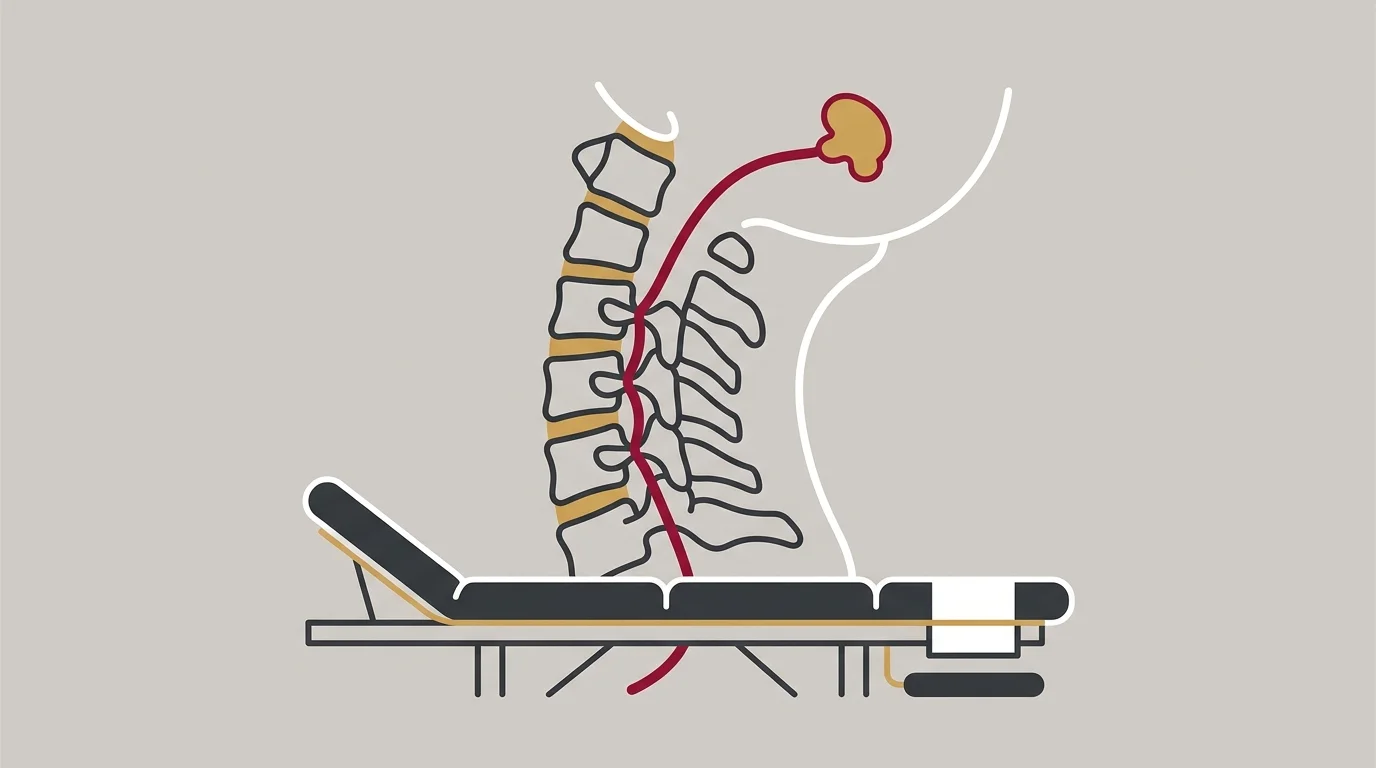
The spine is not just a stack of bones protecting a bundle of nerves. It functions as the central communication highway for the entire nervous system, relaying signals that dictate hormone production throughout the body.
That includes melatonin, the hormone that pulls you into sleep, and cortisol, its stress-driven opposite. When the spine sends the wrong message, the glands on the other end listen and respond in kind.
The Highway Metaphor: How the Spine Carries Hormonal Signals
Picture the spinal column as the physical wiring between command center and hormone factory. Signals leave the brain, travel down the spinal cord, and run out along the nerve roots to the glands that set the sleep-wake cycle.
Now interrupt that wiring with physical tension, and the message changes. Instead of a clear signal to wind down, the body picks up static that reads as ongoing threat, so it stays alert instead of settling toward rest.
Why Sleep Hygiene Advice Misses the Structural Trigger
Most sleep advice aims at behavior. Cut the caffeine, dim the lights, silence the phone.
None of that resolves a spine under constant physical tension, because the body interprets that tension as a persistent threat and locks the nervous system into a fight or flight state biochemically incompatible with deep, restorative sleep. That structural trigger sits underneath the behavior, which is why the the sleep-and-nervous-system connection explained mechanism matters more than another hour of screen discipline.
The Cortisol-Melatonin Seesaw Under the Microscope
Cortisol and melatonin don't just share the same body peacefully. They ride a seesaw. When one climbs, the other gets pushed down, and that's not mood or willpower, it's mechanics.
This matters far beyond occupational stress research. It matters for anyone whose spine is holding chronic tension, because the same suppression shows up regardless of what triggered the elevated cortisol in the first place.
| Study Population | Hormone Measured | Direction of Change | Sleep-Related Finding |
|---|---|---|---|
| Healthcare professionals across 14 included studies | Melatonin and cortisol | Melatonin suppressed, cortisol dysregulated | Burnout associated with circadian misalignment and poor sleep quality |
| Healthy women during non-rapid eye movement sleep | Autonomic (sympatho-vagal) balance | Shift toward parasympathetic modulation | Increased coherence between heart rate variability and respiration in the high frequency band |
How Chronic Muscular Bracing Locks the Nervous System in Threat Mode
Burnout research makes the seesaw visible at scale. Research published through PubMed Central found burnout was associated with suppressed melatonin secretion and cortisol dysregulation across 14 included studies.. Across 14 included studies, that suppression tracked consistently alongside disrupted sleep timing, which tells us this is not an isolated finding but a repeatable biochemical pattern.
And the same shift happens every night in healthy sleep, not only in burnout. Research published through Frontiers in Physiology found the sympatho-vagal balance shifts toward parasympathetic modulation during non-rapid eye movement sleep, associated with increased coherence between heart rate variability and respiration in the high frequency band.. That parasympathetic takeover is exactly the state chronic spinal bracing blocks, which is why the Am I Tired But Wired cycle of daytime exhaustion and nighttime alertness keeps repeating.
What the Research Shows About Spinal Manipulative Therapy and Cortisol
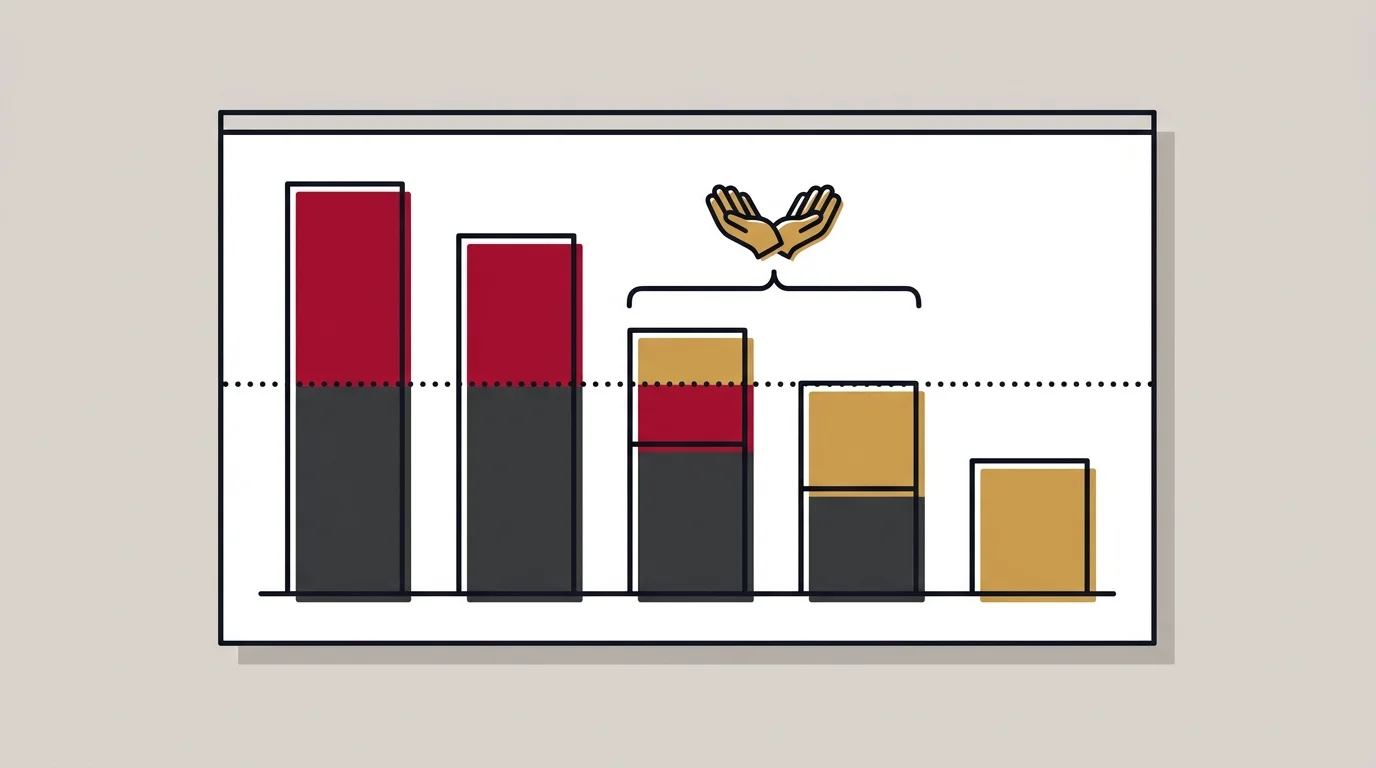
Theory only carries you so far. Controlled research on spinal manipulative therapy hands the seesaw a measurable outcome you can actually point to.
That outcome is not a single anecdote. It is a documented shift in stress hormone output tied directly to a course of treatment.
| Study Detail | Measured Value |
|---|---|
| Participant Group | Employed volunteers tracked across the full study window |
| Treatment Window | A portion of the study period included spinal manipulative therapy treatment |
| Measure Tracked | Salivary cortisol, sampled to reflect stress hormone output over time |
| Direction of Change | A decrease in cortisol that held up under statistical scrutiny |
| Statistical Confidence | Significance strong enough to rule out chance as the explanation |
Reading the Numbers: Cortisol Reduction Timelines in Controlled Study
A study following nine employed volunteers tracked salivary cortisol across a five-week period that included two weeks of spinal manipulative therapy treatment. Cortisol levels dropped, and the drop held up under statistical scrutiny. Australasian Chiropractic & Osteopathy reports salivary cortisol levels may decrease over a five-week period that includes spinal manipulative therapy treatment, with results showing statistical significance at p<0.001.
That result lines up with a p-value of 0.001, a threshold that rules out chance as the explanation. The timing also matters here, since the reduction tracked the treatment window itself rather than drifting on its own. That shift toward calm is the same shift the body needs at night, which is exactly what the Activating Parasympathetic Sleep Transitions Naturally mechanism describes in more depth.
How the Vagus Nerve Shifts the Body Toward Sleep-Ready Parasympathetic Tone
The vagus nerve is the primary channel through which the body shifts out of threat mode and into rest mode. It runs from the brainstem down through the neck and torso, and its tone determines how easily the nervous system settles.
Strong vagal tone pulls the body toward the parasympathetic state where digestion, healing, and sleep can all take place. That same shift toward parasympathetic dominance is what already showed up in the heart rate research above, just measured from a different angle.
The Upper Cervical Spine and Brainstem Pressure on Sleep Regulation
The upper cervical spine sits right beneath the brainstem, where the vagus nerve and other cranial nerves begin. Chronic tension or misalignment in that small region can press on the very structures the nervous system relies on for clean signaling.
When that pressure persists, the brainstem's output skews toward sympathetic alarm rather than parasympathetic calm. Restoring normal motion through Chiropractic adjustment in this region is one way to relieve that pressure, and a deeper look at that process lives in the practice's chiropractic treatment approach.
Where Spinal Correction Fits Into a Structural Sleep Assessment
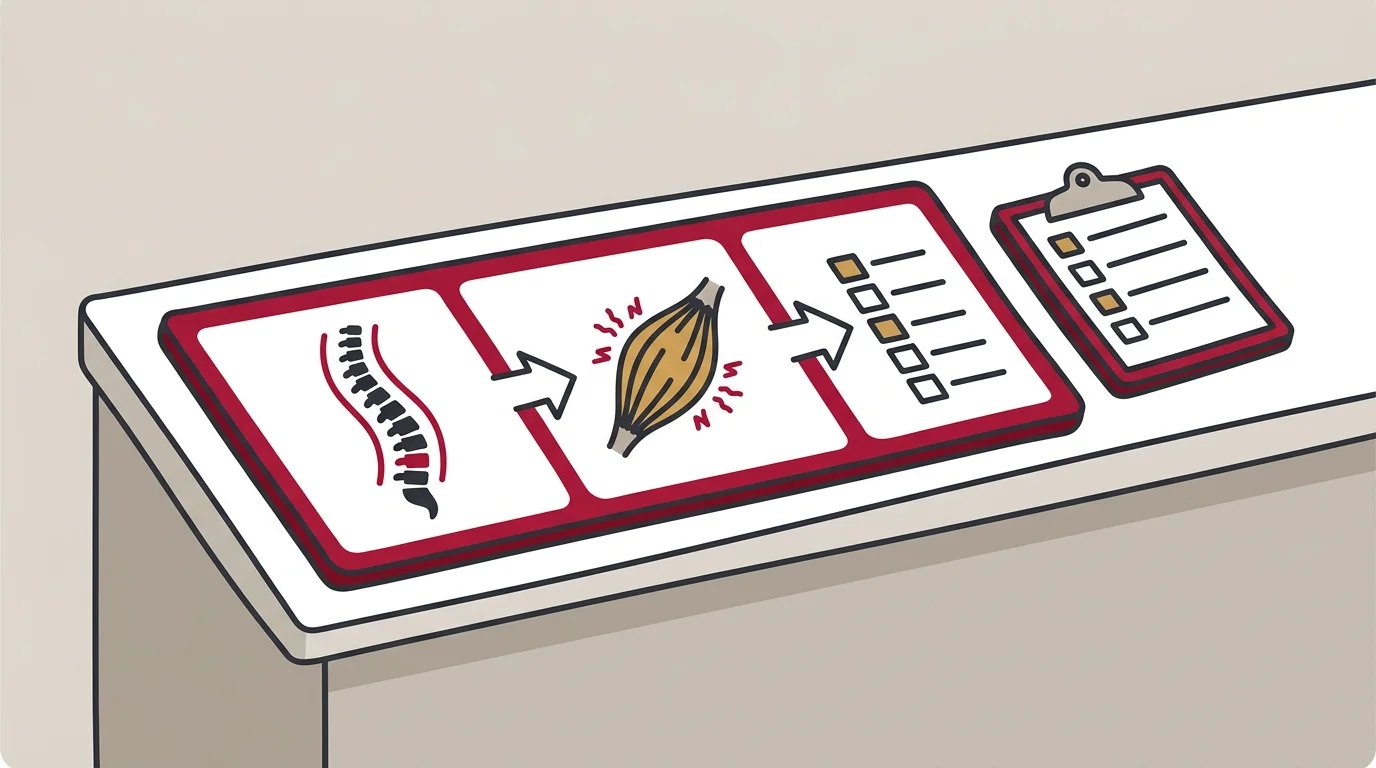
The missing piece of the sleep puzzle is usually structural, not just behavioral or psychological. A structural sleep assessment starts where the last section left off, tracing that same communication highway from the base of the skull down through the spine.
The goal is simple: find where that highway carries static instead of a clean signal.
Assessing Postural and Muscular Tension Patterns
Many people who struggle with sleep have already tried everything they've been told. They avoid blue light, cut out caffeine, and practice good sleep hygiene, yet still feel tired and wired.
An assessment of postural and muscular tension patterns looks past those habits toward the physical bracing held in the neck, shoulders, and upper back. Chronic tightness in these areas often points directly to the sympathetic dominance driving the sleep disruption.
Sequencing Structural Correction Alongside Behavioral Sleep Practices
Once the structural source of the tension is found, Chiropractic adjustment goes to work on the mechanical interference itself. Behavioral habits still count, but now they sit on top of a nervous system that can actually settle.
Structural correction first gives those habits something functional to build on.
Frequently Asked Questions
Once the spine-to-sleep connection clicks, a few mechanical questions tend to surface. Here are the straight answers.
Can a stiff neck or back pain actually cause insomnia?
Yes. Tension held in the neck and back keeps the sympathetic nervous system switched on, and that alert state is exactly what blocks the hormone shift sleep needs.
How does a chiropractor know if my spine is affecting my sleep?
A structural assessment traces the spine from the base of the skull down, hunting for restricted motion and muscular bracing. Those findings point straight to where the communication highway is carrying static.
What is the vagus nerve and what does it have to do with melatonin?
The vagus nerve runs from the brainstem through the neck and torso, and its tone decides how easily the body drops into rest. Strong vagal tone supports the parasympathetic state melatonin production depends on.
How many adjustments does it typically take to see an improvement in sleep quality?
That depends on how much structural tension has built up and how long it's been there. Chiropractic adjustment works on the underlying interference, not on a fixed schedule.
Besides chiropractic care, what can I do to reduce spinal tension that disrupts sleep?
Behavioral habits still matter, like limiting screens and holding a steady bedtime. They just work better once the structural bracing behind the sympathetic dominance has been addressed.
Is it the physical pain from spinal tension that blocks sleep, or something else?
Pain can be part of it, but the deeper mechanism is neurological, not just sensory. Even tension you don't feel still sends threat signals that suppress melatonin.
Can poor posture during the day really stop me from sleeping well at night?
Yes. Hours of poor posture load the same spinal structures covered above, and that daytime bracing carries straight into the nervous system's state at night.
What This Means
The spine is the highway. Cortisol and melatonin are the traffic, and physical tension is the wreck that keeps blocking every lane. No amount of sleep hygiene clears a wreck it was never built to reach.
Structural correction belongs at the start of sleep care, not the end of it. Chiropractic adjustment addresses the mechanical interference directly, restoring the clear signal the nervous system needs to shift out of fight-or-flight and toward genuine rest.
That is not a replacement for good habits. It is what makes those habits finally work. If tired but wired has become the norm, the next step is a structural sleep evaluation.