
Chiropractic care breaks the cycle of pharmaceutical sleep aid dependency by correcting spinal interference that disrupts the nervous system's own ability to regulate sleep. Sleeplessness is often treated like a chemical deficiency, something to mask with a pill until the next dose is needed again. That approach never touches the actual mechanism deciding whether the body can power down at night. The nervous system carries an on and off switch for sleep, and that switch is neurological, not pharmaceutical. When misalignment in the spine places stress on the nervous system, it can keep the body locked in a heightened state of alertness, making deep, restorative sleep hard to reach without outside chemical help. A chiropractic adjustment works by reducing that interference, restoring proper communication between the spine and the nervous system so the body can go back to regulating its own sleep cycles. Rather than sedating the body into unconsciousness, this approach addresses the underlying dysregulation that blocks natural sleep in the first place. Over time, pharmaceutical sleep aids can create a dependency loop, where the body stops trying to regulate sleep on its own because a chemical substitute keeps doing that work for it. Stopping the medication then triggers a rebound effect, often making sleep even harder to achieve than before treatment began. Addressing the neurological root cause offers a different path, one aimed at restoring the body's own capacity for sleep regulation rather than replacing it indefinitely. This is the distinction between managing a symptom and correcting the dysfunction that produces it, and it forms the basis for understanding how spinal health and sleep quality are connected.
What Sleeplessness Actually Costs Before a Pill Ever Enters the Picture
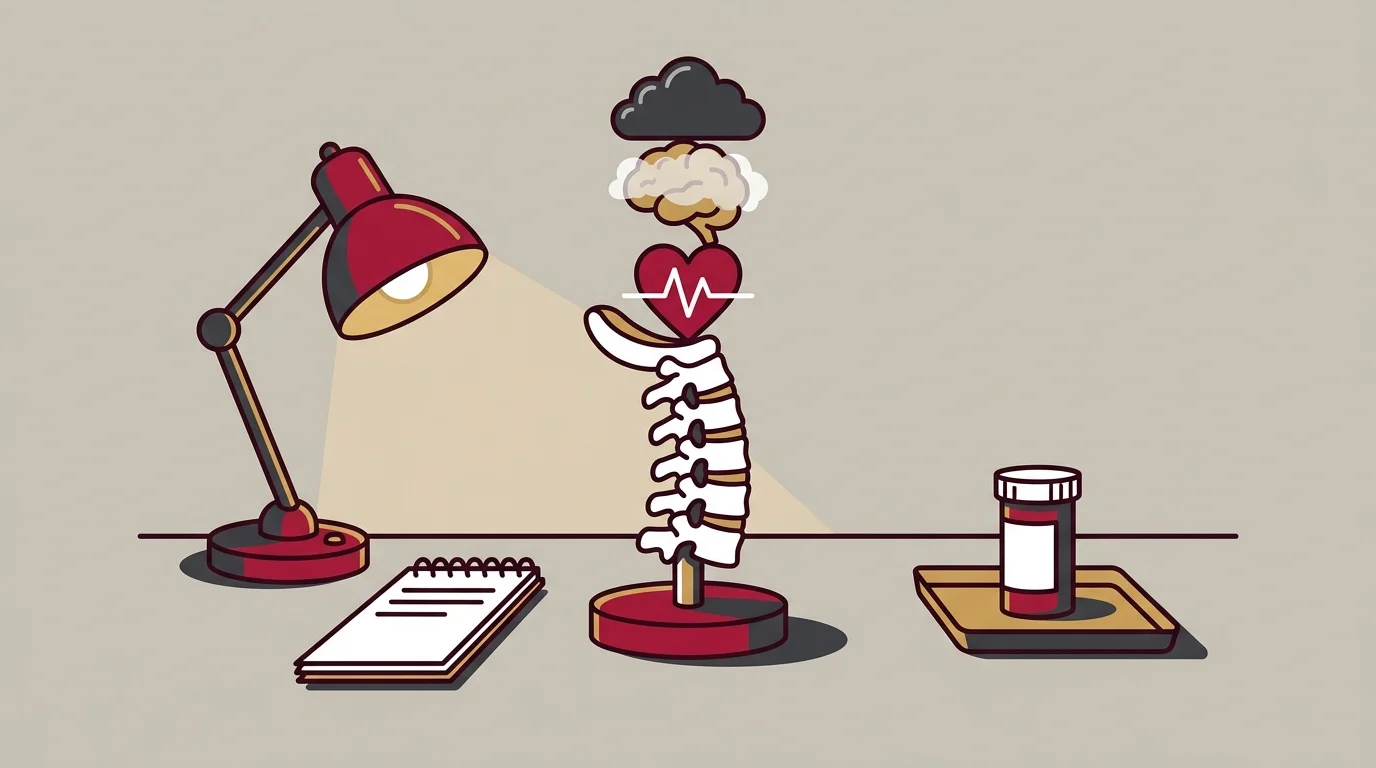
Here's where the cycle of dependency starts. The moment sleeplessness gets treated as the problem itself, the symptom gets managed night after night while whatever caused it stays untouched.
True restorative sleep isn't something a chemical produces. It's a state the body enters on its own once the nervous system finds its balance again. That distinction matters even more once you look at what rebuilds healthy sleep architecture, where the deeper mechanics of that balance come into view.
Why the Sleeping Pill Cycle Keeps Renewing Itself
Most answers to sleeplessness never get past the symptom. A pill goes in, the body drops into unconsciousness, and the nervous system dysregulation underneath it sits right where it always was.
Leaning on that approach feels less like a solution and more like borrowing time. It never reaches the real reason the body can't power down on its own.
The Rebound Trap: How Dependency Rebuilds Itself Every Time a Dose Stops
Stop the medication, and the nervous system has nothing to fall back on. It never relearned how to regulate sleep, so the rebound hits harder than the original sleeplessness ever did.
That's the trap. Every dose reinforces the same dependency it was supposed to resolve, and the Chiropractic Adjustments vs. Sleeping Pills comparison shows why chemical suppression and neurological correction lead to such different places over time.
Why Chasing the Symptom Leaves the Cause Untouched
Chasing sleeplessness as if it were the disease misses the point entirely. Sleeplessness is a signal, not the source.
As we saw earlier, the cause goes untouched while the symptom gets managed night after night. Nothing shifts in the spine or the nervous system, so nothing shifts in how the body sleeps.
How the Spine Talks to the Sleep Switch
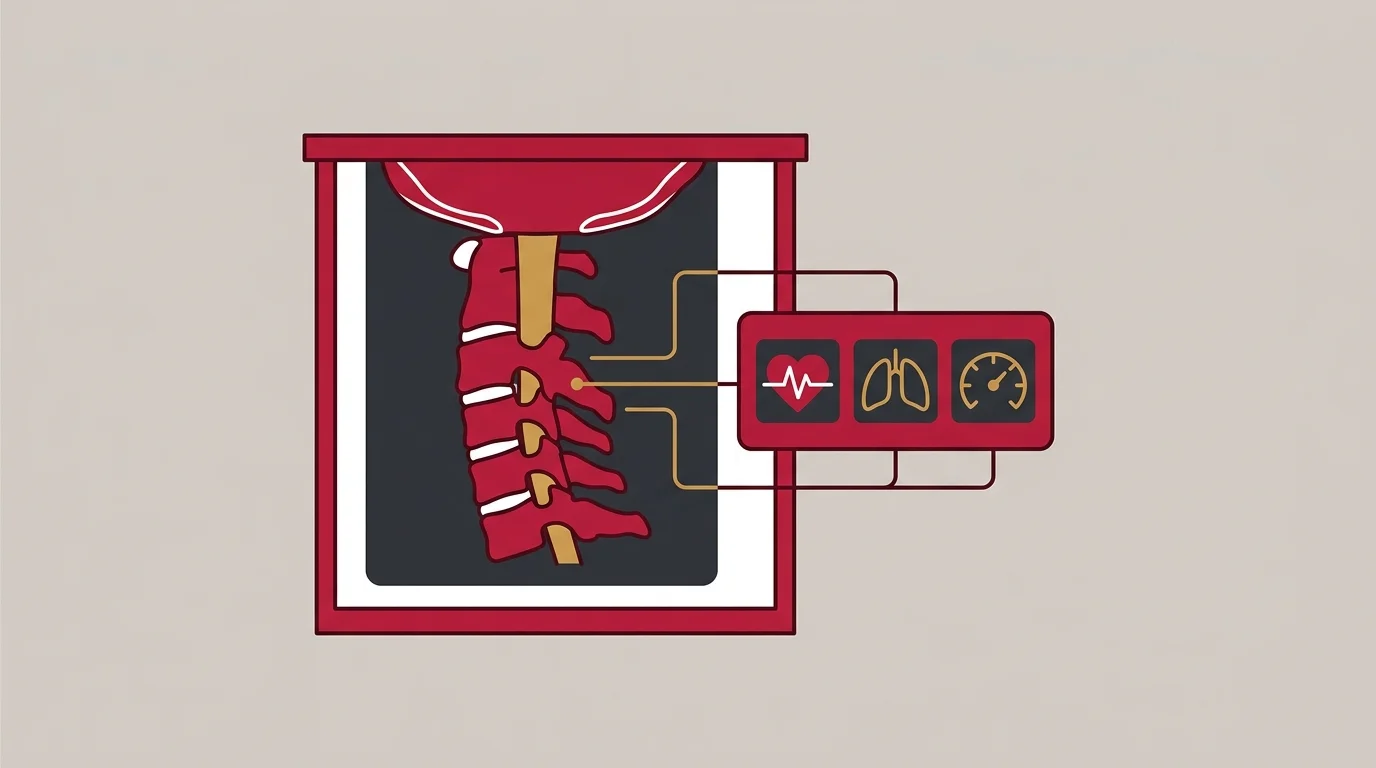
Think of the spine as more than a stack of bones. It houses the nervous system's main communication line, carrying signals between the brain and every organ that governs sleep.
When that line is compressed or stressed, the signal itself changes. The switch that should flip toward rest instead stays leaning toward alert.
| Autonomic Function | Response in Compression Patients | Response in Healthy Controls |
|---|---|---|
| Deep Breathing Response | Abnormal, blunted variation between inhale and exhale | Normal rhythmic variation tracking the breath cycle |
| Valsalva Maneuver | Impaired ratio, signaling delayed nervous system recovery | Sharp rise and recovery consistent with healthy regulation |
| Positional Changes | Disrupted adjustment when shifting posture or position | Smooth, immediate compensation with no lag |
| Blood Pressure Regulation | Orthostatic fall, indicating poor autonomic control on standing | Stable regulation maintained across position changes |
The Cervical-Autonomic Connection
Nowhere is that clearer than in the cervical spine, the neck region sitting closest to the brainstem. Pressure here doesn't stay local. It ripples out into the systems that regulate heart rate, blood pressure, and breathing.
Work available through PubMed indicates cervical spinal cord compression is associated with significant disruption of autonomic nervous system function compared to healthy controls, including abnormal responses to deep breathing, the Valsalva maneuver, positional changes, and blood pressure regulation. That finding matters here because those same functions rise and fall as the body moves toward sleep. If they cannot respond correctly while sitting still, they cannot be expected to settle correctly at night either.
Where the Vagus Nerve Fits Into the Sleep Switch
The vagus nerve runs straight through this same neurological corridor. It carries the signal that shifts the body out of alert mode and toward genuine rest.
When cervical stress interferes with that pathway, the body struggles to complete the shift. Instead of easing down, it stays partway braced, which is part of why a System Is Locked in Fight-or-Flight state so often shows up as an inability to fall or stay asleep.
What the Research Shows When the Spine Is Adjusted
Architecture explains how the mechanism works. Studies show what actually changes when that architecture gets addressed.
Researchers have looked at chiropractic adjustment for chronic low back pain and measured its effect on sleep itself, not just on pain scores.
| Measured Outcome | Chiropractic Group Result | Timeframe |
|---|---|---|
| Light Sleep Stage | Significant improvement observed | Four weeks |
| Overall Quality of Life | Enhanced, alongside sleep gains | Four weeks |
| Anxiety and Depression | Significant reductions reported | Four weeks |
| Fatigue and Pain | Significant reductions reported | Four weeks |
Reading the Data Without Overselling It
As PubMed Central reports, significant improvements in light sleep stage and enhanced overall quality of life were observed in a chiropractic group after four weeks, including significant reductions in anxiety, depression, fatigue, and pain.
That improvement showed up in a specific population dealing with chronic low back pain, not sleeplessness in isolation. It matters here because it links spinal correction directly to measurable sleep change, without a chemical anywhere in the process. Anyone studying that link further can go deeper in nervous system focused chiropractic treatment, where the broader case for chiropractic adjustments gets laid out.
What an Assessment for Sleep-Related Nervous System Disruption Actually Looks Like
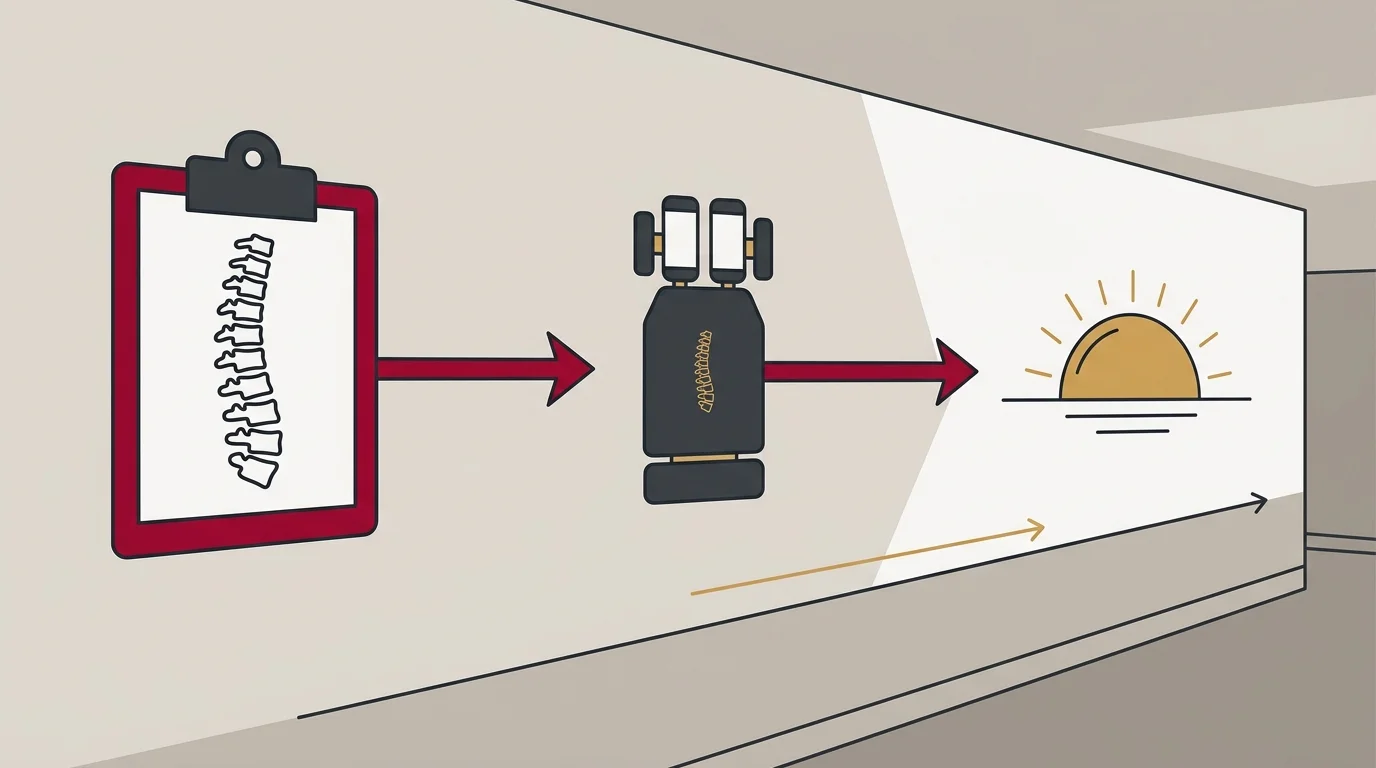
Research explains the mechanism. An assessment is where that mechanism gets checked against what is actually happening in a given nervous system.
Many people try apps, supplements, and strict sleep hygiene routines before ever considering the spine. Results stay disappointing because the root of the problem is neurological, not behavioral.
| Stage | Focus | What Changes |
|---|---|---|
| Initial Assessment | Mapping cervical spine stress and how it connects to nervous system signal flow | A baseline picture of where interference sits and how far the switch has drifted toward alert |
| Early Care | Reducing stress on the cervical spine to restore clearer communication along the vagus nerve pathway | Signal flow starts stabilizing, though sleep changes have not yet caught up to what is happening structurally |
| Progressing Care | Tracking whether fight-or-flight tension is easing as the nervous system relearns its own regulation | Sleep quality tends to build gradually as the body stops leaning on outside chemical assistance |
| Ongoing Monitoring | Watching cervical alignment and lingering tension patterns over time rather than judging one night alone | A clearer read on whether the underlying architecture is shifting toward restoration or holding steady |
The Adjustment-to-Sleep-Cycle Timeline
Correcting spinal interference does not flip the sleep switch overnight. The nervous system needs time to relearn a pattern it has outsourced to medication for months or years.
Early visits focus on reducing the stress placed on the cervical spine and restoring clearer signal flow. Changes in sleep quality tend to build gradually as that communication line stabilizes.
What Gets Measured at Each Stage
Each stage of care tracks specific markers of nervous system function, not just whether sleep feels better on a given night. Alignment findings in the cervical spine matter, since that region sits closest to the brainstem and the vagus nerve pathway.
Signs of lingering fight-or-flight tension get monitored too, since that tension is what keeps the switch leaning toward alert. None of this replaces a conversation about medication. It simply shows whether the underlying architecture is shifting toward restoration or staying exactly where it started.
Frequently Asked Questions
A few questions come up again and again when this topic surfaces. Here are direct answers to the ones worth settling.
How is addressing the nervous system different from just taking a sleeping pill?
A sleeping pill sedates the body into unconsciousness. A chiropractic adjustment restores the communication line between spine and nervous system, so the body regulates sleep on its own.
What are the long-term risks of relying on pharmaceutical sleep aids?
Leaning on it long-term can deepen the same dependency loop it was meant to solve. Stop the medication, and the rebound often leaves sleep harder to reach than it was before.
How many chiropractic sessions are typically needed to see an improvement in sleep?
The nervous system needs time to relearn a pattern it outsourced to medication for months or years. Progress builds gradually as cervical alignment and vagus nerve signaling stabilize, rather than showing up overnight.
Is it safe to get chiropractic care while still taking prescribed sleep medication?
A chiropractic adjustment addresses spinal interference, not the medication itself. Any change to a prescribed sleep aid belongs in a conversation with the prescribing physician, not the chiropractic visit alone.
What does a fight-or-flight state have to do with an inability to sleep?
Fight-or-flight keeps the nervous system braced for alertness instead of easing toward rest. That tension leans the sleep switch toward alert, which is why falling and staying asleep turns difficult.
Besides adjustments, what else might a chiropractor recommend for better sleep?
Beyond chiropractic adjustment, attention often turns to reducing cervical stress and monitoring signs of lingering fight-or-flight tension. The goal stays the same: restoring the architecture that lets the nervous system regulate sleep itself.
Where This Leaves the Cycle
The switch was neurological the whole time. Every pill, every app, every sleep hygiene trick that fell flat was aimed at the wrong target, because not one of them ever touched the spine or the nervous system it houses.
Breaking the cycle means restoring the communication line between the two. Chiropractic adjustment does not sedate the body into rest, it removes the interference that kept the switch stuck on alert, and lets the nervous system relearn what it was always built to do on its own.
Touch of Wellness Chiropractic built its approach around that one distinction, treating the cause instead of managing the symptom night after night. If the cycle of dependency is the question, restoring the switch itself is the answer, and that starts when you talk it through with us.