
Why 'Getting Back to Being You' Is the Primary Clinical Goal at Touch of Wellness
"Getting back to being you" is a clinical objective. It means returning to the morning run, the workday without distraction, the weekend with your family where pain is not the organizing principle of every decision.
Chronic pain does more than hurt. It reorganizes life around itself. Approximately 20.9% of U.S. adults — 51.6 million people — lived with chronic pain in 2021. Of those, 6.9% experienced high-impact chronic pain severe enough to limit major life activities on most days. For those patients, the person they were before the pain started becomes someone they refer to in the past tense. That shift is the clinical problem that matters most. It is also the one that standard symptom-focused care rarely addresses directly.
Up to 85% of lower back pain cases are classified as non-specific. Structural imaging comes back normal. The patient continues to suffer. That diagnostic gap creates a second injury — the psychological distress of being told nothing is wrong when something clearly is. Chronic pain degrades executive cognitive processing and erodes the sense of physical self-agency that defines personal identity. Pain does not just limit movement. It limits the person.
Chiropractic care addresses this by targeting the mechanical and neurological disruptions that block normal function. Spinal manipulative therapy produces statistically significant improvements in pain — 10 to 20 points on a 100-point scale — by reducing joint mechanical dysfunction and restoring the afferent neural pathways that carry information back to the central nervous system. That is not symptom management. That is system restoration.
The clinical goal is not a pain score. It is the moment a patient stops saying "I used to" and starts doing again.
Last Updated: July 20, 2026
- • When Pain Stops Being a Symptom and Starts Being Your Identity
- • Why Most Pain Treatment Measures the Wrong Thing
- • The Biological Systems Lens: What a Zoology Background Changes About Pain Care
- • What 'Getting Back to Being You' Actually Looks Like as a Clinical Milestone
-
• Frequently Asked Questions
- • What is the psychological impact of being told 'nothing is wrong' by doctors?
- • How long does it take to return to physical activities after years of chronic back pain?
- • Why do standard physical therapy protocols sometimes fail to resolve radiating sciatica?
- • What makes a biological systems approach to pain care different from standard chiropractic?
- • Can a chronic nerve condition improve even if previous treatments offered no relief?
- • How does Touch of Wellness Chiropractic decide when a care plan needs to change?
- • Your Life Is the Benchmark
When Pain Stops Being a Symptom and Starts Being Your Identity
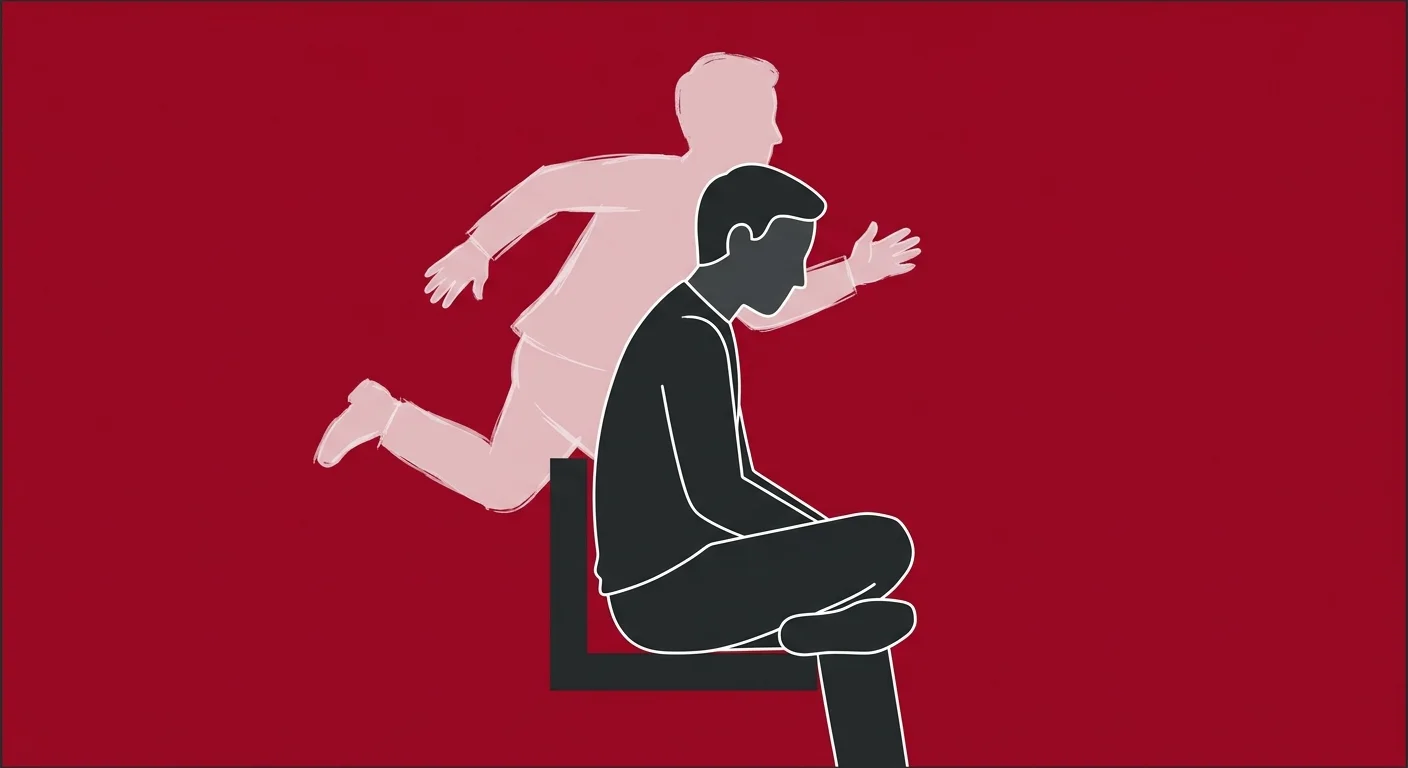
Most people with chronic pain can name the exact moment it happened. The moment pain stopped being something they were dealing with and became something they were.
It doesn't announce itself. It accumulates.
You stop signing up for the 5K because you're not sure you can train. You stop committing to the hiking trip because you can't promise you'll be functional that weekend. You stop explaining what you're going through because the sympathy is hollow and the explanation is exhausting.
Slowly, pain becomes the organizing principle. And you become the person who has it.
That's not a mindset problem. It's a neurological one.
Chronic pain doesn't just generate a signal in your body. It rewires how your brain processes identity, agency, and executive function. So when patients improve on a pain scale and still can't get their life back — that's not failure of effort. That's what happens when you treat the symptom and leave the rewiring alone.
The Grammar of 'I Used To'
Listen to how people with chronic pain talk about themselves. You'll hear the same grammatical shift every time: I used to run. I used to sleep through the night. I used to go to my kids' games without dreading the bleachers.
The past tense isn't nostalgia. It's a clinical marker.
That shift in grammar is what pain identity looks like out loud. It tells you the patient has stopped picturing themselves in a functional future. They've started anchoring their self-concept to what they can't do.
Pain has restructured the relationship between who they are and what their body can do. That's not a philosophical point. That's the clinical problem a recovery framework has to address directly.
And it's not abstract. Chronic pain directly degrades executive cognitive processing and erodes physical self-agency — the felt sense that you're the one running your own life. When that goes, the identity shift follows fast.
No postural correction, no massage, no generic stretching protocol touches that. Not because those things have no value. Because they're not aimed at the right target.
Why Standard Medicine Misses the Identity Shift
Here's what makes this worse. Standard medicine isn't built to catch the identity shift.
Up to 85% of lower back pain cases are classified as non-specific(https://ncbi.nlm.nih.gov/pmc/articles/PMC3413003/) — meaning the MRI comes back clean, the X-ray shows nothing alarming, and the patient gets sent home with a referral or a prescription and no real answer.
For patients who've been dismissed as having nothing wrong, that blank result creates a second layer of damage. The pain is real. The functional loss is real.
But the system that's supposed to explain it comes back empty. So patients land on one of two conclusions: either it's not serious, or no one believes them. Neither one moves them toward recovery.
Standard care is built for conditions that show up on imaging. Chronic nerve pain doesn't scan well. Non-specific back pain doesn't scan well. The kind of systemic functional decline that builds over years doesn't scan well.
So the identity shift goes unaddressed. The 'I used to' grammar gets louder. And the patient walks out of that appointment no closer to being themselves again.
| Pain Stage | How the Patient Describes It | What Gets Lost | What Standard Care Typically Addresses |
|---|---|---|---|
| Early pain — acute and recent | 'My back is killing me this week.' | Temporary comfort; one or two activities avoided for now | Pain relief, anti-inflammatories, rest recommendations |
| Recurring pain — pattern established | 'I've been dealing with this for months.' | Consistent sleep, reliable work performance, social commitments | Imaging, referrals, short-term physical therapy cycles |
| Chronic pain — identity begins to shift | 'I used to run. I used to travel. I used to be able to sit through a full workday.' | Future plans, physical self-confidence, the ability to project a functional self forward | Symptom scoring, pain management protocols, medication adjustments |
| Pain as identity — full reorganization | 'I'm just someone with a bad back. That's who I am now.' | Personal agency, executive function, the sense that recovery is even possible | Typically nothing — this stage is rarely named or addressed in standard care |
Why Most Pain Treatment Measures the Wrong Thing
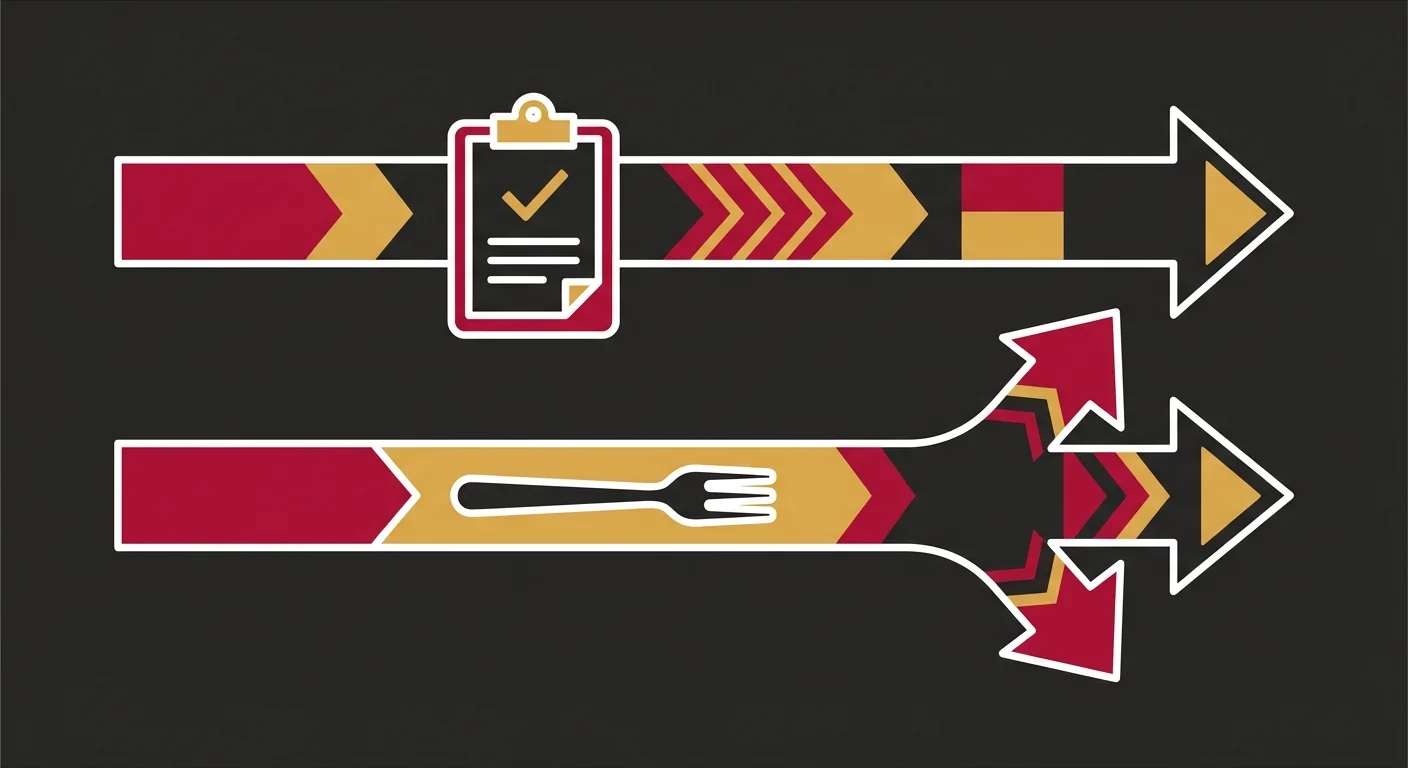
Rate your pain on a scale of one to ten.
That's the question most treatment is built around. That number drives the assessment. It guides the protocol. It decides when you're 'better.'
But for someone who's stopped running, stopped sleeping, stopped showing up fully to their own life — a pain score doesn't come close to measuring what's actually been lost.
Medicine reaches for MRIs, pain scales, and range-of-motion protocols first.
Every one of those tools is measuring something. Just not the thing that matters to the person sitting across the desk, wondering when they'll feel like themselves again.
Standard care is optimized for symptoms that resolve on a predictable timeline. Not for the functional erosion that builds quietly over months and years until a person's identity is structured around what they can no longer do.
That's not a niche problem. CDC data puts 20.9% of U.S. adults — 51.6 million people — living with chronic pain in 2021. The gap isn't rare. It's the default outcome of a system measuring the wrong thing.
The Cookie-Cutter Protocol Problem
Here's what the cookie-cutter protocol looks like in practice.
You come in with a specific complaint. You get the same sequence every other patient gets — same adjustments, same order, same frequency. What you report between sessions doesn't change it. The fact that nothing is improving doesn't change it.
The protocol runs because the protocol is the plan. Your feedback isn't part of the equation.
That model fails in a specific, predictable way. When the clinical approach is fixed before the assessment is finished — before anyone knows how your pain behaves, what aggravates it, what you've actually lost functionally — treatment becomes about completing a sequence.
Not about restoring you.
The individualized chiropractic care model works the other way: the assessment drives the plan. Full stop.
I've seen this pattern with patients who transfer here after months of care elsewhere. They can describe exactly what happened at every appointment — because every appointment was identical.
And they're still not back to the activities they came in wanting to recover.
That's not bad luck. That's what happens when a treatment protocol is designed around efficiency instead of outcome.
The cookie-cutter model isn't just clinically ineffective. It's the reason patients arrive here convinced nothing will work.
When the same approach runs indefinitely — no reassessment, no pivot, no acknowledgment that the clinical picture has changed — patients stop expecting results. They stop picturing returning to the activities you love as something that actually happens to people like them.
That's the real cost. Not just time lost. The slow death of belief that 'I used to' can ever become present tense again.
Why Standard Pain Metrics Miss the Point
A pain scale captures intensity. It doesn't capture the morning you skipped the trail because your back locked up before you got out of bed.
It doesn't capture the meeting you powered through at half-capacity. Or the weekend you sat on the sidelines of your own life because flaring up in public felt worse than missing it entirely.
Intensity is one variable. Function is the whole equation.
Standard metrics are built for acute care. They track whether a discrete injury is healing on schedule.
NIH research confirms spinal manipulative therapy produces improvements of 10 to 20 points on a 100-point pain scale. That's a real clinical result. But a 15-point drop means nothing if the patient still can't sleep, still can't train, still can't show up to their own life the way they did before the pain started.
The number improved. The person didn't get back.
The right metric isn't how much less it hurts. It's how much more you're doing.
Are you back at the gym? Back at the desk for a full day? Back in the bleachers at your kid's game without planning your exit strategy around your spine?
Those are the numbers that matter. And they're the ones that never appear on a standard intake form.
| What Gets Measured | What It Actually Tracks | What It Misses | Clinical Risk |
|---|---|---|---|
| Pain intensity score (1–10 scale) | Subjective sensation of pain at a single moment in time | Functional loss, identity erosion, and the activities the patient has stopped attempting altogether | Patient appears 'improved' on paper while still unable to return to daily life |
| Structural imaging (MRI / X-ray) | Visible anatomical abnormalities — disc herniation, bone changes, gross structural damage | Non-specific pain, neural pathway disruption, and functional decline that doesn't appear on a scan | Patient is discharged as 'normal' while the underlying driver of limitation goes unaddressed |
| Range-of-motion assessment | Mechanical mobility at a specific joint or segment during a clinical snapshot | How that mobility — or lack of it — translates to real-world function: sleep, work, recreation, and self-directed movement | Care is declared complete when joint mobility returns, even when the patient's life hasn't |
| Symptom frequency / medication usage | How often the patient experiences a pain episode or reaches for relief | Whether the patient is suppressing symptoms to keep functioning — or genuinely recovering agency over their own body | Reduced symptom frequency is mistaken for resolution; the functional ceiling stays low and unchallenged |
| Visit compliance / protocol completion | Whether the patient showed up and completed the prescribed sequence of sessions | Whether the treatment sequence actually changed anything meaningful in the patient's daily experience | Protocol is deemed successful by completion, not by outcome — the patient's real progress is never the deciding variable |
The Biological Systems Lens: What a Zoology Background Changes About Pain Care
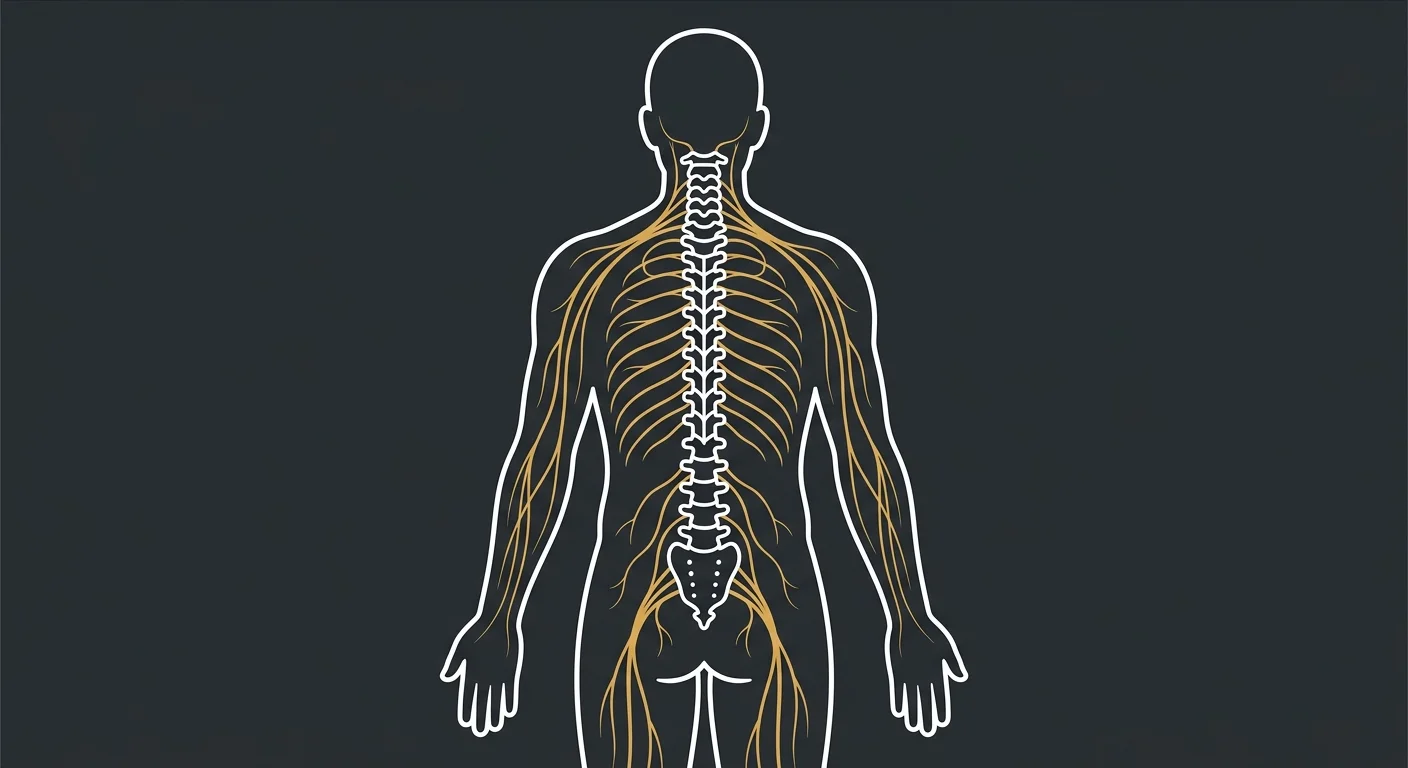
Most providers chase the structural problem. They want the disc, the joint, the thing they can point to on an image. And when they find it, they treat that one thing and call it a day.
But your spine isn't just a load-bearing column. It's the central highway of your nervous system. When something goes wrong there, the effects don't stay local — they travel.
Dr. Karen Hannah didn't come up through a standard chiropractic pipeline. Her undergraduate training was in Zoology — whole-body biological systems analysis. That background means she doesn't look at a patient and see a list of complaints.
She sees an organism signaling a disruption.
That's a different starting point. And it produces a different care plan.
So the question changes.
Not 'where does it hurt?' But 'what broke down — and what has to be restored for the system to run again?' Those aren't two versions of the same question. They produce entirely different answers.
The Nervous System Is the System — Full Stop
The nervous system doesn't just transmit pain signals. It runs everything — movement, coordination, organ function, sleep, recovery.
When spinal dysfunction disrupts the pathways carrying information between your body and your brain, the downstream effects show up across the entire system. That's why two patients with the same diagnosis present completely differently. Their nervous systems are telling different stories.
This is also why the 'nothing is wrong' dead-end is so clinically damaging. The nervous system disruption keeps running while structural imaging comes back clean.
The MRI isn't wrong. It's measuring the wrong thing.
Nervous system dysfunction doesn't always leave a mark you can see on a scan.
Once you understand the nervous system as the system — not one organ among many — the target gets specific.
It's not pain reduction. It's restoring the neural integrity that lets your body move freely, regulate itself, and stop running the alarm signal that's been on in the background of your life for months.
How Spinal Adjustments Restore Neural Communication
Here's what a chiropractic adjustment is actually doing at the structural level. When mechanical dysfunction in the spine gets resolved, it frees up the afferent neural pathways — the channels carrying sensory information back to the central nervous system.
That's not a metaphor or a positioning statement. It's the mechanism. Restore the joint function, and you restore the communication line.
The clinical evidence supports it. Spinal manipulative therapy produces statistically significant improvements — 10 to 20 points on a 100-point pain scale — by addressing the mechanical restriction that's been choking off neural communication.
But that improvement isn't the end goal. It's the signal that the system is starting to talk again. From there, back pain and sciatica relief becomes a realistic outcome rather than a distant hope.
And when that signal clears, patients stop using the past tense.
Not because someone reframed their mindset. Because the biological barrier blocking function was removed.
The version of you that chronic pain gradually pushed out — that was never gone. The signals were just blocked.
| Symptom-Only Approach | Biological Systems Approach | Clinical Difference | Patient Outcome |
|---|---|---|---|
| Targets the site of pain — the disc, joint, or muscle reporting the complaint | Traces pain to its origin in nervous system disruption and spinal dysfunction | Symptom-only care treats the alarm; systems care finds what triggered it | Pain may quiet temporarily but returns because the underlying disruption is untouched |
| Uses a fixed protocol applied uniformly regardless of how the patient presents | Builds a care plan from what the patient actually reports and how their system responds | Fixed protocols complete a sequence; individualized plans pursue a functional outcome | Patients in fixed protocols plateau early and stop expecting progress |
| Measures success by pain intensity scores alone | Measures success by restored function — sleep, movement, daily participation | Intensity scores track one variable; function tracks whether the patient got their life back | Functional metrics reveal recovery that a pain scale never captures |
| Treats each complaint as an isolated structural problem | Reads the patient's presentation as interconnected signals across a biological system | Isolated treatment misses downstream effects; systems thinking addresses the whole disruption | Patients stop being surprised when unrelated symptoms improve once spinal function is restored |
| Stops reassessing once a diagnosis is assigned and a protocol is running | Pivots the clinical plan when functional metrics don't change after assessment | Static protocols run indefinitely; adaptive plans change course when something isn't working | Patients learn that their feedback drives care decisions — not a billing calendar |
| Accepts 'nothing is wrong on imaging' as a clinical endpoint | Investigates nervous system dysfunction that structural imaging doesn't capture | Imaging absence-of-finding ends the inquiry; systems thinking opens a new line of questions | Patients who were dismissed as having nothing wrong finally get a real clinical investigation |
What 'Getting Back to Being You' Actually Looks Like as a Clinical Milestone
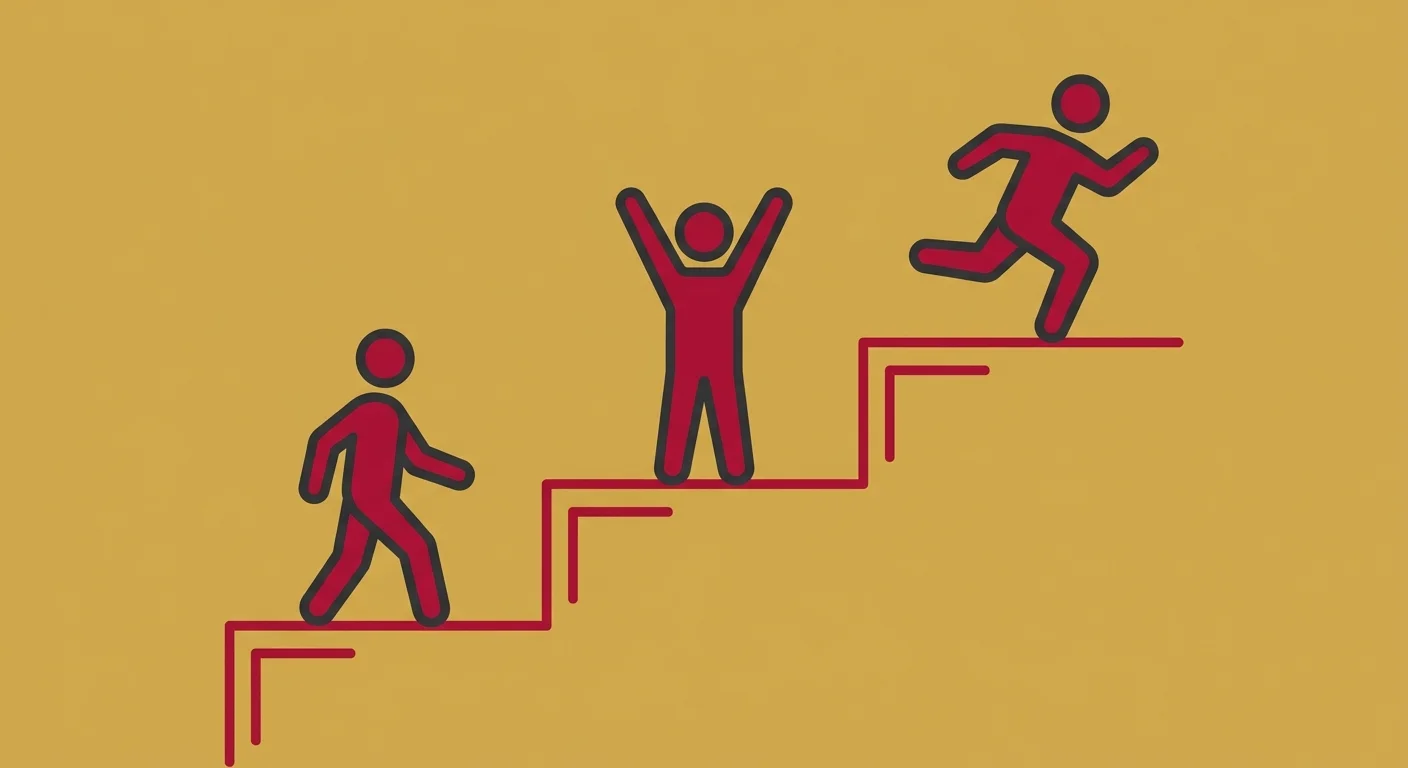
Getting back to being you isn't a feeling. It's a functional event. And it shows up in specific, measurable ways before you've even fully registered that something has shifted.
The clinical milestone isn't a pain score dropping to zero. It's the morning you wake up and don't immediately inventory your spine. It's the afternoon you worked a full day without rearranging your schedule around a flare. It's the moment you stopped calculating what it'll cost you to do something you used to do without thinking.
That's when the recovery is real.
Chronic pain — affecting approximately 20.9% of U.S. adults, or 51.6 million people — doesn't just hurt. It reorganizes. It builds workarounds into your daily architecture until your whole life is designed around protecting the problem instead of resolving it.
Functional recovery means dismantling those workarounds one by one. Not because you decided to push through. Because the biological barrier that built them has been removed.
Functional Recovery Benchmarks That Actually Matter
Standard intake forms don't track the benchmarks that matter. But you already know what they are. The activities you've stopped attempting. The moments you've been sitting out. The version of yourself you keep describing in the past tense.
So that's what gets tracked. Early sessions identify where the nervous system is breaking down and what the functional losses actually are. Progress isn't measured by whether you feel a little better walking out.
It's measured by whether you're doing more. Back at the gym. Back at the desk for a full day. Back in the bleachers without an exit strategy. Those are the numbers that matter — and they're the ones that never appear on a standard intake form.
That's also why suppressing the pain signal instead of resolving the underlying disruption always stalls at symptom management. The pain quiets. The nervous system interference keeps running. The functional losses don't reverse — because the system driving them was never touched.
Real benchmarks don't ask 'does it hurt less?' They ask 'are you back?'
Who This Approach Is — and Isn't — For
This is built for the patient who wants answers, not management. Someone willing to go through an honest assessment, follow a care plan built from their actual clinical picture, and stay in it long enough for the nervous system to respond.
That's not a high bar. But it is a real one.
But it isn't the right fit for everyone. If you need to replicate exactly what a previous provider did — before the assessment even starts — the clinical lead here won't be yours to override. If you're expecting one visit to resolve what took months or years to build, that expectation is going to run straight into biological reality.
And if you won't engage the plan between appointments, what gets done in the office doesn't compound the way it needs to.
But if you're the person who's been dismissed, handed a 12-month protocol with no explanation, or told the imaging is clean so nothing can be done — this is a different conversation.
The chronic pain that has quietly reorganized your life and eroded your ability to function isn't permanent. It's a disrupted system. And disrupted systems, when you understand what actually broke down, can return to the activities you love.
You stop saying 'I used to.' That's not a motivational target. It's the clinical one.
| Recovery Milestone | What It Means Functionally | How It Is Tracked at Touch of Wellness | Why It Matters More Than a Pain Score |
|---|---|---|---|
| Sleeping through the night without spinal inventory | The nervous system is no longer generating a persistent alarm signal that interrupts rest and forces constant body-checking | Patient-reported sleep quality and morning function — tracked as part of the functional picture, not just pain intensity | Sleep is where the nervous system consolidates recovery — a patient who isn't sleeping isn't healing, regardless of what the pain score says |
| Returning to physical activity without exit-strategy planning | The functional workarounds built around the pain — modified routes, avoided movements, pre-planned escapes — are no longer necessary | Specific activities the patient identified at intake as lost or limited are revisited and marked recovered as they return | Activity avoidance is how chronic pain compounds over time — reversing it is the clearest signal the system is running again |
| Getting through a full workday without rearranging around a flare | Executive cognitive processing — attention, decision-making, sustained focus — is no longer being taxed by persistent pain interference | Work performance and daily scheduling patterns reported by the patient, compared against the baseline established at the first visit | Professional function is one of the first things chronic pain erodes and one of the last things standard pain scores account for |
| Stopping the use of 'I used to' as your default grammar | Personal identity has shifted back from pain-defined to capability-defined — the patient is describing themselves in present tense again | Qualitative check-ins on self-description and future planning — whether the patient is making plans or still building life around protection | Identity reorganization around pain is one of the most lasting effects of chronic conditions — reversing it is the recovery, not a side effect of it |
| Re-engaging socially without calculating the physical cost | The energy and cognitive bandwidth previously consumed by pain management is freed up for presence, participation, and connection | Social re-engagement flagged by the patient — events attended, activities resumed with family or peers that had been avoided | Chronic pain doesn't just limit movement — it limits participation in the moments that define a person's life outside of work and medical appointments |
| No longer building daily life around protecting the problem | The compensatory architecture — modified posture, avoided positions, pre-emptive rest — is no longer required because the underlying disruption has been resolved | Care plan milestones that track functional restoration, not symptom suppression — progress is measured by what the patient is doing, not how much less it hurts | When the biological barrier is removed, the workarounds dissolve naturally — that's the difference between managing a condition and resolving the system disruption driving it |
Frequently Asked Questions
Understanding the model is one thing. Believing it applies to your case — after years of dead ends, clean MRIs, and providers who sent you home with a shrug — is something else.
That skepticism is fair. So here's where the 'but what about my case' questions get answered — no hedging, no reassurances, no 'it depends.'
What is the psychological impact of being told 'nothing is wrong' by doctors?
It's not just frustrating. It's a second injury. Up to 85% of lower back pain cases get classified as non-specific. That label doesn't mean nothing's wrong. It means structural imaging didn't find a cause. For the patient, it means their experience got invalidated by the system that was supposed to explain it. You stop trusting your own body. You start wondering if it's in your head. That doubt compounds the original pain. The 'nothing is wrong' diagnosis doesn't close the case. It opens a new wound on top of the one that brought you in.
How long does it take to return to physical activities after years of chronic back pain?
Anyone who gives you a universal timeline is guessing. What actually drives the clock is how far the nervous system disruption has progressed — and how consistently the care plan gets followed.
What's measurable is when functional benchmarks start shifting. The first full workday you didn't rearrange around pain. The first workout you didn't talk yourself out of. Those markers show up at different points for different patients.
But they do show up — when the system driving the dysfunction gets addressed instead of just quieted.
Why do standard physical therapy protocols sometimes fail to resolve radiating sciatica?
Standard physical therapy addresses the muscular and structural layers. Radiating sciatica is a nerve pathway problem.
When the spinal dysfunction compressing that nerve pathway isn't resolved, the muscular work doesn't stick. You strengthen around the interference. The interference stays.
Chiropractic adjustments work at the joint-nerve interface — reducing the mechanical dysfunction that's been blocking afferent neural transmission. That's why some patients go through months of PT with modest results, then see the picture change when the nerve pathway issue gets directly addressed.
What makes a biological systems approach to pain care different from standard chiropractic?
Standard care treats the symptom where it presents. A systems approach reads what that symptom is telling you about the whole network.
Dr. Karen Hannah's undergraduate training in Zoology — whole-body biological systems analysis — means every patient presentation gets read as a set of interconnected signals. Not a list of isolated complaints.
That changes what gets assessed, what gets treated, and what the care plan gets built around. The question isn't just 'where does it hurt?' It's 'what broke down, and what does the system need to run correctly again?' Those aren't variations on the same question. They lead to completely different outcomes.
Can a chronic nerve condition improve even if previous treatments offered no relief?
Yes. Previous treatment failure means the previous approach didn't address the right layer. It doesn't mean the condition is permanent.
Chronic pain affects approximately 20.9% of U.S. adults. Most of them have tried something. The real question is whether that treatment targeted the nervous system disruption — or just the symptom sitting on top of it.
When spinal mechanical dysfunction gets resolved at the joint-nerve interface, the afferent neural pathways that have been firing the wrong signals start transmitting correctly. That's a physiological change. Not a reframe. Not optimism. The system starts working again because the thing blocking it was removed.
How does Touch of Wellness Chiropractic decide when a care plan needs to change?
When the functional benchmarks aren't moving. Not when the visit feels different. Not on a fixed schedule. When the evidence that the system is responding isn't showing up in what you're actually doing — the plan changes. That's not a weakness in the model. It's the whole point. Running the same protocol after it's stopped producing results isn't care. It's inertia. At Touch of Wellness Chiropractic, the plan follows your clinical reality. Not the other way around. If something isn't working, we stop. Reassess. Pivot. That willingness to change course isn't the exception here — it's the standard.
Your Life Is the Benchmark
It wasn't a pamphlet that brought you here.
It was the gap. The distance between who you were before the pain started rewriting your schedule, your plans, your vocabulary — and who you've had to become since.
That 'I used to' grammar running on autopilot every time someone asks what you do for fun. That's the clinical problem. Closing it is the only result that counts.
At Touch of Wellness Chiropractic, your function is the benchmark. Not a pain score. Not a protocol completed on schedule. Not a discharge note that says 'patient improved.'
The benchmark is whether you're back. At the gym. At the desk for a full day. In the bleachers without an exit strategy.
The 'you' that chronic pain displaced was never gone. The signals were just blocked. And when you restore the biological systems that were running those signals in the wrong direction, what comes back isn't a modified version of yourself.
It's you.
If you've been dismissed, handed a template, or told that clean imaging means nothing can be done — that's not the end of this conversation. It's where a real one starts.
Your daily life. The specific activities you've stopped doing. The identity chronic pain quietly displaced. Those aren't soft measures. They're the most precise clinical data available. And they're exactly where an honest assessment at Touch of Wellness Chiropractic begins.
Stop saying 'I used to.' That's not a motivational target. It's the clinical one — and it's the only one worth chasing.
Here's the thing about 'I used to.' That phrase isn't nostalgia. It's a clinical signal — your system had capacity it no longer has, and something specific is blocking it. That's not a mystery to live with. That's where an assessment at Touch of Wellness Chiropractic starts.