
What Is the Chronic Pain Functional Rebirth Protocol at Touch of Wellness?
The Chronic Pain Functional Rebirth protocol is a four-phase chiropractic care framework — Assessment, Nervous System Reset, Structural Restoration, and Functional Maintenance — built to resolve persistent pain at its systemic root, not mask it.
Chronic pain is clinically defined as persistent or recurrent pain lasting longer than 3 months, accompanied by functional disability or emotional distress. Approximately 20.4% of U.S. adults live with it. A substantial portion cannot work normally or participate in the activities that define their daily lives. Standard treatment frequently fails this population — not because lasting relief is impossible, but because most approaches treat the location of pain rather than the system producing it.
That distinction is the foundation of the Functional Rebirth protocol. Pain is a systems problem. Resolving it requires treating the system.
The nervous system is central to why chronic pain persists past the point where tissue has healed. A process called central sensitization causes the central nervous system to become hyper-responsive — amplifying pain signals long after the original injury is gone. The pain is real. It is neurologically driven. And it does not respond to interventions that ignore this mechanism.
Federal clinical guidelines now prioritize non-pharmacologic interventions — physical treatments and manual therapies — as front-line options before opioid initiation. Spinal manipulation and conservative structural approaches are among the most widely used integrative methods for back and neck pain. Chronic pain also commonly co-occurs with disrupted sleep, mental health strain, and autonomic nervous system dysregulation — which is why single-target approaches produce inconsistent and short-lived results.
The Functional Rebirth protocol addresses this full picture. It is individualized by design, calibrated through clinical assessment, and built to change course when a current approach is not producing results. The goal is restored function — not indefinite symptom management.
Last Updated: July 20, 2026
- • Why Chronic Pain Keeps Coming Back (And Why Standard Fixes Miss the Point)
- • Why the Cookie-Cutter Protocol Fails Chronic Pain Patients
- • What the Functional Rebirth Protocol Actually Is
- • The Four Phases of the Functional Rebirth Protocol
- • What the Functional Rebirth Protocol Addresses (And What It Doesn't)
-
• Frequently Asked Questions About the Functional Rebirth Protocol
- • What makes the Chronic Pain Functional Rebirth protocol different from standard pain management?
- • Why does chronic pain persist even after the original injury has fully healed?
- • How does Dr. Karen Hannah's Zoology background influence the Functional Rebirth protocol?
- • What should I expect during my initial assessment at Touch of Wellness Chiropractic?
- • Is the Functional Rebirth protocol a cookie-cutter treatment plan?
- • How long does the Functional Rebirth protocol take to produce results?
- • The Bottom Line on Chronic Pain and the Functional Rebirth Protocol
Why Chronic Pain Keeps Coming Back (And Why Standard Fixes Miss the Point)
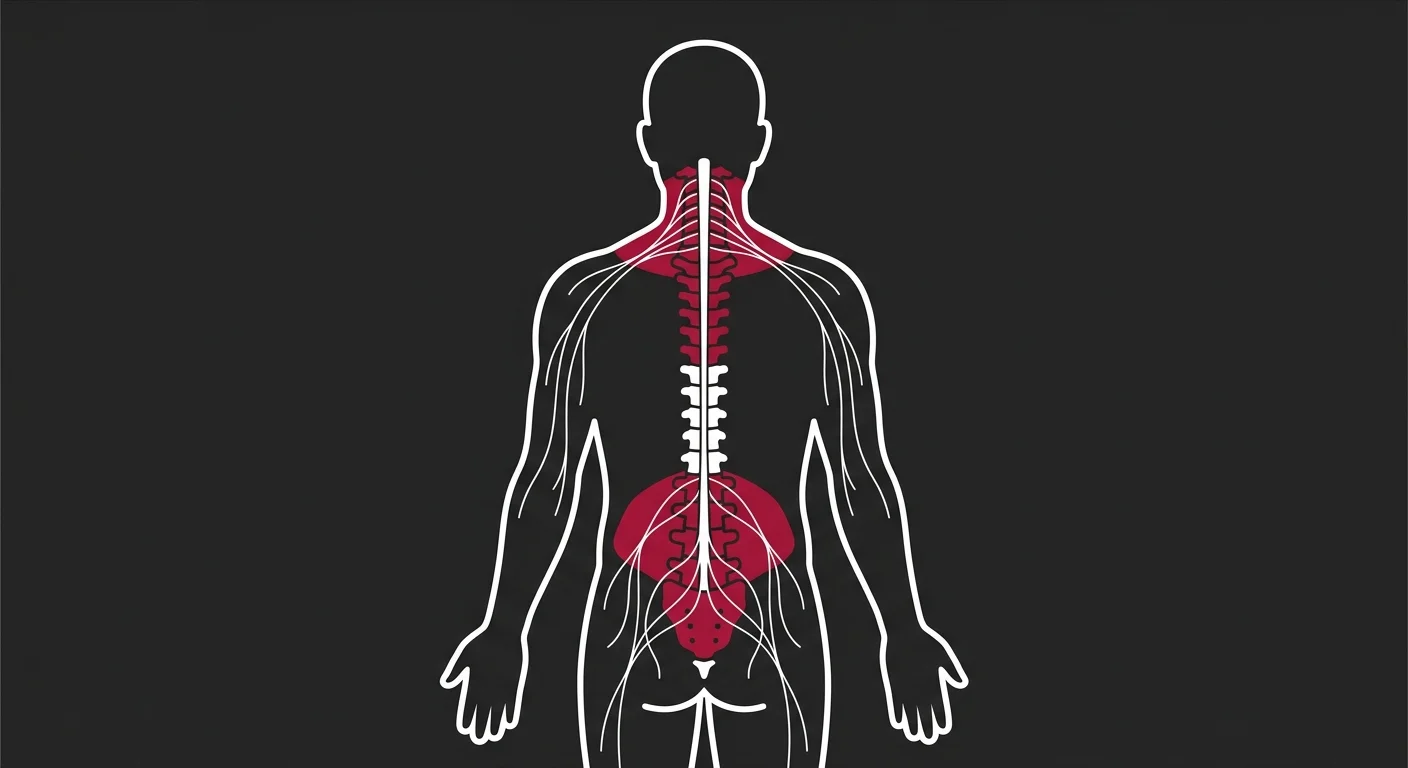
Most people who walk through that door have already tried something. Physical therapy. An injection. A prescription that helped for a month. Maybe another chiropractor who ran the same sequence on them twice a week for six weeks.
And it helped — for a little while.
Then the pain came back. And they were right where they started.
That's not bad luck. That's what happens when treatment targets the location of pain instead of the system producing it.
According to CDC data, approximately 20.4% of U.S. adults live with chronic pain. And a significant share of them aren't just uncomfortable.
They're functionally limited. Work suffers. Sleep disappears. The activities that used to define their days get crossed off one by one.
Standard symptom-focused care fails this group consistently. Not because pain care is impossible — but because it's solving the wrong problem.
The Biology of Pain That Outlives the Injury
Here's what most people don't realize: pain that won't quit doesn't always mean the original injury is still there.
Clinical guidelines define chronic primary pain as persistent or recurrent pain lasting longer than 3 months — often accompanied by emotional distress and real functional disability. But the tissue that started the whole thing? It may have healed a long time ago.
The pain stayed anyway.
That's why chronic pain persists after the injury heals matters more than most providers let on. The nervous system doesn't always stand down once the damage is repaired. It stays on alert — amplifying signals that no longer match any real structural threat. Repeating the same adjustment sequence doesn't change that. It just keeps treating a location while the system driving the problem runs unchecked.
That's not a mindset issue. That's not weakness.
That's biology doing exactly what biology does when it's stuck in a loop with no off-ramp.
Why Chronic Pain Is a Nervous System Problem, Not Just a Tissue Problem
The NIH research on central sensitization names the mechanism directly: the central nervous system becomes hyper-responsive, actively amplifying pain signals even after the initial tissue injury has healed.
The nervous system isn't just reporting pain anymore. It's generating it.
And treatment that only addresses the structural site where pain is felt doesn't touch the system that's driving it.
This is the piece most care plans skip entirely. They treat the back, the neck, the hip — wherever the pain is loudest. The network running all of it gets ignored. But if that network is dysregulated, the signal doesn't stop just because the structure looks clean on an MRI. That's why chiropractic care in Morton, IL that starts with nervous system assessment — not a predetermined adjustment sequence — produces different outcomes. The body is a biological network. You can't fix a network by treating one node.
| Pain Type | What's Actually Happening | Why Standard Treatment Falls Short |
|---|---|---|
| Acute pain that never resolved | The original injury healed, but the nervous system never received a clear signal to stand down — leaving the pain response running on loop | Treatment targets the original injury site, which no longer contains active damage — so nothing changes at the system level |
| Pain after a 'successful' procedure | Central sensitization has rewired pain signaling — the nervous system is generating pain independent of any structural problem | Follow-up care focuses on the surgical or injection site rather than the neurological pattern sustaining the pain |
| Recurring pain that returns in cycles | Underlying nervous system dysregulation drives repeated flare-ups — the structural trigger is secondary to the amplified baseline response | Each flare is treated as a new isolated event rather than evidence of a systemic pattern that hasn't been addressed |
| Widespread pain with no clear source | Autonomic nervous system dysregulation has spread the signal beyond any single structural origin — sleep, stress, and function are all disrupted | Standard imaging finds nothing definitive, so care either stalls or defaults to symptom suppression without a root-cause framework |
| Pain tied to specific movement or posture | Structural misalignment is loading the nervous system unevenly — creating a feedback loop between mechanical dysfunction and amplified signaling | Isolated physical therapy or symptom relief addresses the mechanical trigger but leaves the nervous system's heightened response intact |
Why the Cookie-Cutter Protocol Fails Chronic Pain Patients
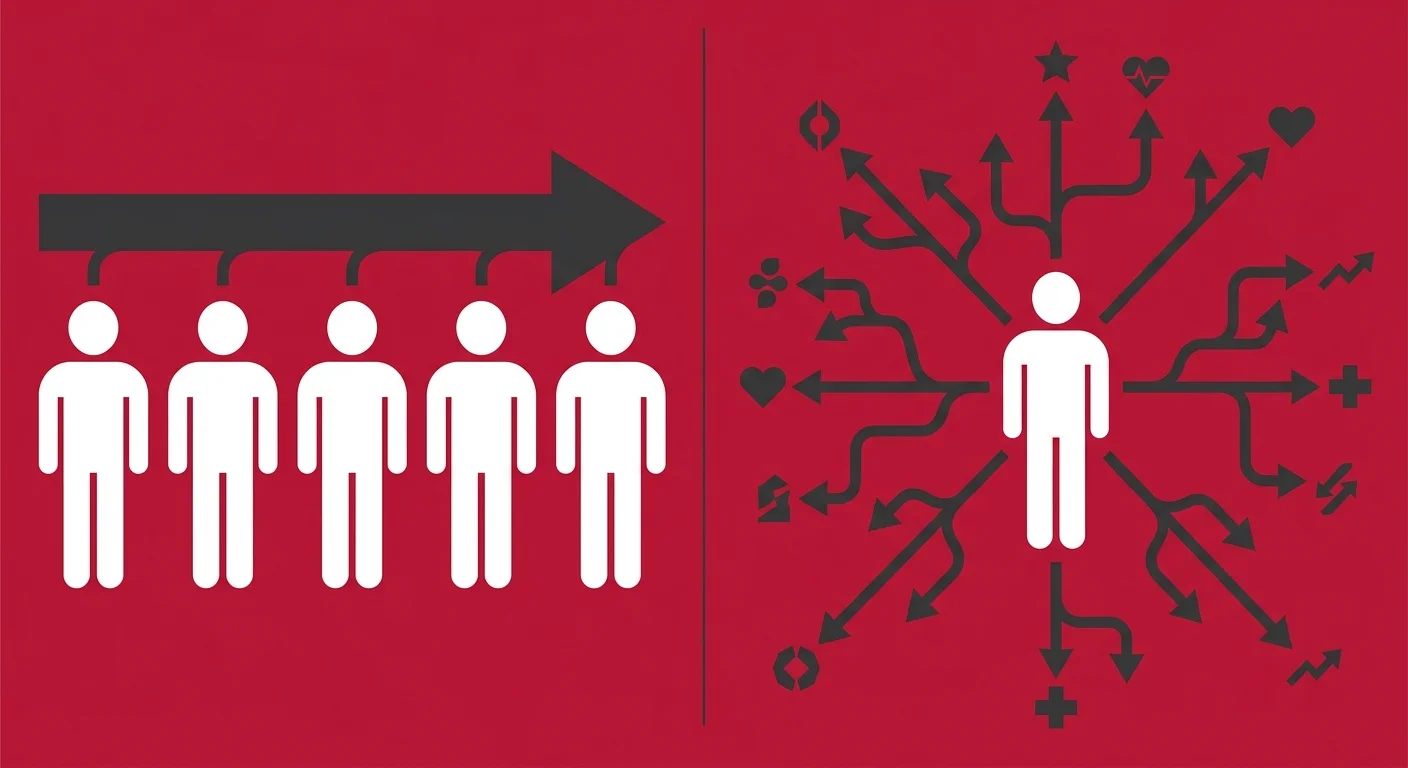
Here's what most chronic pain treatment gets wrong.
It treats the location of pain as the problem. Run the same sequence. Adjust the same vertebrae. Repeat until something changes — or until the patient stops showing up.
That model works fine for a straightforward acute injury — clear structural cause, nervous system still responding normally, tissue that just needs time and support.
But that's not who's in the chronic pain category. A patient whose nervous system has been stuck in amplification mode for months or years isn't a structural problem with a structural fix. Running a fixed protocol on a dysregulated system isn't treatment. It's repetition with different session notes.
Federal clinical guidelines now put non-pharmacologic interventions — physical treatments, manual therapies — ahead of opioids as front-line options for chronic pain. Spinal manipulation is among the most used conservative approaches for back and neck pain.
But those guidelines don't tell a provider which patients need an adaptive, assessment-driven framework versus a standardized one.
That distinction is exactly where the cookie-cutter model falls apart.
The Same Sequence on Every Patient Isn't a Care Plan — It's a Template
Walk into most practices with low back pain and you'll get the same sequence as the person ahead of you with neck pain.
Same adjustments. Same frequency. Same duration.
The intake form is a formality. The protocol was already decided before you sat down.
That's not a care plan. It's a template with your name on it.
The nervous system changes over time. A static protocol doesn't.
That mismatch is where recovery stops and stagnation begins. The provider is running the clock. The patient is waiting for something to shift. And the gap between ongoing pain management and a genuine path forward keeps widening — not because the patient isn't trying, but because the protocol isn't reading them.
A care plan that doesn't change when it isn't working isn't clinical judgment. It's a schedule.
Who This Protocol Is Not Designed For
The Functional Rebirth protocol isn't a fit for everyone.
That's not a disclaimer. It's information worth knowing before you book.
If you're arriving with a list of what your last provider did — and the expectation is that this practice replicates that sequence exactly — this isn't the right fit.
The Assessment phase drives the care plan here. Not your previous provider's habits. Not a diagnosis code. Not what worked on someone else with a similar complaint.
If that's a problem before the evaluation has even started, that tells both of us something useful.
Same goes if you've already decided chiropractic care doesn't work — before an assessment has touched your case.
GP-inherited skepticism is common. It's worth naming directly, not dismissed. But if the conclusion is written before the evaluation starts, the Functional Rebirth protocol can't run. It needs room to operate.
Two parties have to show up: a provider who adapts, and a patient willing to give the process a real trial. If that's not where you are right now, that's honest information. And this isn't the right moment.
| What Cookie-Cutter Protocols Do | What That Produces | What Individualized Care Does Instead |
|---|---|---|
| Applies the same adjustment sequence to every patient regardless of presentation, history, or nervous system state | Patients whose pain is driven by central sensitization receive structural treatment that doesn't address the neurological loop producing the pain | Assessment identifies whether the root driver is structural, neurological, or both — and the care plan is built from that finding |
| Sets treatment frequency and duration at intake before clinical response is observed | Providers repeat a protocol that isn't working because the schedule demands it — not because the patient is responding | Treatment frequency and duration adjust in real time based on what the patient's body is actually doing, not what a billing calendar requires |
| Treats the location of pain as the problem to solve | The structural site gets addressed while the nervous system driving the signal remains dysregulated — pain returns | The nervous system is assessed and treated as the network that runs the structural system — not as a secondary concern |
| Collects patient intake information but doesn't integrate patient-reported feedback into ongoing care decisions | Patients feel processed rather than assessed — and the protocol continues unchanged even when they report no improvement | What the patient actually reports between visits directly informs whether the current approach continues, shifts, or pivots entirely |
| Defines success as reduced pain at the treated site | Patients who improve structurally but remain functionally limited — unable to work, sleep, or participate in daily life — are counted as outcomes even when nothing has actually changed | Success is defined as restored function: the ability to work, move, sleep, and participate in the activities the patient identified as disrupted |
What the Functional Rebirth Protocol Actually Is
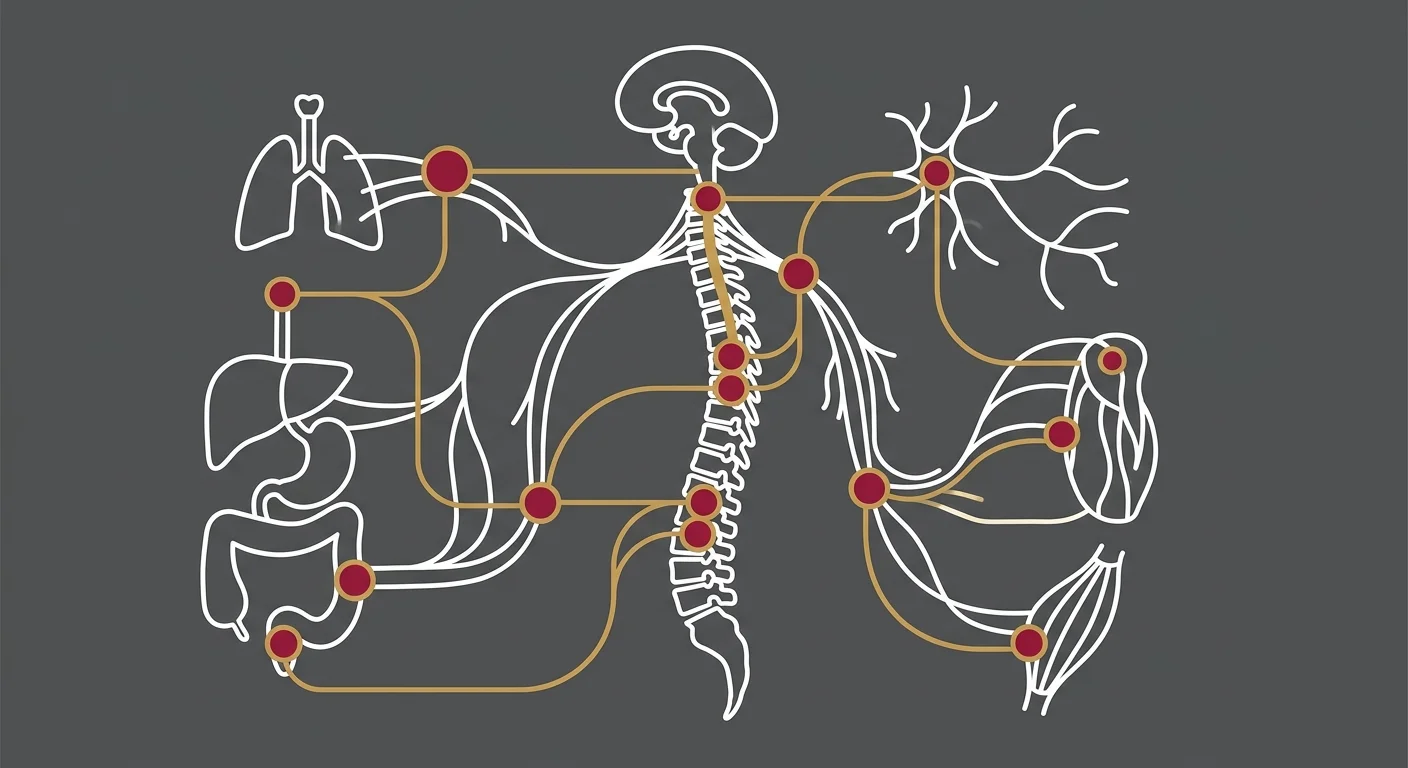
The chronic pain functional rebirth protocol isn't a treatment style.
It's a framework — built on a single clinical premise: chronic pain is a systems problem. And systems problems don't yield to single-target fixes.
It runs in four phases: Assessment, Nervous System Reset, Structural Restoration, and Functional Maintenance.
Each phase has a purpose. Each phase feeds the next. But none of them are locked in place.
The protocol adapts to what you actually report — not to what a template says should happen by week three.
Chronic pain that shows up alongside disrupted sleep, mental health strain, and autonomic nervous system dysregulation isn't a pain problem with complications.
That's a dysregulated system expressing itself across multiple channels at once.
The chronic pain functional rebirth protocol was built to address that full picture. Not to pick one channel and hope the rest sorts itself out.
A Zoology-Backed Systems Framework for Nervous System Recovery
Dr. Karen Hannah didn't train in pain management.
She trained in Zoology — whole-body biological systems analysis.
That's not a footnote. That's the entire clinical lens.
Zoology doesn't sort the body into isolated parts with isolated problems.
It reads the body as a network. Disruption in one system ripples into others. The nervous system isn't a passive bystander to your pain — it's an active driver of it.
Here's what that looks like clinically: central sensitization. The central nervous system becomes hyper-responsive and keeps amplifying pain signals long after the original tissue has healed. At that point, you're not treating a structural injury anymore. You're treating a network that's stuck in alarm mode.
And a stuck network doesn't care how many times you run the same intervention at the same node.
That's the foundation everything else is built on.
Every patient starts at Assessment. Not assumption. Not a replication of whatever the last provider tried.
That matters especially for people recovering from persistent pain after failed back surgery who've run out of obvious next steps. Assessment establishes the actual state of the nervous system and the structures connected to it. What follows is built from what that data shows — not from what a billing calendar says should happen by week four.
How the Protocol Adapts in Real Time
Here's what makes this protocol different from every fixed-sequence model: patient response is clinical data.
Not a complaint. Not a reason to reassure someone the process is working.
Actual data that changes what happens next.
So if the Nervous System Reset phase isn't producing measurable change, the protocol doesn't repeat it and call that persistence.
It stops. Reassesses. Pivots.
That's not a design flaw — that's the design. A nervous system that's been dysregulated for months or years doesn't run on a predetermined schedule. Expecting it to is how fixed-sequence models keep failing the same patients.
Pain is a systems problem. Treat the system. The protocol moves with your biology — not around it.
| Protocol Element | What It Assesses | Why It Matters for Chronic Pain |
|---|---|---|
| Assessment | Nervous system responsiveness, structural presentation, pain history, and real-time patient-reported experience — before any treatment sequence is decided | Chronic pain rarely maps cleanly to a single structural site; the Assessment establishes the actual clinical picture so the protocol adapts to the patient, not to a preset schedule |
| Nervous System Reset | Degree of central sensitization and autonomic dysregulation — how the nervous system is amplifying or distorting signals beyond the original injury site | A nervous system stuck in amplification mode won't respond to structural treatment alone; resetting the neurological environment is what makes downstream phases effective |
| Structural Restoration | Spinal mechanics, joint function, and musculoskeletal integrity — what's contributing to ongoing nerve interference and movement restriction | Structural work without prior nervous system assessment applies force to a system that may still be dysregulated; sequencing matters as much as the intervention itself |
| Functional Maintenance | Patient-reported function in daily life — sleep quality, work performance, and participation in activities that define identity and independence | Recovery that ends at pain reduction without restoring function isn't full recovery; Functional Maintenance tracks whether the patient is actually getting their life back |
| Real-Time Pivot Threshold | Whether each phase is producing measurable change — and when it isn't, what the clinical picture shows about why | A protocol that repeats without results isn't diligence; the willingness to stop, reassess, and change course is the mechanism that separates adaptive care from a template |
The Four Phases of the Functional Rebirth Protocol
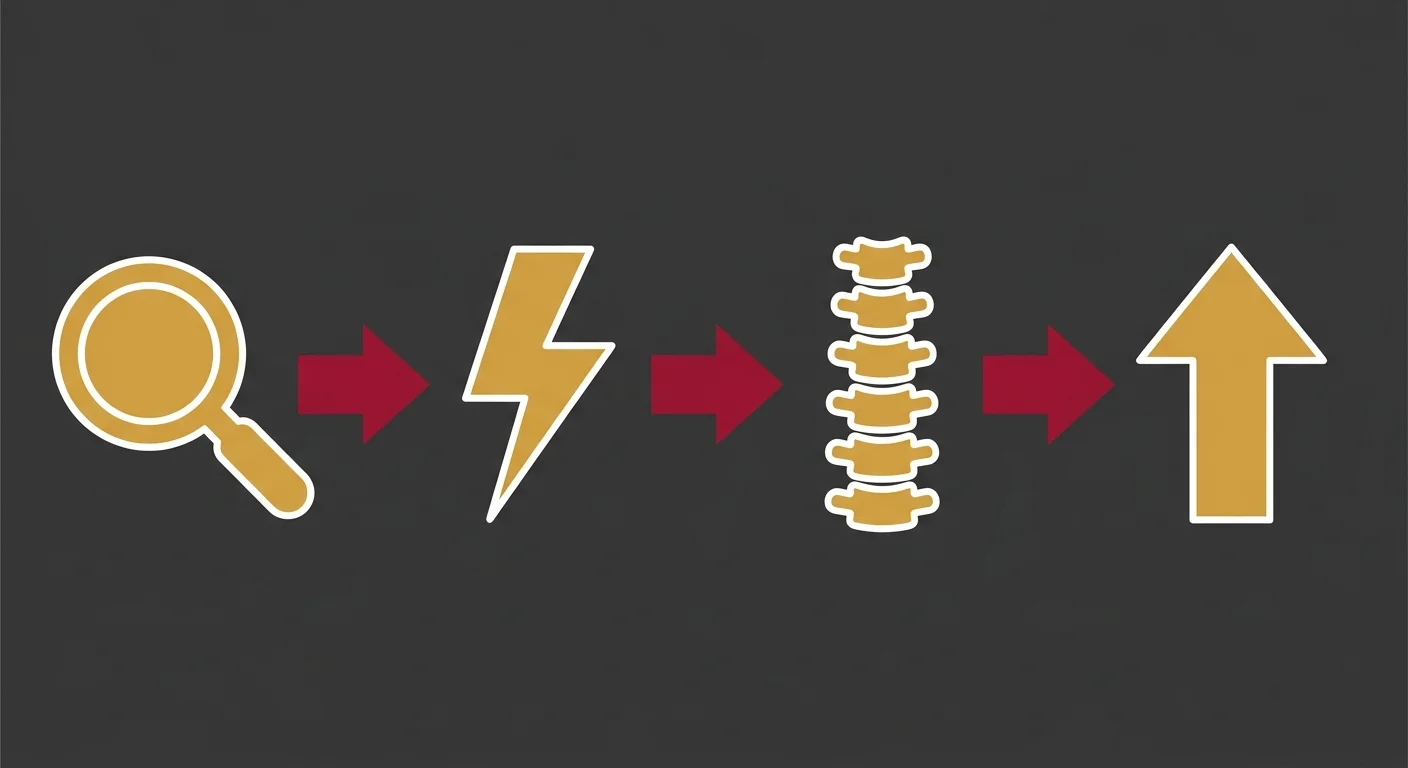
Four phases. Each one earns the next. None of them optional.
The order isn't arbitrary. You can't restore structural integrity in a nervous system that's still stuck in amplification mode. And you can't sustain recovery without a maintenance phase that accounts for how biology actually behaves over time.
Skipping ahead doesn't save time. It just means the work doesn't hold.
Here's what the sequence makes possible: each phase generates clinical data that shapes what follows. The protocol doesn't advance on a schedule. It advances when your biology says it's ready.
Phase 1: Assessment — Reading the Full System Before Touching It
Most providers start with a protocol. The Functional Rebirth protocol starts with a question: what is this system actually doing right now?
The Assessment phase isn't a standard intake. It's a full-system read — mapping where structural disruption exists, how the nervous system is currently responding, and whether the pain signal actually matches the structural picture.
Chronic pain doesn't arrive alone. NCCIH research confirms it shows up alongside disrupted sleep, mental health strain, and autonomic nervous system dysregulation. That's not a pain problem with complications. That's a system in distress across multiple channels at once. The Assessment is built to map all of them — not just locate the loudest signal and stop there.
When the nervous system has been stuck in a hyperresponsive state — amplifying pain signals long after the original tissue healed — every intervention that follows an incomplete assessment is aimed at the wrong target.
This is also where the pain-fear cycle and its role in specialized chiropractic becomes clinically relevant. That cycle — fear reinforcing pain, pain reinforcing fear — is a nervous system loop. It shows up in the assessment data before it ever surfaces in conversation.
What the Assessment produces isn't a diagnosis code. It's a starting point that's actually connected to your real clinical picture — not a template that was loaded before you walked in.
Phase 2 and Phase 3: Nervous System Reset and Structural Restoration
The Nervous System Reset phase is where the sequencing pays off. You don't start here — not because it's less important, but because starting here without Assessment data means you're guessing. And guessing isn't a clinical standard.
This phase targets the nervous system's state directly — working to bring it out of amplification mode so the structural work that follows has somewhere to land.
Spinal manipulation and conservative structural interventions are among the most widely used approaches for back and neck pain. But when they're deployed into a nervous system that's been primed through Reset work, the response is different. Not because the adjustment changed. Because the system receiving it did.
Structural Restoration follows. It's targeted work on the structural components that contributed to — or were disrupted by — the pain pattern.
But it isn't a fixed sequence applied to a fixed list of sites. It's built from the Assessment findings, refined by what the Reset phase revealed, and adjusted in real time based on what you actually report.
Something not producing measurable change? It changes. That's not a philosophy. That's the clinical standard.
Phase 4: Functional Maintenance — When the Goal Is Staying Well, Not Just Getting There
Most care plans end when the acute problem resolves. The Functional Rebirth protocol doesn't treat that as the finish line. Because the biology doesn't, either.
A nervous system that spent months or years in dysregulation doesn't become permanently stable after a few weeks of treatment. Functional Maintenance exists because of that reality — not to keep you dependent on care, but to build the conditions under which your system can hold its own.
At Touch of Wellness Chiropractic, an honest care plan works toward its own end. Functional Maintenance is what makes that possible — without leaving you one stressful week away from starting over.
| Protocol Phase | Primary Goal | Key Clinical Actions | What Changes for the Patient |
|---|---|---|---|
| Assessment | Map the full system — not just the loudest symptom | Full-system intake; structural disruption mapping; nervous system response evaluation; identification of pain-fear cycle patterns; sleep and autonomic function review | The patient has a clinical picture that's actually connected to what they're experiencing — not a diagnosis code assigned before the evaluation was finished |
| Nervous System Reset | Bring the nervous system out of amplification mode before structural work begins | Targeted interventions to reduce nervous system hyper-responsiveness; addressing central sensitization; creating a receiving state for structural work | The system stops fighting the treatment — structural interventions land in a nervous system that's ready to respond, not one that's still stuck in overdrive |
| Structural Restoration | Address the structural contributors to the pain pattern — adapted in real time to patient response | Targeted spinal and structural work built from Assessment findings; real-time adjustment based on patient-reported outcomes; pivot when measurable change isn't occurring | The patient experiences treatment that changes when the data says it should — not because a protocol says it's week four |
| Functional Maintenance | Establish lasting system stability so the patient doesn't return to baseline after care ends | Periodic structural support; monitoring for dysregulation patterns; building conditions for independent nervous system stability | The patient has a realistic endpoint — a system that holds on its own, not one that requires indefinite care to stay functional |
What the Functional Rebirth Protocol Addresses (And What It Doesn't)
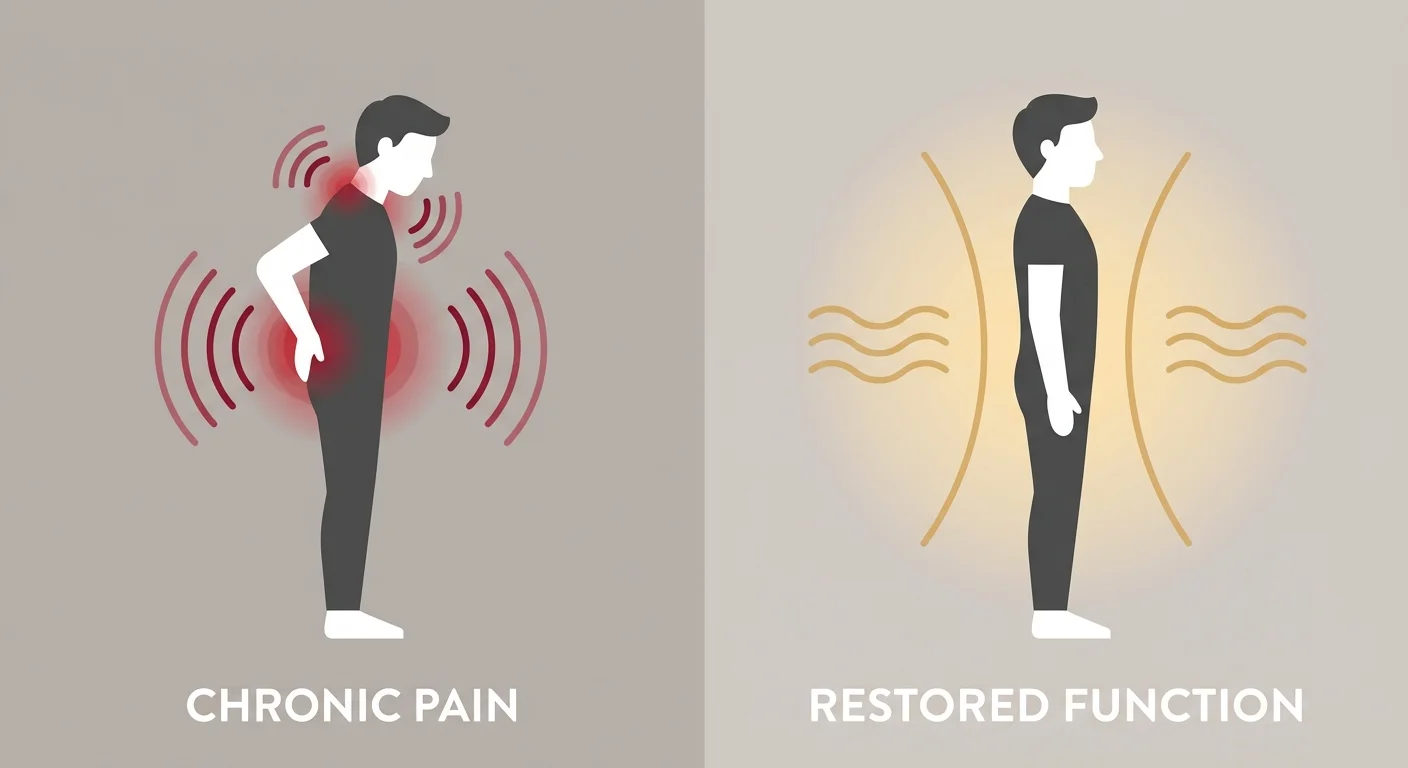
The Functional Rebirth protocol has a specific scope. That's not a limitation — that's exactly how it works.
About 20.4% of U.S. adults are living with chronic pain. They're not all dealing with the same underlying problem. Some are exactly right for this protocol. Some aren't. Knowing the difference matters more than filling a schedule.
This protocol is built for chronic and recurring pain that hasn't fully resolved despite previous treatment. For nerve-related symptoms that surface without a clean structural explanation. For cases where the pain picture is more complex than a single diagnosis captures.
It's also built for the patient who's been told everything looks fine — medical clearance issued, imaging came back clean — and yet the pain is still there. That experience of why the brain keeps registering pain even after tissue has healed is a nervous system problem. Not an imaginary one. The protocol is designed to address it directly.
What it isn't built for: conditions outside the scope of chiropractic care, acute emergencies, pathology that needs surgical or medical management first.
If the Assessment surfaces one of those cases, the referral happens. Honest care sometimes means pointing someone in a different direction. That's not a failure — that's the job.
Conditions and Presentations This Protocol Is Built For
The presentations this protocol is built for share a common thread.
Pain that outlasted the original injury. Symptoms that shift or spread without a clean mechanical explanation. Nervous system dysregulation that doesn't stay in one place — it shows up across multiple channels at once. Disrupted sleep. Autonomic instability. Mental health strain sitting on top of everything else.
That's not a pain problem with complications. That's a system in distress.
That includes chronic low back and neck pain. Recurring headaches and tension patterns. Radiating nerve symptoms. Post-injury cases where the structure healed but the pain signal never quieted. Sciatica-type presentations where the root driver isn't always where the symptom lives.
Federal clinical guidelines now put non-pharmacologic and manual therapies at the front of the line for chronic pain management — before opioid initiation. The Functional Rebirth protocol sits squarely in that category. Applied with a nervous-system-first sequencing that most approaches skip entirely.
The protocol also integrates shockwave therapy where the Assessment supports it — particularly in cases with stubborn soft tissue involvement that hasn't responded to adjustment work alone.
It's not added by default. It's added when the data points toward it.
When Chiropractic Care Alone Isn't the Complete Answer
Some cases need chiropractic care as part of the answer. Not all of it.
Active pathology requiring medical management, fractures, tumors, systemic disease driving the pain signal — the protocol doesn't resolve those on its own. And it's not trying to. The Assessment is partly designed to surface those cases early, so the patient gets directed to the right care before time gets wasted on the wrong one.
That kind of honesty isn't a limitation of the protocol. It's a feature of it.
A provider who tells you what they can't do is a provider you can trust about what they can. The Functional Rebirth protocol isn't positioned as everything for everyone. It's the right intervention for the right presentation — assessed accurately, applied precisely, and adjusted based on what actually happens.
Pain is a systems problem. Treat the system.
| Presentation Type | How the Functional Rebirth Protocol Applies | Likely Outcome Without Root-Cause Care |
|---|---|---|
| Chronic low back or neck pain that keeps returning | Assessment maps the structural and nervous system drivers — not just the site of pain. Nervous System Reset and Structural Restoration address the root pattern, not the flare-up. | Repeated cycles of temporary relief followed by return of pain. The underlying dysregulation never gets addressed, so the pattern repeats indefinitely. |
| Radiating nerve symptoms without a clean structural cause | The protocol evaluates the full nervous system pathway — identifying where the signal is originating, not just where it's being felt. Treatment targets the source, not the symptom location. | Symptom chasing. Treatment applied to wherever the pain presents, with no resolution because the true driver is upstream and unaddressed. |
| Post-injury pain that persists after the tissue has healed | Nervous System Reset is designed specifically for central sensitization — where the nervous system is still amplifying a pain signal that no longer reflects active tissue damage. The protocol addresses the neurological loop, not the original injury site. | Continued pain with no structural explanation and no clinical pathway forward. Patients are told their imaging looks fine and sent home — without addressing why the pain signal hasn't quieted. |
| Recurring headaches and tension patterns | Assessment identifies whether the driver is cervical structure, nervous system dysregulation, or a combination. Care is sequenced to address the actual source — not applied as a default neck adjustment protocol. | Short-term relief from symptom-focused care, followed by return of the same pattern. Without identifying the root driver, there's nothing to resolve — only to manage. |
| Disrupted sleep and autonomic instability co-occurring with pain | These systemic presentations are recognized as part of the same dysregulated state — not separate problems. The Nervous System Reset phase is designed to bring the autonomic system out of a hyperresponsive pattern that affects sleep, stress response, and pain amplification simultaneously. | Fragmented care. Pain is treated by one provider, sleep by another, and the systemic connection is never addressed. None of the individual interventions hold because the underlying nervous system state remains unchanged. |
| Conditions requiring surgical or medical management | The Assessment is designed to identify these cases early. When active pathology, fracture, tumor, or systemic disease is indicated, the protocol surfaces that finding and the patient is directed to the appropriate care — not processed through a plan that won't help them. | Delayed appropriate care. Without an Assessment that's designed to catch these presentations, patients can spend months in the wrong clinical environment before the real problem is identified. |
Frequently Asked Questions About the Functional Rebirth Protocol
Most people don't book because they have a question. They don't book because they have a dozen — and no one's answered them straight.
Here's what's actually true about how this works.
What makes the Chronic Pain Functional Rebirth protocol different from standard pain management?
Standard pain management is built to reduce pain. That's not the same as resolving it. And that gap is where most people spend years.
The Functional Rebirth protocol isn't aimed at the symptom. It's aimed at the system generating the symptom. Assessment comes before any intervention. The nervous system gets addressed before structural work begins. And the plan adapts based on what you actually report — not what the intake form predicted. Most approaches skip at least one of those steps. Usually all three.
The other difference is sequencing. Non-pharmacologic and manual therapies are now front-line recommendations in updated federal guidelines for chronic pain. But most implementations still apply them in a fixed order — regardless of what the nervous system is actually doing. The Functional Rebirth protocol applies them in the order the biology requires. Not the order a template prescribes.
Why does chronic pain persist even after the original injury has fully healed?
Because the pain isn't always coming from the original injury anymore. That's the part most providers don't explain — and it's the part that matters most.
When pain signals fire long enough, the central nervous system becomes hyper-responsive. It starts amplifying pain even after the tissue has fully healed. That state is called central sensitization. The system itself is generating the experience of pain, independent of any structural damage. The injury resolved. The signal didn't.
That's a nervous system problem. Not a structural one. And it's why treating the original injury site — without addressing the nervous system driving the signal — produces temporary relief at best. Pain is a systems problem. The original injury was just the entry point.
How does Dr. Karen Hannah's Zoology background influence the Functional Rebirth protocol?
Zoology isn't just an academic credential. It's a training in how complex biological systems interact, regulate, and break down when one part of the network fails.
Dr. Karen Hannah brings that lens directly into how chronic pain gets assessed. Most clinical frameworks look at the symptomatic site. A systems biology framework asks what the entire network is doing — and why this particular node is failing. That's a different question. It produces a different assessment.
The Functional Rebirth protocol is structured the way it is because systems biology demands it. You can't reset a nervous system you haven't assessed. You can't restore structure inside a system that's still in dysregulation. The protocol isn't a list of techniques. It's systems logic applied to a systems problem.
What should I expect during my initial assessment at Touch of Wellness Chiropractic?
The Assessment isn't a check-in. It's the clinical foundation everything else is built on.
Expect a real intake — not a clipboard with basic history questions. A thorough look at what you're experiencing, where you've been, what's worked, what hasn't, and what the nervous system is actually doing right now. The goal isn't to confirm a diagnosis that was already loaded before you walked in. It's to build an accurate clinical picture before a single intervention is decided.
At Touch of Wellness Chiropractic, appointments run 15 minutes door-to-door — so the Assessment is efficient without being rushed. What you leave with is a starting point that's actually connected to your body. Not a protocol that would have looked identical no matter what you reported.
Is the Functional Rebirth protocol a cookie-cutter treatment plan?
No.
Clinical guidelines define chronic primary pain as pain lasting longer than 3 months, associated with significant emotional distress or functional disability. That definition alone explains why a single template can't serve every patient. The presentations are too varied. The nervous system involvement too different. The history too specific.
Every Functional Rebirth care plan is built from that patient's Assessment findings. The phase structure is consistent — Assessment, Nervous System Reset, Structural Restoration, Functional Maintenance — but what happens inside each phase is determined by what the data reveals. Not by a pre-loaded sequence. And if something isn't producing measurable change, it changes. That's not flexibility as a selling point. That's the clinical standard.
How long does the Functional Rebirth protocol take to produce results?
Any provider who gives you a timeline before completing an Assessment isn't giving you clinical information. They're managing your expectations with a number they invented.
What the protocol is built to avoid is the indefinite extension — the care plan that keeps rolling forward without a clear clinical rationale. Every phase exists to create the conditions for the next phase to work, moving toward Functional Maintenance and then toward a system stable enough to hold on its own. That arc has a direction. It doesn't have a fixed calendar.
Here's the context worth holding: approximately 20.4% of U.S. adults are living with chronic pain — many of them through approaches that were never built to resolve it. The Functional Rebirth protocol is built to resolve it. That's a different process than managing it. And it takes the time the biology actually requires — not the time a billing cycle prefers.
The Bottom Line on Chronic Pain and the Functional Rebirth Protocol
Chronic pain isn't a symptom problem.
It's a systems problem. And that distinction is everything.
When the nervous system has been stuck in amplification mode long enough, treating the loudest symptom isn't care. It's noise management. The body is a biological network. You can't resolve a network failure by addressing one node at a time — and every treatment approach that tries is going to produce exactly what most patients have already experienced: temporary relief, then right back to where they started.
That's the clinical foundation Dr. Karen Hannah built this protocol on. Not a preference. Not a philosophy. A direct application of systems biology to what chronic pain actually is.
Assessment before intervention. Nervous system before structure. Maintenance before discharge. The sequence isn't arbitrary — it's the only order that gives the work somewhere real to land.
If you've been through providers who ran the same protocol regardless of what you reported — who handed you a care plan before the assessment was finished, or told you the pain was in your head because imaging came back clean — that's not a failure of chiropractic care. That's a failure of how it was applied. The Functional Rebirth protocol at Touch of Wellness Chiropractic is built to do something different: start with what's actually happening, adapt to what the biology reveals, and stop when the goal is reached. Not when the calendar says so.
Unexplained doesn't mean untreatable. It means no one's looked at the right system yet.
If the pain is still there — after the imaging, after the standard treatment, after being told everything looks fine — the problem isn't that care doesn't exist. The problem is that the system driving the pain has never been the actual target.
Pain is a systems problem. Treat the system. That's either what your next provider does — or you're starting the same cycle over again.
If you've been managed instead of resolved — that's the gap this changes. The Assessment at Touch of Wellness Chiropractic starts where every other approach skipped: the system driving the pain, not just the pain itself. Book yours.