
(309) 321-8412 | 1101 W Jackson St, Suite A, Morton, IL 61550
(309) 321-8412 | 1101 W Jackson St, Suite A, Morton, IL 61550
What Home Exercises Support Nerve Healing Between Chiropractic Adjustments?
Three categories of home exercises directly support nerve healing between chiropractic adjustments: nerve gliding (neurodynamics), circulatory movements, and proprioceptive balance drills.
Nerve gliding moves the nerve through its surrounding tissue to prevent adhesion formation — the mechanical sticking that happens when a nerve loses its ability to slide freely. Circulatory movements like ankle pumps and toe curls drive blood flow to peripheral nerve fibers that are already oxygen-starved from compression or damage. Balance and proprioceptive drills retrain the brain's ability to track the position of the feet and hands — a function that degrades when neuropathy is present.
These aren't general fitness exercises. They're clinical maintenance steps designed to preserve the decompression achieved during a chiropractic adjustment. Without them, the structural work done in the office begins to reverse between visits.
Here's what most people don't realize: the adjustment opens a window. The nerve gets room to breathe. But if the tissues surrounding it are still tight, immobile, and starved of circulation, that window closes faster than it should.
Home exercises extend the window.
They're not a replacement for clinical care — they're what makes clinical care stick. Nerve glides prevent new adhesions from forming in the space the adjustment just created. Circulatory movement delivers the oxygen nerve fibers need to regenerate. Balance drills rebuild the neurological communication pathways that chronic nerve compression has degraded.
Done consistently — short sessions, multiple times daily — these three exercise categories support the kind of nerve recovery that doesn't plateau after the first few adjustments. Results vary based on the severity and duration of nerve involvement, and they work best as part of a supervised care plan.
This article covers each exercise type, how to perform it correctly, how to structure your daily home program, and who this protocol is — and isn't — designed for.
Last Updated: April 8, 2026
- Why Home Care Isn't Optional — It's Part of the Protocol
- The Three Pillars of Neurodynamic Home Care
- How to Practice the Protocol at Home
- Who This Protocol Is Built For — And Who Should Think Twice
- Frequently Asked Questions
- Can I do these exercises if I have a lot of pain or tingling?
- How many times a day should I perform nerve glides?
- Why is balance training part of nerve healing?
- Is it safe to push through discomfort during nerve glides?
- What is the difference between nerve gliding and regular stretching?
- Do I still need chiropractic care if I am doing these exercises at home?
- How long before I notice results from daily nerve exercises?
- What It Comes Down To
Why Home Care Isn't Optional — It's Part of the Protocol
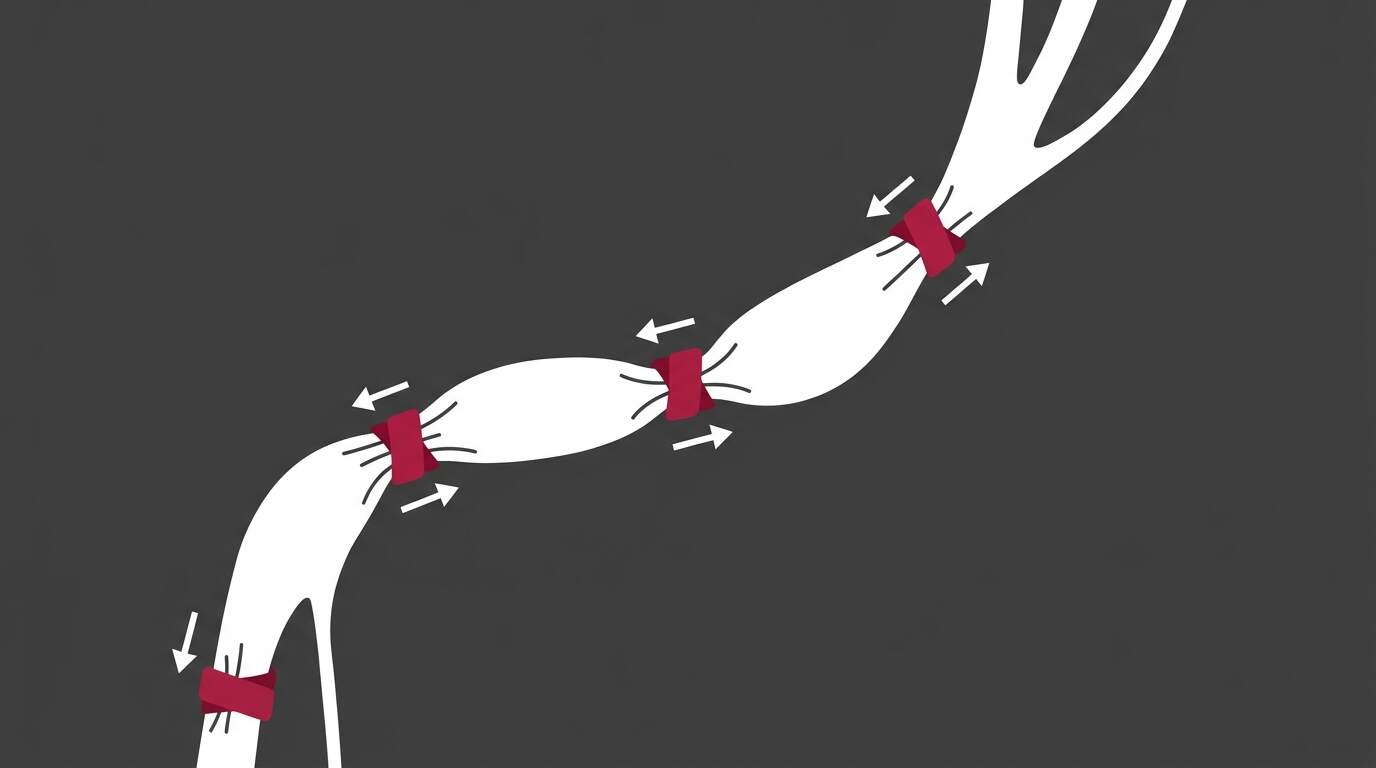
The adjustment clears interference. That's one hour of your week. What happens in the other 167 determines whether you actually get better.
Most people who walk in here have already tried something for their nerve symptoms. And it helped — for a week, maybe two. Then the pain cycled back and they were right where they started. That's not a treatment failure. That's what happens when you address the signal and leave the environment alone.
The environment is what the home program changes.
The adjustment opens the window. Your home care is what keeps it from closing.
Here's the reality nobody explains at discharge: the nerve environment you go back to after your appointment is the same one that created the problem. Same posture. Same sustained positions. Same gap in targeted movement. Medication quiets the alarm. Rest reduces the aggravation. But the nerve stays compressed, starved, and stuck in tissue that isn't moving.
The fire's still there. You've just muted the detector.
A nerve heals when the mechanical restrictions are removed, when blood gets moving again, and when the brain relearns how to communicate with the extremities. That takes movement — specific, deliberate movement — between every visit. For chronic nerve conditions, the conventional prescription of “rest and manage symptoms” isn't conservative care. It's exactly the wrong instruction.
Why Medication Alone Leaves Your Nerve Stuck
Gabapentin doesn't repair nerve tissue. Neither does pregabalin. Neither do NSAIDs.
They interrupt the pain signal. That's the whole mechanism — and for a patient in acute nerve crisis, quieting the signal temporarily is useful. It lets you function. But the nerve itself hasn't changed. It's still restricted. Still losing ground. Still being denied the one thing it actually needs to recover.
Here's why: peripheral nerves run on blood. There's a vascular supply threaded along the nerve sheath — tiny vessels that deliver oxygen and nutrients for repair. When a nerve is compressed or adhered to surrounding tissue, that supply gets cut off. The nerve can't regenerate in an ischemic environment, regardless of what you're taking for the pain.
Medication doesn't touch this.
It doesn't restore blood flow. It doesn't free the nerve from the tissue it's stuck in. It doesn't retrain the brain's ability to track where the feet are. What it does is keep the alarm quiet while the structural problem keeps running.
I've seen it happen to patients who transferred here after years of pharmaceutical management. The doses were higher. The function was lower. The nerve hadn't healed — it had just stopped being loud about it. That's not care. That's symptom suppression masquerading as a long-term solution.
The answer isn't to throw medication out. It's to stop treating it as the primary intervention. Medication can manage the signal while clinical care and a real home program address what's actually causing the nerve to fail.
What Actually Happens to Nerve Tissue Between Adjustments
Nerves are designed to slide.
Every time you move a limb, the nerve running through it glides forward and back through the surrounding tissue. When that tissue gets tight, adhered, or scarred, the glide stops. The nerve gets caught. Signals get disrupted. Symptoms get worse.
After a chiropractic adjustment removes interference from the spinal pathway, the peripheral nerve has room again. But if the soft tissue surrounding it — the myofascia, the tunnel walls in areas like the carpal tunnel or tarsal tunnel — is still locked down, the nerve can start re-adhering within 24 to 48 hours of the adjustment.
That's not a flaw in the adjustment. That's the biology of connective tissue.
Research on neurodynamic mobilization techniques confirms that keeping the nerve moving through its anatomical path restores both its mechanical and physiological properties. The day after an adjustment is the optimal window — the nerve is at its most mobile, inflammation is lowest, and the tissue is most receptive to movement that locks in what the adjustment just created.
Waiting until your next visit is the functional equivalent of having a stuck door unstuck and never opening it.
| Approach | What It Addresses | What It Misses | Long-Term Pattern |
|---|---|---|---|
| Medication only | Pain signal suppression, temporary inflammation reduction | Mechanical adhesions, circulation deficit, proprioceptive degradation | Symptom cycling — improves temporarily, returns |
| Chiropractic adjustment alone | Spinal root decompression, interference reduction | Between-visit adhesion re-formation, peripheral circulation | Partial gains, faster plateau |
| Adjustment + neurodynamic home care | Root cause + peripheral nerve mobility + circulation + proprioception | — | Progressive recovery with sustained gains |
The Three Pillars of Neurodynamic Home Care
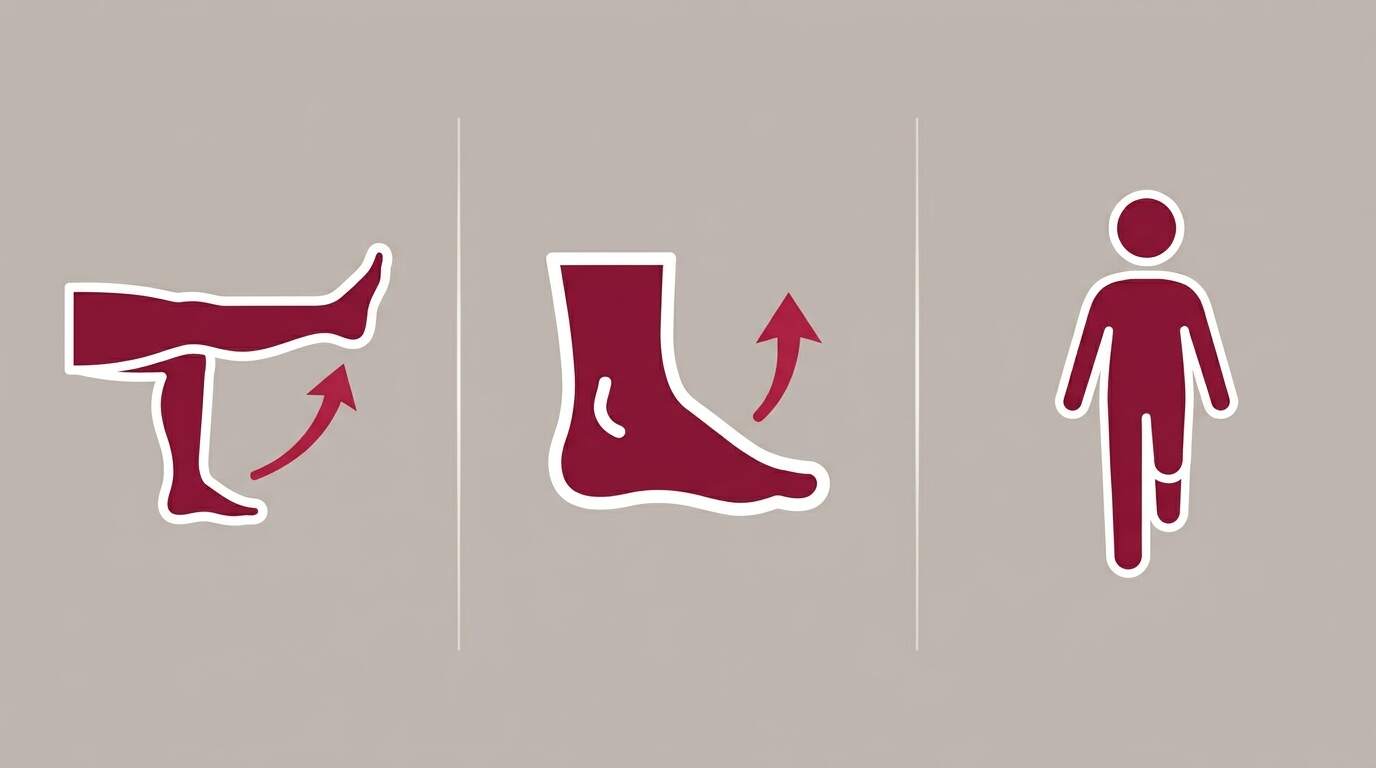
There's a reason this is called a protocol and not a list of exercises.
These three categories each address a different failure point in the nerve healing process. Each one works. None of them work as well alone. Skip one and you've got a partial solution — which in practice means partial results and an early plateau.
| Exercise Type | Primary Mechanism | What It Targets | Frequency | Session Length |
|---|---|---|---|---|
| Nerve Gliding | Mechanical mobilization — prevents adhesion formation | Neural tissue mobility in extremities and spine | 3–5x daily | 3–5 min |
| Circulatory Movement | Vascular restoration — oxygen delivery to nerve fibers | Peripheral nerve vascular supply | 3–5x daily | 3–5 min |
| Balance / Proprioceptive Drills | Neuroplasticity — rebuilds sensorimotor pathways | Brain-extremity communication | Once daily, progressive | 5–10 min |
Nerve Gliding: Restoring Mechanical Mobility
When a nerve can't slide, it can't signal properly.
Adhesions form in the surrounding tissue — the nerve gets caught, the glide stops, and you feel it as numbness, tingling, burning, or a deep ache that doesn't quite match what the imaging shows.
Nerve gliding is the specific intervention for this specific problem. It moves the nerve through its anatomical path without tensioning it — sliding it through the tunnel rather than stretching the tunnel itself.
That distinction is critical. Tensioning an irritable nerve is how symptoms get worse. Gliding it — keeping the nerve at a consistent length while the surrounding tissue releases — is how they get better.
Neurodynamic mobilization research from PMC/NIH confirms that this approach restores both the mechanical and physiological properties of neural tissue. The mechanism is real. The execution has to match it.
- Sciatic nerve (relevant to low back pain, sciatica, and lower extremity neuropathy) — performed seated or supine, using hip and knee position to move the nerve through its lumbar and gluteal path
- Femoral nerve (relevant to anterior thigh and quadriceps symptoms) — performed prone, with controlled knee flexion
- Median nerve (relevant to carpal tunnel and forearm symptoms) — performed seated, using wrist extension and elbow position to slide the nerve through the carpal tunnel
- Ulnar nerve (relevant to elbow and small finger symptoms) — performed with controlled elbow flexion and wrist position changes around the cubital tunnel
Which protocol you run depends on which nerve root is involved and what the clinical picture looks like. At Touch of Wellness Chiropractic, that's determined at your visit — not from a default starting point applied to everyone.
Circulatory Movements: Delivering Oxygen to Starved Nerve Fibers
Damaged nerve fibers don't heal in a low-oxygen environment.
The peripheral nerve vascular supply — the network of small vessels threaded along the nerve sheath — is what delivers the oxygen and nutrients the nerve needs to repair. When that supply is compromised by compression, inflammation, or sustained immobility, regeneration stalls. Clinical care can decompress the pathway. But if the local circulation to the peripheral nerve isn't being maintained between visits, the repair environment stays hostile.
That's what circulatory exercises change.
These movements aren't about cardiovascular fitness. They're about keeping blood moving through the microvasculature that feeds the nerve sheath. Small movements. Low demand on the system. High impact on the local repair environment.
University of Michigan Medical School research confirms that even targeted physical activity reduces peripheral neuropathy progression — including for patients already managing an active nerve condition. According to Massive Bio, gentle mobility exercises like ankle pumps and toe curls specifically improve circulation to nerve fibers compromised by compression or vascular insufficiency.
- Ankle pumps — Foot up, foot down. 20 repetitions per session. The calf contraction acts as a mechanical pump for venous return and lymphatic flow. Seated, accessible, takes 90 seconds.
- Toe curls and extensions — Curl tight, hold 3 seconds, extend fully. Activates the intrinsic foot muscles and drives local circulation to the toes — the territory most commonly affected first in peripheral neuropathy.
- Heel and toe raises — Standing with support, rise to the balls of the feet, hold briefly, lower. Drives both muscular activation and circulatory activity in the lower leg without loading the nerve.
- Finger and wrist circles — For upper extremity involvement. Slow circles, full available range, 10–15 reps each direction. Keeps the median and ulnar nerve territories supplied.
Short, frequent sessions are what make these effective — 3 to 5 minutes every 2 to 3 hours. The nerve doesn't benefit from a 30-minute pump followed by 8 hours of stillness. It benefits from consistent oxygen delivery across the hours it's under load.
Balance and Proprioceptive Drills: Reconnecting Brain to Extremity
Neuropathy doesn't just cause pain. It causes what patients describe as not knowing where their feet are.
That's not an exaggeration — it's proprioception breaking down. The sensory fibers that continuously report joint position back to the brain are often the first fibers damaged in peripheral nerve conditions. When they're not sending accurate signals, the brain loses its map of the extremities. The result is instability, a higher fall risk, and a disconnect between intention and movement that makes everyday function harder than it should be.
Balance training directly addresses this. It gives the nervous system a repeated, specific input that drives new signaling pathways — the same way any skill gets built. Research in Frontiers in Public Health confirms that combined balance and proprioceptive tasks improve sensorimotor integration and neuroplasticity in patients with peripheral nerve involvement.
This isn't a side effect of the other exercises. It requires its own targeted input.
- Single-leg stance — Near a counter or wall for safety. One foot lifted, hold 10 seconds. Progress to 30 seconds, then to eyes closed when balance is stable enough. Eyes closed is the high-demand version — it forces the system to rely entirely on proprioceptive input. Don't rush it.
- Tandem stance — One foot directly in front of the other, heel to toe. Challenges balance differently than single-leg and is often more accessible early on.
- Weight shifting — Feet hip-width apart, slow controlled shifts from foot to foot. Reactivates the sensory receptors in the soles of the feet — the first link in the proprioceptive feedback chain.
Progress here is measured in weeks to months. The neurological adaptation takes time. That's not a flaw in the protocol. That's how the nervous system works.
How to Practice the Protocol at Home
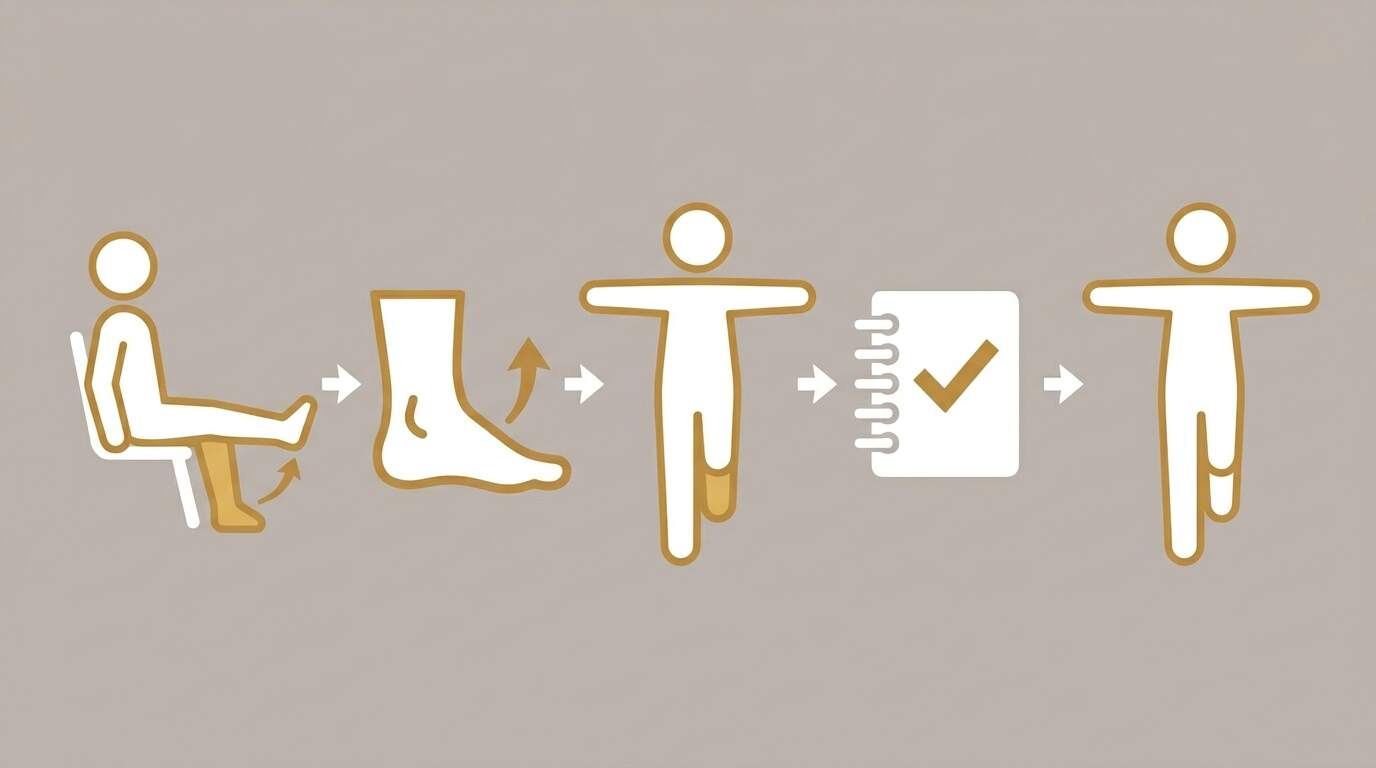
Knowing what the exercises are is the easy part. Executing them correctly — at the right frequency, inside the right range, consistently enough to accumulate the signal the nerve responds to — is where most patients either build momentum or stall out.
More intensity doesn't accelerate this process. Precision does.
The goal at every session is to stay inside the pain-free zone and come back again tomorrow. Here's how to structure the full daily protocol from start to finish.
Step 1: Identify Your Pain-Free Zone Before Every Session
Before touching a single nerve exercise, find your operating range.
This is the range of movement where you feel the nerve — mild tension, maybe a light awareness — but nothing that qualifies as pain. Sharp, burning, or shooting means you've exceeded it. Back off 20 to 30 percent and work from there. That reduced range is your starting point, not a consolation prize.
- Sharp, burning, or shooting pain during any movement — reduce the range immediately. Don't push through.
- Mild tingling is expected. It's the nerve responding to mobilization.
- Consistent symptom increase with every attempt — note it. Bring it to your next visit. It changes what happens in the office.
Step 2: Perform Nerve Glides for Your Assigned Nerve Root
Slow and controlled. That's the execution standard for every nerve glide.
Two to three seconds in each direction. No bouncing at end range. No forcing past what the nerve will tolerate comfortably.
Basic sciatic nerve glide:
- Sit upright in a chair, both feet flat on the floor
- Extend one knee slowly until the leg is straight or until mild nerve awareness appears
- At the same time, flex the foot toward the shin (dorsiflexion)
- Hold 2–3 seconds at end range
- Return to start
- 10 repetitions, then switch sides
Basic median nerve glide:
- Sit upright, arm at your side, elbow slightly bent
- Extend the wrist back so fingers point upward
- Slowly straighten the elbow while holding that wrist position
- Hold 2–3 seconds at end range
- Return to start
- 10 repetitions per side
The specific protocol is assigned at your visit based on which nerve root is involved. These examples show the execution principle: intentional, controlled, never aggressive.
Step 3: Perform Circulatory Movements Multiple Times Throughout the Day
Don't block these into one session. That's not how they work.
Three to five short sessions distributed across the day — spaced roughly 2 to 3 hours apart — beat a single 20-minute block. The nerve needs consistent oxygen input, not periodic spikes followed by long gaps.
In each session:
- Ankle pumps: 20–30 repetitions
- Toe curls: 10 repetitions, 3-second hold each
- Heel/toe raises (standing, if able): 10–15 repetitions
- Finger and wrist circles (upper extremity involvement): 10–15 circles each direction
Seated. At a desk. On a couch. It doesn't matter where. What matters is that you do it consistently across the day.
Step 4: Practice Balance Drills Once Daily
Once daily. With focus — not as an afterthought.
Position yourself near a counter, wall, or sturdy chair first. Not because the drills are dangerous, but because a fall during balance training is the opposite of the outcome you're building toward.
Start here:
- Single-leg stance: 3 sets of 10–20 seconds per side, eyes open
- Progress to: 30-second holds, eyes open
- Progress to: 20–30 second holds, eyes closed — only when your balance is stable enough to warrant it
Don't push the progression. The neurological adaptation that makes balance training effective isn't built in days. The brain is building new pathways. That takes consistent input over time, not intensity in a single session.
Step 5: Log Your Response and Report to Dr. Hannah
Track two things after every session.
- Symptom response: Did symptoms increase, decrease, or stay the same?
- Exercise completion: Which exercises stayed inside the pain-free zone and which ones pushed past it?
This information matters clinically. It changes the care plan. It gives Dr. Hannah a picture of what the nerve is tolerating between visits — what's working, what isn't, and where the protocol needs to adjust. Patients who track this and bring it to their appointments get better outcomes, because the protocol actually evolves in response to their nerve.
If two to three weeks of consistent home care produce no change at all, that's not a failure — that's clinical information. Either the protocol needs adjustment or a different mechanism is driving the symptoms. For context on what clinical progress typically looks like and when to expect it, see the clinical timeline for nerve restoration care.
| Time of Day | Exercise | Duration | Notes |
|---|---|---|---|
| Morning (after waking) | Circulatory movements + nerve glides | 5 min | Nerve is most mobile after overnight rest; optimal window for gliding |
| Midmorning | Circulatory movements | 3 min | Counters circulation drop from sustained sitting |
| Midday / Lunch | Circulatory movements + balance drills | 8–10 min | Best window for balance work — alert, warmed up |
| Afternoon | Nerve glides + circulatory movements | 5 min | Counters afternoon stiffness from sustained posture |
| Evening (before bed) | Gentle circulatory movements only | 3 min | Nerve glides close to sleep can increase awareness — use judgment |
| Symptom During Exercise | What It Signals | Action |
|---|---|---|
| Mild tingling or gentle nerve awareness | Normal mobilization response — inside therapeutic window | Continue |
| Mild ache that resolves within 15 minutes | Normal response to unfamiliar movement | Continue — reduce range if it persists past 20 min |
| Sharp, shooting, or burning pain | Nerve tensioned past tolerance | Stop immediately — reduce range or rest; report at next visit |
| Symptom increase lasting 30+ minutes after exercise | Exercise is provoking, not treating | Stop the provoking exercise; report immediately |
| No sensation change at any range | Too gentle, or nerve may not be the primary issue | Discuss at next visit — protocol likely needs adjustment |
Who This Protocol Is Built For — And Who Should Think Twice
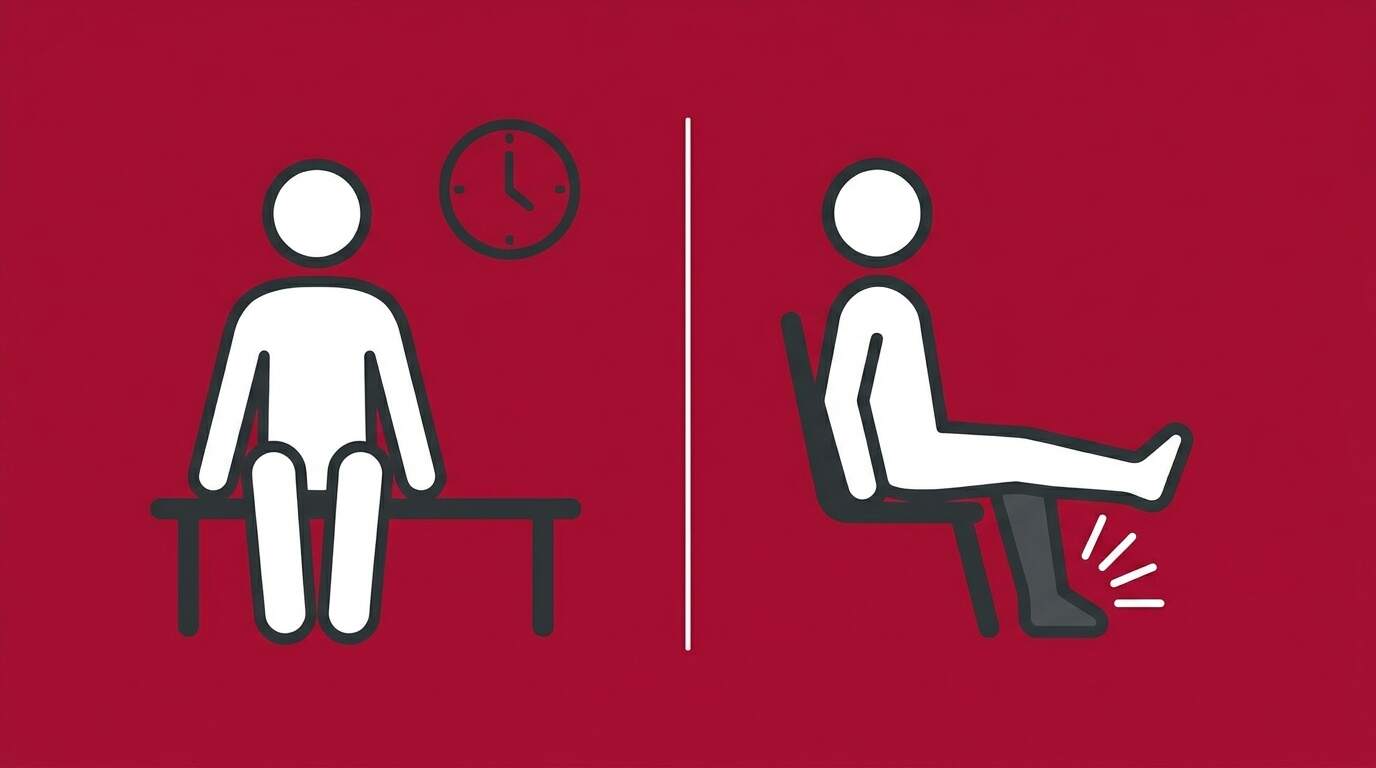
This protocol works. The research is consistent. The mechanism is well-established.
But effectiveness requires execution — daily, consistent execution — and not every patient who walks into Neuropathy Care is prepared for that ask. It's better to be direct about that now than to run a care plan that's going to stall because only half of it is being followed.
This Isn't for the One-Adjustment Miracle Seeker
If you're expecting a single adjustment to resolve a nerve condition that's been building for months — and you're not planning to do anything between visits — this isn't the right fit.
That's not a judgment. It's an honest description of how nerve biology works.
Nerves don't heal on a provider's timeline. They heal at a fixed biological rate when the environment supports it. What clinical care does is create that environment — decompressed pathways, reduced interference, room for the nerve to function again. What it can't do is sustain that environment 24 hours a day. That's the patient's job.
Without home care, the tissue re-adheres. Circulation drops. By the time you come back in, a significant portion of the progress has reversed. The adjustment helps again. The relief comes. And then it goes again. The cycle continues because only one side of the protocol is running.
The patients who get real results here are the ones who treat their home exercises as seriously as they treat the appointment.
That's 15 to 25 minutes, distributed across the day. Not a gym session. Not an hour of physical therapy. Short, specific movements that keep the nerve environment the adjustment just opened from closing back down. The ask isn't large. But it has to be consistent — because the nerve doesn't respond to sporadic input any more than it responds to sporadic clinical care.
What Real Recovery Actually Requires From You
Passive patients get partial results. That's not a character assessment — it's a description of how the mechanism works.
A nerve glided once a week, at your adjustment appointment, doesn't accumulate the mobilization signal it needs to prevent re-adhesion. A nerve glided three to five times daily, in short sessions across the day, does. The nervous system responds to repeated, consistent input. That's the principle behind every aspect of this protocol — and it can't be compressed into a weekly office visit.
Same with circulation. One 10-minute ankle pump session is better than nothing. Five 3-minute sessions distributed through the day is what maintains the oxygen supply to the nerve across the hours it's under load. That's the difference between a recovery environment and a hostile one.
The full commitment has three parts. None of them are optional.
- Nerve gliding (3–5 short sessions daily) — A nerve mobilized once a week at your adjustment appointment doesn't accumulate the signal it needs to prevent re-adhesion. Three to five sessions distributed across the day does. That's not a preference — it's how the mechanism works.
- Distributed circulatory movement (every 2–3 hours) — Frequent short sessions maintain consistent oxygen delivery to the nerve across the hours it's under load. A single block of ankle pumps followed by hours of stillness doesn't. The nerve needs continuous supply, not periodic spikes.
- Intentional nutrition (ongoing) — B vitamins, omega-3 fatty acids, and magnesium are the raw materials for nerve repair. They have to be present for regeneration to occur at any meaningful rate. How your diet directly affects the pace of nerve fiber repair is worth understanding as part of the same protocol.
Results vary based on severity, duration, age, and overall health. But the ceiling for patients who show up on all three fronts is substantially higher than for those who don't.
Frequently Asked Questions
Can I do these exercises if I have a lot of pain or tingling?
Yes — but execution has to stay inside the pain-free zone.
Mild tingling during nerve glides isn't a warning sign. It's the nerve responding to movement — that's the process working. What you're watching for is the step up to sharp, burning, or shooting pain. That means you've gone past the therapeutic range.
Start with the smallest version of each exercise. Work toward fuller range across multiple sessions — not within one. The nervous system learns the movement is safe through gradual, consistent exposure. Aggressive single attempts teach it the opposite lesson.
If every movement produces significant symptom increase, stop the home program and bring it to your next visit before continuing. That's clinical data. It changes what happens in the office.
How many times a day should I perform nerve glides?
Three to five short sessions daily outperform a single long session for nerve health.
The nerve responds to consistent, repeated input distributed throughout the day — not a single block followed by hours of stillness. Three minutes every few hours accumulates more therapeutic benefit than 20 minutes run once, because the nerve isn't sitting in a low-circulation, low-mobilization state for the hours in between.
Total daily commitment: 15 to 25 minutes, broken into sessions. That fits inside a normal schedule.
Why is balance training part of nerve healing?
Neuropathy degrades the sensory fibers that report joint position back to the brain — a function called proprioception. Balance drills retrain these pathways through the same mechanism the nervous system uses to build any skill: repeated input, consistent challenge, progressive demand.
Frontiers in Public Health research confirms this improves sensorimotor integration and drives neuroplasticity in patients with peripheral nerve involvement — alongside meaningfully reducing fall risk.
Balance training doesn't happen as a side effect of nerve gliding or circulatory work. It requires its own dedicated input. Skipping it leaves one of the three pillars unsupported, and patients who focus only on pain relief consistently underestimate what that costs them long-term.
Is it safe to push through discomfort during nerve glides?
No. And the instinct to push through is exactly the reasoning that keeps many patients stuck.
Pain during nerve gliding isn't a sign the exercise is working. It means the nerve has been tensioned past what it can tolerate — and the nervous system's response is to protect itself. Muscle guarding increases. Available range decreases. Symptoms worsen. You've taught the nerve that the movement is a threat.
Nerve gliding works through desensitization. The nerve learns the movement is safe through repeated, gentle, non-threatening exposure at a range it can handle. That's the entire mechanism. Blow past the pain threshold and you've reversed the lesson.
The therapeutic window is mild nerve awareness — nothing sharp, nothing burning, nothing that persists significantly after the session ends. This isn't the no-pain-no-gain model. That model applies to muscle tissue. Nerves respond to precision, not effort.
What is the difference between nerve gliding and regular stretching?
Stretching targets muscles and connective tissue by increasing length under tension. Nerve gliding targets the nerve's ability to slide through its surrounding tissue without increasing tension on the nerve itself.
In a hamstring stretch, you want to feel the pull — that's the point. In a sciatic nerve glide, that same pull is what you're carefully avoiding. The goal is to move the nerve through the hamstring tunnel without tensioning it. Body position changes the nerve's path through the tissue. It doesn't lengthen the nerve.
That's why gliding is appropriate when symptoms are active and aggressive stretching isn't. Tensioning an irritable nerve worsens the irritation. Gliding reduces it — provided execution stays inside the pain-free zone.
Do I still need chiropractic care if I am doing these exercises at home?
Yes — because the exercises and the adjustment address fundamentally different mechanisms.
The adjustment works at the spinal level — the root of the nerve pathway, where interference originates. Home exercises work at the peripheral level — keeping the nerve's mobility, circulation, and proprioceptive function intact between those spinal corrections.
Do the exercises without clinical care and the root problem stays unaddressed. Do the clinical care without home exercises and the peripheral nerve re-adheres before the next visit. These aren't alternatives. They're two halves of the same protocol. Patients who run both halves consistently get outcomes that patients who run only one half don't.
How long before I notice results from daily nerve exercises?
It depends on how long the nerve condition has been present and how severely the nerve fibers are affected.
For early-stage compression with minimal fiber damage, improved symptom stability — less between-visit regression — typically shows within 2 to 4 weeks of consistent home practice. For long-standing neuropathy with significant fiber involvement, the meaningful timeline is months, not weeks. The nerve regenerates at a fixed rate. What consistent home care changes is the quality of the environment that regeneration is occurring in.
The better early question isn't when you'll feel better. It's when your progress will stop reversing between adjustments. That's usually apparent within the first 2 to 3 weeks of consistent execution — and that's the first real indicator that the protocol is working. For a detailed look at clinical milestones across the full recovery arc, see when to expect clinical progress during nerve restoration care.
Results vary based on severity, duration of nerve involvement, age, and overall health.
What It Comes Down To
Nerve healing is not a spectator sport.
The adjustment creates the environment. Home care maintains it. Both are required — not mostly one and occasionally the other. Not the clinical side when you come in and something passive the rest of the week. Both, consistently, in parallel.
Real answers are more valuable than comfortable ones. The comfortable answer is that the treatment takes care of it. The real answer is that nerve restoration is a two-sided protocol. Dr. Hannah handles the clinical side. The 167 hours between visits are yours.
Nerve gliding, circulatory movement, and proprioceptive balance training aren't add-ons to the care plan. They're the difference between patients who plateau at week three and patients who get their function back.
If your nerve symptoms improve after adjustments but seem to creep back before the next one, that gap isn't random — and it isn't something to wait out.
A chiropractic assessment at Touch of Wellness Chiropractic identifies which nerve root is involved, what's compressing it, and what the peripheral pathway looks like. The home program built from that assessment matches the clinical care: the right nerve glide protocol for your nerve, the right circulatory approach for your presentation, a progression that reflects where you actually are — not where a generic protocol assumes you should be.
If you're in Morton, Peoria, or anywhere in central Illinois and you want to understand what's driving your nerve symptoms, start with a nerve assessment at Touch of Wellness Chiropractic.
The cycle of improving after visits and reversing before the next one has a clinical answer. The sooner the mechanism is identified, the sooner the protocol can address it on both sides.
Copyright Touch of Wellness Chiropractic 2026
1101 W Jackson St, Suite A Morton, IL 61550
Web Design by iTech Valet