
(309) 321-8412 | 1101 W Jackson St, Suite A, Morton, IL 61550
(309) 321-8412 | 1101 W Jackson St, Suite A, Morton, IL 61550
The Science of Upper Cervical Mobilization: What Clinical Studies Say About TMJ Relief in 2026
Upper cervical mobilization is targeted manual therapy applied to the C1-C2 vertebral segments — the two joints directly beneath the skull — to restore restricted range of motion and reduce mechanical load on the jaw system.
Patients with chronic TMJ disorders average 15 degrees of lost C1-C2 range of motion compared to pain-free individuals. That restriction connects directly to how the jaw functions, how the trigeminal nerve is loaded, and how pain signals from the jaw and face are processed.
10 million Americans live with temporomandibular disorders. The National Institute of Dental and Craniofacial Research identifies conservative, reversible care as the primary clinical standard for this population. Upper cervical mobilization fits that standard.
The cervical-jaw connection is documented, not theoretical. Up to 70% of patients diagnosed with TMJ disorders also present with concurrent cervical spine dysfunction. The trigeminal nerve — which governs sensation and motor function in the jaw — shares central processing pathways with the upper cervical nerve roots. When C1 and C2 are restricted, that shared pathway amplifies jaw pain signals. Addressing the restriction reduces the amplification.
The clinical outcomes reflect that mechanism. When upper cervical mobilization was combined with targeted jaw exercises, over 70% of participants experienced clinically significant reductions in TMJ pain pressure thresholds. Separate trial cohorts reported an average 2.5-point reduction on the Visual Analog Scale for jaw and facial pain following upper cervical spine mobilizations.
Forward head posture compounds the problem. Every inch of forward skull drift adds up to 10 pounds of abnormal tension on the temporomandibular system by altering the mechanical dynamics of the trigeminal nerve pathway.
The cervical spine is the load-bearing structure the jaw depends on. Resolving chronic TMJ pain requires addressing that structure — not only the symptoms it produces.
Last Updated: August 25, 2026
- • Why the Jaw and the Cervical Spine Are the Same System
- • What the Research Actually Found: Upper Cervical Mobilization and TMJ Outcomes
- • Reading the Evidence: What Clinical Trial Outcomes Mean for Your Care Plan
- • Who Is and Isn't a Candidate for Upper Cervical Mobilization in TMJ Care
-
• Frequently Asked Questions About Upper Cervical Mobilization and TMJ Relief
- • How can a neck adjustment relieve pain in my jaw or TMJ?
- • Why do dental-only splints fail to resolve chronic TMJ dysfunction?
- • Is upper cervical mobilization safe if I have severe jaw popping or clicking?
- • How many chiropractic sessions are needed before I see TMJ improvement?
- • What does a biological systems assessment reveal about jaw and neck pain that a dental exam misses?
- • The Load-Bearing Wall: What the Evidence Is Actually Telling You
Why the Jaw and the Cervical Spine Are the Same System
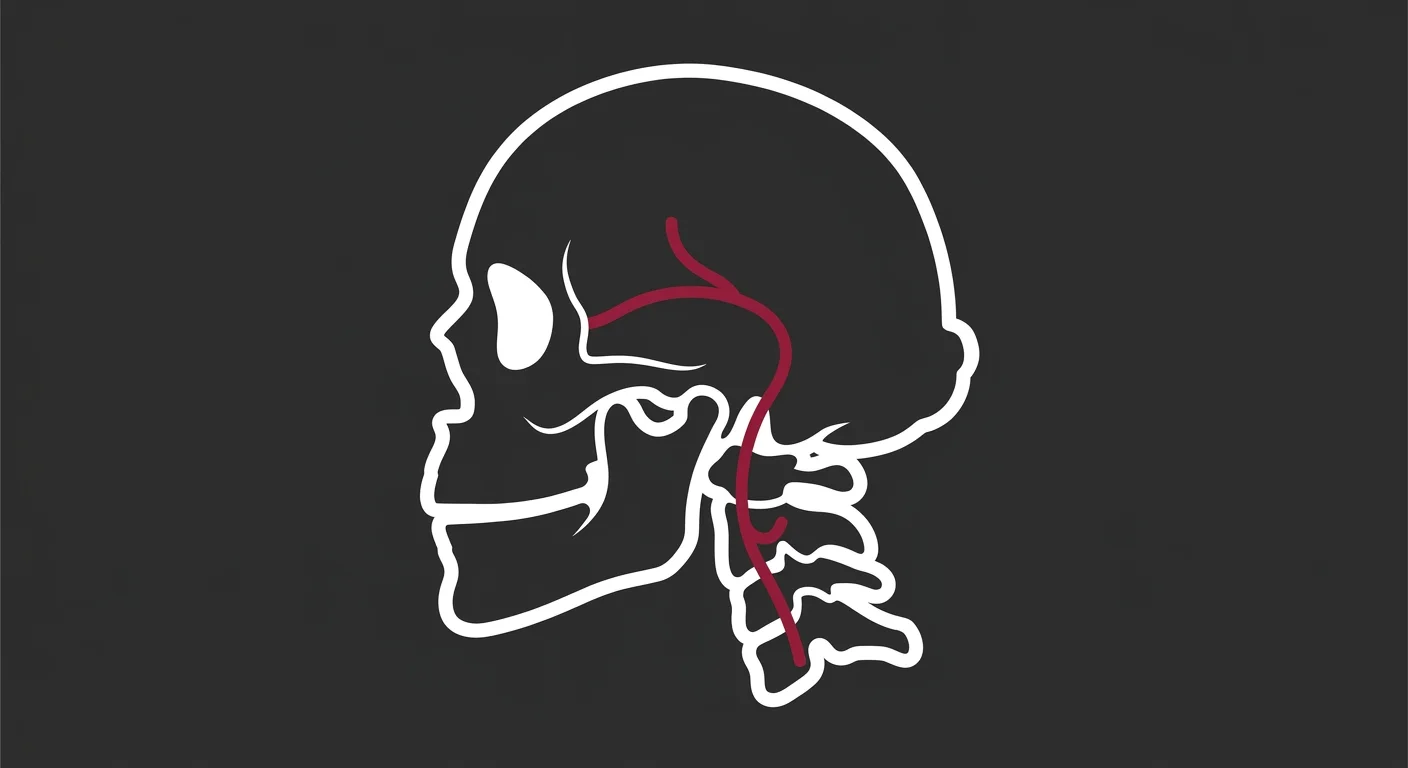
The jaw doesn't operate in isolation. It's structurally dependent on the cervical spine the same way a door depends on its frame. Frame shifts — door binds. That's not a metaphor. That's anatomy.
Up to 70% of patients with clinically diagnosed temporomandibular disorders also present with measurable cervical spine dysfunction, according to NIH research. That isn't a soft correlation. It's a signal that these two systems are functionally one system.
Here's the frame: the cervical spine is the load-bearing wall the jaw hangs from. Stop patching the drywall — swap in a bite splint, adjust the occlusion — all you want. If the wall is shifting, the crack comes back. It will keep coming back until someone looks at the structure.
The Anatomy Behind the Connection
The trigeminal nerve is where the anatomy gets specific. It governs sensation across the jaw, the face, and the temples. But it doesn't process those signals in isolation — it shares central pathway input with the upper cervical nerve roots at C1 and C2. That shared architecture is why a restriction in your neck shows up as jaw pain. Two systems. One pain signal.
When C1 and C2 are restricted, that shared pathway stops sorting cleanly. Jaw pain arrives at the brain alongside distorted input from a compressed cervical environment. The brain doesn't separate them. It registers more pain — more broadly distributed. That's why TMJ patients describe symptoms that migrate into the neck, the temples, behind the eyes. They're not exaggerating a wider problem. They have one.
Cervical flexion-rotation testing makes this concrete. Patients with chronic TMJ show an average restriction of 15 degrees in C1-C2 range of motion compared to asymptomatic individuals, as documented in peer-reviewed NIH findings. That restriction isn't random. It's a consistent anatomical fingerprint in this patient population — and it's the exact structural target that upper cervical mobilization is designed to address.
Why Most TMJ Patients Have Undiagnosed Cervical Restrictions
Most TMJ patients walk in having already seen a dentist. Some have seen an ENT. A few have seen an oral surgeon. Almost none of them have had their upper cervical range of motion tested. That's a scope problem, not a competence problem — dentistry looks at the jaw. Cervical assessment isn't part of that scope. So it doesn't happen.
And when the cervical restriction goes undetected, the whole treatment plan is built on an incomplete picture. Patients who find themselves researching whether chiropractic can resolve what dental splints haven't are usually asking the right question. They just don't know exactly why yet. They've worked through the dental toolkit. What no one has evaluated is the cervical component.
That's what individualized chiropractic care changes. Assessment drives the clinical picture — not the referring diagnosis. A patient who arrives labeled as a TMJ case gets evaluated as a full cervical and neurological case. The restriction either shows up in testing or it doesn't. But you don't skip the test.
| Anatomical Structure | Role in TMJ Function | What Happens When It's Restricted |
|---|---|---|
| C1–C2 Vertebral Segments (Upper Cervical Spine) | The structural anchor point the jaw depends on for mechanical stability and neurological signaling. C1 and C2 sit directly beneath the skull and house the nerve roots that share central processing pathways with the trigeminal nerve. | Restricted range of motion at C1–C2 compresses shared nerve pathways, amplifying pain signals from the jaw. The brain receives distorted input from two converging systems simultaneously — jaw pain registers as louder, more diffuse, and harder to localize. |
| Trigeminal Nerve | Governs sensation and motor function across the jaw, face, and temples. It's the primary sensory highway between the jaw and the brain — processing everything from bite pressure to facial pain. | When upper cervical segments are restricted, the trigeminal nerve's central processing environment is disrupted. Pain signals from the jaw arrive alongside compressed cervical input, producing symptoms that migrate into the neck, temples, and behind the eyes. |
| Temporomandibular Joint (TMJ) | The hinge joint connecting the lower jaw to the skull. Its function depends on balanced muscular tension and properly aligned cervical mechanics — it doesn't operate independently of the spine above it. | Without addressing underlying cervical restriction, the TMJ continues to operate under abnormal mechanical load. Bite splints and occlusal adjustments may reduce surface-level symptoms temporarily, but the structural driver remains unresolved. |
| Cervical Musculature (Suboccipital and Deep Neck Flexors) | The muscles surrounding C1–C2 regulate head position and help control jaw-opening mechanics. Their tension state directly influences how much mechanical load is transferred to the temporomandibular system. | Chronic cervical restriction triggers compensatory muscle guarding in the suboccipital region. That guarding tightens the surrounding musculature, pulling the jaw out of its optimal resting alignment and sustaining the pain cycle even when the jaw itself isn't the primary problem. |
| Forward Head Posture (Cervical Alignment) | The position of the skull relative to the cervical spine determines how much mechanical tension is distributed across the jaw system. Proper cervical alignment reduces the load the TMJ has to absorb during normal function. | Forward skull drift shifts the mechanical load progressively onto the jaw and its supporting musculature. The further the skull drifts from neutral, the greater the abnormal tension placed on the temporomandibular system — compounding existing TMJ symptoms without any direct injury to the jaw. |
What the Research Actually Found: Upper Cervical Mobilization and TMJ Outcomes
These trials weren't built to confirm a belief. They were built to measure what happens. And what keeps happening is this: when clinicians target the upper cervical spine directly, jaw pain scores drop in ways that dental-only protocols haven't produced on their own.
But most TMJ patients aren't in clinical trials. They're in dental offices. They're getting fitted for bite splints and wondering why the symptoms keep cycling back. The research answers that question. The structure underneath the jaw — the load-bearing wall — isn't being touched. The drywall keeps getting patched.
So the clinical question isn't whether upper cervical mobilization works. The trials settled that. The question is why it's still absent from the standard treatment conversation. That's a scope problem — not a science problem.
The Clinical Trials That Put Numbers to Jaw Pain Reduction
Here's the thing — when NIH clinical findings measured what happened after manual therapy was applied to the upper cervical spine alongside jaw exercises, the results weren't marginal. Over 70% of participants experienced clinically significant reductions in TMJ pain pressure thresholds. That isn't a modest trend. That's a reproducible outcome tied to a specific anatomical target — not a generalized treatment effect from moving the jaw around.
Separate trial cohorts added a second data point. Targeted upper cervical spine mobilizations produced an average 2.5-point reduction on the Visual Analog Scale for jaw and facial pain. The VAS is a patient-reported measure — a 2.5-point shift isn't a statistical footnote. Patients felt it. The numbers just confirmed what they were already telling clinicians.
And if the question is whether upper cervical care is safe when TMJ is severe — that's an assessment question, not a waiting-room one. The trials used targeted, low-force mobilizations. The outcomes held. Safety and efficacy don't conflict when the approach is built around what the assessment actually finds, not around a diagnosis code someone else assigned.
Why the Dental-Only Approach Keeps Failing the Research Test
The dental-only model isn't failing because dentists are wrong about the jaw. It's failing because the jaw isn't the whole problem. A bite splint repositions the occlusion. It doesn't restore C1-C2 range of motion. Those are two different problems — and one intervention can't solve both.
NIDCR clinical guidance is clear: conservative, reversible protocols are the first line of defense for the estimated 10 million Americans living with chronic TMJ issues. A bite splint qualifies as conservative. So does upper cervical mobilization. But one addresses the cervical restriction driving the problem — and one doesn't. That's the distinction why dental-only TMJ treatments fail to resolve chronic neck and head pain breaks down in detail.
The wall keeps shifting because the foundation hasn't been touched. Until the cervical component gets assessed and treated, the symptoms come back. That's not a patient failure. That's exactly what happens when the clinical picture stops at the jaw.
| Study Focus | Intervention Tested | Outcome Measured | Key Finding |
|---|---|---|---|
| Upper cervical manual therapy + jaw exercises | Manual therapy to cervical spine combined with targeted jaw exercises | TMJ pain pressure thresholds | Over 70% of participants experienced clinically significant reductions in TMJ pain pressure thresholds |
| Targeted upper cervical spine mobilization | Upper cervical spine mobilizations applied to clinical trial cohorts | Jaw and facial pain severity (Visual Analog Scale) | Average 2.5-point reduction on the Visual Analog Scale for jaw and facial pain |
| Conservative, reversible TMJ care — NIDCR clinical guidance | Conservative and reversible protocols as first-line intervention | Population-level TMJ burden and recommended treatment standard | NIDCR guidelines identify conservative, reversible care as the primary defense for an estimated 10 million Americans with chronic TMJ |
Reading the Evidence: What Clinical Trial Outcomes Mean for Your Care Plan
Here's where most TMJ patients get stuck. They know the research exists. They just don't know what it means for them specifically.
The research isn't making a blanket claim. It isn't saying upper cervical mobilization works for every jaw pain presentation. What it's saying is more precise: when cervical restriction is present and targeted directly, the outcomes are consistently measurable.
That distinction matters. It means the first clinical question isn't whether to try something. It's whether the cervical spine is part of what's driving the problem — and that question only gets answered one way.
The National Institute of Dental and Craniofacial Research recommends conservative, reversible protocols as the primary line of defense for the estimated 10 million Americans living with chronic TMJ issues.
A bite splint qualifies as conservative. So does upper cervical mobilization. But only one of them tests the structural driver first. That's the distinction a patient deserves before committing to a care path — not after six months of a plan that never got to the root of it.
Forward Head Posture and the Hidden Load on Your Jaw
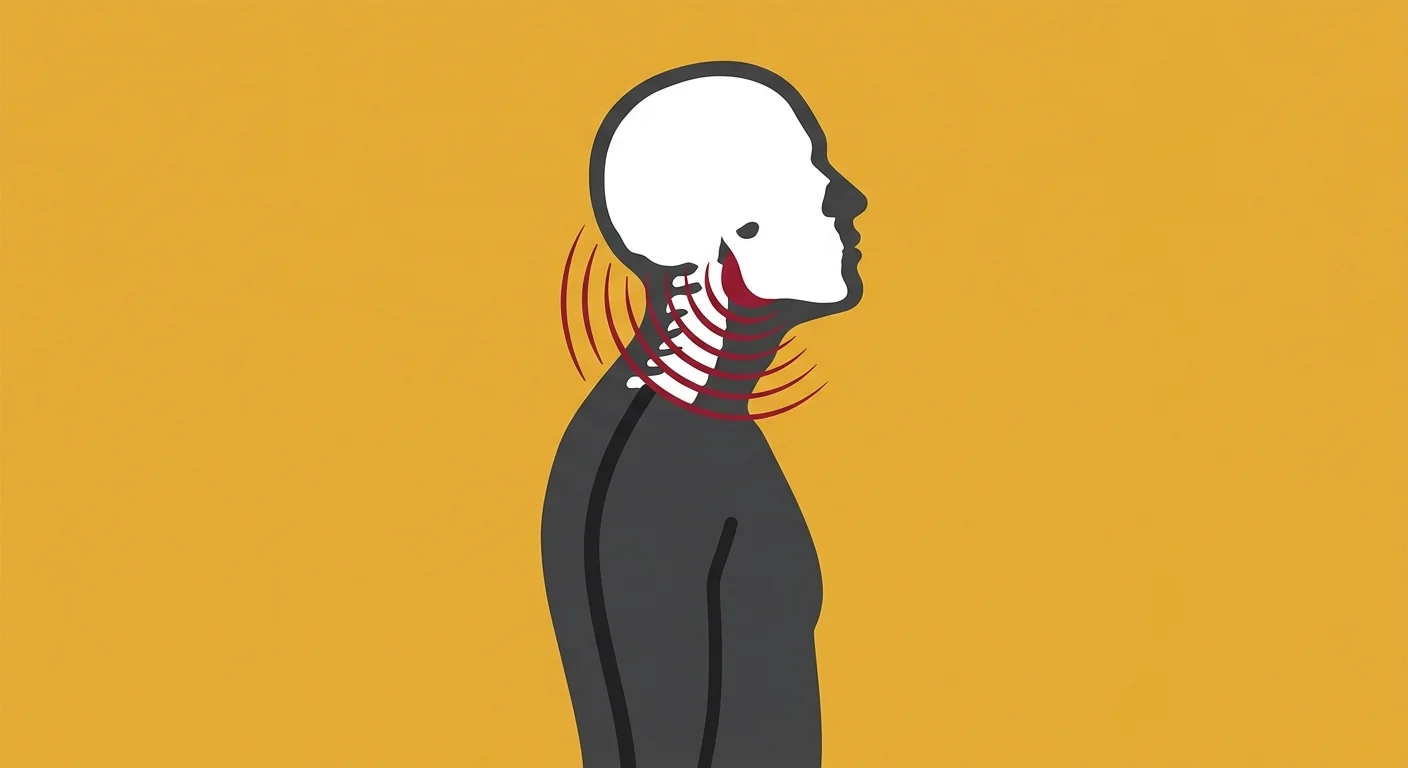
Posture isn't a wellness talking point. It's a mechanical variable with a load calculation attached to it — and that load lands directly on the jaw system.
Every inch of forward skull drift adds up to 10 pounds of abnormal tension on the temporomandibular system. That load gets generated at the cervical-cranial junction — several inches above where the splint sits.
Those aren't the same address. And an intervention at one location doesn't fix the problem at the other. The splint manages the symptom. The cervical load keeps compounding.
And this is why patients who did everything right still didn't get better. They wore the splint. They followed the protocol. They did the exercises.
What nobody measured was the forward head carriage adding load to the jaw system every waking hour. The load-bearing wall kept shifting. The drywall kept cracking. Not because the patient failed the treatment — because the treatment never touched the structure.
What Conservative, Reversible Care Actually Looks Like in Practice
Conservative and reversible doesn't mean passive. It means the intervention addresses the problem without creating a new one. That's a harder standard than most people realize.
NIDCR positions conservative, reversible care as the appropriate starting point. Not because aggressive options don't exist — because the evidence supports targeted, low-force approaches before anyone escalates.
Upper cervical mobilization, when the assessment findings call for it, fits exactly inside that framework. It's targeted to the specific restriction identified. It doesn't require irreversible structural change before the clinical picture is clear. That's not a workaround. That's what the guidance actually says to do.
So what does a realistic care plan actually look like? Assessment first. That's not a hedge — it's the only honest starting point.
If the cervical restriction is there, it gets addressed directly. If it isn't, the plan reflects that. The goal isn't to run a protocol. It's to build a clinical picture accurate enough to guide treatment. That's what separates a care plan from a script.
| TMJ Symptom Pattern | Likely Cervical Contributor | Clinical Assessment Approach |
|---|---|---|
| Jaw pain that worsens through the day, especially with sustained desk posture | Forward head carriage increasing mechanical load on the temporomandibular system throughout the workday | Cervical-cranial posture assessment; flexion-rotation testing to identify upper cervical restriction patterns |
| Persistent jaw clicking or locking that doesn't resolve with a dental splint | C1-C2 restriction limiting normal cervical rotation and altering the biomechanical relationship between the neck and jaw | Upper cervical range of motion testing; assessment of lateral cervical mobility independent of dental occlusion findings |
| Headaches originating at the base of the skull alongside jaw tightness | Suboccipital muscle tension driven by cervical restriction, referring pain into the cranial and facial regions | Palpation and motion assessment of the upper cervical segments; evaluation of whether headache onset correlates with jaw symptoms or cervical position |
| TMJ symptoms that flare after a dental procedure or prolonged mouth opening | Pre-existing cervical restriction that becomes symptomatic when the jaw is held in a sustained position under load | History-taking to establish symptom timeline relative to dental events; cervical range of motion and segmental assessment |
| Facial pain or jaw fatigue accompanied by neck stiffness or limited rotation to one side | Asymmetrical cervical restriction creating uneven load distribution across the temporomandibular system | Comparative bilateral cervical rotation testing; flexion-rotation test to isolate C1-C2 contribution to the asymmetrical presentation |
Who Is and Isn't a Candidate for Upper Cervical Mobilization in TMJ Care
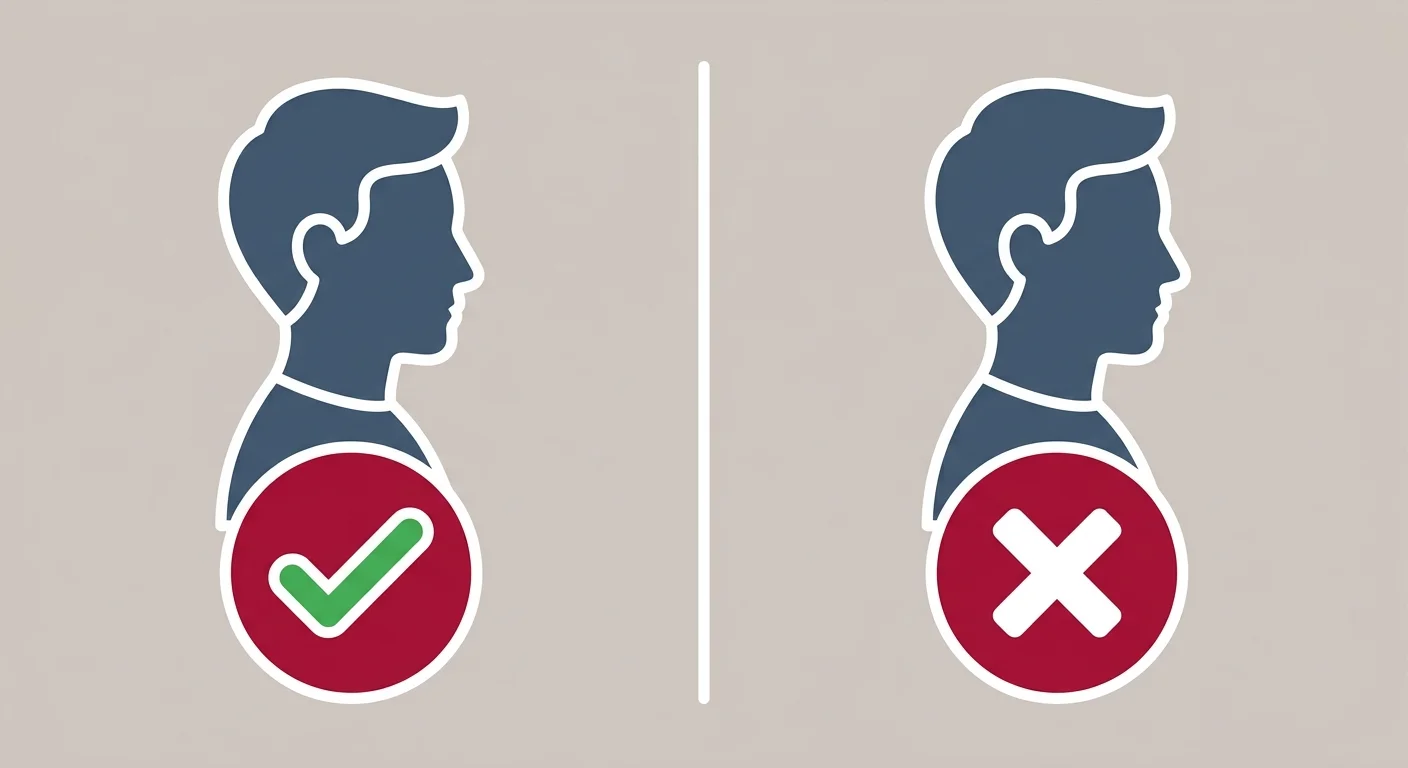
Trial data answers a population question. It doesn't answer yours.
That gap is exactly where most TMJ patients get lost. They read about upper cervical mobilization and TMJ in the same sentence — and never find out whether the cervical component is actually part of their picture.
Here's what the prevalence data actually says: up to 70% of clinically diagnosed TMD patients present with concurrent cervical spine dysfunction. That's high enough to make cervical assessment a standard first step — not an optional add-on you request after the bite splint stops working.
But 30% of that same population doesn't have a significant cervical driver. And treating the cervical spine aggressively in that subgroup isn't neutral. It's misallocated care.
So the right question isn't whether upper cervical mobilization works for TMJ. The right question is whether your upper cervical spine shows the restriction pattern that's driving your jaw symptoms.
That question has a testable answer. It's the only honest place to start.
Clinical Markers That Point to a Cervical Driver
The cervical driver doesn't announce itself. It shows up as a cluster — and when the markers stack, the picture becomes hard to argue with.
The most direct test is cervical flexion-rotation. Patients with a genuine cervical contribution to their TMJ presentation consistently show restricted C1-C2 range of motion — an average of 15 degrees less than asymptomatic individuals. That's not a subtle finding. A 15-degree deficit at the atlas-axis segment is a measurable structural signal, not a clinical impression.
And for patients trying to sort out whether their head pain is jaw-driven, nerve-driven, or something else entirely, knowing how to distinguish a cervicogenic pattern from migraine or TMD is what makes the clinical picture usable rather than confusing.
Other markers that point toward a cervical driver: jaw pain that worsens with sustained neck positions, headaches that originate at the base of the skull rather than the temples, and a symptom pattern that shifts with posture changes.
None of these close the case alone. But when they cluster with a positive flexion-rotation test and a history of failed dental-only interventions, the cervical spine moves to the top of the differential. Not as a guess. As a testable hypothesis.
This Approach Is Not for Every TMJ Patient — and That Matters
The National Institute of Dental and Craniofacial Research puts the number at 10 million Americans living with chronic TMJ issues — and its clinical guidelines are clear that conservative, reversible protocols are the appropriate first-line approach. Upper cervical mobilization fits that standard.
But fitting the standard doesn't mean it fits every patient. Being honest about who isn't a candidate is part of what separates individualized care from a protocol.
This approach isn't the right fit if the assessment doesn't find a cervical restriction. It's also not the right fit if a patient won't complete the evaluation before deciding what care looks like — because the assessment is the starting point, not an obstacle to clear before arriving at a predetermined answer.
And it isn't the right fit for patients who've already decided what the problem is and which modalities they'll accept before a single clinical finding has been established. That's not a judgment. That's a scope mismatch. If you want to understand what assessment-driven cervical care actually looks like before committing, is chiropractic neck adjustment safe for patients with severe TMJ dysfunction addresses that question directly.
The load-bearing wall framing holds here too. If the cervical spine isn't the shifting wall — if the restriction isn't measurably present — then mobilizing it won't change the jaw symptoms. It isn't what's generating the load.
In that case, a different driver needs to be identified. A different intervention follows. What doesn't change is the clinical standard: assessment first, care plan second. The answer follows the findings. The findings don't follow the plan.
| Patient Profile | Cervical Involvement Likely? | Recommended Starting Point |
|---|---|---|
| Chronic jaw pain with concurrent neck stiffness or restricted head rotation | Yes — cervical restriction likely contributing to jaw load | Cervical flexion-rotation assessment before committing to any care path |
| Headaches originating at the base of the skull, not the temples | Yes — base-of-skull pattern points toward upper cervical involvement | Upper cervical assessment; evaluate C1-C2 restriction as a primary driver |
| Jaw symptoms that shift or worsen with sustained neck positions or posture changes | Yes — postural load pattern suggests cervical-jaw mechanical link | Posture and cervical range-of-motion evaluation prior to jaw-only intervention |
| History of dental-only care (bite splints, occlusal guards) with incomplete or temporary relief | Possibly — cervical component wasn't assessed or ruled out in prior care | Cervical screening to determine whether a structural driver was missed |
| Jaw pain with no neck symptoms, no restricted head rotation, and no postural complaints | Unlikely — cervical driver not indicated by presentation | Dental or orofacial evaluation remains appropriate; cervical mobilization not indicated without assessment findings |
| Patient unwilling to complete clinical assessment before selecting modalities | Unknown — restriction presence cannot be established without evaluation | Not a fit for this approach; assessment is the starting point, not an optional step |
| Patient who has already decided what the problem is and which treatments they'll accept | Unknown — clinical findings haven't been established | Scope mismatch; care plan must follow findings, not precede them |
Frequently Asked Questions About Upper Cervical Mobilization and TMJ Relief
Most people who ask about upper cervical mobilization and TMJ have already been told something that didn't stick. A referral. A splint adjustment. Another appointment that ended with "let's give it more time."
They're not looking for more hedging. They want to know what's actually going on.
These are the questions that actually change the outcome. Answer them correctly and a patient stops cycling. Answer them wrong — or not at all — and they're back in the splint line.
How can a neck adjustment relieve pain in my jaw or TMJ?
The jaw and the upper cervical spine share a neurological neighborhood. The trigeminal nerve runs jaw sensation and motor function. It also shares central processing pathways with the nerve roots at C1 and C2.
Restrict those segments, and the trigeminal pathway feels it. That's not a theory — it's anatomy. It's why cervical restriction shows up so consistently in TMJ presentations.
Upper cervical mobilization restores movement at the restricted segment. When that restriction is the upstream driver of jaw symptoms, restoring movement changes the sensory and motor input the jaw receives. Pain pressure thresholds shift.
Over 70% of participants in clinical trials experienced that shift after targeted upper cervical work combined with jaw exercises. The jaw doesn't have to be touched directly for the jaw to feel different.
Why do dental-only splints fail to resolve chronic TMJ dysfunction?
A bite splint works at the occlusal level — how the teeth meet. That's the right tool when the problem is occlusal.
But up to 70% of TMJ patients have concurrent cervical spine dysfunction driving or amplifying their symptoms. A splint can't reach the cervical spine. It can't restore C1-C2 range of motion. It can't change the load the cervical-cranial junction is placing on the jaw system.
So the symptoms cycle. Better for a week, then back. That's not a splint failure. That's a scope mismatch — the splint was built for one problem while the driver was somewhere else entirely.
Is upper cervical mobilization safe if I have severe jaw popping or clicking?
Jaw popping and clicking aren't contraindications. They're symptoms — and symptoms don't determine whether upper cervical mobilization is appropriate. The clinical findings do.
The National Institute of Dental and Craniofacial Research is explicit: conservative, reversible protocols are the right first-line approach for TMJ. Upper cervical mobilization fits that category. It's low-force, targeted, and applied to the cervical spine — not directly to the jaw.
The assessment comes first. If it reveals cervical restriction, that's what gets addressed. If it doesn't, the care plan reflects what's actually there.
Popping and clicking are part of the clinical picture. They're not the deciding factor.
How many chiropractic sessions are needed before I see TMJ improvement?
There's no honest answer to that question before the assessment happens. Any number given before clinical findings exist isn't a care plan. It's a guess wearing a white coat.
What the assessment reveals determines the path. If cervical restriction is present and measurable, addressing it is a specific clinical task with a specific endpoint. Progress gets tracked. If markers aren't shifting, the approach changes — it doesn't repeat.
What won't happen is a 12-month timeline handed over before the first finding is on the table. That model serves the billing calendar. It doesn't serve the patient.
What does a biological systems assessment reveal about jaw and neck pain that a dental exam misses?
A dental exam is designed to evaluate the jaw, the bite, the teeth, and the surrounding oral structures. It's not designed to evaluate cervical range of motion or C1-C2 segmental restriction. So those things don't get measured — not because they're irrelevant, but because they're outside the exam's scope.
A biological systems assessment looks at the jaw as one component of a larger neurological and biomechanical system. It asks what the cervical spine is doing, how posture is loading the jaw system, and whether the restriction pattern at C1-C2 is measurably present.
The 10 million Americans managing chronic TMJ — many of them in dental-only care — have typically had the jaw evaluated thoroughly. What often hasn't been evaluated is everything the jaw connects to.
That's the gap. And it's the only place a real answer can come from.
The Load-Bearing Wall: What the Evidence Is Actually Telling You
Here's what the research is actually telling you: the jaw doesn't work alone. It never has.
Up to 70% of clinically diagnosed TMD cases present with concurrent cervical spine dysfunction. That's not a supporting detail. That's the central clinical fact that dental-only management keeps building around — and never addressing.
The load-bearing wall isn't a metaphor. It's what's happening in your body.
Patch the drywall as many times as you want — a bite splint, an occlusal guard, another round of dental adjustments. The crack keeps coming back because the wall underneath is still shifting. When over 70% of participants receiving targeted upper cervical mobilization experienced clinically significant reductions in TMJ pain pressure thresholds, that wasn't a footnote supporting dental care. That was the research pointing directly at the structure dental management was never designed to reach.
That's not a critique of dentistry. It's a scope problem. The jaw is in the dental scope. The load-bearing wall isn't.
So if you've been in dental-only management and the symptoms keep coming back — that's not bad luck. That's what happens when the cervical component was never assessed in the first place.
At Touch of Wellness Chiropractic, the first clinical question Dr. Karen Hannah asks isn't what your dental records say. It's whether the load-bearing wall is shifting. That gets answered through assessment — cervical range of motion, flexion-rotation testing, a clinical picture built from what's actually measurable. Not from a diagnosis code. Not from whatever the last provider ran.
The evidence has pointed at the structure for years. The structure can be tested. The only question is whether anyone's looked at it yet.
Stop patching the drywall.
The jaw's been evaluated. What it connects to hasn't. If chronic TMJ pain keeps coming back despite every dental intervention, that's not a dental failure — it's a systems gap. Find out whether the cervical-jaw connection is what's actually driving it.
Copyright Touch of Wellness Chiropractic 2026
1101 W Jackson St, Suite A Morton, IL 61550
Web Design by iTech Valet