
(309) 321-8412 | 1101 W Jackson St, Suite A, Morton, IL 61550
(309) 321-8412 | 1101 W Jackson St, Suite A, Morton, IL 61550
What to Expect During Your First Chiropractic Exam for Chronic Headaches and TMJ
Your first chiropractic exam for chronic headaches and TMJ is a single diagnostic investigation into one system — because in most cases, the headaches and the jaw symptoms share the same structural origin.
The exam covers symptom history, posture, range of motion, upper cervical palpation, and temporomandibular joint evaluation. Not as separate checklists. As one connected picture.
Here's why that matters. Approximately 15.9% of US adults experience a severe headache or migraine in any given three-month period. A significant portion of those cases involve jaw dysfunction that has never been assessed at the cervical spine level. Research shows that up to 70% of TMJ and temporomandibular disorder cases co-occur with neck pain and cervical spine dysfunction — a relationship dental-only evaluations aren't built to detect.
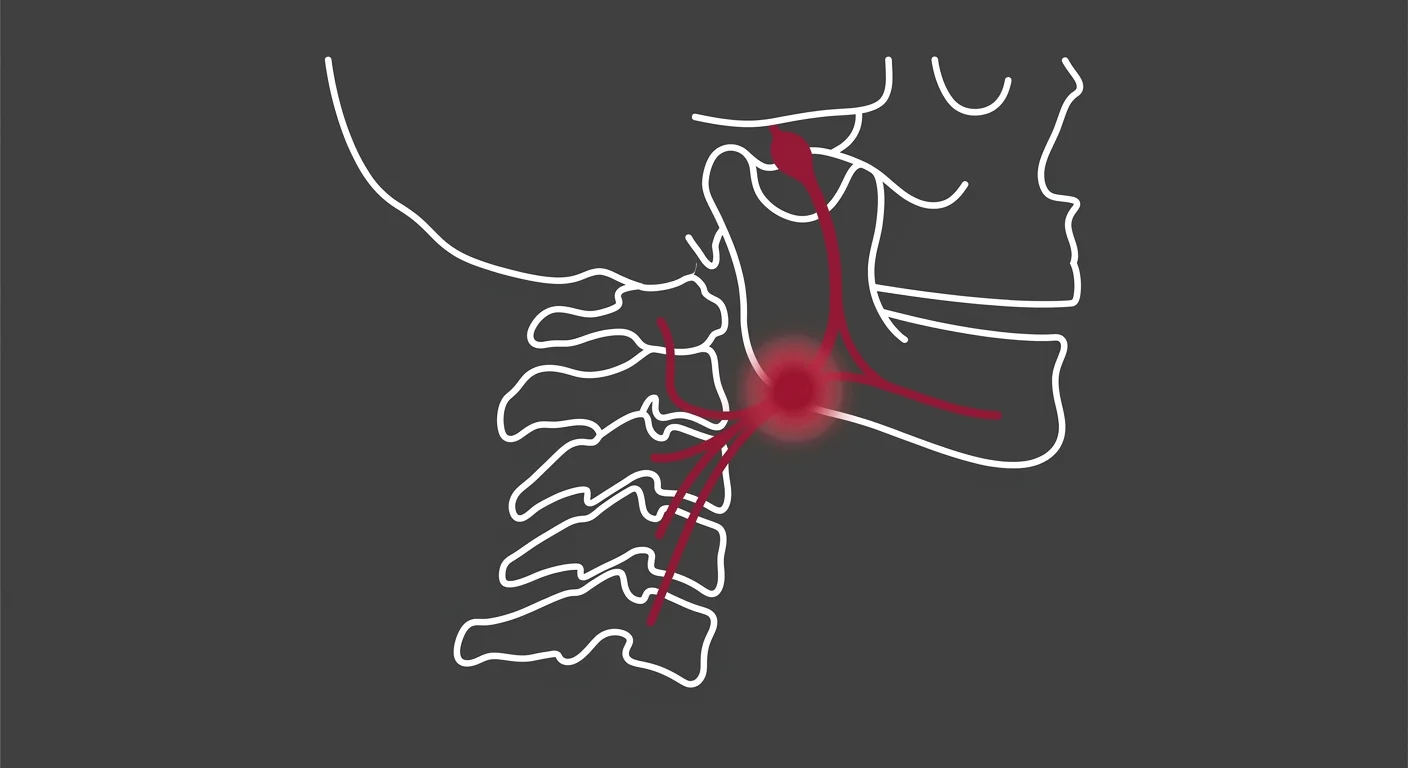
The anatomy explains it. The trigeminocervical nucleus is the convergence point in the brainstem where nerve signals from the upper cervical spinal nerves meet the trigeminal pathways that serve the jaw and face. When the upper cervical spine is dysfunctional, that convergence produces referred pain — jaw clicking, facial pressure, head pain. The signals look like a jaw problem. The source is often the spine.
Cervicogenic headaches originate from dysfunction in the C1 through C3 spinal nerve dermatomes and refer pain to the frontal, orbital, and temporal regions. That pattern is clinically indistinguishable from other headache types without a hands-on cervical spine exam.
Chiropractic adjustment is a non-pharmacological approach with demonstrated effectiveness for reducing headache frequency and duration. Manual therapy targeting the cervical spine has produced significant improvements in TMJ pain intensity and jaw mobility.
Find the convergence point first. That's what this exam is for — before anything is treated, before any care plan is discussed, before a single adjustment is made.
Last Updated: August 25, 2026
- • Why Headaches and TMJ Show Up Together — and Why That Changes the Exam
- • What the Chiropractic Intake Process Actually Covers
- • The Physical Exam: What Gets Assessed and Why
- • What This Exam Is Not — And Who It Is Not For
-
• Frequently Asked Questions
- • What does a chiropractor do for TMJ and headaches during the first visit?
- • Will you adjust my neck if I am afraid of neck cracking?
- • Why does my jaw click when I have a tension headache?
- • How long does a first chiropractic exam take for headaches and TMJ?
- • Can chiropractic care help if mouthguards from my dentist failed?
- • This Is Where the Guessing Stops
Why Headaches and TMJ Show Up Together — and Why That Changes the Exam
Most people walking in with headaches and jaw pain have already done the dental route.
They tried the mouthguard. They were told it's stress. The symptoms came back anyway.
That's not a coincidence. That's a diagnostic gap.
It's not a failure of effort. It's a failure of scope.
The jaw doesn't operate in isolation. Neither does the headache. CDC data shows 15.9% of US adults experience a severe headache or migraine in any given three-month period — and a substantial portion of those cases involve jaw symptoms that were never evaluated at the cervical spine level.
NIH research puts the co-occurrence rate at up to 70% — TMJ and temporomandibular disorder cases presenting alongside neck pain and cervical spine dysfunction.
That number doesn't show up in dental records. Because dentists aren't examining the cervical spine.
The chiropractic exam is built around the system where these two problems actually meet.
Why the Dental-Only Model Misses the Root Cause
Here's what the dental-only model gets wrong: it starts and ends at the joint.
The jaw gets examined. The bite gets measured. A splint gets made. But the question of why that joint is under stress — that question never gets asked.
That's the gap.
Here's the anatomy that makes this undeniable.
The trigeminocervical nucleus sits in the brainstem where nerve signals from the upper three cervical spinal nerves converge with the trigeminal pathways that govern the jaw and face. Restrict the upper cervical spine, and that convergence generates referred pain.
It shows up as jaw clicking, facial pressure, and head pain that looks exactly like a TMJ problem. The signals point to the jaw. The source is the spine.
People who've looked into what happens when dental splints don't resolve symptoms describe the same pattern every time. The mouthguard helps for a week. Then the jaw tightens again. The headache comes back.
That cycle repeats because the splint addresses the output — the clenching, the clicking — without touching the cervical input driving it.
You can manage the symptom indefinitely. You can't resolve it that way.
That's not an indictment of dentistry. Dentists are looking at the right symptom through the wrong window.
The why desk workers experience co-occurring tension headaches and jaw clicking pattern makes this concrete — posture-driven cervical restriction producing jaw pain and head pain simultaneously, in the same patient, with no dental cause to find.
A chiropractic exam traces that referral pattern back to the spine. That's where the root cause lives. Find the convergence point first.
| Symptom | Where It's Usually Sent | What Gets Missed | Root System Involved |
|---|---|---|---|
| Chronic tension headaches | Primary care physician or neurologist | Upper cervical restriction referring pain into the frontal and temporal regions | Cervical spine — C1 through C3 nerve dermatomes |
| Jaw clicking and limited opening | Dentist or oral surgeon | Cervical spine dysfunction driving mechanical stress on the temporomandibular joint | Trigeminocervical nucleus — brainstem convergence of cervical and trigeminal pathways |
| Facial pressure and orbital pain | Allergist or ENT specialist | Referred pain from upper cervical nerve irritation mimicking sinus involvement | Trigeminal nerve pathways — cervical input misread as facial origin |
| Occipital pain and base-of-skull aching | Massage therapist for muscle tension | Segmental dysfunction at C1–C2 producing referral into the occiput and behind the eyes | Upper cervical spine — suboccipital region |
| Nighttime jaw clenching and morning jaw soreness | Dentist for a night splint or bite guard | Cervical postural load increasing masticatory muscle tension through the night | Cervical spine and masticatory system — mechanosensitivity loop |
| Co-occurring headache and jaw pain flare-ups | Treated separately by two or more providers | No single evaluation connects the spinal structure driving both symptom sets simultaneously | Integrated trigeminocervical system — single root, two symptom expressions |
What the Chiropractic Intake Process Actually Covers
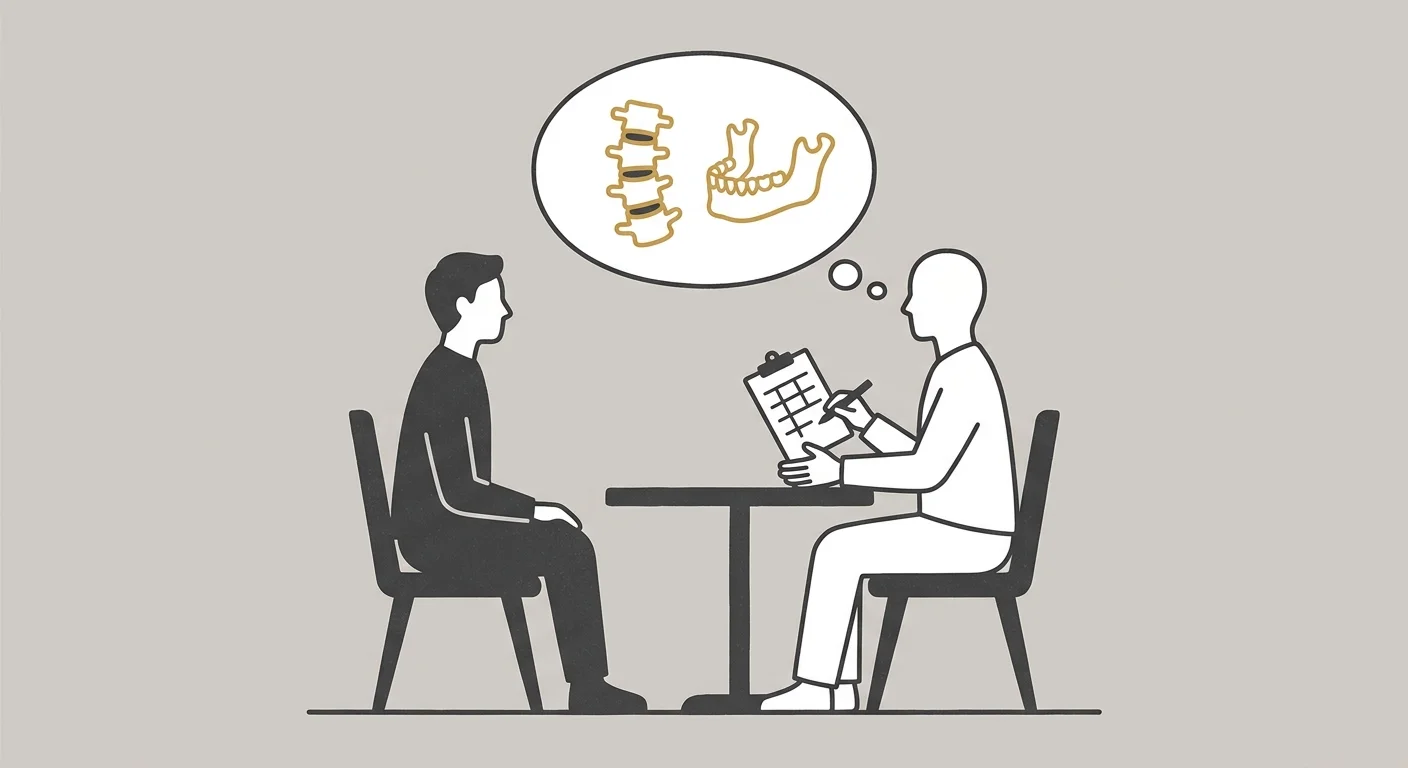
Here's what most people don't expect: the exam starts before anyone puts a hand on you.
It starts with questions. And not the ones you've already answered a hundred times.
A complete intake covers symptom onset, location, frequency, and what makes things better or worse. It also covers posture history, sleep position, prior dental work, and any failed treatments — including mouthguards.
That last part matters. Individualized chiropractic care in Morton is built around what you actually report — not around what a diagnosis code says you should have.
If the mouthguard failed, that's information. It tells us where the previous assessment stopped.
That history drives the physical exam. Postural assessment, cervical range-of-motion testing, upper cervical palpation, direct evaluation of the temporomandibular joint — it all points toward one question: is there a shared structural origin?
For a lot of patients, there is. When jaw symptoms get worse at a desk, there's often a cervical restriction pattern sitting underneath it. A dental intake never documents that.
The C1 through C3 spinal nerve dermatomes refer pain directly to the frontal, orbital, and temporal regions of the head. That referral pattern lives in the neck — not on any chart from a dentist's office.
What Patients Who Were Told It Was 'Just Stress' Actually Report
"Just stress" is one of the most common things patients hear before they end up here.
It's not entirely wrong. Stress loads the cervical spine. It tightens the jaw musculature. Both things are real.
But "just stress" isn't a diagnosis. It's a placeholder — and a placeholder doesn't explain why the jaw clicks every morning or why the headache starts at the base of the skull.
What those patients actually report is consistent enough to be predictable. Headaches that started around the same time the jaw clicking got worse. Neck stiffness nobody connected to the head pain. A mouthguard that helped for two weeks and then stopped.
There's a reason that pattern repeats. The trigeminocervical nucleus is where nociceptive signals from the upper cervical nerves converge with trigeminal afferents in the brainstem. When that convergence fires, the pain output doesn't feel like a neck problem.
It feels like a jaw problem. A headache. Or both at once. The signals point one direction. The source runs another.
The intake is the first time those dots get connected on purpose.
Not by asking what the jaw is doing. By asking what the cervical spine was doing first.
That's the order that changes the answer.
| Intake Area | What the Chiropractor Is Listening For | Why It Matters for Diagnosis |
|---|---|---|
| Symptom Onset & Timeline | When the headaches and jaw symptoms started — and whether they appeared together or separately | Co-occurring onset points toward a shared structural origin rather than two unrelated conditions |
| Location & Pain Pattern | Where the headache lives — frontal, temporal, orbital, or occipital — and whether jaw pain is one-sided or bilateral | Pain location maps to specific cervical dermatomes and helps identify which spinal levels are involved |
| Posture & Work Habits | How long the patient sits, screen height, head position throughout the day, and whether symptoms worsen at the desk | Sustained forward-head posture loads the upper cervical spine and is a primary driver of the headache-TMJ pattern |
| Sleep Position | Whether the patient sleeps on their stomach, the side they favor, and pillow height | Cervical spine position during sleep directly affects upper cervical joint stress and overnight jaw clenching patterns |
| Prior Dental & Medical Treatment | Mouthguards, splints, injections, physical therapy, and what improved — even temporarily — versus what didn't | Treatment history reveals whether the jaw was isolated from the cervical spine in prior care, and what remains unaddressed |
| What Makes Symptoms Better or Worse | Heat, cold, movement, rest, stress, chewing, time of day, and whether symptoms shift location under different conditions | Aggravating and relieving factors clarify whether the driver is mechanical, postural, or neurological — and where to focus the physical exam |
The Physical Exam: What Gets Assessed and Why
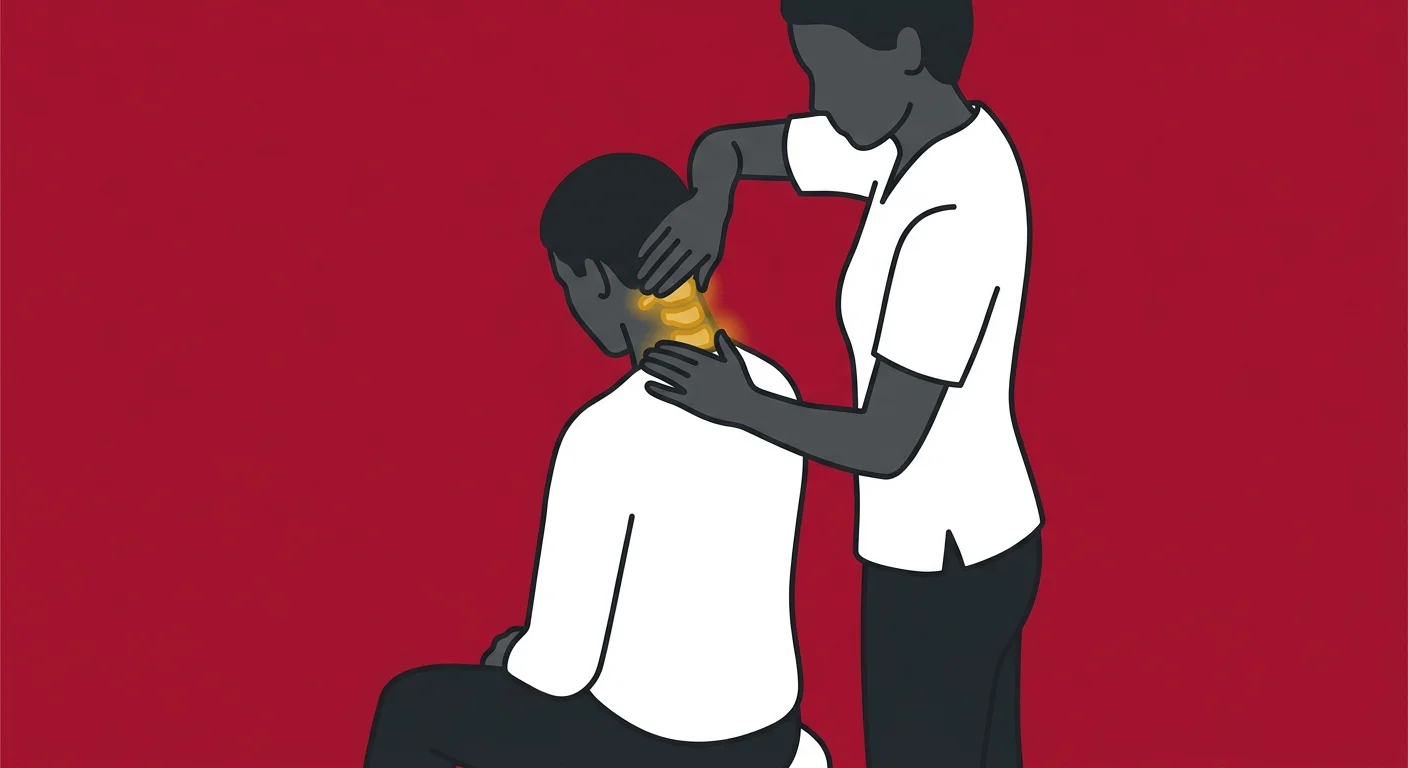
The history tells you where to look. The physical exam tells you what's actually there.
The hands-on portion covers more ground than most patients expect. Posture, cervical range of motion, upper cervical palpation, direct evaluation of the jaw and surrounding musculature — it all gets assessed. But not as separate stops on a checklist. As one connected clinical picture, evaluated in the order that traces the problem back to its source.
Every component is asking the same question from a different angle: is the spine driving the symptoms, or is something else?
That question doesn't get answered at the jaw. It gets answered at the cervical spine. The exam is built to go there first — find the convergence point, and everything else follows.
Cervical Range-of-Motion and Postural Analysis
Cervical range-of-motion testing isn't routine. It's diagnostic.
When a patient can't rotate their head fully to one side, or when flexion and extension produce pain that radiates toward the jaw or temple — that's not incidental. That's a clinical signal. And it's one the dental intake never captures.
Postural analysis runs alongside range-of-motion testing because the two tell the same story from different angles. Forward head posture loads the upper cervical vertebrae and compresses the C1 through C3 nerve roots — the exact dermatomes that refer pain to the frontal, orbital, and temporal regions.
When someone walks in with a headache behind the eyes and a jaw that clicks, a postural assessment often shows exactly where the load is coming from. And knowing how to distinguish a migraine from a cervicogenic pattern matters here — because posture-driven cervical restriction and a migraine can land pain in nearly identical locations.
Restricted range of motion combined with a forward-shifted posture is one of the most consistent findings in patients with co-occurring headaches and jaw symptoms. A dental intake almost never documents it. The physical exam finds it every time.
Palpation of the Upper Cervical Spine and Jaw Region
Palpation is where the clinical picture gets specific.
Hands on the upper cervical spine locate joint restrictions, muscle guarding, and trigger points — and the tissue tells you things imaging doesn't capture. A restricted C1 or C2 segment doesn't always appear on an X-ray. It shows under pressure, with a reproducible pain response the patient recognizes the moment it's found.
The jaw region gets the same systematic attention. Palpation of the temporomandibular joint, the masseter, the pterygoids, and the suboccipital muscles maps what's overloaded and where.
NIH published findings show that manual trigger point therapy and chiropractic adjustment of the cervical spine significantly reduce TMJ pain intensity and improve jaw mobility. So the palpation findings in the jaw aren't just diagnostic. They're directly actionable.
What separates this exam from a dental evaluation isn't scope. It's the through-line.
The trigeminocervical nucleus is where nociceptive signals from the upper cervical nerves converge with the trigeminal pathways running the jaw and face. Palpating the cervical spine and the jaw in the same exam isn't thorough for its own sake. It's the only way to trace a referred pain pattern back to its actual source — and the only way to know whether what presents as a TMJ problem is actually a cervical spine problem running the whole show.
| Exam Component | What Is Being Measured | Connection to Headache or TMJ Symptoms |
|---|---|---|
| Postural Assessment | Head and shoulder position relative to the spine; degree of forward head translation | Forward head posture loads the upper cervical vertebrae and compresses the C1–C3 nerve roots — the dermatomes that refer pain to the frontal, orbital, and temporal regions |
| Cervical Range-of-Motion Testing | Rotation, flexion, and extension capacity; pain provocation patterns during movement | Restricted or painful cervical motion — especially rotation toward one side — is a clinical signal for joint restriction that can refer pain to the jaw and temple |
| Upper Cervical Palpation (C1–C3) | Joint restriction, segmental mobility, and tissue response at the top three cervical segments | Restricted C1 and C2 segments generate nociceptive signals that converge with trigeminal pathways at the trigeminocervical nucleus — producing jaw pain and headache simultaneously |
| Temporomandibular Joint Evaluation | Joint mobility, clicking, deviation on opening, and end-range pain behavior | Jaw restriction and clicking that worsen alongside neck stiffness point toward a shared cervical origin rather than an isolated joint problem |
| Masseter and Pterygoid Palpation | Muscle tension, trigger point presence, and pain referral patterns in the primary jaw musculature | Overloaded jaw muscles reflect chronic cervical tension feeding into the masticatory system — not just a clenching habit or a bite alignment issue |
| Suboccipital Muscle Assessment | Trigger point activity and tension in the muscles spanning the base of the skull and upper neck | Suboccipital tightness directly loads the C1–C3 nerve roots and is one of the most consistent findings in patients presenting with co-occurring headaches and jaw symptoms |
What This Exam Is Not — And Who It Is Not For
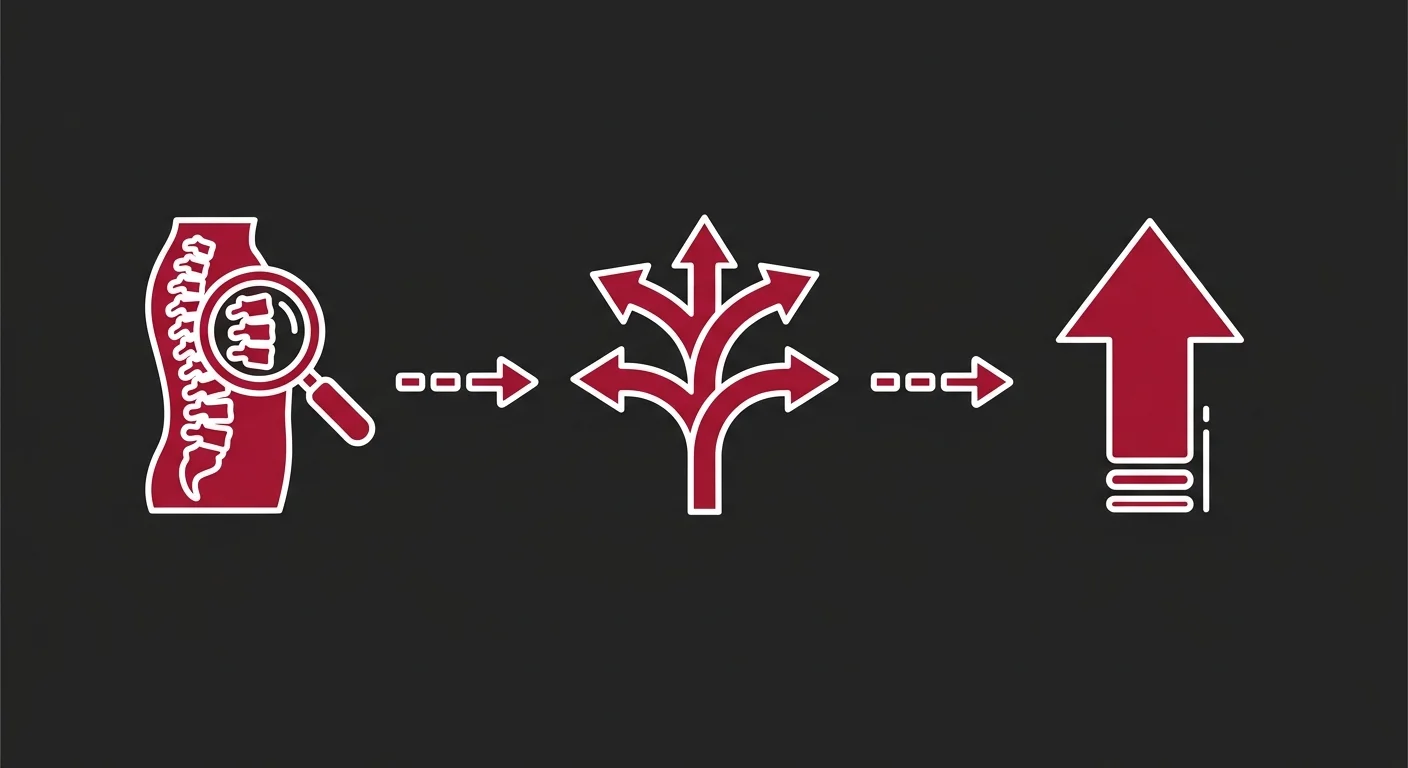
This exam isn't for everyone. And saying that upfront is more useful than running you through something that won't hold.
If you're expecting one adjustment to resolve something you've had for years — this isn't that. If you need us to replicate what your last provider did before any assessment is run — this isn't the right fit. The assessment drives the care plan here. Not your previous provider's habits. Not your dentist's treatment history.
This exam is built for patients who can follow a clinical lead. Who can accept that a jaw problem isn't always a jaw problem — and that the cervical spine is often where the real answer lives. Research shows up to 70% of TMJ cases co-occur with neck pain and cervical spine dysfunction. If you're not willing to have that conversation before the findings come in, this process won't give you much. That's not a judgment. It's honest information — and honest information is more respectful than running you through a protocol that won't hold.
What Happens After the Exam: Reading Your Results and Next Steps
When the exam is finished, you get a clear picture. Not a list of diagnoses to sort through on your own.
The postural assessment, cervical range-of-motion testing, and palpation findings all point toward one question: is there a shared structural origin driving both the headaches and the jaw symptoms? The neck tension that feeds into chronic TMJ and head pain either shows up in the findings or it doesn't. That answer shapes everything that follows — including whether a care plan makes sense at all.
If cervical restriction is driving your symptoms, you'll know which segments are involved and what that means for treatment. If the jaw is carrying independent dysfunction alongside spinal findings, that gets documented too. And if something in the findings points toward a referral — that gets said directly. Real answers are more useful than comfortable ones. That goes for the answers you hoped for and the ones you didn't.
How the Care Plan Is Built From Your Exam Findings
The care plan isn't built before the exam. It's built from it.
That distinction matters more than it sounds. A care plan handed over on the first visit — before the palpation findings are even reviewed — is a billing calendar. At Touch of Wellness Chiropractic, the plan reflects what the exam actually found: which cervical segments are restricted, where the muscular overload is concentrated, and how the jaw and upper spine are interacting. Chiropractic adjustment of the cervical spine combined with manual trigger point therapy has been shown to significantly reduce TMJ pain intensity and improve jaw mobility. When the plan is built around those specific findings, it has a reason to work — not just a protocol to run.
And if something isn't producing results after a few visits, the plan changes. That's not a failure — that's the standard. The willingness to stop, reassess, and pivot is what separates individualized care from a template. Once you've found the convergence point, the treatment isn't a guess. It's a response to a specific, documented finding. And it stays that way for every visit that follows.
| Exam Finding Category | What It Indicates | How It Shapes the Care Plan |
|---|---|---|
| Isolated jaw dysfunction — no cervical involvement | TMJ symptoms are driven by the jaw itself, independent of spinal mechanics | Primary focus stays on the temporomandibular joint and surrounding musculature; cervical findings are secondary and may warrant dental co-management |
| Cervical restriction driving jaw and head pain | Upper cervical joint restrictions are referring pain into the jaw and face via the trigeminocervical pathway | Care plan centers on restoring cervical mobility and reducing referred nociceptive load — jaw symptoms are addressed as downstream effects, not the primary target |
| Shared structural origin — cervical and jaw dysfunction co-occurring | Both the cervical spine and the jaw are contributing independently to the symptom picture | Care plan addresses both systems in sequence; cervical work typically precedes jaw-focused treatment to establish whether spinal correction reduces jaw symptoms before adding modalities |
| Postural load as the primary driver | Forward head posture is compressing the upper cervical nerve roots and sustaining both headache and jaw tension patterns | Care plan incorporates postural correction alongside spinal work; without addressing load mechanics, symptom relief is likely temporary |
| Incidental findings requiring referral | Exam findings suggest a condition outside chiropractic scope — vascular, neurological, or structural pathology that needs diagnostic imaging or specialist evaluation | Referral is communicated directly; care does not proceed until the finding is appropriately cleared or co-managed |
| Insufficient clinical basis for a care plan | Findings do not support a clear mechanical origin — symptom picture is ambiguous or inconsistent with musculoskeletal presentation | Further evaluation is recommended before committing to a care protocol; a plan built on unclear findings produces unclear results |
Frequently Asked Questions
These are the questions most people don't ask out loud. They should. Here are straight answers.
Real answers are more useful than comfortable ones. That's the standard here.
What does a chiropractor do for TMJ and headaches during the first visit?
It starts with a full intake. Symptoms, history, what you've tried, what helped, what didn't.
Then comes the hands-on assessment. Posture, cervical range of motion, upper cervical palpation, and direct evaluation of the jaw and surrounding musculature.
This isn't a dental exam. It's a spinal and neurological assessment. The question it's built to answer: is the neck driving the jaw symptoms?
The trigeminocervical nucleus is where signals from the upper cervical nerves converge with the trigeminal pathways that serve the jaw and face. That's the anatomical target. The exam is structured to find it.
Will you adjust my neck if I am afraid of neck cracking?
Nothing happens without your input. Every finding gets explained before any care decision is made.
If cervical restriction shows up in the exam, you'll know exactly what was found and why a chiropractic adjustment is being recommended. If you're not ready for that — it's a conversation, not a problem.
Fear of neck adjustments is common. It's addressed directly here. What won't happen is a rushed sequence that skips the clinical rationale.
The assessment drives every decision. Including yours.
Why does my jaw click when I have a tension headache?
Because the jaw and the neck share the same neurological hardware.
The trigeminocervical nucleus is the convergence point. Nociceptive signals from the upper three cervical nerves meet the trigeminal pathways that serve the jaw right there. When the upper cervical spine is restricted, that signal doesn't stay in the neck — it refers into the jaw, the temples, and the base of the skull.
Research shows that up to 70% of TMJ cases co-occur with neck pain and cervical spine dysfunction.
That click isn't always a jaw problem. It's a cervical spine problem showing up at the jaw. That's exactly what the exam is built to determine.
How long does a first chiropractic exam take for headaches and TMJ?
Longer than a standard chiropractic appointment. Plan for it.
Intake, history review, postural assessment, cervical range-of-motion testing, full palpation of the upper cervical spine and jaw region — none of that gets rushed without producing a useless result.
That time is what separates a documented clinical picture from a template applied on arrival. This isn't a quick drop-in. It was never designed to be.
Can chiropractic care help if mouthguards from my dentist failed?
Yes. And the reason isn't complicated.
A mouthguard addresses the jaw in isolation. It doesn't touch the cervical spine. But when the source of the dysfunction sits in the upper neck — the C1, C2, or C3 segments referring pain into the jaw — a mouthguard can't reach it. It never could.
Manual trigger point therapy and chiropractic adjustment of the cervical spine significantly reduce TMJ pain intensity and improve jaw mobility in ways that dental orthotics simply don't address.
When dental treatment hasn't held, the right question is whether the cervical spine was ever assessed. That's the conversation this exam is built to have.
This Is Where the Guessing Stops
Every exam here ends the same way: a clear answer.
Not a theory. Not a maybe. A documented clinical finding that explains why the headaches and the jaw symptoms arrived together — and why every treatment that addressed only one of them didn't hold.
That's what finding the trigeminocervical convergence point actually does. It's not a theory you take home and think about. It's the anatomical explanation for why your neck and your jaw have been running the same problem in the same body at the same time.
Once that's mapped, the treatment isn't built around what usually works. It's built around what your findings show.
If mouthguards, pain relievers, and stress reassurances have been your treatment plan — and none of it has held — that's not bad luck. That's what happens when you manage the symptoms and leave the source alone.
At Touch of Wellness Chiropractic, Dr. Karen Hannah starts where the symptoms converge, not where they're loudest. The cervical spine gets assessed first. The jaw gets assessed in context of that. That order matters — because the source of the problem determines whether the treatment has a reason to work.
Find the convergence point first. Everything that actually holds starts there.
You've managed the jaw. You've managed the headaches. Neither has held. That's not bad luck — that's a missing piece. The convergence point between your cervical spine and your jaw has never been assessed. That's what the first exam at Touch of Wellness Chiropractic is built to find. Book your assessment.
Copyright Touch of Wellness Chiropractic 2026
1101 W Jackson St, Suite A Morton, IL 61550
Web Design by iTech Valet