
(309) 321-8412 | 1101 W Jackson St, Suite A, Morton, IL 61550
(309) 321-8412 | 1101 W Jackson St, Suite A, Morton, IL 61550
Why Your Jaw Pain Might Actually Be an Upper Cervical Spine Alignment Issue
Jaw pain that won't respond to nightguards or dental work usually isn't a jaw problem.
Temporomandibular disorders affect an estimated 5% to 12% of adults in the United States. Most are treated exclusively at the site of pain — the jaw — because that's where the symptoms appear. That's not where the problem originates.
The trigeminal nerve governs sensation in the jaw, face, and teeth. Its sensory input converges with signals from the upper cervical spinal nerves — C1 through C3 — inside a brainstem structure called the trigeminocervical nucleus. When C1 or C2 is misaligned, those cervical nerves are compressed. The brainstem cannot cleanly separate the incoming pain signal from the cervical spine and registers it instead in the trigeminal nerve's territory: the jaw. The pain is felt in the jaw. The source is in the neck.
This is not an unusual presentation. Over 70% of patients with temporomandibular disorders have concurrent upper cervical spine dysfunction or neck pain. That overlap reflects anatomy, not coincidence. Altered cranio-cervical posture increases mechanical load on the jaw muscles and the temporomandibular joint, compounding both the structural and neurological dysfunction simultaneously.
Clinical evidence supports addressing the cervical spine directly. Manual therapy targeted at the cervical spine has produced reductions in jaw pain index scores exceeding 30% in controlled trials. That result does not come from treating the jaw. It comes from treating the source.
Severe temporomandibular disorders are up to nine times more prevalent in women than in men. This population has frequently cycled through dental interventions with incomplete results. Identifying the upper cervical spine as the probable origin reframes the clinical picture and redirects the care plan accordingly.
Last Updated: August 25, 2026
- • The Jaw-Spine Connection Most Patients Never Hear About
- • The Trigeminocervical Complex: Where the Jaw and Spine Actually Converge
- • How C1-C2 Misalignment Drives Jaw Symptoms
- • Who This Article Is and Is Not For
- • What an Upper Cervical Assessment for TMJ Actually Looks Like
-
• Frequently Asked Questions
- • How can a neck misalignment cause pain in my jaw?
- • Why has my dentist's nightguard failed to resolve my TMJ pain?
- • What is the trigeminocervical complex and how does it link my spine to my jaw?
- • Will an upper cervical chiropractic adjustment hurt my neck or jaw?
- • How long does it take to see TMJ relief through chiropractic adjustments?
- • Is this a chiropractic problem or a dental problem — and how do I know which one to treat first?
- • The Jaw Is the Alarm. The Spine Is the Fire.
The Jaw-Spine Connection Most Patients Never Hear About
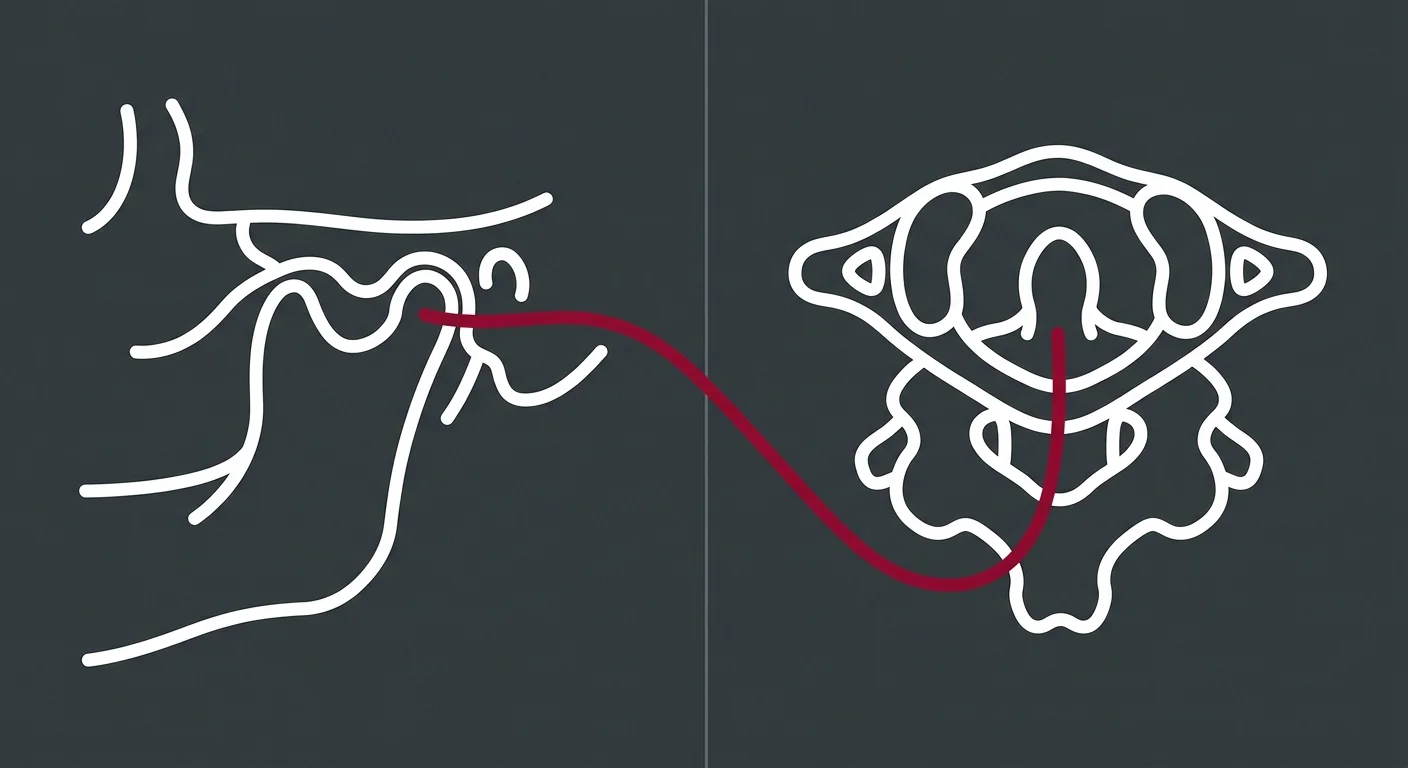
Most TMJ patients have already been told the problem lives in their jaw.
That assumption is exactly why they're still in pain.
Between 5% and 12% of adults in the United States are dealing with temporomandibular disorders right now, according to NIH data. Most of them are being managed with nightguards, dental splints, or muscle relaxants.
All of it aimed at the jaw. All of it treating the alarm. Not the fire.
The fire is burning in the cervical spine.
And until someone looks there, the jaw keeps ringing.
Why Jaw Pain Is Rarely Only a Jaw Problem
Here's what the dental intake form doesn't capture: over 70% of patients with temporomandibular disorders also present with concurrent upper cervical spine dysfunction or neck pain, according to peer-reviewed research.
That isn't a coincidence. It's anatomy.
The trigeminal nerve governs sensation in your jaw, face, and teeth. But it doesn't work in isolation. Its sensory signals converge in the brainstem with input from the upper cervical spinal nerves — C1 through C3.
When those cervical segments are misaligned or compressed, the brain gets a scrambled signal. It registers pain where the trigeminal nerve governs. The jaw. Which is exactly the wrong place to look for the cause.
That's why patients who've spent months pursuing dental treatment for jaw pain often describe the same pattern: some relief, then right back where they started.
They're addressing the site of pain, not the source. Those are two entirely different clinical acts.
Why the Cookie-Cutter TMJ Approach Fails
Here's the standard TMJ protocol: examine the jaw, fit a nightguard, tell the patient to eat soft foods, and wait. If that doesn't resolve it, escalate to more aggressive dental intervention.
The cervical spine never gets assessed. Not on visit one. Not on visit six. Even when that's exactly where the dysfunction originates.
Same sequence on every patient. Same tool regardless of what the clinical picture actually shows.
That's the cookie-cutter model.
And it fails — not occasionally, but systematically — because it's built on a flawed assumption: jaw pain always has a jaw cause.
Individualized chiropractic care starts from a different premise entirely. The assessment drives the care plan. Not the diagnosis code.
When the upper cervical spine isn't assessed, the cervical origin of the pain goes completely undetected.
So the patient gets fitted with another nightguard. The jaw keeps hurting. And everyone keeps staring at the wrong floor of the building.
| TMJ Symptom | Common Dental Explanation | Cervical Spine Explanation |
|---|---|---|
| Jaw clicking or popping with movement | Worn disc or joint surface inside the temporomandibular joint | Altered cranio-cervical posture shifting jaw mechanics and loading the joint unevenly |
| Chronic facial pain or jaw aching | Muscle tension or bruxism originating in the jaw muscles | Trigeminocervical nerve convergence projecting cervical dysfunction as facial and jaw pain |
| Headaches radiating from jaw or temple | Referred pain from the temporomandibular joint capsule | Upper cervical nerve irritation at C1–C3 referring pain through the trigeminal pathway |
| Jaw locking or limited opening | Disc displacement within the jaw joint | Elevated jaw muscle hyperactivity driven by cervical postural compensation, reducing range of motion |
| Ear pain or fullness with no infection present | TMJ inflammation pressing on surrounding structures near the ear canal | C1–C2 misalignment irritating nerves that share sensory pathways with auricular and jaw tissue |
| Nightguard provides temporary relief but pain returns | Bruxism not fully controlled by the splint | Cervical origin of muscle overactivation left unaddressed — the source continues driving the jaw symptoms |
The Trigeminocervical Complex: Where the Jaw and Spine Actually Converge
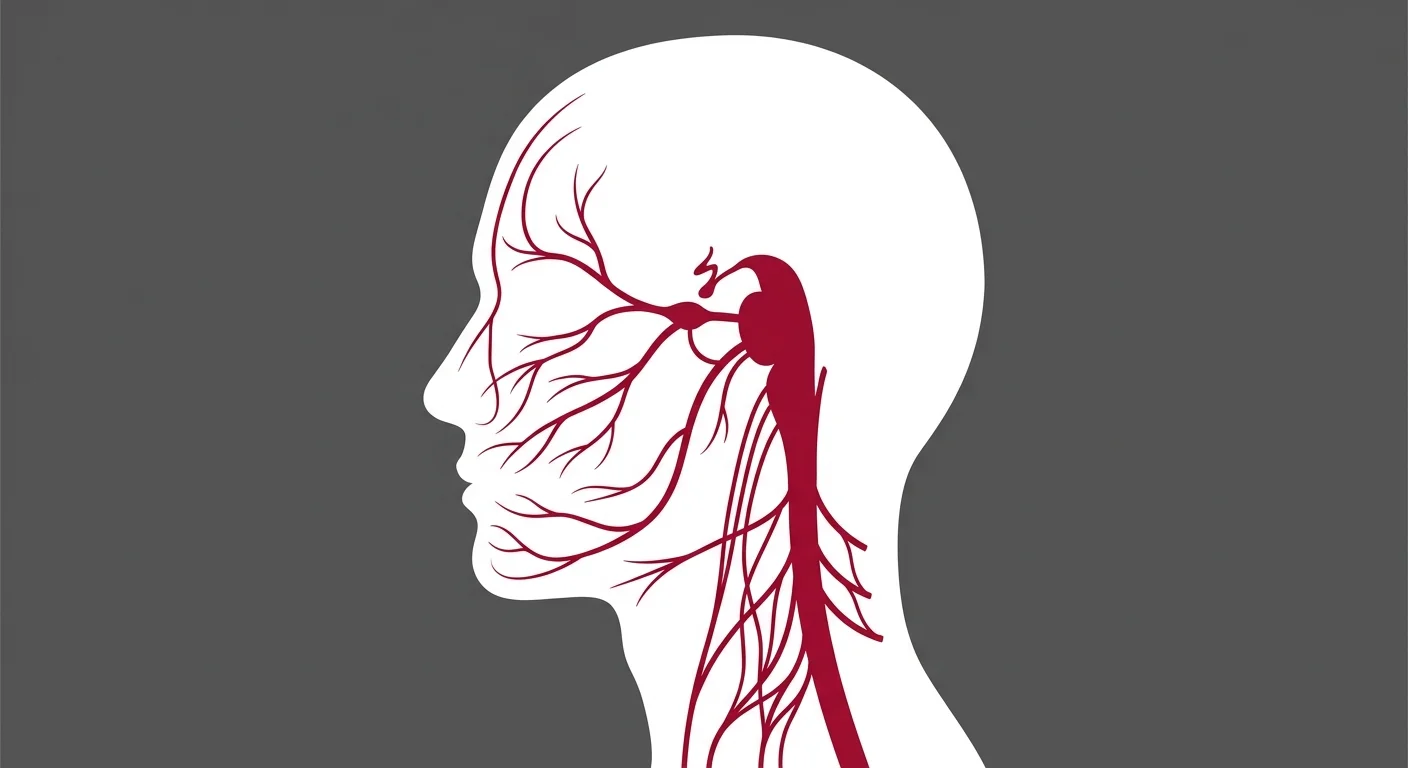
The trigeminocervical complex isn't a theory. It's the reason jaw pain and neck dysfunction are almost always the same problem wearing two different masks.
Most patients — and most providers — treat them as separate systems. That's the mistake. The jaw and the upper cervical spine aren't independent structures with a loose anatomical relationship. They're neurologically inseparable, and the research on how the trigeminocervical complex links neck tension to TMJ makes that impossible to look away from.
Until you understand the anatomy, the gap between treatment and results doesn't make sense. Once you do, it's the only thing that does.
The Neurological Anatomy Behind the Jaw-Neck Link
Here's the mechanism. The trigeminal nerve — cranial nerve V — handles sensory input for your jaw, your face, and your teeth. The upper cervical spinal nerves at C1, C2, and C3 carry sensory information from your neck and the base of your skull. These aren't parallel systems running side by side. They feed the same hub.
And those two systems don't stay in their lanes. Sensory fibers from the trigeminal nerve and from the upper cervical spinal nerves converge directly on the same second-order neurons in the trigeminocervical nucleus, according to NIH research. That convergence zone is where the jaw-neck link lives — physically, anatomically, in the brainstem. Not in theory. In tissue.
So here's what that means in practice. The brainstem receives pain signals from both the jaw and the cervical spine through that shared processing hub. It doesn't always know which input triggered the alarm. When C1 or C2 is misaligned and compressing those cervical nerve roots, the brainstem can't sort the incoming signal cleanly. It defaults to what the trigeminal nerve governs. The jaw gets the blame.
What Happens When the Signal Gets Crossed
When the signal gets crossed, the jaw takes the blame for a fire it didn't start.
But it's not just the nerve signal. Cranio-cervical postural changes — the kind that develop when C1 or C2 shift out of alignment — directly increase the mechanical load on the jaw muscles and the temporomandibular joint. The cervical dysfunction isn't only generating a confused pain signal. It's also physically increasing the strain on the joint getting blamed. Two problems. One source.
Two floors up, the fire burns. Down in the jaw, the alarm rings. The nightguard muffles the alarm. It doesn't touch the fire. That's why the relief never holds.
| Nerve Pathway | Origin Point | Convergence Zone | Clinical Effect |
|---|---|---|---|
| Trigeminal Nerve (CN V) | Jaw, face, and teeth | Trigeminocervical nucleus (brainstem) | Registers pain in the jaw and face — even when the signal originates in the cervical spine |
| Upper Cervical Spinal Nerves (C1–C3) | Neck and skull base | Trigeminocervical nucleus (brainstem) | Delivers cervical dysfunction signals into the same hub that processes jaw sensation |
| Trigeminocervical Convergence Zone | Brainstem (shared processing hub) | Second-order neurons in the trigeminocervical nucleus | Cannot reliably distinguish jaw pain from cervical pain when both inputs arrive simultaneously |
| C1–C2 Misalignment Pressure | Upper cervical vertebrae | Compressed cervical nerve roots entering the convergence zone | Amplifies the confused signal — brainstem defaults pain attribution to the trigeminal territory (jaw) |
| Cranio-Cervical Postural Disruption | Altered head and neck alignment | Increased mechanical load transmitted to the temporomandibular joint | Compounds neurological confusion with direct physical strain on the jaw muscles and joint |
| Nightguard / Dental Splint Intervention | The jaw (site of pain) | No contact with the trigeminocervical nucleus or the cervical nerve roots | Addresses the alarm, not the fire — relief is temporary because the cervical source remains active |
How C1-C2 Misalignment Drives Jaw Symptoms
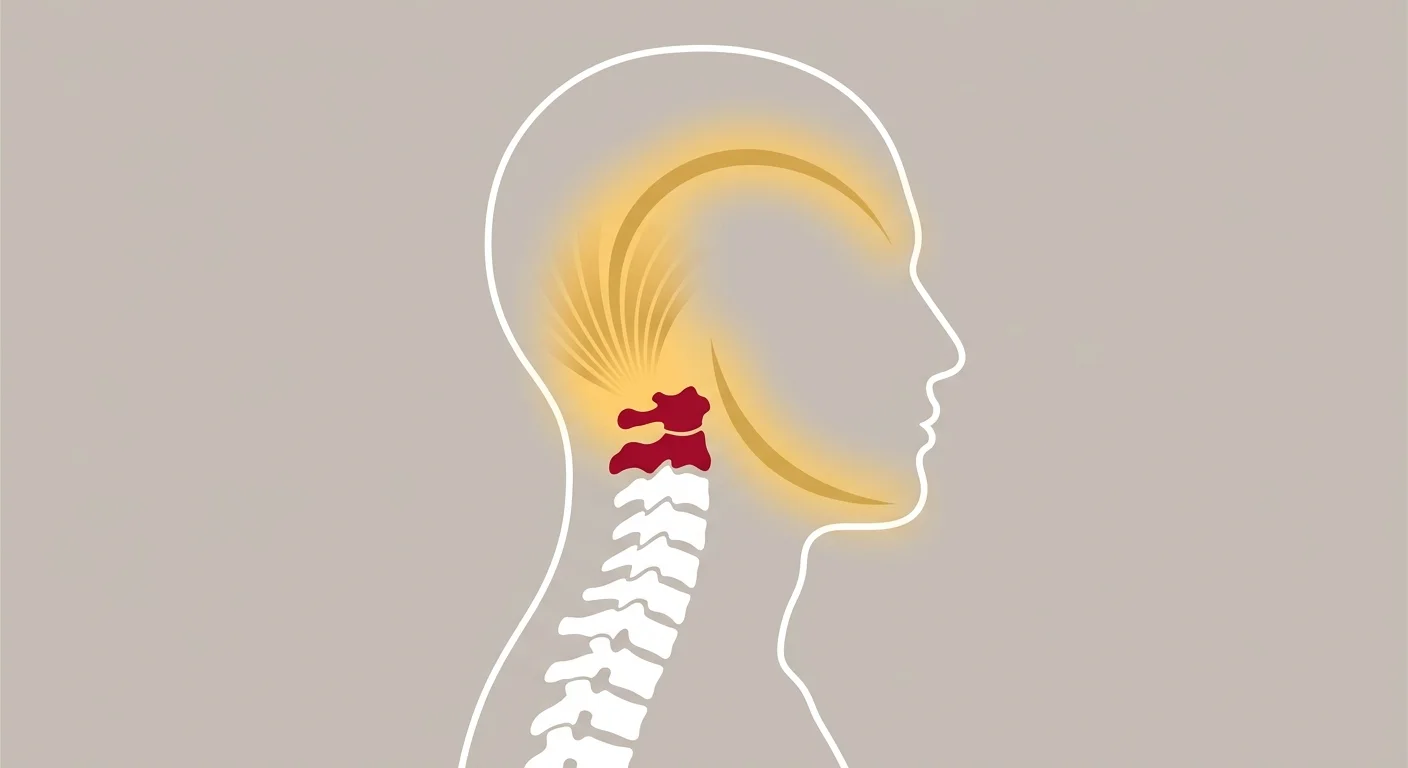
So the anatomy connects the neck to the jaw. Here's what happens when that connection breaks.
When C1 or C2 shifts out of position, the jaw pays for it — even though it had nothing to do with causing it.
Misalignment at C1 or C2 triggers an immediate soft-tissue response. The surrounding muscles, ligaments, and fascia tighten to protect the joint.
That tension doesn't stay local. It travels upward through the suboccipital muscles into the base of the skull. It travels downward through the cervical chain toward the shoulders.
The jaw sits right in the middle of that cascade. It absorbs what the cervical spine is generating.
More than 70% of TMD patients present with concurrent upper cervical spine dysfunction or neck pain.
That's not a coincidence. That's the predictable output of a system under structural stress — the cervical spine generating dysfunction, the jaw absorbing it.
The Postural Chain From Cervical Spine to Jaw Muscle Load
Here's where the postural chain enters the picture. When C1 or C2 shifts, the head compensates immediately.
It tilts. It rotates. It translates forward. The goal is hardwired — keep the eyes level with the horizon. It's a neurological reflex, not a choice.
But that compensatory position changes the angle at which the jaw hangs from the skull. And that changes everything about how the jaw muscles have to work.
When the head position changes because the cervical spine is off, the jaw muscles work harder just to close. They're compensating for a structural problem they didn't create.
The joint takes the load. The muscles stay braced. The pain follows.
And it keeps following — because the cause is still there.
That's why the nightguard helps for a week and then stops helping.
It repositions the jaw slightly. It doesn't change the cervical alignment driving the muscle overload. The structural load returns. The pain returns.
The alarm rings again — because no one touched the fire.
The Specific Symptom Patterns That Point Upward
There's a specific symptom cluster that points straight up the cervical spine.
Most patients don't recognize it as cervical. No one has ever framed it that way for them — because no one treating the jaw has ever looked at the neck.
- Jaw pain that gets worse when you move your neck
- Morning stiffness in both the jaw and the base of the skull at the same time
- TMJ clicking or locking that started after whiplash, a hard fall, or a prolonged stretch of poor posture
- Headaches that start at the back of the head and travel forward toward the temple and jaw
- Neck soreness that consistently shows up alongside jaw flare-ups
If you've described that pattern to a dentist and walked out with another appliance, you've felt that gap firsthand. The research on upper cervical spine alignment and jaw pain has been documenting it for years.
The jaw was examined. The cervical spine wasn't.
And the source of the problem was never in the room.
| C1-C2 Misalignment Pattern | Resulting Jaw / Face Symptom | Why the Jaw Gets Blamed |
|---|---|---|
| C1 rotational misalignment | Unilateral jaw pain, clicking, or locking on one side | The jaw joint on the affected side bears asymmetrical load due to compensatory head tilt — the joint takes the mechanical blame for a cervical imbalance |
| C2 compression with forward head posture | Jaw muscle tightness, difficulty opening the mouth fully, morning stiffness at the jaw and skull base | Forward head position shifts the mandible's resting angle, forcing masticatory muscles to overwork on every bite and during sleep — the jaw is the symptom site, not the source |
| Suboccipital muscle tension from C1-C2 instability | Radiating face pain, tooth sensitivity with no dental cause, pressure behind the eyes | Suboccipital tension compresses the upper cervical nerve roots, sending a confused signal into the trigeminal nucleus — the brainstem routes the alarm to the jaw because that's where the trigeminal nerve governs |
| Post-whiplash C1-C2 displacement | TMJ clicking or locking that appeared weeks after a neck injury, combined with occipital headaches | The trauma displaced the atlas before jaw symptoms emerged — because the injury was in the neck, not the jaw, the dental presentation months later looks like a separate condition when it isn't |
| Chronic cervical muscle guarding from sustained poor posture | Bilateral jaw tension, teeth clenching during sleep, daytime facial fatigue | Sustained cervical muscle guarding elevates systemic muscle tone throughout the head and jaw — the clenching pattern gets labeled bruxism and treated with a nightguard, while the cervical driver goes unexamined |
| C1-C2 lateral shift altering head-on-neck balance | Ear fullness, tinnitus, or jaw deviation when opening wide | The cervical shift changes the spatial relationship between the jaw and the skull base — structures in and around the ear and TMJ respond to that altered geometry, but the symptoms present in the face, not the neck |
Who This Article Is and Is Not For
Not every TMJ patient needs this conversation. But if you've been treated at the site of pain and never gotten a cervical assessment — you do.
NIDCR data puts TMJ disorders at 5% to 12% of US adults. That's not a niche problem. But that population hasn't been managed the same way — and the outcomes reflect it. Some have spent months chasing dental fixes. Some are just now asking whether the cervical spine has anything to do with it. What they share is this: they're still in pain, and they're willing to follow the clinical findings wherever those findings lead.
So here's the direct version. This model requires full participation, honest reporting, and a willingness to let the assessment lead. That clarity isn't a warning. It's a service.
The Patient This Model Is Built For
This model is built for the patient who followed every recommendation — and is still in pain.
They've worn the nightguard. Tried the splint. Cut out hard foods, slept on their side, taken the muscle relaxants. And every time the treatment ends, the pain comes back. They're not resistant to care — they're exhausted by care that doesn't hold. What they've never had is a full cervical assessment. That gap is exactly why dental-only TMJ approaches miss the source of the dysfunction entirely. The jaw kept getting examined. The cervical spine was never in the room.
And this is for the patient who can describe her symptoms clearly — and has spent years being told they're stress-related, exaggerated, or untreatable. NIDCR reports severe TMJ disorders are up to nine times more prevalent in women than in men. A significant share of that population has been dismissed, not assessed. "Unexplained" isn't a diagnosis. It means no one has looked at the cervical spine yet.
If You're Looking for a Quick Fix or a Protocol Replication, This Isn't It
Here's the other side of that.
If you're coming in with a list of what your last chiropractor did — and you need that sequence replicated before the assessment is finished — this isn't the right fit. The assessment drives the care plan here. Not your previous provider's habits. Not a diagnosis code. The clinical picture does. If that's a problem before we've even started, that's important information for both of us.
And if you're expecting one adjustment to resolve everything — that's not this either. The cervical spine didn't shift overnight. The jaw didn't start compensating last week. These patterns are established over months, sometimes years. Real resolution takes a care plan built from your clinical picture, adjusted when the picture changes, and followed through. Partial commitment produces partial results. That's not a policy. That's anatomy.
What an Upper Cervical Assessment for TMJ Actually Looks Like
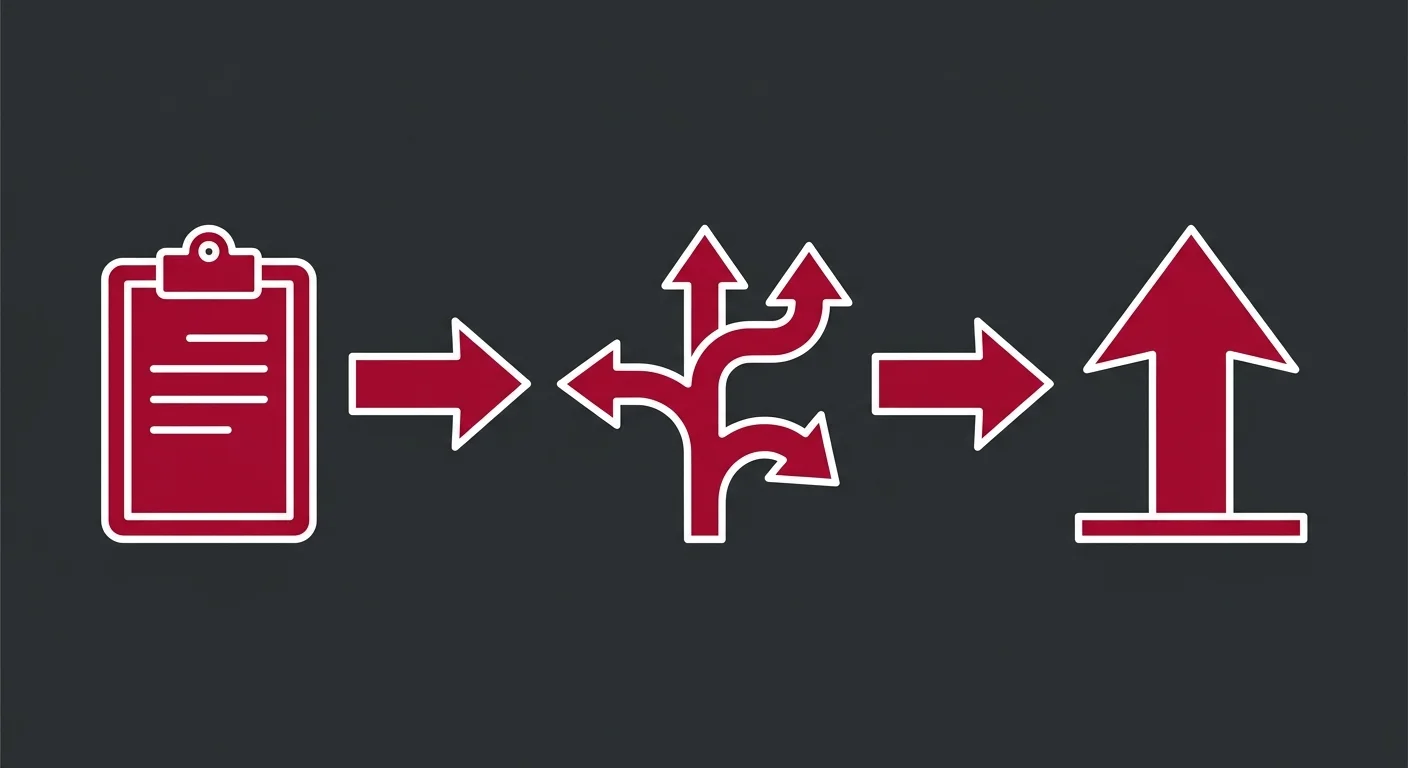
Most people who land in an upper cervical assessment have already done the dental route. They've got a drawer full of appliances and a jaw that still hurts.
What they haven't had is someone who looked at the cervical spine first.
That's the difference between an assessment-driven model and everything else. It doesn't begin with a protocol. It begins with a question: where is the dysfunction actually coming from?
The jaw gets examined. But so does the cervical spine — posture, range of motion, and the neurological patterns that connect those two systems. The sequence isn't incidental. It's the whole point.
The clinical evidence isn't ambiguous. Manual therapy directed at the cervical spine produced a significant reduction in jaw pain index scores — over 30% — according to NIH clinical findings.
That outcome doesn't come from treating the jaw. It comes from treating the source. The assessment found the dysfunction in the cervical spine. The care went there. The jaw responded.
Assessment Before Protocol: Why the Sequence Matters
Here's what separates a real assessment from a repeat performance of whatever came before.
Nothing is decided first.
Cervical range of motion gets evaluated first. Then C1 and C2 — checked for restriction, tenderness, and positional deviation. Then jaw range of motion, muscle tension patterns, and symptom provocation — all mapped against what the cervical picture already shows.
Each finding informs the next. That's not a formality. That's clinical logic. A care plan built before that sequence is finished isn't a care plan. It's a guess with a clipboard.
That sequence is exactly what determines whether chiropractic adjustments versus dental nightguards even becomes the right comparison to make.
When cervical findings drive the care decisions, the jaw symptoms stop being the target. They become the feedback mechanism. That's a different clinical conversation. And it's the one most TMJ patients have never had.
What Changes — and What Gets Reassessed — After Each Visit
An assessment-driven model doesn't lock in a plan and run it regardless of what the patient reports.
It reassesses. Every visit.
Here's why that matters. Sensory fibers from the trigeminal nerve and the upper cervical spinal nerves converge on the same second-order neurons in the trigeminocervical nucleus. That means the neurological picture changes as the cervical spine responds to care.
What was driving the symptoms in session one isn't necessarily driving them in session four. If the care plan doesn't account for that shift, it's already behind the patient's actual clinical reality.
When something isn't producing results after a reasonable number of visits, it changes. Not repeated.
Stopping to reassess isn't an admission that the first approach failed. It's the marker of a competent provider. At Touch of Wellness Chiropractic, that pivot isn't the exception — it's built into the model from the start.
The cervical spine didn't create this problem overnight. The care plan that resolves it has to be responsive enough to match the way the nervous system actually heals.
| Care Phase | Assessment Focus | What Changes If Results Are Insufficient |
|---|---|---|
| Initial Evaluation | Cervical range of motion, C1–C2 palpation for restriction and positional deviation, baseline jaw range of motion, and symptom provocation mapping | Assessment sequence is extended; additional cervical segments are examined before any care decisions are made |
| Session 1–3 Response Window | How jaw pain patterns shift relative to cervical findings; whether muscle tension in the masticatory system decreases as cervical alignment is addressed | Modality selection is adjusted; care plan is revised to reflect actual neurological response rather than the original assumption |
| Mid-Plan Reassessment | Cervical range of motion is re-measured and compared to baseline; symptom location and frequency are tracked against structural changes | If progress has plateaued, the care plan pivots — the stalled approach is not repeated |
| Ongoing Visits | Patient-reported symptom changes are integrated into every session; clinical findings from palpation and range of motion update the working picture continuously | Any visit where the clinical picture contradicts the current plan triggers an immediate reassessment — not a note for the next appointment |
| Discharge Planning | Functional restoration of jaw range of motion and cervical mobility; resolution or significant reduction of the original symptom cluster | If the cervical spine has responded but jaw symptoms persist, the care plan expands to address remaining contributing factors before discharge is considered |
Frequently Asked Questions
Understanding the mechanism is one thing. What to actually expect when you walk through the door is another conversation entirely.
If you've been chasing jaw pain through dental offices long enough, these are the questions nobody's sat down and answered yet.
How can a neck misalignment cause pain in my jaw?
The nerve pathways overlap. Sensory fibers from the trigeminal nerve and the upper cervical spinal nerves converge on the same neurons in the trigeminocervical nucleus. When C1 or C2 is misaligned, it fires signals into that shared pathway. The brain receives those signals as jaw pain — even though the jaw itself isn't the source. That's not a loose metaphor. It's a direct neurological connection. The spine is driving it. The face just feels it.
Why has my dentist's nightguard failed to resolve my TMJ pain?
Because it was aimed at the alarm. Not the fire. The nightguard reduces joint loading and limits grinding. Those are real benefits — for the jaw. But if C1 and C2 are misaligned and compressing nerve pathways into the trigeminocervical complex, the nightguard doesn't touch that. The source is two floors up. Over 70% of patients with temporomandibular disorders also present with upper cervical spine dysfunction, according to published research. The nightguard didn't fail because the dentist was wrong. It failed because it was aimed at the wrong structure.
What is the trigeminocervical complex and how does it link my spine to my jaw?
It's the region of the brainstem where nerve inputs from the jaw and the upper cervical spine converge. Sensory fibers from the trigeminal nerve — the cranial nerve supplying sensation to your face and jaw — synapse on the same second-order neurons as signals from the C1, C2, and C3 spinal nerves. That's the overlap. That's why a misalignment in the upper neck can produce pain that feels exactly like a jaw disorder. The brain can't always tell where the signal originated. It registers the location. Not the source.
Will an upper cervical chiropractic adjustment hurt my neck or jaw?
It's precise work. An assessment-driven chiropractic adjustment to the upper cervical spine isn't a high-velocity thrust to the neck. The assessment tells the clinician exactly what's restricted and in which direction. The adjustment addresses that specific finding — nothing else. Most patients describe the sensation as pressure followed by an immediate release of tension. Jaw symptoms often shift within the first few visits. Not because the jaw was touched, but because the cervical input driving the dysfunction changed. Manual therapy directed at the cervical spine produced a significant reduction in jaw pain index scores — over 30% — according to NIH research. That's what happens when the right structure finally gets treated.
How long does it take to see TMJ relief through chiropractic adjustments?
That depends on how long the cervical spine has been driving the dysfunction — and how your nervous system responds to care. There's no honest universal timeline. Anyone who hands you one before finishing an assessment isn't giving you a clinical prediction. They're giving you a sales number.
What the assessment can actually tell you: which cervical segments are involved, how restricted they are, and how your jaw responds after the first few adjustments. That early response shapes the care plan. It isn't decided before the evaluation is finished. It gets built from what your body shows.
Is this a chiropractic problem or a dental problem — and how do I know which one to treat first?
Often it's both. But not equally, and not at the same time. TMJ disorders affect between 5% and 12% of the US adult population, according to NIDCR data. A significant portion of those patients have both a dental component and a cervical component driving their symptoms. The question isn't which one to treat. It's which one to assess first. The cervical spine should come first — because if C1 or C2 misalignment is the primary driver, no dental appliance will resolve it. Once the cervical findings are mapped and addressed, any remaining jaw symptoms can be evaluated for dental co-management. Starting with the jaw and never checking the spine is how patients spend years cycling through appliances that help for a week.
The Jaw Is the Alarm. The Spine Is the Fire.
The alarm isn't the problem. It never was.
Every nightguard, every splint, every bite adjustment was aimed at the jaw — because that's where the pain lives. But the cervical spine was never in the room. It was in the building the whole time. Two floors up, running the damage.
Here's the loop that keeps patients stuck. C1 or C2 shifts. The trigeminocervical complex can't sort the signal. It fires through the trigeminal nerve. The patient feels it in the face. The dentist treats the face. The cervical spine keeps driving the dysfunction.
The loop doesn't break until someone assesses where it actually starts.
If you've been in that loop — treated, relieved, returned to pain, treated again — another appliance isn't the answer. An assessment that starts at the cervical spine and follows the findings wherever they lead is.
That's what individualized chiropractic care at Touch of Wellness Chiropractic actually means. Not a protocol handed over before the evaluation is finished. A clinical picture built from what your body is actually doing.
The fire is burning in the cervical spine. It doesn't go out when someone silences the alarm. It goes out when someone finally finds it.
Your jaw has been taking the blame long enough. If the cervical spine is driving the pain, that's where the answer starts.
Book your cervical assessment at Touch of Wellness Chiropractic
Copyright Touch of Wellness Chiropractic 2026
1101 W Jackson St, Suite A Morton, IL 61550
Web Design by iTech Valet