
(309) 321-8412 | 1101 W Jackson St, Suite A, Morton, IL 61550
(309) 321-8412 | 1101 W Jackson St, Suite A, Morton, IL 61550
Animal Chiropractic vs. NSAIDs for Horses: Restorative Care vs. Symptom Masking
NSAIDs and animal chiropractic are not two versions of the same answer. They are two fundamentally different decisions about what equine pain actually is.
NSAIDs — including phenylbutazone (Bute) — reduce inflammation and suppress pain signals. That is the full scope of what they do. They do not restore spinal alignment, repair joint mechanics, or stop cartilage from continuing to break down.
A horse that stops showing pain after a Bute course has not resolved anything. The signal went quiet. The structural condition did not.
Silence is not recovery.
Vertebral subluxations restrict the natural ranges of lateral and vertical spinal bending, altering joint kinematics throughout the horse's body. Those restrictions generate compensatory muscle guarding and altered gait patterns — often long before lameness is formally diagnosed. Suppressing the pain signal does not touch any of that. It removes the horse's primary communication tool while the dysfunction advances.
The systemic cost of long-term NSAID use compounds the problem. Phenylbutazone at a standard clinical dosage of 4.4 mg/kg/day for more than 4 to 10 consecutive days increases the risk of protein-losing gastropathy and mucosal erosion. Prolonged use is associated with gastric ulceration, right dorsal colitis, and renal papillary necrosis — organ-level consequences that accumulate while the horse appears comfortable.
Animal chiropractic works through a different mechanism entirely. Manual chiropractic adjustments applied to equine vertebral segments have been shown to increase mechanical nociceptive thresholds by up to 27% in treated areas — a measurable reduction in localized spinal pain through structural restoration, not chemical suppression.
The goal is not to silence the signal. It is to resolve the condition generating it.
For horse owners managing chronic movement restrictions, gait changes, or recurring back pain, the distinction between these two approaches is not academic. NSAIDs are a short-term inflammatory management tool. They are not a substitute for identifying and addressing the spinal and nervous system conditions driving equine discomfort in the first place.
Last Updated: August 18, 2026
- • What NSAIDs Actually Do Inside a Horse's Body
- • Why NSAIDs Alone Can Accelerate the Problem They're Managing
- • What AVCA-Certified Animal Chiropractic Actually Does
- • How to Evaluate Whether Your Horse Needs Structural Care vs. Pharmaceutical Management
- • NSAIDs vs. Animal Chiropractic: A Side-by-Side Clinical Picture
-
• Frequently Asked Questions
- • How does animal chiropractic differ from giving a horse daily NSAIDs like Bute?
- • Can long-term Bute use mask serious spinal problems in horses?
- • What are the main clinical risks of relying solely on NSAIDs for equine lameness?
- • How can I tell if my horse has a spinal subluxation before visible lameness shows up?
- • Is animal chiropractic safe to use alongside veterinary pharmaceutical care?
- • Stop Silencing the Signal — Start Addressing the Source
What NSAIDs Actually Do Inside a Horse's Body
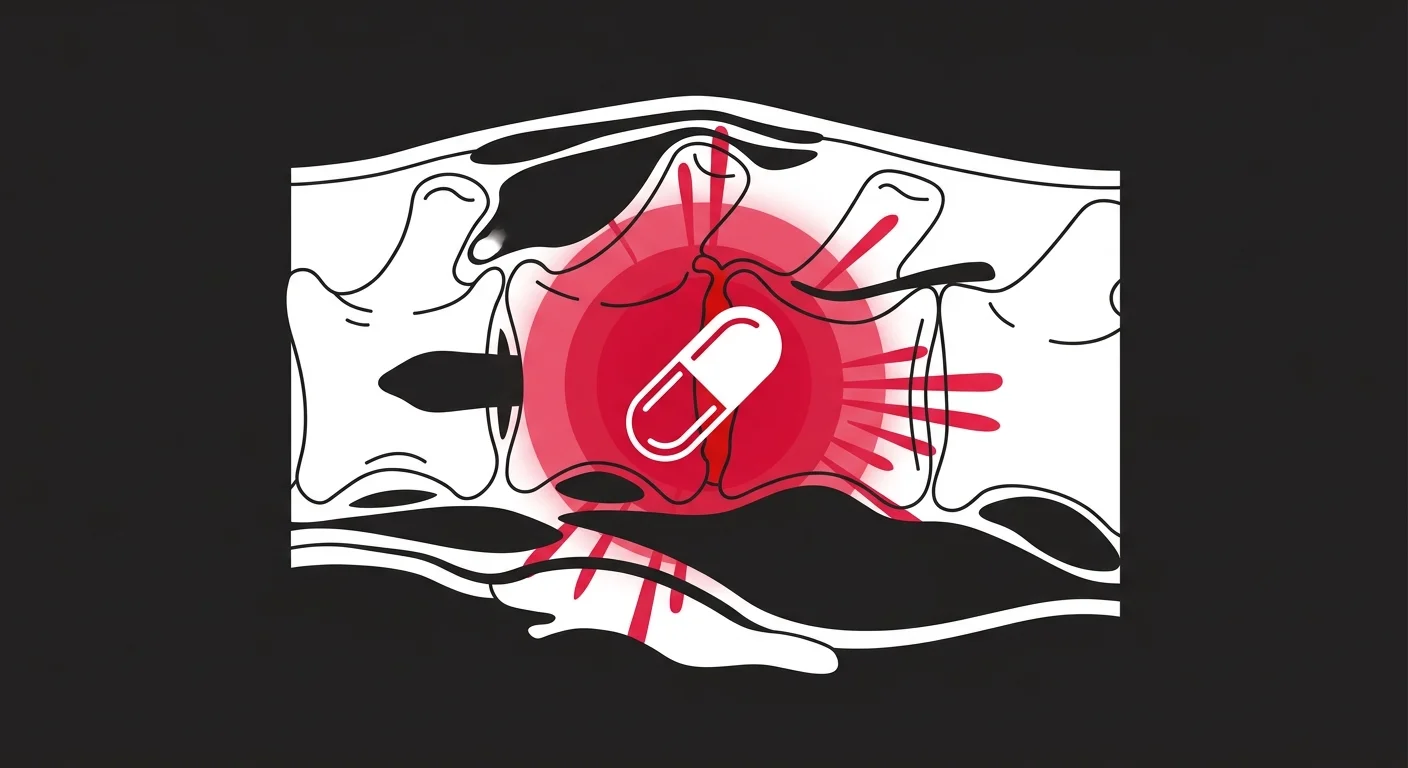
NSAIDs don't heal anything. That's not an indictment. It's a job description.
Phenylbutazone and other equine NSAIDs block the cyclooxygenase enzymes that produce prostaglandins — the chemical messengers that fire up the inflammation cascade. Block the messenger, and you block the sensation of pain.
So the horse moves more comfortably. The owner sees improvement. And the underlying condition keeps running exactly as before.
That's the clinical reality behind long-term bute usage issues: a quieted pain signal isn't the same as a resolved structural problem. NSAID protocols manage inflammatory pain. They don't repair cartilage. They don't halt joint degradation.
The horse that looks better on Bute isn't better. It's just stopped reporting the problem.
The Mechanism: Pain Suppression Without Structural Repair
Pain is a horse's only way of telling you something is wrong. NSAIDs silence that signal at the neurochemical level — and stop there.
They don't touch joint mechanics. They don't touch vertebral alignment. They don't touch the nerve pathways generating the distress.
So the structural wear keeps accumulating. Cartilage doesn't regenerate because the inflammation is suppressed. The joint keeps degrading under a horse that now moves freely enough to stay in work.
And that's often the worst-case outcome — not a horse that breaks down visibly, but a horse that keeps working while the damage compounds beneath a switched-off warning system.
Here's the thing. When horse owners start asking whether AVCA-certified care is actually safe, the deeper question isn't safety. It's whether there's a clinical path that addresses the source of equine discomfort rather than muting the symptom.
Knowing what pharmaceutical suppression deliberately leaves untouched is where that answer begins.
The Cookie-Cutter NSAID Protocol and Why It Fails the Horse
Most NSAID protocols run on a single logic: the horse is in pain, so reduce the pain. That's a template. It gets applied regardless of what's actually generating the discomfort.
Back pain, joint dysfunction, vertebral subluxation — same pharmaceutical response. The presenting condition doesn't change the prescription.
The risks of that protocol aren't hypothetical. NIH research on phenylbutazone toxicity puts it plainly: a standard clinical dosage of 4.4 mg/kg/day for more than 4 to 10 consecutive days significantly increases the risk of protein-losing gastropathy and mucosal erosion.
NIH adverse effect documentation confirms what accumulates alongside those numbers — gastric ulceration, right dorsal colitis, and renal papillary necrosis. Systemic consequences that compound while the horse appears comfortable enough to stay in full work.
The cookie-cutter protocol doesn't ask what's actually wrong. It asks only whether the pain signal can be reduced — and then it stops there.
That's not a care plan. That's a workaround that trades long-term structural health for short-term behavioral compliance.
| NSAID Drug | Common Use in Horses | Primary Mechanism | What It Does Not Address |
|---|---|---|---|
| Phenylbutazone (Bute) | Acute and chronic musculoskeletal pain, lameness, post-injury inflammation | Blocks cyclooxygenase enzymes to suppress prostaglandin-driven inflammation and pain signaling | Spinal alignment, vertebral subluxation, joint kinematics, cartilage integrity, nerve pathway function |
| Flunixin meglumine (Banamine) | Visceral pain, colic, soft tissue inflammation | Inhibits prostaglandin synthesis to reduce pain perception and systemic inflammatory response | Structural joint mechanics, compensatory muscle guarding, progressive cartilage degradation |
| Meloxicam | Osteoarthritis pain management, post-surgical discomfort | Selectively inhibits COX-2 enzymes to reduce localized inflammatory pain with a narrower systemic profile | Underlying joint degeneration, vertebral mobility restrictions, root-cause movement dysfunction |
| Firocoxib (Equioxx) | Chronic osteoarthritis and long-term pain management in horses | Targeted COX-2 inhibition designed to limit gastrointestinal side effects while suppressing pain signals | Cartilage repair, spinal nerve interference, biomechanical compensation patterns already in progress |
Why NSAIDs Alone Can Accelerate the Problem They're Managing
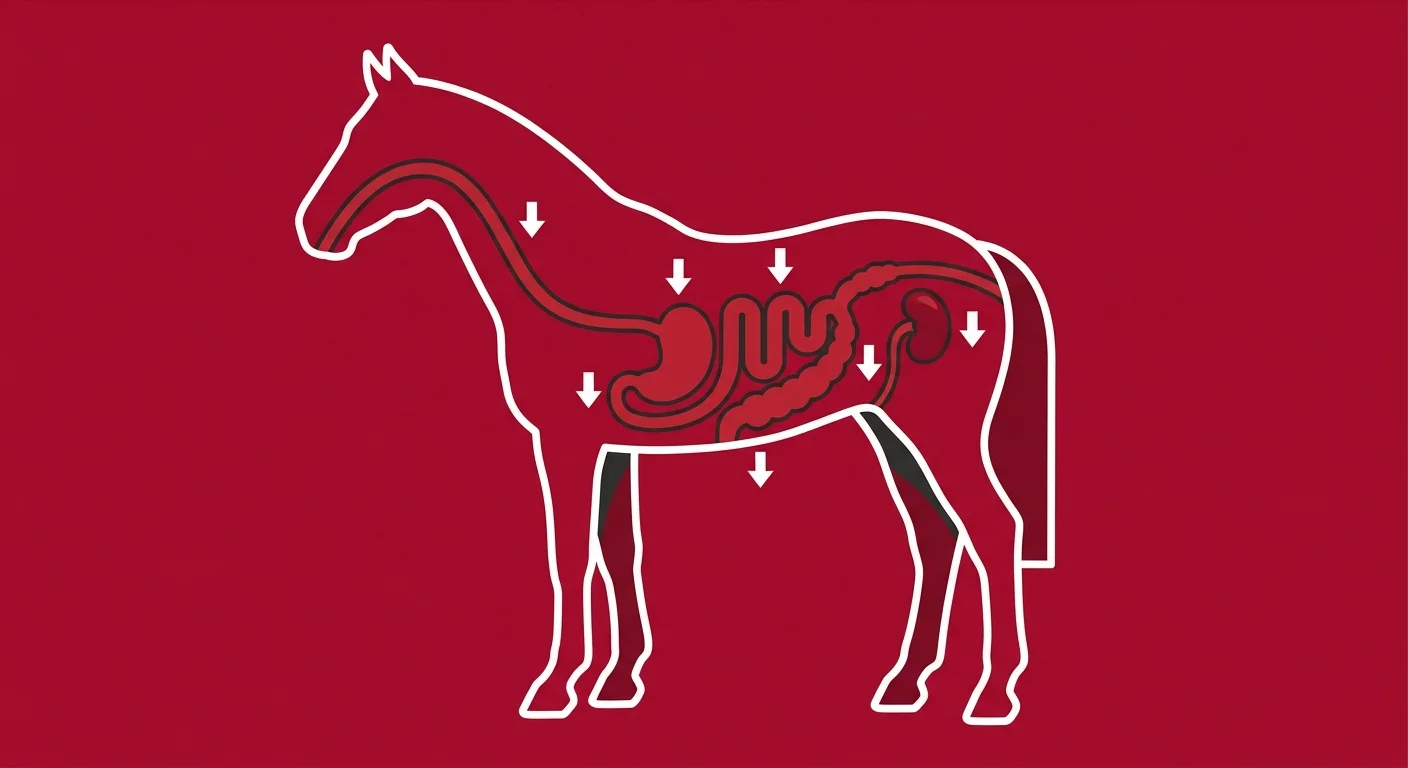
Suppressing pain and resolving pain are not the same thing. The Bute bottle doesn't make that distinction. Most protocols don't either.
When a horse looks comfortable after an NSAID course, that comfort is chemical. Not structural. The joint degradation hasn't paused. Cartilage isn't regenerating. The subluxation hasn't corrected itself. The horse has simply lost the ability to report the problem.
That matters enormously when the horse stays in work. A quieted pain signal doesn't mean the horse is ready for full load. It means the warning system is offline while structural wear keeps accumulating underneath.
How Pain Masking Lets Structural Damage Compound
And here's where pharmaceutical-first protocols create their own compounding problem.
NSAIDs manage inflammatory pain. They don't repair degenerated cartilage or stop joint degradation — University of Minnesota Extension research on equine arthritis makes that distinction explicit. The horse moving freely on Bute isn't moving freely because the joint is healthy. It's moving freely because the neurochemical signal that would trigger guarding, compensation, or resistance has been blocked. The underlying mechanics are unchanged. And because the horse now moves through the full range of that damaged joint without restriction, structural wear often compounds faster than it would have without the intervention.
That connects directly to the early signs of equine back pain problem. Compensation patterns develop long before the clinical picture becomes obvious. Masking the pain signal doesn't stop those patterns from forming. It removes the most visible indicator that they're progressing — which means by the time someone notices something is wrong, the structural damage has had weeks or months of uninterrupted runway.
The Toxicity Timeline: What Prolonged Use Does to Organ Systems
And that's before you get to what's happening internally. The structural damage is problem one. Organ toxicity is problem two.
At a standard clinical dosage of 4.4 mg/kg/day, phenylbutazone starts escalating the risk of protein-losing gastropathy and mucosal erosion within 4 to 10 consecutive days. That's not a fringe scenario. That's the documented risk profile of routine administration at a dose most owners would consider normal.
Prolonged use turns that risk into organ-level consequences: gastric ulceration, right dorsal colitis, renal papillary necrosis. FDA safety documentation on equine NSAIDs doesn't frame these as edge cases. They're the documented endpoints of long-term pharmaceutical dependence. The horse looks comfortable. The organ damage accumulates silently. That's the complete clinical picture of a protocol that was never designed to be a permanent solution.
| Duration of NSAID Use | Gastrointestinal Risk Level | Renal Risk Level | Structural Damage Status |
|---|---|---|---|
| Short-term use (1–3 days) | Low — within standard clinical tolerance | Low — within standard clinical tolerance | Ongoing — structural damage and subluxations continue regardless of pain suppression |
| 4–10 consecutive days at 4.4 mg/kg/day | Escalating — mucosal erosion and protein-losing gastropathy risk increases | Escalating — early renal stress threshold reached | Ongoing — cartilage degradation and joint wear continue unaddressed |
| Prolonged use beyond 10 days | High — gastric ulceration and right dorsal colitis documented | High — renal papillary necrosis documented | Ongoing — warning system suppressed while structural deterioration compounds under full workload |
What AVCA-Certified Animal Chiropractic Actually Does
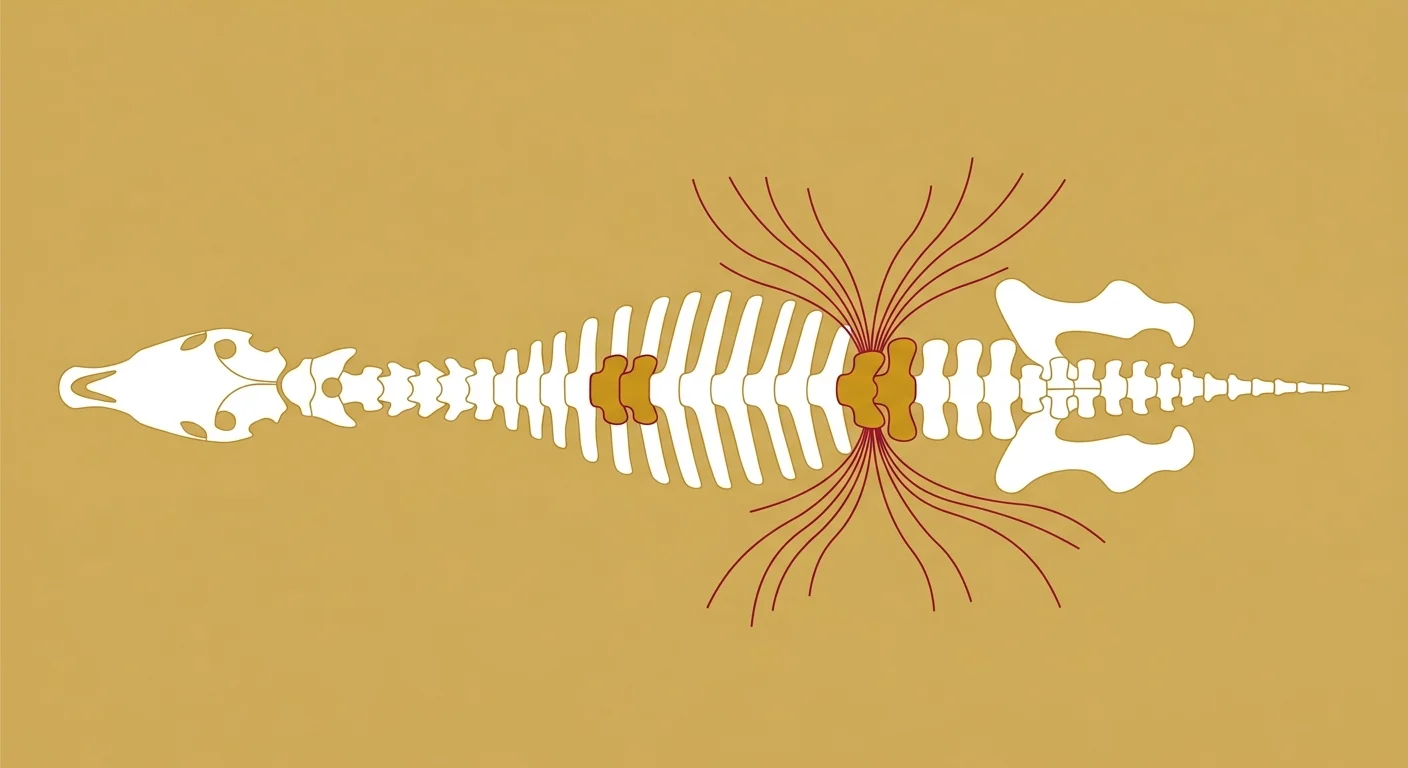
Animal chiropractic doesn't manage the signal. It goes after whatever is generating it.
That's not a subtle distinction — it's the entire clinical argument. And it's why AVCA certification isn't optional when you're talking about adjusting a horse's spine.
The AVCA — the American Veterinary Chiropractic Association — is not a wellness stamp you earn at a weekend seminar. The credential requires structured clinical training in vertebral subluxation identification, joint kinematic assessment, and targeted adjustment protocols specific to equine anatomy.
That training is what separates a practitioner who can read a horse's structural picture from one who's applying force and hoping.
NSAIDs quiet the signal. Certified animal chiropractic care works on the structure generating it.
A horse that appears comfortable isn't the same as a horse that can move correctly. That gap is the whole problem.
How Spinal Subluxations Drive Equine Movement Dysfunction
Vertebral subluxations don't create a single isolated problem. They alter joint kinematics across the entire axial skeleton — killing the natural ranges of lateral and vertical spinal bending that correct movement depends on.
One restricted segment shifts the load. The whole structural picture changes.
That restriction doesn't stay local. The horse compensates — building muscle guarding patterns, redistributing load across adjacent segments, developing altered gait signatures long before lameness shows up on a diagnostic.
And here's the problem: by the time the compensation is visible, it's already structural. The horse hasn't been coping for a week. It's been coping for months.
Here's the thing about those early gait shifts and behavioral changes: they're not random. They're the horse's structural picture communicating through movement before the clinical diagnosis catches up.
Suppressing the pain signal doesn't stop that communication from being necessary. It just removes the clearest version of it. The compensation keeps building. You've simply lost your best indicator that it's happening.
What the Chiropractic Adjustment Targets — and What Changes After
A chiropractic adjustment to a restricted equine vertebral segment targets the joint directly. It restores range of motion. It reduces mechanical load on the surrounding soft tissue. It reestablishes the nerve pathway communication that subluxation cuts off.
That's the clinical target. Not the pain signal — the structure that's generating it.
And the outcomes are measurable. According to NIH-published equine research, manual chiropractic adjustments have been shown to increase mechanical nociceptive thresholds by up to 27% in treated vertebral segments.
That's a quantifiable reduction in localized spinal pain. Achieved through structural restoration — not chemical suppression.
After a properly administered adjustment, the joint moves. The nerve pathway functions. The horse stops compensating around a restriction that was quietly running the whole structural picture into the ground.
The calm that follows isn't masking. It's the absence of the condition that was producing the signal. That's a different kind of quiet — and it's the only kind that holds.
Who Should Not Be Adjusting Your Horse
Not everyone calling themselves an equine therapist is qualified to adjust a horse's spine.
That's not a minor credential gap. It's a safety issue.
An unqualified practitioner adjusting a horse's spine can miss the actual subluxation entirely — applying force to the wrong segment, failing to account for the compensatory patterns the horse has already built over months.
That's not a neutral outcome. At best, it's a missed clinical opportunity. At worst, it's an iatrogenic injury on a horse that was already compensating.
AVCA certification means the practitioner completed structured clinical training in equine anatomy, subluxation identification, and adjustment protocols. That's not a marketing detail — it's the floor.
When you're considering individualized chiropractic adjustments for a horse, the credential is what separates a clinical intervention from an unqualified guess. Not an optional extra. The minimum starting point.
| Intervention Type | Structural Target | Pain Mechanism Addressed | Certification or Credential Required | Effect on Underlying Joint Condition |
|---|---|---|---|---|
| AVCA-Certified Chiropractic Adjustment | Restricted vertebral segment and associated joint | Mechanical nociception from subluxation-driven joint restriction | AVCA (American Veterinary Chiropractic Association) certification required | Restores joint range of motion and reduces structural load on surrounding soft tissue — underlying restriction directly addressed |
| NSAID Administration (e.g., phenylbutazone) | Systemic inflammatory signaling pathways | Inflammatory pain perception — the signal is quieted, not the source | Veterinary prescription authorization required | No change to underlying joint condition — cartilage wear and subluxation continue while pain reporting is suppressed |
| Passive Rest Protocol | None — no targeted structural intervention | Reduces load temporarily but does not address joint dysfunction or nerve pathway disruption | No credential required | Underlying subluxation and compensatory muscle patterns remain intact — condition may progress undetected during rest period |
| General Equine Massage / Soft Tissue Work | Superficial musculature and fascia | Addresses secondary muscle guarding and tension — does not target the vertebral subluxation generating those patterns | Varies by jurisdiction — no standardized clinical credential required for soft tissue work alone | Compensatory muscle patterns may temporarily ease, but the structural source of guarding is not corrected |
How to Evaluate Whether Your Horse Needs Structural Care vs. Pharmaceutical Management
Here's the question most owners never ask: is your horse comfortable — or has it just stopped being able to tell you it isn't?
That's the whole frame. NSAIDs suppress the signal. Structural care addresses what's generating it. One quiets the horse. The other restores it.
Figuring out which path fits starts with watching the horse. Before reaching for either option. Signs pointing toward structural dysfunction look different from signs pointing toward acute inflammatory pain. Conflating them is exactly how the wrong protocol gets applied — and then repeated until someone finally asks why it isn't working.
Behavioral and Gait Signs That Point to a Structural Root Cause
Structural root causes don't announce themselves with obvious lameness. They communicate through subtlety — reluctance to bend laterally on one rein, uneven muscle development across the topline, resistance to collection that wasn't there six months ago. Equine back pain generates compensatory muscle spasms and altered gait patterns well before lameness is formally diagnosed. By the time the lameness shows up, the compensation has already been running for months.
Vertebral subluxation restricts the natural ranges of lateral and vertical spinal bending. So the horse that consistently falls out on a circle, rushes downhill, or braces through transitions isn't being difficult. It's working around a joint that isn't moving the way it should. That's a structural problem. Not a training problem. Treating it as a training problem is how it gets worse.
Muscle guarding is an early signal that's easy to miss when you're not actively tracking. When compensatory spasm patterns develop, the gait shifts quietly — often before any formal diagnosis is on the table. Owners who follow post-adjustment movement tracking protocols between sessions catch structural problems early instead of discovering them after compensation has become permanent. The pattern matters. Most owners skip that step.
When Pharmaceutical Management Is the Right Call — and When It Isn't
Pharmaceutical management has a legitimate role. Acute injury, post-surgical recovery, short-term pain control during a diagnostic workup — those are appropriate contexts for NSAID use. That's not the argument.
Where it stops being appropriate is when it becomes the plan instead of the bridge. NSAIDs don't repair degenerated cartilage or halt joint degradation. A horse managed long-term on anti-inflammatories isn't being treated — it's being buffered against reporting a condition that keeps progressing underneath. That's not a care plan. That's a delay with side effects.
If a horse needs ongoing pharmaceutical support just to hold workable comfort levels, that's a clinical signal — not a maintenance schedule. It means the structural source of the discomfort hasn't been found or addressed. That's where a structural assessment belongs in the conversation. Not as a replacement for veterinary oversight. As a parallel investigation into what the pharmaceutical protocol is currently covering up.
What This Practice Is Not For
This isn't for owners who want a one-appointment resolution. And it isn't for owners who need a provider to replicate whatever the last practitioner did — on the same schedule, without asking whether it's actually working.
And it isn't for owners who won't track their horse's response between sessions. Structural care is a process. It requires observation, honest reporting, and a willingness to follow a clinical lead built from what the horse actually presents — not what the owner walked in expecting. Partial engagement produces partial results. That's not a warning. That's just how it works.
If you want a provider who runs the same protocol indefinitely and calls it care — that's not what happens at Touch of Wellness Chiropractic. The assessment drives the plan. If something isn't producing results, the plan changes. That's the standard here, and it isn't negotiable.
| Observable Sign in Horse | Likely Underlying Cause | NSAID-Appropriate? | Structural Assessment Warranted? |
|---|---|---|---|
| Sudden onset of swelling, heat, or acute lameness following injury or hard work | Acute inflammatory response — tissue damage or joint trauma | Yes — short-term NSAID use is appropriate to manage acute inflammation during diagnosis | Not immediately — resolve acute phase first; structural assessment appropriate once inflammation stabilizes |
| Reluctance to bend on one rein or consistent resistance to lateral flexion | Vertebral subluxation restricting lateral spinal range of motion | No — anti-inflammatories won't restore restricted joint movement | Yes — consistent unilateral resistance is a primary indicator of structural dysfunction |
| Uneven topline muscle development or progressive muscle atrophy on one side | Compensatory muscle guarding from spinal pain generating asymmetrical loading | No — NSAIDs do not address the neuromuscular compensation pattern driving asymmetry | Yes — asymmetrical muscle development reflects altered movement patterns that structural care can address |
| Performance decline — rushing downhill, bracing through transitions, reluctance to collect | Joint restriction limiting the range of vertical and lateral spinal movement required for collected work | No — pain suppression does not restore the mechanical range of motion the horse needs | Yes — performance-specific movement restrictions are a clear structural assessment indicator |
| Horse requires ongoing NSAIDs to maintain workable comfort levels with no acute injury present | Chronic structural source of discomfort being buffered — not treated — by pharmaceutical management | No — long-term NSAID use without a structural diagnosis is managing symptoms of an unresolved condition | Yes — pharmaceutical dependency without a structural explanation is a direct referral signal |
| Post-surgical recovery or acute injury with confirmed tissue damage | Tissue repair process requiring short-term pain and inflammation control | Yes — NSAIDs serve a legitimate bridging role during the acute recovery window | Pending — structural assessment appropriate once the horse is cleared by the veterinarian for manual therapy |
| Subtle gait changes before lameness — shortened stride, altered footfall, or irregular rhythm under saddle | Early compensatory gait adaptation from spinal or joint dysfunction preceding formal lameness diagnosis | No — early compensatory gait shifts are structural signals, not inflammatory ones | Yes — catching these patterns before formal lameness appears is exactly where structural intervention has the most value |
NSAIDs vs. Animal Chiropractic: A Side-by-Side Clinical Picture

Here's what each approach actually does — and where each one stops.
NSAIDs reduce inflammation and suppress pain signals. That's the job — and it's a legitimate one when the goal is short-term relief during an acute event, a diagnostic window, or a post-surgical recovery. But suppressing the signal doesn't correct the structure generating it.
A horse that stops showing pain because the signal has been chemically blocked is not the same as a horse that has healed.
Silence isn't recovery.
Animal chiropractic works from a different premise. It finds where restriction exists in the spinal column. It applies a targeted adjustment to the affected vertebral segment. And it restores the joint mechanics and nerve pathway function that subluxation has disrupted.
The outcome isn't chemical. It's structural.
And structural restoration doesn't carry the organ risk that long-term pharmaceutical use does.
Reading the Comparison: What the Data Actually Shows
The data makes this hard to argue with. Prolonged NSAID use at a standard clinical dosage of 4.4 mg/kg/day — applied for more than 4 to 10 consecutive days — significantly escalates the risk of mucosal erosion and protein-losing gastropathy.
The FDA's safety documentation on equine NSAIDs identifies right dorsal colitis, gastric ulceration, and renal papillary necrosis as documented endpoints of long-term use. These aren't edge cases.
They're the clinical trajectory of a short-term protocol applied chronically.
On the other side: NIH-published equine research shows that manual chiropractic adjustments increase mechanical nociceptive thresholds by up to 27% in treated vertebral segments.
That's a measurable, quantifiable reduction in localized spinal pain — achieved by restoring the structure, not suppressing the report of its dysfunction.
One approach quiets the horse. The other restores it.
This isn't a matter of preference. It's a matter of capability.
NSAIDs can't restore joint mobility. Animal chiropractic can't manage acute systemic inflammation. Conflating the two — or substituting one for the other without clinical rationale — is exactly where horses end up in the wrong protocol.
The Role of Each Approach in a Sound Care Protocol
NSAIDs have a role. Acute injury, post-surgical pain management, short-term inflammatory control during a diagnostic workup — those are real applications. Nobody's dismissing them.
But that role ends where chronic management begins.
When a horse requires ongoing pharmaceutical support just to maintain workable comfort levels, the drug isn't the plan. It's the signal that the structural source hasn't been found or addressed.
That's the inflection point where a structural assessment belongs in the conversation.
The two approaches aren't adversarial. They're sequential.
Short-term pharmaceutical control buys the time and comfort margin to assess what's structurally driving the discomfort. Animal chiropractic addresses that structural driver directly.
A horse managed on NSAIDs indefinitely — without a structural investigation — isn't receiving a complete care protocol. It's receiving half of one. The half that quiets the horse. Not the half that restores it.
| Clinical Category | NSAID Protocol | AVCA-Certified Animal Chiropractic | Combined Protocol Potential |
|---|---|---|---|
| Primary Mechanism | Suppresses inflammatory signaling and pain reporting through chemical intervention | Restores vertebral joint mechanics and nerve pathway function through targeted structural adjustment | Short-term pharmaceutical relief creates the comfort margin needed for accurate structural assessment |
| What It Addresses | Inflammatory pain signals — the report of dysfunction, not its structural source | Vertebral subluxation, restricted joint mobility, and the compensatory patterns that develop around them | Acute inflammatory control followed by structural root-cause correction once the horse is stable |
| What It Cannot Do | Repair degenerated cartilage, restore joint mobility, or correct spinal subluxation | Manage acute systemic inflammation or replace veterinary oversight during injury recovery | Neither approach alone constitutes a complete care protocol for a horse with both structural and inflammatory components |
| Appropriate Clinical Window | Acute injury, post-surgical recovery, short-term pain relief during diagnostic workup | Chronic movement restriction, recurring performance decline, structural compensation patterns, and post-pharmaceutical follow-through | NSAID use as a bridge; chiropractic assessment and care as the structural investigation that follows |
| Risk Profile Over Time | Escalating gastrointestinal, renal, and mucosal risks with prolonged or repeated administration | No systemic organ risk; adverse outcomes associated primarily with unqualified application or missed contraindications | Risk is managed by limiting pharmaceutical duration and transitioning to structural care as soon as the clinical picture allows |
| Signal vs. Source | Quiets the horse — pain reporting is reduced or eliminated while the underlying structural dysfunction continues | Addresses what's generating the signal — mobility and nerve function are restored rather than chemically suppressed | Signal suppression buys time; structural restoration is the outcome the protocol should be working toward |
| Monitoring Requirement | Bloodwork and gastrointestinal monitoring recommended with extended use; behavior change may be masked by drug effect | Ongoing observation of movement quality, response to work, and behavioral indicators between sessions | Active owner tracking across both protocols is essential — a horse that appears comfortable may be chemically quieted, not structurally restored |
Frequently Asked Questions
Here are the questions that actually come up. And the direct answers — no hedging.
These aren't theoretical questions. They come from owners who've watched a horse go quiet on Bute and couldn't tell whether that meant better — or just silenced.
How does animal chiropractic differ from giving a horse daily NSAIDs like Bute?
NSAIDs suppress the pain signal. That's the whole mechanism — and it's a legitimate one for short-term use. But suppressing the signal doesn't change the structure generating it.
Animal chiropractic works from the opposite direction. A targeted adjustment identifies where restriction exists in the spinal column and restores the joint mechanics and nerve pathway function that subluxation has disrupted. The outcome is structural. Not chemical.
One quiets the horse. The other addresses what's making the horse uncomfortable in the first place. That's not a subtle distinction — it's the entire clinical argument.
Can long-term Bute use mask serious spinal problems in horses?
Yes. That's exactly what chronic NSAID management does — and it's the part most owners don't recognize until the compensation has already become structural.
Equine back pain produces compensatory muscle guarding and altered gait patterns long before a formal lameness diagnosis. When a horse runs on continuous NSAIDs, those early movement signals get chemically suppressed. The subluxation keeps progressing. Joint restriction keeps accumulating. The horse just can't report it accurately anymore.
A horse that stops showing pain on Bute hasn't healed. It's a horse that can no longer tell you how it feels. Silence isn't recovery — and that distinction matters enormously when the horse stays in full work.
What are the main clinical risks of relying solely on NSAIDs for equine lameness?
The organ risk is documented. The FDA identifies right dorsal colitis, gastric ulceration, and renal papillary necrosis as clinical endpoints of prolonged equine NSAID use. These aren't rare outcomes — they're the documented trajectory of a short-term protocol applied chronically.
But there's a structural cost that's harder to see. NSAIDs don't restore degenerated cartilage or stop joint degradation. A horse managed long-term on anti-inflammatories isn't being treated for the underlying condition. It's being buffered against reporting it — while that condition keeps progressing.
So you get both risks at once. The pharmaceutical risk. And the clinical gap where the structural source of the discomfort goes uninvestigated. That's not a complete care protocol. That's one half of one.
How can I tell if my horse has a spinal subluxation before visible lameness shows up?
Visible lameness is a late signal. The early ones show up in how a horse moves through work — not how dramatically it limps.
Vertebral subluxation restricts lateral and vertical spinal bending. That shows up as a horse that consistently falls out on a circle, braces through transitions, rushes downhill, or loses topline engagement in ways that don't respond to training. Compensatory muscle guarding develops before formal lameness is diagnosed — and that guarding changes gait patterns in ways a consistent observer will catch before anyone else does.
Log what you see after rides. Stiffness patterns, resistance, shifts in topline engagement. Catching a structural problem early versus discovering it after the compensation has compounded — that difference almost always comes down to the quality of observation happening between sessions.
Is animal chiropractic safe to use alongside veterinary pharmaceutical care?
Yes — and the two approaches aren't adversarial. They're sequential.
NSAIDs have a legitimate role in acute injury, post-surgical recovery, and short-term inflammatory control during a diagnostic window. Animal chiropractic addresses the structural source of the restriction the pharmaceutical protocol is quieting. Used together under veterinary oversight, they serve different clinical functions without competing.
The concern isn't combining them. It's substituting one for the other without clinical rationale. A horse on long-term NSAIDs without a structural investigation isn't receiving a complete care protocol. It's receiving the half that quiets the report — without the half that identifies what's being reported. Animal chiropractic fills that gap. It doesn't replace veterinary care. It completes the clinical picture.
Stop Silencing the Signal — Start Addressing the Source
A horse that stops showing pain hasn't healed. It's stopped reporting.
That's the whole argument. And it's the one most pharmaceutical protocols are built to avoid confronting.
Silence isn't recovery.
Long-term NSAID use removes the horse's ability to communicate that something is wrong. The subluxation is still there. The joint restriction is still progressing. The compensatory patterns are still accumulating. The horse just can't tell you anymore.
Animal chiropractic works from the opposite clinical premise. Find the structural source. Restore the mechanics. Let the nervous system report accurately again.
That's not a philosophy preference. That's a difference in what each approach is actually capable of doing — and that capability gap doesn't close with more Bute.
If your horse has been managed on anti-inflammatories long enough that you're no longer sure whether it's comfortable or simply quieted — that's the question worth sitting with.
At Touch of Wellness Chiropractic, the assessment starts with what the horse actually presents. Not what the previous protocol assumed. Not what the last provider defaulted to.
The signal your horse has been sending through every gait shift, every resistance, every compensatory pattern — it deserves a real answer, not another round of silence.
If Bute has made your horse quieter but you're not sure that means better — that's the question worth asking out loud. Quiet isn't the same as resolved. A structural assessment at Touch of Wellness Chiropractic starts with what the horse is actually showing, not what the pain signal has been turned down to.
Copyright Touch of Wellness Chiropractic 2026
1101 W Jackson St, Suite A Morton, IL 61550
Web Design by iTech Valet