
(309) 321-8412 | 1101 W Jackson St, Suite A, Morton, IL 61550
(309) 321-8412 | 1101 W Jackson St, Suite A, Morton, IL 61550
Is Animal Chiropractic Safe? What AVCA Certification Actually Means
Animal chiropractic is safe when performed by a licensed veterinarian or a licensed chiropractor with formal, species-specific training. Without that credential baseline, the neurological and biomechanical risks are real.
The American Veterinary Chiropractic Association (AVCA), established in 1989, is the credentialing authority for this field. AVCA certification requires a minimum of 210 hours of postgraduate education beyond an existing veterinary or chiropractic degree. That curriculum covers animal anatomy, spinal biomechanics, and the specific adjustive forces appropriate to each species. A spinal adjustment on a dog is not the same as one on a horse. Neither is the same as one on a human.
Cornell University College of Veterinary Medicine specifies that animal chiropractic must only be performed by a licensed veterinarian or a licensed chiropractor with formal animal-specific training — specifically to prevent structural damage. Spinal adjustments on animals use high-velocity, low-amplitude forces that must remain within the normal anatomical range of joint motion. Exceeding those limits risks ligamentous injury. A practitioner without AVCA certification has not been trained to identify where those limits are.
Clinical research on equine spinal mobility documents measurable improvement in spinal range of motion and mechanical nociceptive thresholds when precise adjustive forces are applied. Force parameters, angle, and species anatomy are all variables that trained practitioners account for. None of it is improvised.
The University of Illinois College of Veterinary Medicine classifies animal chiropractic under integrative medicine — positioned alongside rehabilitation services, not as a standalone alternative. Animal chiropractic care functions as a complement to a primary veterinarian's treatment plan, not a replacement for it.
AVCA certification is the minimum standard for safe animal chiropractic — not a credential to verify after the fact, but the prerequisite that makes safe care possible in the first place.
Last Updated: August 18, 2026
- • What Animal Chiropractic Actually Does — And What It Doesn't
- • Why Provider Credentials Aren't Optional in Animal Chiropractic
- • What AVCA Certification Actually Requires
- • Who Should — And Shouldn't — Receive Animal Chiropractic Care
-
• Frequently Asked Questions About Animal Chiropractic Safety
- • Is animal chiropractic safe for dogs and horses?
- • What qualifications does an AVCA-certified animal chiropractor have?
- • How does animal chiropractic care fit with my primary veterinarian's plan?
- • Are there risks if a non-certified practitioner adjusts my pet?
- • What should I expect during my animal's first chiropractic assessment?
- • Is animal chiropractic the same as what a human chiropractor does on people?
- • The Real Safety Standard in Animal Chiropractic
What Animal Chiropractic Actually Does — And What It Doesn't
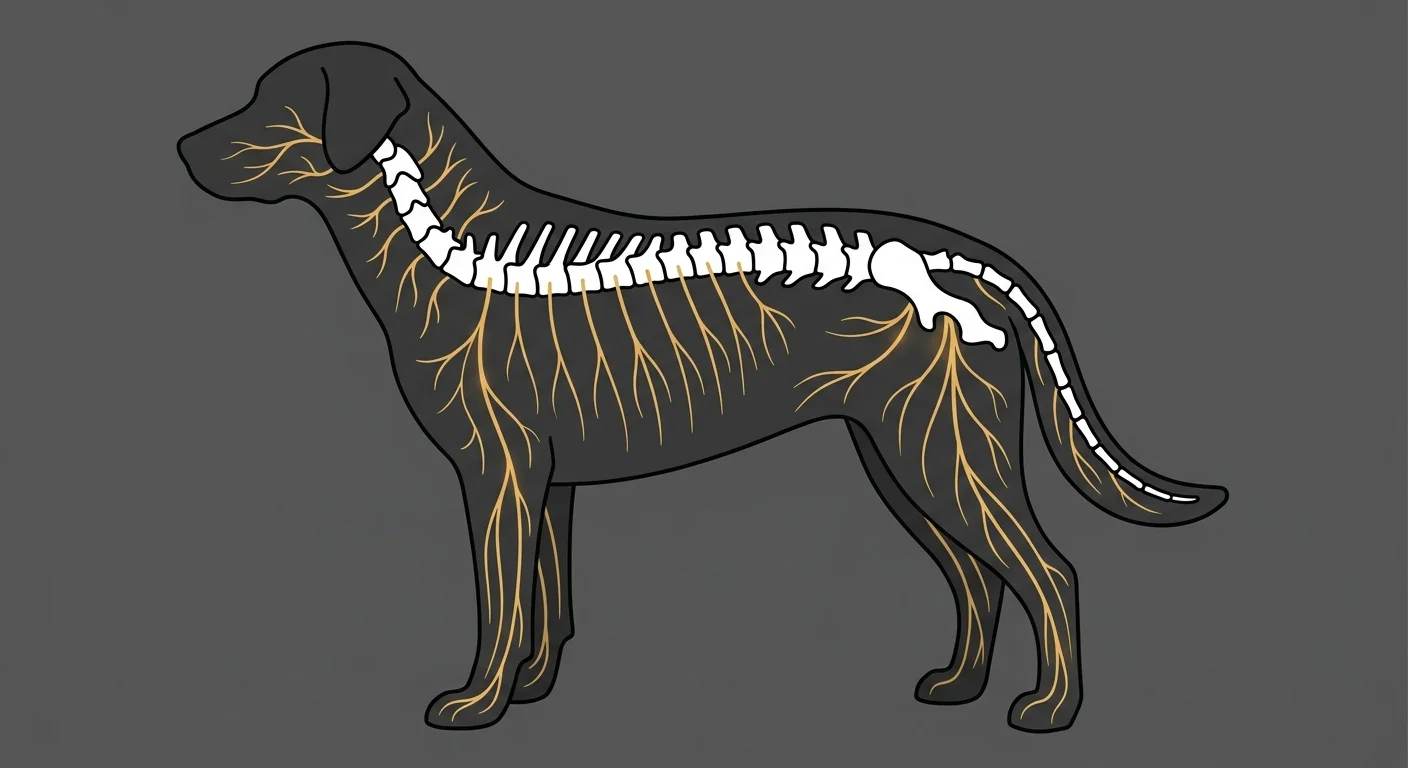
Here's what almost everyone gets wrong: animal chiropractic isn't about loosening a stiff joint.
It's about restoring neurological communication between the spine and the rest of the body.
A spinal adjustment on an animal is a calibration. Not a mechanical procedure applied to a body part.
The joint is the access point. The nervous system is the target.
That distinction changes everything — what forces are appropriate, how the procedure is performed, and who is qualified to deliver it.
When it's done right, animal chiropractic care addresses the neurological interference that shows up as gait changes, behavioral shifts, reluctance to perform, or chronic soft-tissue tension.
When it's done wrong — or by someone without formal animal-specific training — it risks the exact structural damage it's supposed to prevent.
The Nervous System Is the Target — Not Just the Joint
Your animal's spine isn't just structural. Every vertebral segment is a relay station — nerve signals from the brain travel outward through those segments to organs, muscles, and limbs.
When a segment loses proper motion, it doesn't just create localized discomfort. It interrupts the signal.
That's why whole-body biological systems training changes how a practitioner approaches this work. They're not chasing the symptom. They're reading the system.
They identify where neurological interference originates. Then they apply precise, low-amplitude force to restore proper motion at that segment.
Biomechanical research confirms that adjustive forces must stay within normal anatomical ranges of joint motion to avoid ligamentous injury. That threshold is species-specific. It takes hands-on trained precision. You don't develop it by instinct — and you don't develop it watching someone else work.
This matters most in horses. Anti-inflammatory use masks the spinal dysfunction that a proper neurological assessment would catch — and why long-term bute for horses may mask spinal subluxations is exactly the mechanism a certified practitioner is trained to recognize.
The drug suppresses the symptom. The interference stays. The animal keeps working on a nervous system nobody has actually evaluated.
This published analysis of credential requirements makes clear why structural assessment — not pharmaceutical management alone — is the standard a certified practitioner is trained to apply. This published analysis
Why Most People Confuse Animal Chiropractic With Something It Isn't
Massage relaxes soft tissue. Stretching lengthens it.
Neither one addresses a vertebral segment that's lost proper motion. And neither requires anything close to the training animal chiropractic demands.
The confusion happens because some of the movements look similar from across a barn or a treatment room. That's the problem.
A spinal adjustment is a specific, high-velocity, low-amplitude force directed at a precise vector on a specific vertebral joint. That is not a technique you approximate. It isn't something a video teaches. It isn't refined by feel over a few sessions.
It's trained. It's tested. It's credentialed.
Animal bodyworkers, uncertified 'spinal therapists,' wellness providers offering 'animal alignment' — most of them aren't trying to cause harm.
But good intentions don't protect your animal's nervous system. Ignorance of the system does the damage regardless of motive.
That's the credential question stripped to its core: has the person touching your animal's spine ever been trained to recognize where that spine ends and the nervous system begins? If the answer isn't a clear yes — that's your answer.
| Approach | Primary Target | Mechanism | Requires Animal-Specific Training |
|---|---|---|---|
| Animal Chiropractic Care | Nervous system — restoring neurological signal between vertebral segments and the body | High-velocity, low-amplitude spinal adjustment directed at a specific vertebral joint to restore proper motion | Yes — AVCA certification required; species-specific anatomy and adjustive force parameters must be formally trained |
| Massage Therapy | Soft tissue — muscles, fascia, and superficial connective tissue | Manual pressure and mobilization to reduce tension and improve circulation in muscle tissue | Recommended — animal-specific soft tissue knowledge reduces risk of inadvertent harm |
| Passive Stretching | Range of motion — lengthening muscles and tendons through guided positional movement | Slow, sustained elongation of soft tissue through joint range without direct spinal force | Recommended — improper technique or force can strain tendons and joint capsules in animals |
| Pharmaceutical Pain Management | Symptom suppression — reducing the animal's neurological or inflammatory pain signal | Systemic drug mechanism that dampens the pain response without addressing structural source | No — but veterinary oversight is required; does not resolve underlying spinal dysfunction |
| Uncertified Animal Bodywork / 'Alignment' Therapy | Variable — practitioner-dependent, often undefined or anecdotal | Improvised manual techniques not governed by biomechanical training or species-specific credentialing standards | No formal training required — and that's the problem; no recognized standard exists to govern force, angle, or depth |
Why Provider Credentials Aren't Optional in Animal Chiropractic
Credentials aren't paperwork. They're proof that the person touching your animal's spine understands the neurological system attached to it — not just the joint they can see.
That's not a small distinction. It's the whole ballgame.
The FTC weighed in on this directly. In August 2000, the agency finalized a settlement with the AVCA over how animal chiropractic credentials were being represented to the public.
That action didn't happen because regulators had nothing better to do. It happened because when the gap between certified and uncertified is invisible to an animal owner, animals get hurt.
An owner who can't tell the difference can't protect their pet.
Cornell University College of Veterinary Medicine doesn't hedge on this. Animal chiropractic must only be performed by a licensed veterinarian or a licensed chiropractor with formal, animal-specific training — specifically to prevent structural damage.
That's not a recommendation. It's a safety floor.
The procedure uses high-velocity, low-amplitude forces. Those forces have to stay within normal anatomical ranges of joint motion. Push past that threshold and you risk ligamentous injury. An uncertified practitioner hasn't been trained to know where that threshold is — because nobody taught them.
What Happens When an Uncertified Practitioner Works on Your Animal
Here's the failure mode: they don't know where the line is.
A practitioner without animal-specific training can produce a movement that looks correct from the outside while exceeding the tissue tolerances protecting the animal's ligaments and spinal cord.
The procedure looks fine. The damage is already done.
Animals who need this work most often don't announce it loudly. Those early gait changes and reluctance to engage — the signs that surface before visible lameness — are exactly what a trained practitioner is calibrated to catch and address with precision.
An uncertified practitioner isn't reading those signals through a systems lens. They're reacting to what's visible and applying force without understanding what's underneath it.
That's not a minor gap. That's the entire difference between calibration and guesswork.
And it's not always one catastrophic session.
Sometimes the harm is cumulative. Repeated force at the wrong vector, on a joint that needed something different, across multiple visits. By the time the animal shows clear clinical distress, the structural damage is already done.
Cornell's standard exists because the margin for error in this work is narrow. And the consequences of exceeding it fall entirely on the animal.
Who Is Actually Qualified to Perform Animal Chiropractic
Two pathways. That's it.
A licensed veterinarian with formal animal chiropractic training. Or a licensed chiropractor who has completed species-specific postgraduate education.
Everyone else — regardless of experience, reputation, or whatever title they've given themselves — is operating outside the established safety framework. Full stop.
AVCA certification became the recognized standard because two completely separate bodies — one regulatory, one clinical — landed at the same conclusion from different directions.
The FTC recognized that misrepresenting animal chiropractic credentials causes real harm to real animals. The clinical community recognized that species-specific training isn't optional when the procedure directly influences a living neurological system.
A practitioner with that credential has been trained, tested, and held to a defined standard. One without it hasn't. That's the credential question answered.
At Touch of Wellness Chiropractic, spinal adjustments for animals are performed by Dr. Karen Hannah — an AVCA-certified human chiropractor with a Zoology background.
That combination matters. Zoology is whole-body biological systems analysis. It's the exact lens animal chiropractic demands — because every adjustment is a calibration of an interconnected living system, not an isolated joint.
You can't deliver that with instinct. You need the training, the credential, and a genuine understanding of what you're working on before you touch it.
| Provider Type | Animal-Specific Training | Eligible to Perform Animal Chiropractic | Primary Risk if Uncertified |
|---|---|---|---|
| AVCA-Certified Licensed Chiropractor | Minimum 210 hours of formal, species-specific postgraduate training required for certification | Yes — one of two qualifying pathways recognized by the clinical and regulatory community | Negligible when working within certified scope and in coordination with a primary veterinarian |
| Licensed Veterinarian with Animal Chiropractic Training | Formal animal chiropractic coursework completed in addition to veterinary degree | Yes — the other recognized qualifying pathway | Negligible when applying trained, species-specific adjustive technique |
| Licensed Chiropractor Without Animal-Specific Training | Human chiropractic licensure only — no species-specific postgraduate education | No — human licensure does not transfer to animal populations | High — adjustive forces calibrated for human anatomy may exceed the tissue tolerances of a different species |
| Animal Bodyworker or 'Spinal Therapist' (Uncertified) | No standardized training requirement — credential is self-assigned | No — operates entirely outside the established safety framework | Severe — no training to recognize neurological thresholds, anatomical limits, or contraindications for spinal force application |
| Wellness Practitioner Offering 'Animal Alignment' | Variable — typically massage or stretch-based modalities with no spinal adjustment training | No — alignment language does not substitute for credentialed neurological assessment | High — conflates soft-tissue work with spinal adjustment, masking the distinction between relaxation techniques and precise neurological calibration |
What AVCA Certification Actually Requires

Anyone can say they're certified. The question is what the certification actually required them to do. That's the difference between a credential and a title someone gave themselves after a three-day seminar.
The AVCA isn't a membership club. You don't get in by paying dues and checking a box.
It's a credentialing body. Entry requires formal, species-specific postgraduate education, written examinations, and demonstrated clinical competency.
That structure exists because animal chiropractic involves direct neurological influence on a living biological system. It's not a soft-tissue technique you can pick up from a video and start charging for.
Two pathways qualify. A licensed veterinarian who has completed formal animal chiropractic training. Or a licensed chiropractor with equivalent, species-specific postgraduate education.
That's the entire list. There's no third door.
Self-certification doesn't make the cut. An apprenticeship under an uncredentialed mentor doesn't make the cut. Self-study doesn't make the cut. Those routes produce someone operating outside the safety framework — not someone equipped to work inside it.
The 210-Hour Postgraduate Standard — And Why It Exists
The AVCA was founded in 1989. The training standard wasn't symbolic then, and it isn't now.
A minimum of 210 hours of postgraduate education is required before certification is granted. That's 210 hours stacked on top of an existing professional license. Not a replacement for one.
Here's what doesn't transfer from human practice: anything species-specific. Spinal segment ratios are different. Joint angles are different. Lever lengths, tissue tolerances, the way force propagates through a horse's thoracolumbar junction versus a dog's lumbosacral region — none of it maps cleanly.
A practitioner trained only on humans doesn't automatically know what changes when the patient has four legs. That's not a minor gap. That's the gap that causes injuries.
The AVCA's 210-hour postgraduate requirement exists to close it. Species-specific by design. Not arbitrary — necessary.
This matters most when an owner is weighing chiropractic care as an alternative to long-term NSAIDs. The case for chiropractic only holds when the practitioner delivering it can distinguish a neurological pattern from a drug-masked symptom.
That discernment isn't intuitive. It isn't built in a weekend.
It's built over 210 hours of structured, species-specific education.
How the AVCA Certification Standard Was Established
The AVCA standard wasn't built in a vacuum.
In August 2000, the FTC finalized a settlement with the AVCA over how animal chiropractic credentials were being represented to the public.
That action mattered. It made the credentialing standard visible at a federal level. Practitioners got the message: misrepresenting your credentials in this field has consequences.
The FTC settlement addressed the core question every animal owner should be asking: what does a certified practitioner actually have that an uncertified one doesn't?
The answer is a structured, tested, species-specific education — delivered under a credentialing body accountable enough to draw federal regulatory attention.
That's not a technicality. That's the line between a calibrated neurological intervention and an improvised one.
The AVCA credential is the only external guarantee that the practitioner touching your animal's spine understands the system being worked on — not just the joint being touched.
A weekend course doesn't build that understanding. A self-assigned title doesn't confer it.
The 210-hour postgraduate standard, backed by a credentialing body the FTC has scrutinized, is what separates a trained neurological calibration from an uninformed guess applied with force.
| AVCA Certification Requirement | Minimum Standard | Purpose |
|---|---|---|
| Founding of credentialing body | 1989 | Establishes the AVCA as the recognized standard-setter for animal chiropractic certification — not a voluntary club, but a formal credentialing architecture with documented history |
| Postgraduate education hours | 210 hours minimum | Forces species-specific curriculum on top of an existing professional license — closing the anatomical gap between human and animal practice before a practitioner touches an animal spine |
| Qualifying practitioner pathway | Licensed veterinarian or licensed chiropractor with formal animal-specific training | Limits certification to practitioners who already hold a professional license — self-study, apprenticeship, and weekend courses do not satisfy this requirement |
| Federal regulatory scrutiny | FTC settlement finalized August 2000 | Confirms the credentialing standard has been tested at a regulatory level — misrepresentation of AVCA credentials carries documented federal consequences, not just professional ones |
| Scope of FTC action | Addressed standards for representation of animal chiropractic credentials | Draws a clear public line between certified and uncertified practitioners — animal owners can use this standard to evaluate any provider's claimed qualifications |
Who Should — And Shouldn't — Receive Animal Chiropractic Care
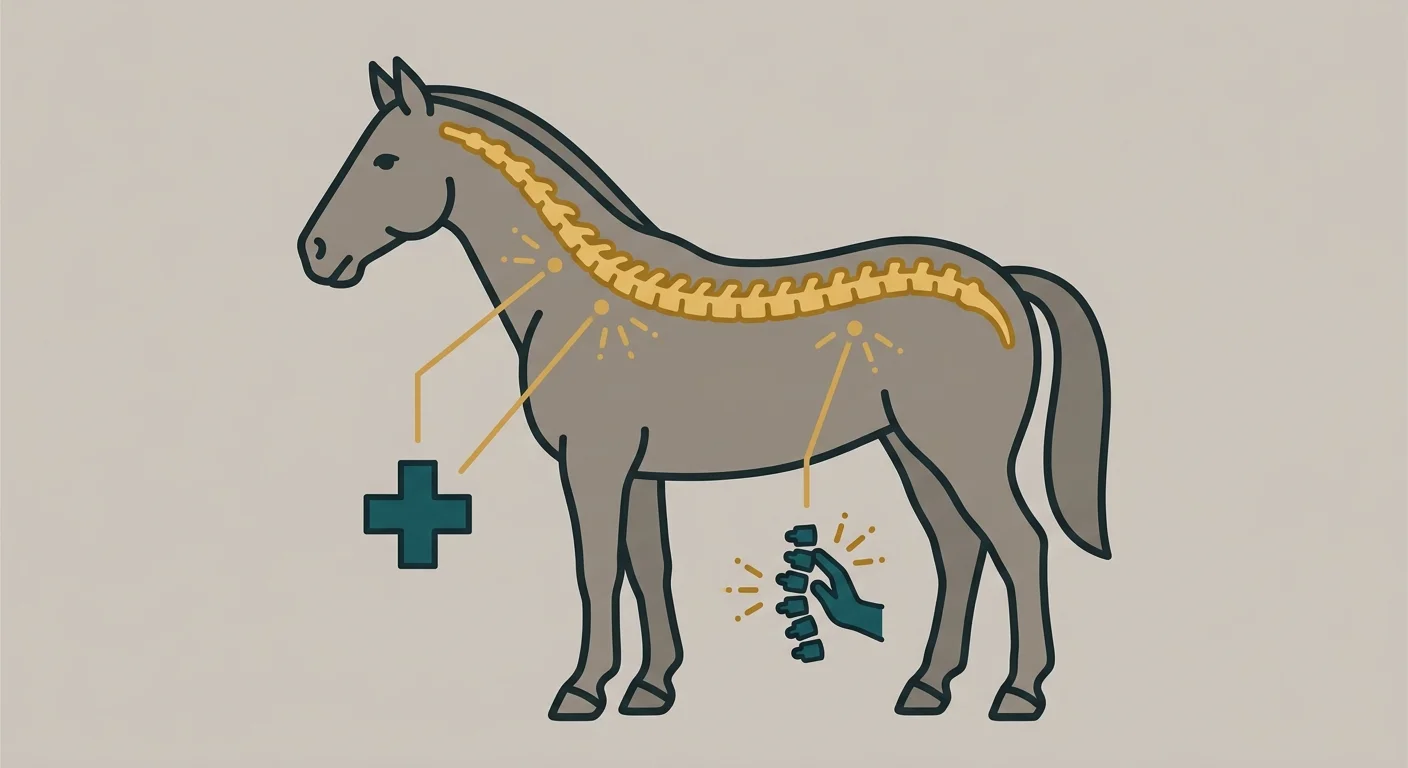
Not every animal is a candidate. And not every owner asking about animal chiropractic is asking the right question for their situation.
That's where the credential standard stops being abstract and starts mattering in the room.
The animal's presentation has to call for a neurological calibration — not surgery, not soft-tissue work, not a wait-and-see approach. Get it wrong in either direction and there's a cost. Sending an animal who needs surgery to a chiropractor is a mistake. Defaulting to long-term NSAIDs when the underlying pattern is a spinal issue a trained provider could resolve — that's also a mistake.
Here's the honest frame: animal chiropractic is a targeted tool with a defined scope.
Not a catch-all wellness service. Not a replacement for your vet's diagnosis. Knowing where it fits — and where it doesn't — is the difference between an owner who uses it well and one who either misses an opportunity or creates a risk.
Clinical Conditions Where Animal Chiropractic Has a Clear Role
Spinal mobility deficits. Compensatory movement patterns. Nerve-related dysfunction that hasn't responded to conservative medical management. Those are the presentations where this approach has a clear clinical role.
And it's not experimental. NIH-indexed research documents measurable improvements in spinal range-of-motion metrics when precise adjustive forces are applied correctly. The results are there when the provider knows what they're doing and why.
Performance animals are a particularly clear example — working dogs, sport horses, competitive canines. Spinal dysfunction in these animals often shows up long before it becomes a visible deficit. By the time it's obvious, the pattern has been running for a while.
A dog showing early signs of rear-end weakness or reluctance to jump is communicating a spinal pattern — not muscular fatigue. A provider reading through a systems lens catches that. A generalist doesn't.
This isn't fringe thinking. University of Illinois integrative medicine classifies chiropractic care as a formal clinical service — specifically positioned to support joint and muscle rehabilitation.
That classification reflects a clinical reality most owners don't hear about until the standard options have already failed them. Post-surgical recovery, chronic spinal stiffness, age-related mobility decline — these are the presentations where chiropractic care isn't just complementary. It's often the most direct path to resolving the underlying pattern.
If You Want a Pharmaceutical-Only Protocol, This Isn't Your Fit
If you're looking for a provider who'll manage your animal's condition with pharmaceuticals only — no assessment for spinal or neurological contributors, no integrative evaluation — this isn't the right fit.
That's not a knock on pharmaceutical protocols. There are conditions where they're exactly right.
But an owner who's already decided the answer is medication — before the assessment is finished — has closed the clinical picture before it's been fully opened. Cornell is direct on this: animal chiropractic requires a provider who understands the structural and neurological system well enough to know when to adjust and when not to. That same discernment belongs on the owner's side. Knowing whether the question even belongs on the table is part of the work.
And animal chiropractic isn't for the owner who wants one session and a clean exit.
The neurological calibration model runs on assessment, precise treatment, monitored response, and reassessment. Without owner follow-through, the clinical outcome doesn't hold. That's not a pitch for more visits — it's how nervous system care works in any species. The commitment isn't optional.
How Animal Chiropractic Works Alongside Your Primary Veterinarian
Animal chiropractic doesn't compete with your primary vet. It works alongside that relationship — and it works best when both providers are communicating clearly about the animal's full clinical picture.
A qualified animal chiropractor isn't diagnosing veterinary conditions. They're assessing spinal function, identifying neurological patterns, and applying targeted adjustive care within the scope of that credential.
Your veterinarian handles pathology, disease management, and surgical decisions. The animal chiropractor addresses the spinal and neurological layer that often runs underneath those conditions — and that often improves outcomes when it's addressed directly. Where cold laser therapy for animals is also part of the recovery plan, the two modalities complement each other without overlap.
That cooperation model matters because it protects the animal. Cornell's position is that animal chiropractic belongs within a care structure that includes licensed, credentialed providers — not as a parallel alternative, but as a specialist layer inside an integrated clinical approach.
An AVCA-certified chiropractor working alongside your vet isn't a workaround. They're the right piece in the right place — calibrating a living system, not just touching a joint.
| Animal Type | Condition or Symptom | Role of Animal Chiropractic | Coordination With Primary Vet Required |
|---|---|---|---|
| Dogs — working or sport breeds | Rear-end weakness, reluctance to jump, bunny-hopping gait pattern, post-surgical mobility recovery | Assess spinal and neurological contributors to movement dysfunction; apply targeted low-force adjustive care to restore range of motion | Yes — vet confirms no acute fracture, disc herniation requiring surgery, or active infection before chiropractic begins |
| Horses — performance or competition | Reduced collection, back stiffness, uneven stride, resistance under saddle, compensatory movement patterns | Identify and address spinal mobility deficits and neurological patterns underlying performance decline | Yes — lameness exam and imaging rule out structural pathology; chiropractor works within the veterinary treatment plan |
| Senior dogs and cats | Age-related spinal stiffness, chronic mobility decline, reduced activity tolerance without clear orthopedic diagnosis | Support joint and muscle rehabilitation through integrative spinal care; address neurological patterns contributing to stiffness | Yes — vet manages underlying disease or organ-related conditions; chiropractic addresses the spinal layer alongside medical management |
| Animals with acute trauma or fracture | Recent injury, suspected spinal fracture, acute disc event, active neurological emergency | Not appropriate — animal chiropractic care is contraindicated; stabilization and veterinary intervention take priority | Required immediately — veterinary diagnosis and stabilization must occur before any manual therapy is considered |
| Animals under pharmaceutical-only protocols by owner preference | Conditions managed exclusively with medication at owner's direction, with no openness to spinal or neurological assessment | Not the right fit — animal chiropractic requires owner commitment to assessment and integrative evaluation | Coordination is not applicable — the owner has closed the clinical picture before it has been fully evaluated |
| Dogs with subtle early-onset spinal signals | Early reluctance on stairs, mild hind-end hesitation, changes in posture or play behavior not yet flagged as orthopedic | Assess for spinal dysfunction before compensation patterns become entrenched; early intervention preserves neurological function | Yes — vet confirms no underlying disease or structural lesion; chiropractic provides the neurological evaluation layer |
Frequently Asked Questions About Animal Chiropractic Safety
So you know what the credential means. You know who qualifies and who doesn't. That still leaves the questions every owner sits with before they actually book.
Here they are. Straight answers. No hedging.
Is animal chiropractic safe for dogs and horses?
Yes — with one non-negotiable condition. The provider must be qualified. Cornell University College of Veterinary Medicine is direct: animal chiropractic must only be performed by a licensed veterinarian or a licensed chiropractor with formal, animal-specific training. Without that credential, structural damage is a real risk. With it, the procedure is a targeted neurological calibration. That's not the same thing as a mechanical force applied blindly to a joint.
What qualifications does an AVCA-certified animal chiropractor have?
An AVCA-certified provider has completed a minimum of 210 hours of postgraduate training. That's on top of an existing professional license — not instead of one. The AVCA was established in 1989 to create and enforce that standard. The curriculum covers species-specific anatomy, spinal biomechanics, and adjustive technique. It isn't a weekend certification. It's a tested, rigorous credential built around one requirement: the practitioner must understand the neurological system, not just the joint they're touching.
How does animal chiropractic care fit with my primary veterinarian's plan?
It works alongside your vet's plan. Not instead of it. A qualified animal chiropractor isn't diagnosing veterinary conditions. They're assessing spinal function and addressing neurological patterns within a defined clinical scope. Your veterinarian handles pathology and disease. The animal chiropractor addresses the spinal and neurological layer underneath. Cornell University College of Veterinary Medicine is clear: this care belongs within a structure that includes credentialed, licensed providers. That's cooperation — not competition.
Are there risks if a non-certified practitioner adjusts my pet?
Yes. The risks are real — and they're structural. Adjustive forces must stay within normal anatomical ranges of joint motion to avoid ligamentous injury. An uncertified practitioner hasn't been trained to identify those limits. They don't have the species-specific knowledge to recognize when they're approaching a threshold — or when they've already crossed it. Your animal can't tell you something went wrong until the damage is done. That's not a theoretical risk. It's the exact reason the credential exists.
What should I expect during my animal's first chiropractic assessment?
Expect an assessment — not an adjustment. A trained provider observes gait, posture, and movement patterns before applying any force. They're reading the neurological picture. The adjustment itself is low-force and targeted. Precision is the point. When applied correctly, precise adjustive forces produce measurable improvements in spinal range of motion. After the first session, you'll know exactly what was found and what the care plan looks like going forward. No vague timelines. No guesswork.
Is animal chiropractic the same as what a human chiropractor does on people?
The underlying principle is shared — restore neurological function through spinal care. The application is not. Animal anatomy, range of motion, and tissue tolerance vary significantly by species. That's exactly why the AVCA requires species-specific postgraduate training rather than assuming human skills transfer directly. A provider who treats animals the same way they treat people doesn't understand the system they're working with. Calibrating a living system, not touching a joint, requires training built for that specific system. The AVCA credential exists to make that non-negotiable.
The Real Safety Standard in Animal Chiropractic
Safety in animal chiropractic isn't a property of the procedure.
It's a property of the person performing it.
The same spinal adjustment, delivered by an AVCA-certified provider who understands the neurological system being addressed, is a calibrated clinical intervention. Delivered by someone without that training, it's uninformed force applied to a living biological system. The animal can't tell you the difference until something goes wrong.
That's where the credential question stops being abstract.
You're not evaluating whether animal chiropractic is inherently safe or risky. You're evaluating whether the practitioner in front of you understands the system they're working on. The AVCA credential is the only external signal that answers that question directly.
It doesn't mean someone took a weekend course. It means they completed a rigorous, species-specific postgraduate curriculum under a credentialing body accountable enough to draw federal regulatory scrutiny. That accountability is the line between a trained neurological calibration and a guess applied with confidence.
So the question isn't whether chiropractic is right for animals in general. That question is already answered.
The question is whether the provider in front of you has the training to understand your animal's specific neurological and musculoskeletal picture — and the judgment to know when to adjust, when to hold, and when to refer.
At Touch of Wellness Chiropractic, that's the standard Dr. Karen Hannah applies. The AVCA certification exists precisely because that level of understanding doesn't come from proximity to animals. It comes from structured, tested, species-specific education.
Because every adjustment is calibrating a living system, not touching a joint — and if your provider doesn't know the difference, your animal is the one carrying the risk.
Your animal deserves a provider who understands the system — not just the joint. If you're in Morton or the surrounding area and want an AVCA-certified assessment that actually reads the neurological picture, schedule an animal chiropractic assessment.
Copyright Touch of Wellness Chiropractic 2026
1101 W Jackson St, Suite A Morton, IL 61550
Web Design by iTech Valet